This post is also at “Rain Lilies,” a Substack that I started when I considered leaving the WordPress platform. While it was sitting unused but not deleted, my friend Dresden Graff (read what he writes at “Human and Learning” over there) recommended me to his readers. And that spurred me to write about Lilly’s and my walks in nature. I’m getting my thoughts together to possibly write a new book, this one for families of kids. I would talk about introducing kids to nature, supporting their nature interests, and I would draw on my psychology career to include some things about child development and how the human lives part of our lives in nature works. I may try out some ideas over at Rain Lilies, in case you’d like to have a look.
Tomorrow (January 17), I plan to take Lilly to the woods and the marsh. We took a walk there a couple of weeks ago, and she’d like to return and maybe see birds. On our last walk, we heard crows, and one of them flew in and loudly announced his presence from a nearby tree. What a wonderful, big black bird, like a druid of the woods with secret knowledge of who lives among the trees, some to welcome and others to chase away. Did he welcome Lilly and me? I don’t know, but I think Lilly welcomed him.
Lilly and I have been taking adventure walks since she was two, and now she is four. She loves climbing on boulders and looking at creatures we find. A little before her third birthday, she discovered a small, harmless DeKay’s brownsnake on the trail. She had nothing but gentle curiosity with this little animal, and with my guidance she was able to touch it and wish it good-bye as it disappeared into the leaves and grasses.
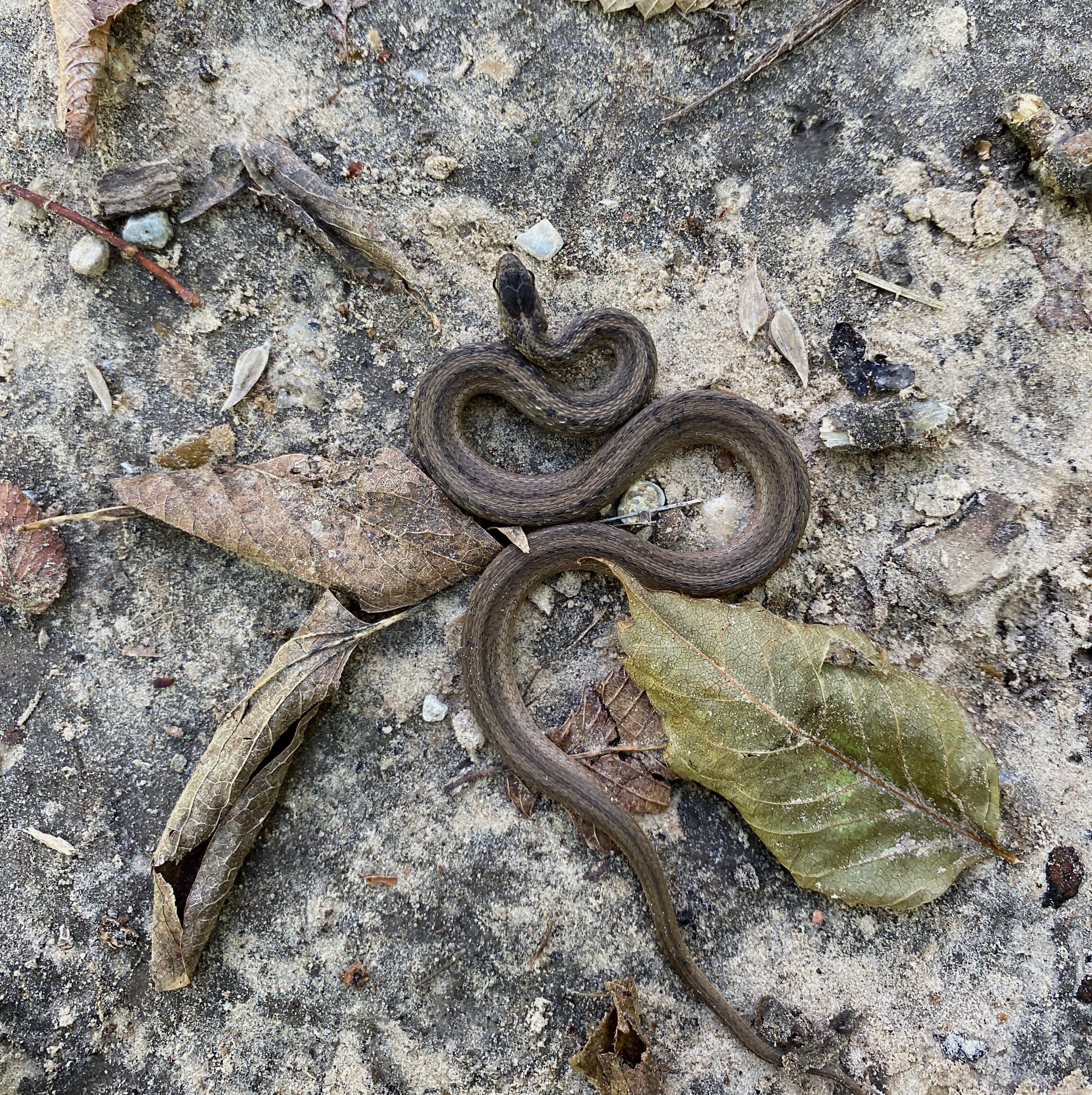
In that encounter, she embodied a significant issue for two-year-olds, as expressed by the famous psychoanalyst Erik Erikson as “holding on and letting go.” As they experiment with their increasing sense of what it is to have power, they may make demands, enjoy saying “no,” and become overwhelmed with the resulting emotion and have tantrums. Toddlers have to work out, with us big people, how to manage the impulse to be in charge of everything, to have and express choices while living within limits. A loving adult caregiver can be firm, yet reassuring, and help the child navigate the stage that Erikson called “autonomy vs. shame and doubt.”
Lilly seemed to get through that stage amazingly well, with a healthy wish to be independent along with an ability, most of the time, to negotiate shared control. She has what psychiatrists Chess and Thomas would describe as an easy temperament, meaning that she is pretty adaptable to changes and new situations, her mood is generally positive, she is active but not so much that it interferes with everyday situations, and so on. Child development researchers tell us that temperament styles are largely a part of who the child is (they are not taught by parents), though they can shift some with experience and parents can bring their own flexibility into play and work around some difficult temperament.
In one of our visits to Sheri Capehart Nature Preserve when she was still two, we looked at flowers of the tie vine (a kind of morning glory) where honeybees, bumblebees, and other bees were visiting. She was fearless but did not impulsively try to grab one (thankfully). We talked about just watching and not touching, and we had a good time. Her dad – my son Geoffrey – understands that the loving and careful grandpa is in charge of his own wild nature nerd impulses, and I’ve never brought her back with bee stings or other boo-boos. However, I encouraged and was proud of her fearlessness as we sat there.
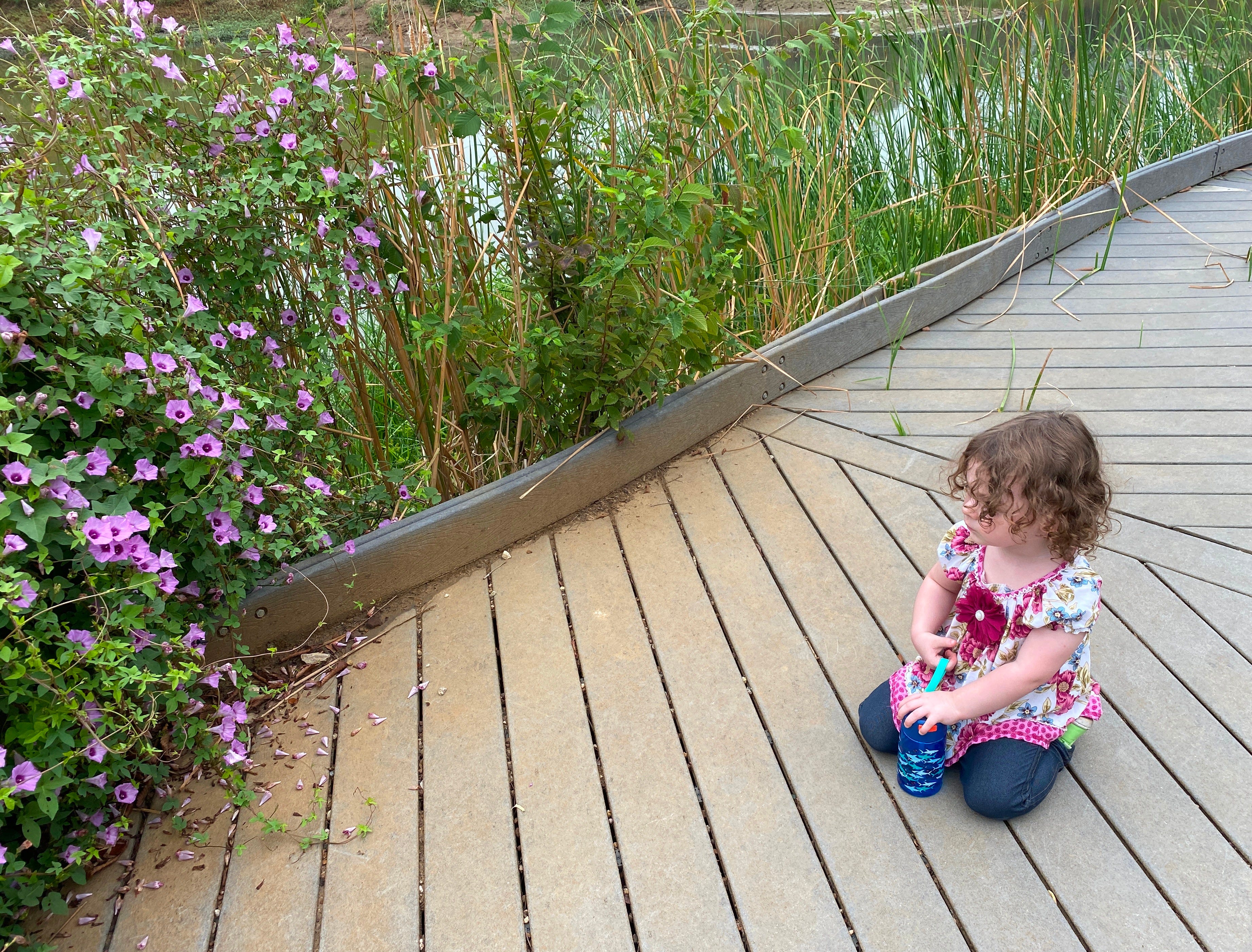
As a three-year-old, we’ve been to a number of parks and preserves, and sometimes she would walk along the top of a series of small boulders, enjoying her physical ability and coordination (and being up there as tall as papa). She has spent plenty of time sitting in the trail drawing in the dirt with fingers or sticks. As the famous developmental psychologist Jean Piaget would tell us, the typical child at age 3 can think about things that are not present and talk about them or make drawings of them. Sometimes she may have been drawing herself, but there were also times that it might have been the turtles we saw earlier or a bird she wished to see. Drawing in the dirt is an imprecise thing, and I often could not tell.
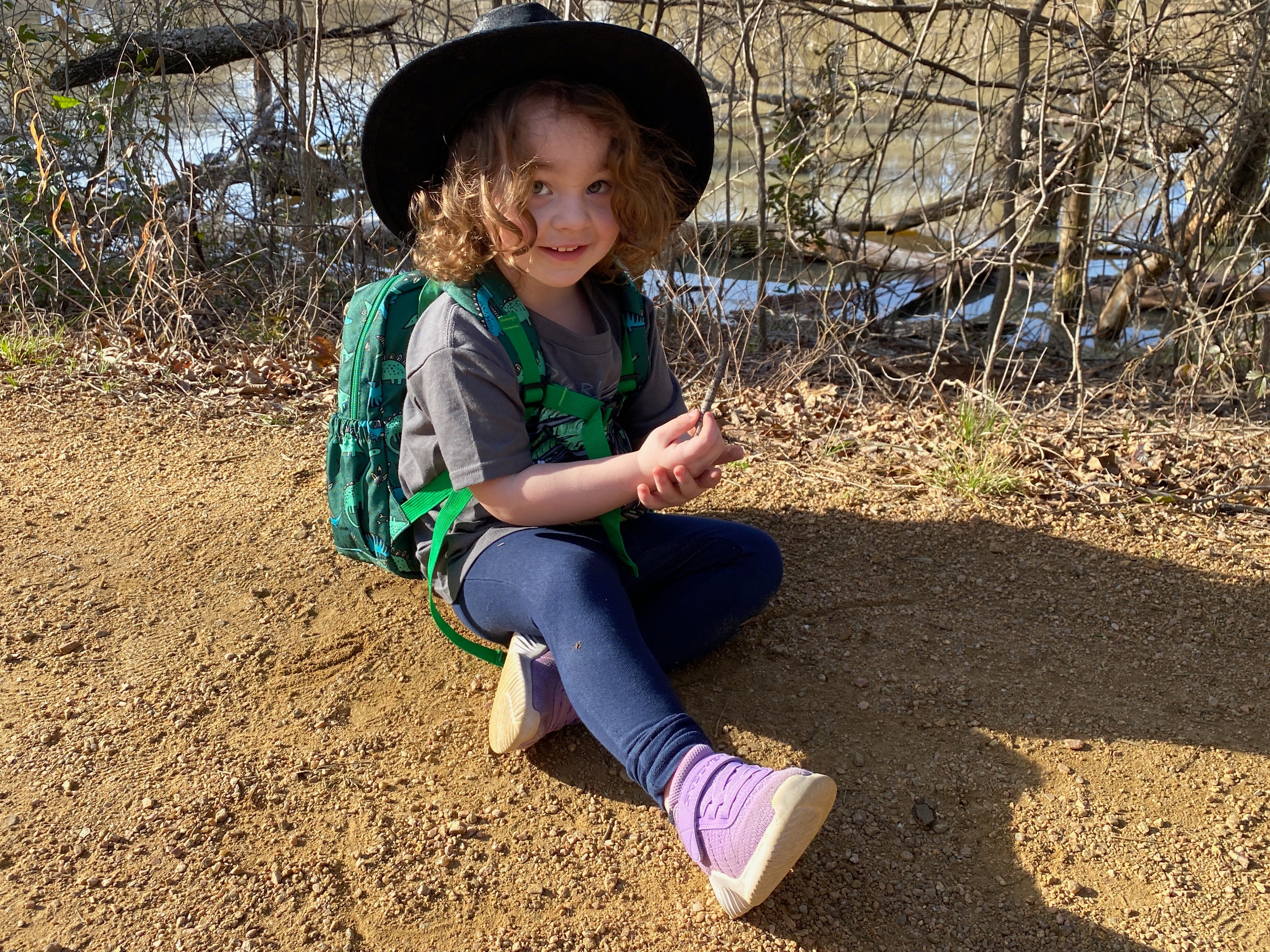
For Lilly, an adventure walk is a learning walk, but hopefully not because I’m turning it into “school.” I try to check myself if I start saying “…and that tree over there is an oak.” Better to follow her lead, and then I will throw in the name of something or ask a question we can both wonder about. If she almost steps into a cactus, I’ll help her stop and say a couple of things about it being “pokey” but also some animals do eat them. If she asks a question, I’ll try to answer it, but if she is ready to move on, I’ll go with that. (I did start a game at one point by saying, “Let’s see how many cacti we can see,” and she walked along noticing each one: “Cactus!”)
An adventure walk is also a way for us to learn about each other and share with each other. We get better at understanding each other’s likes, abilities, and attention spans. And we experience the delight of a pond, and ants following a path across the trail, or a crow fussing at us from a tree. We open each other’s eyes to wonderful things that we might have missed.
Being a guide for a child’s becoming acquainted with nature is a privilege to be honored and taken seriously. I’m enormously grateful. And I’m ready to see that crow tomorrow!
This is a short follow-up to yesterday’s post about Lilly’s and my adventure walks. As I mentioned in yesterday’s post, we went to Fort Worth Nature Center & Refuge today (January 17), so here’s what happened.
We arrived just after 2:00pm, when the clouds retreated and the sun warmed the afternoon. She had wanted to see birds, and we did see vultures as well as some sparrows (sorry, no specific ID) in the dead stalks and branches along the boardwalk. We wanted to get a photo of one of those turkey vultures, and I’m including one that Lilly took, with help with zoom and focus.
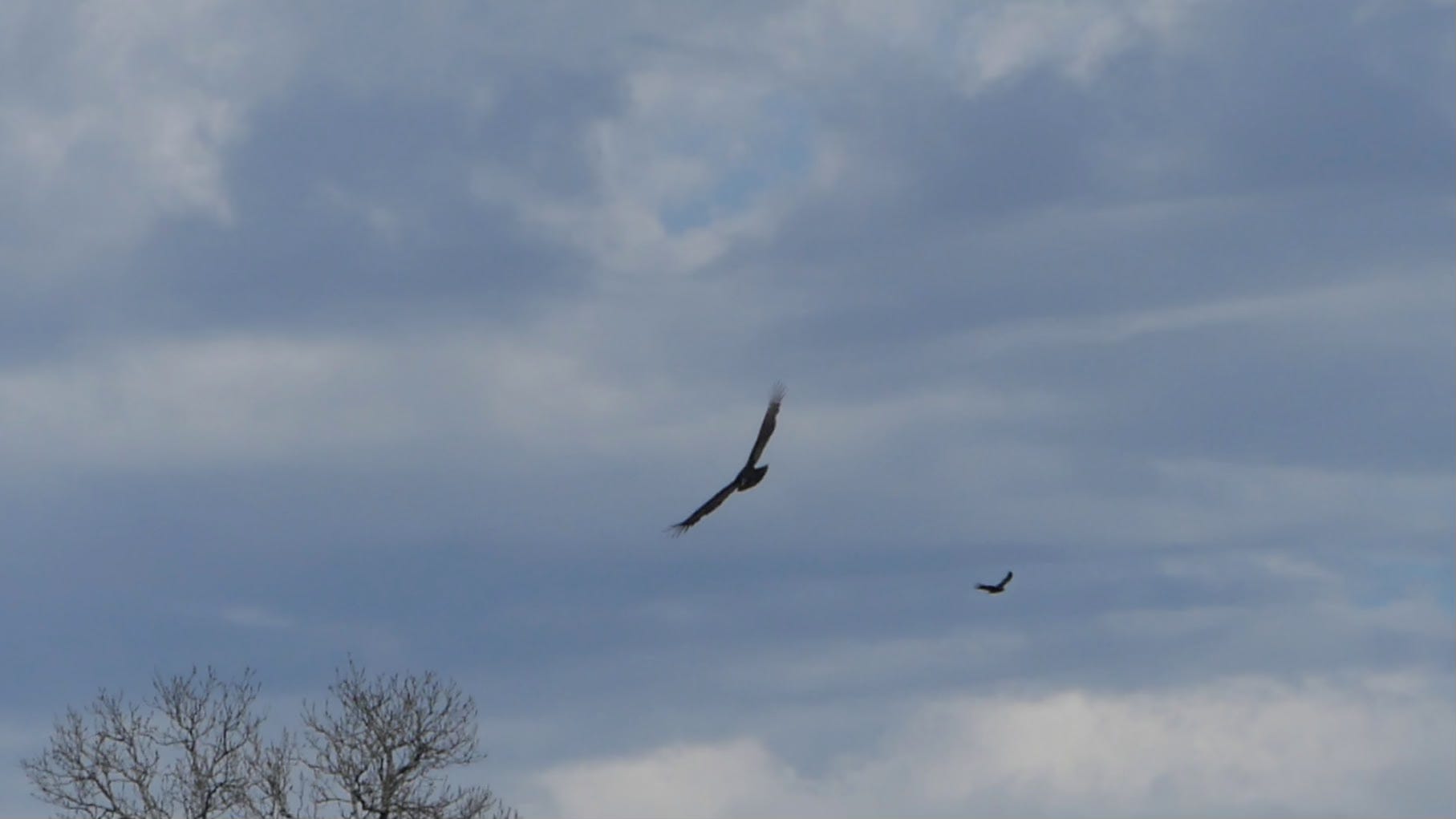
From a cloudy and cool morning, it was becoming a really wonderful day with beautiful clouds.
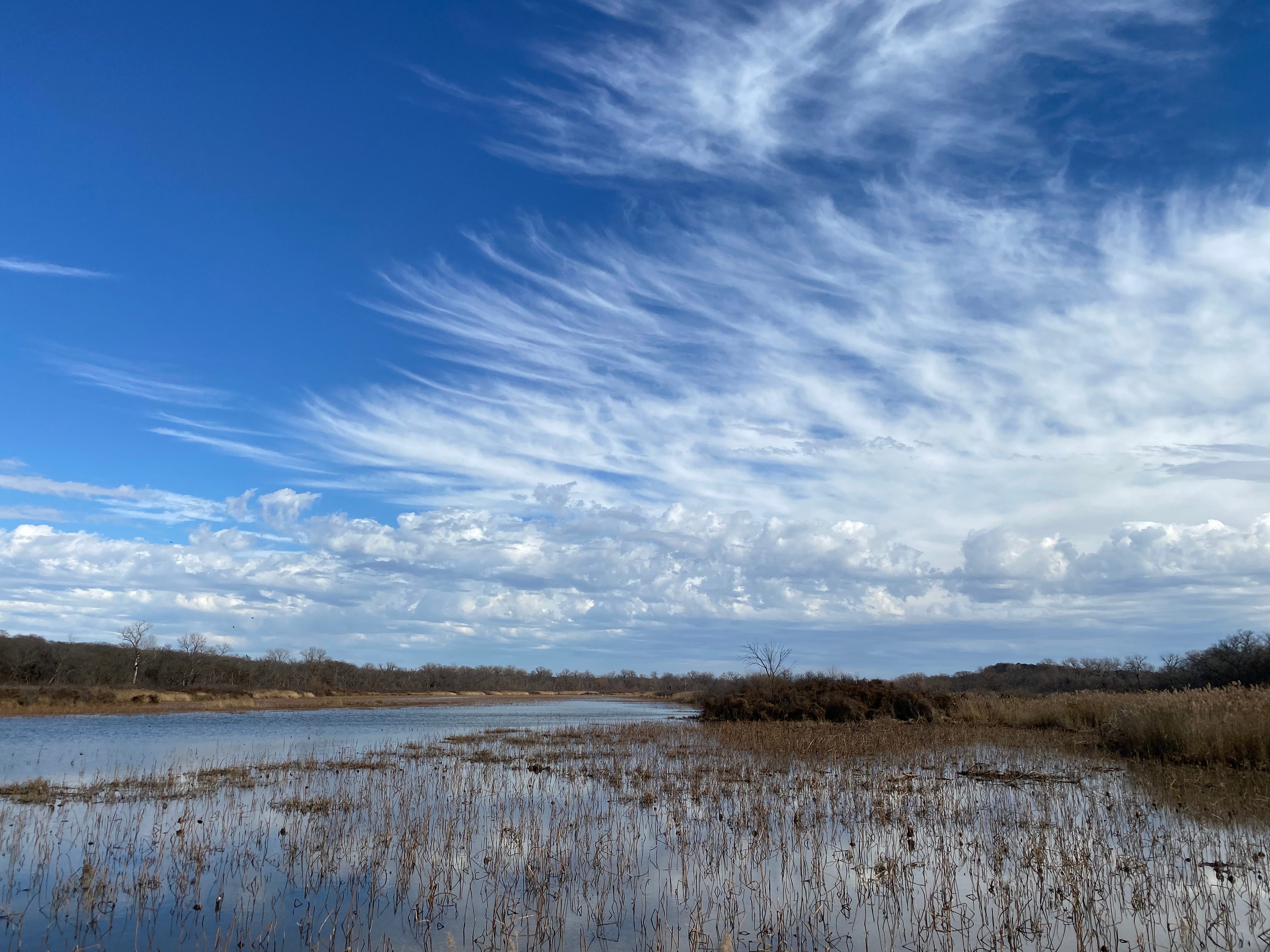
We walked the trail eastward, and after a short walkway across a low area the trail climbs up a little, overlooking the marsh. Lilly had decided that we were pirates, and that I was to tell her “aye, aye, cap’n,” which of course I did. She runs a very egalitarian ship, trading off periodically and making me the captain.
At a high spot along the shore there is a bench, and we stopped and had a drink. She dug for buried treasure in the gravel, and came up with some caps from acorns. We drank candy from these acorn cups, as pirates always do, and she even spoke in a harsh pirate voice.
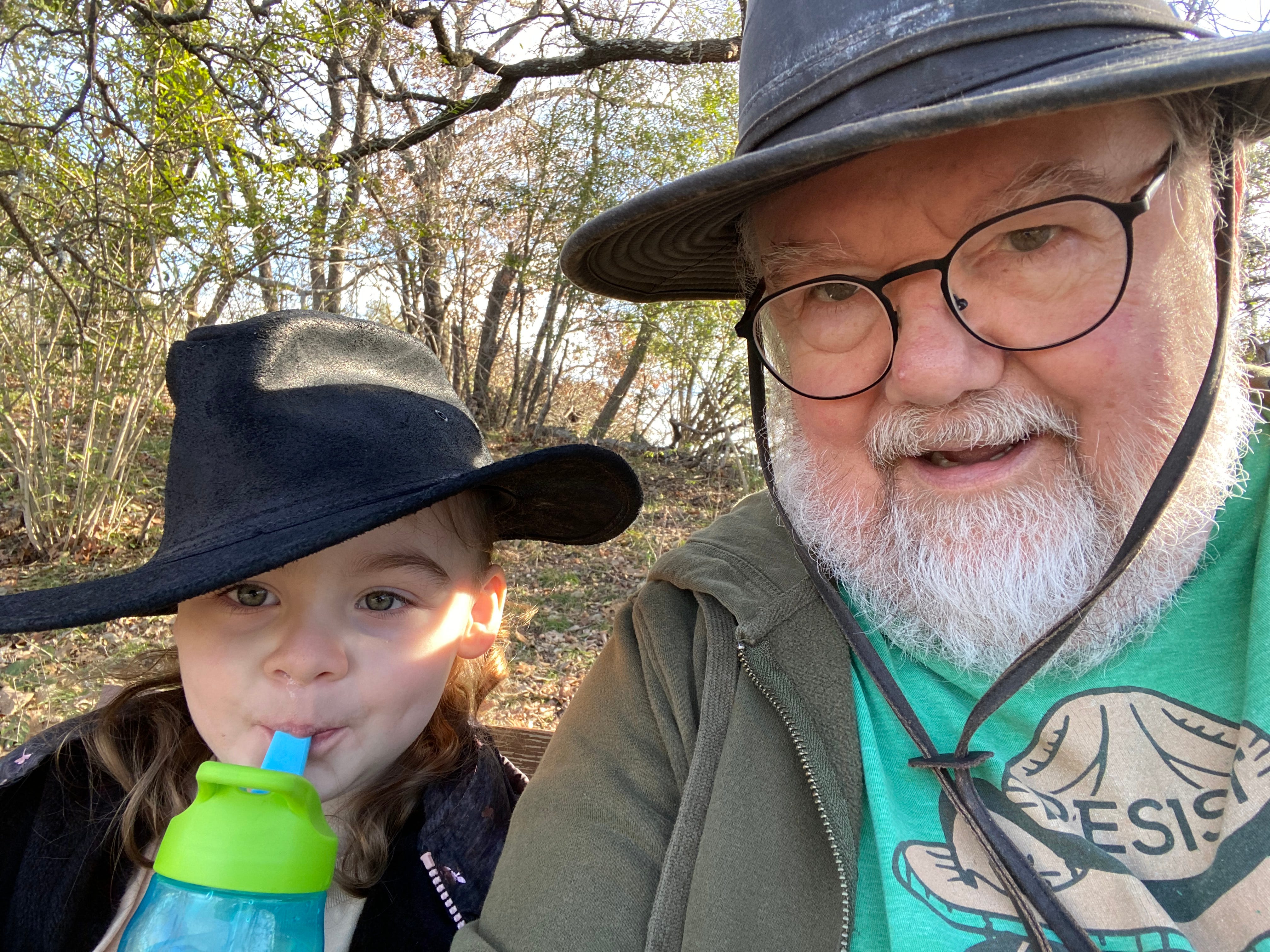
And so it was a great walk on a very nice day, and she noticed turkey vultures as well as greenbrier (she really doesn’t want to get scratched, so she kept calling out “greenbrier” when she would see one). A nice combination of natural history and pretend play!
Discover more from Our Lives In Nature
Subscribe to get the latest posts sent to your email.
 Our Lives In Nature
Love this!
LikeLiked by 1 person