Getting to Know Some Reptiles

… and at least one amphibian

My interest in nature has been dominated by reptiles and amphibians (herps) starting when I was nine or ten and the girl across the street invited me to come along and find garter snakes in Colorado. I was active in herpetological societies twenty-five years ago and I’ve been teaching incoming Master Naturalists about these animals for some years. I’m interested in the “big picture” of ecology and natural history, but herps are still an important focus.
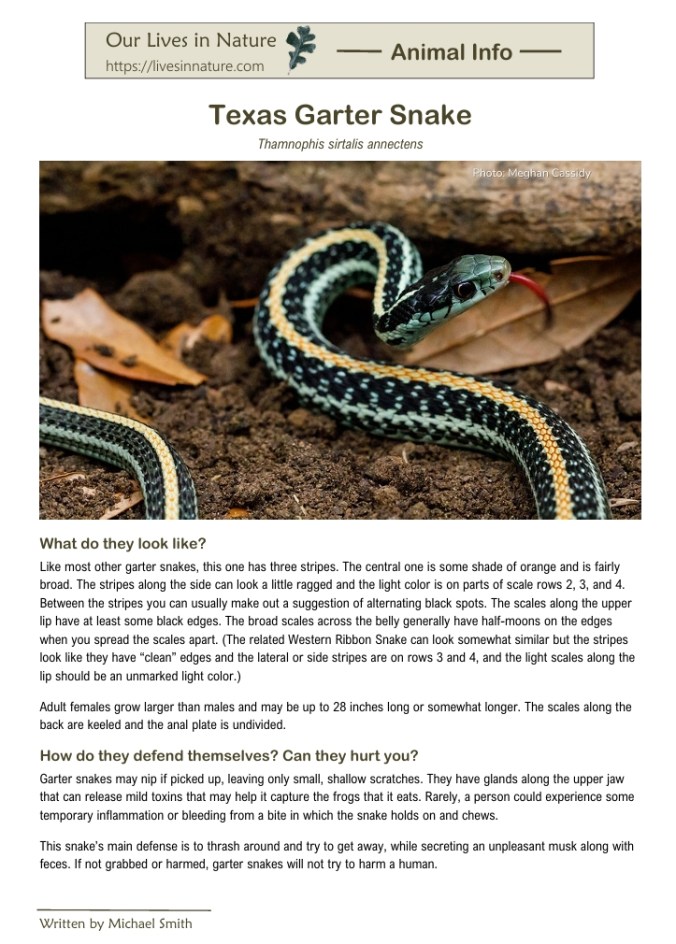
Herp conservation is very important to me. If you’d like to learn more and support some important work, please check out the Amphibian and Reptile Conservancy and the Orianne Society, among other organizations (such as Texas’ own Texas Turtles). I’ll be giving talks about reptile and amphibian conservation in Texas over the next few months, and while preparing, I’ve added some species profiles to the downloadable pdf files on my herpetology page.

Among them is information about the Texas Garter Snake, a subspecies of the “Common” Garter Snake. Across the years, I have found a handful of Texas Garter Snakes, and they turn up occasionally on iNaturalist, but as far as I can tell they have never been common. There seemed to be particular spots or areas where they had viable populations, but even in those places a search for them was always hit-and-miss. That turned out to be the case in 2013 and 2014 when a group from UT Tyler started a project to investigate its genetics and preferred habitat. They did not find any, and had to rely on a few museum specimens in order to finish the project (published in The Southwestern Naturalist in 2019).
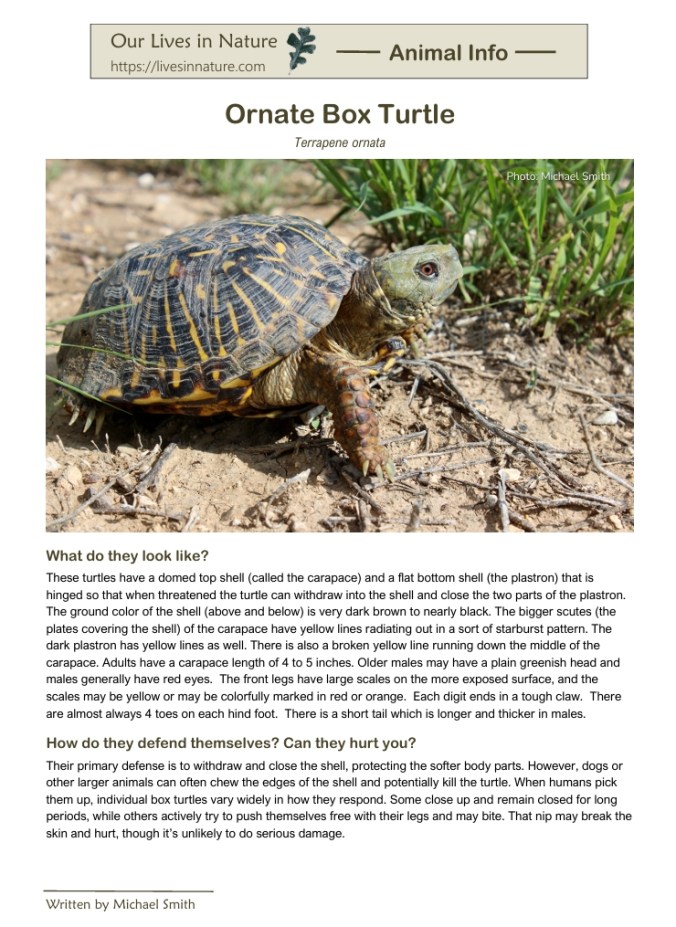
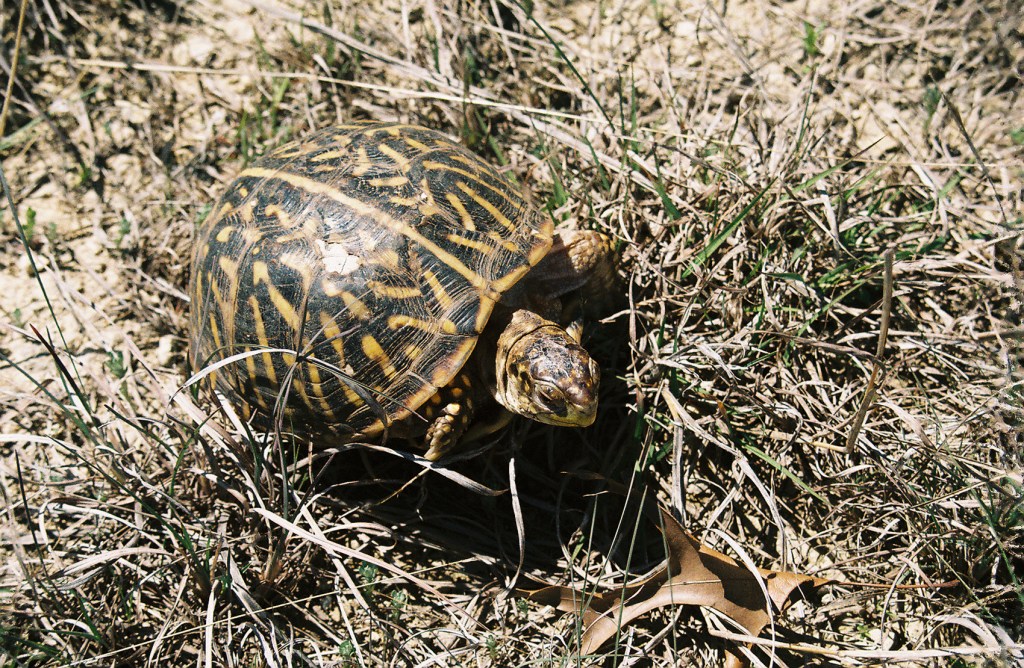
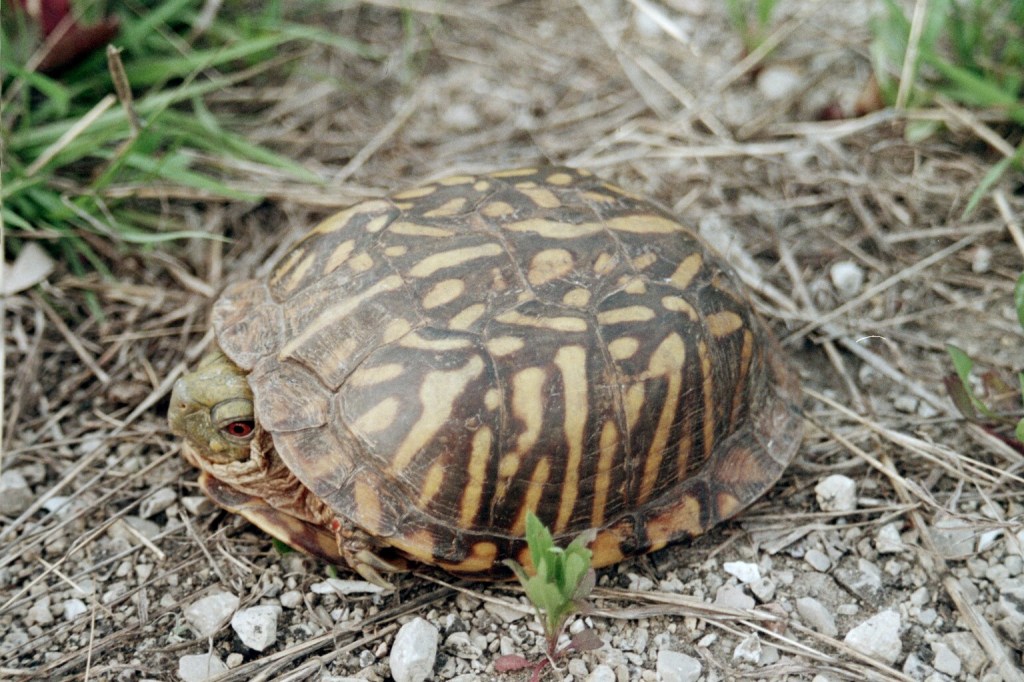
Another profile covers the Ornate Box Turtle. I have loved box turtles since I was a kid (and at least half of Texas would say the same thing, until they became uncommon enough that kids didn’t get many chances to see them). They have suffered from habitat loss and fragmentation, road mortality, and the unfortunate tendency of our species to want to collect and keep interesting and cute animals. In recent years, Texas protected box turtles from commercial collection. However, people still pick them up and take them home. Like turtles generally, their success depends on living long lives once they become adults. Collecting one is like running it over on the road – it is “dead” to the reproductive population of turtles.

And Texans of a certain age recall when the Texas Horned Lizard could be found in back yards and local parks. In the 1960s these places were often dotted with Harvester Ant colonies with a big bare circle of ground around the opening to the colony. These were the horned lizard’s food, and when people poisoned the ants (and later when the fire ants largely replaced them), there was nothing for horny toads to eat. Also in the 1960s, large numbers of these lizards were collected and shipped off to the pet trade where they inevitably died. But probably the biggest deal, according to Andy Gluesenkamp, was the loss and degradation of habitat. Native Texas prairies, with bunch grasses, open areas, ants, and the right combination of shelters and wildlife “neighbors,” were great for them. Monoculture pastures of non-native grasses, the increasing network of roads, the invasion of fire ants, and other factors have eliminated Texas Horned Lizards from many of the places where they used to be found. (Gluesenkamp led the San Antonio Zoo effort to captive breed and release young horned lizards in suitable habitat – an effort that is working.)

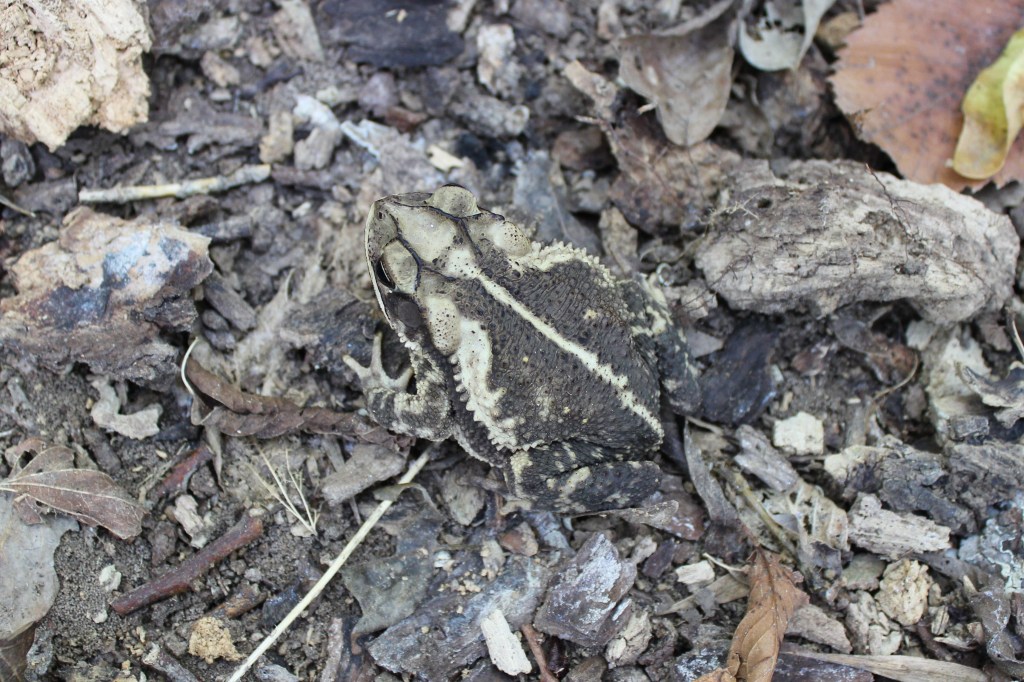
So far, the sole amphibian I’ve profiled is also one that biologists are concerned about. There is little real data concerning how Woodhouse’s Toad is doing, but it is the species that many of us used to see on spring and summer nights in North Texas. It has largely been replaced by the Gulf Coast Toad, but away from the cities there are places (like the LBJ National Grasslands) where Woodhouse’s Toad seems to be the predominate species. Overall, the species is considered secure, but are we sure? Wildlife agencies and universities have limited resources and cannot study everything. Everyday folks documenting what they see on iNaturalist help a great deal, but there are still enormous gaps in our knowledge of the status of most of our herps.

There are other species with these two-page downloadable pdf profiles, including the Texas (Western) Rat Snake, the Great Plains Rat Snake, the Long-nosed Snake, Rough Earth Snake, and Checkered Garter Snake. I hope you’ll use them to share with home schoolers, scout troops, or anyone else who would like them. I’d be happy if you’d like to leave a contribution, but if you can’t, that’s fine. And maybe leave me a note about anything else you’d like to see. Our venomous snakes are briefly summarized in my “Identification Guide to Venomous Snakes of North Central Texas,” found on the same page.

World Turtle Day at LLELA

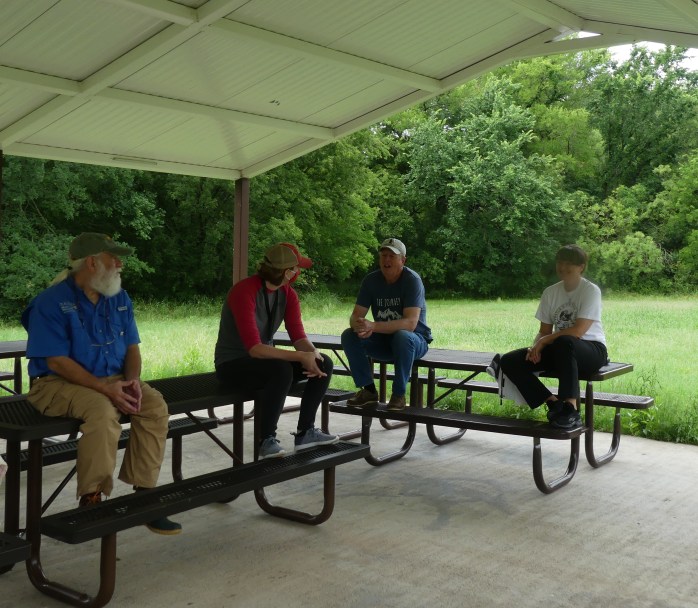
May 23rd is World Turtle Day, an opportunity to celebrate those animals that found a good plan and stuck with it for over 200 million years. The earliest turtles developed a protective shell and then rearranged their bodies to be able to swim, walk, and even run while encased in that shell. It’s a remarkably effective evolutionary feat, which is why they kept that basic body plan for millenia. The DFW Turtle and Tortoise Club celebrated the day at the Lewisville Lake Environmental Learning Area (LLELA) hearing from box turtle researcher Sara van der Leek and her colleagues. 

Three-toed box turtles are found at LLELA

For me, there could hardly be a better choice, and I’ll freely admit my bias since these are my favorite turtles. They are beautiful, interesting, and everybody likes them. They also need help – wild populations of box turtles are in decline in lots of places in the U.S. Not many babies make it to adulthood, and then the adults are often run over on the highway or collected as pets. There are other threats, too, and so box turtles are in trouble. 

As the LLELA folks described it, they started out with a small population of box turtles. In order for the turtles to find each other and breed, there must be reasonably high numbers of adults. If the numbers are too low, the population is sometimes described as “reproductively dead,” meaning that the long-lived adults are still seen at times but there are too few of them to produce enough babies for survival. To keep box turtles as a healthy part of LLELA’s wildlife, staff and volunteers worked along with Sara to do a couple of things. First, they attach a miniature radio transmitter to each box turtle above a certain size, so they can track the turtle down periodically and check on how it is doing and study its movements. Second, they raise and head-start baby box turtles that are released on the property when they grow to a certain size. If they were released as soon as they hatched, most of them would be eaten by predators, but if raised until their shells are harder and more protective, they have a better chance.

Sara van der Leek

This all sounds like great fun, and when you hear Sara talk, you get the impression that it is very rewarding. However, it also involves pushing your way through the greenbrier and poison ivy and sometimes crawling through the woodland in search of a turtle’s radio signal. It’s a lot of work, and Sara and her team have earned our admiration and respect for the work that they do. 

The LLELA and DFWTTC crews – from L: Hugh Franks, Sara, Scott Kiester, and Barbara Dillard

This relaxed and enjoyable conversation among Turtle & Tortoise Club members and LLELA folks happened as a result of planning and coordination by Barbara Dillard, who leads the club. Turtle people and “herp people” (those interested in reptiles and amphibians) used to form clubs and societies to share stories, organize activities, and provide information to each other. That has largely shifted from in-person groups to Internet social media, and the DFW Turtle and Tortoise Club made that shift, too. Barbara deserves credit for the fact that the club continues to function. The get-together on World Turtle Day was an opening invitation for turtle fans to be, at least sometimes, an in-person community. The pandemic made it too risky to be with each other face-to-face, but those risks are receding and now it’s time to remember how good it is to see and hear each other in real life. If we do it carefully, there is a lot to be gained. Being with each other, physically present, is the glue that holds human connections together. We have been a fragmented collection of individuals, holding some semblance of community together by staring at pixelated images and listening to computer audio. That’s how we got through the last fifteen months or so, but now if we can safely and carefully come together, we will be happier for it.

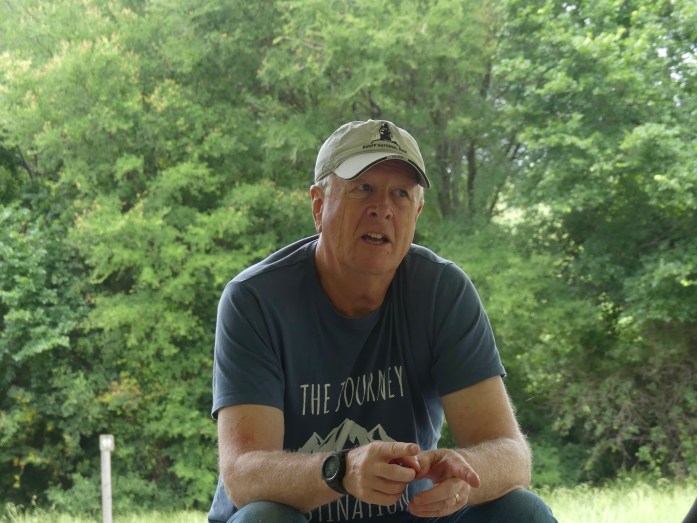
Scott Kiester, President of Friends of LLELA
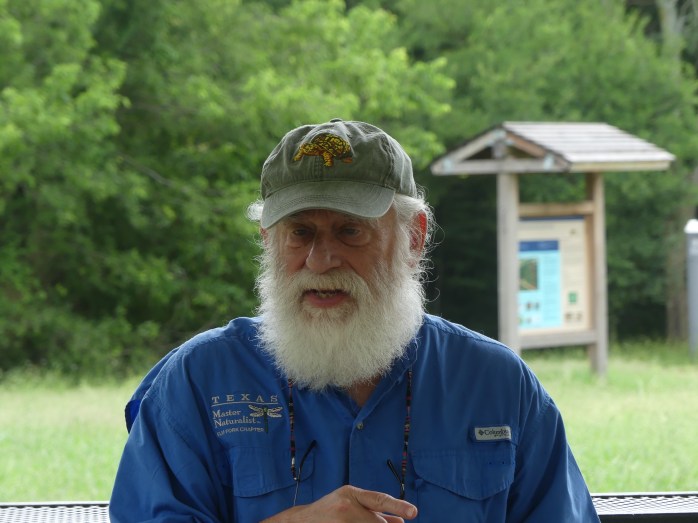
Hugh Franks, Master Naturalist and turtle-whisperer

The meeting on the 23rd also shows how much the interests of turtle folks can include the science and natural history of wild turtles and the keeping (and sometimes breeding) of captive turtles. In the professional world, there is the study of turtle populations living in forests and savannas, prairies and wetlands, as well as zoo collections and conservation programs as well as the assurance colonies maintained by the Turtle Survival Alliance. In the hobbyist and amateur world there are days spent photographing wild turtles and posting observations on iNaturalist, and also people who keep red-footed tortoises in the back yard or mud turtles in indoor tanks. The discussion with LLELA folks helps keep the turtle hobby grounded in the fact that turtles are wild animals and that we all have a stake in the continued existence of healthy populations in wild places.

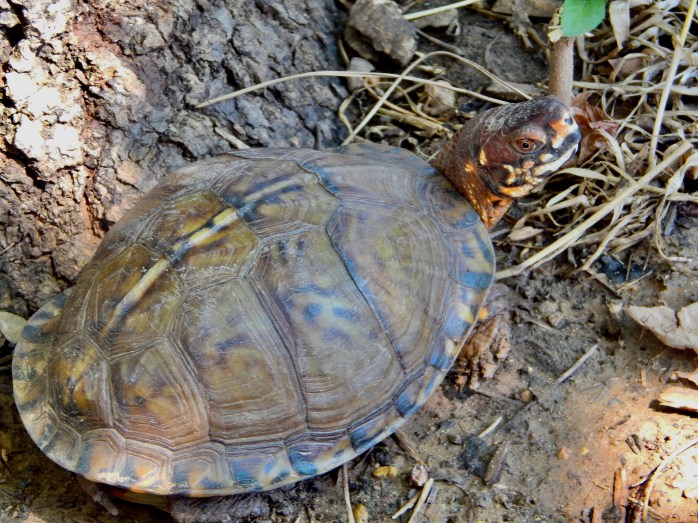
Male three-toed box turtles often have colorful heads and forelegs

To help with that balance of interests, Meghan Cassidy worked with Barbara to create the DFW Turtle and Tortoise Club project on iNaturalist. “Projects” are collections of observations, either focusing on particular groups of species in certain geographic areas (like “Insects of Texas”) or the observations of an organization. This will be a great way for club members to share what they see in the wild with fellow members and with the scientific community.

One of the questions that came up was, “How can the average person help out with the box turtle work at LLELA?” It will not help (and oddly enough, would hurt) if we bring box turtles to LLELA and let them go. Volunteers can help out if they get the proper training from Sara. Mostly, we all need to remember that if we find a turtle somewhere, in most situations we should not pick it up and take it anywhere. When we see a native turtle, unless it is in a situation that is obviously not survivable, we should assume that it belongs where it is and knows where it is going. (It is good to help turtles when they are found crossing the road – more about that in another post.)

Hugh Franks shows us a box turtle in the outdoor pen in which turtles reach maturity before release

Thank you, Barbara and Meghan, and thanks Sara van der Leek, Hugh Franks (who raises the baby box turtles), and Scott Kiester with Friends of LLELA. Together, you made possible a beautiful World Turtle Day for a small, lucky group of people.

Finding a Box Turtle

(I wrote this in The Great Rattlesnake Highway blog, several years ago. I thought it was worth bringing over here before I finally retire the other blog.)

Another Ornate Box Turtle, this one a female

In May of the year 2000, Steve Campbell and I found a box turtle on our way to the LBJ National Grasslands, north of Decatur. It was an old male that had probably walked the fields and fencerows for twenty or perhaps thirty years or more. These ornate box turtles, with their yellow streaks on a compact, dark shell, used to be a common sight in the western cross timbers north and west of Fort Worth. In the last fifty years they’ve become increasingly uncommon in most of the places where they are found. So Steve and I were faced with a problem: what do you do with a turtle found just past someone’s driveway, on a busy farm road at the outskirts of a small but growing city?

Taking it home was never an option for us to consider. The box turtles that are left in the wild need to stay there, because the species depends on adults living a long time and continuing to reproduce, in order to have a chance of surviving. That individual turtle might have done fine if we had collected him; both Steve and I understood its need for a varied diet, an outdoor enclosure with access to direct sunlight as well as water and refuge, and such things. However, once picked up and taken home, it is dead to the population of box turtles. It might as well have been run over, as far as the impact on the box turtle population is concerned. We would like future generations to be able to see box turtles in the wild, and so we were not going to take that turtle out of the population.

A male Ornate Box Turtle, seen in Grand Prairie, Texas

Perhaps one way to keep the turtle in the population would be to take it far down a side road, away from traffic, and release it in a meadow near a pond – how does that sound? It used to sound great to me, but it can only sound good if we ignore something pretty important about box turtle behavior. If I was picked up and taken far from home, placed on an unfamiliar street surrounded by strangers, I would set out to try to find home. It probably would not matter that the neighborhood might not look so bad, I would want to find the place I know. I would want to go home. It is similar with box turtles. I do not want to anthropomorphize, trying to make box turtles just like people. However, these turtles do learn and remember important landmarks, and as they grow up, they generally establish a “home range.” This is an area that the turtle uses for day-to-day activities, in the same patch of woods or the same meadow, for most or all of the year.  In North American Box Turtles: A Natural History, C. Kenneth Dodd reports that while it is an area of variable size, often it is about the size of a couple of football fields. While some box turtles are transients, most stay within a small area over the course of years. And if moved out of this home range, they generally try to find their way back.

This tendency toward “homing” has plagued efforts to re-populate areas from which box turtles have declined. It also makes it hard to know what to do with box turtles found on city streets or other places where they cannot stay. If you take them to some new place, even an apparently good place, they may wander off. This is generally true of many reptile species – they know where they live and they don’t do well when released far from home. The mortality rate among relocated reptiles is high, presumably from wandering into danger or failing to settle down and find adequate shelter and food.

In a study published last year in Herpetological Conservation & Biology, J. Alan Sosa and Gad Perry reported on their work releasing adult, juvenile, and hatchling ornate box turtles in the Lubbock area. The turtles came from a wildlife rehabilitation facility, where they were brought after being hurt or found in areas that were obviously unsuitable for them. The researchers relocated only healthy turtles, placing them in a variety of locations. Some were released in suburban back yards, others in small undeveloped areas within the city limits, and still others were released on ranchland outside the city. Their whereabouts were tracked using radio transmitters glued to their shells. They found that only 24% of the adult turtles remained in the area where they were released, regardless of what which area it was. There were better results with juveniles and hatchlings, but even then, only 40% of them remained in the area.

And so, if we had taken our ornate box turtle to some place we considered safer and better, it is likely that the outcome for the turtle would be bad, with the turtle failing to settle down and “make a living” in a new place. Imagine how this applies to all the turtles that well-intentioned people take some place and let go, thinking that they’ve done the turtle a favor or helped boost the local population of turtles. And yet, it’s hard to know the right thing to do when you find a box turtle in a suburban neighborhood, in imminent danger from traffic, dogs, pesticides, and many other hazards. Our box turtle’s circumstances were a little better. It was at the edge of a small town, with open fields across the road.

We did about the only thing that our knowledge of box turtle natural history and our commitment to conservation left for us to do. We took the turtle across the road and released it in the nearby field. I thought about the chances that this turtle could go on living in this same patch of grassland, near a line of trees and a little creek, where it probably grew up. It had been lucky enough to survive all these years and not been run over by a car, or collected and put in some dirty aquarium in somebody’s house. Maybe that turtle is still roaming around on the outskirts of Decatur, eating dewberries and grasshoppers, and getting a good soak in the puddles after it rains. Maybe he ran across a female box turtle and together they generated one more clutch of eggs, from which one hatchling (if it was lucky) would survive to adulthood to carry on the species.

100_0142
An ornate box turtle seen at LBJ Grasslands on a different occasion – I made sure it got across the road and watched it walk out into the grasslands

On the other hand, I don’t know if that turtle wandered back out on the road the next day, possibly to be run over. There is no way for me to know, but I am sure we made the right decision on that day, sixteen years ago. Over the years since then, I have wandered the LBJ Grasslands many times, but have only seen  two or three other box turtles. We need to keep those turtles out there, alive and at home.

The “Dunedain” of the Cross Timbers

All that is gold does not glitter,

Not all those who wander are lost;

The old that is strong does not wither,

Deep roots are not reached by the frost.

J.R.R. Tolkien, Lord of the Rings

Once again this year I had the privilege of teaching herpetology to an incoming group of Master Naturalists. Today I led them on a short walk into the bottomland forest at Fort Worth Nature Center & Refuge. Each year, I appreciate the Texas Master Naturalists even more; they are the “rangers” of the remaining wild lands and creatures of our state.

Flooded bottomlands in April of 2010

By “rangers,” I am drawing upon the stories within The Lord of the Rings, and referring to the Dunedain, the people who wandered the lands in the north of Middle Earth. The rangers knew those lands and protected them as best they could, just as the Master Naturalists learn about the land, animals, and the plants around us. Maybe you’ll forgive what could seem like an overly stretched analogy, but in a world increasingly separated from nature, we need to celebrate those who understand and are drawn to nature and who might help advocate for it. Who else studies the intricacies of natural history and spends time wandering in the forests and fields?

Becoming a Master Naturalist involves a series of classes and readings; you do not sign up, pay your money, and now you get the title just for joining the “club.” There are classes and field experiences, and after certification there are activities and ongoing training. Some of the people in the Master Naturalist program are quite expert in one or perhaps several areas of nature study.

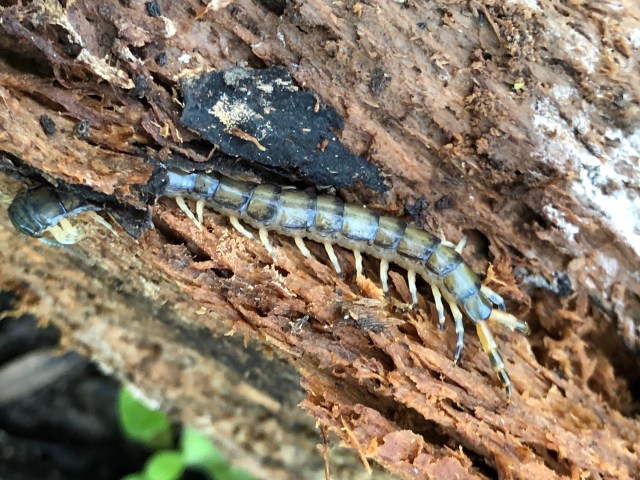
A centipede, surprised under a fallen log

What did we do today? We walked down through the bottomlands, past huge cottonwoods and other trees and in areas that periodically flood. Fallen logs and branches shelter numerous herp species, along with lots of wolf spiders and other invertebrates.

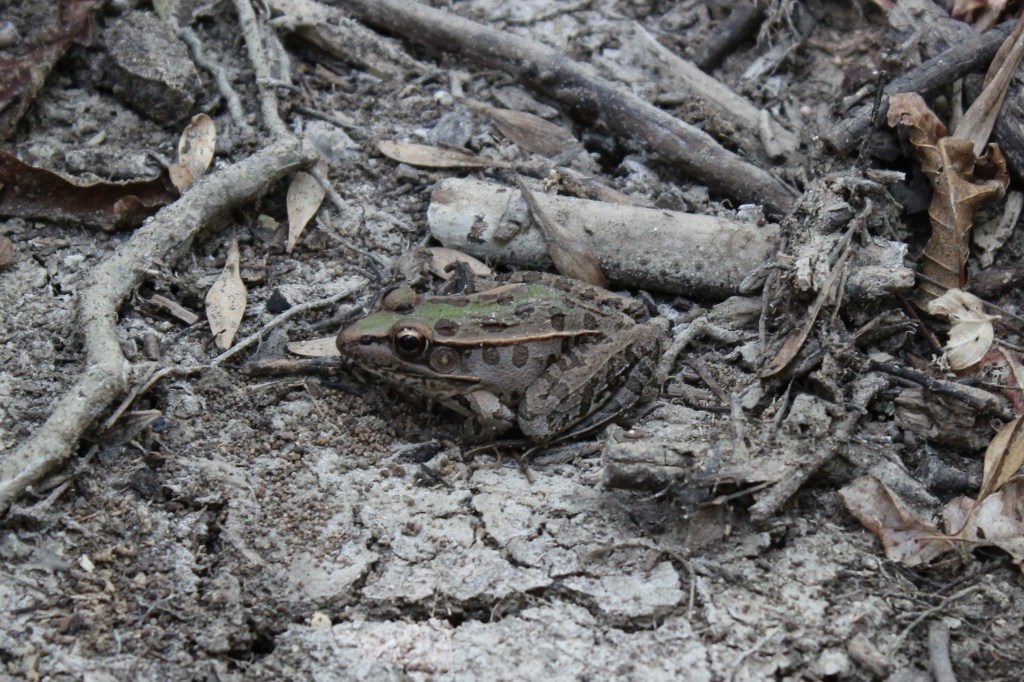
Two amphibian species dominated our walk today: The Southern Leopard Frog and the Gulf Coast (or Coastal Plains) Toad. The ranges of three species of leopard frogs converge near here, and some hybridization occurs, but the ones we saw appeared to be Southern Leopard Frogs (Lithobathes sphenocephalus). They are medium-sized spotted frogs that can leap long distances. Today’s leopard frogs had continuous, unbroken sets of dorsolateral ridges, no spot on the snout, and the light line on the upper jaw was not particularly bold – and that set them apart as the Southern species.

Southern Leopard Frog

The other common amphibian was what I’ll just call the Gulf Coast Toad, since that’s what a number of sources continue to call it. Others refer to it as the “Coastal Plains” Toad, which is only one of many name changes. This toad’s scientific name has gone through considerable taxonomic chaos, seeming to land at the name Incilius nebulifer. It is a dark toad with a light stripe down the back and a light band on either side. The cranial crests – those bony ridges that the “true” toads have on the crown of the head – are dark and very obvious.

A Gulf Coast Toad … ok, if you insist – a Coastal Plains Toad

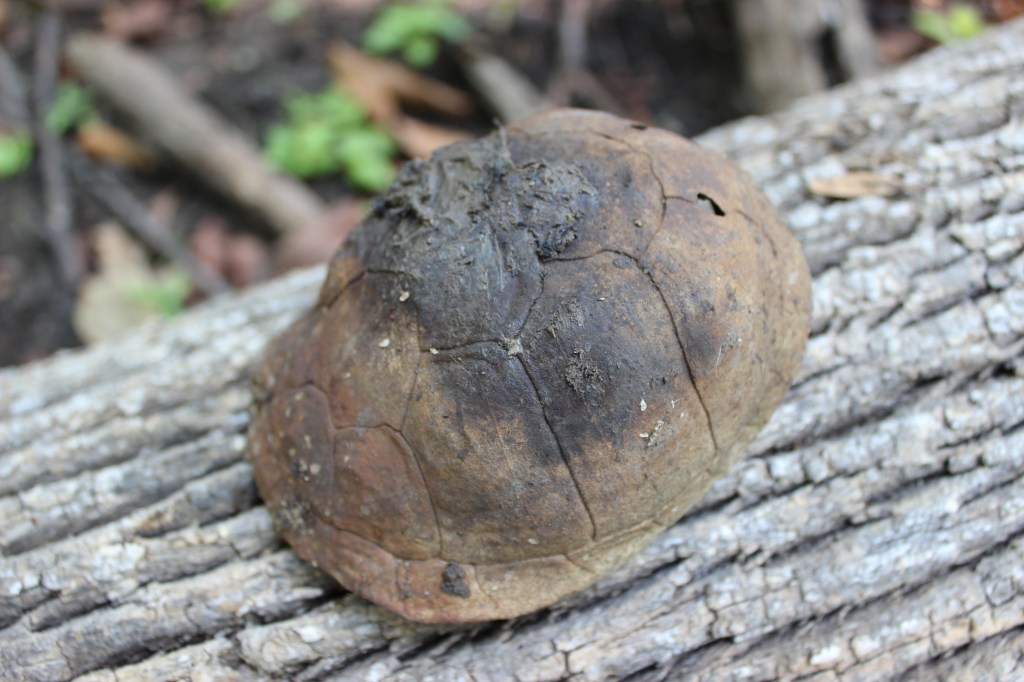
What about reptiles? There were a few, though no snakes today (a source of some disappointment to me). One really nice find was made by a very observant ranger who spotted the skeletal carapace (the bones of the upper shell) of a box turtle. To my eye this was pretty clearly the Three-toed Box Turtle species, not only from the shape of the shell but because a bottomland forest would much more likely have the Three-toed species than our other species, the Ornate Box Turtle. And because box turtles have become more scarce over the years, finding one here was exciting.

The skeletal shell of a box turtle

We also saw several young Little Brown Skinks – aka the “Ground Skink” (Scincella lateralis) in many field guides. The body length (not counting the tail) might be a little over two inches in a fully grown Little Brown Skink, but the ones we saw were smaller and younger.

A Little Brown Skink, with a little of its tail lost (before we found it)

They are brown or coppery-colored along the top, with a darker band along the side that fades toward the belly. Little Brown Skinks have small legs but move quickly, virtually “swimming” through the leaf litter to disappear under cover.

There was another lizard, for which I have no photo, but which I was excited to see. I had just talked with the group about the Prairie Racerunner, a beautiful lizard within the “whiptail” genus. Then, a small movement caught my eye along the edge of the trail and it was a little miniature striped lizard – a recently hatched baby with thin little light lines on a dark background and a tail that shaded from a sort of tan to a slightly bluish color (not typical of adults in our area). It was probably a Prairie Racerunner, but it’s not so easy to tell with a hatchling. The other related species is the Texas Spotted Whiptail, and those have spots between the stripes as adults and they do not have the lime green wash over the front of the body that the Prairie Racerunner has. Whichever species he “grows up” to be, I hope he does in fact grow up. I don’t see those lizards that much, and would love to see more.

Our short walk was over all too soon, and I hope these new Master Naturalists enjoyed seeing what we saw and will continue to get to know the Cross Timbers with the familiarity of one of Tolkien’s Dunedain. I’m encouraged by them, at a time when there’s not a lot of encouragement to go around. Congratulations to the group on becoming Master Naturalists … and rangers!