A Most Athletic Snake

The Western Coachwhip

It has happened several times – driving out in the grasslands or desert, I pull up on a long, slender snake that sees me before I see it. Perhaps its head and neck periscope up a foot or more for a better look at me. If I get out and creep slowly toward it, the snake keeps a careful watch on my distance and speed. At some point I cross a line in the snake’s calculation of risk, and decides it is time to go. It bursts into agile and athletic motion that carries it unerringly around rocks and through brush piles. In my younger years I sometimes chased but rarely caught them. The only realistic opportunity to catch one was to surprise it, lifting a log or discarded piece of plywood and finding the snake hesitating for a moment.

The western coachwhip seen in 2006 at LBJ National Grasslands

Occasionally I caught a coachwhip when it believed itself to be concealed or camouflaged. I once surprised one on a gravel road in the LBJ National Grasslands, and it quickly slipped off the road. I pulled over and investigated a grassy area where I last saw it and found four feet or so of tan scales blending very well in the dappled sunlight along the ground. I grabbed the snake and then worked to calm its thrashing body so that I could take a photograph. After a short time the snake was calm enough for me to put it on the ground, covering its head and restraining its body just enough so that it did not struggle. 

Then it tried a different strategy that suggested some form of death-feigning. Coachwhips have occasionally been described as feigning death to discourage an attacker from continuing whatever it is doing. After all, there is no need to attack a dead snake. This one went limp but turned its head and neck to the side. A hog-nosed snake will flip over in death-feigning, as if the only way to be properly dead is upside-down, and this snake seemed to be doing a much less dramatic version of “playing dead.” 

I posed the snake in a more normal position, took a couple of photos, and then encouraged it to be on its way. I positioned the snake in something closer to a straight line and backed away. In a moment it came back to itself and took off, crossing back across the road at typical coachwhip speed.

What are coachwhips?

One or another species or subspecies of coachwhip is found all across the southern U.S. In the east, including in parts of east Texas, much or all of the eastern coachwhip’s body may be velvety black. In central and west Texas the subspecies is the western coachwhip, with light brown or tan colors, often with a darker head and neck that may be rusty brown. In parts of their range, some of these coachwhips may have a banded appearance, with long, broad bands of a little darker color alternating with broad lighter bands. In the Trans-Pecos region, some of the western coachwhips are pink or reddish. Traveling with friends, we found one in Big Bend National Park that propelled itself off the road nearly in a blur, and I described it as looking like a snake with the world’s worst sunburn. (We stopped, but never found the snake.) Western coachwhips usually reach four to five-and-a-half feet, sometimes longer. Coachwhips are related to racers and whipsnakes, all of which are active by day, visually alert, and very fast.

Eastern coachwhip seen in the Big Thicket region

The name “coachwhip” comes from the color of the dorsal scales. Each one is light-edged as it emerges from under the previous scale, then becomes darker until it is dark brown along its trailing edge. This highlights the edges of scales, and toward the tail it gives the appearance of a braided whip.

Where do they live and what do they eat?

Coachwhips are, even in East Texas, snakes you expect to see in patches of prairie, openings in woodlands, or rocky hillsides. In the rest of Texas, they are well-adapted to open arid or semi-arid regions where they take advantage of openings beneath rocks, rodent burrows, and such refuges. They are able climbers and may take refuge in shrubs or lower tree branches when escaping predators. Within the Chihuahuan Desert they are seen in dry arroyos and desert flats, with desert shrubs and clumps of cactus offering shelter, along with mammal burrows.

As witnessed recently by my friend Rosealin Delgado, they are able climbers and may take refuge in shrubs or lower tree branches when escaping predators. She was at the edge of a pond at Sheri Capehart Nature Preserve and saw one emerge from the water’s edge (where the snake may have been getting a drink), periscope up and take note of her, and then climb up in low trees. The snake watched her for the better part of ten minutes before she left.

The coachwhip’s diet can be quite varied, depending on the prey available where they live. They readily eat lizards, spotting them and chasing them down. In some places they are reported to sit at the base of plants such as mesquite and wait for prey such as a lizard to dart into the shade to cool down. Coachwhips will eat smaller snakes, and they may poke around in crevices or burrows where they may find and eat mice. Around bat caves, coachwhips sometimes find and eat bats that are injured or stranded on the ground. They eat large insects such as lubber grasshoppers.

Having no venom to subdue prey, and not using constriction to kill the mouse or lizard before eating it, the coachwhip relies on strong jaws and a strategy of pinning prey against the ground. After catching a lizard and holding onto it with sharp little recurved teeth and a powerful bite, the snake points its snout toward the ground and pushes its prey against rocks or soil to help prevent escape and then begin swallowing. In our book, Herping Texas, co-author Clint King described watching a western coachwhip catch a Great Plains skink and beat the lizard repeatedly against the ground. Some of this might have been to dislodge the lizard’s biting the snake in a counter-attack, but it also appeared to be to stun or disable the lizard before swallowing it.

Reproduction

Coachwhips mate in the spring, typically in April or May. Within a month, the female lays a clutch of eggs in some place where they will be protected from drying out or overheating, and hopefully where predators will not find them. Such a place might be an abandoned burrow or under a rotting log. By August or September, the brightly marked babies hatch, measuring 12 to 14 inches long according to Werler & Dixon (2000). 

Juvenile western coachwhip found by Meghan (photo by Meghan Cassidy)

On a walk at LBJ National Grasslands in September of 2020, my friend Meghan Cassidy found a hatchling coachwhip and she took a number of beautiful photos of this little reptile. As is typical, its eyes were large (as befits an active, visual snake such as this) and it was slender and fast. Its coloration was bright, verging on orange along its neck. There were a number of thin crossbars of darker scales that would likely fade as the snake grew. I described our encounter with this snake in Mindfulness in Texas Nature.

The head and neck of the juvenile coachwhip (photo by Meghan Cassidy)

Human perspectives and tales

No matter what your grandpa told you, a coachwhip is not going to wrap around you and whip you, regardless of its name and appearance. It seems likely that those old stories might have begun when someone caught a coachwhip and its long body wrapped around the person’s arm and, as it thrashed and tried to escape, whipped its tail against its captor. 

Fewer people seem to have heard such stories, and we usually think of that as a good thing. After all, we don’t want people believing misinformation such as hoop snakes that roll down a hill and sting you, or milk snakes that will suck the milk from cows in a barn. But I worry that the disappearance of tall tales is not because people today are more savvy, but instead that they have so little contact with nature that there is no experience that would give birth to the tales. Stories about writhing balls or nests of cottonmouths arise when people see something and struggle to understand it, and they fill in missing details with fanciful explanations. 

So I hope that you and your friends and family will be out in the field enough that you notice coachwhips and other things in nature, and come up with stories to account for what you saw. Read and listen and learn what you can so that your stories are mostly based on accurate understanding. But I would gladly live in a culture that is connected to nature enough so that we have stories and legends about the natural world, such as the coyote as a mythical trickster or the snake that will whip you.


Smith, M. 2024. Mindfulness in Texas Nature. College Station: Texas A&M University Press.

Smith, M. & C. King. 2018. Herping Texas: The Quest for Reptiles and Amphibians. College Station: Texas A&M University Press.

Werler, J.E. & J.R. Dixon. 2000. Texas Snakes: Identification, Distribution, and Natural History. Austin: University of Texas Press.

The Arrival of the Mindfulness Book

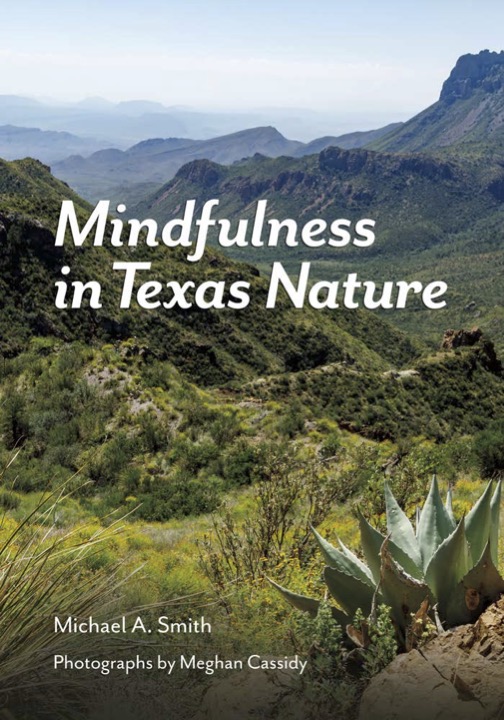
Yesterday my copies of Mindfulness in Texas Nature arrived. It’s now available through the publisher, Amazon, as well as bookstores. If you can join me tomorrow at Interabang bookstore in Dallas, I will be there at 6pm for discussion and book signing.

Meghan and I have looked forward to this day for a long time. It was the very end of 2019 when I got the go-ahead to write this book, with Meghan on board to be the photographer, and we got started just before the pandemic arrived in 2020. But we began with Muleshoe National Wildlife Refuge and kept on traveling as much as we could. Each of those trips was magical as I look back on them. We visited Big Bend, Caddo Lake, LBJ National Grasslands, The Big Thicket, and multiple other places. 

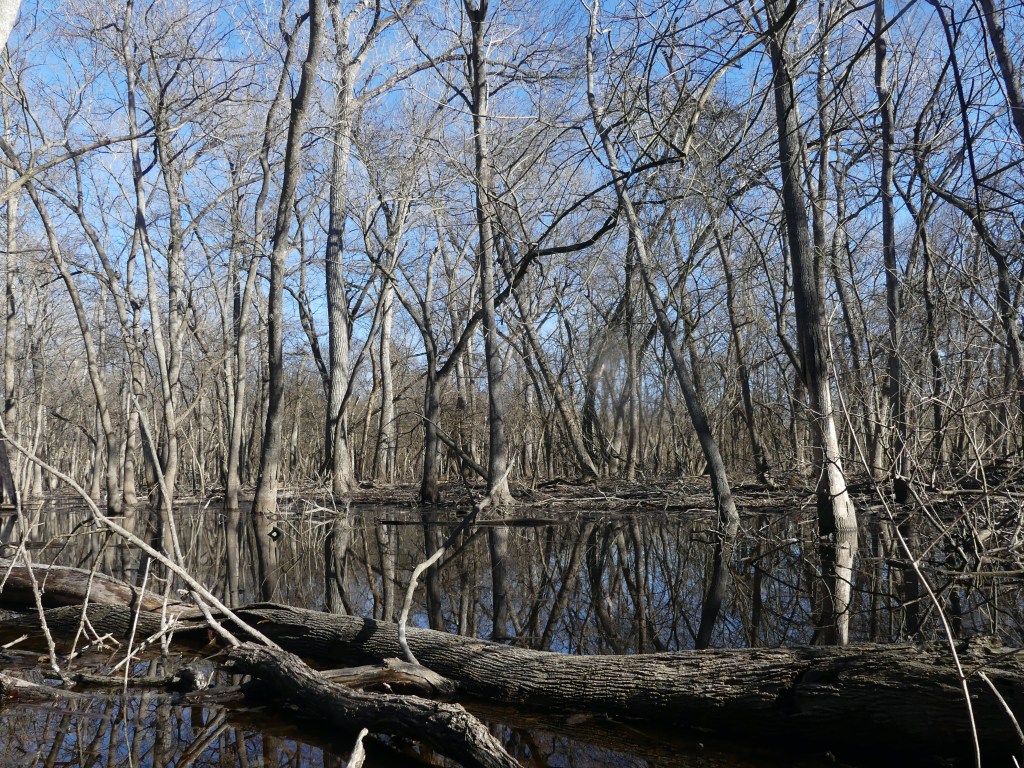
Photo from the Big Thicket

Meanwhile, I wrote about mindfulness in nature and how a person might go about practicing it. I discussed the documented benefits of time spent in nature along with the benefits of mindfulness and the related practice of Shinrin-Yoku or “forest bathing.” The lower blood pressure and stress hormones, the boosted immune functioning, the decreases in anxiety and ruminative thinking, and other good things that happen. 

Mostly the book consists of narratives of all those trips, the adventures and quiet moments without gadgets or agendas, just being there among all the grasses, woodlands, and wildlife in those wonderful places. What I wrote brings those days back, and Meghan’s photos make them even more vivid. 

Pedernales River

Our trips were done and the manuscript completed by late 2021, and now the book is here. I think readers will feel some of what we felt in those trips and get ideas about “ways to be fully present … freed from the distractions and restlessness that can let the sights, sounds, smells, and other sensations slip past us before we really notice” (Introduction, p. 1).


Mindfulness in Texas Nature, 2024, Texas A&M University Press

Seeing Horned Lizards Again

I just got back from a couple of days in the Rolling Plains with three wonderful friends. We saw Texas horned lizards, snakes, and a beautiful springtime landscape out there past the city of Vernon. This note is a “heads up” that my friends and I plan to collaborate on the story of our visits to Copper Breaks State Park and Matador Wildlife Management Area. Stay tuned and consider subscribing to Rain Lilies on Substack.

Texas horned lizard

Road trips alone are OK, and there can be a wonderful quality to solitude out in some natural place. For me, going with like-minded friends is probably the best. There were times when we were the eyes and ears for each other. If I’m more focused on the ground where lizards skitter off the trail and Kat is attentive to a more distant view where Mississippi kites soar and buntings perch, we complement each other. Alaina is particularly attuned to the insect and spider life, and Sheryl takes in the birds but also those miniature worlds of flowers, fungi, and insects. One of us commented that together we’re like one organism, because we are closely attuned to each other while focusing on different aspects of our surroundings.

Where we went, the Texas horned lizard is doing well, and we saw six or seven of them. At night, we found three massasauga rattlesnakes along with other snake species. The landscape is thick with blooming thistles and basketflowers as well as (in places) skeleton plant, lemon beebalm, firewheel, and other flowers. It was a beautiful trip, and we’ll have more of the story – and lots of photos – at Rain Lilies soon.

Rain Lilies

Last September, after flipping over to Substack for a while, I came back here as the home base for my writing. I did not want to get too caught up in trying to get paid subscriptions, which is Substack’s business model. Anyway, there were several factors which I won’t bore you with. Now, embarrassingly, I find myself flopping back. Again, there are several factors in the decision, but I guess the bottom line is that I’m a flip-flopper.

I have created a Substack newsletter and called it Rain Lilies, with a focus not so different from this blog. I wrote, “I hope that what you will read here will be like those beautiful flowers that suddenly emerge after a rain, offering what might be a moment of unexpected wonder. Maybe it could offer a bit of insight into how we are a part of the natural world around us. Rain Lilies also takes a bit of inspiration from our wonderful granddaughter’s name.”

At Rain Lilies I plan to keep writing about nature and our place in it. I also have in mind a continuation of the “Letters to Nature Kids” idea, as well as news or comments about my books and related activities.

I do hope you will give Rain Lilies a try. You’ll have the opportunity to be a paid subscriber, and I’ll offer some things to make that worthwhile. However, most of my stuff will be available to free subscribers. This site will continue for now with the pages of information and downloadable materials, particularly in the area of herpetology.

The flip-flopper

Wild Lives at the Nature Center

On May 5th I started the latest round of The Wild Lives of Texas Reptiles & Amphibians, a four-part training that I offer with slides and discussion in class as well as time in the field. The idea is to dig down a little deeper about herp (reptile and amphibian) natural history, more than I’m able to when training incoming Master Naturalists. And the people participating get several sessions in the field, which is both fun and important when learning about how to find and interact with herps.

And so I got to meet several new people, one of them a 15-year-old who is new to all this and one a Master Naturalist in her 80s. They were all delightful. I covered some very practical issues like watching out for bull nettle and how wild snakes, including venomous species, usually respond when we encounter them. I also gave a quick overview of taxonomy and scientific names, though the discussion about why some of these names keep changing might have gotten a little thick – but it was brief.

An eastern river cooter basking in the warm sunshine

At 3:00 it was time to take a walk; the rain clouds had parted and it was a sunny and beautiful day at Fort Worth Nature Center & Refuge. We walked up the Cross Timbers trail along the Trinity River for a while, with the long, torpedo bodies of gar easily visible and the big scales and reddish fins of carp breaking the water’s surface. Our first herps were the turtles swimming or basking on branches of fallen trees. I am used to seeing more red-eared sliders, but today the river cooters were more common. 

Witches’ butter, a type of jelly fungus

Meanwhile our group of 8 or 9 people were captivated by everything around us. After all the recent rain, the fungi were proliferating. Sheryl told us about some of the mushrooms as well as the jelly fungi like witch’s butter and wood ear. Soon, Caleb found a little brown skink. Those words serve as the actual name of the lizard as well as a description of it; they’re small and have a broad, coppery-brown band down the back, edged with a darker brown band on each side. They are sometimes described as “elfin,” perhaps because they are woodland creatures that are sometimes glimpsed for a moment as they make their way through the leaf litter. 

Sara gently restrains the little brown skink so we can get a good look before releasing it

Across the river channel along the opposite bank, I spotted an American alligator that we estimated to be a bit more than five feet long. This one was half-submerged and presumably basking in the afternoon sunshine. Sometimes people are surprised that we have alligators in the DFW metroplex, thinking that they belong in the swamps of Louisiana or Florida. But the American alligator has made a significant recovery from the days when it was hunted to near-extinction. 

American alligator

Our ‘gators are generally found in secluded spots in or near the Trinity River. They are mostly shy around humans, though people on Lake Worth sometimes see them basking out in the open, seemingly without a care in the world. What I had shared with the group is that alligators should be admired from a distance (Texas Parks & Wildlife Dept. advises staying 30 feet away), and that alligators can run faster than we can for short distances. And yet, there are no records of people in Texas being killed by alligators and relatively few injuries. 

The razor-backed musk turtle

One of the turtles basking over the water was clearly not a cooter or slider, but my camera lens was not pulling in enough detail. Caleb took a look and said he thought it was a musk turtle, and with the head and neck more visible in his photo I agreed. It appears to be a razor-backed musk turtle, a small turtle with a carapace (top shell) a little like a peaked roof. Such turtles are on the menu for lots of other animals, including that alligator we had seen. As a result, they are pretty wary and I’m a little surprised that this one didn’t drop into the water before we could take a photo. 

Sheryl (right) investigates a cluster of wood ear fungus, swollen and rubbery from the recent rain

While I checked the local temperature and humidity (87.6F and 45%), Eleanor brought me the first snake, a rough earthsnake. These small snakes are found in leaf litter and under logs, as well as under boards or rocks in old fields and in gardens. In those places they find earthworms and small, soft-bodied insects that are their food. 

A pallid spiny softshell, pulled mostly out of the water to bask

Meanwhile we continued finding lots of caterpillars as well as a variety of spiders. When the trail led us away from the river and into the woodland there were little refuges to investigate, in the form of fallen branches and logs. Could we find a frog or toad under one? Alaina did spot a leopard frog and chased it but it was soon lost in vegetation. The best things to turn over are bigger pieces that offer a larger area of shelter. Those are the ones that might conceal a ribbonsnake or cottonmouth (I brought a snake hook to insure that nobody turned a log by sticking their fingers under it). 

I talked about the absence of small-mouthed salamanders in these places at the refuge. Intermittently flooded bottomlands are where I would expect them, and some persist along the Trinity River floodplain in Arlington. There are 93 observations in iNaturalist (55 of them just since the year 2020), all clustered in that area, but no observations are in the vicinity of Lake Worth and Fort Worth Nature Center & Refuge. Why would that be the case? What difference in microhabitats, predators, water quality, or something else would account for it? That would be an interesting puzzle to solve.

Everyone seemed to enjoy the walk and all that we found. This class is off to a great start, and I’ll post updates after future meetings. The next session is about amphibians, and we will look for frogs and toads around sunset and listen for frog calls. I think it will be magical!

“Kaleidoscope of Color”

All around, kaleidoscope of color

I think that maybe I’m dreaming

–The Byrds, “Renaissance Fair”
Engelmann daisies

So far this year, Tarrant County rainfall is about 3 inches above normal according to drought.gov. At Sheri Capehart Nature Preserve, the plants have responded with an explosion of growth and flowers.

Walking up the switchback trail to the bluff, I have never seen so many spiderworts, their blue-purple flowers dotting the trail’s edge and the openings in the woodlands. Engelmann’s daisies grew in a few of the sunny spots, and the brighter yellows of chickory were common.

It was cloudy, and an Arlington weather source said that it was 61 degrees. The next day was predicted to be full of rain; I could imagine tomorrow’s shining raindrops on the leaves and the water soaking into the sandy places and forming pools where there is clay. But during my walk it was cool and dry.

At the boulders the green stems and leaves of vetch are overflowing and the bees and butterflies are feasting on clusters of purple flowers. And there were a couple of patches of firewheel (Indian blanket).

Question mark butterfly

The butterflies scattered up from the trail as I walked, including sulphurs, red admirals, and question marks. This last butterfly has a small mark on the underside of the hind wing that is said to look like a question mark, but for the most part with wings folded it looks like a dead leaf and the opened wings are a beautiful study in smudged and burnt orange.

It’s remarkable how different plant species have their time and then move on. The year progresses in a “kaleidoscope of color” as each one has its appointed time. There was no sign of toadflax blooms, even though only recently they seemed like the prominent flowers of the hillside. Near the trailhead, Maximilian sunflower was getting started, although we won’t see their blooms for some time.

Change is constant; nothing stays the same. The woods, prairie openings, and ponds change from season to season, and even within a season everything is in motion. And yet it’s the same place, a constant familiar presence even as it constantly shifts. How wonderful is that!

Creek Kids

In her book, Wild DFW, Amy Martin says that people like her and me are “creek kids.” Each of us spent some formative years wandering nearby creeks. In my case the creek was my second home from about age 12 until high school, sometimes going with a friend or two and sometimes spending most of the day there by myself. For Amy and for me, the creek played a part in creating a lifelong love of nature. What would have happened, had we not had a creek, or a woods, or a prairie? I strongly suspect that if childhood slips away before we have had a close acquaintance with some place in nature, it might be too late. If there had been no creek, maybe I would have an intellectual or aesthetic interest in nature, but I don’t see how it could ever feel like home. For a creek kid, the attachment to places in nature and the things that live there is visceral. It’s like a beloved sibling, not a casual acquaintance.

The creek in early April of this year

My creek was and is in western Tarrant County in what originally was prairie with black soil above white limestone. It sometimes filled up and ran like a raging river, but mostly it flowed quietly in a small stream from one pool to the next over that limestone. Under overhanging tree branches the water was sometimes crystal clear and cool, and mostly I had sense enough not to drink it. It was, in the early 1960s, full of wildlife, enough to keep me coming back day after day during the summer. My passionate interest was herpetology, but I was learning to love the armadillos, herons, and sunfish along with the reptiles and amphibians.

The creek is still there, but much has been lost in the 60 years since I first walked and waded it. The spaces between pools, those broad gravel bars and broken slabs of limestone, were inhabited by greater earless lizards in colors of pale gray and chalk white. They would run ahead and stop, waving their tails to expose black bars underneath (perhaps meant to confuse or disorient a predator). I haven’t seen one at the creek in many years. Ribbonsnakes used to thread their way through stream side vegetation, hunting for cricket frogs. When spooked, these slender harmless snakes would swim across the pools with bright orange and cream-colored stripes glistening in the sunlight. They seem mostly to be gone as well, at least at my creek. As populations of wildlife disappear here and there, younger generations know of them only through the memories of us older naturalists, or they may never know what is missing (see the article on shifting baseline syndrome).

I keep coming back, though the city’s development has forced me to find access points further upstream. Occasionally I will bring someone, but it’s a little like in Mary Oliver’s poem, “How I Go to the Woods” – those who smile and talk too much are kind of unsuitable, and if I do take someone, it is a person with whom I feel comfortable and close.

Fleabane growing on the banks of the creek

In particular, my visits there with Elijah have been important to me and, I think, to him. He is not quite a grandson but I’ve known him since he was born, so he’s family. I first took him to see the creek when he was six, and we’ve visited on and off since then. I described one such visit in an issue of “Letters to Nature Kids.” Giving kids time in nature, introducing them to the turtles and fish and other things that set the engines of curiosity and wonder in motion, that feels like part privilege and part responsibility. Taking my granddaughter for a walk to see birds and draw in the sand on the path through the woods is a great pleasure, and I think it is more than that. It is planting seeds that might, if she chooses, grow into a source of joy and connection with the world around her.

Blackstripe topminnows at my creek

So my creek is still there and has not been swallowed up by the city. I imagine kids playing in that creek and exploring it as I once did. I imagine it, but I do not see it. I have not seen anyone who appeared to be playing or learning about the life of that creek in a long time. Is this part of the cultural trend that Richard Louv wrote about in Last Child in the Woods? He documented the increasing tendency for children to play inside, to spend their time in front of screens, with little time in woods and fields. As parents, we may worry that no place out of our sight is safe. For a child to be outdoors for an extended time away from contact with a parent seems neglectful to many people. Yet I survived and thrived at the creek with no cell phone, just a watch and a rendezvous time for mom to pick me up.

I hope you have a creek, and that you take your kids or somebody’s kids there. I know that it might not be a creek; it could be a woods or a pond or some other place in nature. I would love to hear about it in the comments – either a place in your memory or some place you can visit right now. And I hope that you can visit it, for an hour or a day.

A near-perfectly camouflaged cricket frog, hoping that I’ll walk on by
Blue water-speedwell, according to iNaturalist, growing along the creek

A Celebration of “Coming ‘Round Again”

Meet on the ledge, we’re gonna to meet on the ledge
If you really mean it, it all comes ‘round again

Richard Thompson, “Meet on the Ledge”

It is Easter, and spring is returning. The woodland in the nearby preserve is dotted with flowers, and oaks are leafing out. Days are getting longer and warmer. Additionally, the jelly beans that Lilly planted yesterday have sprouted into candies that she harvested today. She’s found all the bunny’s eggs, too. Easter is the most profound holiday in the Christian calendar, and its themes touch on renewal and resurrection. We are encouraged to believe that what is important does not die forever, instead “it all comes around again.” For children, we find simple ways to celebrate renewal and new life in ways they can enjoy.

In childhood rituals of colorful eggs, maybe we’re re-creating a little bit of Ostara, the pagan holiday that pre-dates Easter and celebrates the spring equinox and renewal of life and fertility. Celebrations often involved eggs and planting seeds. We may not be thinking of Ostara when our kids hunt for Easter eggs, but there is a connection (if you are interested in the origins of the Easter bunny story, have a look at this).

I’m not trying to recruit new pagan or Christian believers, just pointing out how strong is the undercurrent of our belief in this idea: that which is truly important, truly good, cannot be lost forever but finds a way to return. Perhaps some things are so fundamental to who we are, so much a part of us, that our faith and our need for them brings them back. “If you really mean it, it all comes ‘round again.”

I don’t mean to wring too much meaning out of that lovely Fairport Convention song, written by Richard Thompson when he was still a teen. I’ve read that “Meet on the Ledge” is sometimes played at funerals, when people very much want to believe in things coming ‘round again (and there’s that line, “When my time is up I’m gonna see all my friends”). He has been quoted saying that he was not intentionally writing a very deep song, but it seems that some very meaningful words wrapped themselves around him as he wrote.

I would love for our granddaughter to find her way of marking the seasons and transitions of this world and celebrating ideas and values like standing up for love and compassion no matter the cost. Today the ritual was about the sweet taste of spring and things that grow again as the season begins, and spending time delighting in things you find in the grass and the soil. There are so many things to learn about and celebrate in the coming seasons and years.

A Mournful Moth on a Spring Afternoon

Spring is fully underway and it’s not yet April. Things are green and growing, and the insects – the beetles, flies, dragonflies, damselflies, skippers, and butterflies – are busy. On March 27 I wandered the trails at Sheri Capehart Nature Preserve, up the hill to the bluff and over to the boulders. There were filmy high clouds but it felt sunny and the breeze was cool. A nearby weather station reported that it was 65 degrees and felt like 74.

Spiderwort

Many of the oaks were leafed out and a few stragglers were still putting out small leaves tinged in red. Along the trail’s edge there were some spiderworts with their deep blue flowers, three petals surrounding a cluster of yellow anthers. And everywhere I looked in the sandy soil of the hillside, it seemed that I saw Texas toadflax. I’ve really looked forward to this!

Texas toadflax

Last year, toadflax really captured my imagination. I wrote: 

“To tell the truth, part of the reason I’ve focused on them … is that name – “toadflax” – which immediately made me think of The Wind in the Willows. A plant with such a name surely belongs in an old children’s tale centered on the English countryside with animals such as the toad.”

Even if it had a completely unimaginative name, I would think this delicate-looking plant was worth paying attention to with its tall stems and pale violet flowers. 

Near the top of the hill there is an area with plenty of southern dewberries, and on one of the flowers was a pretty black-and-white moth called the “mournful thyris.” That’s just the kind of name that gets me wondering about how it was named, and an internet search or two did not yield much. Thyris is part of the name of the family – the group of moths – to which this one belongs. The word is said to be a Greek reference to “window,” and they have a spot on the wing that is translucent, like a sort of window. But why is this one mournful? I looked for a window into its grief but could find nothing. If any readers know the origin of the name, please share with us in the comments.

Mournful thyris moth on southern dewberry

I walked the rest of the way to the bluff, along the way seeing beautiful yellow woodsorrel in a few places, with leaves reminding me of clover. Up on the bluff there were places with groups of what appeared to be leastdaisy, with tiny white flowers. It can be so rewarding to pay attention to little things like this, just stopping and maybe getting on hands and knees to get to know something small and magical.

Some leastdaisies at the bluff

There were plenty of butterflies – skippers, sulphurs, and a couple of beautiful tiger swallowtails. And the soundtrack to this lovely spring day was provided by a Carolina wren’s calling, with a blue jay heard in the distance. There were cardinals, too, and it sounded like an ideal spring day. I’m waiting for that first Texas spiny lizard on a tree trunk, which will add that perfect touch to a delightful day. I’m sure I’ll see one soon.

The Bullsnake Can Be a Gentle Giant

Sometimes, however, it is not so gentle: 

“A sudden encounter with a large, angry bull snake in the wild can be an awesome, even frightening experience for the uninitiated. Almost everything about the reptile’s defensive behavior looks or sounds menacing.”

– John Werler and James Dixon, Texas Snakes
A defensive bullsnake from near Menard, TX. The vertical flap of tissue (epiglottis) can be seen toward the back of the mouth.

The bullsnake is a large snake, growing to lengths greater than five feet and occasionally approaching nine feet, according to Werler & Dixon. When threatened, this large snake generally pulls itself into a coil, vibrates its tail, and with head and neck held high and ready to strike, it hisses loudly. The snake’s mouth is open at least partly. A vertical flap of cartilage at the opening of the windpipe amplifies that hiss so that it is loud and has a little rattling quality, suggesting the high buzz of a defensive rattlesnake. 

If the source of threat is very close, the bullsnake will then strike at the offending animal or human with a dramatic hiss. Occasionally it is just a bluff; Clint King and I picked one up off a road one time to keep it from being hit by a car, and it hissed but never tried to bite. More often, bullsnakes are willing to bite. Their rows of sharp teeth leave nothing more than scratches, as the teeth are small and the snake has no venom.

A few bullsnakes have more timid or calm temperaments, especially those bred in captivity. Knowing how intimidating they can be when frightened, a calm bullsnake can seem like a gentle giant as its big, powerful body moves across your arms or shoulders. A snake like that is my favorite choice for educational presentations, hopefully adding to participants’ appreciation for native species.

A young bullsnake from near Weatherford, TX.

A bullsnake’s neck has dark brown rounded or irregular blotches which gradually become spaced further apart. There are dark blotches and spots on the side of the body as well, on a sandy or yellowish-brown ground color. Near the tail, the dorsal blotches become darker and the tail is nearly ringed by these dark blotches on a yellowish-tan ground color. The head is a light caramel or yellowish color with some dark freckles, and a darker brown band crosses the snout just in front of the eyes and runs diagonally through each eye and back toward the jaw line. Where most of our nonvenomous snakes have two prefrontal scales on the top of the head just in front of the eyes, the bullsnake (and the pine and gopher snakes) have four. 

The four prefrontal scales can be seen just at the front of that dark band across the head.

Let’s talk just for a moment about that name for the genus – Pituophis. Where does that name come from? A book from 1974, Snakes of the American West, claimed that this name translated to “phlegm serpent,” but this appears to be an error. I’ve seen a similar claim made in a self-published book on Amazon. I went looking for the real etymology of the word.

The second part of the genus (“-ophis”) means snake, but the first part derives from a Greek word for pine (“pitys”). An earlier synonym for the genus was spelled “Pityophis,” but you have to look through the research literature from many years ago to see that spelling. No matter how much the hiss sounds wet and rattling, it is not a “phlegm serpent.”

Where are they found?

The bullsnake is one of several species of Pituophis in the U.S. that range from coast to coast and from Canada to Mexico. In the eastern U.S., they are called pine snakes, and in the western U.S. they are gopher snakes. In the middle, reaching from northern Mexico up through central and west Texas, stretching out in the Plains states and up to southern Canada, is the bullsnake. 

In Texas, the bullsnake is found west of a line that runs approximately through the DFW metroplex down through San Antonio to around Victoria, according to Dixon. Around the Pecos River, it transitions into another subspecies, the Sonoran gophersnake. 

A juvenile Sonoran gophersnake (perhaps an intergrade with the bullsnake) from near the Guadalupe Mountains in Texas.

Natural history accounts of the bullsnake usually mention their preference for prairies and grasslands. A study from southwestern Wisconsin showed that they preferred bluffs with open spaces between trees and did not use closed canopy forest or agricultural lands (Kapfer and others, 2008). Werler & Dixon mention the bullsnake’s fondness for agricultural fields containing rodent prey. I don’t know how to reconcile the statements about agricultural lands.

What do they eat?

Most of the bullsnake’s diet is made up of small mammals such as mice, rats, gophers, and ground squirrels. They spend considerable time exploring burrows and tunnels to find their prey, according to Werler & Dixon. The snake is very well adapted for such behavior. The bones in the snout are more rigid than those of most snakes so that in sandy soil it can use its head to dig. The bullsnake’s skills as an excavator were described by Carpenter, who tested eight bullsnakes in an enclosure with sand substrate. The snakes generally began prodding the sand next to a stable object and began digging sand with sideways movements of the head. Then, the snake bent its head to the side to scoop loosened sand and move it away. A loop of the neck continued to push the sand backward. In further testing, bullsnakes were seen to excavate tunnels up to a meter long. Additionally, Carpenter examined whether bullsnakes would recognize pocket gopher mounds, and showed that these snakes actively explore and excavate pocket gopher burrows in attempt to eat the gophers. 

Once they locate a gopher or other prey animal, the bullsnake grabs and constricts it with powerful coils. What about rodents discovered in burrows? There may not be space to wrap around the rodent, and so the bullsnake uses a portion of its body to press the animal against the side of the burrow, ultimately having similar effect to constriction. 

Bullsnakes are also reported to be fond of eating eggs, raiding the nests of ducks and other birds. 

How do they reproduce? 

Bullsnakes mate “soon after they leave hibernation,” according to Werler & Dixon, in “late April or May” (page 235). A study by Iverson and others in the sandhills of Nebraska found courtship and mating to occur in May and egg-laying to occur in June or July. Bullsnakes lay very big eggs in protected, moist locations and they hatch around two months later. The babies are a little over a foot long. 

As our climate changes, winter dormancy may end earlier. Could this result in a shift in reproductive timing? And will hatchlings emerge into a hotter, drier environment here in Texas and find it difficult to thrive? I suppose we do not know. 

What conservation challenges do they face?

In the Iverson study in Nebraska mentioned above, the authors stated, “At the most intensive site of removal, where every bullsnake observed along a 1,100-m drift fence was removed or relocated for 8 consecutive years (Gimlet Lake), number of snakes captured during the same period each year did not decrease” (p. 59). That may be encouraging news about the potential for these snakes to withstand collection. It is not clear whether they can withstand other threats like habitat loss.

NatureServe shows the bullsnake as a species of “special concern” in Canada because of habitat loss and road mortality, while it is “secure” in the U.S. The International Union for Conservation of Nature (IUCN) considers bullsnakes and gophersnakes (Pituophis catenifer) a species of “least concern.”


Carpenter, C.C. 1982. The bullsnake as an excavator. Journal of Herpetology, 16(4), Pp. 394-401.

Dixon, J.R. 2013. Amphibians and Reptiles of Texas, 3rd Edition. College Station: Texas A&M University Press.

Iverson, J.B., Young, C.A., Akre, T.S.B., & C.M. Griffiths. 2012. Reproduction by Female Bullsnakes (Pituophis catenifer sayi) in the Nebraska Sandhills. Southwestern Naturalist, 57(1), 58-73.

Kapfer, J.M., J.R. Coggins and R. Hay. 2008. Spatial ecology and habitat selection of bullsnakes (Pituophis catenifer sayi) at the northern periphery of their geographic range. Copeia 2008(4), Pp. 815-826.

Shaw, C.E. & S. Campbell. 1974. Snakes of the American West. NY: Knopf.

Werler, J.E. & J.R. Dixon. 2000. Texas Snakes: Identification, Distribution, and Natural History. Austin: University of Texas Press.