The land knows you, even when you are lost
Robin Wall Kimmerer
Spending time in nature – in places with native trees, grasses, and bodies of water – provides a refuge in which our minds can recover from the stresses of life in the modern world. Wandering through the woods feels good for most of us, and when our wandering is done we may feel relaxed and refreshed. Researchers have focused on how big a deal this is, and how it helps us, and the results are adding up. The evidence says that our blood pressure may improve, depressive thoughts may subside, and chronic stress may be relieved. There is research showing that we heal faster when exposed to nature. Our ability to pay attention is likely to improve, and there may be fewer symptoms of ADHD. Sometimes simple things have powerful benefits.
I have led many walks and organized field trips, either at nature centers or with herpetological societies, generally looking for particular animals or talking about how nature works. However, on walks by myself, some of the best moments occurred when I was simply being quiet and taking in all the sights, sounds, and smells without thinking about anything in particular.
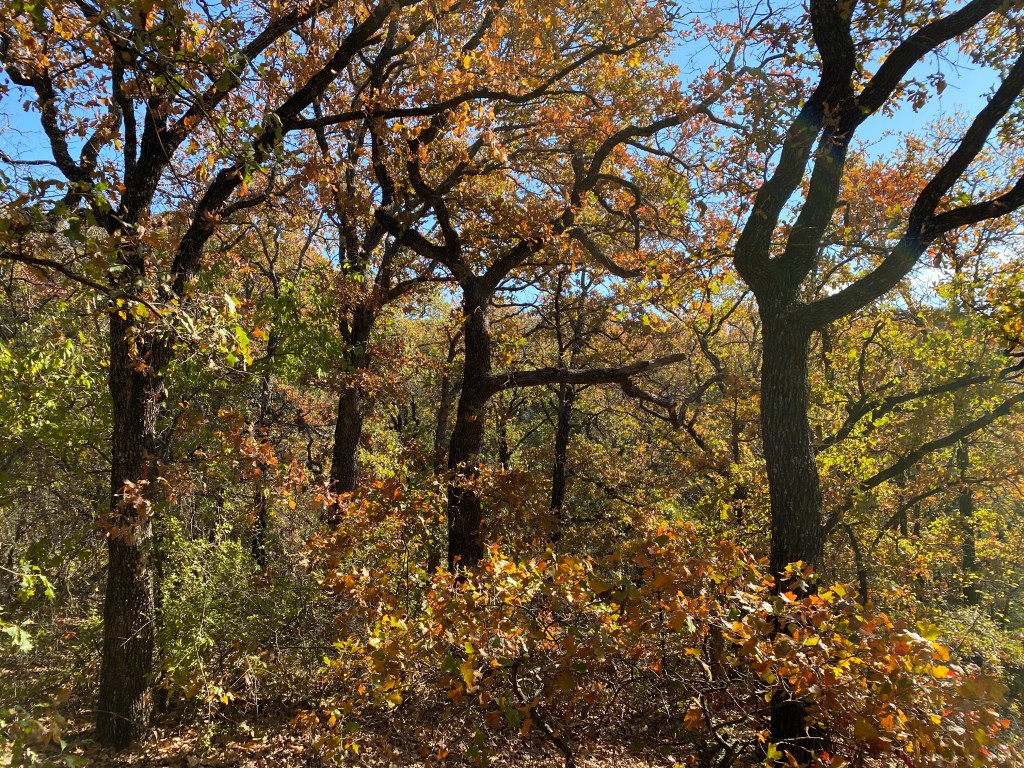
If we take a walk together, we will do just that. We will spend some time being open to the present experience, taking in all the sights, sounds, and other sensations a place has to offer and letting go of past recollections or future plans. This is mindfulness, the practice of being engaged in the present without judging it as good or bad, just noticing what we are experiencing and accepting it with kindness and compassion. In mindfulness practice, when thoughts come to us, we note them, let them go, and return to a focus on the present. Like exposure to nature, mindfulness has a good track record of benefits for health, attention, stress, and mood.
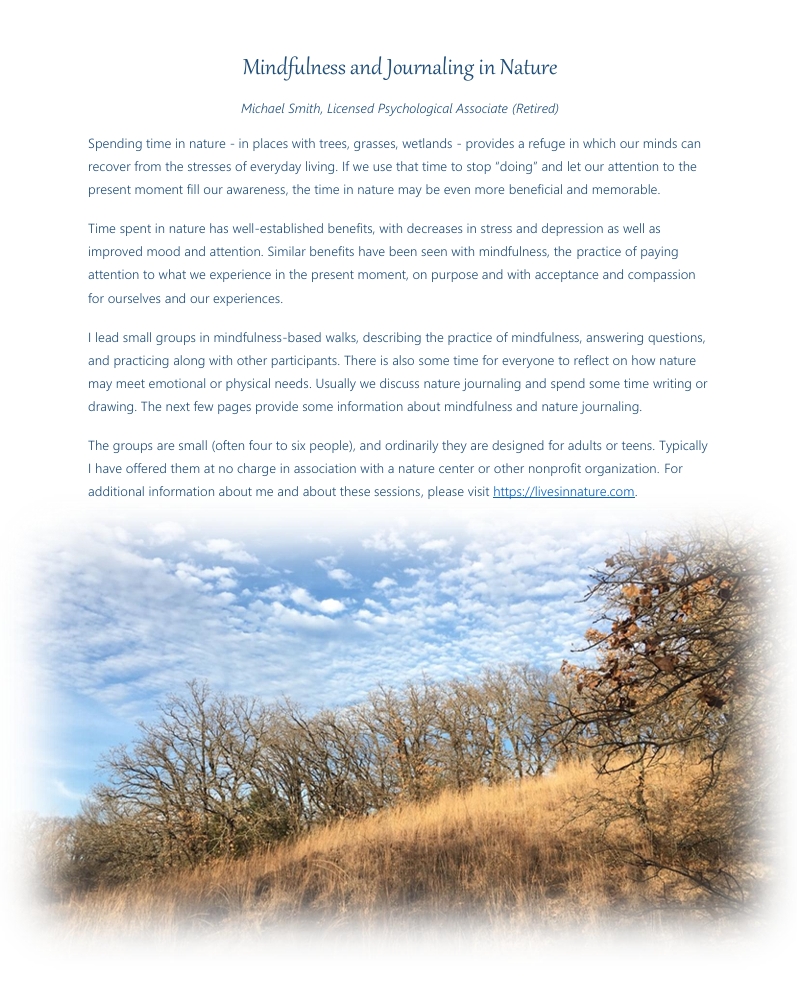
You can download some information designed to go along with a mindfulness and nature journaling walk HERE (or click the image).
While the walks certainly can be a form of therapy, they can also be beneficial for anyone who enjoys this sort of experience.
I lead walks from time to time in connection with nature centers or other organizations. We discuss and practice mindfulness in those walks and we may also include topics such as nature journaling. We typically go out in very small groups. I have regularly been leading small groups for mindfulness in nature through the Friends of Sheri Capehart Nature Preserve (the website has an “Events” page that may list an upcoming session, and the “Blog” page has some descriptions of past mindfulness events).
For some reading (or listening) about mindfulness and related practices:
- M. Amos Clifford. Your Guide to Forest Bathing: Experience the Healing Power of Nature. Red Wheel (2021)
- Mark Coleman. A Field Guide to Nature Meditation: 52 Mindfulness Practices for Joy, Wisdom and Wonder. Awake in the Wild (2022)
- Mark Coleman (Interview). Learning from Nature with Buddhist Teacher Mark Coleman. Being Well Podcast
- Jon Kabat-Zinn. Wherever You Go There You Are: Mindfulness Meditation in Everyday Life. Hachette Books (1994)
- Jon Kabat-Zinn (Interview). Mindfulness 101: How to Begin a Meditation Practice. NPR
 Our Lives In Nature