(I recently wrote this over at Substack – yes, I’m still struggling with where to land – but I felt the post ought to be here, too, because of its importance. I hope you will read and go to the Federal Register site and comment. Thanks.)
Suppose a group of people came to your house and stole the roof from over your head. “What??!” you might protest, but they tell you they needed the shingles. Shortly after, a crew plows up the easement in front of your house, and water shoots up from the broken pipes, then subsides to a trickle. Eventually you sit in your house, unharmed, but with no protection from the elements and no water. The police tell you that you have no recourse, because none of these people physically hurt you.
That is what the Trump regime plans to do to species protected under the Endangered Species Act. A proposed rule would re-define “harm” to only mean “taking” a protected plant or animal. Changing or degrading its habitat would not fall under the definition of harm. Only such things as trapping or killing the animal, or digging up an endangered plant, would qualify as “harm.”
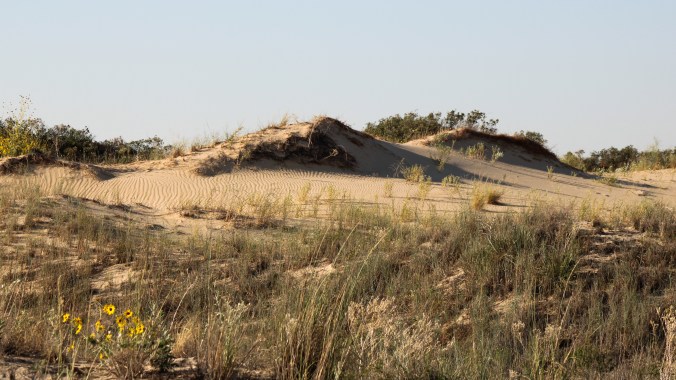
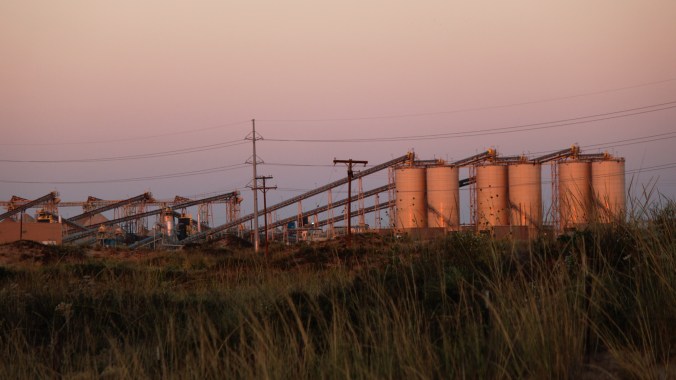
The beneficiaries of this, of course, are extractive industries. Loggers can log and the spotted owls just have to deal with it, because if nobody is shooting owls out of the sky, no harm done. In the Permian Basin of Texas, industries can go on mining sand for fracking, and the Dunes Sagebrush Lizard will have to learn to live on caliche roads and patches of remaining bare sand. I visited the area last year, writing about the Dunes Sagebrush Lizard for Green Source DFW. Researchers have found that this lizard requires very specific habitat that includes sand dunes and a low, shrubby oak species called shinnery oak. If you remove that habitat, the species cannot survive.
Over a year ago, the U.S. Fish and Wildlife Service listed the Dunes Sagebrush Lizard as endangered, but a loophole in the law allowed them to defer setting aside any habitat for it. (The Monahans Sandhills State Park provides some good habitat, but the whole park is only 3,840 acres.) The land in Texas west of Midland and Odessa is like a big outdoor industrial park crisscrossed with roads and sand trucks, sand mining sites in the spotty areas where dunes are found, drilling sites and the network of caliche roads connecting them. A lizard could look around in most places out there and see no direction home.
So, back to our analogy, if you were an endangered species, industry could come steal your roof, dig up your water pipes, and leave you with no food, water, or shelter, and according to the current regime you would be completely unharmed. To further quote Bob Dylan, “How does it feel?”
From a conservation biology perspective, it’s fair to say that all species depend on certain conditions to survive. The more they are habitat specialists, the narrower the range of conditions that they need in order to survive. That is, if they are adapted to very specialized diets or ways of living, they can’t just decide to be more flexible and live outside those requirements. The Dunes Sagebrush Lizard did not just decide it liked sand dunes and shinnery oak and would be annoyed if they couldn’t get them. Over a long span of time, generations of these lizards survived by making use of that habitat and only that one.
Regarding this proposed rule change, you can submit a public comment before May 19th here. I really hope that you will. With the Musk-Trump regime, it is too easy to conclude that since they don’t care what we think, it’s a waste of time. But that’s not quite true. They don’t care unless we speak up in large numbers, signifying a big wave of opposition that they cannot ignore. Enough of us, acting together and persistently, might still have an impact.
Also, giving up on telling them what we think reminds me of the first of Timothy Snyder’s lessons for resisting tyranny: do not obey in advance. Staying quiet teaches them the extent of their power, and it is also a kind of signal to our neighbors and friends that there is no point in resisting.
There are over 1,300 species federally listed as threatened or endangered under the Endangered Species Act, and a number of them occur in Texas (including the Ocelot, Mexican Long-nosed Bat, Golden-cheeked Warbler, Red-cockaded Woodpecker, Louisiana Pinesnake, Salado Springs Salamander, Comal Springs Riffle Beetle, Hinckley’s oak, Neches River Rose-mallow, and many more). I hope we won’t leave them “on their own, like a complete unknown.”
(Apologies to Bob Dylan’s “Like a Rolling Stone”)




 Our Lives In Nature