Safe (But Not Too Safe)

I recently wrote about our fears of nature, whether it involves spiders, snakes, or whatever. I mentioned that sometimes a fear gets triggered by an actual negative experience in nature, like being stung or spraining an ankle (or more uncommon events like venomous snakebite). Before discussing what to do about fears, we need to discuss actually staying safe.

As I put ideas together into a list, I was thinking of children exploring in the woods or at a creek, and the sort of guardrails that would keep them safe. But really, the ideas pertain to adults, too. Some items – like taking an adult along – are more obviously for children. Even there, the general idea of not going alone and letting someone know where you will be applies to all of us.

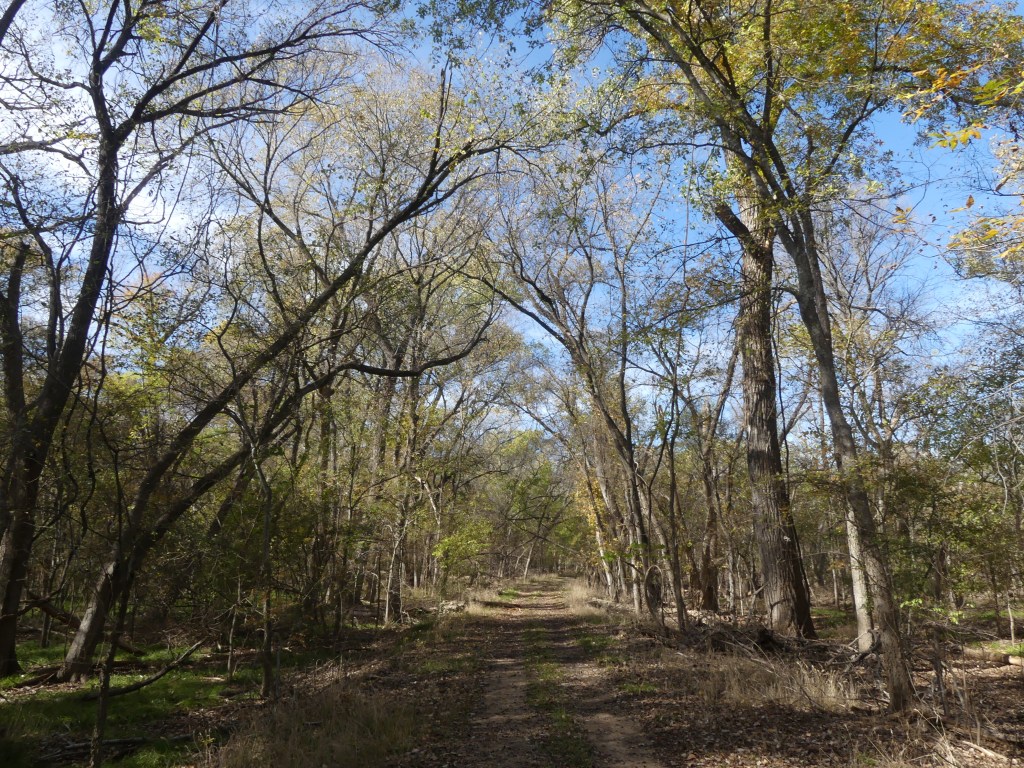
Following the road further into nature

I go out on my own quite often to nearby nature centers and to the LBJ National Grasslands (about an hour away), so am I being hypocritical when I suggest “not going alone”? Would some things on my list involve hovering and overprotecting children? There has been a lot of commentary about how overprotecting our kids deprives them of self-reliance and makes them anxious. A couple of sources to check out are here and here. In Last Child in the Woods, Richard Louv writes about how our concern for children’s safety can get the better of us (see the chapter titled, “The Bogeyman Syndrome Redux”).

As always, we have to weigh the issues and consider the needs of the particular person when thinking about safety. What I’ve done is to list some guidelines and then add a couple of “on the other hand…” comments.

Go together, not alone

If children want to walk to a nearby pond or nature preserve, they should talk it over with a parent or other responsible adult. The adult might say that they have to accompany the children or might set some boundaries concerning how far or how long. It is also good for two or three children to go together rather than one alone. An adult who is going on an outing has much more discretion, but it’s still a good idea to let someone know where we will be and when we plan to return, and maybe go with a partner. The wilder or further away the destination, the stronger my recommendation.

On the other hand, we can all benefit from opportunities for solitude, and being by ourselves in nature can be wonderful, even for a short time. Among those benefits are self-confidence and self-reliance. Parents should always consider the age and abilities of any child and might want to start with just a little independence while out in nature.

Don’t show off or be a daredevil

That is, don’t focus on how impressed others will be or how you can get a laugh, focus on doing something well and safely. Find a better reason to stand out in a crowd. For example, a great many venomous snake bites occur because someone was doing something foolhardy (out in the field, on YouTube videos, or at rattlesnake roundups).

On the other hand … well, there’s not much “other hand” here, just don’t. You can find safe ways to challenge your abilities and do exciting things. Climbing a rocky hillside or wading a creek with a strong current are examples of putting your abilities to the test. Such skills can be built gradually and carefully.

Pay attention to your surroundings

This could be a plug for mindfulness, for being in the present and not walking along on autopilot or while distracted. If we’re not paying attention we might miss a drop off ahead, poison ivy growing at the edge of the trail, a strange dog sizing us up, or a wasp nest where we were about to reach. Not only that, we would miss interesting and beautiful things along the way. Being “lost” in conversation is not a great way to spend time in the woods.

On the other hand, who but a Grinch would tell you that you can’t talk with a friend on a walk? Or check the weather on your phone? As much as I love practicing mindfulness in nature, we should also be able to do other things. I suggest that we practice shifting attention back and forth, between the path and our friend, the trees and our phone. Think of it like driving and keep an eye on the road.

Don’t put your hands (or feet) where you cannot see

A centipede under a log

If you see something you want to examine on the woodland floor, or you would like to look for mushrooms, insects, or other things under a log, watch where you put your hands. In the last post, I talked about a time when I was a child and reached down a hole and brought up a tarantula. That’s a good example of why you should not put your hands (or feet) in some hidden spot. Walking barefoot at night, unable to see where you are stepping, occasionally results in a snake bite. Use a flashlight, and don’t reach under that log with your fingers.

On the other hand, find ways to explore safely and have fun. Probe under things with a stick or position yourself where you can see, and then take a look at what’s under the log.

Don’t touch wildlife or approach too close

A person who is learning about snakes and finds a pretty one out in the field may be tempted to assume it is harmless and pick it up. Most snakes are not venomous, but the cost of a mistake can be high. People who think of deer as cute (not saying they aren’t!) might approach one too close if it doesn’t run off. Aggressive behavior from white-tailed deer happens from time to time, so give Bambi some distance. I should add here that we should have at least as much caution around strange dogs. We can still observe wildlife, learn about them and enjoy them, from a safe distance. Knowing what that distance is depends on the kind of animal, how it is behaving, and the surroundings we are in. Expert guidance is needed here.

On the other hand, catching grasshoppers and frogs is one way to feed a child’s (and our) sense of wonder and curiosity. My own journey as a naturalist and nature writer was launched when I was about ten years old and we caught dragonflies and garter snakes. It seems silly to argue that no kid should ever catch a crayfish or pick up and examine a toad, but I believe a knowledgeable parent or nature educator should provide guidance and set limits.

Bring water and dress appropriately outside

Here in Texas, everyone hears warnings about the weather. In the spring we watch for storm fronts with the risk of tornados, lightning, and hail. In the summer we make sure to drink water and avoid heat exhaustion or heat stroke. Even walking a nature preserve for an hour or so, I encourage people to bring water, especially in summer. With kids we have to remember that smaller bodies overheat or lose heat more quickly than big bodies, so taking breaks and getting into shade is important in summer and extra protective clothing may be needed in winter. We also need to think about clothes that help protect from thorns and rocky terrain. Hiking boots or sturdy shoes are recommended.

On the other hand, depending on what we’re doing and whether we are using sunscreen, shorts can feel great on a walk outside. Just avoid the poison ivy and bull nettle in places where they are common. Flip-flops or barefoot ought to be OK sometimes, too, if we do a scan for cacti, stickers, and half-buried trash like broken bottles.


One additional thing: The more we know (like recognizing kinds of plants and animals and knowing the behavior of local wildlife), the safer we will be. And the more rewarding our time in nature will be. That’s not to say that we have to be experts to enjoy nature, but it is good to have some level of “nature literacy.” If we visited another country, it makes sense that being somewhat literate in the culture, language and geography of that country would be an advantage. We need to be able to read a few signs, understand what someone says to us, and know the places where we might run into trouble. In the same way, basic knowledge about wild places will help us know what to expect and how to interact with the lives we will encounter in those places.
About Our Biophobia

I’ve given a number of talks to groups of kids after being asked to help with their fear of snakes. Even when addressing fear was not the primary reason for the talk, the adults may reason that knowledge and experience will inoculate the kids against fear and will feed the experience of curiosity and wonder in place of fear. Those are wonderful reasons for me to pack up some snakes and a few pictures and go talk with the kids and the adults. Knowledge will help counteract fear, but experience is what works the real magic, and that’s true for any of the phobias of critters in nature and for the general fear of nature that some people have.

We live almost all our days surrounded by our own stuff, our technology and built structures, and our lives become more and more separate from nature. Food and water are treated more like commodities, and even the air is conditioned and filtered. And so, wild places may feel dangerous or unappealing and wildlife may seem more frightening. Fears of various things in nature (collectively referred to as biophobia) become more prevalent. A vicious cycle sets in. As nature becomes more unfamiliar and threatening, our fear or disgust makes us avoid the experiences which might counteract the fears. The “extinction of experience” robs us of the sense of being at home among our non-human kin.

I’m not naive; I recognize that there are dangers in nature just like there are dangers in our homes, neighborhoods and on our freeways. Some of the snakes that I love to observe or photograph are dangerously venomous, especially when we accidentally get too close or try to show off with them. But most people are not bitten, especially when equipped with a little knowledge and common sense.

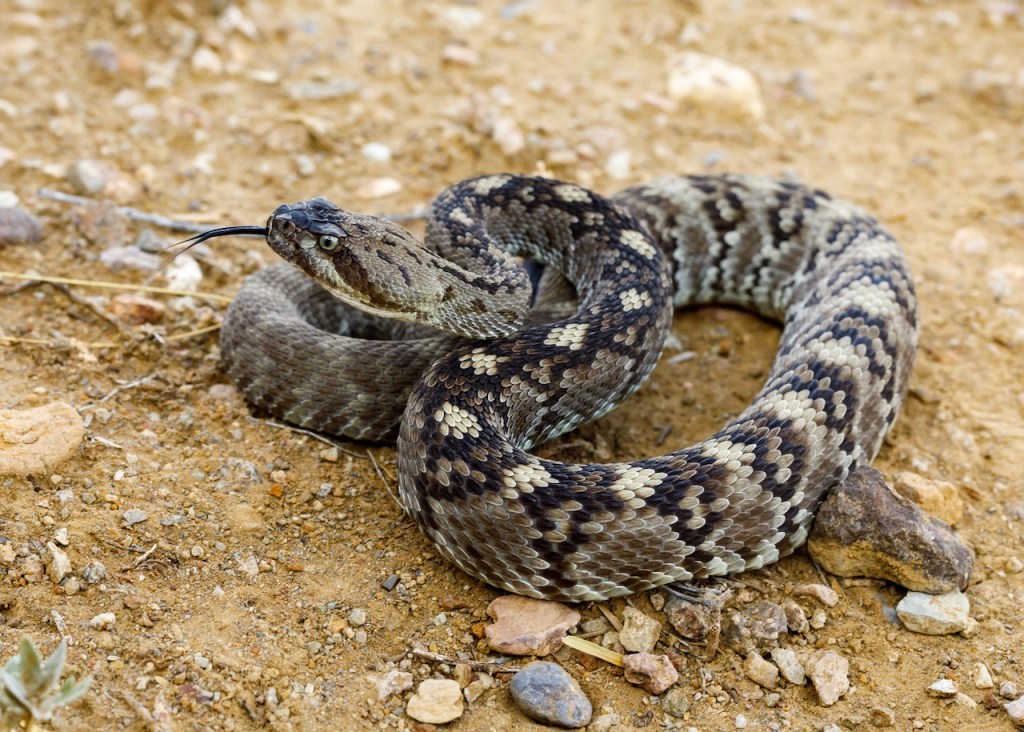
A black-tailed rattlesnake photographed by Meghan Cassidy during our trip to the Big Bend while working on a book on mindfulness in nature. The snake is venomous but we negotiated our encounter with each other well, and the snake never attempted to bite.

Coyotes are among the wildlife that people tend to assume are dangerous. A 2009 study searched for reports across the U.S. over a 46 year period and found 142 attacks during that time (with attacks defined as encounters in which a person was bitten). Very few of those occurred here in Texas. Some (30%) were related to coyotes that had been fed by people, accidentally or intentionally. Steps for staying safe around coyotes include not feeding them, limiting the outdoor activity of pets like small dogs, and not running from them (triggering a built-in tendency to chase). To keep it in perspective, the reported dog bite fatalities (not just attacks) from 2020-2022 ranged from 47 to 56 per year. We are in much greater danger from dogs than we are from coyotes.

The idea that we are in greater danger from the things most familiar to us, like our cars (one reportable car crash every 57 seconds in Texas in 2021) or our dogs, is a hard sell for most folks. That is because we are around them all the time, and our experience is usually safe and rewarding. We adults understand intellectually that cars, dogs, household chemicals, electricity, and so on can be dangerous. We do what we can to make the risk manageable and continue to enjoy the benefits. Being careful does not mean that accidents are impossible, but even though there is some chance of accidents, we are not afraid.

Here are some reasons why so many of us are afraid of things in nature:

Limited contact

We are comfortable with what is familiar. A strange place in nature, or certain things in natural spaces, may feel foreign and unpredictable. We don’t know what that bug might do, nor do we know if the coyote howls and yelps might mean they are hunting us down, and so we keep away from contact with those things, thus guaranteeing that we will not have experiences that might teach us what is realistic. Additionally, many people live in cities with no nearby natural spaces and limited transportation, and so they miss out on walks in the woods and encounters with wild things.

Not knowing what to do

Many people would not know what to do in a wetland, prairie, or woods. If they visit, they may bring with them the things they know from everyday life, like listening on headphones, chatting on the phone, riding bicycles or off-road vehicles. I do realize that some people know their way around the woods and still enjoy listening to music or bicycling, but I imagine that there are others who would be bored and lost in nature without gadgets and vehicles. Many people do not know the names of plants or animals and what they do, and would be uncomfortable finding their way through the woods or across a creek.

The culture often teaches fear

Our minds are wired to look for danger, and sometimes we enjoy the thrill of finding it or hearing about it. And so we tell each other stories of the time an uncle killed a big snake or we went camping and were frightened by sounds in the night. We watch movies about bear attacks, snakes loose on an airplane, werewolves, bats that want to suck our blood, and on and on. We warn each other or see overblown news reports of killer spiders or murder hornets. Our culture portrays nature as full of danger, and unless we get out there and discover that nature is mostly safe, we become fearful.

Actual negative experiences in nature

Sometimes we become afraid of something in nature because we actually did have something bad happen there, like a near-drowning incident or being stung by a jellyfish on the beach. At other times, being startled or surprised will trigger fear. As an eight-year-old child, I reached into a hole and felt something soft. Cupping my hand around it, I slowly removed it and discovered a tarantula, triggering a phobia that was pretty severe for the next couple of years (despite the fact that the tarantula kindly refrained from biting the invader to its home). Only after I developed other interests in nature and as a result began to have safe, incidental encounters with spiders and their webs did the fear gradually subside.

Possibly inherited predisposition

Could it be that some of us are just put together that way? It is true that some of us have a greater general predisposition to being fearful, and part of that appears to be genetic. And do we inherit fears of snakes and spiders? There are some studies that give at least a guarded answer of “yes,” such as one in which babies (too young for culture or experience to be a factor) were shown pictures of various animals and their pupillary reactions revealed that they react to spiders – and to some extent snakes – in a more anxiety-related way than their reactions to other pictures.

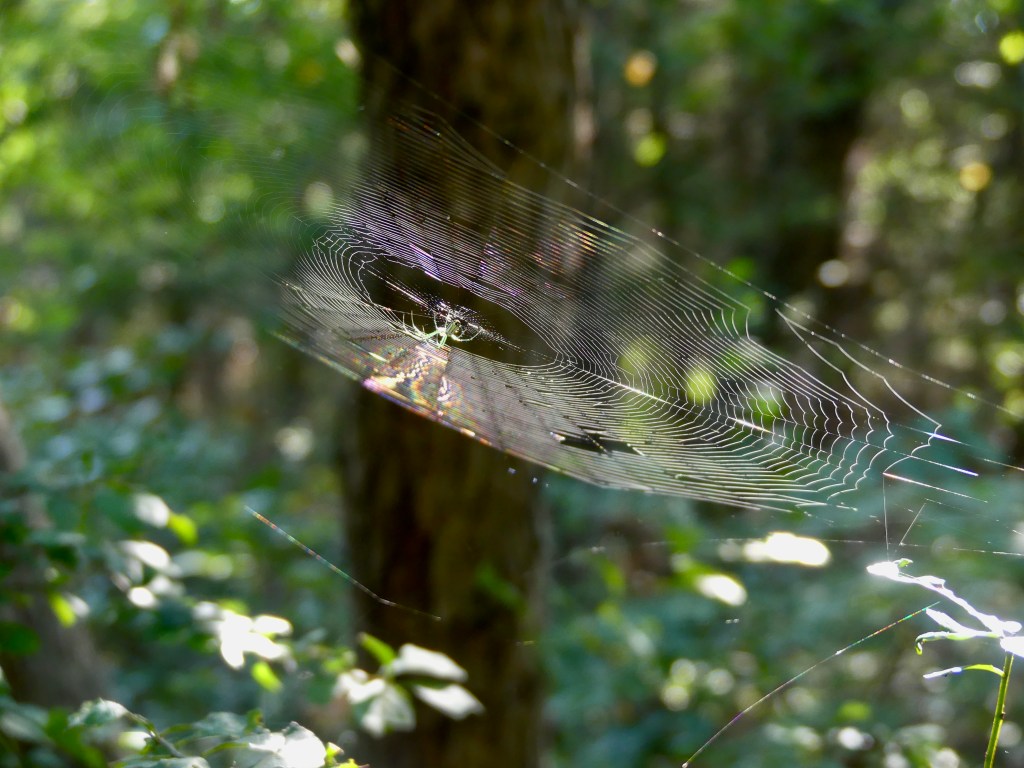
An orb-weaving spider at Dogwood Canyon Audubon Center

Since time spent in nature provides us a great deal of benefit (here is a review that sorts some of these benefits based on our senses: vision, hearing, smell, etc.), giving people the tools to decrease fears of nature would be a very helpful thing. We can do something about several of the issues I listed above. What if we helped people – particularly children – have more contact with nature in enjoyable ways that could contribute to exploration, safety, discovery, and wonder? I plan to write more about that in this space, so I hope you’ll check back or subscribe so that new posts are emailed to you.

Happy Holidays – and a Letter

I hope everyone has a wonderful holiday, however you celebrate it. We’ll be sticking close, avoiding traffic, and getting together with family. I’ve recently been walking at Sheri Capehart Nature Preserve and Fort Worth Nature Center & Refuge (FWNCR), and wrote a “Letter to Nature Kids” (See December, 2024 End of Autumn) about those walks and some of the birds and other wonders I saw.

If you can, I hope you can take a walk that is as wonderful as mine yesterday at FWNCR. “It was a day at the edge of winter, getting late in the afternoon. A crow’s call echoed through the woods and a few dragonflies flew low around the edge of the grasslands. Other than that, this place felt like it could be sleeping – still, quiet and peaceful. We all need to sit quietly in a place like that sometimes, don’t we?”

Nature Community as a Strategy for 2025

Sitting in a preserve writing in my notebook, I wondered about the point of “all this wandering and writing, taking small groups out to learn about or experience nature. While much of the world is falling apart, I hold myself to an expectation of doing something.” What actions are needed? What might contribute something worthwhile? What can I do, and what should I do? How can we work together to sustain the good in society and in nature? 

The goals of the incoming administration appear to be to instill fear and division, seek out loyalty and punish perceived enemies, dismantle the rule of law (and the assumption that it applies equally to all) and consolidate unrestrained power and wealth. The plan is evidently to take a wrecking ball to anything in the government and society that interferes with achieving those goals, and collateral damage is perfectly fine. 

With that context, what good is finding places in nature for immersion in prairies, woodlands, water, “brother sun and sister moon,” other than an escape? Can my response to our troubles be to keep on living a relatively privileged life, looking for beauty and a connection to creation, keeping my distance from the losses taking place around me? If we want to have meaningful lives that reflect our values, this is certainly a time for self-examination.

We need each other

As individuals we figure out who we are and what we will do, but much of what we can do is in the context of partnerships, teams, and groups. One strategy for the coming years should be to take care of those connections with others. They keep us sane and healthy, and they help us accomplish things.

It was once easier to be more connected to other people, sustaining real face-to-face relationships as part of neighborhoods or networks of friends. Some of the social institutions were deeply flawed, but one way or another we kept getting together with each other. Increasingly, we spend our time in the bubbles that surround our smart phones, and social institutions are being supplanted by social media. 

The importance of actually being present with each other is hard to ignore. So much of human connection and communication involves responding to each other’s posture, facial expression, voice volume and inflection, the flow and timing of our words and bodies. It is intricate, marvelous, and much of it happens out of our awareness. And not much of it can happen in the lines of a text message or Facebook post. You can look at some of the research and professional opinions here and here.

We are more powerless when we are isolated and mistrustful

When is the last time you were in a group of people with a common purpose or intention? Maybe it was a small gathering, or perhaps it was a big group, either listening to each other, celebrating, or something else. There may have been some sense of coming together as one, perhaps a feeling of the group being more than just the sum of the parts. There is an important Surgeon General report on the need for social connection and the epidemic of loneliness we are experiencing that is worth reading, even for us introverts. Our society is ever more fragmented and isolated, leading to real risks for our physical and mental health. 

And so I think that taking care of our connections with other humans is as important as the care we give to our connection with the rest of nature. It is together with each other that we have the best shot at defending our favorite woodland, our friends, marginalized neighbors, and a society in which justice and empathy can still be found. When we cannot be together physically, I’m grateful for tools like Zoom and FaceTime that allow the next best thing. 

And we need to pay attention to important teachers. Among the first people I think of is Robin Wall Kimmerer, a botanist and professor as well as a member of the Potawatomi Nation. Her new book, The Serviceberry, revisits and extends her thoughts about how relationships work in nature and how that is a useful model for humans. Serviceberries, corn, trout, cedar waxwings – living things in nature provide their gifts and receive benefits in return. Relationships are reciprocal, and, as she writes, “all flourishing is mutual.” 

In The Serviceberry, she compares capitalism based on exploitation and scarcity with the gift economy that is prevalent in nature and in some indigenous societies and small communities. “I share what I have with you, and there will come a time when you share with me.” In such ways are relationships of trust and care built, and we all can flourish. It’s a good way of being human, and good business, too. Kimmerer talks about Native American communities in which prestige is based on giving gifts to community members, rather than hoarding wealth. 

It is challenging – but important – to be an advocate for and an example of generosity, gratitude, and reciprocity. I’m willing to bet that those qualities, applied to ourselves and our social and natural communities, are the best way forward. Kimmerer teaches us that in nature the energy that drives the system comes from the sun, warming everything, driving the weather, and powering the photosynthesis through which plants make food. She suggests that love is the analogous source of energy that empowers human interactions and communities.

So if there is a reason to be less isolated, this is it. The contribution that I can offer is mostly to try, as I wrote on that day in the preserve, to “bring people more into a relationship with nature,” and hopefully “strengthen a sense of belonging or a sense of being part of a community of life. Perhaps less self-focused, less likely to use the world rapaciously, maybe. We need ways of being less acquisitive, more a part of something.” Maybe there is more; my self-examination is not over, but here is what I know best.

I want to participate in a community of people attuned to each other and to nature. I think such a community would pay attention to the lessons Kimmerer describes. It would seek ways to live that are not centered on power, dominance, and wealth. I think that’s essential to trying to defend democracy and a just society, along with protecting the natural world that makes such things possible.

RIP, Tex

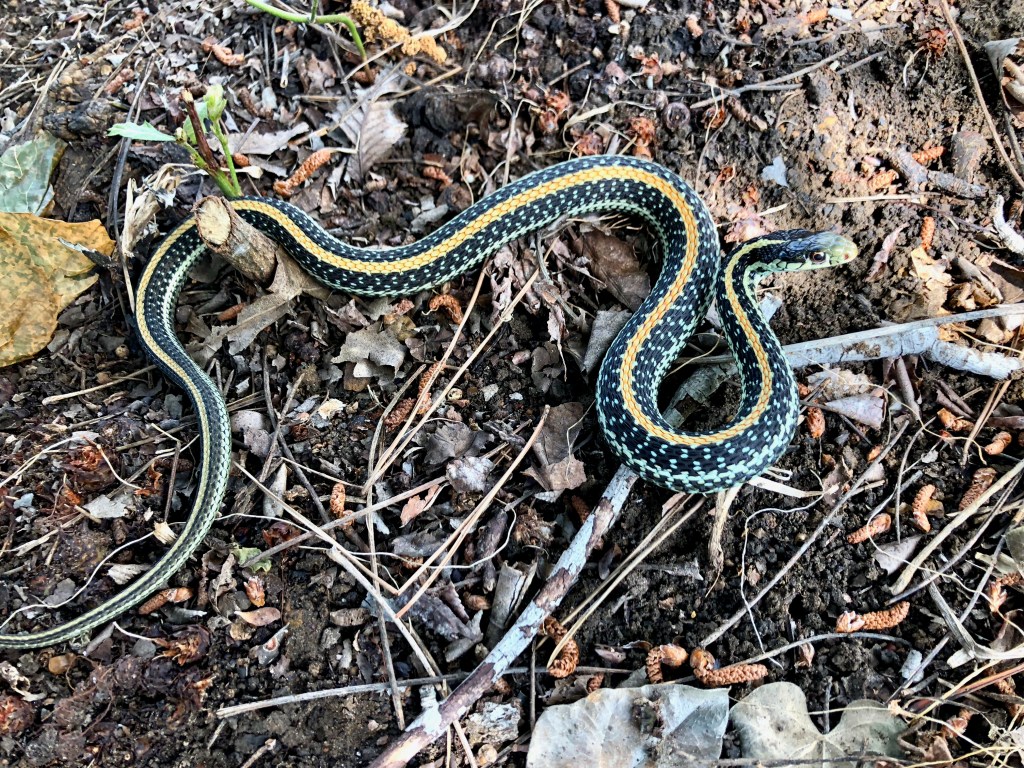
Nearly ten years ago, I was given a young Texas garter snake. A landowner in North Texas had picked him up on his land (where he reported seeing that subspecies regularly) and wanted verification of which kind he was seeing. I drove there with a friend and was delighted to hear that this farm seemed to be one of those little pockets where the Texas garter snake was doing OK. They have always been pretty hard to find, but some places are better than others. Texas Parks & Wildlife Department considers them to be “critically imperiled.”

Tex, back in 2018

I accepted this young one because it evidently would not be a noteworthy loss for that local population, and because he could be an ambassador for threatened Texas snakes. I’ve taken him to quite a few talks and presentations to new groups of Master Naturalists and to school or summer camp groups. Seeing Tex was a good way for people to learn how being a striped snake helps you escape by giving the appearance of being stationary – the stripe doesn’t seem to move – while you are slipping away. And of course he was a living example of an animal I said was in serious trouble and might disappear, for reasons that no one is sure about. It could involve things like habitat loss, habitats fragmented by roads, fire ants, and maybe other things.

In a study in the 2019 issue of Southwestern Naturalist, researchers looked at the genetic status of The Texas garter snake (Thamnophis sirtalis annectens) and two other related garter snakes that occur in Texas. They also looked at suitable habitat, finding that in Texas, where T. s. annectens does better than the other subspecies is in the area of the Cross Timbers, parts of the Blackland Prairie, and some of the Post Oak Savannah and down toward the coast. The study did not look at why it is imperiled.

I wrote about one of the times I took Tex to meet some kids at River Legacy Nature Center, when a girl had commented that she hoped one day they would be protected. On days like that I felt like Tex living in captivity (rather than living out his life on that farm) was worth it. Tex, of course, was silent on the matter.

But he was happy to nap under a piece of bark, cruise around the cage and eat the occasional mouse. His siblings and cousins in the wild were probably snacking on small frogs and earthworms, but most garter snakes can be convinced to eat thawed mice from the store. He grew and seemed to thrive, and living about ten years is not bad for a garter snake. (Their life span in the wild is assumed to be less than that, and sometimes in captivity they may live longer than ten years, but the evidence about their longevity is fairly spotty.)

And now he has died, I presume from something akin to “old age.” RIP, Tex. You charmed a lot of kids; a lot of Master Naturalists around here know your kind based on getting a look at you. I’ll miss you.

Wear Your Love…

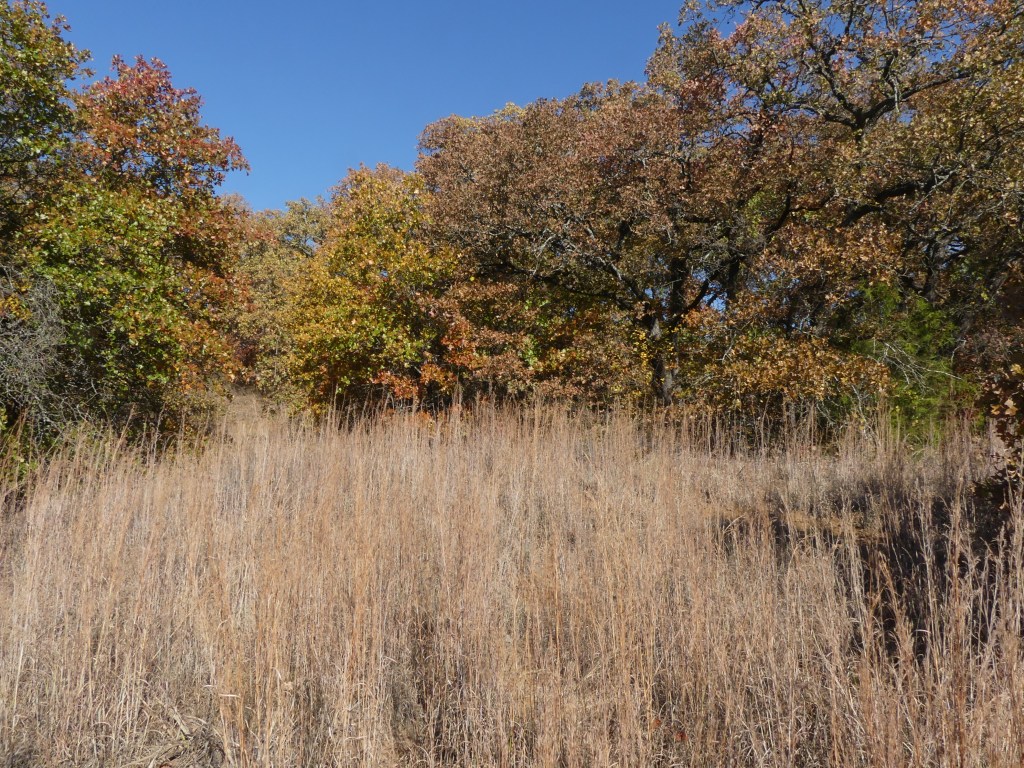
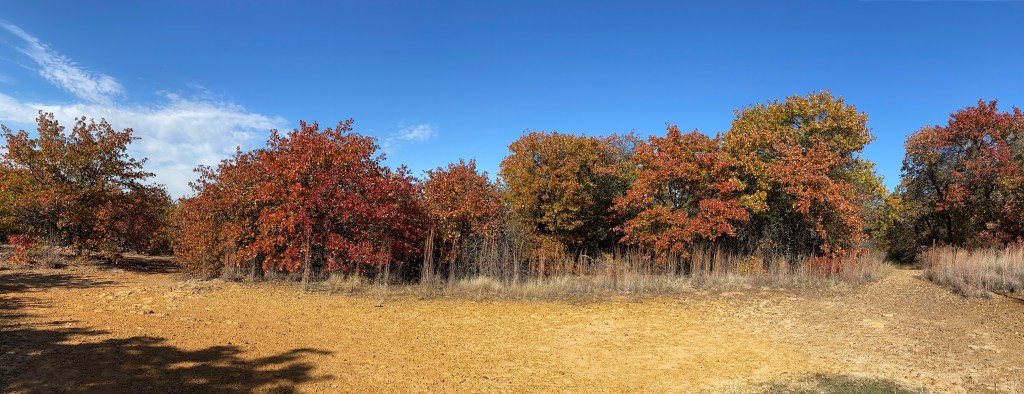
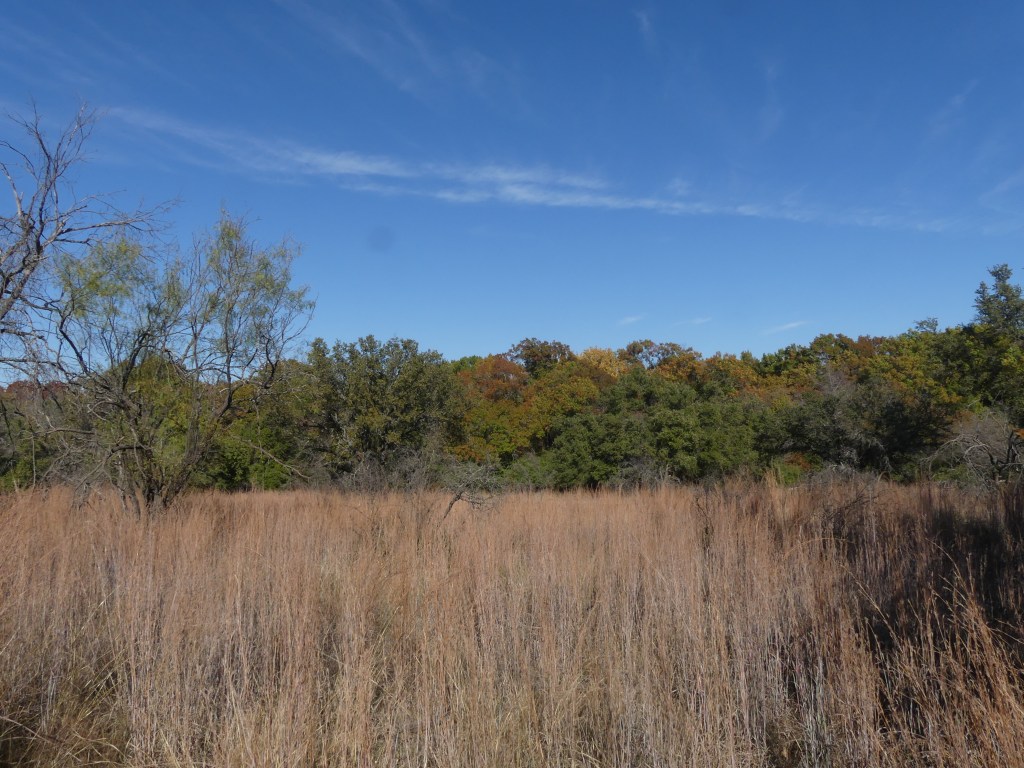
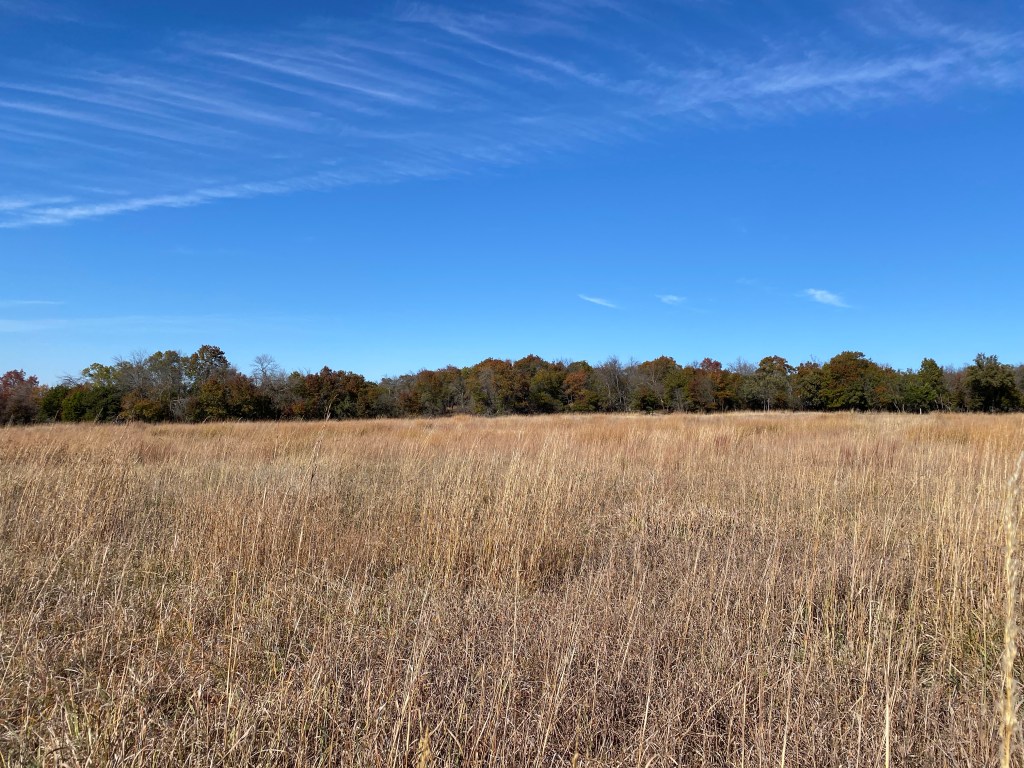
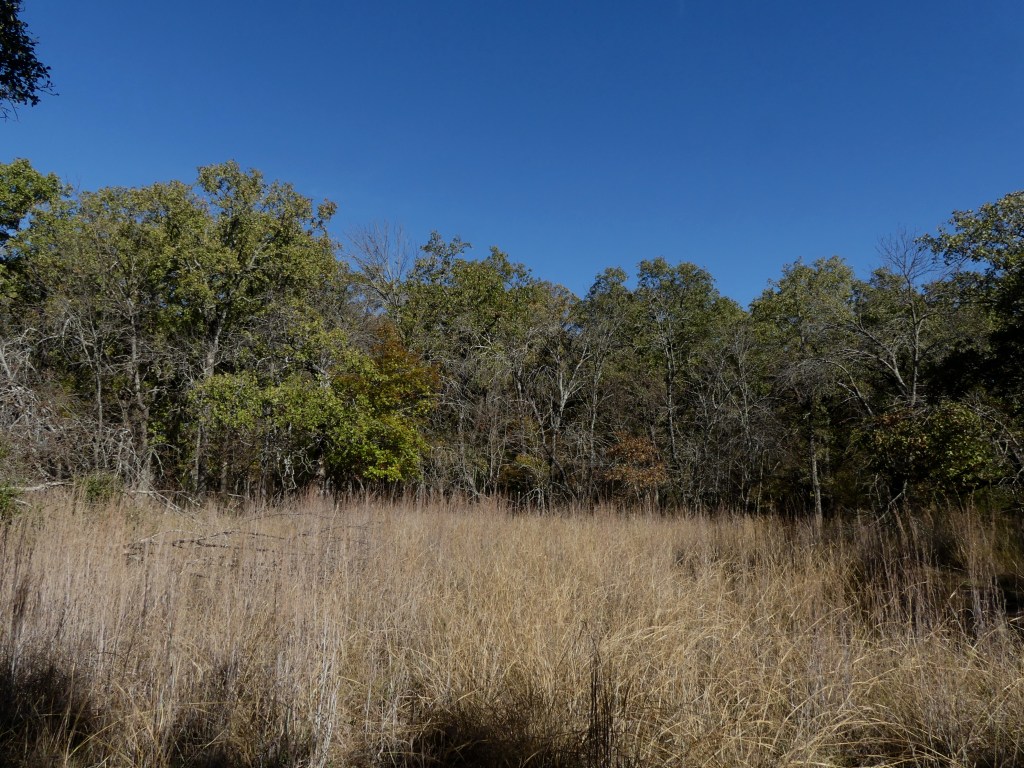
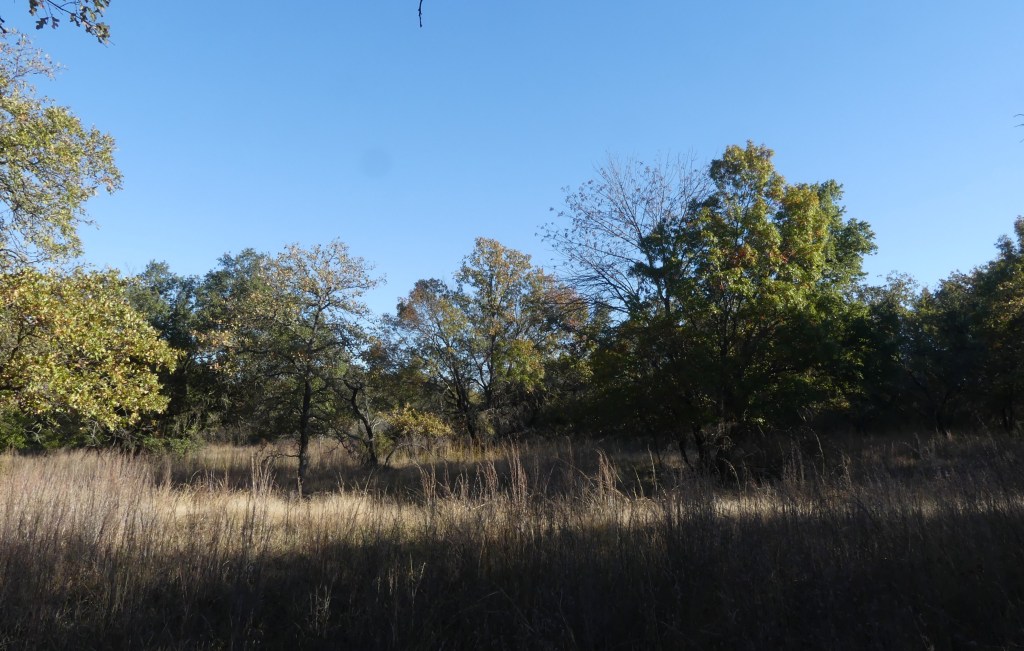
I sat beside the pond, looking at the line of trees outlined by a pure blue sky. The glossy green blackjack oak leaves were turning a mixture of caramel and ruddy red. In front of the trees was a stand of little bluestem, a native grass with subtle beauty. Each starts with a little clump of narrow, curled leaves at ground level, sending several tall stems to reach chest high. The tiny seeds along those stems are feathery, and in autumn sunlight they are like a constellation of stars scattered among the grasses. Altogether a lovely little spot on a fine late autumn day.

You might say that this preserve has been kissed by creation, filled with a beauty that it wears in one form or another throughout the seasons. Before long I was thinking of “Wear Your Love Like Heaven,” a song by Donovan Leitch that most of us – of a certain age – have some memory of. 

When it was released in 1967 I heard the song many times, but never listened to it well. I assumed it was a hippie love song (“kiss me once more”), the opening of the double album “A Gift From a Flower to a Garden.” But Donovan, with his soft Scottish voice, is often deeper than that. It is more like a prayer than a love song.

The verses suggest an artist with a beautiful palette of colors, or someone experiencing such a range of hues in nature. “Color in sky Prussian blue,” but the colors change with sunset as the “crimson ball sinks from view.” There are shifts to “rose carmethene” and “alizarin crimson.” It is easy to imagine being in a place where the land and sky overwhelm one with beauty, where any of us might ask for more such experiences of awe. Such a plea could easily be a prayer:

“Lord, kiss me once more
Fill me with song
Allah, kiss me once more
That I may, that I may
Wear my love like heaven”

What might it mean to wear your love like heaven? I suppose wearing it would be to let it show, not hide it, and offer it freely to anyone. And a state of bliss and love freely shared with everyone is one way to imagine heaven. 

Within such a state, Donovan experiences an extraordinary vision: 

“Cannot believe what I see
All I have wished for will be
All our race proud and free”

Perhaps he is seeing what follows from wearing our love like heaven. Generous and open-hearted, not trapped in greed or the desire for domination, free of self-destructive impulses and all the things that bind and restrict us. Wearing a transcendental love would make us proud and free. 

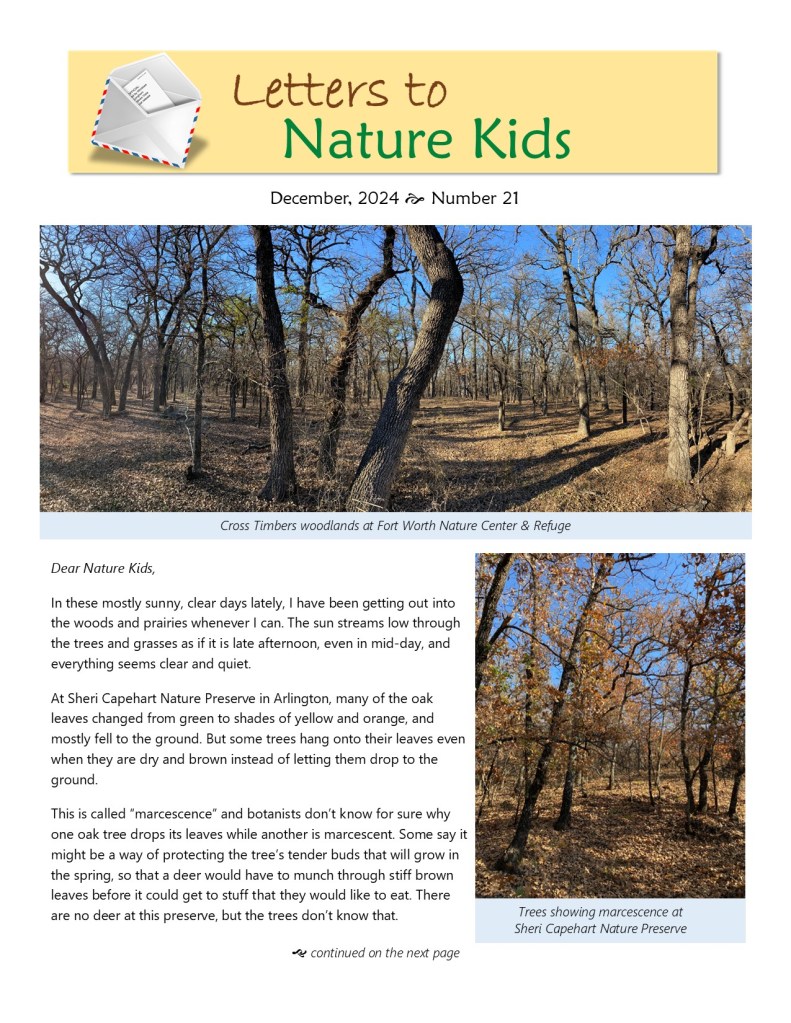
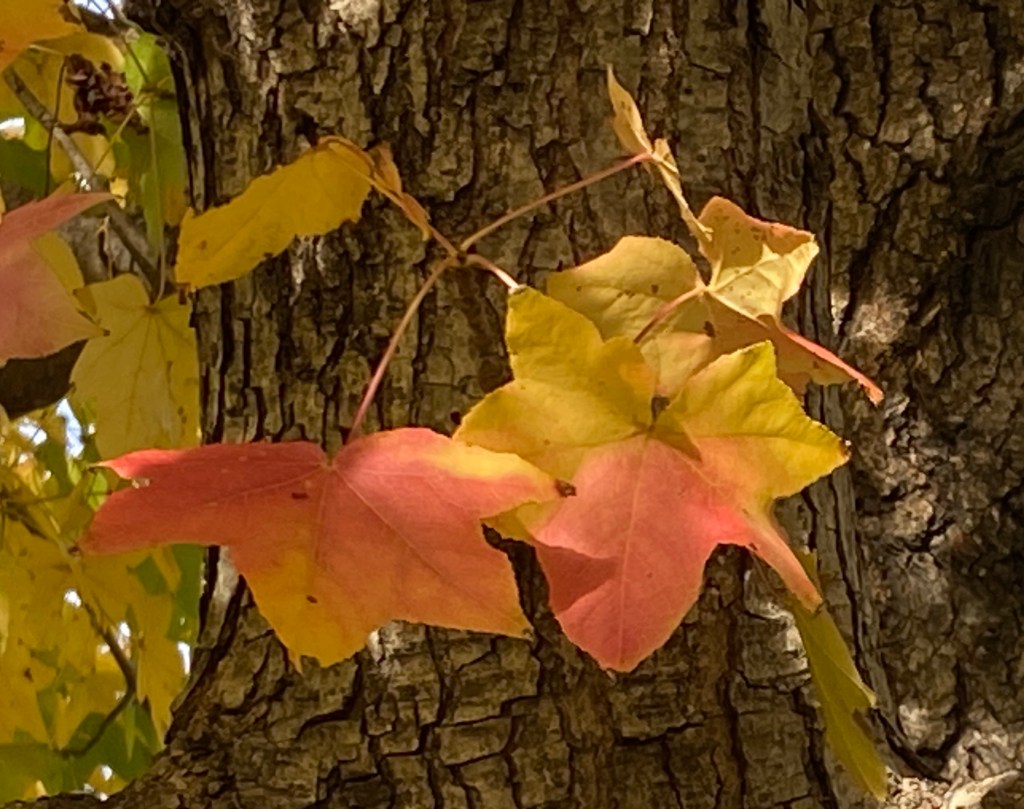
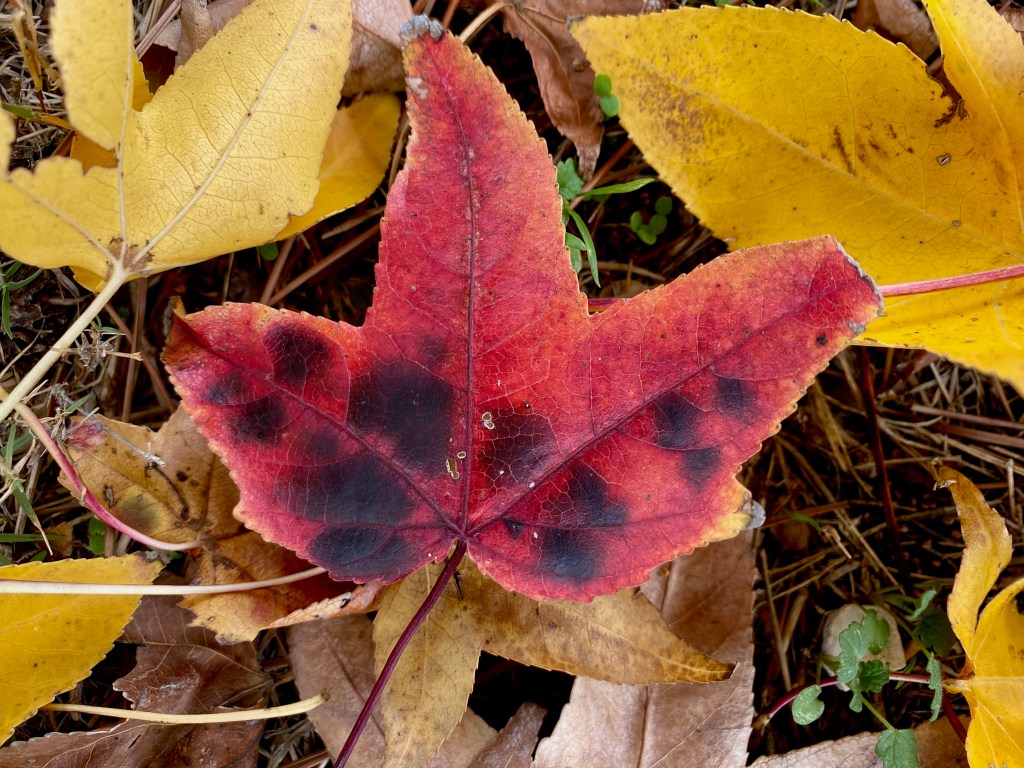
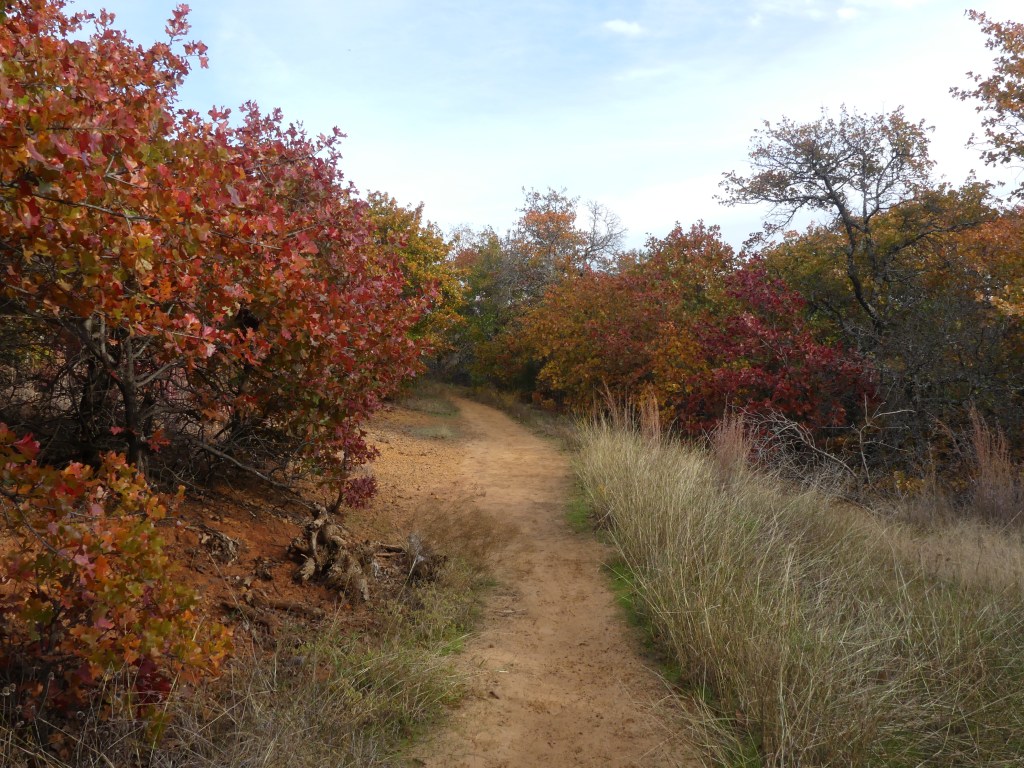
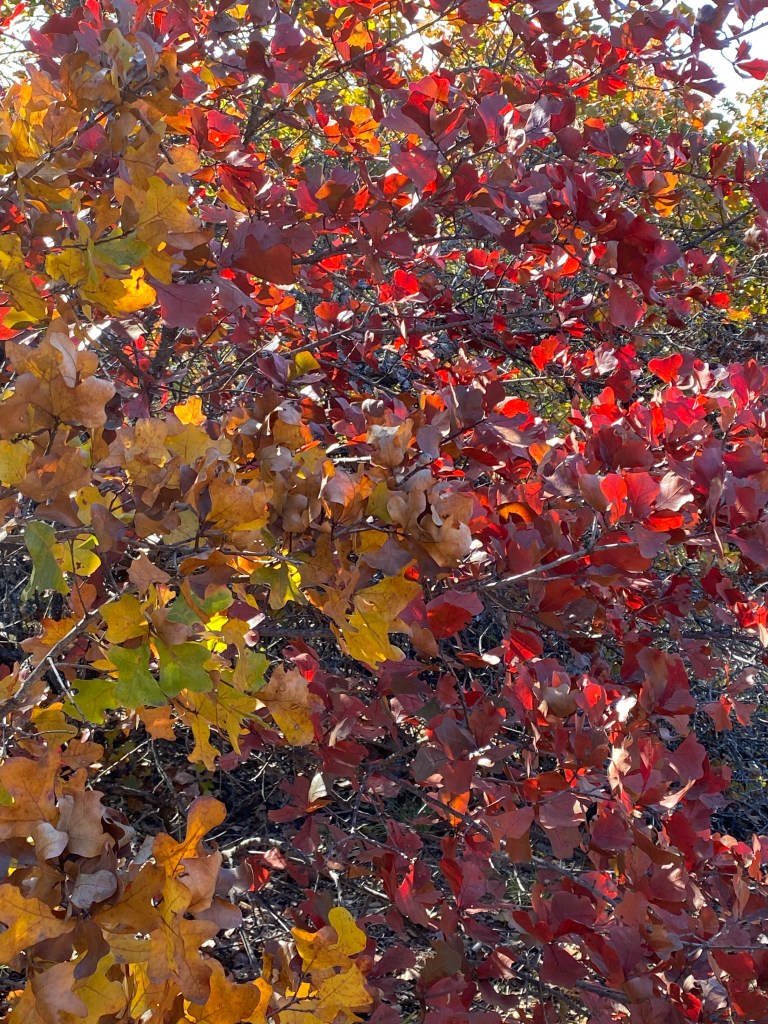
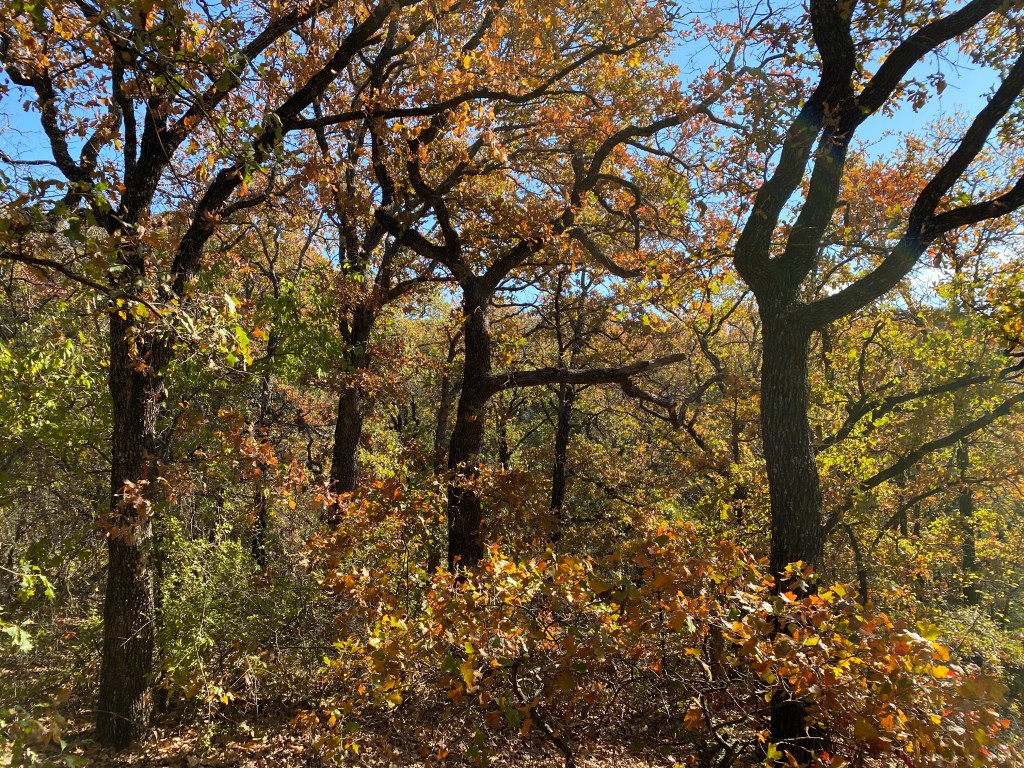
It was a beautiful vision to carry with me as I walked through oak woodlands and on trails along patches of prairie that are lovingly being restored. Some of the blackjack oak leaves have taken on a shade of alizarin crimson, and tonight, if the sky is clear enough, we might look up to see Prussian blue. 

To connect with and be blessed by the divine, filled with song, and to live in beauty and love. That’s a lot of message to be carried by a two-and-a-half minute pop song from 1967, but we are allowed our interpretations of the meaning of art and this is how I hear it. The song has been covered over the years by people I think of as serious artists. Ritchie Havens recorded it in 1969 and Sarah McLachlan covered it in her 1991 album, “Solace.”

More Thinking About (And Photos From) FW Nature Center

I’ve walked trails and sat on benches at the Fort Worth Nature Center & Refuge (FWNCR) a couple of times in the last week or so and cannot get it out of my mind. I’m happy to let the marsh, the woodlands, prairies, and bottomland forests take up space in my brain. It’s the worries on their behalf that I’d like to shake off.

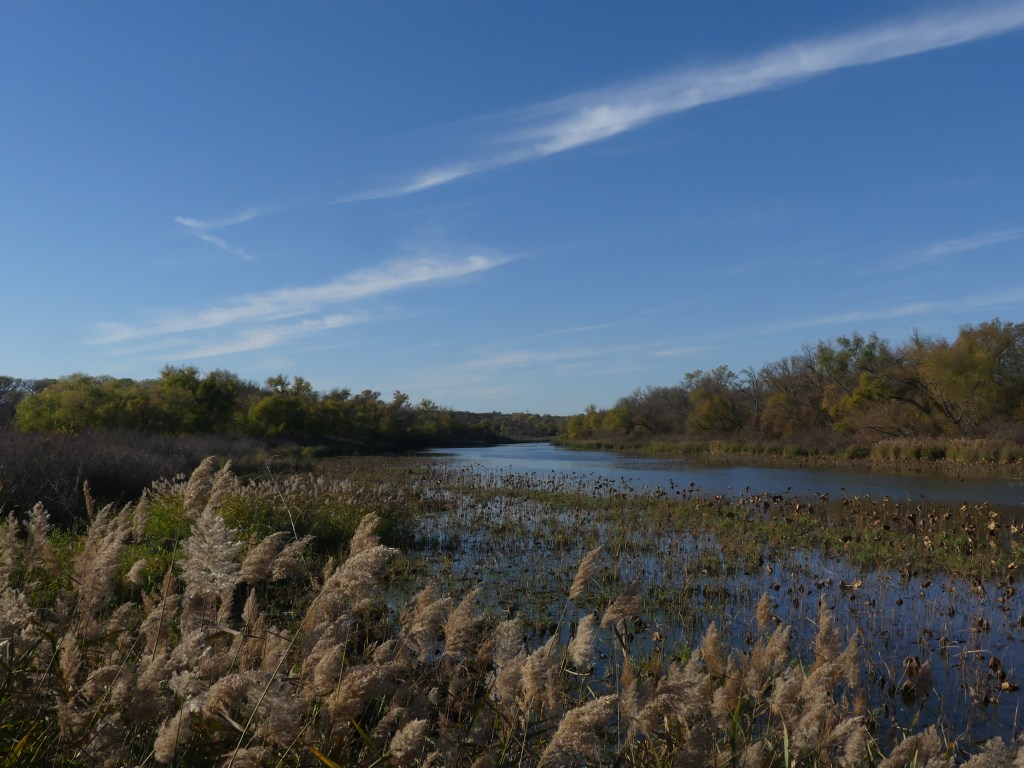
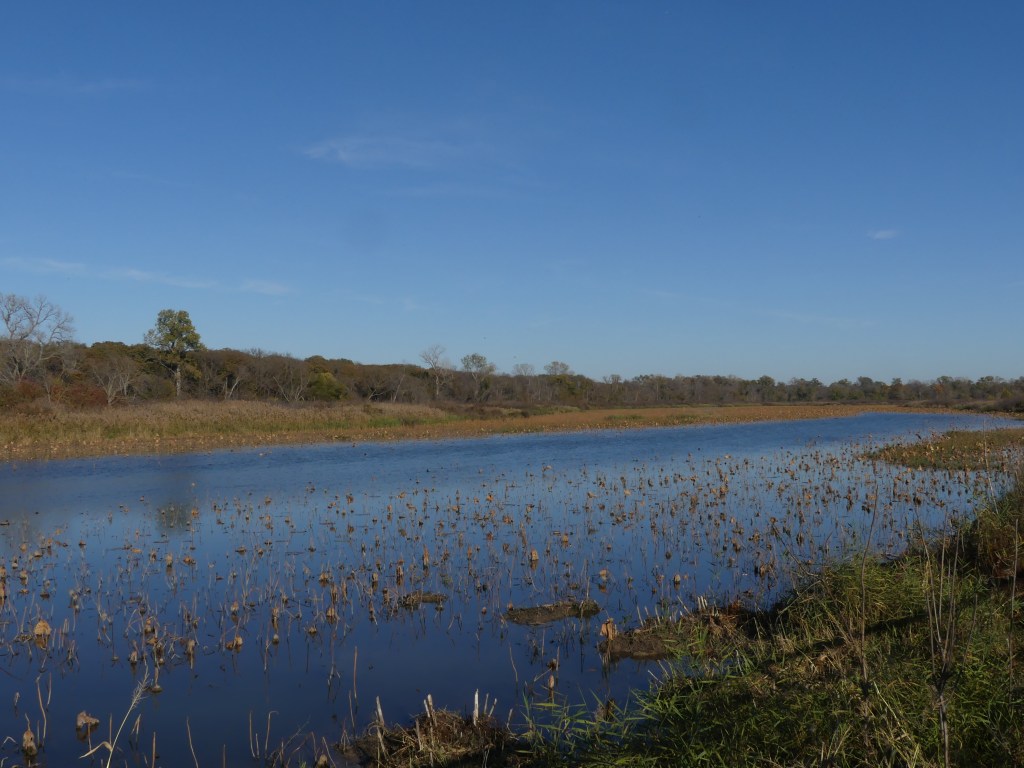
The marsh at FWNCR

I recently wrote about the FWNCR and its 3,650 acres where a substantial bit of North Texas wildness lives on. Green Source DFW had just published my article about discussions between the City of Fort Worth, the Botanical Research Institute of Texas (BRIT), and the Friends of Fort Worth Nature Center & Refuge about the future of the nature center. BRIT now manages the Botanic Gardens and is now eyeing the nature center.

The City of Fort Worth website quotes BRIT CEO Patrick Newman saying, “The biodiversity crisis is affecting plants that are our food and possible cures for diseases. As we try to identify these plants, we want to link arms with the Nature Center and continue their great work as we move towards and create this possible partnership.” Does this mean BRIT wants to study the biodiversity crisis? Medicinal plants? Wouldn’t the easiest thing, the thing that would call for them to “link arms,” be to work together with the nature center through a research partnership? Without either one taking over the other, that is.

But the stated goals for the nature center, again quoting the city website, are, “increasing attendance and use of the center, membership, educational programs, and private support for research, conservation and investment.” One of the three issues being considered is, “Economic benefits for the City and BRIT.” In my Green Source article, I noted that the city’s Mark McDaniel said the plan was for attracting more visitors, ramping up marketing, and enabling more facilities and capital improvements. 

You can see how I might worry about whether the nature center and refuge would stay wild. It’s not that we shouldn’t let more people know about FWNCR and invite them to visit. As I said a month ago, “We want everyone to share the refuge, learn from it, and fall in love with it. But not everyone all at once, and not by offering so many built attractions that people miss the point, which is the wildness.”

A pocket prairie along the Deer Mouse trail

Please do not let this issue be buried in all the other news that we are preoccupied with. Let the City of Fort Worth Park & Recreation Department know what you think. Speak up for the nature center.

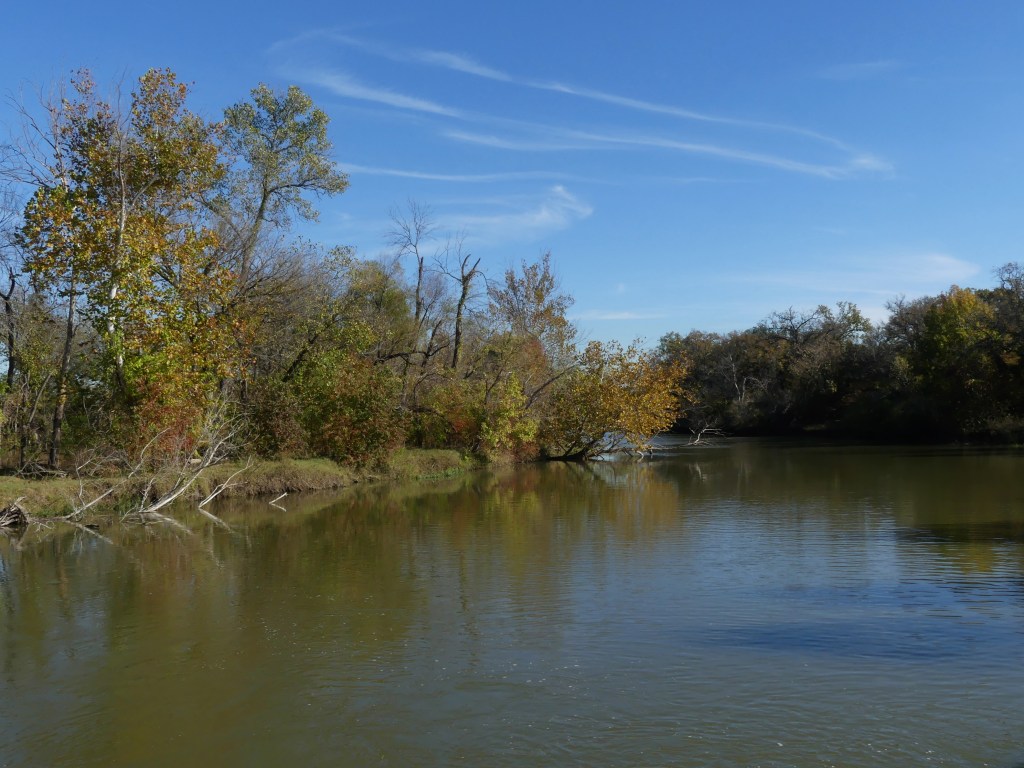
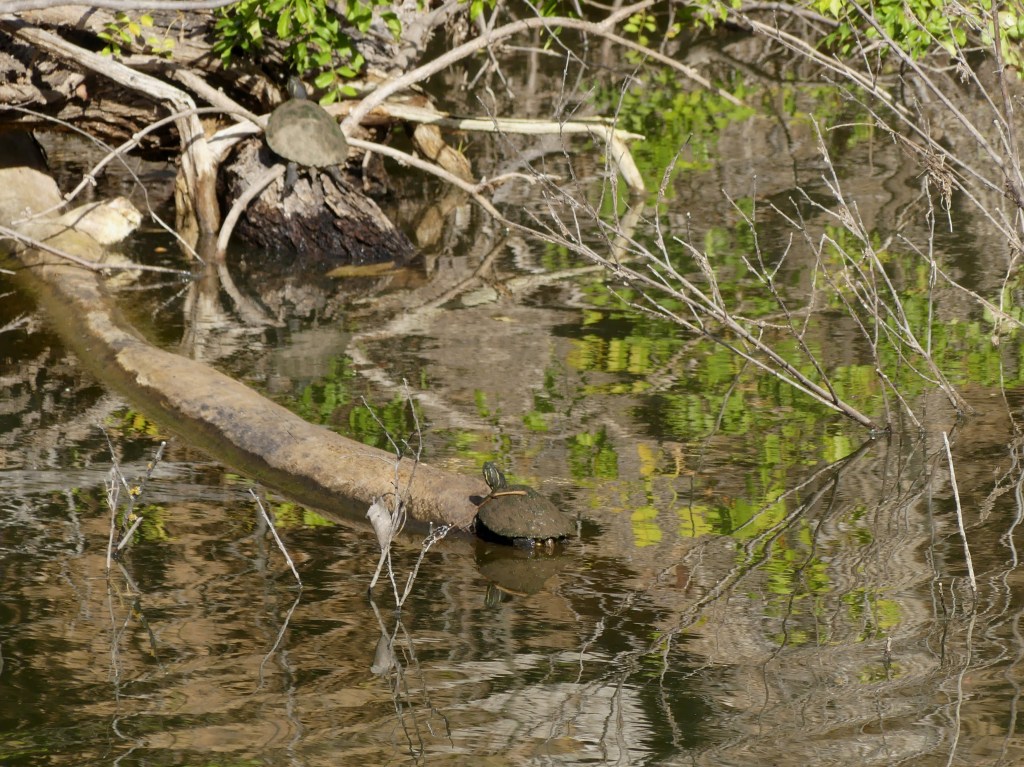
The gallery of photos below is from my recent visits to FWNCR. If you click the photo you can see it full-size.