A Woods Full of Hackberry Emperors

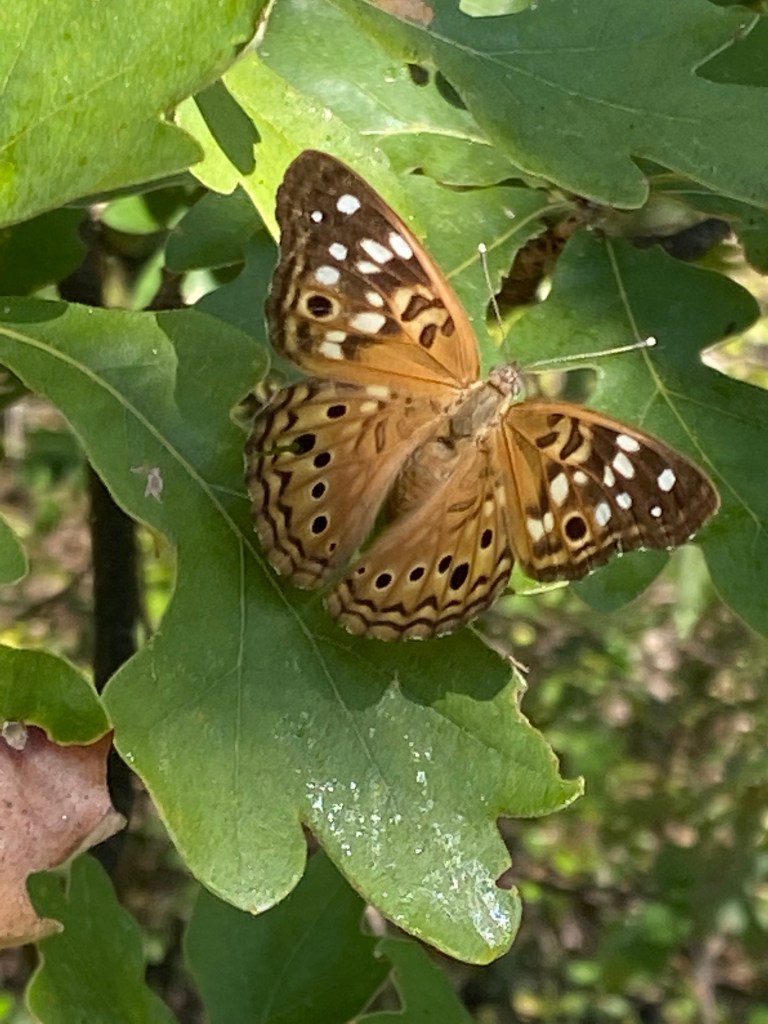
Sounds strange, right? What exactly is running around trying to be ruler of the woods? Butterfly folks know that the hackberry emperor is a butterfly whose earth-toned wings are beautifully spotted, not bright and showy like monarchs or fritillaries, but really lovely nonetheless. They are called hackberry emperors because the hackberry tree is the host plant that feeds the caterpillars of this species.

A hackberry emperor

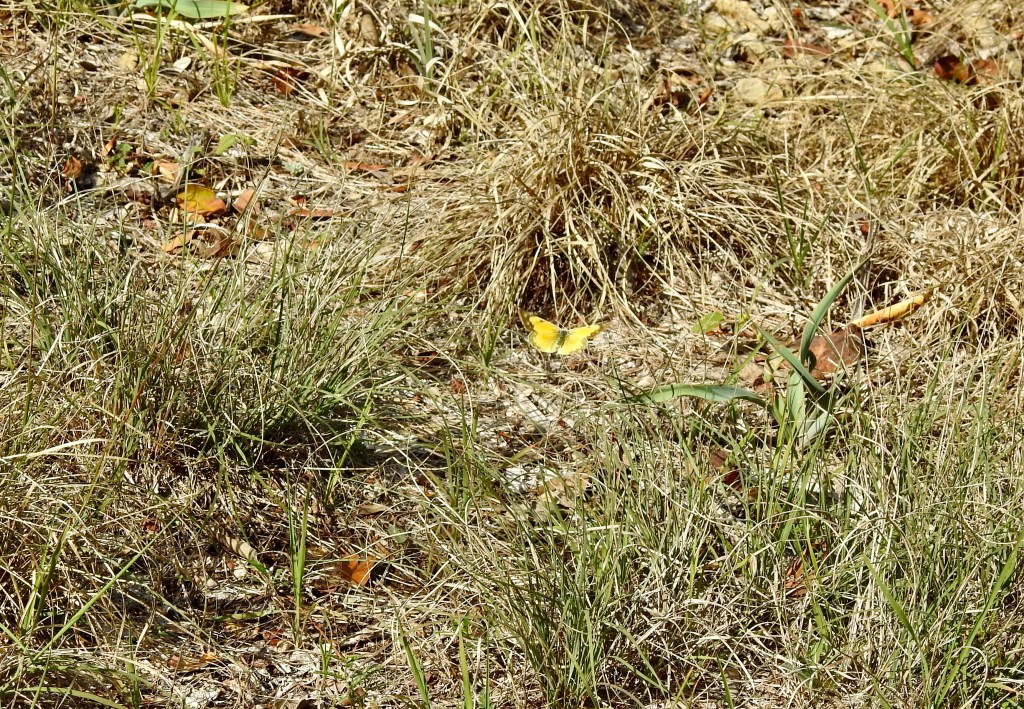
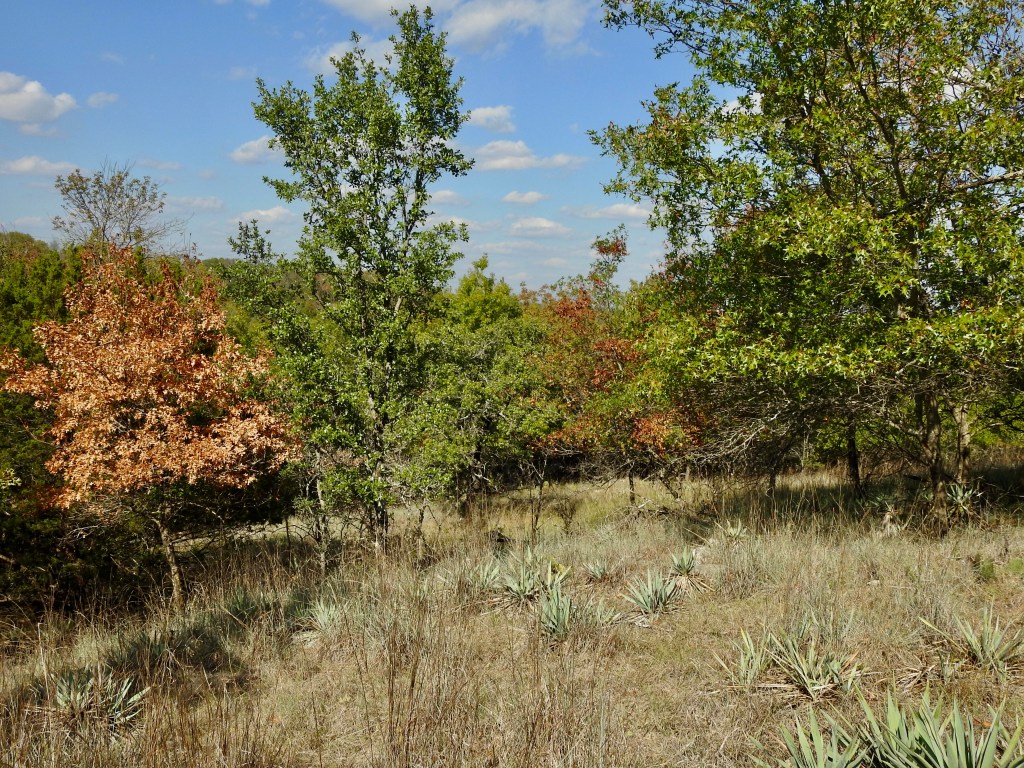
Anyway, today the woods were alive with butterflies, mostly hackberry emperors but also snouts and others. There were small yellow butterflies and little gray-white ones flying near the ground. It was one more sign of autumn, as butterfly activity ramps up.

This afternoon I was at Sheri Capehart Nature Preserve, the wonderful little remnant of Eastern Cross Timbers in Arlington and an oasis for butterflies and many other things. It has been a difficult year at the preserve, full of drought and record high temperatures. Then, briefly, there was drenching rain, and a return to drought.

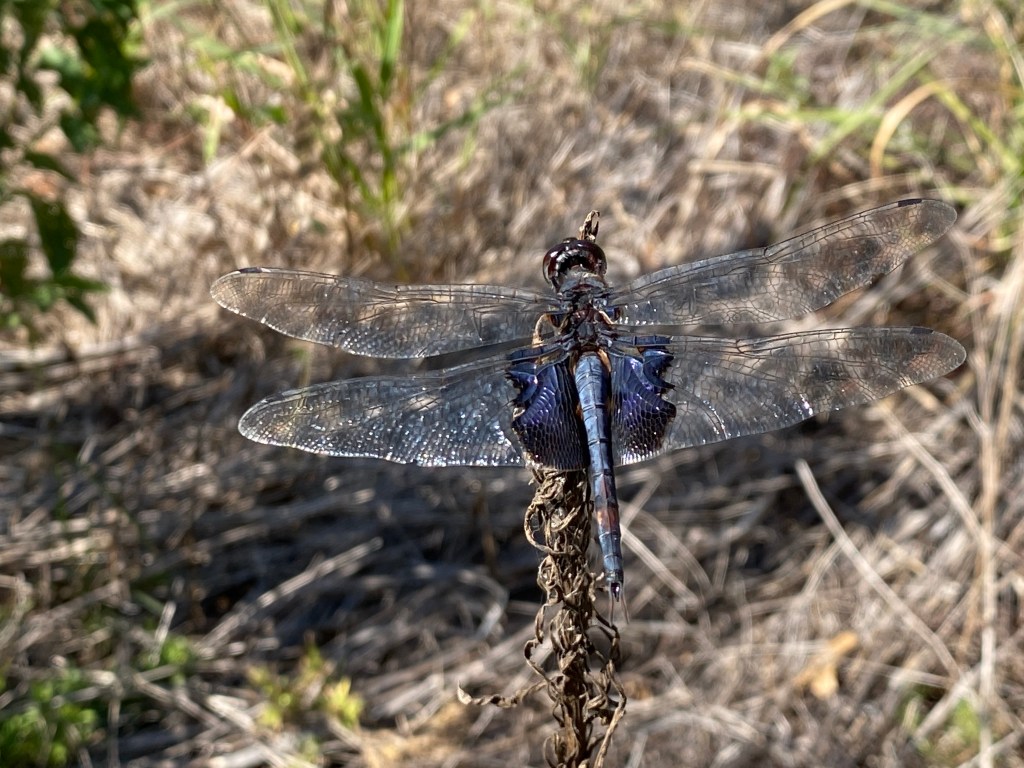
The water level in the north pond was low today, lower than I have seen it in quite a while. I could see the bottom, or at least could see the ragged layer of reddish algae growing along the bottom. Above the water were dozens of dragonflies darting and dipping, floating on the air and perching on twigs and reeds. They brought to the pond what the butterflies brought to the woods: a sort of dancing, whirling energy.

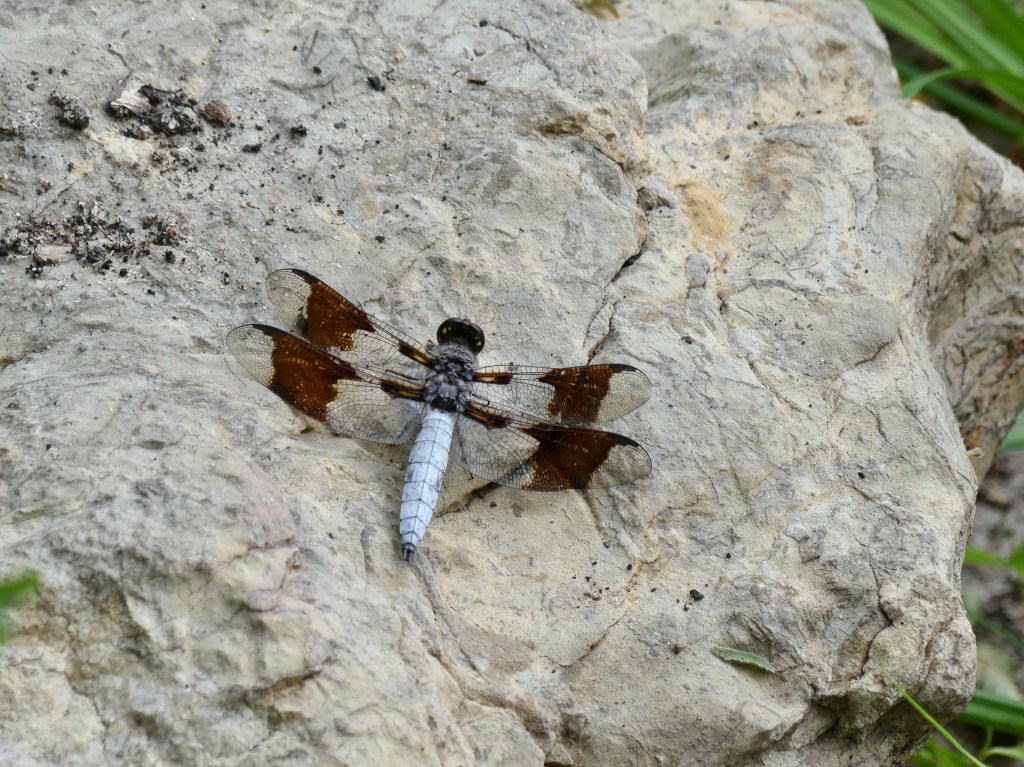
A black saddlebags, a species of dragonfly (note the dark “saddlebag” patches on the wings)

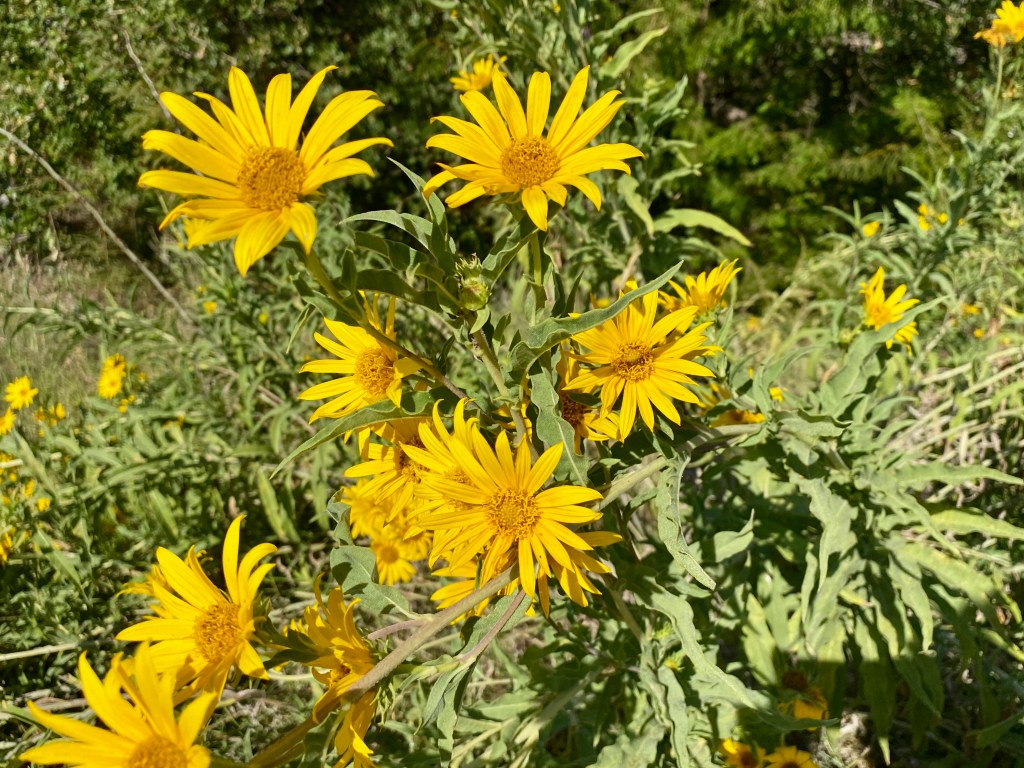
There was one last bit of autumn, adding just a little more charm to this afternoon with the sun at a low angle and cool breezes moderating the warm sun. Maximilian sunflower, a native prairie plant that blooms at the end of summer through the fall, was blooming at the preserve. Those clusters of big yellow flowers are a beautiful sight every year.

Maximilian sunflower

A Morning at the Edge of Autumn

The change of seasons can be imperceptible when one day is mostly like the last one. Sometimes, though, there is a day that feels like change has come. September 11, this year, felt that way, and the LBJ National Grasslands was a great place to greet the new season. I drove toward Decatur in early morning, with the nearly full moon watching over me and the sun rising as an orange disk on the other side of the sky. But to the northwest, a blue-gray deck of clouds inched toward me. I reached the edge of the clouds at Decatur and left the moon and sun behind.

In a small pine grove east of Alvord, the pine trees swayed in a cool breeze. They made a beautiful sound like water rushing as each wave of air poured through the pine needles. My thermometer registered 66 degrees, and we stood under the trees with one of us commenting that she was glad to have a jacket. 

There was Dana, Erika, Carol, Carla, Kayla and me, most of them Master Naturalists and all of us naturalists in the sense of people who study the natural world and who return time and again to be lovingly, gratefully immersed in it. Kayla and I have started a community we refer to as the LBJ Grasslands Project in which we can be immersed in the grasslands, online and in small group visits there. The walk in the grasslands on September 11 was one of those visits.

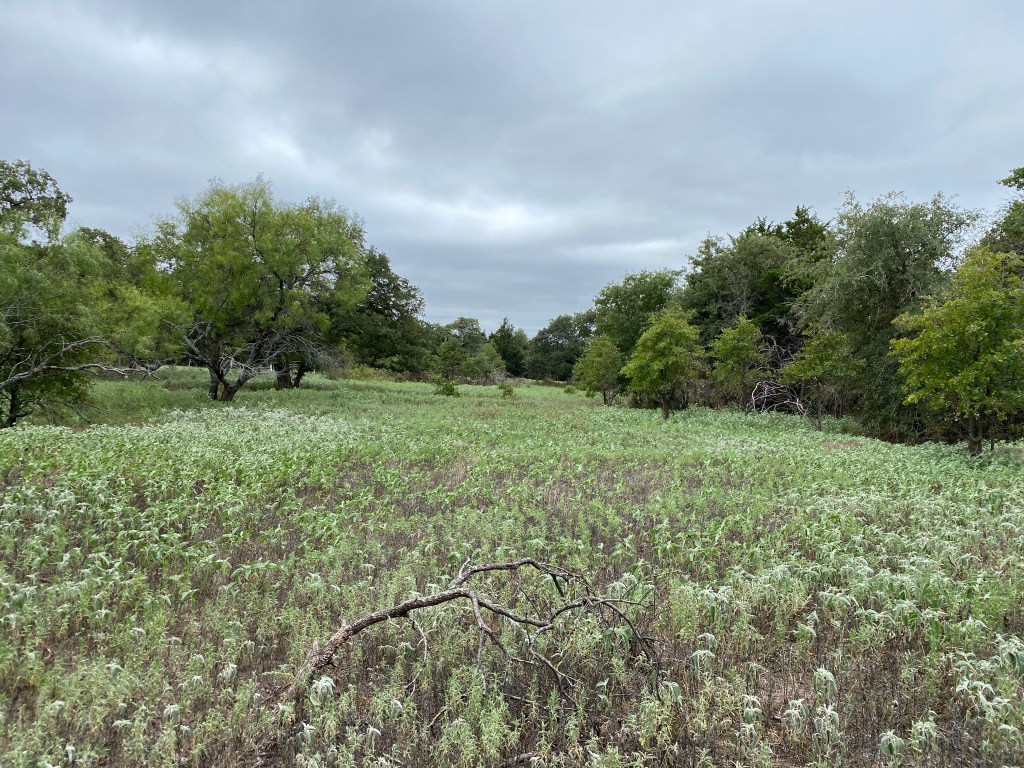
A field with lots of croton

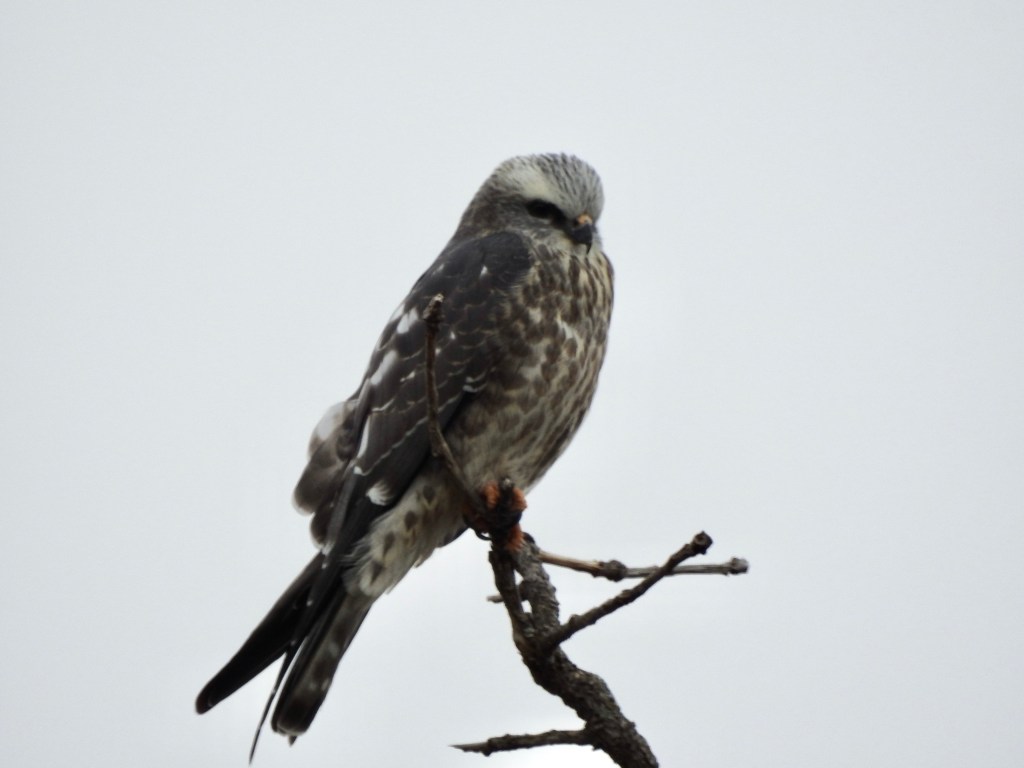
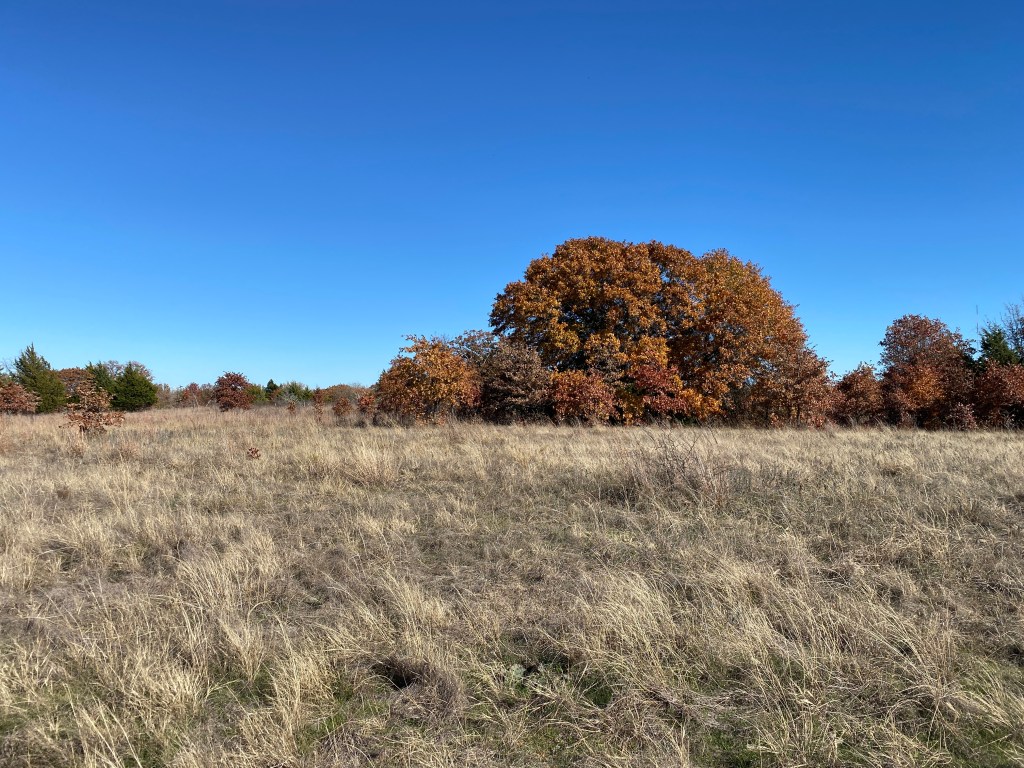
Under the deck of gray clouds we began walking across open prairie patches and through areas of oak and juniper woodland, looking at the green growth after the prescribed fires from some months ago. Very soon after the fire the new growth had appeared, but the grasslands then had to endure months of heat and drought. The recent rains triggered something like a second spring, with lots of new green vegetation and beautiful flowers. Some of the meadows were full of croton, also known as “dove weed” or “goat weed,” and those fields had the different texture and color of those grayish green leaves. Kayla examined branches for lichen and found several beautiful varieties. Then we looked up in a dead tree to see a young Mississippi kite perched there, watching us with little apparent concern. We took photos and wondered if that brown-streaked bird was really a kite. As we did so, I noticed that the clouds were beginning to break up and the sky beyond was a beautiful blue. 
A juvenile Mississippi kite

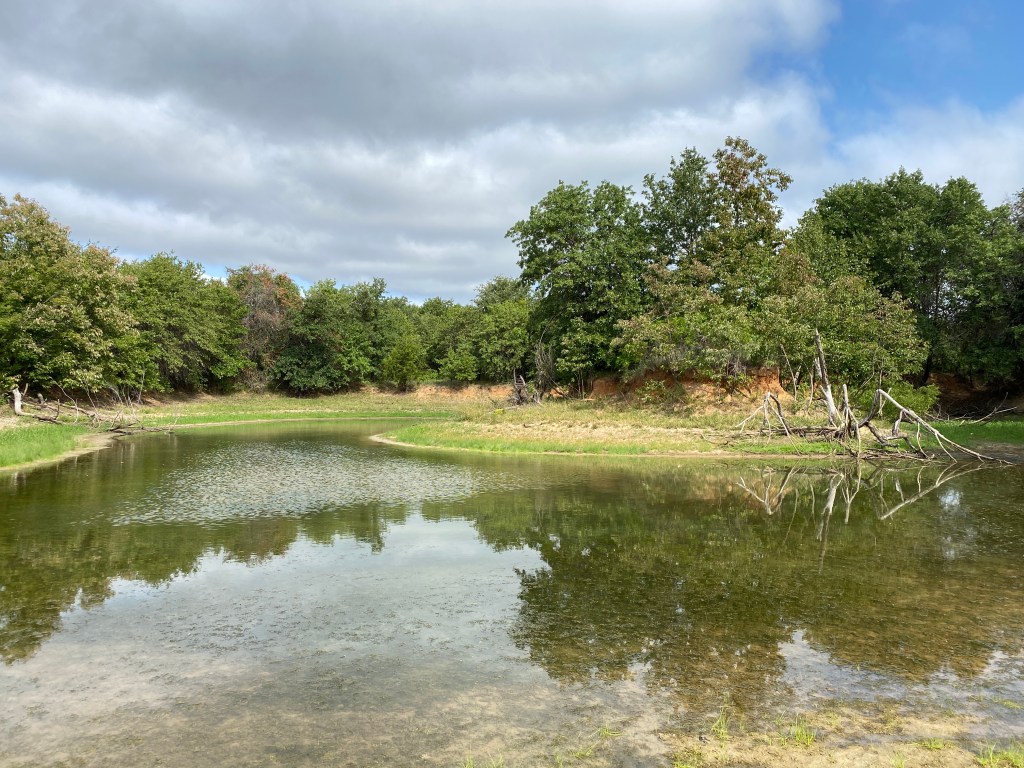
We came to a couple of small ponds within an area where the sandy soil was eroded and scooped out. One of the ponds had what was nearly an island, a steep mound on which several trees grew, including some persimmons. Most of the developing fruits were green, but I found a ripe one and ate part of it. The texture was a little like plum and the taste was vaguely peachy. What a wonderful place this was!

The boundary of this little place was a low eroded embankment where the woodland gave way to the basin that held the pond. My companions were scattered near the pond, sitting quietly to write something about what we were experiencing. A breeze came down and stirred a patch of ripples in the water. Above the embankment, some sumac was starting to turn red, and the oak trees moved with each current of air. Those trees sheltered so much life in feathers, scales, chitin and fur. Above the tree line, soft clouds drifted and the sky behind them was deep blue shading to pastel toward the horizon. In the distance, a group of crows fussed at something. 

This is the part I love the most – quiet, wordless moments just taking everything in or reflecting on where we had been. A member of our group wrote about the quiet, the rippling water and “sense of separation from today’s world.” This is a place of refuge from cities and never-sleeping machinery. This is a sanctuary in which we can be still, feel the sun’s warmth and the soft breezes, and listen to birds. I didn’t want to leave. I wanted to sit among the bitterweed and sedges and talk with the cricket frogs.

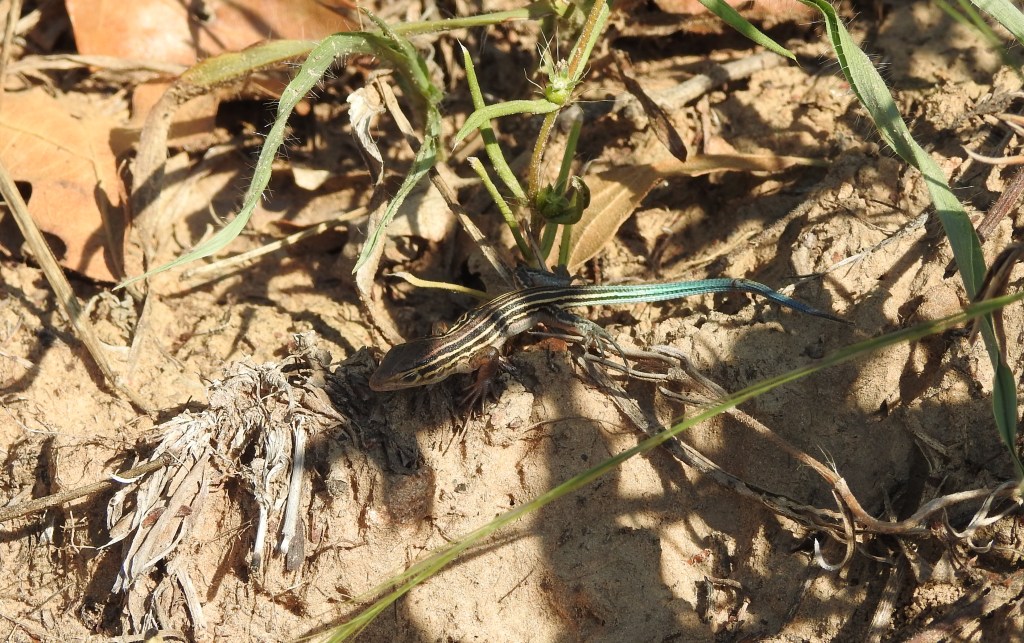
A hatchling whiptail lizard, either a prairie racerunner or spotted whiptail

The time came to an end, however, and we started back. Somewhere we noticed some movement in the leaf litter and I was enthralled with a tiny striped lizard with the most beautiful blue-green tail. Stripes and blue tail send my mind immediately to the thought that it was a baby skink, but the details of body form and pattern made clear that this was a newly hatched whiptail lizard. A couple of us watched as this tiny reptile hunted invertebrates under the leaves, biting and shaking and then chasing the ant-sized insect again. I was grateful that he or she decided to ignore us and continue hunting as we watched. Just another moment of fascination and beauty within these woods and prairies. 

More summer-like days will come, but the sun is lower in the sky now and the heat of the day is nothing like July. There will be more walks as we slip into autumn. I look forward to joining friends for another day at the grasslands. 

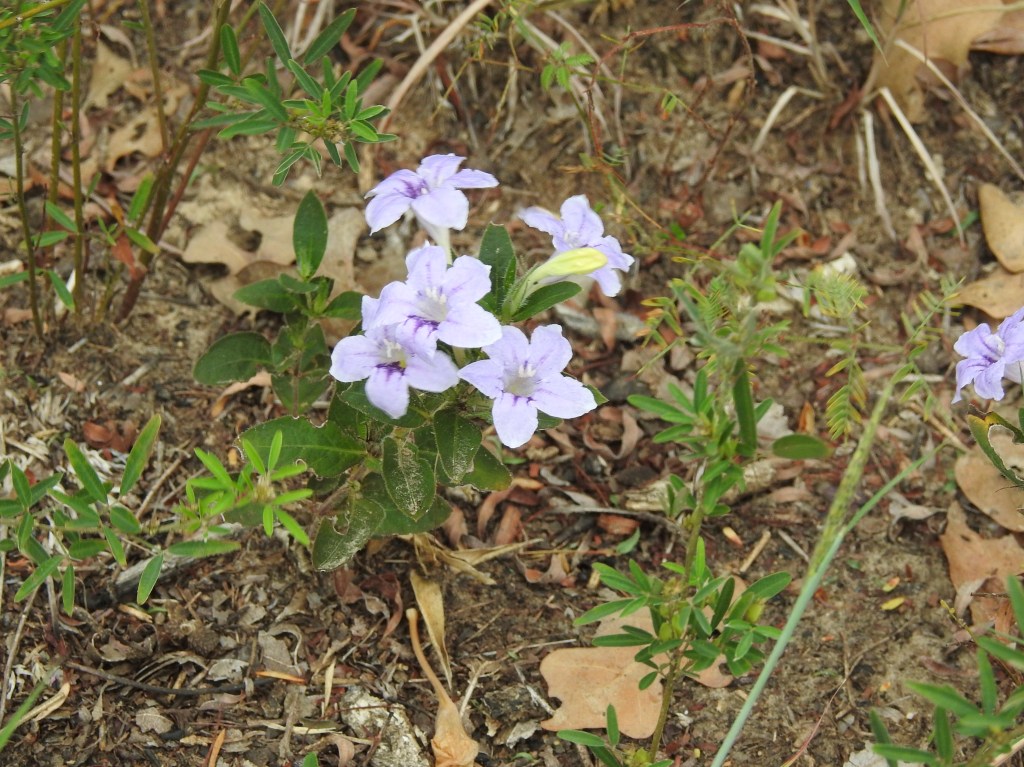
Hairy ruellia, a kind of petunia, grew here and there in woodland openings
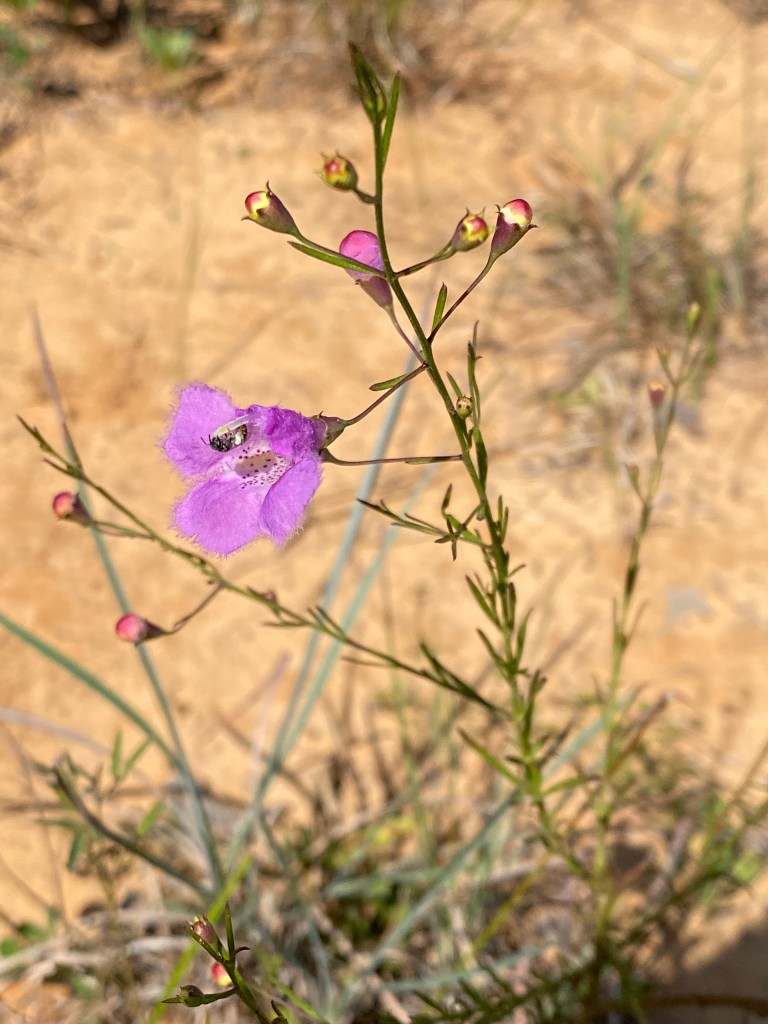
A false foxglove, as identified by iNaturalist

To the Grasslands, With Gratitude

Yesterday, August 20th, several of us took a walk in “Unit 30” of the LBJ National Grasslands, and afterward I wrote this letter to the grasslands. Writing to the grasslands might seem odd. We often think of it as an inanimate “thing.” Why write words to something that has no comprehension? And yet, we speak or write to those with whom we have a relationship, and writing to the grasslands acknowledges that relationship. It affirms the feeling and connection that is present when I visit there.

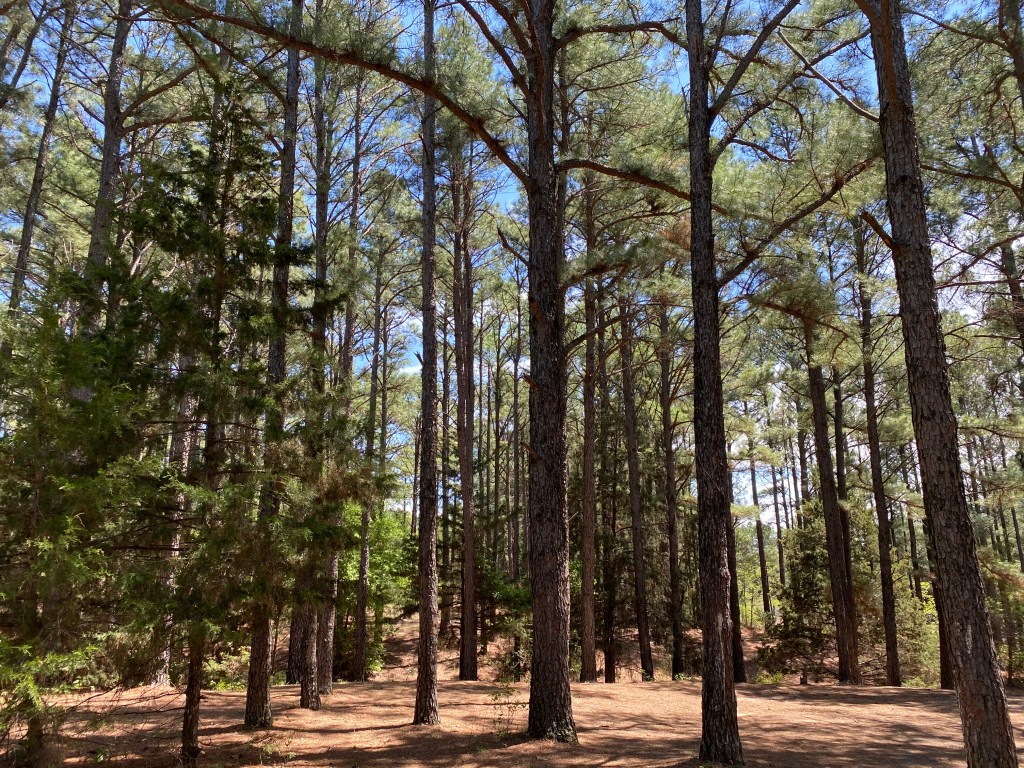
The pine grove, a beautiful, non-native oddity within the grasslands

Dear Grasslands,

I came to see you today, a little unsure of what I would find. After a brutal summer of heat and drought, could your oaks and greenbriers still be green, and could most of the lives you support still fly, jump and swim in something like the abundance and beauty that I’ve seen in all the previous years that I have known you? All of that wonderful, amazing life, and the breezes that come to the ridges and hills, and the bright sparkling ripples on the winter ponds, those are your gifts. Like a generous friend, like a nurturing mother, you offer those gifts to anyone who comes to visit.

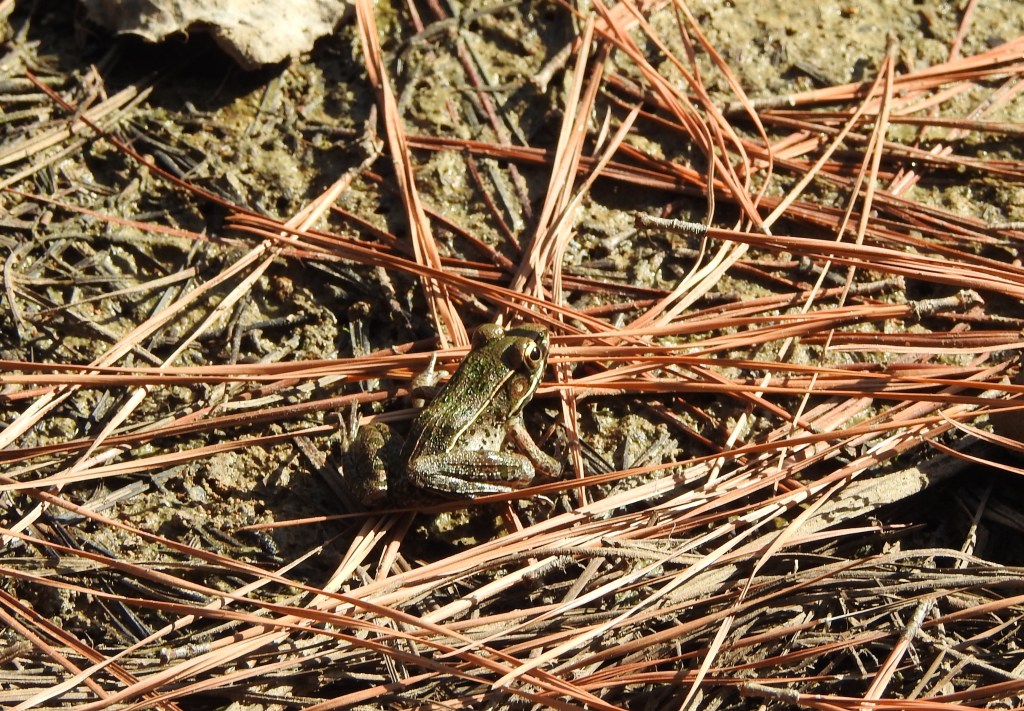
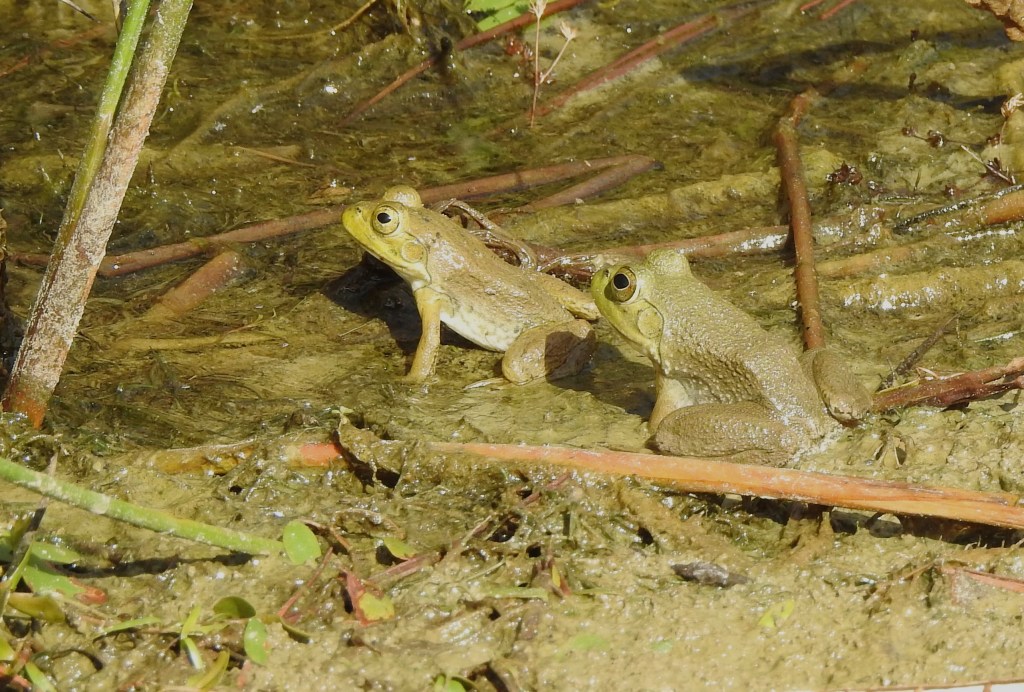
Several others came with me to get acquainted with you and experience some of those gifts. Gale, Cecily and Jim walked under those pine trees and investigated your ponds, reduced to smaller versions of themselves by summer’s drought but still home to so many frogs. As always, they break out of their camouflage and bounce frantically into the water when we come close, only occasionally giving us a glimpse of spotted skin, or pale green shading into a brighter color, or a mud-gray bumpy little cricket frog. These frogs were showing us that you were still full of life, and never more obviously than at your ponds.

Leopard frog
American bullfrogs

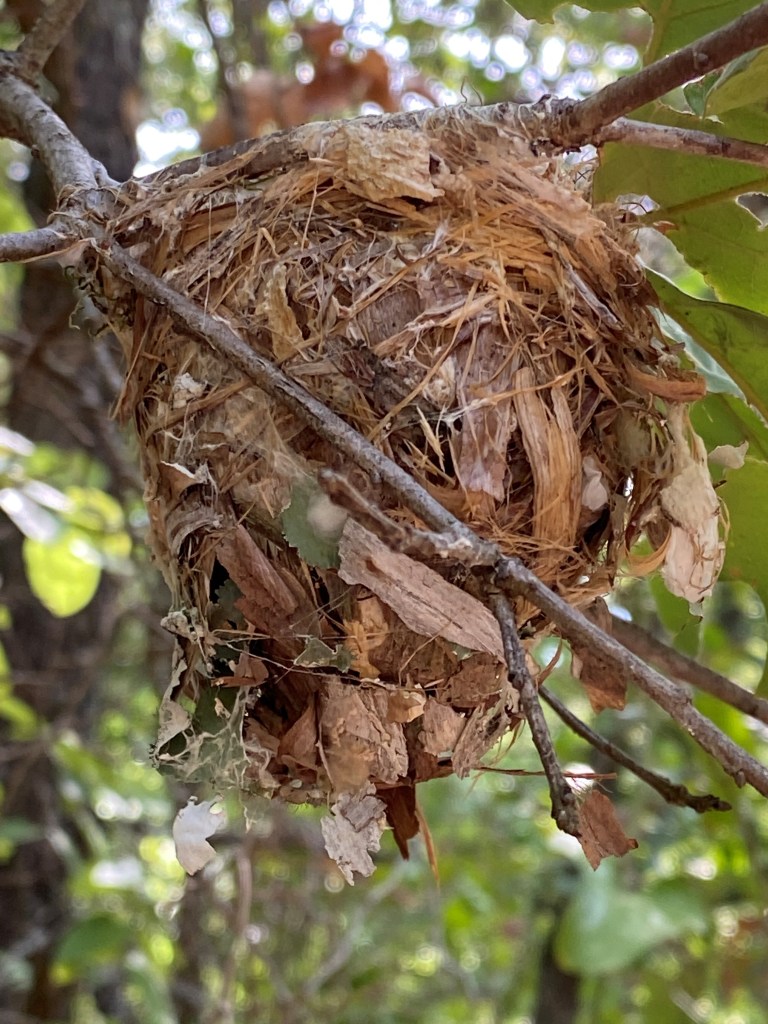
We followed one of the trails leading away from the ponds and into oaks, junipers, and pocket prairies. Jim found a small pouch of a bird nest hanging from the delicate ends of tree branches. We spent some time appreciating all the different materials that had been gathered and woven into this little cup. There were bits of leaf, lichen and grass creating a sturdy little shelter for a delicate egg and a tiny bird who embodied both engineering skill and attentive nurturing of new life.

Bird nest

The nest was, as I see you, a sort of fractal of who you are. Each part repeats the overall pattern of the whole grasslands. Here, you are warm feathered life with skill and determination to keep life going. There, you are cool aquatic life with jeweled eyes and an entrancing nighttime voice, re-creating life through egg, tadpole, and adult frog. Everywhere you look – and listen – there are individual lives doing fascinating and beautiful things to keep life going.

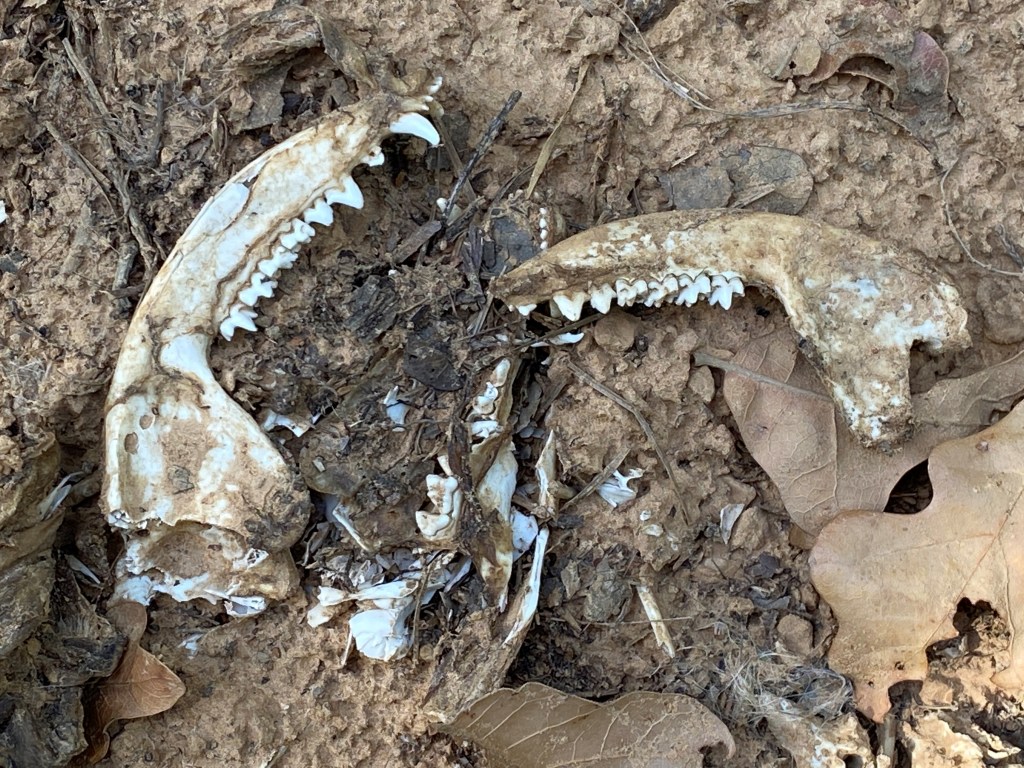
And we look at any part of you from another angle and we see the other part of life’s story. This time, it is life surrendered, either to feed another life or when an individual life runs its course. We discovered parts of a skeleton on the trail, including two nearly complete lower mandibles of some small mammal with the teeth of a predator. A part of you, living and hunting and contributing to new life for a time, and then feeding others after his or her own life ended.

Bones and teeth

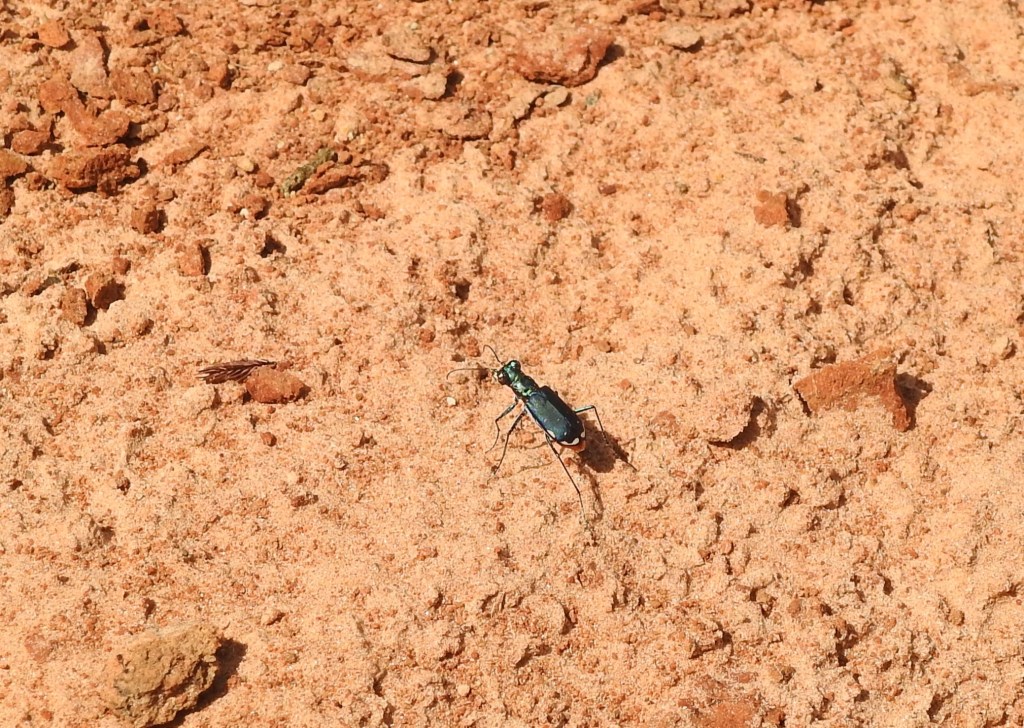
All along the prairie openings, grasshoppers jumped out of the way. They were a welcome sight after the prolonged drought that might have reduced their numbers and left so many animals without food. And we saw tiger beetles foraging along the sandy trail. Evidently there were enough smaller insects to keep those fierce little predators fed, too.

A tiger beetle

It was a privilege to visit you today and experience these things. It is encouraging to find resilience in a time when some things are falling apart. We might lose faith in the old, familiar patterns of the world, the continuing gifts of the world, without coming here and finding your generosity and predictability. Thank you.

The Road and the Refuge

The road meanders ahead, 
Slips easily through trees and dappled light. 
Twin tracks through soil and grass 
Disappear at the edge of sight. 

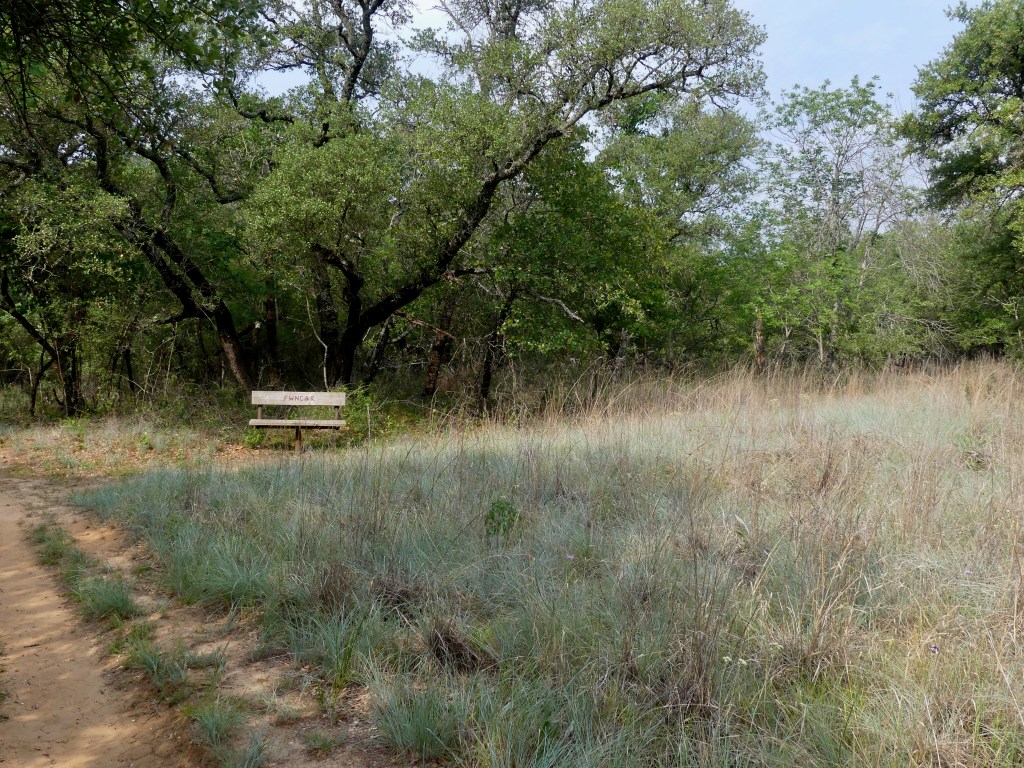
Today I followed some trails and roads at Fort Worth Nature Center & Refuge. I needed some time to sit at “my” bench, located in a little patch of live oak and bluestem savannah. Under a live oak, the bench faces a little patch of little bluestem and a nice community of other plants.

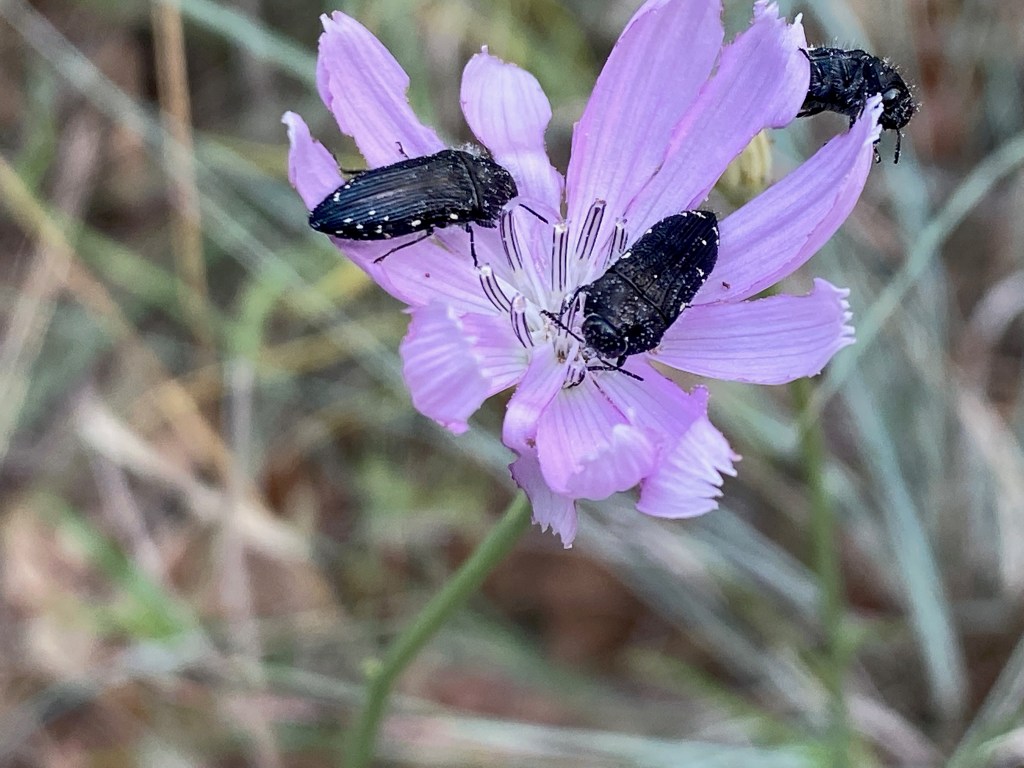
The first thing I noticed were a few scattered slightly purple-pink flowers on slender stalks; Texas skeleton plant, according to iNaturalist. Each of these flowers had several small beetles rummaging around within it. They appear to be a species of metallic wood-boring beetle (the larvae may be wood-boring but the adults seem to love flowers). This place is very familiar from my winter visits but it was delightful to find out how spring changes it. There were other plants – tall wooly whites with their clusters of flowers and a plant with clusters of long, oval leaves with red stems extending up into the central leaf vein.

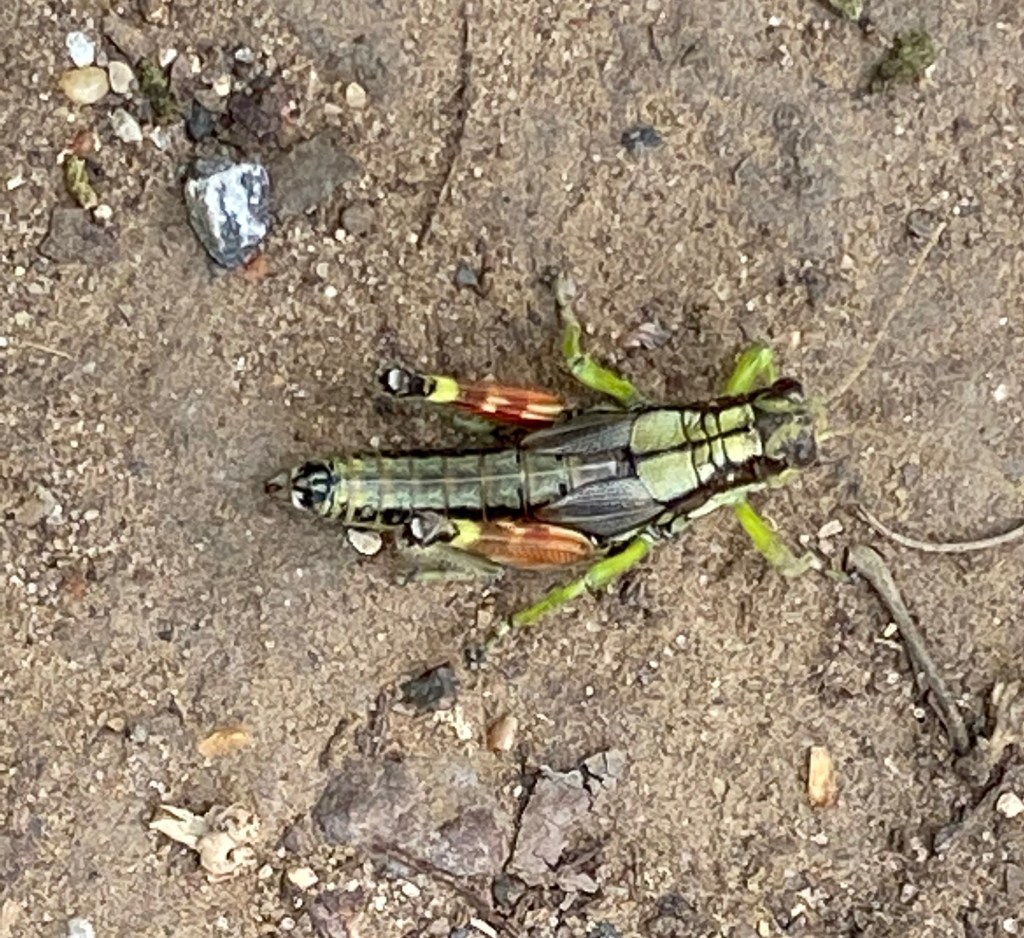
I also found a new grasshopper, identified by iNaturalist as a post oak grasshopper (and there were certainly post oaks nearby). Green and black striped bodies with orange and yellow back legs – wow, what a beautiful insect!

Birds were calling all around. There were northern cardinals singing, “cheer! cheer! cheer!” and one that sounded like “cheater-cheater-cheater!” I liked the first version best.

This road might bring us 
To some new place full of mystery, 
Or perhaps to a familiar spot 
With bees and songbirds for company. 

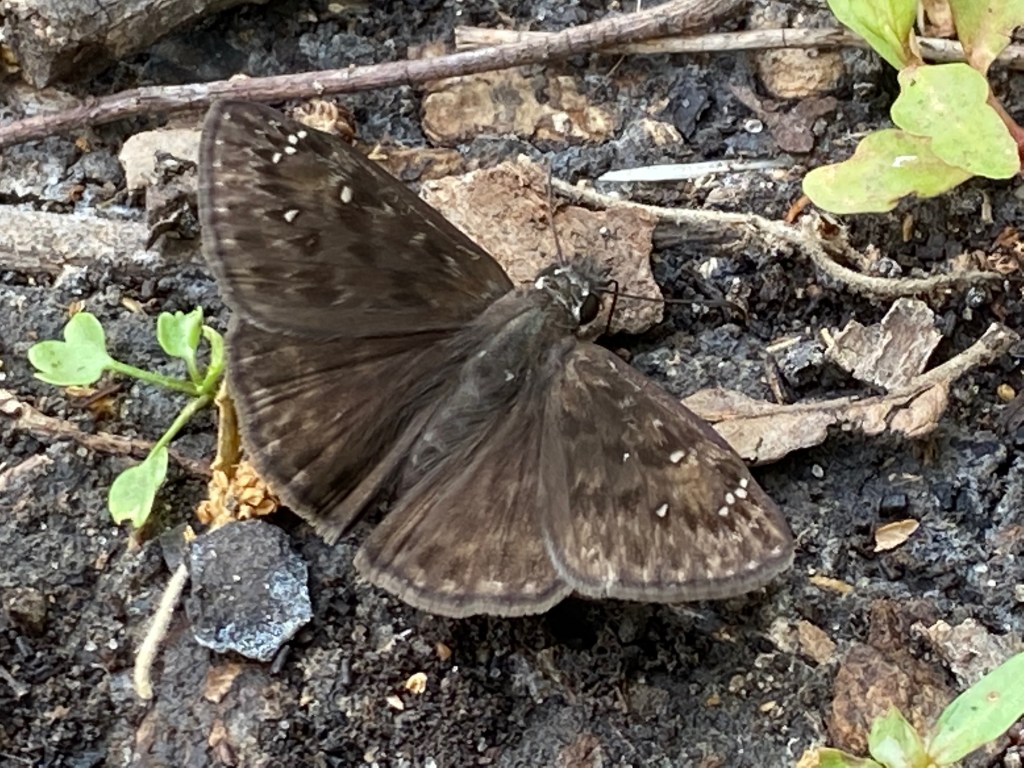
I followed the trail to the edge of the marsh, past a twenty foot tall dead tree whose bark had the appearance of being twisted, as though earlier in its life something grabbed it and gradually twisted it as it grew. There was also a hole, very much suggesting a woodpecker’s cavity nest, but it was only about seven feet off the ground. At the water’s edge there were dragonflies and a handsome brown duskywing skipper to see.

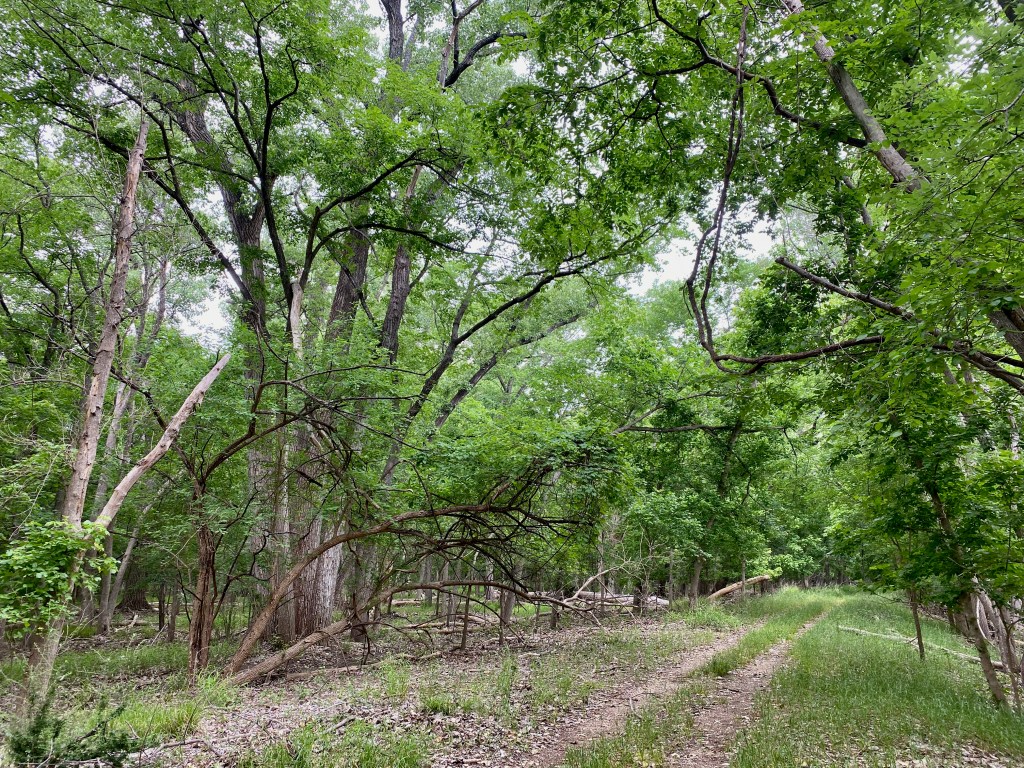
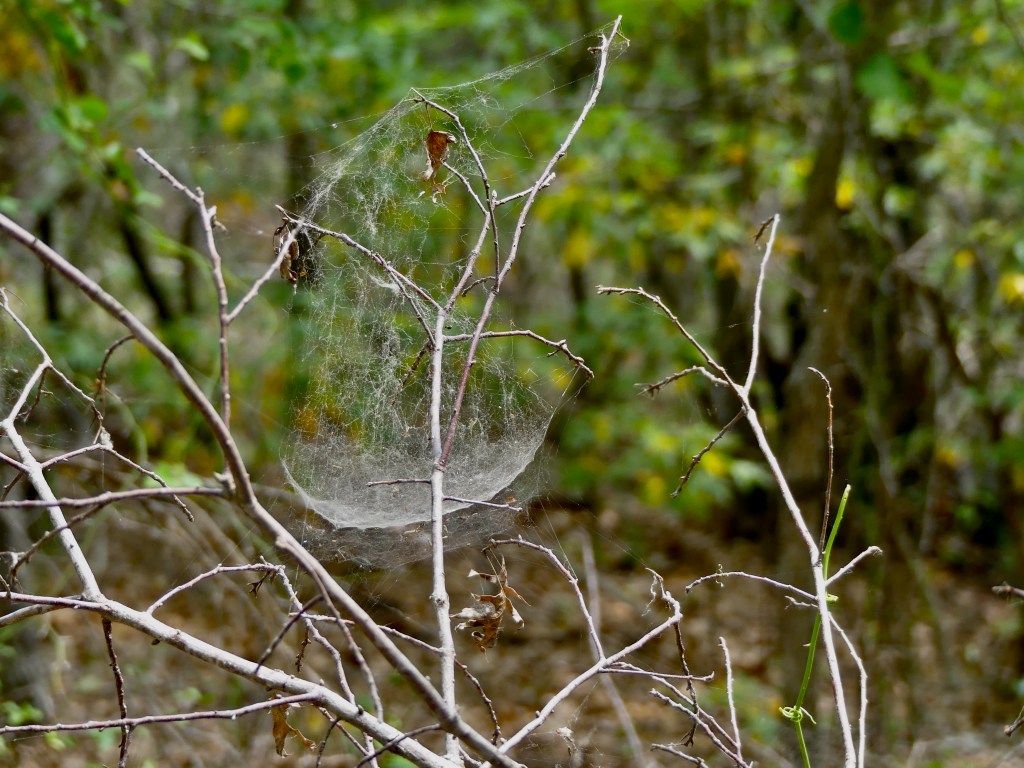
There was another road to walk, the familiar old path down into the bottomlands. The giant cottonwoods and other trees were like the pillars of a giant cathedral, and the place was full of life. One of the things I noticed was a bowl-and-doily spider, a small woodland spider whose web looks like a bowl suspended over a flat, old-fashioned doily.

I’m glad for this place – these trees – and all the other living things here. Fort Worth Nature Center & Refuge lives up to that part of its name, “refuge,” as we can escape deeply enough into the woods and prairies to reach a place of sanctuary and safety.

The road continues on and on 
To quiet places where, with feathers and trust, 
We soar above grief and fracture 
And continue the journey as we must. 

Frogs (And More) Among the Palmettos

My friend Ruthann Panipinto was sure that Palmetto State Park, east of San Antonio in Gonzales County, would be a great place to visit. She really wanted to see if we could find a cottonmouth there, which involved neither bravado nor fear on her part. It was simple curiosity and love for those misunderstood pit-vipers. Ruthann has answered many snake relocation calls from fearful homeowners. She has captured and moved many venomous snakes and freed some that were stuck in glue traps, too. We both would welcome whatever reptiles and amphibians we might see. And so, we decided on March 29 as a good day for a road trip.

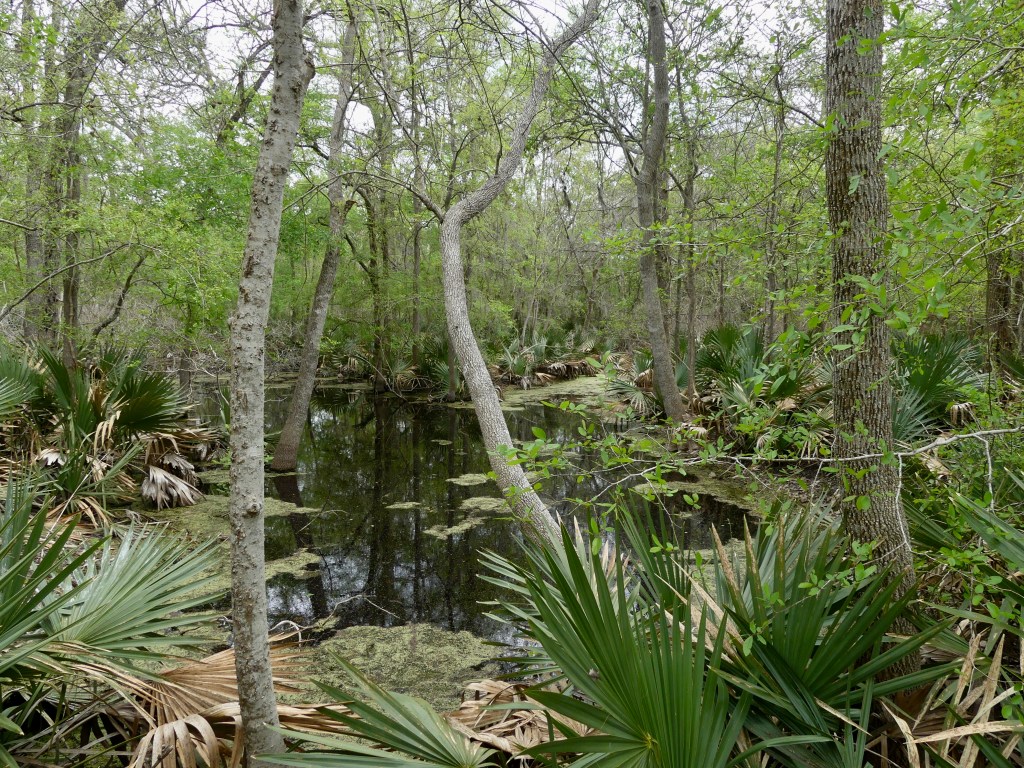
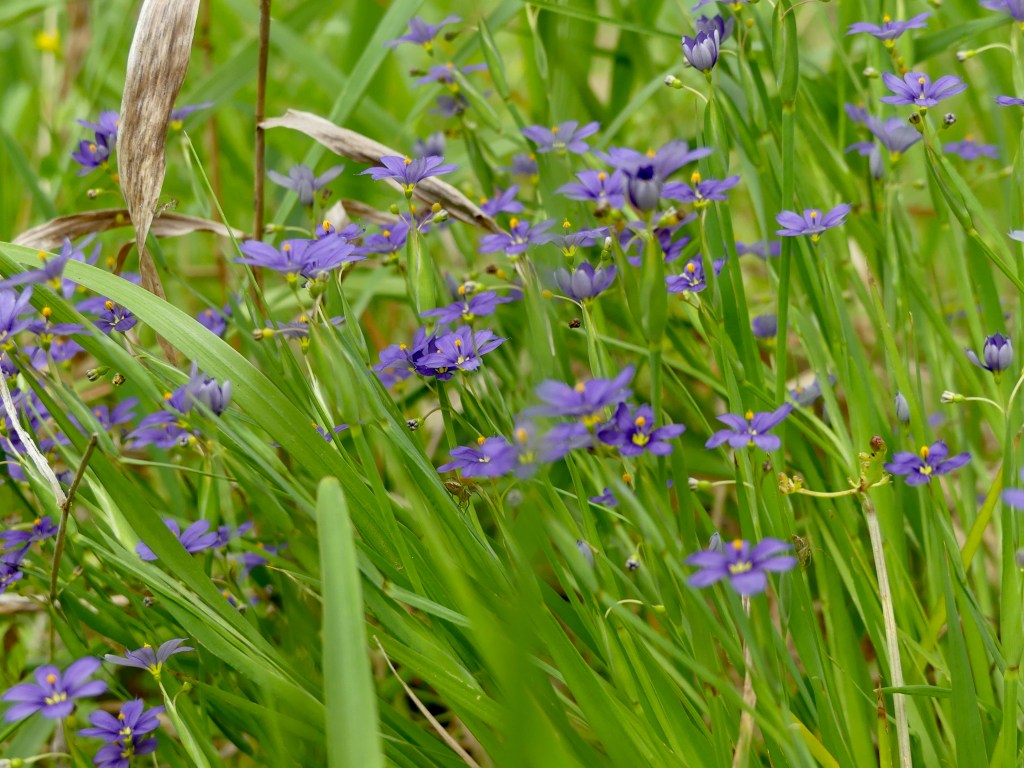
And if we didn’t see reptiles and amphibians (herps), Ruthann would be delighted with the plants that would now be flowering there. She remembered from a previous visit that there were lots of red buckeye with deep green compound leaves and upright clusters of red flowers. In addition to buckeyes, a couple of flowers – baby blue eyes and blue-eyed grasses – were blooming among the palmettos.

Blue-eyed grass

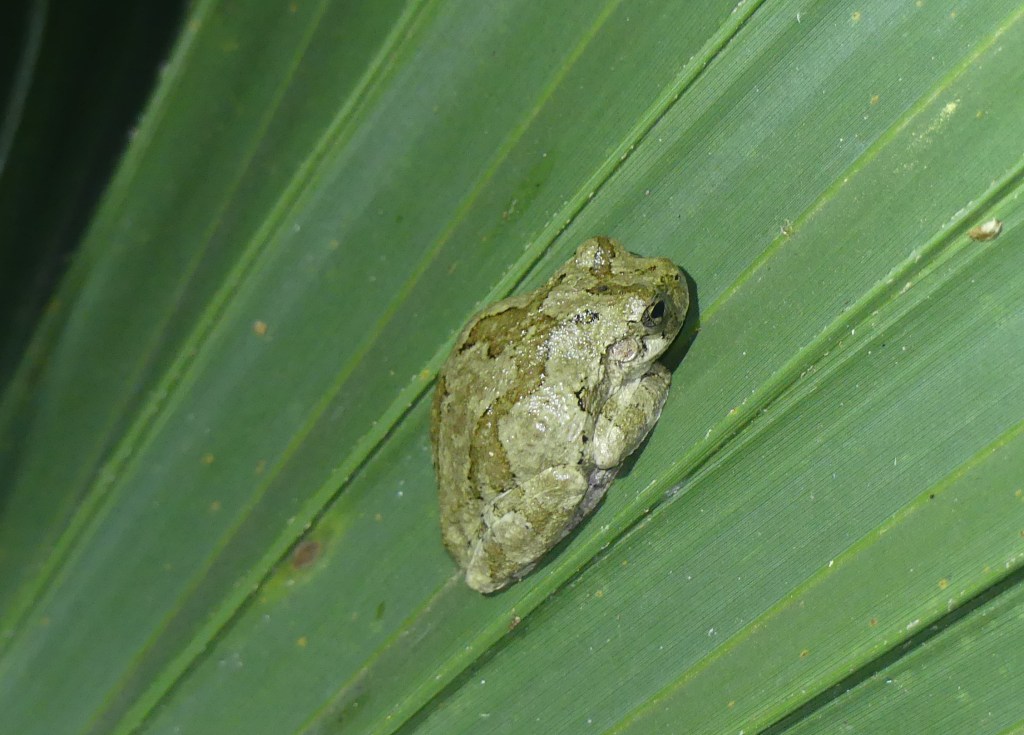
We started our walk at 2:30pm and within minutes we heard a gray tree frog (Hyla versicolor) calling. That call is what allowed me to identify it, because the trill of one species (versicolor) is slower and musical, like a bird call. The other gray treefrog species (Cope’s gray treefrog, Hyla chrysoscelis) has a faster raspy-sounding trill. If you see a gray treefrog without hearing the call, you won’t know which of those species you are looking at, because their appearance is nearly identical. Either one of them is a lichen-gray frog about 1.5 inches long. To add to the confusion, they can change color so that the gray has a little green in it, or the upper part of the frog may change to completely green.

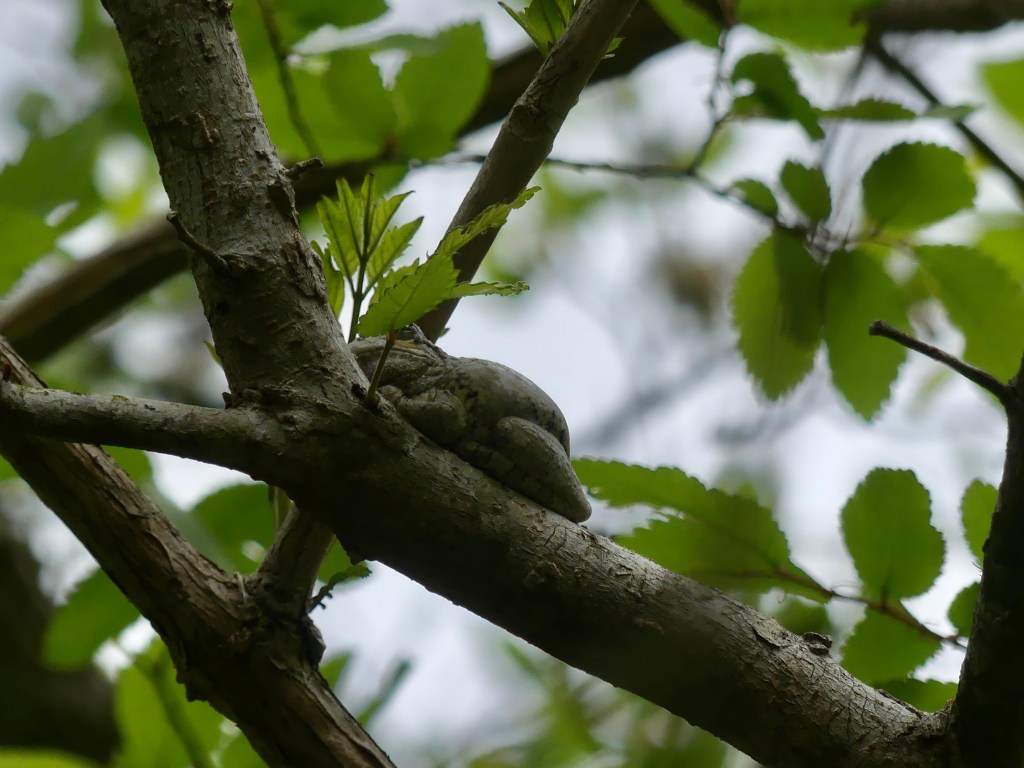
We heard the frog, but finding it was something else entirely. Ruthann looked in nearby branches – it is a treefrog after all, and we usually find them hugging a branch or the trunk of a mid-story tree. The frog called again and Ruthann resumed her search, but these treefrogs are masters of ventriloquism. It seemed to be close and everywhere at once. Finally she found the frog, a little lump on a branch about eight feet above the ground.

Gray treefrog, hidden in the branches

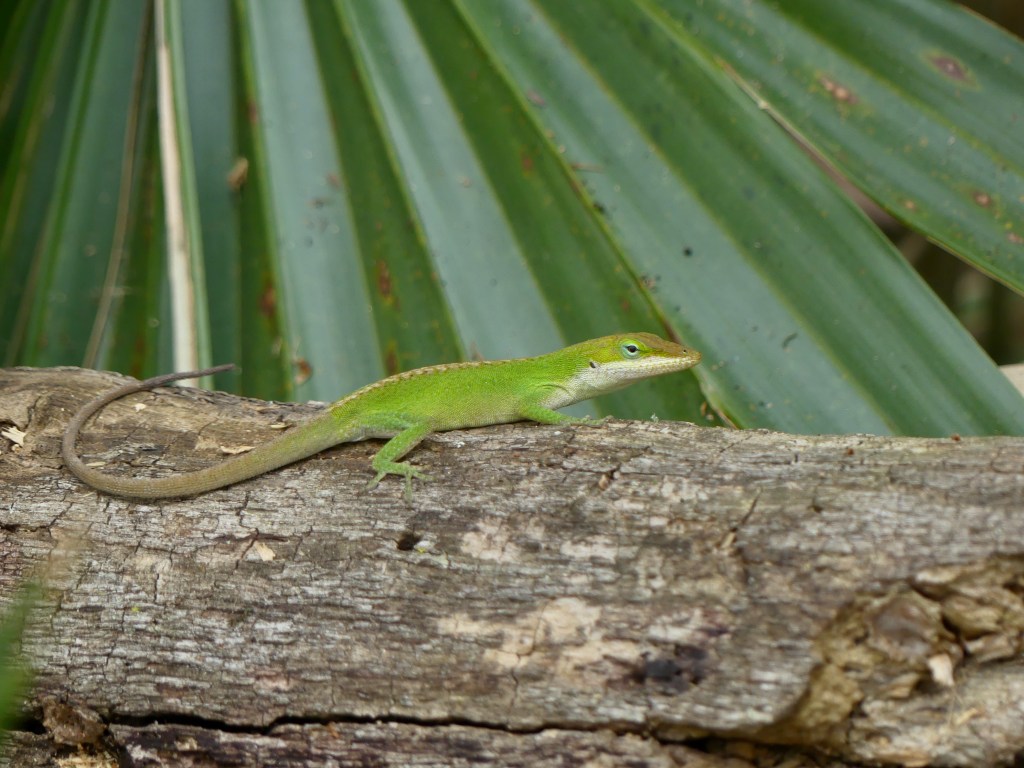
We moved on, imagining that at nightfall, when frog breeding really ramps up, the choruses of frog calls might be pretty impressive. And within a couple of minutes, Ruthann spotted a green anole. Another critter capable of shifting color and blending in beautifully with the green palmetto fronds. At the moment he was mostly green, with what Ruthann aptly described as a little “blue mascara.” The anole’s eyes are partly covered with a little turret of powder-blue skin that shifts position with the lizard’s line of sight.

Green anole

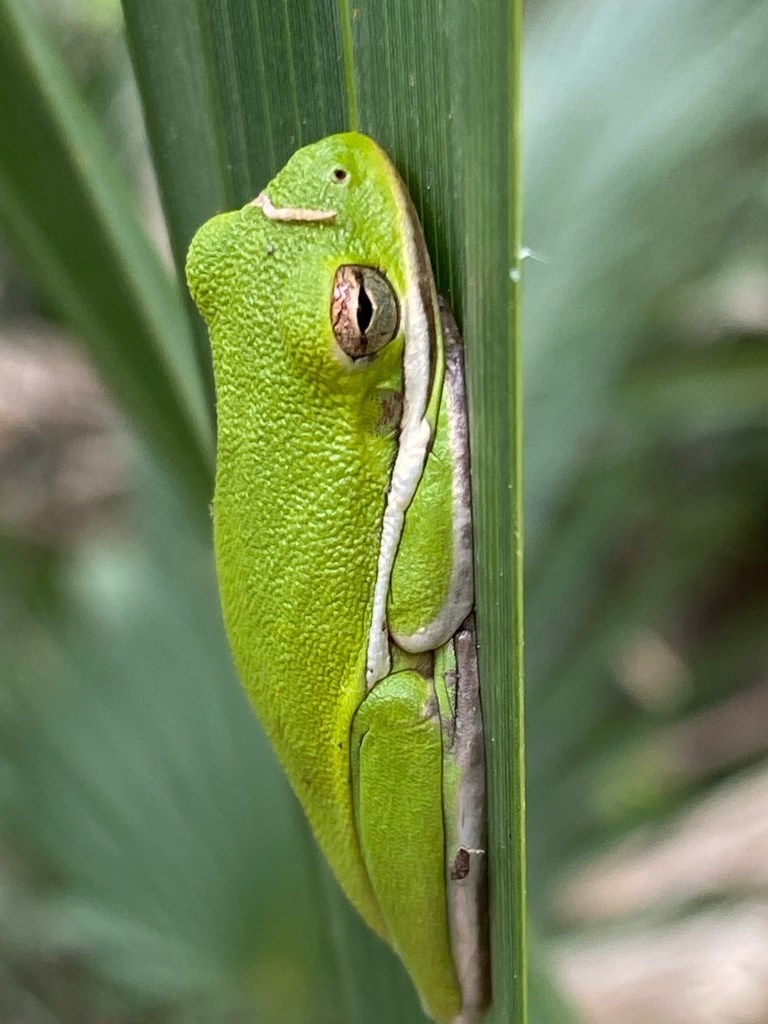
We saw dozens of green treefrogs hugging the palmetto fronds, trying to get a little rest before night fell. These were not gray treefrogs that had shifted to green, they were a different species, a little less toad-like in form and with the most beautiful lime-green skin. A dark-bordered white stripe begins on the upper jaw and extends down the side of the body. Their beautiful golden Kermit-like eyes have pupils in a horizontally-flattened shape, like those of most frogs and toads.

Green treefrog

There was plenty of bird life above us. Ruthann was hearing parula warblers in the treetops, and we saw a red-shouldered hawk and at least one crested caracara. Wrens, northern cardinals and other birds were calling from within the forest above and the expanse of dwarf palmetto that stretched out around us.

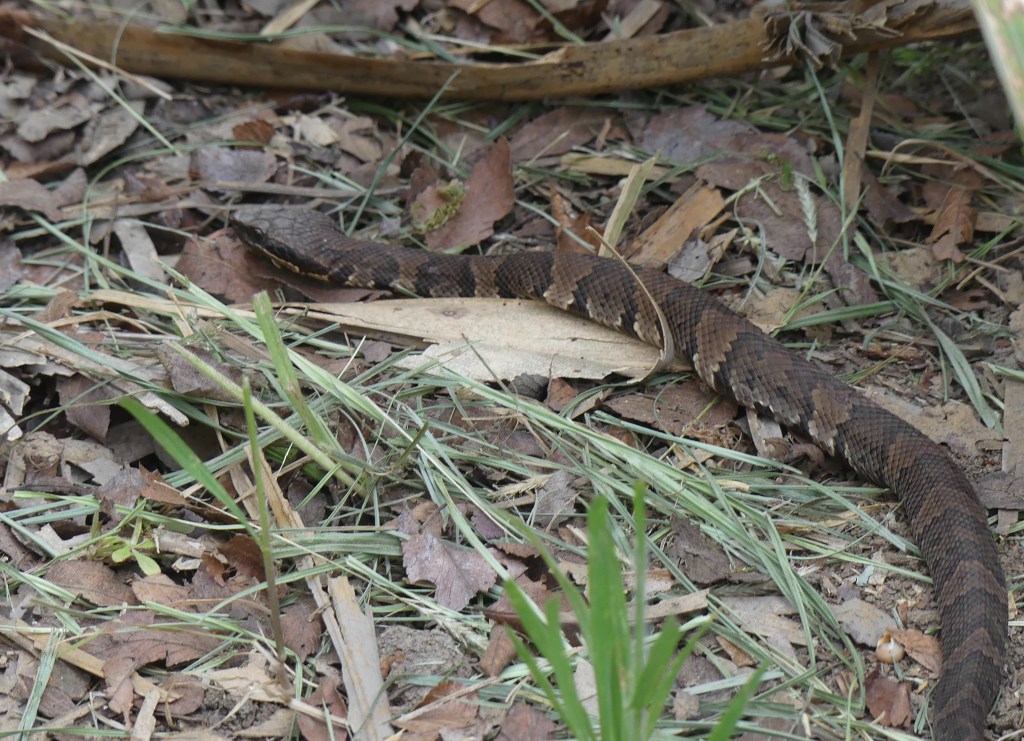
As we walked along one of the trails, a couple of park staff approached on a Gator. They stopped ahead of us, intently focused on something at the edge of the trail, a sure sign of something Ruthann and I would want to see. It was a young cottonmouth, no doubt surprised to be surrounded by admiring humans. We were happy to see that the park guys were very protective of the little snake, and we took a few photos while explaining that we would never harm the cottonmouth. We watched the pretty little reptile turn back and slip under the palmetto fronds.

Juvenile northern cottonmouth

We talked with the park staff for a while about the local ecosystem and wildlife, and they said that they do sometimes see timber (aka “canebrake”) rattlesnakes in the park. That would be a wonderful thing to see, though we did not forget that we were already privileged to see some beautiful and fascinating species.

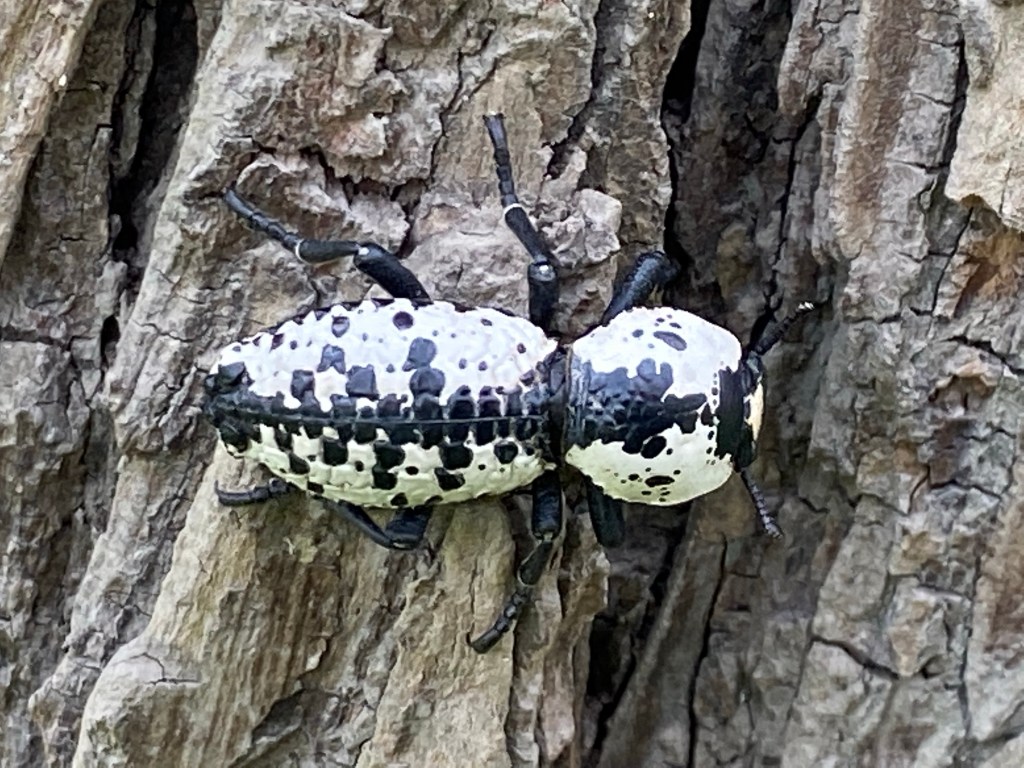
As the afternoon progressed, our discoveries included a Texas ironclad beetle. It looks like a cream-colored beetle that was splattered with black paint, and its claim to fame is that its exoskeleton is really, really hard, justifying the name “ironclad.” Internet sources such as the Field Station of the University of Wisconsin say that you would not kill it by stepping on it. Please don’t try that out in the field – this is a harmless, attractive beetle that just wants to go on its way munching on lichens as it roams around tree trunks or fallen branches.

Ironclad beetle

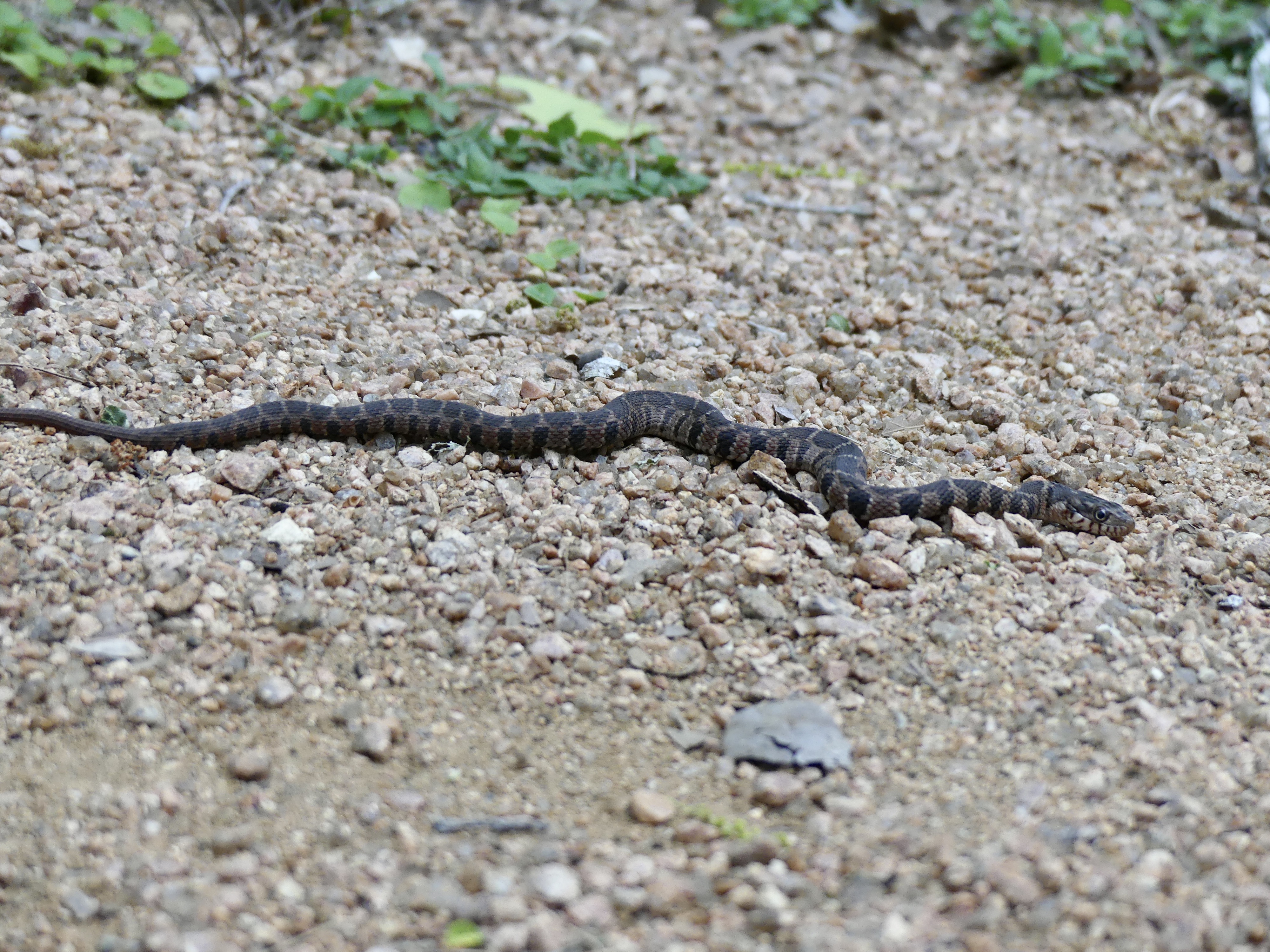
After a break, we returned to the trails as evening approached. One small squiggle caught our eyes, motionless on the crushed granite trail. A baby plain-bellied watersnake, born just last year, hoped that we would not notice a squiggly “twig” lying on the ground, even though the twig had scales and a somewhat banded pattern. I took a photo or two of this “twig” and then Ruthann scooped him up, now a fully animated snakeling struggling to get away. Nothing doing! Ruthann had to examine and talk to the scaly bundle of cuteness before releasing him to go on his way.

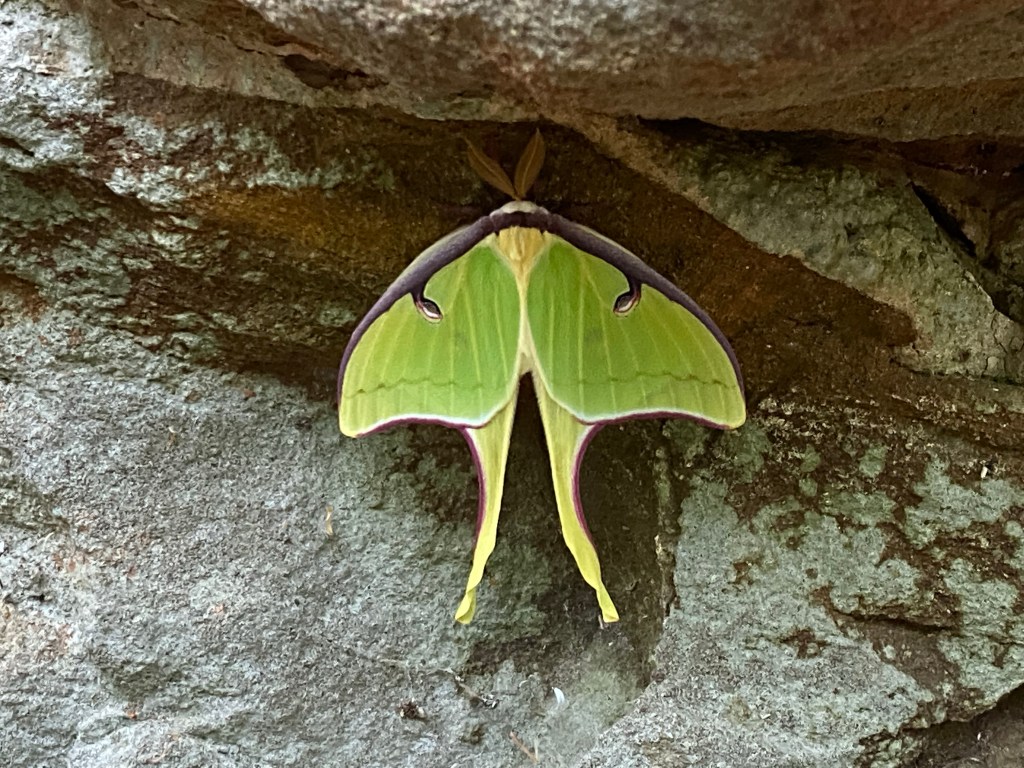
Along the Palmetto Interpretive Trail there is a water tower built nearly 100 years ago by the Civilian Conservation Corp; its pump still pulls water out of the ground to help supply the swampland. A little after 7:00pm we found a luna moth sheltering under the stones at the base of the water tower. I can remember a time or two when I have found luna moths, and each time the beauty and form of this large moth have been irresistible.

Most of the luna moth’s life is spent as a green caterpillar. When it emerges from the pupal stage as a mature moth, it will complete its life in a very short time, so short that it does not even have a functioning mouth to eat. Females release a pheromone to attract males; they take flight in the darkness and some time after midnight they find each other and mate. During flight, the long trailing hindwings are said to interfere with bats’ ability to find them by echolocation.

Luna moth

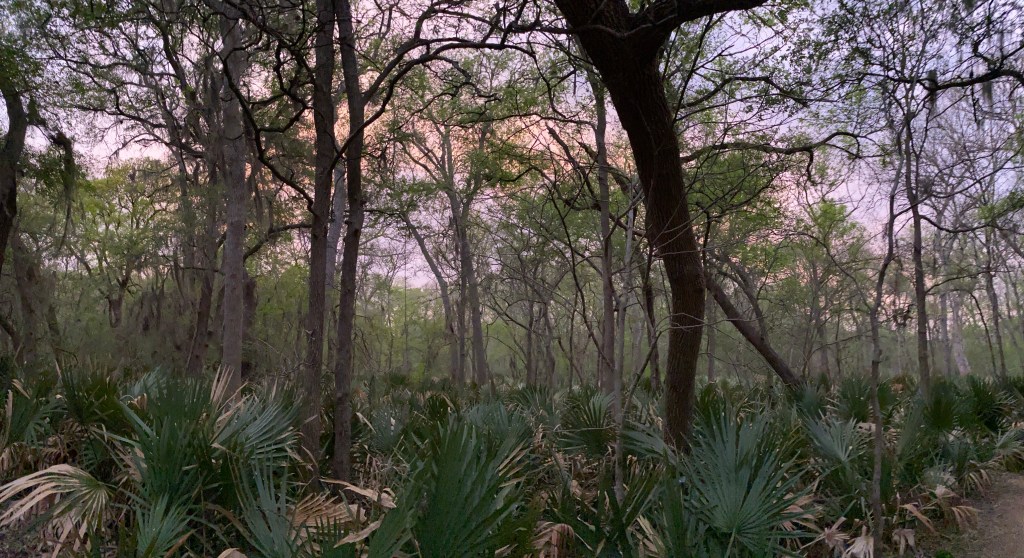
This might be a difficult night for flying. As sunset approached, the breezes became strong winds, making the tops of the trees sway drunkenly back and forth. Gusts sometimes carried dust and grit through the woodland, and it occurred to me that we might wind up dodging falling branches. The sky became rosy and golden, giving this palmetto swamp a magical sort of glow.

The Palmetto Interpretive Trail at sunset

As the swamp was enveloped in darkness, we put our headlamps on and continued walking. The winds subsided for a time, and then periodically swept through the woods again. When the trees and palmettos quieted, the frogs began calling.

Frog calls represent males advertising themselves to females for breeding. When a female approaches a male, he gets on her back in a piggy-back sort of position known as amplexus. Then, as the female lays eggs, the male fertilizes them. Different frog and toad species have different calls, so that often the call allows us to identify the amphibian, much as bird calls help us identify birds.

Against a background of the accelerating “grick-grick-grick-grick” of cricket frogs, the gray treefrogs began to call. I mentioned that it is hard to locate the frog (though it must be easier for female frogs, since that’s the point of the call). Their voices seemed loud in the close darkness.

Cricket frogs and gray treefrogs

Then the green treefrogs began to call, with overlapping sounds a little like the honking of ducks. Sometimes it was almost as if they took turns, a few minutes for gray treefrogs and then some time for green treefrogs to be heard. Sometimes they overlapped.

Green treefrogs and cricket frogs, with the occasional gray treefrog

I usually describe it as “magical” to stand in the midst of these frog choruses in the darkness. Sometimes it comes near to being overwhelming if you are right in the middle of it, or at least the word “immersive” would apply. If you get the chance, give it a try, and although you may want to search for the frogs, you owe it to yourself to try turning off flashlights and headlamps and simply letting all that frog communication wash over you.

A gray treefrog located during the night chorus

As it turned out, Ruthann was right. Palmetto State Park had been a wonderful place to visit, a beautiful and unique pocket of wetlands next to the San Marcos River. The reptiles and amphibians we saw were species that we can easily see in other places, but if you look and listen as if doing so for the first time, they are amazing. And experiencing them in this palmetto swamp made it even better.

Hunting and the “Honorable Harvest”

(I wrote the following as I was working on a book on mindfulness in nature that is now in the editorial process at Texas A&M University Press. I wound up not using it, but I do think it has some useful things to say.)

Before there was agriculture there was hunting and fishing, and there are still communities whose food primarily comes from the fish they can catch and animals they hunt. For many other people, hunting and fishing are not necessary for subsistence but are activities that provide a break from everyday life and an opportunity to spend time in nature. While the number of sport hunters may be falling, in Texas there were 1.25 million hunting licenses issued in 2017,1 and ranchers still make money off deer leases. Fishing and hunting can reflect a very wide range of motivations, attitudes, and relationships with the natural world. As a result, hunting in particular elicits a polarized range of views. A 2014 nationwide survey of U.S. residents found that 87% of respondents agreed with hunting as a way of obtaining food, but only 37% agreed that trophy hunting was acceptable.2

Catching fish and hunting game can be done sustainably and honorably, according to a set of informal guidelines drawn from Native American beliefs and practices. Robin Wall Kimmerer describes the Honorable Harvest as guidelines that are not written down but are simply acted upon in daily life. Her listing of the guidelines is as follows:

“Know the ways of the ones who take care of you, so that you may take care of them. Introduce yourself. Be accountable as the one who comes asking for life. Ask permission before taking. Abide by the answer. Never take the first. Never take the last. Take only what you need. Take only that which is given. Never take more than half. Leave some for others. Harvest in a way that minimizes harm. Use it respectfully. Never waste what you have taken. Share. Give thanks for what you have been given. Give a gift, in reciprocity for what you have taken. Sustain the ones who sustain you and the earth will last forever.”

Robin Wall Kimmerer, 2013, Braiding Sweetgrass, P. 183

Imagine if these ideas of the Honorable Harvest were printed within each year’s Outdoor Annual, published by Texas Parks & Wildlife Department, to promote a sustainable and respectful harvest in which each angler or hunter comes into the field as a member of a community, rather than as a stranger with neither kinship nor responsibility to that community.

Many already approach these activities with a strong emphasis on respect and sustainability, including many middle-aged and older hunters. An example is Brad Chambers, a friend who is a naturalist and a hunter who only shoots what he plans to eat. He told me about the intensity of his attention and focus when he is hunting, saying that at those times he notices much more than when he is just walking in the woods. While in a blind with his binoculars he’s watching all the wildlife, not just game species. Brad, who shares my interest in reptiles, remembered a time he was sitting very quietly on a log while hunting. A brightly-ringed coralsnake emerged from that very log and foraged for food while Brad no doubt sat in amazement and delight. Coralsnakes are secretive and shy, and an opportunity to watch one in this way is a rare treat.

Harry Greene is another hunter, also a retired professor and acclaimed author and researcher, who thoughtfully explores the implications of being a “born-again predator” in a chapter of his book, Tracks and Shadows: Field Biology as Art (2013, University of California Press) He came to subsistence hunting during retirement after studying rattlesnakes and other predators during a long career in the field. Spending hours in a blind near a pond in central Texas, carefully waiting for an opportunity for a shot that will kill a deer quickly and with minimal suffering, he thought of the ambush predators he has studied. “Can I be as effective as the natural-born killers who have long held my interest, let alone carry out the task with equal grace?” (Pp.106-107). To be an omnivore – to eat meat at least sometimes – involves either subsidizing an industrial meat production that Greene finds repulsive or else taking on the role of predator. 

Now we have a younger generation of hunters who may not have grown up in hunting families and might at first have had no interest in hunting. Like Harry Greene, many of them are deeply concerned about industrial meat production, with its antibiotics, crowding of livestock, pollution of nearby land and water, and the energy required to transport animals for processing and then shipping of products.3 For them, it is more environmentally friendly and healthier to eat what they hunt. And these hunters, like some in the older generation, are likely to have a close connection to the land, appreciating and caring for the whole community of plants and animals, not just the game that they hope to bring home. Perhaps they will be among those who carry on the tradition of the Honorable Harvest.


1 Thompkins, S. There’s Safety in Numbers for Texas’ Hunters. San Antonio Express-News. https://www.expressnews.com/sports/outdoors/article/There-s-safety-in-numbers-for-Texas-hunters-12738710.php (accessed 10/29/20)

2 Byrd, E., Lee, J.G., & N.J.O. Widmar. 2017. Perceptions of Hunting and Hunters by U.S. Respondents. Animals, 7(11), 83.

3 Kuipers, D. 2020. Field to Fork. Orion, Vol.39 No.3, Pp. 30-35.

Goodbye, Winter

At LBJ National Grasslands yesterday, new green growth emerged from the soil everywhere. In this ecotone, this blended margin between prairie and woodland, what had been the sandy brown floor was now turning green. In some places it was hidden beneath last year’s grasses, and in other places around trees and shrubs the scattered green was unmistakable. In areas that were recently burned, where the soil now had the most contact with the bright, warming sun, the new growth was strong. 

It was March 19, the last day of winter. Tomorrow the Northern Hemisphere would be angled toward the sun just a bit more, reaching the vernal equinox. It would be the first day of spring. I spent most of the day at LBJ National Grasslands to say goodbye to winter in the biggest, quietest place I could wander through.  

It was bright and sunny, as if the weather had already passed the equinox and was intent on spring. I soon shed the hoodie I started my walk with, as the breeze warmed a little and the sun was higher in the sky. By the end of the day I would have a mild sunburn and no regrets for having walked and sat in so much sunshine. 

Limestone shelf at the top of an arroyo

I started up on a ridge where limestone lies beneath shallow soil. In places, erosion exposes the limestone from an ancient sea bed filled with small oysters. I walked around one spot where water had exposed a small limestone shelf and eroded back under it. This was at the top of one of those places where the land drops away from the top of the cuesta or ridge and forms a long arroyo down the hillside. Big junipers, hackberries, and woody shrubs fill these places where the land concentrates rainfall.  

On the top of the cuesta, prairie grasses grow where the soil is deep enough. In shallow soil, even in areas with bare limestone, you can find clumps of cacti such as the grooved nipple cactus with stems like rounded domes covered with spines. There are also prickly pear cacti whose pads in winter are colored in shades of faded brick red and pink. Elsewhere up on the ridge there are clumps of compass plant. I love those long deeply notched leaves that feel as if they were cut from stiff sheets of sandpaper.  

Mexican plum

A couple of hours later I was in the Cross Timbers woodland below the ridge, visiting a small pond. The breeze stirred ripples on its surface. The sunlight glittered brightly from the tops of those ripples, so that the pond’s entire surface seemed covered in sparkling jewels. When I let my focus soften, it was like a very fast twinkling of a field of stars. Even in simple places like this, the rest of the world drops away and there is only the pleasure of this moment in this spot. How we all long for such a refuge, and here it was. 

The stars in the water, only poorly represented in the photo

Throughout the winter the sulphur butterflies persist and dance across dormant prairies and sunny glades, but today more insect life was awakening. In one spot I began to see orange butterflies. At the edge of a clearing, two of them encircled each other and seemed to catch an updraft, swirling straight up to the crowns of the surrounding trees. When one landed, I saw that it was a goatweed leafwing. Their deep orange wings are scalloped, edged in ashen gray and the forewing and hindwing come to points. Their interesting name is based on description and natural history. The host for their caterpillars is “goatweed” or croton, and when closed the wings look just like a dead leaf.  

A goatweed leafwing

Finishing in this part of the grasslands, the practical but unimaginatively named unit 71, I drove to a couple of units near Alvord, including one of the beautiful and fragrant pine groves, and ended up in unit 30, one of my favorites. I let myself in through one of the green Forest Service gates and looked across the prairie and savannah toward the oak-juniper woodland. 

The prairie in “unit 30,” looking upslope

Here was that wonderful down-sloping prairie with little bluestem, Indiangrass, and flowering plants scattered throughout. Then the trail reaches the trees and turns sharply, losing itself in junipers, post oaks and other trees. The woods frequently open into little prairie patches as well as a few little ponds. I know the features of this part of the trail and I enjoy each walk there. I thought about why the places within LBJ National Grasslands have such an attraction for me, these “same old” trails. But the affection for the place holds. Walking here is visiting old friends, so why would I tire of it? And when I walk through spots in the grasslands that are new to me I usually see familiar landscapes, just arranged differently. Some of the appeal for me is the sense of being able to spread out, to be unconfined in grasslands and woods that keep on going. 

A nine-banded armadillo, oblivious to my nearby presence

So goodbye to winter, and welcome spring! I’m ready for frog calls and purple coneflower, and those spring evenings with distant thunder. And eventually I’ll come to miss the earth tones of dormant vegetation and quiet winter afternoons. In time I will welcome winter back again. 

Ready for Spring

As I drove through a northern part of LBJ National Grasslands, last year’s grasses were burned off along with some of the low growing brush. At the ground, some tree trunks were blackened, but the bark of the bigger trees protected the living tissue underneath. The trees will be fine. So will the grasses. The living roots below ground were already starting to send green shoots up within the charred clumps of little bluestem and Indiangrass. After all, what burned was just the dead stems and leaves of last year’s growth. What was pushed back was, hopefully, the growth of woody shrubs and tree seedlings. These ecosystems were built with periodic fire as an important ingredient. Without it, the shrubs and seedlings would grow into thickets, closing off open areas and replacing the meadows and pockets of prairie in this place.

The Forest Service had done well, lighting fires that would move across the land quickly so that it did its job with little real damage. Larger wildlife would move out of the way and most smaller animals would shelter in burrows or climb higher in trees. They would plan the burn when fuel loads would not be too high and wind conditions were right, keeping the fire within certain boundaries. With a well-planned burn, the fire would not linger long enough to become very big or hot. 

I walked a trail northeast of Alvord through areas cleared out by fire and looked at the green shoots beginning to emerge here and there where fire had burned last year’s growth to black stubs. Not only were grasses re-growing, along the surface of the soil – much more exposed than usual – new green growth was beginning everywhere. Spring is just days away (or already started, by meteorological reckoning).

Tiger beetle

A little movement caught my eye. A small wolf spider was scampering over soil and bits of wood on the trail. “Welcome, little survivor,” I thought. A fluttering spot of yellow bounded along the ground. The little butterfly, perhaps a clouded sulphur, had also made it through the fire or the wind had carried her in from nearby fields. Altogether in my walks in two areas of the grasslands today I saw sulphurs, variegated fritillaries, and a very dark swallowtail. At another point on the trail a small insect flew ahead of me, always landing back on the bare sandy soil of the trail. Sure enough, it was a tiger beetle with a metallic green head and thorax and a brushstroke of iridescent red on the wing covers (the elytra). It appeared that the invertebrates were doing pretty well after the burn.

Nine-banded armadillo

Somebody else may have noticed how well the invertebrates were doing. As I came around on the trail, I saw an armadillo about thirty feet away, busily rooting into the soil looking for anything edible. These tough, chunky mammals have a sort of leathery armor over their hips and shoulders, connected in the middle by nine bands of the same stuff (thus their name, “nine-banded armadillo”). Bony deposits are embedded in this modified skin, even on their foreheads and tails. They are very strong, as anyone who has tried to pick one up can attest. 

Armadillos need these attributes, because they are not gifted with strong eyesight or attentiveness to their surroundings. I approached the little beast quietly and downwind, moving mostly when he had his snout in the ground. Periodically he stopped to look around and sniff the air and then returned to the search for insects and grubs. I got within six feet or so, with no intention of doing anything more than taking a photo. At some point he figured out that I was present and ran off, sometimes bounding into the air with all four legs like a deer. It might seem like a parody of gracefulness, but he was fast and had a sort of armadillo-style agility.

Like Texas’ national forests, the national grasslands in our state are maintained in the belief that many different uses of the land are appropriate. These uses include mineral extraction along with recreation, hunting and fishing. We can walk and study nature on what’s left. I got my first reminder that this is a “multi-use” area when the path opened on a big cleared area with gas storage tanks and some sort of building. Nearby, a wide, bulldozed corridor led into the distance with signs saying, “Warning, natural gas pipeline.” Oil and gas extraction sometimes seems like the pre-eminent use of this place.

The other reminder of the multiple uses of the grasslands happened as I finished the walk back to my car. From the pine grove camping area came several loud shotgun blasts. Hunting is allowed on the grasslands, although what I was hearing seemed unlikely to represent hunting in any competent sense, as the shotgun was discharged sometimes four to six times in rapid succession. After a pause, more shots. I wondered if it was safe to get to my car. I decided that I must be hearing some sort of target practice and chose to believe the target was not in my vicinity. I have not had this experience before, but I have passed hunters with shotguns on the trail. When visiting, we should all keep in mind that hunters (and I suppose wild target shooters) may be present.

My last hour in the grasslands on this day was spent a little distance away, in a unit that had not been burned. I wrote this in my journal:

“I’m sitting at the top of a big rise, under a blue sky with a half-moon above and to my right. There is a light breeze, a little cool and a perfect balance to the warm sun behind me. It’s such a nice spring warmth that it’s hard to believe that in twelve hours it will be blustery, cold and raining. In my shade it is 68.9ºF and 59% relative humidity. 

“It’s quiet and peaceful – a sunny refuge with post oaks, butterflies and cardinals for companions. There’s a post oak in front of me with a trunk so thick that I was reminded of the baobab tree. A cardinal flew into it and is in the high branches – “cheer, cheer, cheer” – and when he faces me there is a bright crimson dot in the branches. 

“To my right is a huge oak with twisted arms, right out of a scary story. Along the trail a pair of small sulphurs, swirling together in figure-eights nonstop across the ground.”

The twisted branches of a post oak

I’ll be back soon, watchful for armadillos and butterflies and curious about the new spring growth of grasses and flowers after the burn. Frogs will be calling soon, especially if we get some rain. There’s a lot to look forward to.

Crows and Compass Plants at Tandy Hills

On a bright February afternoon, Tandy Hills Natural Area was a great place to walk through the prairie. A couple of hours of mindful awareness of limestone ridges, junipers, crows and compass plants was just what I needed. I put my phone away and, when my mind strayed, I brought it back to this moment with these grasses and these junipers. The afternoon here was valuable; it deserved my full attention.

Really, any afternoon (and morning, too) deserves our full attention. That is one of the messages of the practice of mindfulness, a discipline that can help us go through our days awake to what is happening around us and within us. In contrast, if I walked through the prairie while looking at my phone or thinking about something coming up tomorrow, I would be on a sort of autopilot and would hardly notice what happened on my walk.

There was a lot to notice in the more than 200 acres of prairie and savannah in east Fort Worth. Wandering along the trail, I noticed a small bird nest in a young tree, only a couple of feet off the ground. Last year, a little bird chose this tangle of branches as the safest spot for her family. I thought of the amazing ability of that avian brain and nimble wings to coordinate a landing within those branches. Routinely coming and going from the nest would have required an Olympian athletic ability.

The shell of a Rabdotus snail

Sometimes my pace resembles what Suzanne Tuttle calls “walking at the speed of botany.” Being unhurried and shifting between the wide view of the landscape and the narrow view of small patches of ground, you find wonders hidden in plain view. For example, there were the small gleaming white shells tucked away in the thatch of last year’s grass. The land snail called Rabdotus generates a beautiful spiral shell, growing bigger as the curve expands below its conical tip. 

There are some spots within open patches of prairie where the sun exposure, drainage, and surrounding community of species is just right for the compass plant. Its name reflects the tendency for the leaves to grow facing north and south. Not that the plant cares much for cartography, but when the leaves grow in this way, they do not absorb so much of the sun’s heat in summer. And what leaves! Compass plant leaves are big and deeply cut into lobes, and the leaf is very stiff and sandpapery. Even in winter when the plant is dormant, the dead leaves persist on the ground as pale ghosts of their summer selves. They are brittle but still stiff and gritty.
One of last year’s compass plants

I walked the trails down to the boundary of the place, just south of I-30. At that point, the traffic noise is pretty distracting to me, and I am ready to head for quieter places. To the east is Broadcast Hill with more rolling prairie added to Tandy Hills in 2020, and beside it is a tall broadcast tower. Looking around, it is clear that this remnant prairie is an island of nature surrounded by the “built world” of freeways, technology, and houses. It is all the more a treasure because outside of its boundaries, all the grasslands, meadows full of flowers, and woodlands are gone. 
Tandy Hills without the “built world’

The challenge for me is to fully accept all the wonders together with the freeways, the 1500-plus species of plants growing on beautiful limestone ridges along with the views of houses and streets. My camera is a snitch that blurts out my denial of the full reality of the place. I focus on some grasslands with a stand of juniper in the background and I shift the camera so that the broadcast tower is not in the view. I frame a photo so that the buildings beyond the preserve are not visible. 

I will be better off when I can accept that Tandy Hills lives here, among the freeways and houses, a stubborn, wonderful survivor where children can learn about the beautiful spiral shells of land snails and the amazing leaves and beautiful white flowers of compass plants. Perhaps I will progress past the denial phase of my grief at the loss of so much that is wild and natural in Texas. 

Beyond the boundaries

Mindfulness will help with this because it depends on an attitude of acceptance. To practice mindfulness is to work on being open to what we experience, non-judgmentally. That does not mean that I should not work to support conservation of what is left, or to encourage rules that keep off-road vehicles from tearing up the place. However, on a walk like this one, this afternoon, the full appreciation of the place needs me to accept the sound of trucks and the view of the city just past the nearby hills.

Butterflies appear to accept Tandy Hills just as it is. As I looked over a patch of dormant prairie grasses, a small yellow butterfly bounced across the field. This little sulphur had survived the recent temperatures in the teens and emerged with boundless energy, flying among the little bluestem and Indiangrass and disappearing over the ridge.

Prickly pear in an array of soft colors

Somewhere along the way was a clump of prickly pear cactus, its pads weakly standing up to the winter and the lack of rainfall. But those pads were the loveliest shades of terra cotta and pale green shading into gold. Walking at the speed of botany brings so many beautiful things into view.

Eventually I sat on a bench on one side of a ridge and looked across junipers and oaks to a small tree or shrub around a hundred yards away. It had a smear of reddish color, perhaps leftover autumn leaves or a possumhaw with clusters of red berries. I wanted to focus my awareness on my breathing and on this one spot in the distance. Bringing attention to each breath is a way, in mindfulness practice, to let go of distractions and focus on moment-to-moment experience.

In my greater stillness and openness, I was more aware of the depth and distance to the next ridge and the green and reddish-gold junipers swaying in the breeze. The hills seemed a little quieter; cars were still moving and somewhere there was an airplane, but they seemed more in the background, more distant. 

A crow flew between the ridges on broad black wings, pulling up to rest on the branches of a skeletal oak tree. Then two more crows flew in from another direction, perching in nearby trees. After a minute of silence there were a couple of rounds of crow-talk, “caw-caw-caw-caw.” The afternoon deepened and the shadows grew longer as I listened to the comings and goings of crows. There was a sense of peace and belonging here with the crows and butterflies and everything else that lives at Tandy Hills. We are all fortunate to be able to spend some time in this patch of prairie.

An American crow

Introducing You to the Grasslands

LBJ National Grasslands at sunset

We want you to spend time in nature and come away in love with the place. We want your kids to love the grasses, ponds and woods. “We” are the LBJ Grasslands Project, and so far that is Michael Smith and Kayla West. We think time spent in nature is important, and we’ll meet you out there and show you around. 

Why is it important? We value your experiences of wonder and fascination, as well as the sense of relatedness, empathy and peace that can come from time spent in nature. In addition, our world needs as many people as possible who have a strong connection with nature. Without that connection, we do not care for the earth around us, and the land, water, and all living things suffer as a result.

The suffering of the earth – the climate, the loss of species, the oceans choking on plastic and carbon, and other issues – is a moral challenge to us and ultimately it threatens human survival. The only answer to it is for us to live in a healthy relationship with all the lives around us. What would such a relationship look like? It would not require us to return to a primitive existence, but it would ask us to weigh our priorities differently. Taking less and giving back are things we do only when we truly care about someone or something.

Meeting people somewhere in nature, introducing them to the community of animals and plants, and finding ways to make the visit playful, memorable, inspiring – that might be a gift to you, but it is surely a gift to ourselves. Sharing places like the LBJ National Grasslands brings considerable joy. It was especially fulfilling to read what Jessica wrote in a letter to the grasslands: “I don’t think any of us play outside enough, and your beauty and diversity inspired such curiosity and creativity in my kids yesterday. I’m grateful.” 

Leopard frog

Let me spell out a little more about what we are doing. The two of us are naturalists, and that means we know something about living things and places like grasslands and woodlands. We are also really interested in how people benefit from nature and how they can spend time “soaking in” all the details of a wild place, paying attention to sights, sounds, smells, even the touch of the land and water. Some folks get outside because it is a pleasant setting for a picnic or outdoor sports, but when we walk in these places we are focused on any or all of the thousands of things we find – trees, birds, mosses and ferns growing on a shady embankment, clouds, a spider tucked away in tree branches, and so on.

Kayla and I have specialized interests in some species, and you’ll find us documenting some of what we see on the iNaturalist app. However, adding to a big list of species that we have seen is not the main point. You don’t have to have any special knowledge of things like geology or botany to walk with us. The walks we want to lead in the LBJ Grasslands Project are for spending time in the prairies and woodlands and following our curiosity wherever it leads us. Sometimes the emphasis might be on understanding the plants and animals and how they live. At other times we might be interested in practicing mindfulness, with little talking and an emphasis on the direct experience of being present.

Our walks are fairly slow and pretty quiet, with the goal of taking time to really see and hear the place, think about what is going on around us, and cause as little disturbance as possible. A big group would scare the birds, frogs, and other wildlife off, and we might not get much individual interaction with you. Instead of bringing a class with a bunch of people, we go in very small groups, maybe just two to five people. (In the pandemic that we are still struggling with, small groups allow for more distance between participants, too.)

Leavenworth’s eryngo

Kids are welcome, as long as they are a pretty good match for the kind of walks I just described. That means that children nine or ten and older are the best fit. Fourteen-year-old Abbey wrote, “I loved the hike, I learned so many things that I wouldn’t learn in school.” If you are interested in bringing younger children, please talk with us and perhaps we can arrange something that will engage them and be meaningful for everyone. 

I should also mention that we do not charge for these walks, which we do just because they needed doing and because we get intangible rewards for doing them. If this interests you, please join the Facebook group for the LBJ Grasslands Project, https://www.facebook.com/groups/lbjgrasslandsproject, where we talk about these things and plan future outings. If you don’t do Facebook, I would be happy to hear from you if you email livesinnature@outlook.com