On a walk in the prairie, I see him at some distance,
Head and neck raised above the grasses, the eyes of the grasslands.
No lizard or grasshopper, nor strolling human escapes his gaze,
And the chase is like watching a living shadow slipping silently
Through bluestem, flowers, and stones, agility and speed
In a slender serpentine form.
That chase is for the grasshopper, for the striped lizard sprinting for cover.
Never for the human, although we imagine it that way.
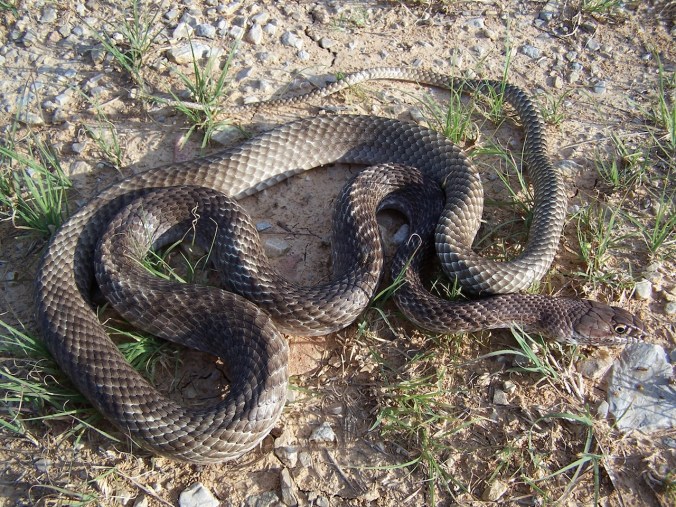
We see six feet of scales looking like a braided whip,
And we give him the name “Masticophis,” Greek for “whip snake,”
And see him through the lens of our own lives – “he’ll whip you!”
We barely see him at all.
It doesn’t matter what a coachwhip looks like to us.
I wish we could know him the way the prairie knows him.
Discover more from Our Lives in Nature
Subscribe to get the latest posts sent to your email.
 Our Lives in Nature
The line about wanting to know the coachwhip “the way the prairie knows him” really sticks with me. It’s a reminder that our instinct to name and measure often keeps us at a distance from the wild lives we’re observing. Makes me wonder what other creatures we’re barely seeing at all.
LikeLiked by 1 person
Thanks for that observation. Here’s an additional one, the thing I had in mind: most people see the coachwhip only through the lens of a brief, easily misunderstood interaction or someone else’s story. A whip, a thrashing snake when grabbed, or something similar. We don’t see what the prairie would see – an alert, visual, graceful animal, marvelously good at its “job.” (And that’s only my own limited observation and experience with them in the field, still an incomplete picture)
LikeLike
Sharing this with a colleague who’s been asking about exactly this. Clear enough to forward without extra context.
LikeLiked by 1 person