Mild winter days are a gift, one that can make us uneasy and yet grateful for the soft warmth of sunshine in midwinter woods. The uneasiness comes when we recognize that the gift often comes from climate change. A recent Texas Monthly article reported that this past December was 4 to 5 degrees warmer than average, and that January of last year was the sixth warmest ever seen in Texas. In winter, our off-the-rails warming climate can feel good, but it is still brought to us by the worsening climate catastrophe.
Let’s get to the gratefulness part; while some days I try to wrap my head around climate issues and see what I can do, on other days I want to accept the wonder and joy that nature gives. On those days I’ll live in today, not next year or last year. Even as I sit under a blue sky, surrounded by the sheltering oaks, some part of me knows where the gift comes from, but that will not spoil the day. And so here are a couple of slightly edited entries from my journal, reflecting solitude and time in the woods at my favorite preserve.
On February 1st I made my way to the top of the hill under a sunny sky with no clouds. The local weather service said that it was 73F. I was on a little-used trail and the traffic noise was in the background. There was a sense of quiet because the noise seemed distant and subdued. I noticed a little chatter of crows. Nearby it was quiet and peaceful, warmed by the afternoon sun and surrounded by oaks reaching their bare branches up into the blue sky.
It was as if I had a distant memory of sleeping outside on such a day, in a peaceful place with all noise far away. Being lulled to the edge of sleep with a warm sun and soft breeze, in the close company of trees. Or perhaps it just seemed like a perfect place to drift away.
And then a strong breeze blew through, dislodging a remaining leaf or two. “Rock-a-bye baby, in the tree-tops…” Will the bough break? The cradle fall? What a strange lullaby.
A fungus in delicate and beautiful concentric rings
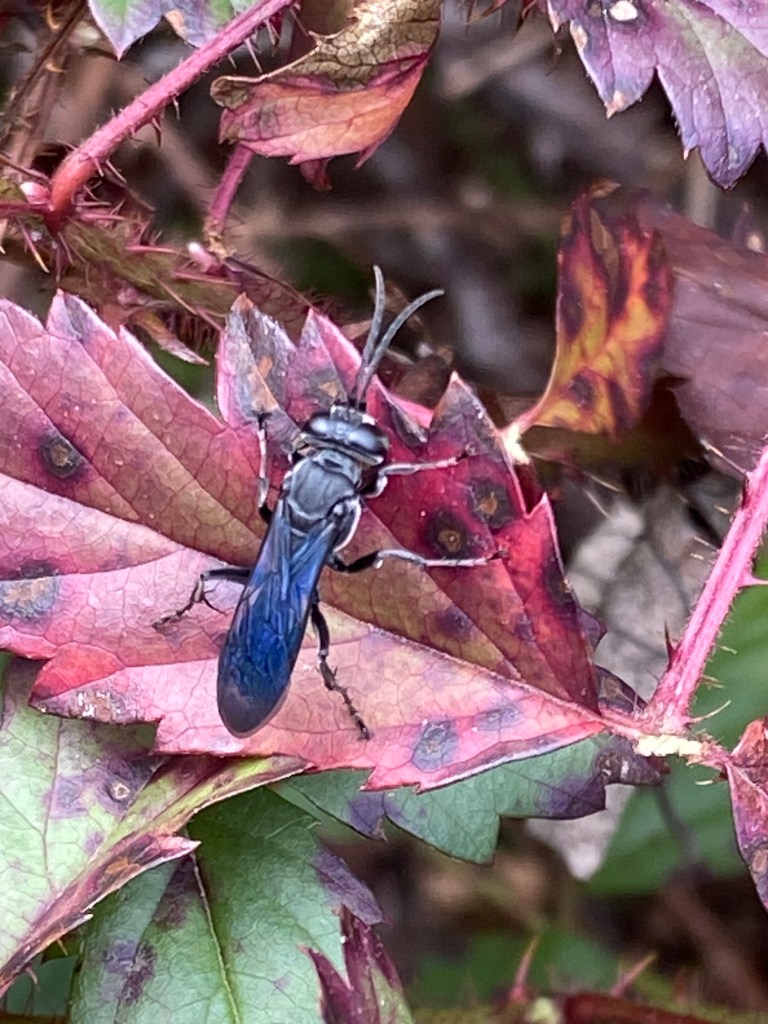
On February 4th it was partly cloudy and a little less warm (61F, reportedly) but at the start of the walk it was mostly sunny. The clouds that moved through were low, thick and heavy, slipping eastward and sometimes hiding the sun. After making my way up to the boulders, I wandered down the trail past lots of small sulphur butterflies and found a small wasp in a tangle of dewberries. Nearby, a Carolina chickadee called from low branches. Blue jays fussed somewhere as the breeze came and went, blowing a few loose leaves.
A small wasp that survived the recent freeze
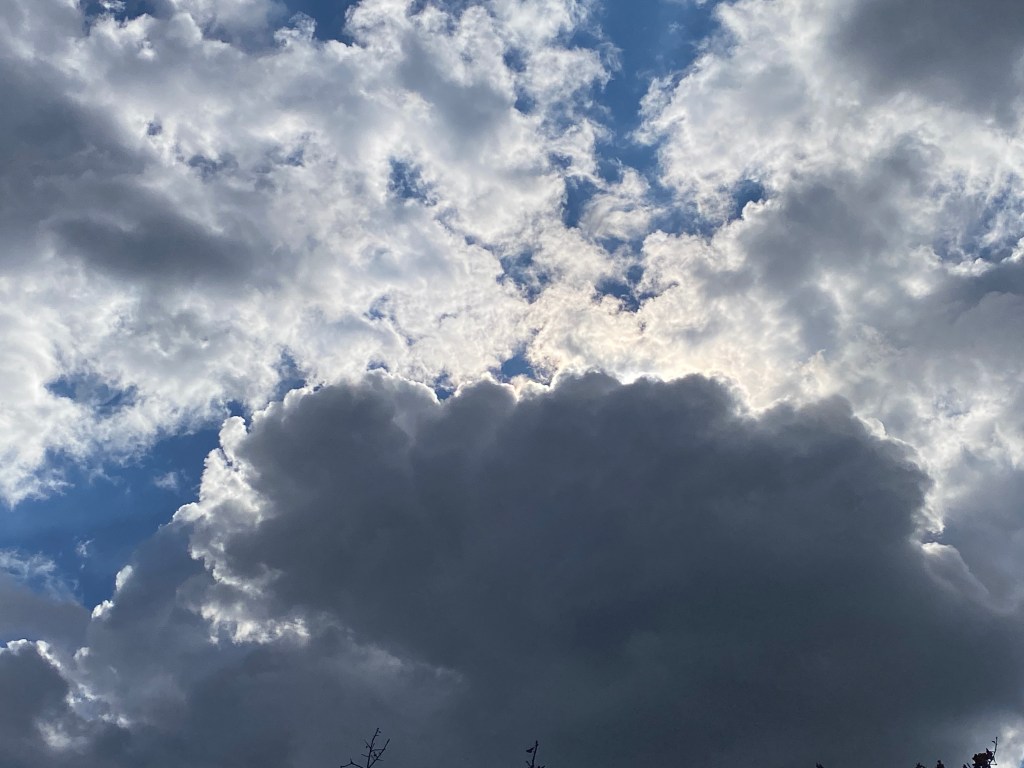
I came back to the sandstone bluff, and the movement of clouds was putting on a delightful show. Using my shoes as a pillow I lay on the rocks and watched those clouds. Sometimes the thicker gray clouds obscured the sun, and I was glad for my jacket, and then the sun re-emerged with wonderful radiant heat.
Looking up at clouds
There were low clouds still sliding to the east, sometimes wispy and light, and other times wet and gray. High above those, a layer of clouds slowly crept in from the north. Some of those were thin and feathered in intricate bands, but others were ropy and white. The edges of the low, gray clouds were rimmed in bright white from sunlight and almost too bright to look at. As always, the slow graceful movement of clouds was mesmerizing.
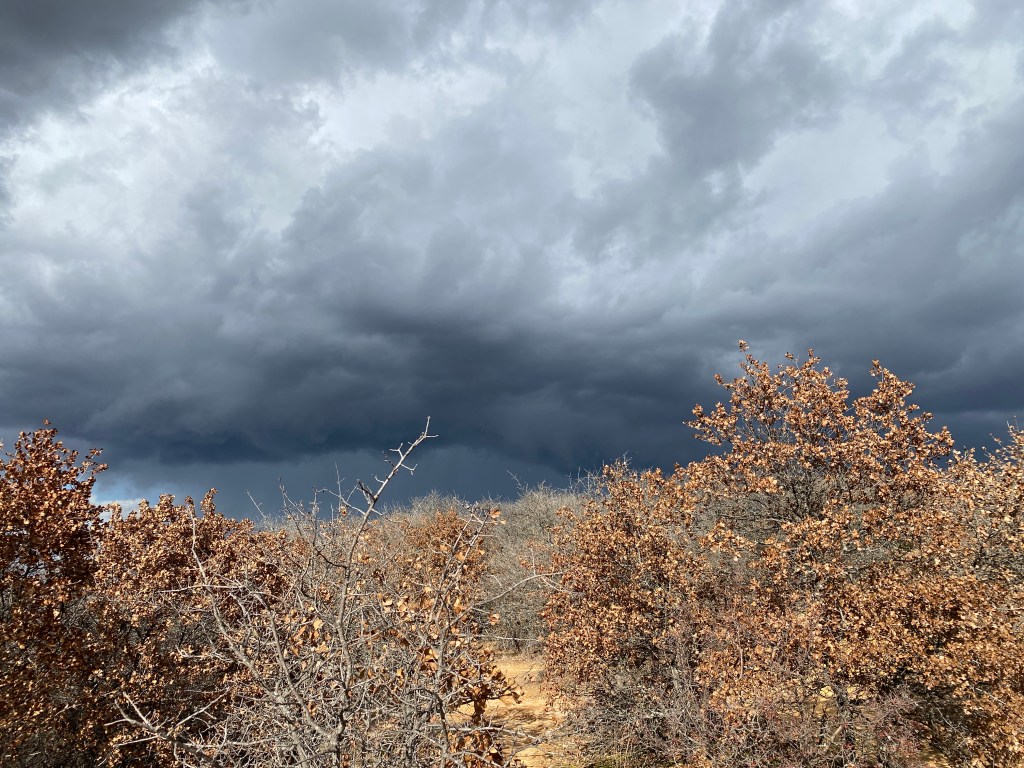
Darker clouds were massing nearby, and I started my walk down the hillside. Somewhere along the way I heard thunder, and rain began to fall as I reached the car.
Rain clouds visible from the bluff
I hope you are able to get outside sometimes on days like this. I’d love to hear in the comments whether you feel the same as I do about these warmer winter days, or if you prefer days when winter has a little bite and maybe brings some snow.
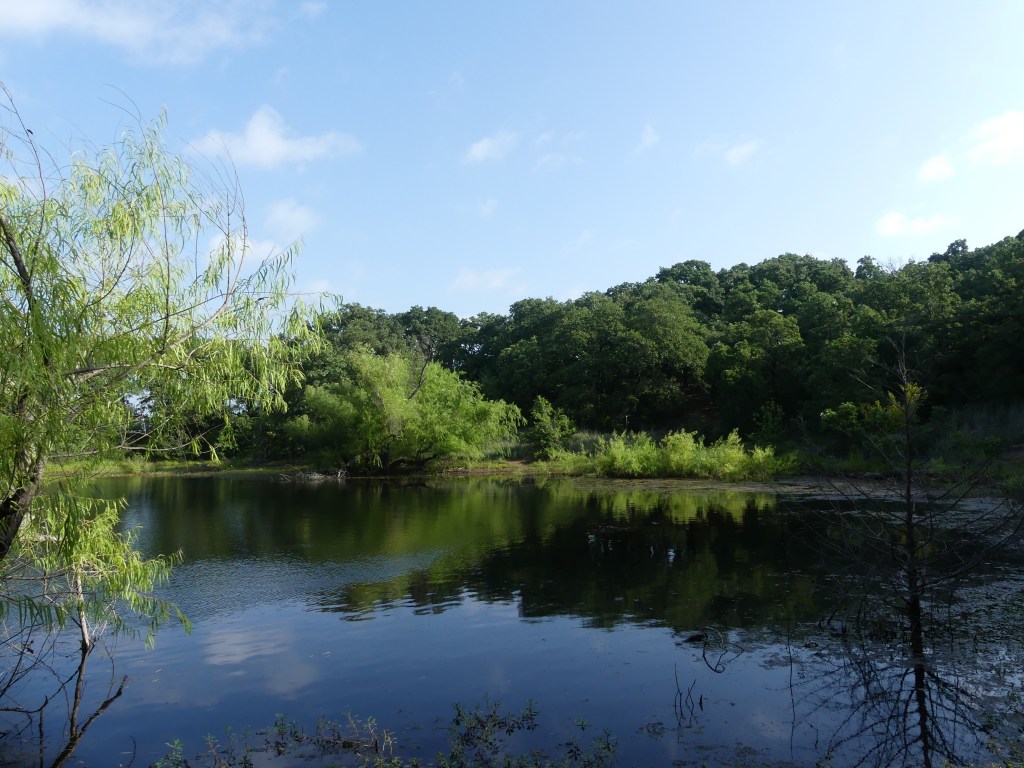
A pond at Sheri Capehart Nature Preserve, Arlington, TX
In recent years, many articles have appeared with titles saying that we are “loving nature to death.” Most of the ones I have read pertain to national parks and wilderness, but the issue applies equally to small preserves and urban parks. During the first year or so of the Covid pandemic, people lost jobs or worked from home and had extra time on their hands with fewer things to do because we were trying to practice social distancing. Many discovered – or rediscovered – getting outside.
For those of us who recognize the benefits of time spent in nature and hope for a reconnection between people and nature, more people outside is good news. But the amount of public space available for wildlife refuges, preserves, and nature parks did not increase. Neither did the budgets for taking care of such places. As a result, public natural areas have to contend with more traffic and the accompanying litter and the impact of our camping spaces, fires, new “rogue” trails, and other wear and tear.
There’s a little preserve in Arlington where I volunteer. (And my comments here are my own and do not necessarily reflect the thoughts of the group that I am affiliated with.) I spend a lot of time there because it is near my house. I have walked its trails, sat watching and listening, and become very familiar with its ponds, woods, and meadows. It is a resilient place, but these days it is contending with lots of traffic. That results in rogue trails, soil compaction and erosion wherever people walk off-trail, litter, issues with dogs and horses, dirt bikes and mountain bikes (which are not allowed), discarded or lost fishing tackle, and the occasional improvised shelter although no camping is allowed.
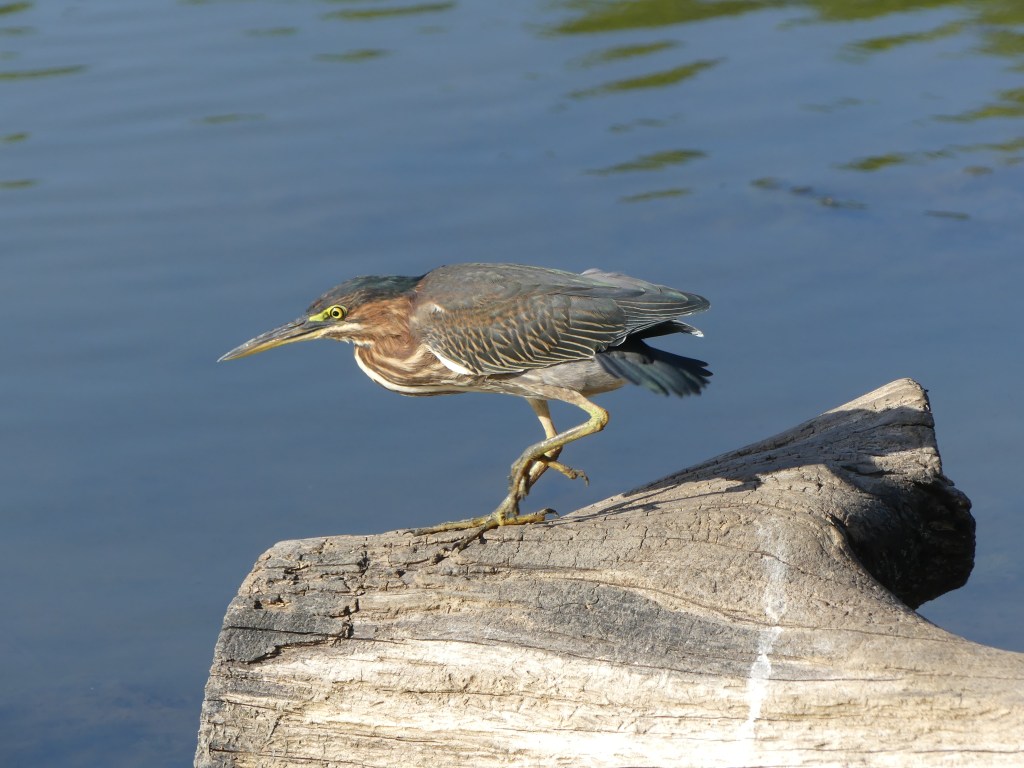
Green heron seen at Sheri Capehart Nature Preserve
Urban nature preserves and urban parks share some similarities, but they are also fundamentally different. The preserve is land set aside and protected in a nearly natural state, so that people can see how the surrounding land once was and can enjoy some of the communities of flowers, trees, and wildlife that are part of our heritage. You can see it as a living museum of natural history, letting us experience the place like it once was, at least to a degree. At the same time, you can see it as our wild neighbors, the plants and animals that are our companions who deserve a chance to live alongside us at least somewhere.
Urban parks, lovely as they may be, are usually modified for human use so that little of the original nature remains. There may be lawns, sidewalks and soccer fields, jungle gyms and ponds with domestic ducks. We need such parks, but they are not nature preserves. We might be urged not to leave litter, but hardly anyone feels the need to say, “leave no trace” of our visit there.
By contrast, many of us would urge each other to leave no trace when we visit wild places and nature preserves. There is an important movement that promotes this idea, and one organization, Leave No Trace, promotes seven principles that will help us. “Leave no trace” is a plea for us to visit nature in the spirit of cooperatively and respectfully sharing a space where many of our wild neighbors live and where other humans will visit. Yes, it is there for our enjoyment and learning, but it is not ours alone, and its purpose is not really entertainment.
The first Leave No Trace principle is to Plan Ahead and Prepare. In a small urban preserve that might mean taking the time to review the preserve’s rules, seeing when it opens and closes, and getting a copy of a trail map. Many preserves allow your dog to come if they are on a leash. Almost all prohibit motorized vehicles.
Another principle is to Travel (and camp, if allowed) on Durable Surfaces. In small preserves this translates to “stay on the trail.” Wandering off-trail means trampling plants, compacting soil, and creating conditions where rainfall will erode the soil away. When a place gets trampled, others assume it is a trail, and soon there is a “rogue” trail. When a small preserve gets criss-crossed by lots of such trails, serious damage is done. From wildlife’s perspective, there is no safe place away from people. The habitat that these animals use is of much lower quality, and when rain comes, there will be much more erosion.
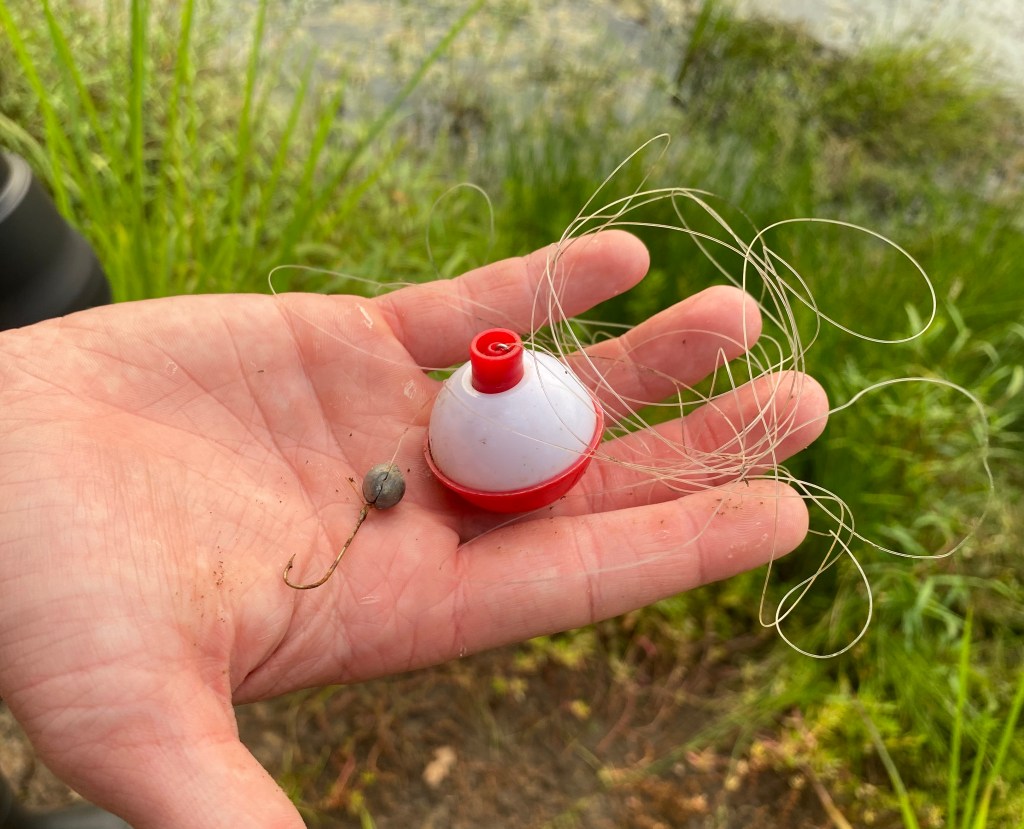
Next is Dispose of Waste Properly, and simply put, it means everything you pack in should be packed out. It’s easy to bring a small bag in your backpack or even your back pocket so that you don’t leave litter. Snack wrappers, water bottles, fishing gear, even Kleenex should be bagged and taken with you. I know that when fishing line snags and breaks, it can be difficult to retrieve it. However, hooks, lines, and lead sinkers are responsible for many wildlife injuries , and hooks can cause human injuries. And here’s another difficult but important thing: use the bags provided to pick up your dog’s waste. If it is left in the preserve, not only is it unpleasant, it is potentially a source of new parasites for wildlife. (The waste from the resident wildlife contains stuff that’s already found in the preserve, things the residents are already adapted to.)
Trash near a pond’s edgeFishing tackle abandoned at the pond
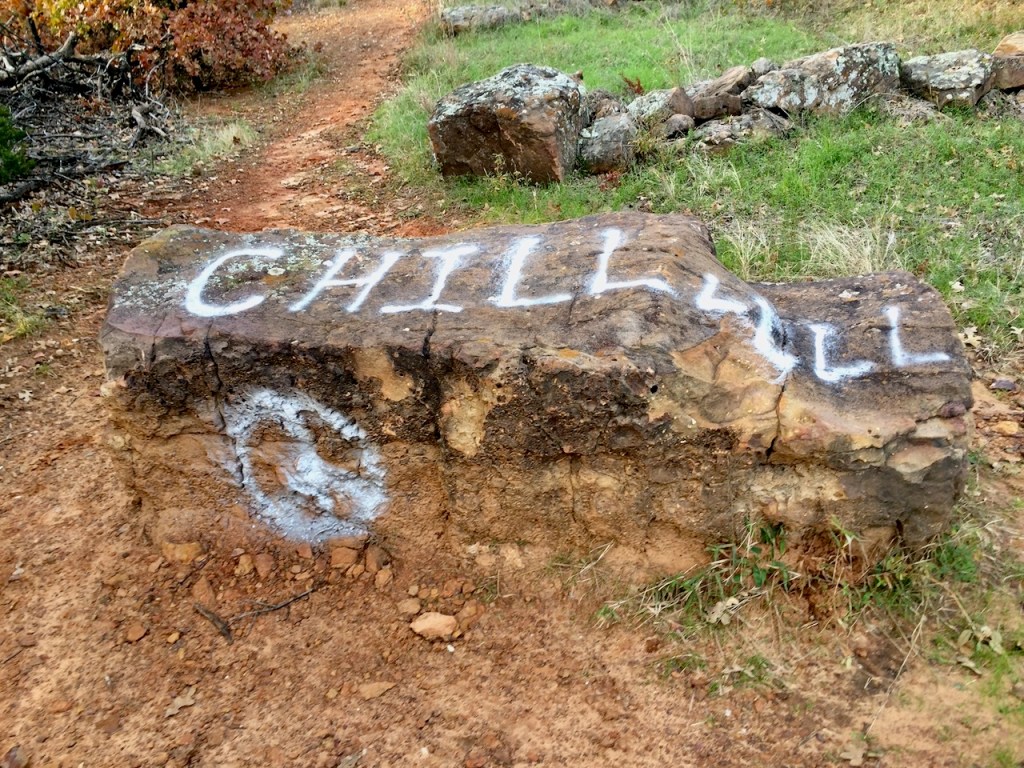
The Leave What You Find principle means leaving the living things how you found them, and don’t introduce non-native species. It also means not collecting artifacts like arrowheads and not “tagging” or carving initials into rocks and trees. We all have a tendency to think, “It’s just this one little thing, it won’t hurt anything.” But if you dig up a few plants, you won’t be the only one, and the losses add up. It’s the same with animals. That lizard might look cute, but don’t catch it! And please do not add things that did not come from the preserve. We’ve seen raccoons relocated and dumped at our preserve, and once at one of our national grasslands I found someone had released goldfish into a pond. They probably thought they were doing the fish a favor. When we add things or take things away from a natural community, the negative consequences might not be easy to foresee.
A boulder with graffiti at the preserve
Minimize Campfire Impacts, in small urban preserves, really means “don’t,” because making a fire is almost certainly prohibited. There is the risk of a fire spreading and also the gathering of firewood and tinder removes homes and hiding places for small wildlife.
The next principle is to Respect Wildlife. Every time we see a photo of someone taking a selfie with a bison, we are reminded of how much people misunderstand wildlife. In general, if we are far enough away they may ignore us but if we get too close they may respond in self-defense and we (or they) may be hurt. Or our getting too close may disturb nesting, courtship, hunting, or other important activity. We should not only be aware of how we may affect wildlife, but also how our pets may do so. One reason our dogs should remain on-leash is to keep them from running ahead and investigating the nooks and crannies that small wildlife shelter in.
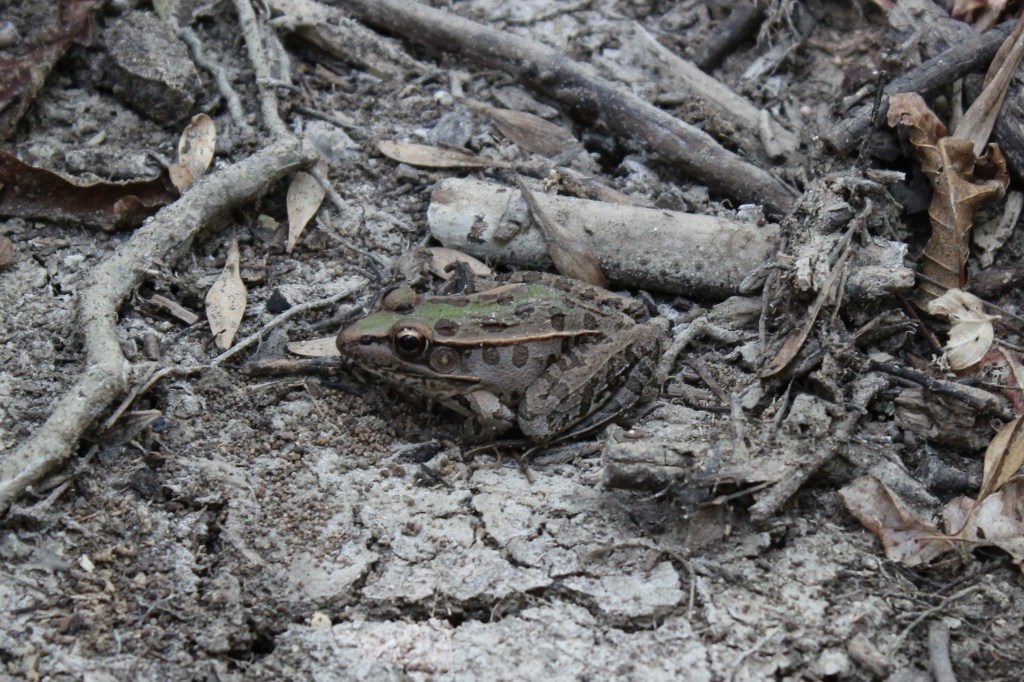
“Admire me from a distance and please don’t take me home”
Finally there is Be Considerate of Others. People have different ways of enjoying a small preserve, and we can try to see to it that everyone has a good experience. Some of this involves little courtesies such as stepping a little off the trail to let people pass and minimizing noises (ear buds will let you listen to music without others having to do so). If dogs are allowed in small preserves, it is crucial to keep them on-leash and do not let them threaten other dogs or people.
When you think about it, all this follows pretty naturally when we visit a small preserve with respect for what it represents and gratitude for what it provides us. I hope if you visit one of our small, urban preserves, you will keep these principles in mind. That way, those living museums of natural history can continue to thrive.
New Year’s Eve, 2022, at LBJ National Grasslands(Michael, Jo, Meghan & Carly)
Sometimes people come into your life and, if you are really lucky, they become permanently and inextricably part of who you are. For Jo and me, over the last five years or so Meghan and Carly have become family.
Meghan and I met in July of 2019 at what was then Southwest Nature Preserve in Arlington. Meghan brought her love and knowledge of spiders and other invertebrates, along with a desire to learn more about herps. I brought my residual bit of arachnophobia and all those years of experience with reptiles and amphibians. For both of us, nature was deeply ingrained.
Before the end of the year, we decided to do a book together, with me as author and her as photographer. It would be one that would combine a mindfulness-based way of being in nature with descriptions of the natural history of places across the state. Let me quote from the Acknowledgements in the book:
Without Meghan Cassidy’s energy and enthusiasm in the field, her friendship and encouragement, and especially her skill at seeing the potential for a really good photograph and capturing it in the field, this book wouldn’t have happened. At some later date, when we sat at a computer deciding which photos really worked, she was right every time. Meghan was the ideal companion for adventures such as the late-night police chase in the East Texas forests that nearly ran us off the road, or the sudden storm that battered the cabin on the hillside in the Trans-Pecos.
Mindfulness in Texas Nature (expected later this year)
Meghan, taking photos for the book at Sea Rim State Park
I remember when Meghan first told me about Carly and how wonderful she was. As in most things, Meghan was right. Carly’s knowledge of birds and ecology is matched by a quiet wisdom and insight (see my comments about our 2021 trip, “Grief and Hope on the Rolling Plains“). And, like Meghan, she is just a deeply good person.
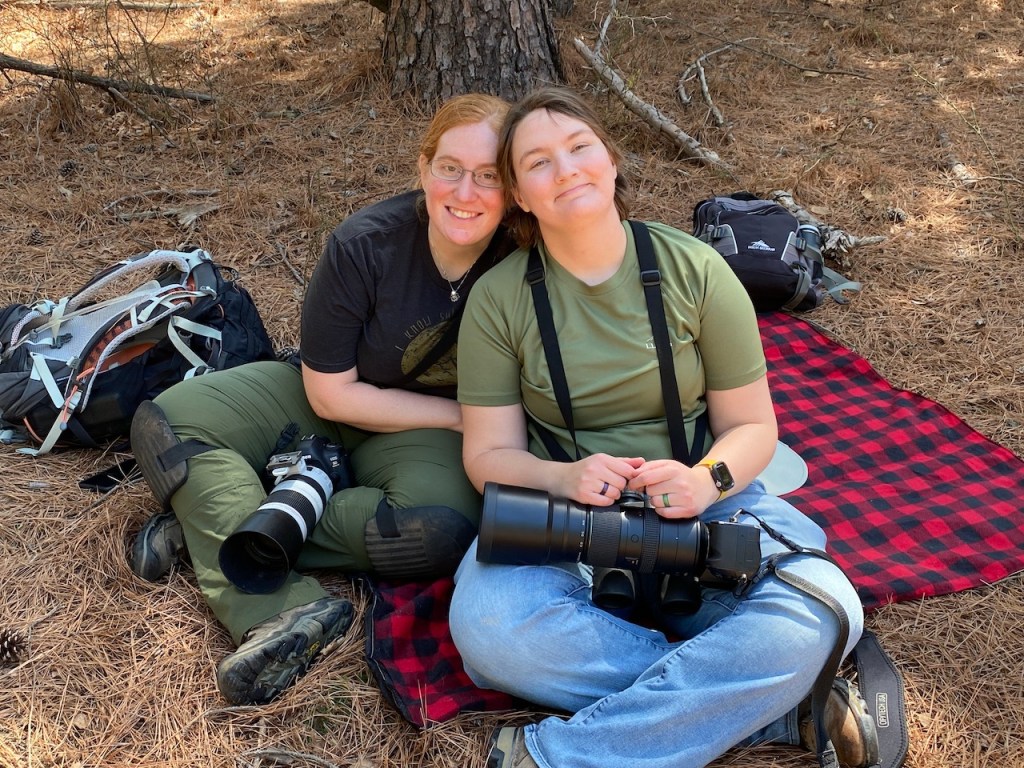
Meghan and Carly at LBJ National Grasslands
Meanwhile the travels for the book continued, with time for mindful walking and sitting as well as finding and photographing many examples of Texas wildlife and wild places. On other occasions I visited prairies with Meghan and Carly and we hung out at our beloved LBJ National Grasslands.
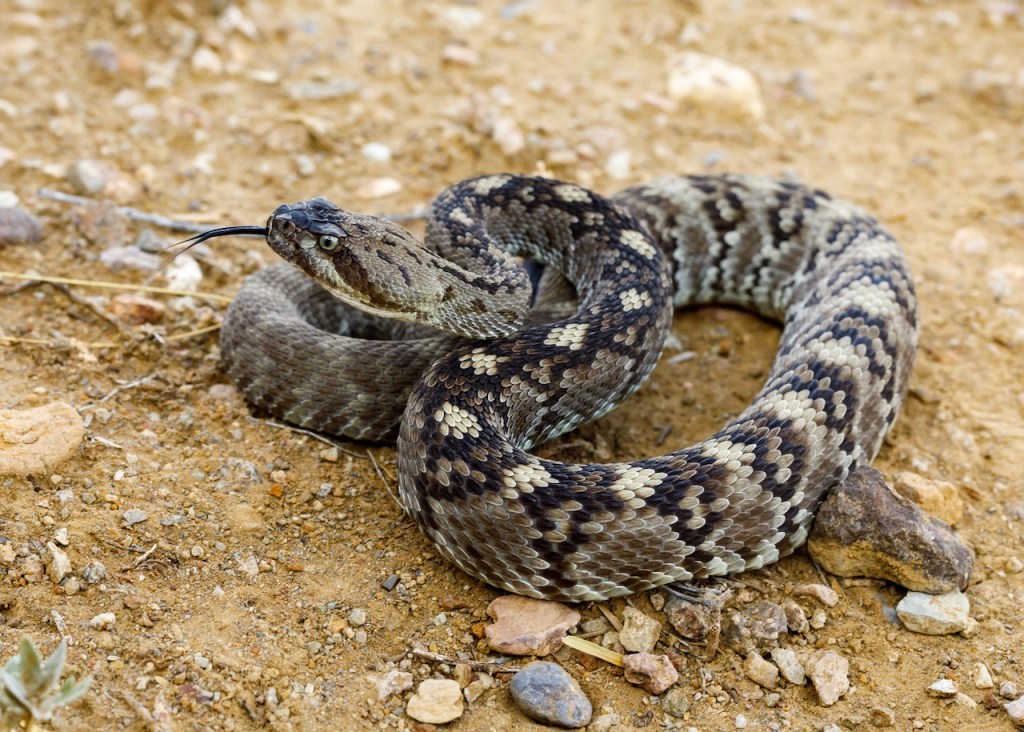
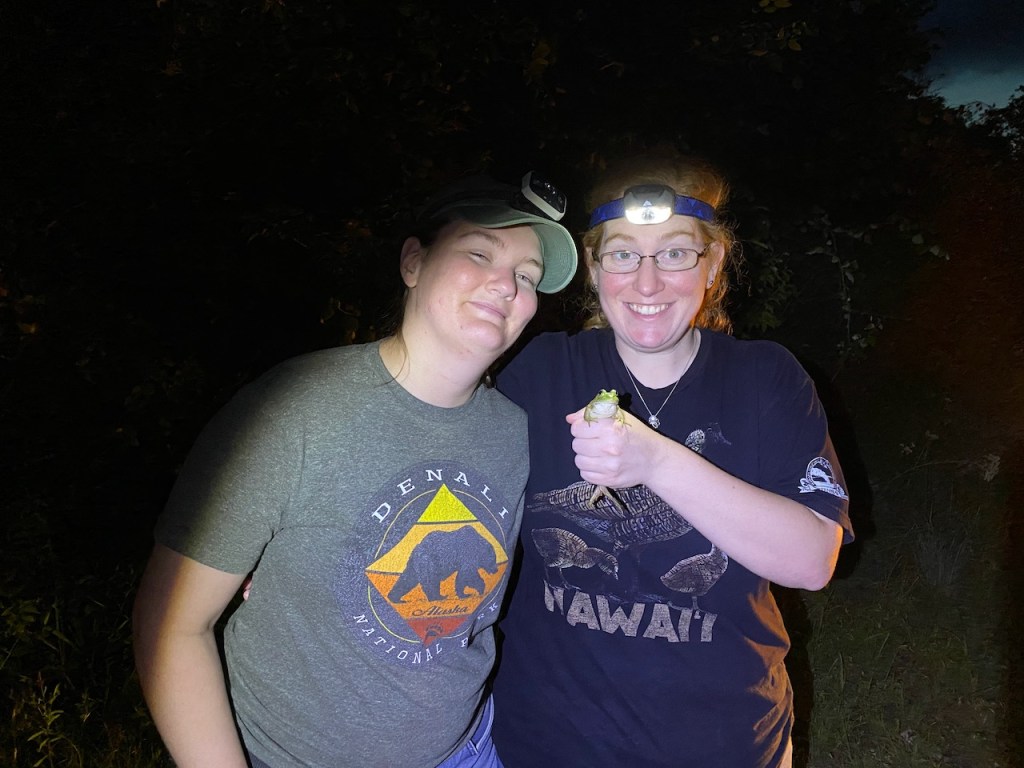
Black-tailed rattlesnake in the Trans-PecosWhile photographing green tree frogsNight herping at LBJ GrasslandsOn a prairie visitA Great Plains ratsnake at LBJ Grasslands
Jo may not have been in the field so much of the time, but she joined us when she could, and dinners and games at each of our homes have been wonderful for the four of us. We’ve been through hard things together, too, and we’ll always be there for each other.
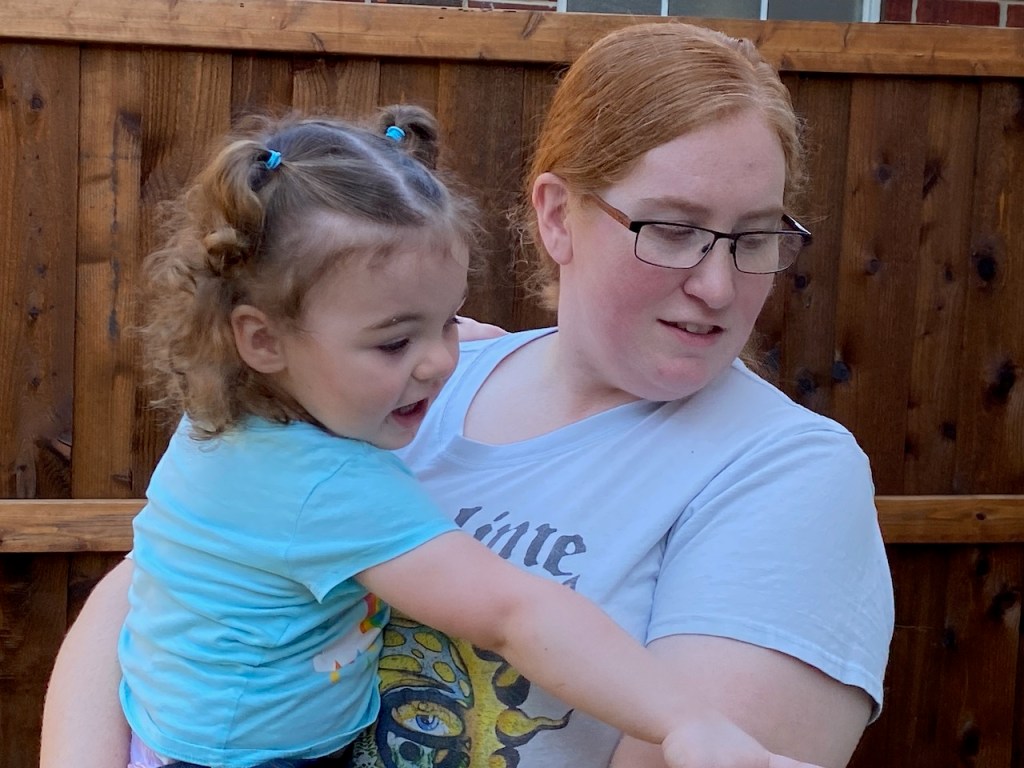
JoMeghan with our granddaughter Lilly
And circumstances change, though our closeness with each other will not. A job change means that Meghan and Carly are moving to Minnesota, leaving in the next couple of days. Two in Texas and two practically in Canada, the four of us will be making frequent use of FaceTime and similar technologies to stay virtually together.
It will be a long drive, so stay safe. I keep being reminded of “The Four of Us,” John Sebastian’s wonderful extended song about two couples who “drew a smile across the states” and took a road trip across the U.S. In this case one beloved couple.
So here’s a little travelling song Of talk that comes from dusk till dawn So go and see and pass it on Lest you miss it, lest it’s gone Every lover keep your driver on the road and laughing
Today in a walk in an urban preserve, what nature offered was a stark contrast to what many humans offered. Nature offered examples of beauty and harmony. Humans, not so much today. I am grateful for nature’s gifts this afternoon, and I’m hoping for all of us to make more progress toward an attentive and respectful relationship with nature (and with other people).
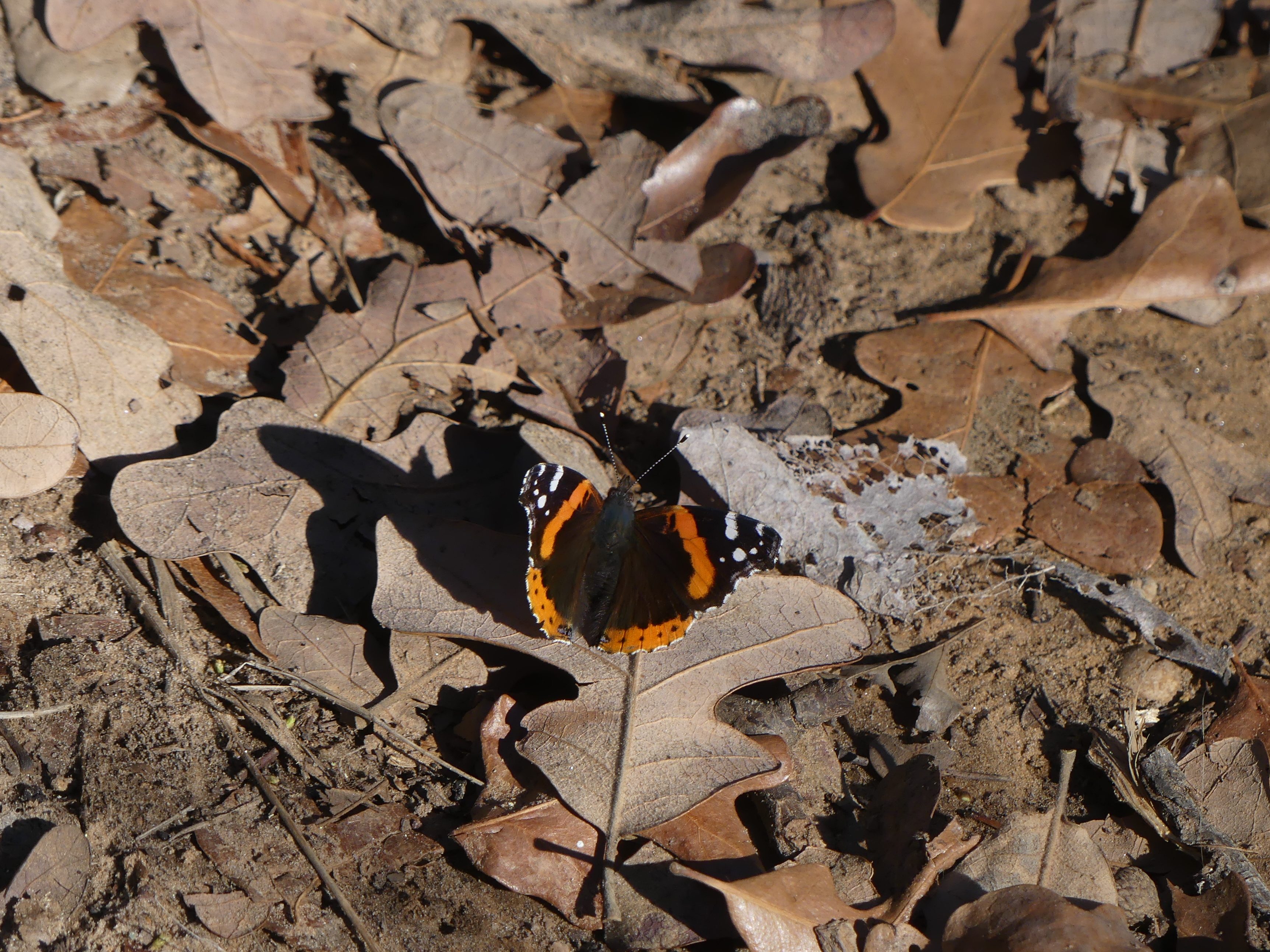
A red admiral rests for a moment
Butterflies and dragonflies are still active at the preserve. A hard freeze is just days away, and these insects bring their beauty and their skillful flight as if today’s warmth was the only reality. They’re right – today, this day right now is the only reality and they were making full use of it.
A young juniper growing in the shelter of an oak tree’s trunk brought to mind the harmony and tolerance that humans sometimes fail to have. I’m aware that the oak did not invite the juniper, and that the oak will take water, nutrients, and sunlight without much regard for its small neighbor. Regardless of intentions, they grew side by side and appear to be thriving.
Juniper, sheltering beside a blackjack oak
Every winter, a little below the crown of the hill, standing cypress begins to grow. They first emerge as feathery green rosettes, and they grow through the winter and spring. Eventually they produce a spike of the most beautiful red flowers before dying back later in the year. When everything else seems doubtful, standing cypress won’t let you down.
A new standing cypress
Maybe standing cypress isn’t high on everyone’s list of priorities. We need an affordable place to live, and we need people who are willing to set aside their momentary impulses and follow rules for the good of the community. Next to that, being able to count on a plant’s annual re-emergence might not seem like much. But the more other things fall apart, the more valuable seem the parts of the world that are dependable.
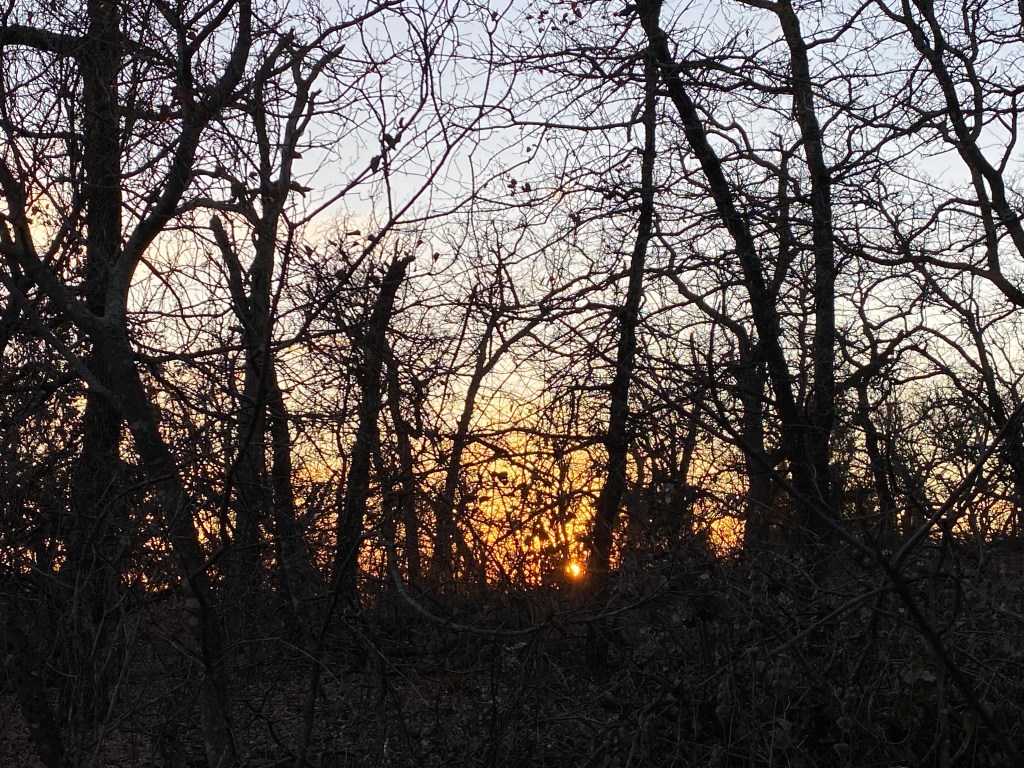
Silhouettes
I sat on a boulder in the warm sunshine and wrote a little in the journal. The temperature had reached the middle 60s in the shade, and sitting there in a t-shirt, the radiant sun felt great. Then it was down the trail to the big pond. There were a few places where some leaves still held on to some color, and the sun shining through them was like nature’s stained glass.
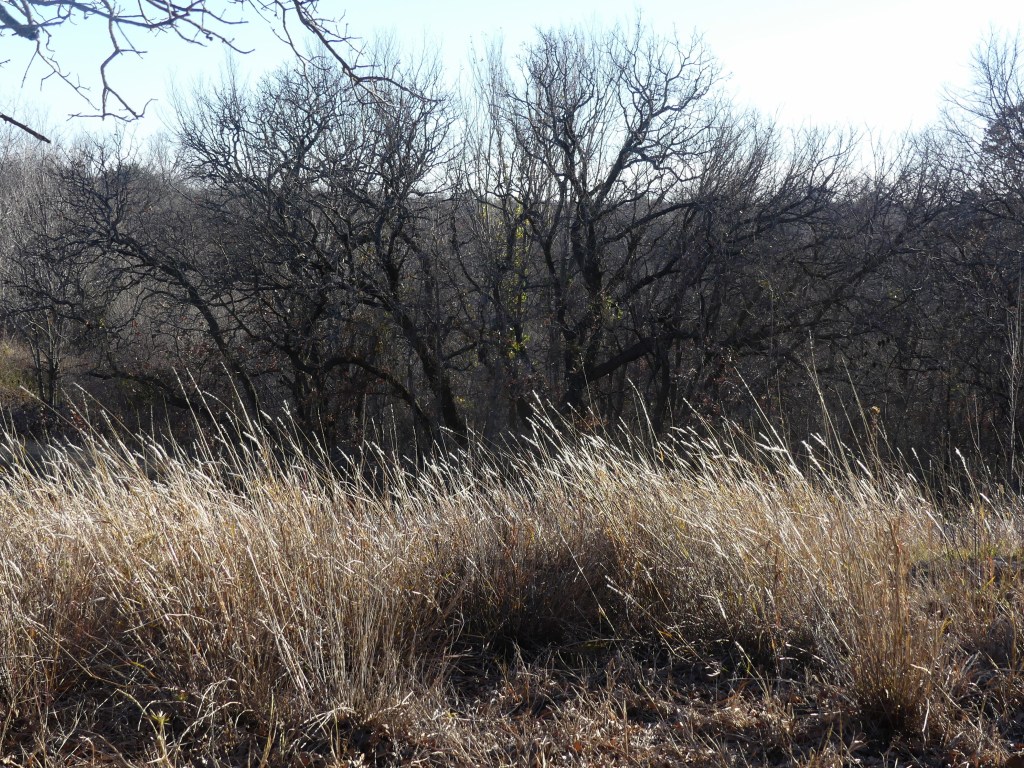
Another gift from the afternoon sun – light in the tops of the grasses
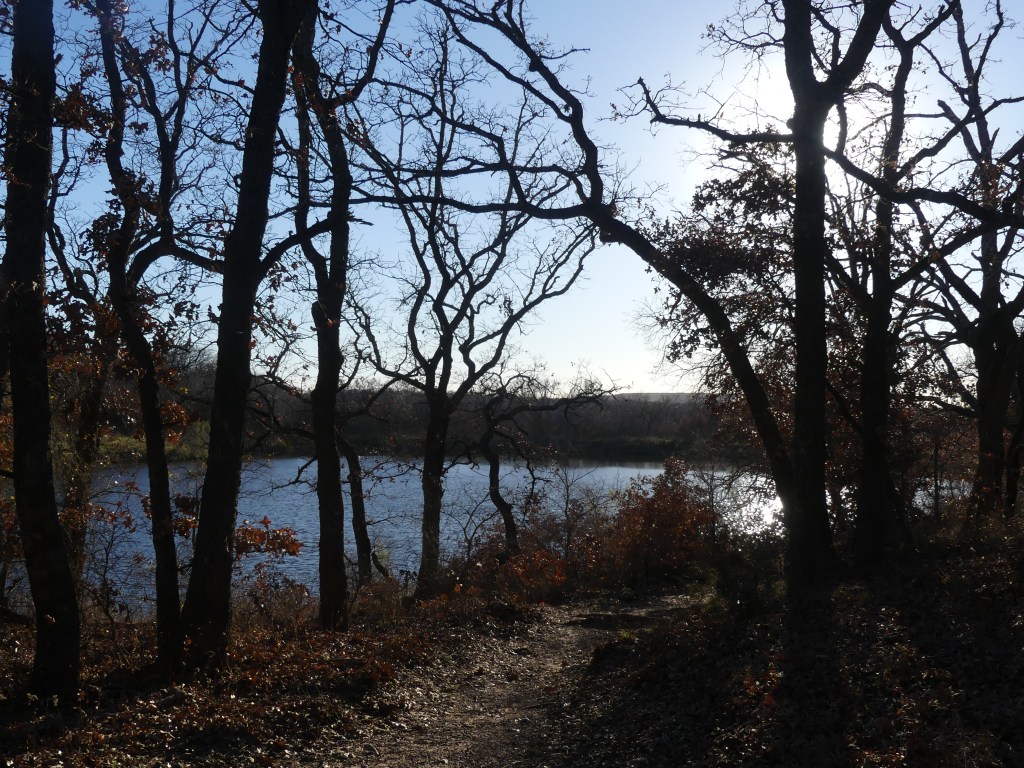
I ended up at one of the other ponds, watching the low sun light up the trees at the end of the day. It was a time of day that felt quiet. I had not heard any birds (with my ears or with the Merlin app) during my walk, and no turtles were basking at the pond. The water was still, and everything seemed hushed. Was the preserve ready for a rest? I know that communities of invertebrates, fish, and other animals continue their activities into the night. I also know that the one who was ready for a rest, after unleashed dogs, unruly dogs, and dirt bikes that have no business in a preserve, was me. The peace of a quiet pond was a welcome end to my walk.
I will be focusing more time on inviting others to some semi-wild place and experiencing it mindfully, doing some nature journaling, and learning a little about the plants and animals that live there. I’ve led nature walks before (with the LBJ Grasslands Project, for example), but these outings will more explicitly focus on mindfulness and nature journaling. If you are reading this in the North Texas area and would like to join me, please use the Contact page to send me an inquiry. At this point there is no fee, but I’ll check the status of the “tip jar” at this website in case anyone would like to contribute! Some of these outings may be more for adults, but some will be for families with kids at least ten years old or older.
Getting children out to experience nature mindfully involves their being less “somewhere else” and more “right here, now.” Somewhere else is thinking about something that happened this morning or hoping you can do something tonight, wishing your friend was here with you, and imagining how Batman could knock that tree down. Being right here is noticing the shapes of clouds, feeling how the ground feels under your feet, listening to a frog call, and recognizing prickly pear cactus and walking around rather than through it. Mindfulness involves paying attention to the present moment, without judging it as good or bad and without wishing it was different.
Some kids may like the idea of taking a walk in which we will see everything more clearly, hear more things, notice smells, and touch a few things to see how they feel. I might explain to them that we will “turn down the background noise” of our thinking and talking while on the walk, so that we can experience the walk more fully. I will mention that this is not always easy for any of us. Our brain wants to turn the volume back up, and that’s normal, it’s what brains do. So when we notice that we’re thinking about something else, we just let the thought go, let it float away, and bring our attention back to what is happening now. We may have to do that over and over, and that’s OK.
Some kids may be used to blasting through a nature walk while talking to friends. If a nature walk seems unfamiliar or boring, they may be escaping by thinking of other things and going through the walk on autopilot. The job of a teacher or parent is to invite them in and make it seem worth a try. One way to do that is with nature games that provide a little structure for paying attention to the things around them. Or it might add interest to offer some natural history information (“That bird over there is getting ready to fly to South America!” “That rock is the silt and seashells from a beach where dinosaurs walked”). We may want to alternate periods of quiet attention with times when kids talk with each other and with us.
A nature journal is your own personal story, in words and pictures, of places you visited and things you experienced. You write a little and maybe draw a few pictures in a blank book or notebook – nothing fancy is needed. The idea is to stop and think about what you’re experiencing and preserve a little bit of it on paper. For some people, an entry might be mostly contain information about the place, the weather that day, and seeing a kingfisher fly over the pond. Someone else might write a poem about sun reflected on the water and the flight of that kingfisher, or maybe they would just draw the bird with a few notes about seeing it. There’s more than one way to keep a nature journal.
The only way I know to do this with kids is to have a responsible adult (family member or family friend) who brings the child and stays with us. It really cannot be a drop-off, but we would be happy for the adults to join in the activities. The ideal group, with kids or adults, is small – perhaps five or six. A small group just seems quieter, more focused, and better able to get to know each other, and so I will limit the group size.
What is my background for doing this? I have been licensed as a Psychological Associate for over 38 years and have led walks in nature for adults and kids. I’ve written two books about reptiles and amphibians and, most recently, a book about mindfulness in nature.
We have this urge to mark the end of the old year and welcome the new one, so we gather to wish each other a happy New Year. We think about the coming year as a new beginning. Sometimes we want to try for a new beginning for ourselves, with new year’s resolutions to start doing this or to do less of that. Midnight on December 31 marks a change, for good or ill (mostly for good; it feels like a bad omen to even consider that it could be a change for the worse). Another year older, another chance, another spring.
LBJ National Grasslands, in Unit 29, on the last day of 2023
But spring is months away and our transition to 2024 is completely arbitrary, unless you consider that it’s pretty close to the winter solstice when everything really does begin to change, in ever so gradual degrees toward greater light and warmth. Nevertheless, yesterday was the end of 2023, and among some members of my nature tribe the right way to mark the occasion was to walk the woods and prairies one last time.
Alaina, Sheryl, and Jake met me at LBJ National Grasslands under a warming sun with scattered clouds. It is a familiar and welcoming place, and if we needed reassurance that some good things can be counted on to stay consistent despite the turning of the year, this was it. We did not talk about it, but I expect that this dependability of nature is part of the appeal of a walk here on New Year’s Eve. Many of us are ambivalent about change, considering what we have been through in recent years. The pandemic, a worsening climate crisis, the creep toward fascism in many places across the world; these things make the woodlands and prairies more precious than ever. The cycles of growth, flowering, the shedding of leaves and winter dormancy make up a background of dependability. That, and the love that truly close friends and family have for each other, keep us going when everything else seems to be falling apart.
Alaina and Sheryl
The earth tones of the prairies have become quite “earthy” and the straw and sienna colors have faded, but there was still some warm brown in the woods. And the liberal scattering of junipers adds some touches of green, so it was hardly a colorless winter scene. When you add the ponds with reflective water and surrounding bare trees, the grasslands in winter have a visual beauty beyond compare. Spring and summer are also lovely, just in a different way. The Western Cross Timbers is an amazing gift that every season makes into something new and wonderful.
There is life in every season. We saw a few dragonflies, and I mentioned to my friends that I believe seeing a dragonfly on the last day of the year should be a sign of good luck. Spread the word – let’s make a “lucky dragonfly” tradition and invite urban folks into a new little connection to the natural world. These insects are already associated with good luck in some Asian and Native American traditions, so it shouldn’t be a stretch.
A common buckeye
We also saw some butterflies. We often see them deep into the winter if the day is sunny and has some warmth. They flutter along and bring extra movement and color to the day. One of them was a buckeye, a species with colorful round “eye spots” on their orange, brown, and white wings.
Our walk helped end 2023 in a good way, and we are ready to carry that through into the new year. Here’s to everyone having a year with beauty and wonder, surrounded by those you love (even if from a long distance*) and filled with empathy, compassion – and healing whenever that may be needed. Happy New Year!
Right now the earth in our little spot is tilted about as far away from the sun as it ever is. Sunlight reaches us from lower in the sky, from a sharp angle rather than high overhead. Thursday, December 21st is our winter solstice, after which the days slowly begin to lengthen again. But in these shortest days the light is different; not only does midday seem like late afternoon, the light spectrum has shifted and is a bit more golden.
Not long after noon, the light looks like it is the end of the day, and I get a sense of things coming to a close. Daylight will soon end, and so will the year. What needs to be put in order before this season and this year is done? What has slipped away while we weren’t looking? It is only a vague emotional tone, nothing more, but it can bring an elegiac feeling to the day.
The light is beautiful, perhaps in part because it contains more of the warmer part of the color spectrum, and because its slanting angle produces more shadows and clearly defines what it touches.
On a recent walk I was particularly struck by all this. There was a large oak whose leaves were becoming quite yellow, and underneath it a small sumac with crimson leaves. The ground beneath was carpeted with leaves in shades of brown and yellow. I thought, “What is this trick of the light that makes everything so much more clear, deepens the colors and highlights things so that I see each one clearly? What is this, that makes it feel like the end of the day, things coming to a close, deepening the emotion along with the color?”
I would be interested in knowing the extent to which others experience these things. If you notice any of these qualities of autumn light, I encourage you to write a comment about it. If you haven’t thought much about it, then find a sunny day while the days remain very short and take a walk somewhere in nature. See what your perception tells you.
We headed south, full of optimism that the sprinkles and mist would not get in the way of a good walk at Pedernales Falls State Park. Being in good company outweighs getting wet, and after the drought we have been going through, none of us were complaining. When we arrived at the park the river was softened by a little mist and the trees were dripping. It was going to be great.
The path, on its way down to a place overlooking the falls, goes through a juniper woodland where every small plant, mushroom, or insect snagged our attention like velcro. Among nature folks, it’s called “walking at the speed of botany.” We kept up that pace, weaving around boulders all the way down the stone steps to the riverbed. Sheryl took beautiful photos of water drops on leaves, and Kat and Alaina examined seeds and leaves and discovered a straggling monarch butterfly feeding near the steps.
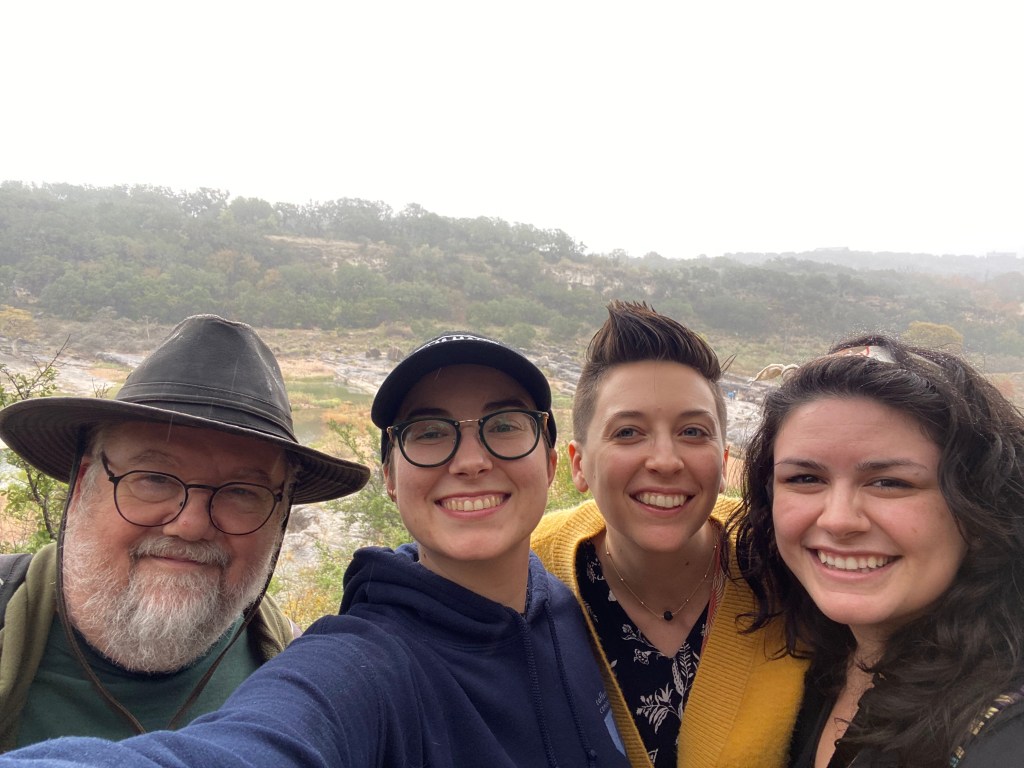
L to R: me, Alaina, Kat, & Sheryl (photo courtesy of Alaina Graff)
This leaning into fascination and wonder is a trait shared by many friends and family, as if hard-wired into our being. Love and gratitude follow as naturally as rain lilies after rainstorms. So many things for us to be grateful for – the sound of tumbling water in the river, the red and orange autumn colors of cypresses and Virginia creeper, and spiders whose webs still held beautiful water droplets.
Water on stems and leaves (photo courtesy of Sheryl Joiner)
Gratitude and affection for the natural world (and for each other) is, along with wonder, what fuels all my visits to places in Texas. There are a handful of people with whom visiting a forest, wetland, or prairie is like worship. Not worship as a practice of religion, but simply a shared reverence. Together we re-connect with something bigger than us, yet part of us, and which nurtures each of us. This creates what Robin Wall Kimmerer describes as a sacred bond:
Knowing that you love the earth changes you, activates you to defend and protect and celebrate. But when you feel that the earth loves you in return, that feeling transforms the relationship from a one-way street into a sacred bond.
Robin Wall Kimmerer, Braiding Sweetgrass
This is a good week to talk about these things, because the Thanksgiving holiday should be about recognizing what we’ve been given and what sustains us. A big feast, all that turkey and pumpkin pie, should just be a metaphor for the abundance that so many of us have been given, and which can be answered with gratitude and thanks. We can give thanks to the land that gives food, water and shelter. We can give thanks to each other for the ways we care for one another and embody what religious folks would call the image of God or a spark of the divine. Another way of saying that we are made of stardust and should recognize that in each other.
The Pedernales River (photo courtesy of Sheryl Joiner)
We walked downstream, along a beautiful stretch of river lined with cypress trees. I wrote in my journal:
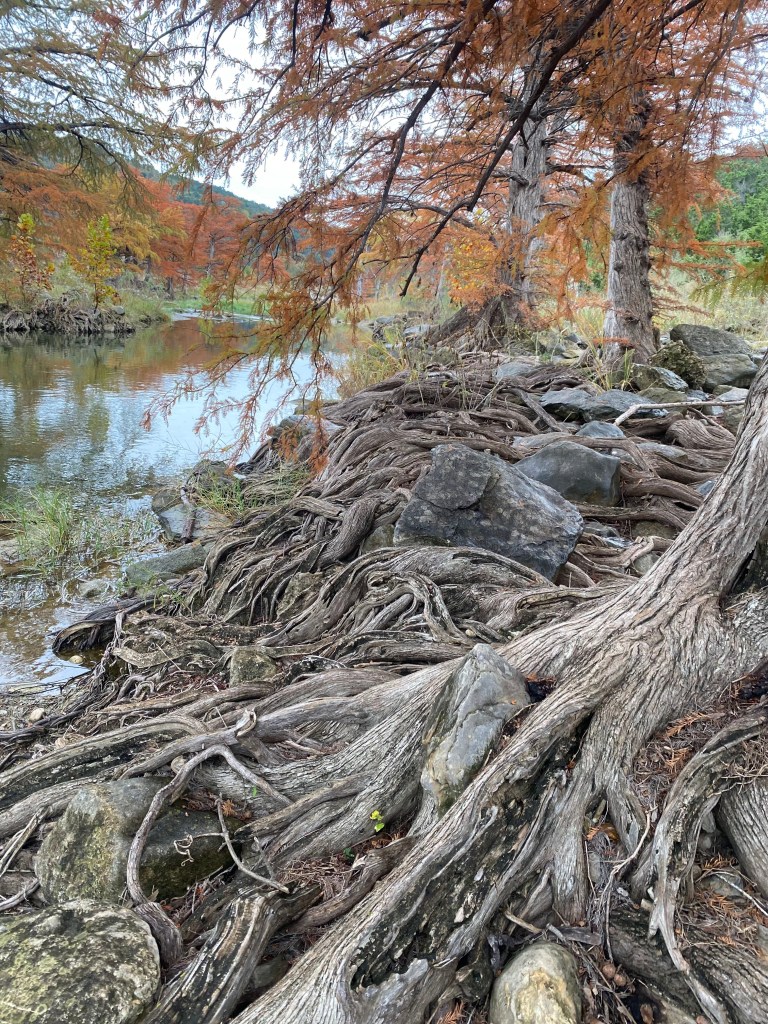
“The sound of the riffles – a deep tumbling noise – was mesmerizing. The river corridor is lined with old cypresses and boulders and stones with roots winding among them. … There is the river and the conversation among Alaina, Sheryl, and Kat, and no mechanical noise (not even a plane). Beautifully musical.”
Roots seeking the water (photo courtesy of Sheryl Joiner)
On Thanksgiving Day, I will think about this place and the friends who were with me, remembering them with gratitude and joy. I will be thankful for so much – my human family as well as those other wild relatives out there without whom our lives would be so much smaller.
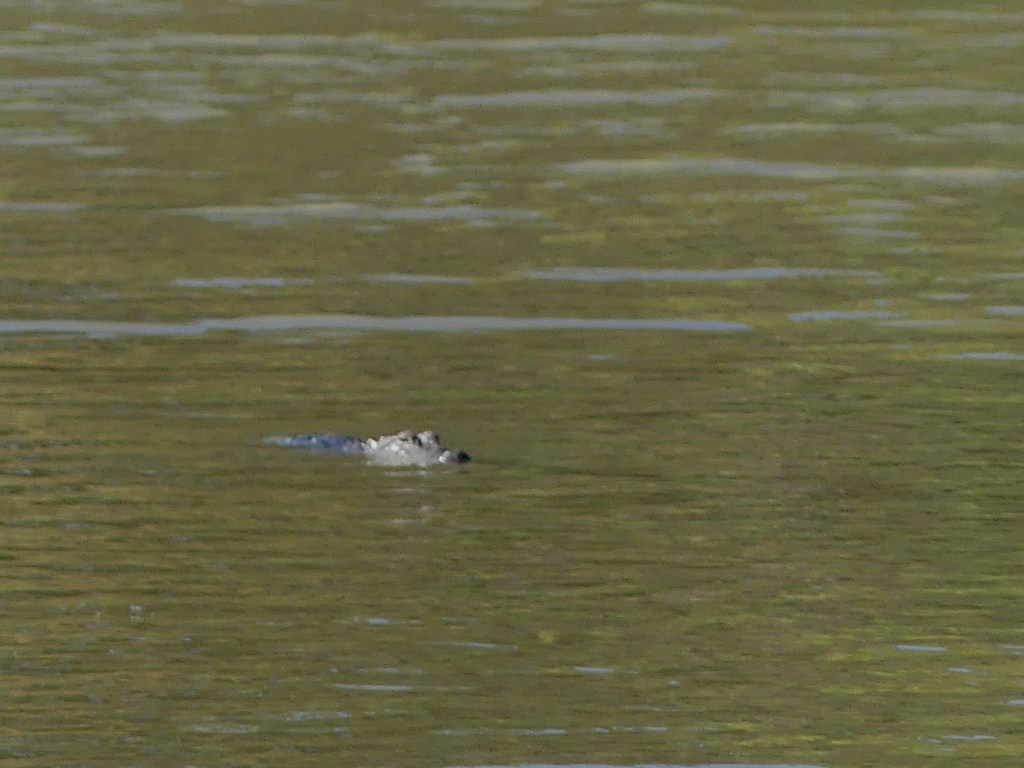
An American alligator (Alligator mississippiensis) seen by the group on our first field trip
It is fun to learn some of the details about the reptiles and amphibians that live in North Texas, getting a grasp of how they live in woodlands, marshes, and other places. It’s great when people get comfortable being around these animals and understand the conservation challenges they face. Those have been my goals as I’ve been teaching a great group of people about reptiles and amphibians (herps) and how to look for them in the field (herping).
Almost all the participants are Master Naturalists, so they start with a certain level of understanding about nature and wildlife. Because I teach incoming trainees for a couple of Master Naturalist chapters on the subject of herps, I had already met some of these folks. But two or three hours introducing herps seems like just scratching the surface. So I came up with a plan that involved four class sessions and several field sessions.
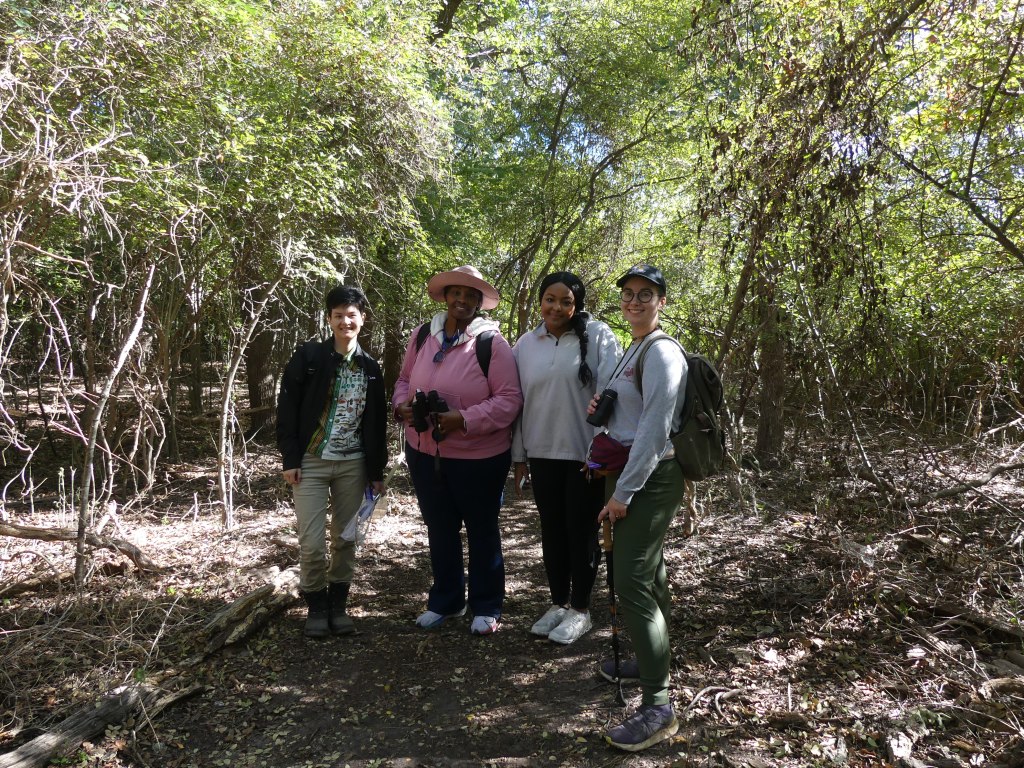
Alex, Kristina, Triniti, and Alaina
I have offered it in October and November as a sort of trial run. This is not exactly prime time for finding herps in North Texas, though we’re doing OK. We’re grateful to Fort Worth Nature Center & Refuge for offering facilities and time in the field. In the first session, after we talked about some basic concepts, Dr. Jared Wood (Natural Resource Manager at the refuge) shared some of his knowledge of the American alligator. He has been studying these reptiles in southeastern Oklahoma and will continue the nature center’s research on the alligators of Lake Worth.
We then headed for Greer Island to look for good herp habitat. While walking down the causeway, members of the group spotted a small American alligator cruising along a few hundred feet out in the water. What a wonderful follow-up to the discussion by Dr. Wood!
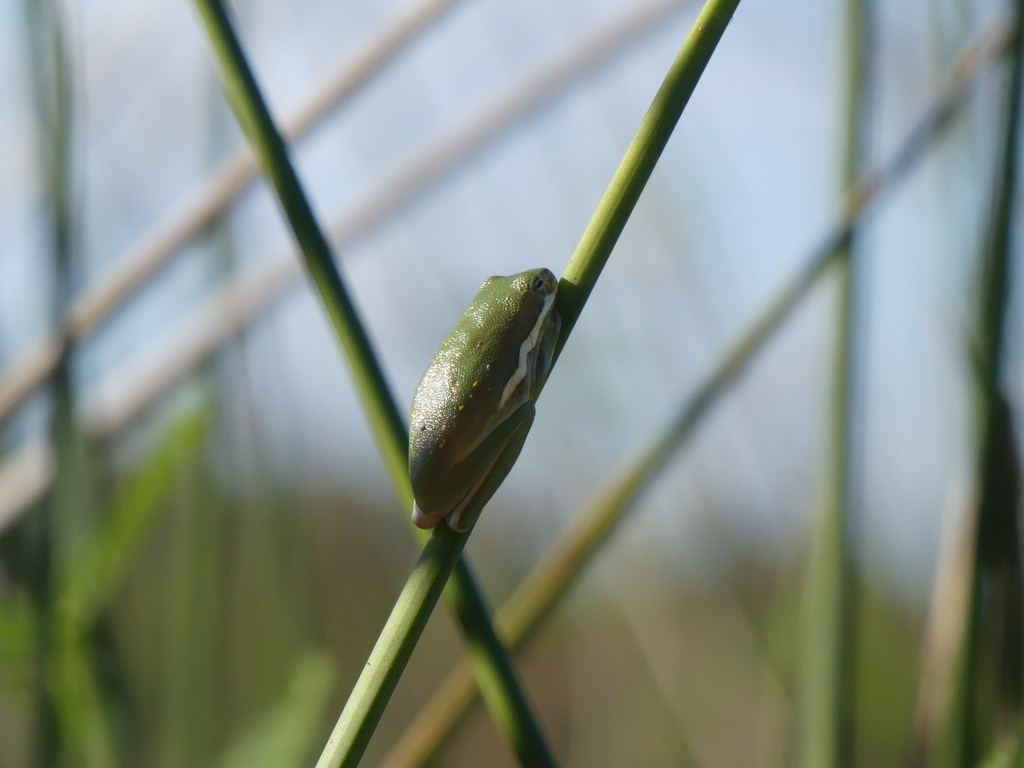
Green treefrog (Hyla cinerea)
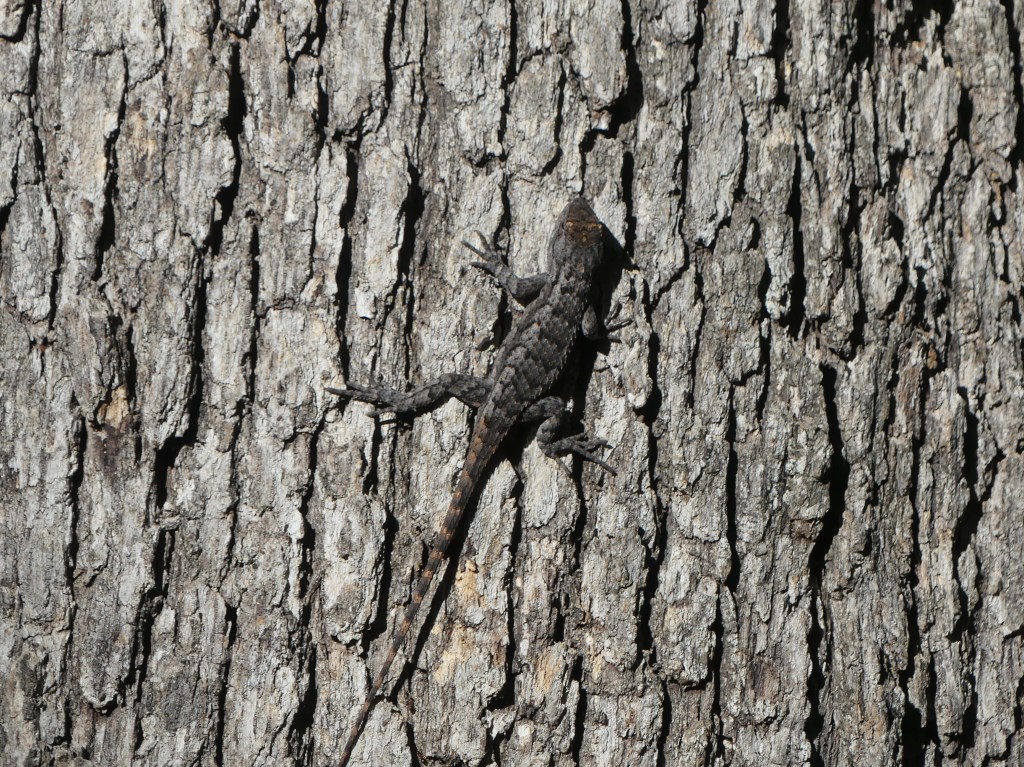
On the island, we wanted to see what we could find without damaging habitat or collecting anything. Our goal was to identify fallen logs that offered good refuge underneath and could be investigated without tearing them up. We also talked about what species would more likely be seen in spots like the water’s edge among tall reeds, or dense mid-story vegetation in the woodland. We did not really expect to see much on a cool October day, but these are very observant folks. We found a little brown skink, a green treefrog sleeping on a reed at the water’s edge, and a Texas spiny lizard before we were done.
Texas spiny lizard (Sceloporus olivaceus)
In our next session we focused on the amphibians of North Texas. We are fortunate to have a number of frogs and toads, and even a few salamanders (occasionally seen in a few locations). We talked about diet, drinking through the skin, secreting toxins through the skin that may confer some protection from infection as well as from some predators. We talked about frog calls and played audio samples of many of them. And then we headed out into the field.
The group, on their way to finding frogs and toads at the marsh
One of our goals was to practice the amphibian monitoring protocol that involves systematically listening for frog or toad calls, identifying for each species whether we heard a few individuals (isolated and non-overlapping calls, which would be Call Index = 1), a larger group (numerous overlapping calls but you can identify individuals calling, which is Call Index = 2), or a full chorus (lots of overlapping calls and individuals cannot be identified, Call Index = 3). The end of October was not the best time for frog breeding, so we were not surprised when we did not hear any calls.
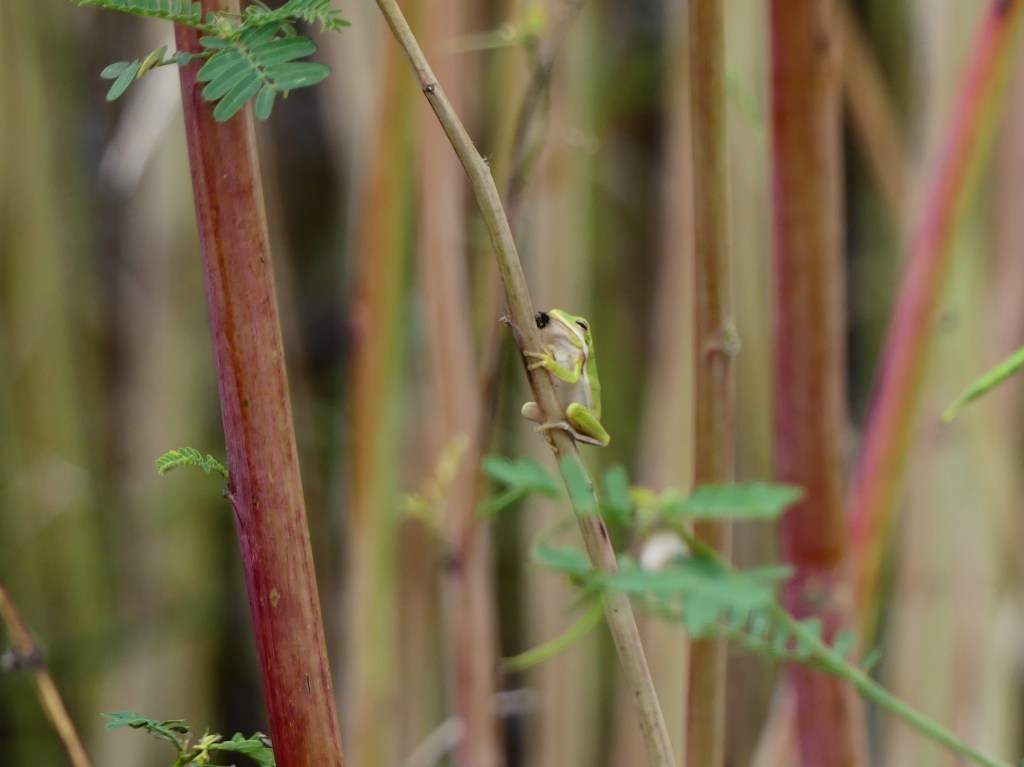
But earlier we had seen several species; they were present but not breeding. People in the group saw leopard frogs, and then we found a small green treefrog. As we watched, it spotted an insect, then jumped, caught it and gulped it down. More green treefrogs were seen, and Alex found a juvenile western ribbonsnake and a couple of cricket frogs. Sheryl found a Gulf Coast toad.
Young green treefrog, in the moment just after catching a “bug”
We’ll turn our attention to turtles next, and in the last session tackle lizards and snakes. To get some good field time for these last species, we may have to reconvene next spring when snakes and lizards are more active.
I’m having a great time getting to know this group of herpers and sharing what I know. They are showing me what good observers they are, and how willing to ignore some mosquitos as we sit in darkness, listening for frogs. Kristina held a snake for the very first time. Some of them are interested in volunteering in the nature center’s alligator research efforts. All of this is great news for reptiles and amphibians and for the broader natural world.
Some of you download and read the Letters to Nature Kids that I write periodically. They’re available within the “Publications” page. I may not post about each one, so they may be overlooked by some who might want to read them. (Parents or teachers might download them and pass them along to kids, but adults read them at least sometimes.) This time I thought I’d put in a word for the Halloween issue.
The first thing I thought about was, of course, how we hijack things in nature, presenting them in ways that make them fearful. Bats, spiders, owls and such. On the one hand, I don’t want to get on my high horse and spoil the fun. I even tried to join in the fun a little by saying: “Bats live in the opposite of the bright daytime world in which we see and hear birds. When people think of angels, they give them feathered wings, but images of demons often have bat wings.”
On the other hand, after Halloween is over, kids should not be left with fears of these things. So I said, “People make up stories, either for fun or as a way to try to explain what they don’t really understand.”
The issue I feel most strongly about is kids (or anyone, for that matter) who take it too far. Halloween should not be an excuse to badly scare some child. I said, “It can be fun to be scared just a little, when we’re with friends and we know the scary thing isn’t real. … Sadly, some people enjoy scaring others because it makes them feel more powerful or stronger than the person that they scared. I’m not talking about kids having fun with each other, I’m talking about a person who enjoys seeing someone really afraid in a way that’s not fun. That’s bullying and it is not OK. Stay away from someone like that.”
If you know someone who might enjoy this Halloween issue, download it and pass it along. And have a safe, fun Halloween!





















 Our Lives In Nature