Summer’s End at the Grasslands

With one more week of summer, I wanted to walk in the LBJ National Grasslands. Summers there can get really hot; I will never forget a midsummer walk years ago in these grasslands. I was out with some herpetological society members on a day when the temperature was supposed to be more moderate, and everyone was probably on the verge of heat exhaustion. At least one member was feeling faint, and we made our way back to the cars by walking from one patch of shade to the next.

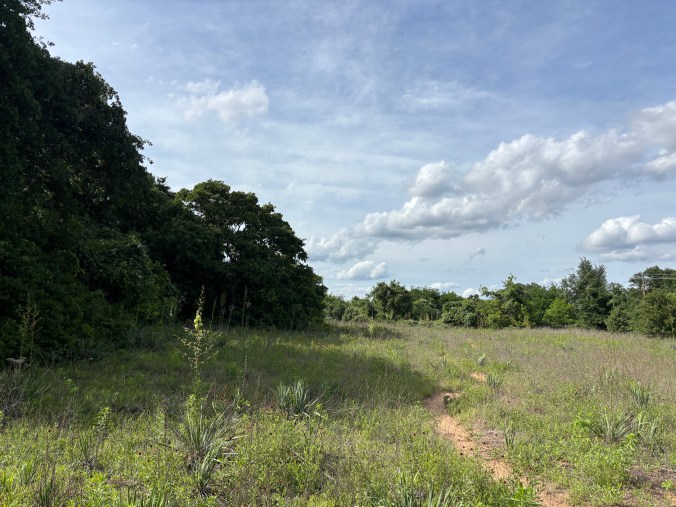
This day at the grasslands would get no hotter than the mid-90s. That’s how warm it was at 2:00pm when I arrived at a trail taking me into open fields and oak woodlands. There were patches of prairie dominated by Wooly Croton, a slightly fuzzy plant whose seeds are sought by doves, among other birds. And so, another common name for it is Doveweed. It is also a host for caterpillars of a beautiful butterfly with the strange name Goatweed Leafwing. Accordingly, another name for this plant is Goatweed. All those names can get confusing (it’s also called Hogwort by some) but the names tell interesting stories. In other areas, Western Ragweed was common. Allergy sufferers may wince at the mention of this plant, but consider the scientific name of its genus: Ambrosia. It may not literally be the food of the gods as the name suggests, but if you crush a leaf between your fingers, the smell is wonderfully aromatic.
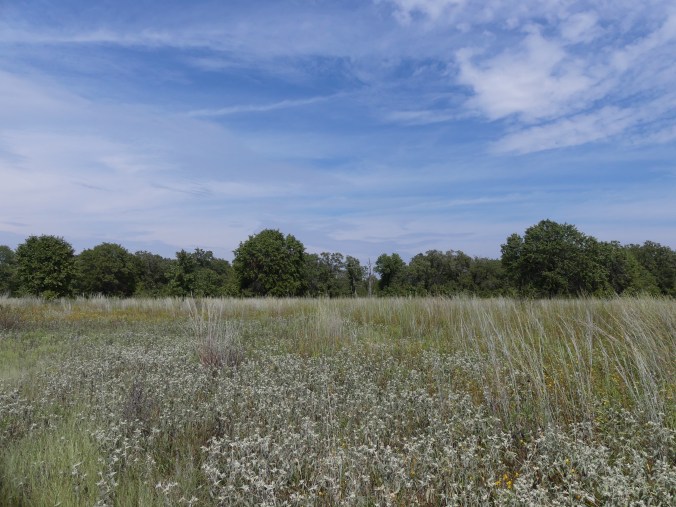
Wooly Croton in the foreground, with Little Bluestem too the right and further back

There are plenty of native grasses, including Little Bluestem, which is easy to recognize because its blue-green stalks with pale smears of magenta stand so straight and tall. Today, some patches were shoulder to head high, giving a particular color and texture to some parts of the prairie. Switchgrass is common in areas that get a little wetter, growing in big green clumps.

The land gently rises and falls, with swales and ridges that are a part of the natural shape of the earth. In most places, the soil is very sandy and erodes easily. It is not unusual to come across a spot where the ground suddenly drops into a gully or maybe a spot where rainfall gathers into a little pond. In other places, humans built embankments years ago that created ponds either for cattle or to slow the runoff and conserve soil.

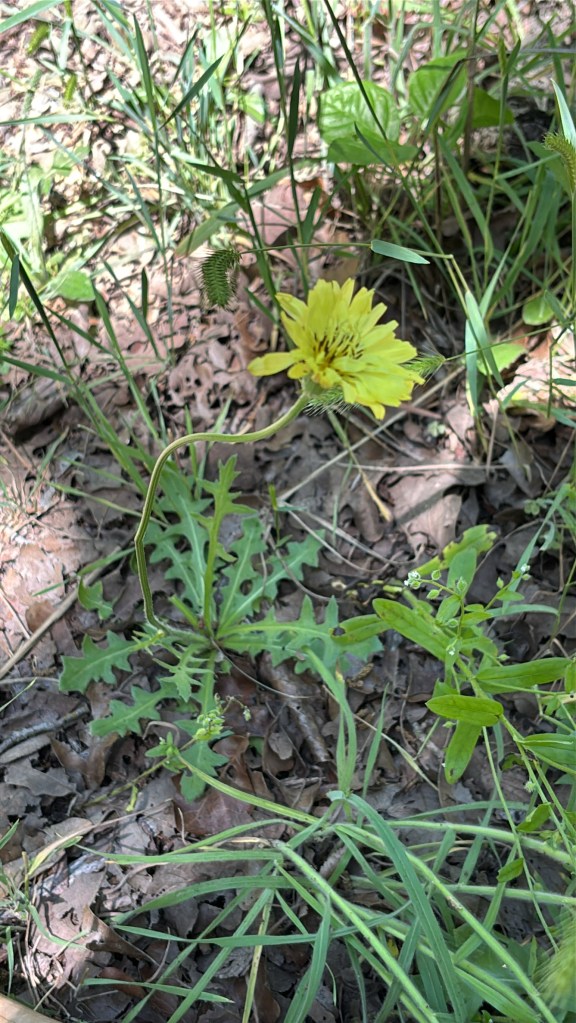
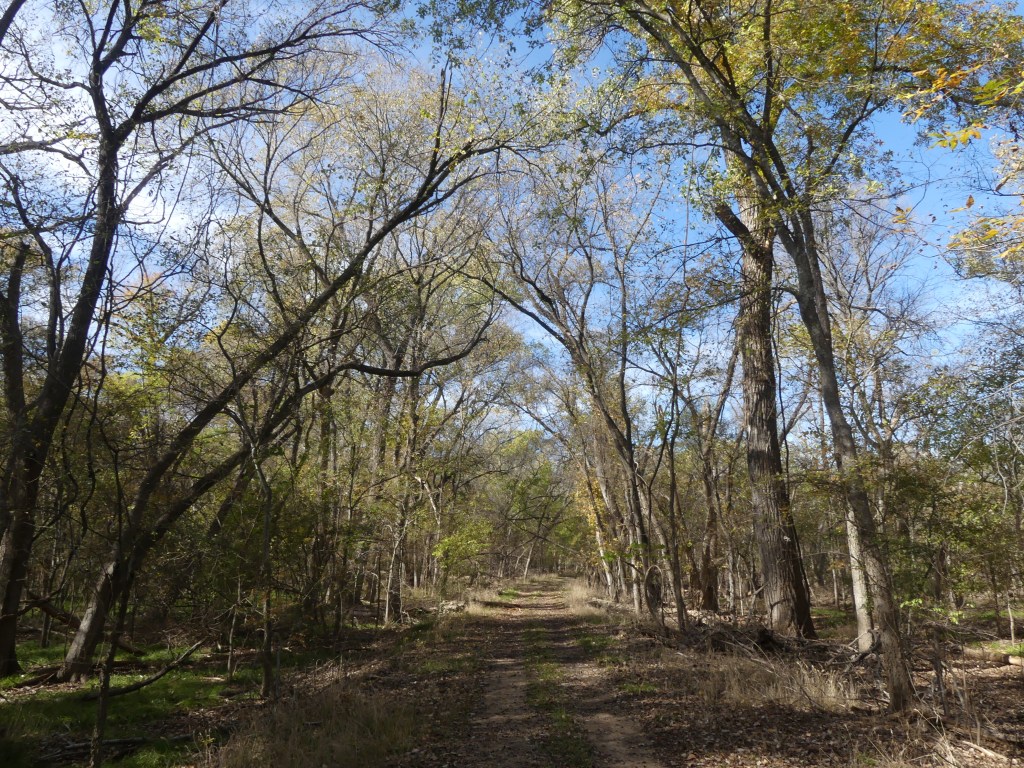
At the fork in the trail, I turned and followed the bare sand and clay track to the north, through stands of Post Oak and Eastern Redcedar and out into grassland openings, grateful for the breeze as well as for the bright sunshine. Along the trail were clumps of Bitterweed, with thin leaves and stems and bright yellow flowers. In each of those flowers, the central bowl-shaped disc is full of tiny yellow disc florets, and arranged around it are the ray florets (most of us are taught to call these structures the “petals”), each one scalloped at the edge. The plant is said to be bitter, so that if cattle must forage on them the cows produce bitter milk. But Bitterweed is a familiar and welcome sight to me, and I often find them blooming deep into winter.
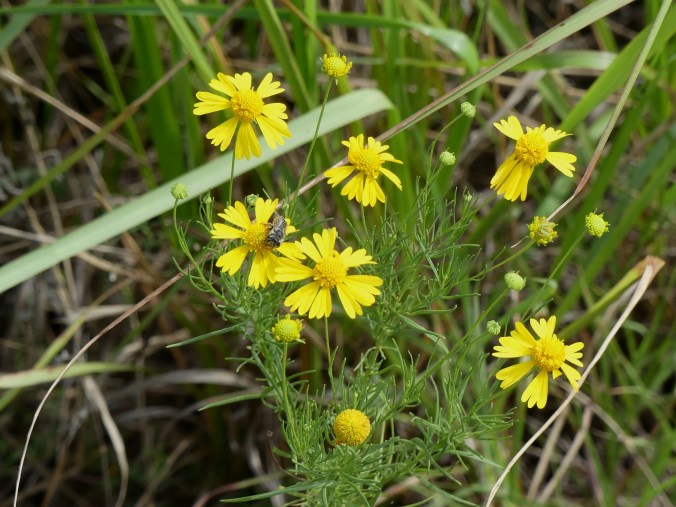
Bitterweed

I sat in the shade of an oak and wrote for a bit and then decided to turn back. I became increasingly grateful for breeze, and thankful for the bright sunshine only in a more abstract sense. It’s true that it was a beautiful day, but the day was determined to show that it was still summer for another week. I found myself looking down the trail for the next spot of shade and heading for it. Perhaps my age is catching up with me, or perhaps it was poor judgment in choosing midafternoon to take this walk.

Down the road was the big pine grove in Unit 30 where people love to camp. And it is a wonderful place to sit and listen to breezes sifting through the crowns of those big Loblolly Pines. Not only that, it is dotted with a number of ponds with turtles and frogs. That made it a perfect place for me to sit beneath those trees, breathing the smell of pine trees and listening to breezes and birds. The grove is a good crow hangout, and I heard several. The identification app Merlin also heard Great Blue Heron and Northern Cardinal.

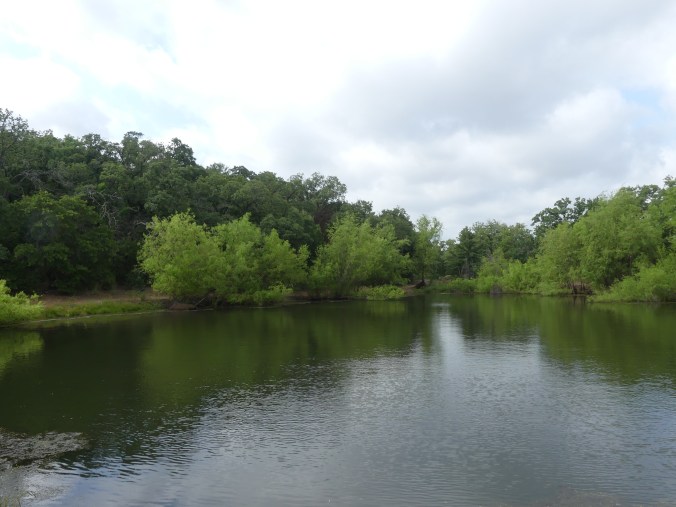
I walked to a spot near one of the ponds and sat beside a big pine tree and across from another. My camp stool rested on a mat of pine needles and dropped twigs that had accumulated over the years. At the water’s edge were the bent but mostly straight trunks of twelve to fifteen understory trees, and beyond was the water, brown from the sand and clay of the soil. On the surface of the water were mats of Floating Water Primrose and clumps of small reeds.

As I watched for the movement of a frog or turtle, I saw skimmer dragonflies dart this way and that. By now it was 4:20pm and the sun was getting lower and the slanting light more golden. Some insect trilled a steady “wrrrt-wrrrt-wrrrt” – almost but not quite like a gray treefrog. Occasional concentric ripples appeared in the water, maybe from fish or some invertebrate. Between the insect trills and the low, hushed sound of breeze in the pines it was very quiet.

It was peaceful here. The smell of pine needles, the lullabye of the breeze, ripples in the water, the sudden appearance of dragonflies; I was very lucky to be there for all of it. And while I’d like to share all of it, I am thankful for the solitude.
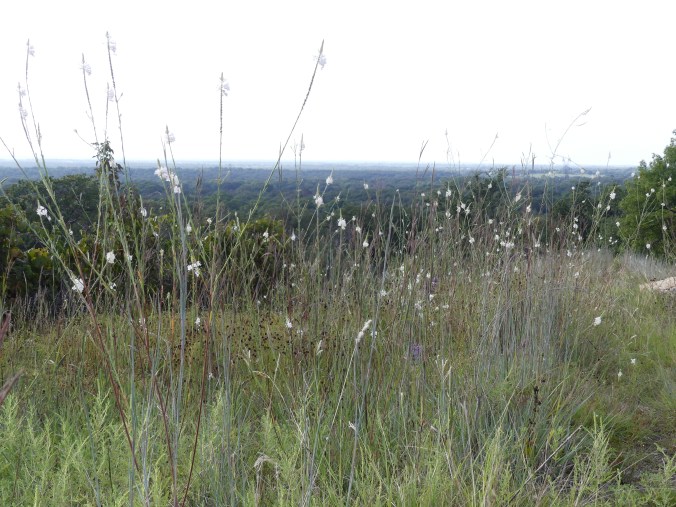
False Gaura on the ridge

At 6:00pm I had moved to a limestone ridge in Unit 71, with a clear view to the west. Here, the Leavenworth’s Eryngo adds some spikey purple to the landscape, and False Gaura is scattered around with flower clusters looking like popcorn waving in the breeze. During the next hour, the sun was obscured behind some clouds near the horizon and it began to feel like the day was ending. Although there were some distant noises, a pump somewhere, an occasional car or jet, it seemed very quiet. No sounds of birds or insects. In the blue sky to the south, a few wispy clouds were drawn out like a downy feather.

Leavenworth’s Eryngo

The sinking sun reached a point where it was behind some clouds, lighting them from behind so that they looked like islands and archipelagos in an orange sea. The ones several degrees up from the horizon were orange, while the ones just at the edge of land were dull red-orange.
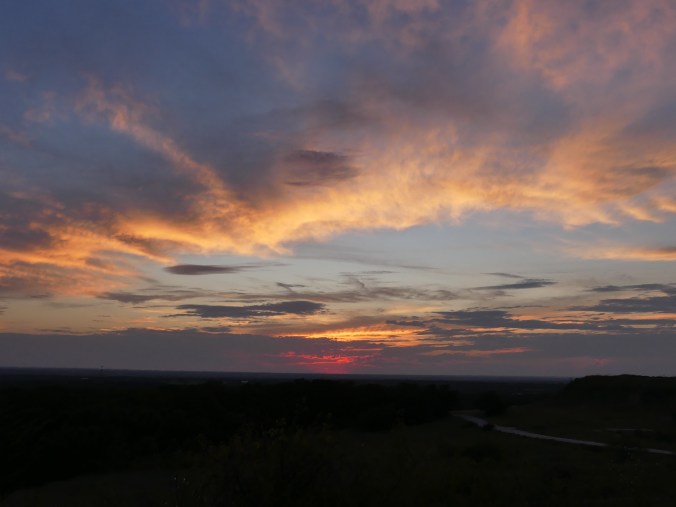
Out of all this, I began to hear gunfire. Somewhere nearby, someone was shooting a rifle or shotgun. When visiting the grasslands, I understand that hunting is allowed with the restriction that only shotguns are allowed (not rifles, where stray bullets would be more dangerous) and shooting is not allowed near trails and campsites. I find bullet casings at the grasslands frequently, so I know that people who like to shoot may not care about the rules. And so, hearing gunfire is a real concern for me. I moved further south along the top of the ridge, and after a while I heard more gunfire – not very close, but not very far off. I sat on the other side of my car from where the sound seemed to be coming.

Forest Service land, including the National Grasslands, are supposed to accommodate various uses, including everything from logging and drilling to hunting and fishing. I understand that public lands cannot be reserved just for one kind of user such as birders or naturalists. However, some kinds of use pose no threat and little chance of degrading the land. Other uses could result in someone being shot or patches of habitat being bulldozed and potentially poisoned for gas and oil drilling. Maybe the “multiple-use sustained-yield” law that opens forests and grasslands to all these uses should have taken into account these different impacts on the land.

Hunters and gun owners might claim I was overreacting. I must acknowledge that the statewide hunting accident data in Texas for the past three years show one fatality each year and between 10 and 18 non-fatal accidents per year from 2022-2024, a lot of them while dove hunting (it is currently dove hunting season). Statistically, I’m safer at the grasslands than I am on Texas highways, where there were over four thousand fatalities last year.

At 7:25pm that orange, red, and blue sunset sea was more brilliant and well-defined. And every minute changed the view. The sun was now fully hidden, shining down between the cloud and the horizon like fire, glowing red-orange in the mists. Then the ball emerged below the cloud, reaching for the horizon.

Ten minutes later, a cool breeze came up, steady this time. With it, the beginning of a pulsing, buzzing insect song. The last burning ember of the sun disappeared at 7:37pm, leaving a brilliant sky. The edges of the clouds were left like burning scribbles, and closer to me the undersides of clouds were lit in gold. Even the tattered clouds overhead were lit up in yellow-orange. Just a bit later, looking back from the west the clouds were blue-gray brush strokes edged in pink and orange. The sky was deep blue overhead but pastel all the way around the horizon, perhaps from light pollution and haze.
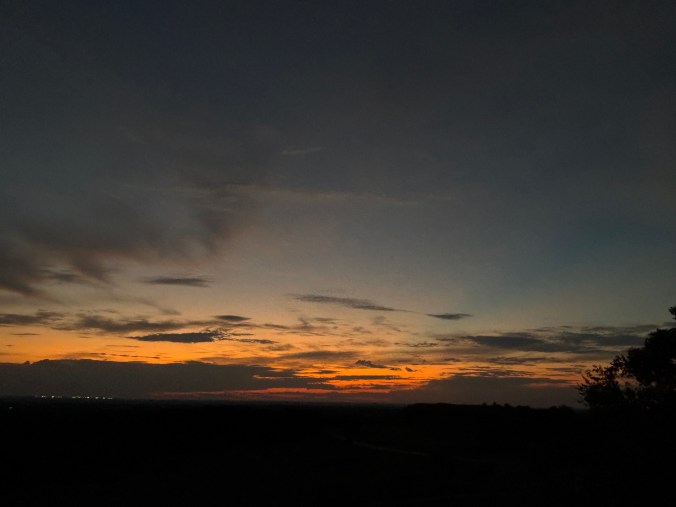
Nearing 8:00pm, still not full dark, stars were not yet visible. The color had left most of the clouds and the ridge was quiet. Just as the summer was ending, the day also was coming to an end.
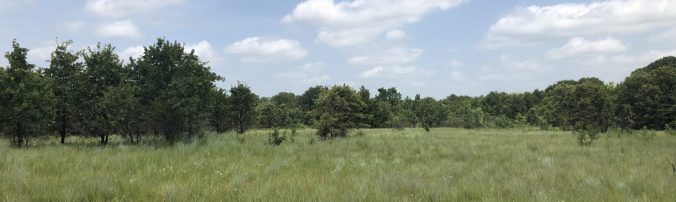
At the LBJ National Grasslands

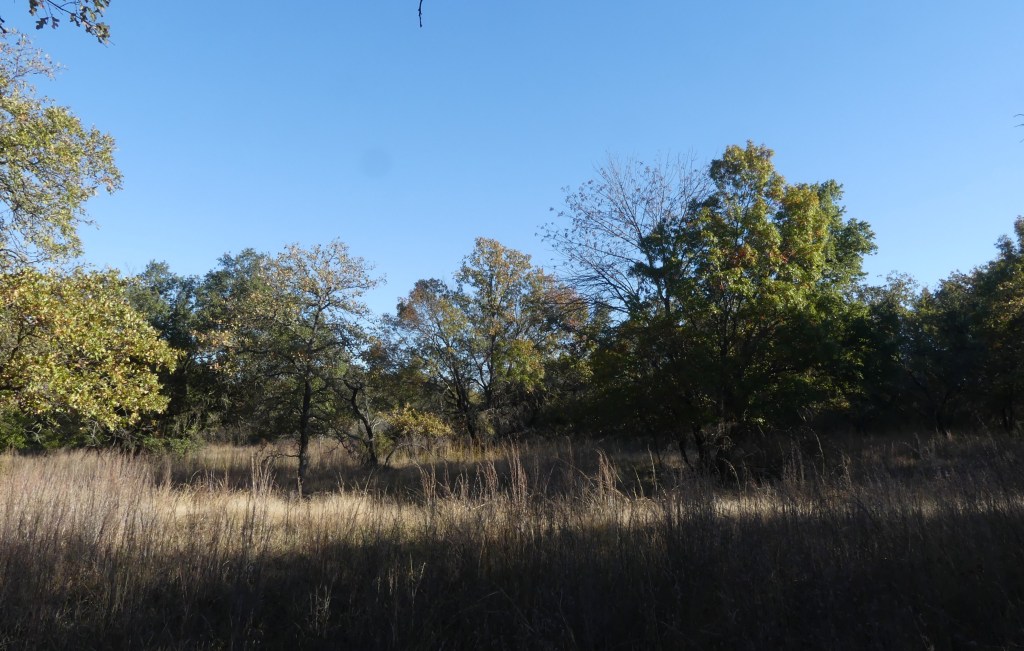
A savanna within the LBJ National Grasslands

Yesterday I took a couple of friends to visit the LBJ National Grasslands (LBJNG). There was a little light rain as we walked around the pine trees and ponds, seeing a few frogs and toads. We wandered out onto the prairie at sunset, seeing some flowers that are a reminder, for a while, of the spring that has just passed. Some time ago, Kayla West and I led walks there regularly to introduce people to this amazing place, and we had a Facebook group for a while.

I’ve adapted some of what I wrote during that time, providing it here for those who may not have visited yet, to help you get acquainted and consider taking a walk there. You might also want to subscribe to Mary Curry’s blog, “Looking Out in North Texas,” in which she describes lots of ramblings in places like the National Grasslands and finding plants, fungi, mosses and lichens, and wildlife.

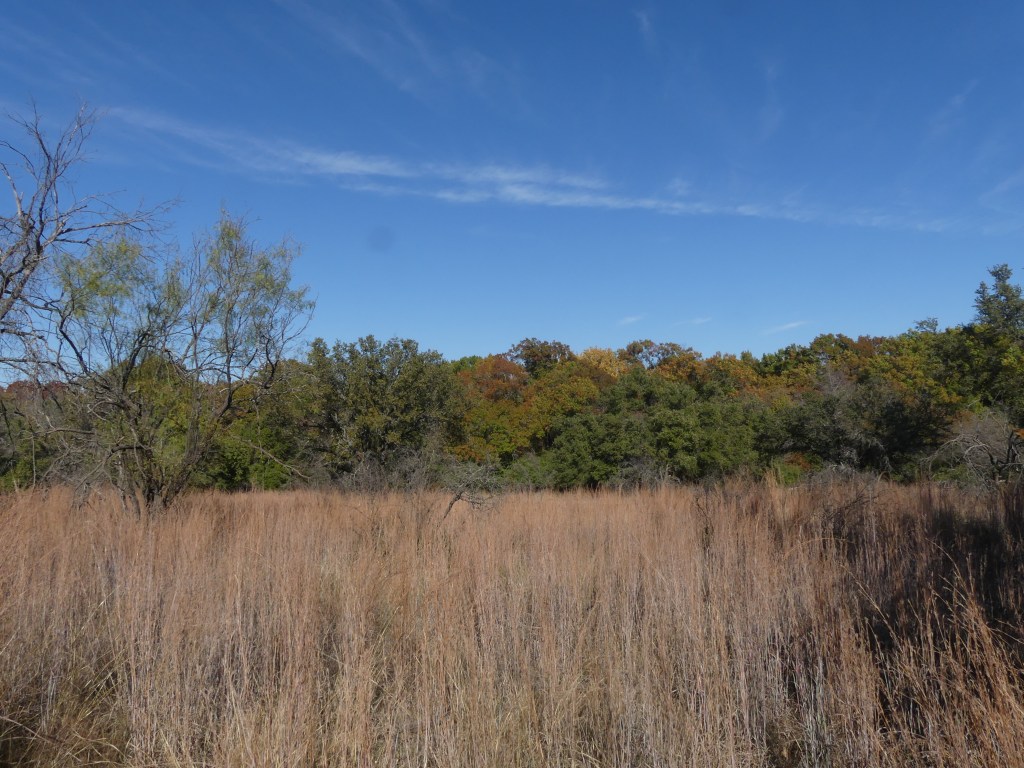
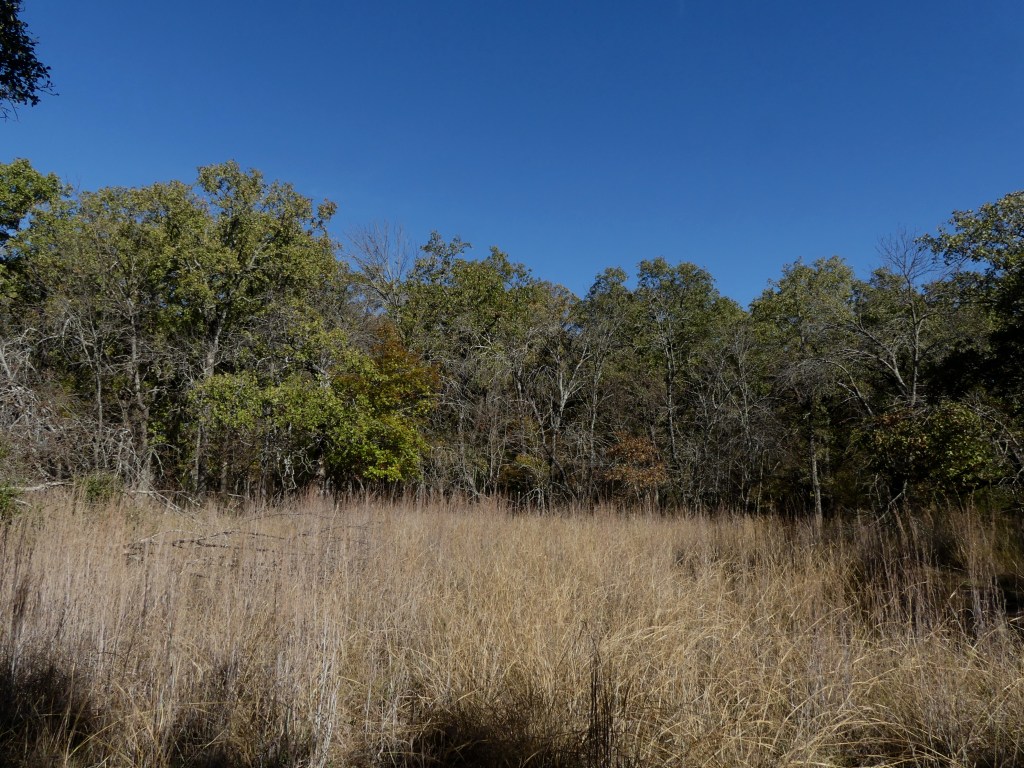
The LBJNG is located along the eastern edge of the Western Cross Timbers, which is an area where patches of prairie are mixed in with woodland (largely Post Oak and Blackjack Oak). You rarely walk very far in the oak woods without emerging into a little meadow or perhaps a large expanse of grassland. The grasses include Little Bluestem, Indiangrass, Switchgrass, and some other native species, some smaller ones like Sideoats Grama and big ones which, in some patches, stand above your head.
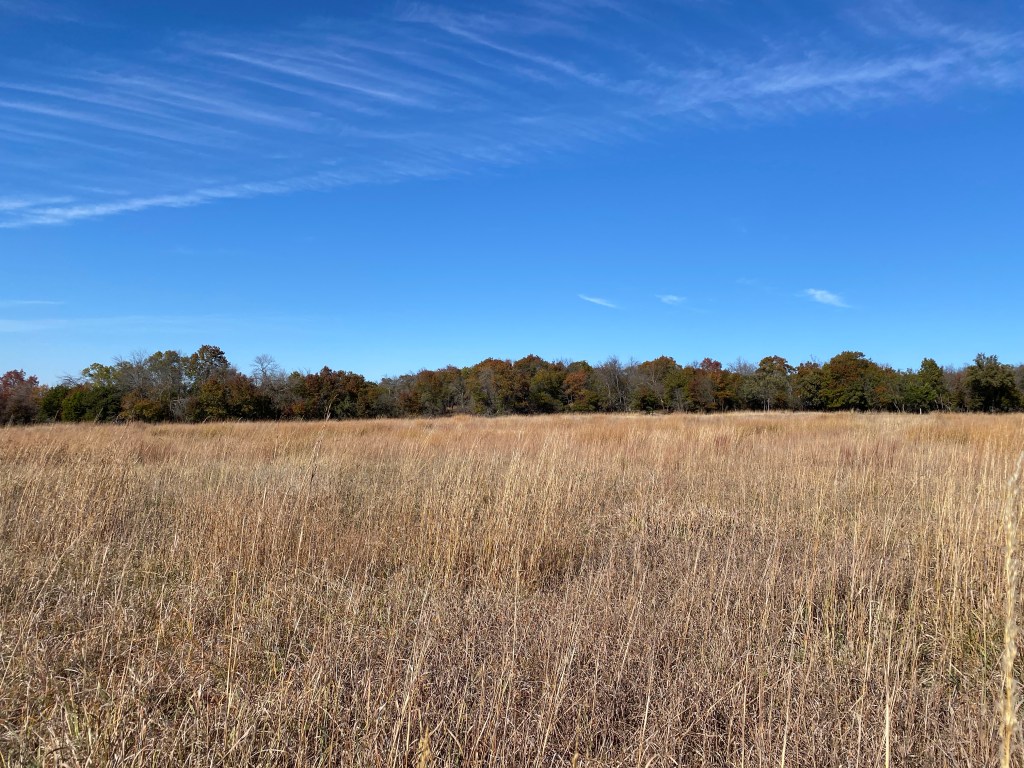
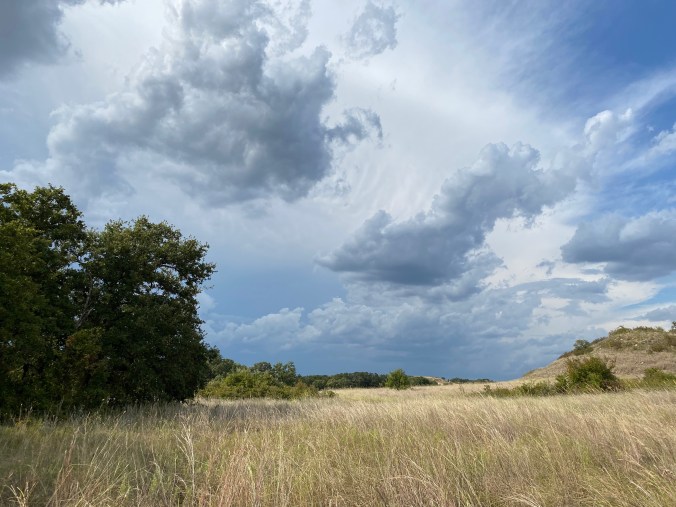
A prairie in Unit 71 with an oncoming afternoon storm

The soil and rock beneath it is largely Antlers Sand with some Walnut and Goodland formation limestone and clay (see “Geology of Wise County, Texas“). These geological features are from the Cretaceous period (roughly 145-65 million years ago). Walking the trails of LBJ National Grasslands, you come into contact with reddish sand and clay, or along ridges in southern units there is limestone filled with fossil oysters. 

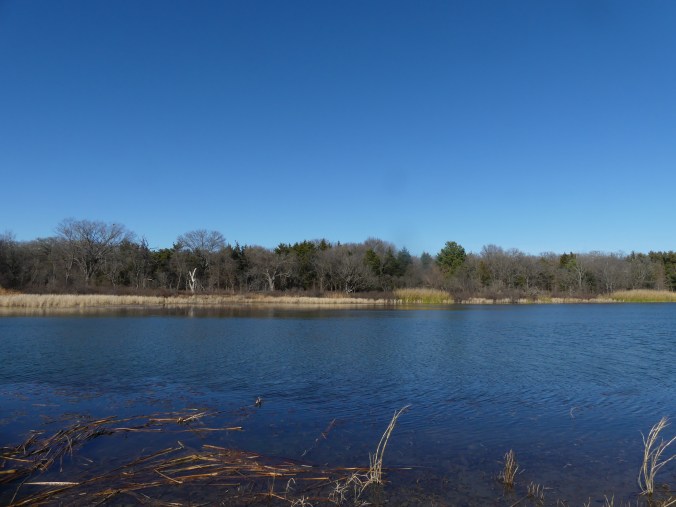
A winter view of Black Creek Lake

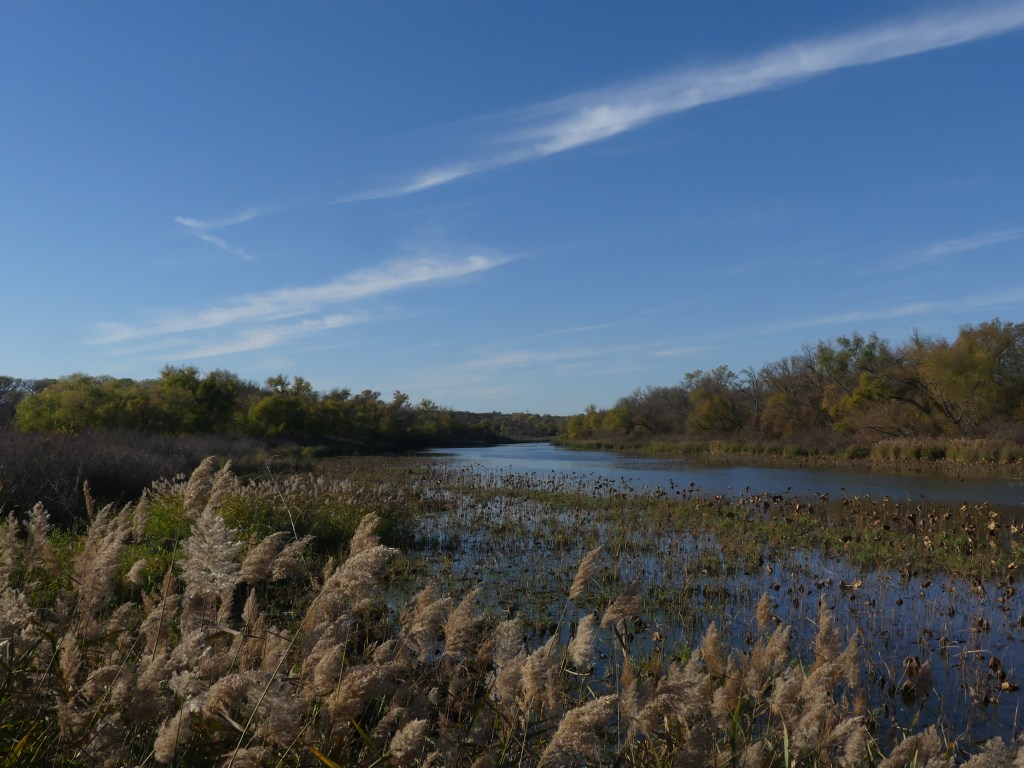
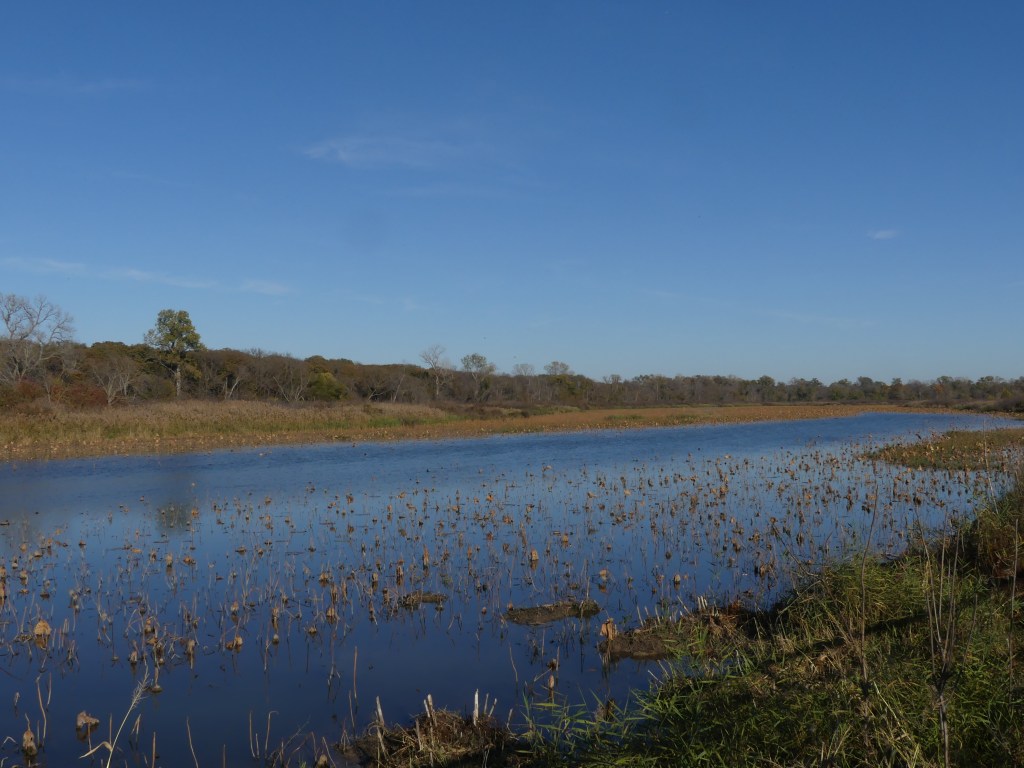
The grasslands are dotted with many small ponds, and many were created by people with the aim of reducing runoff and soil erosion as well as providing water for cattle. There are also several small lakes constructed for the same purpose as well as providing recreation. Those include Cottonwood Lake (about 40 acres in size), Black Creek Lake (about 30 acres), and Clear Lake (about 20 acres, with a small fishing pier).

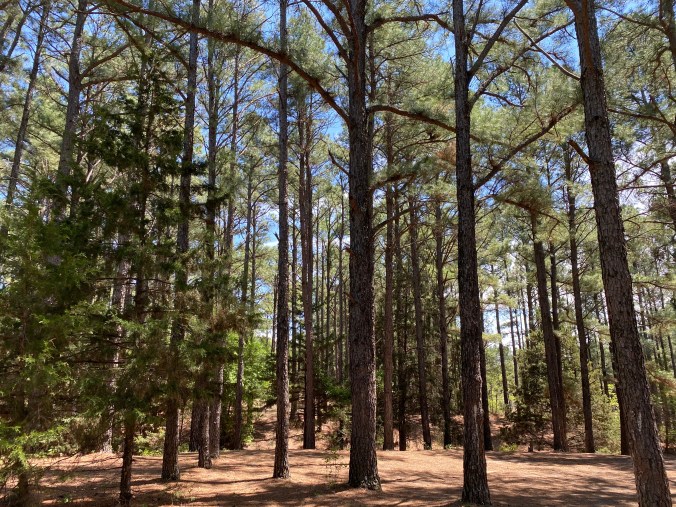
In several spots within the grasslands there are areas dominated by Loblolly Pines. They are generally in areas of deep sand with one or more ponds and are popular with campers. Pine trees are not a typical part of the Cross Timbers plant communities, and we have been told by Forest Service staff that pine seedlings were brought to the area 40 or 50 years ago and planted. Today many of the trees have grown quite tall, and smaller trees and seedlings show that these pine groves are well-established and even expanding.

Pine grove in Unit 30

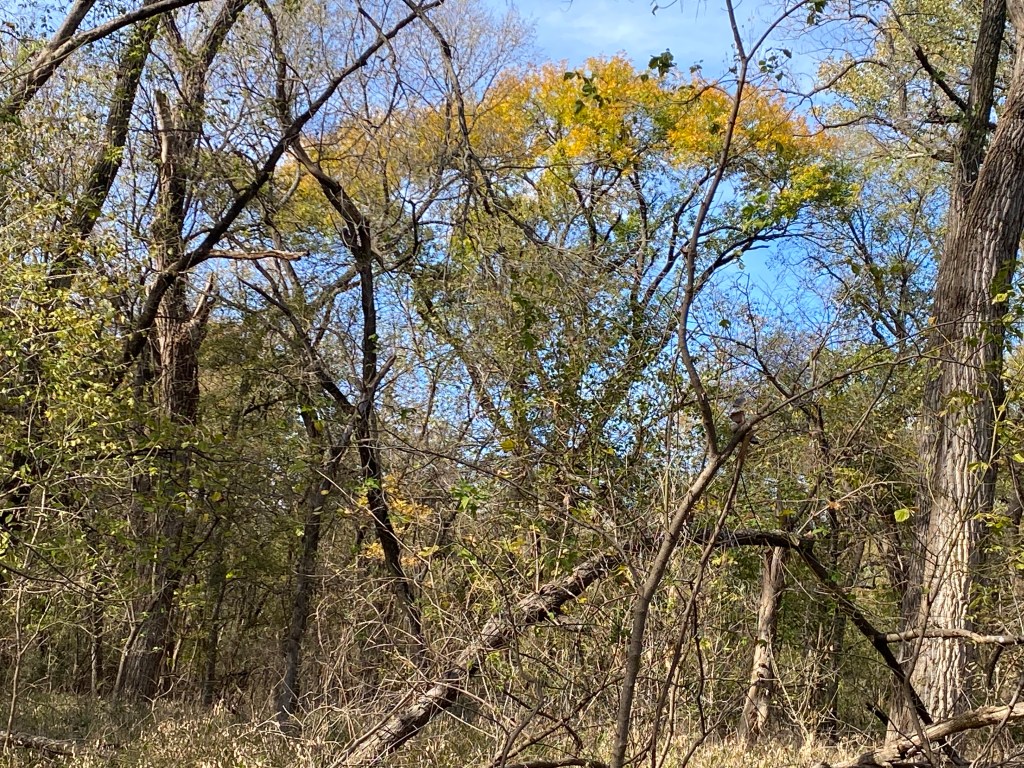
As delightful as the pine trees may be, there is nothing that compares with the prairies and their spring flowers or the native grasses in autumn, or the oak and juniper woodlands on a quiet autumn afternoon.

A spring meadow at LBJ National Grasslands

Visiting the Grasslands

From the Dallas-Fort Worth area, it’s a little drive to get there (somewhere in the neighborhood of 45 miles, depending). However, it’s one of the best nearby opportunities for some solitude and quiet that I know of, along with thousands of acres of oak woodlands, grasslands, and ponds.

Here is a basic map of the grasslands, showing the administrative units (in green), county roads, and many trails. A more detailed map of the major trails can be downloaded here

Making Your Visit Great

Before you walk the trails out there, ask yourself, “What do I want to get from this visit?” and also ask, “How can I be open to what the LBJNG offers?” Perhaps you are looking for beauty. You might want to see wildlife – birds or butterflies, Armadillos, Tiger Beetles, or a beautiful Rough Green Snake masquerading as a vine in the shrubs. You could sit in a pine grove and listen to breezes whispering in the treetops. You might keep walking to see the endless ways that prairie grasses, Post Oaks and Junipers can appear as you explore around the next bend of the trail.

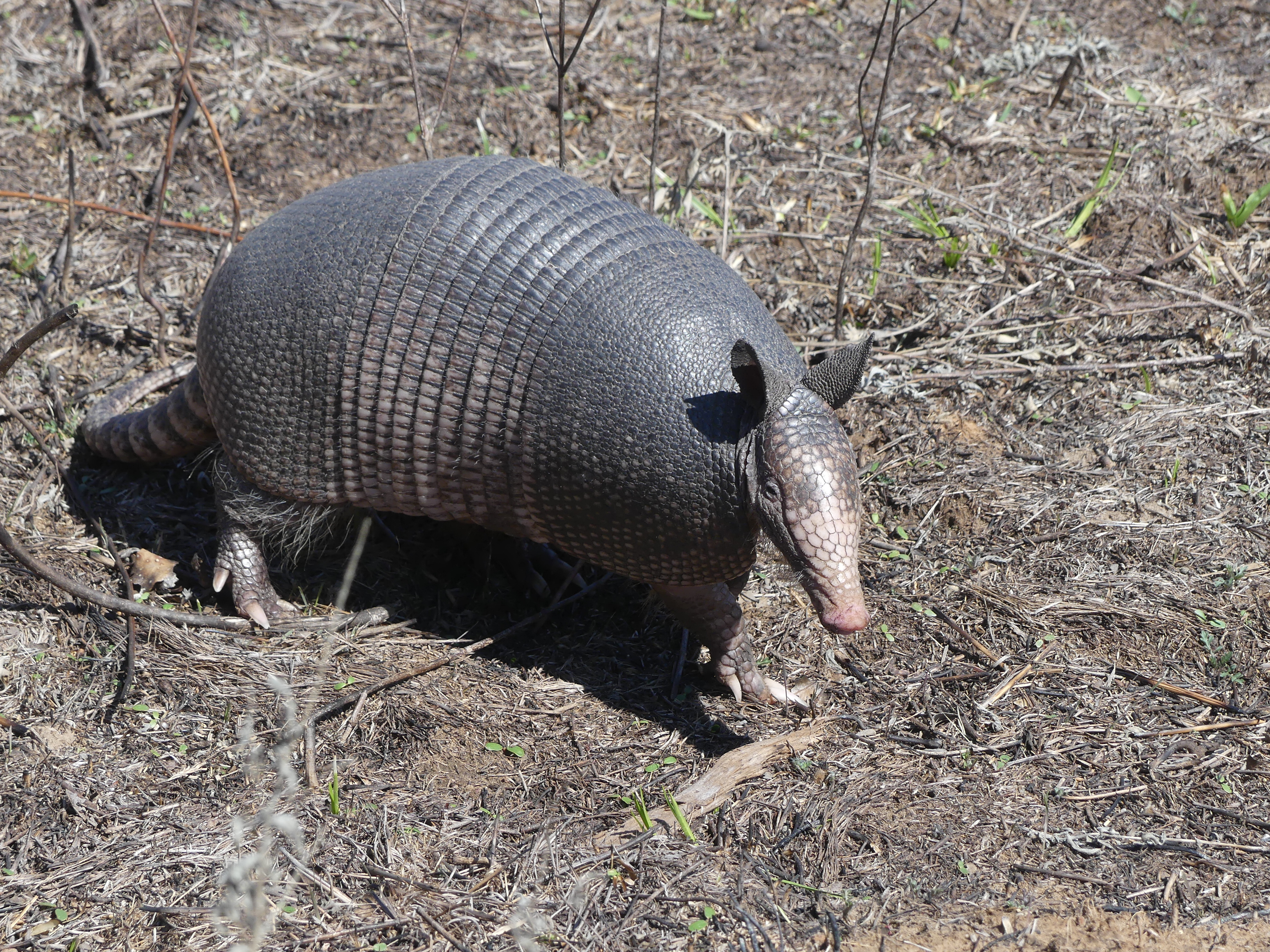
An Armadillo seen during a winter walk

It also is helpful to be open to what a particular visit may offer. Things might be different than you expected, and if you can be flexible you might find that different can still be rewarding. Another way of being open is to widen your attention beyond what you expected or planned to receive. Become quiet and still for at least part of your visit. Be aware of everything around you, noticing sounds, smells, the feel of sunlight, water, and soil. As much as you can, let thoughts and worries go (you cannot stop your brain from coming up with thoughts, but you don’t have to hold onto them and let them take over). Such a practice of mindfulness can be a great way to visit any place in nature.

Leave some room to reflect on what the experience meant to you and, now that you have some connection with the grasslands, what that connection means. For some people, the opportunity to be away from the “built” world of cities, towns and crowds is like being rescued from chaos and recovering for a while. For others, the multitude of living things is some reassurance of life’s – or a creator’s – benevolence and creativity. Some of us see the grasslands as a sort of sanctuary we can share, and at the same time a place that needs our care and support in order to survive in the world. 

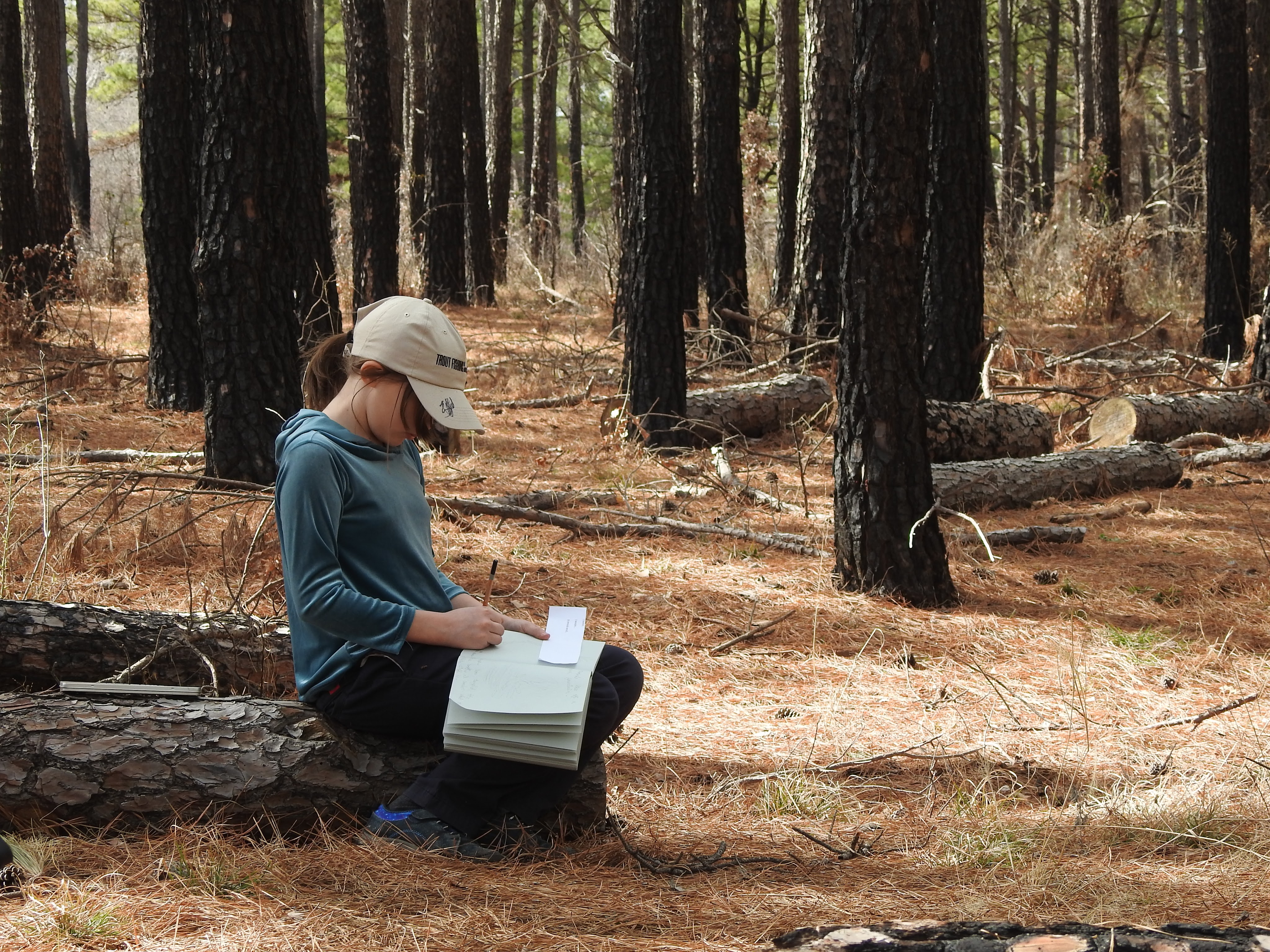
Even if the meaning of the grasslands is largely about a scientific list of species and their characteristics, I’d like to encourage you to write about it and draw things that catch your eye. I suggest carrying a notebook of some sort and stopping periodically to write and draw while you’re out there. This nature journaling will strengthen your memory of the day and give you a chance to reflect on what the place means to you.

Writing in a journal – in a session Kayla West and I taught at LBJNG

One way to write about your visit is to write a letter to the grasslands, as if the ponds, prairies and woodlands could read what you wrote. Maybe that sounds a little weird when you first consider it. However, when you write to somebody, you’re writing from within a relationship, and each person in the relationship has intentions and wishes to be considered. Kayla and I have led walks in which we suggested that participants write a “Dear Grasslands” letter, and the results were often personal and meaningful. 

Taking Care of the Grasslands

All of us should take care that our visit does not harm the grasslands. We hope you’ll take a small bag with you to place any snack wrappers, disposable water bottles (get a non-disposable one!), or other trash so you can pack it out with you. And be very careful with fire, if you make a campfire. The Forest Service occasionally does prescribed burns to maintain the ecosystem, but the time and place of such burns are carefully planned. Clear the area around your fire and make sure there are no branches or shrubs close by – including above the fire. Then stay with the fire until every spark is out. 

I hope you will leave things the way you found them. There is a role for legal hunting and fishing (especially for food) and scientific collection, and I think there’s no harm in taking a few samples of things like leaves, acorns, or empty mussel or snail shells.

Taking Care of Yourself

There are few dangers to worry about at LBJNG. Nevertheless, please pay careful attention to the following hazards:

  1. Dehydration and heat illness. It is very easy to forget water at the start of a walk when you’re not thirsty. Please bring water with you, even on a winter walk. Additionally, in summer you can get overheated and dehydrated very easily. Read up on heat exhaustion, heat stroke and sunburn and bring water, a hat, and sunscreen.
  2. Guns and archery equipment. People may be hunting in the area. For guns, the Forest Service rule is black powder hunting only, because buckshot is less likely than a bullet to travel far and injure someone at a greater distance. However, be aware that not everyone follows this rule (you occasionally find bullet casings). The Forest Service also forbids hunting in developed areas like campsites and within 150 yards of hiking/equestrian trails, but not all hunters know this. Hunters are, in most situations, required to wear fluorescent orange to make accidents less likely, and hikers are encouraged to do the same during hunting and archery season. Information from Texas Parks & Wildlife Department about hunting seasons can be found here
  3. Plants. Depending on the area, Prickly Pear and other cacti may be common. Greenbrier is a thorny vine that is common especially in the woodlands. The stiff, pointed leaves of Yucca can also cause a puncture if you stumble into one. In places you will find Texas Bull Nettle, a plant covered with small stinging hairs. Another plant to be careful around is Poison Ivy, especially in woodland areas. 
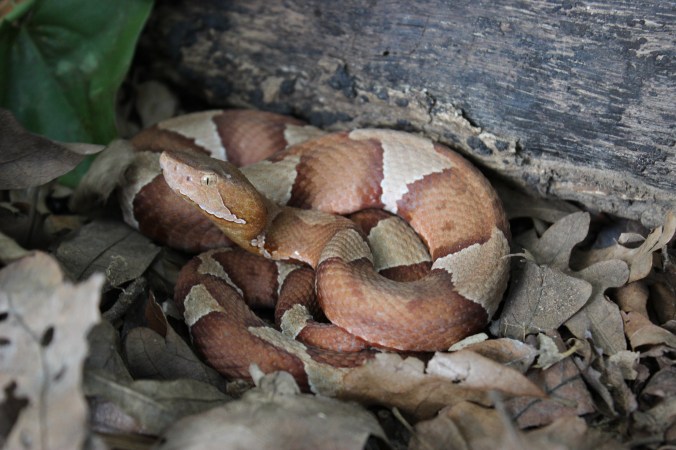
  4. Wildlife. Most of the larger wildlife at LBJNG is no cause for fear. Coyotes live there, but you are more likely to hear them than to see them. If you see a coyote that stands its ground, especially in spring during pupping season, you should back away and leave the area. More information about interactions with coyotes can be found here. Feral pigs are seen in some areas, and while they usually run away, they are potentially dangerous. Avoid them, especially sows with young pigs. We should keep a respectful distance from wildlife, even deer. There are two species of venomous snakes that are common in suitable habitat within the grasslands. These are the Northern Cottonmouth (also called the water moccasin) and the Broad-banded Copperhead. Cottonmouths typically are seen near the bigger lakes and ponds. Through most of the year, copperheads are primarily active at night. If left alone both species will avoid interacting with people. Don’t put your hands under rocks or logs where one may be concealed, and watch your step. More information about these snakes can be found here
Broad-banded Copperhead from the grasslands

I would love to hear your thoughts about this great place, especially if you visit after reading this article. After 25 years of visiting off-and-on, I believe there is always something to make each visit interesting and each walk a little gift of renewal of body and spirit.

Drenched In Humidity and Birdsong

As I started on the trail this morning at Sheri Capehart Nature Preserve, I asked permission, so to speak. I said: “May I be here as one among many, neither greater nor less than. May I understand how I fit within this place and cause no harm.”

I expected no particular answer, but I did hear calls of Bewick’s Wren, Northern Cardinal, Red-bellied Woodpecker, Blue Jay, and Painted Bunting (identified by the Merlin app), and those calls felt welcoming. Low clouds covered most of the sky, and it was a little like being draped in a warm, wet blanket. Weather Underground said it was 81F and 76% humidity in the area.

On the trail I was submerged beneath the green canopies of oak trees and then emerged at a little open hillside where the spring rains are helping the Little Bluestem grasses look like they might take back the slope that has suffered erosion and drought.

The north pond

At the pond, the roster of bird calls expanded to include White-eyed Vireo, Carolina Wren, and Carolina Chickadee. And while the Black Willows have taken over large sections of the bank, in one spot there was a beautiful patch of flowers. Chickory, Black-eyed Susan, and Bitterweed were scattered in different shades of yellow. And as I looked out over the water, a group of Blanchard’s Cricket Frogs set up a chorus of “grick-grick-grick” calls. Those calls are always surprisingly loud for a little frog that could easily sit on your thumb.

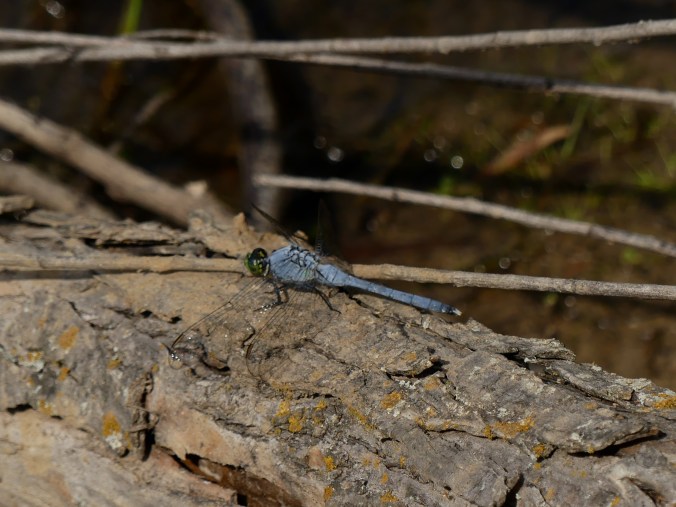
An Eastern Pondhawk. Females of this species are bright green while males are blue

I climbed uphill and away from the pond and walked upslope along the north prairie. Every part of this walk brought wonderful things into view, including Glen Rose Yuccas retaining some of their flowers, a few Indian Paintbrush among the grasses and Western Ragweed, Silverleaf Nightshade (a nettle with a beautiful name and lovely lavender flowers), and Texas Bull Nettle growing tall with their big leaves and white flowers.

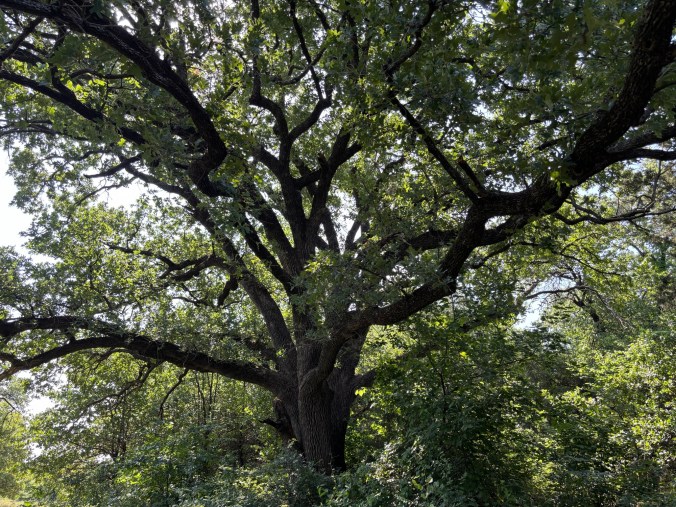
And that brought me to the Old Man (Old Woman, if you like) of the preserve, a huge Post Oak that the Texas Tree Coalition designated as a Historic Texas Tree in 2019. It is called the “Caddo Oak,” in honor of the Caddo People who once lived here. After more than 200 years it continues to stand, with a huge trunk and massive branches stretching out like arms to embrace the sky.

The “Caddo Oak

This “Old Person” – oak trees have both male and female flowers so I shouldn’t assign them a gender – might give us a sense of a something ancient that presides over the place. There are a few other big oaks on the preserve, but probably none that were growing when Texas was part of Mexico, before independence or the battle at the Alamo. We are fortunate that it is still here, never in all those years cut down or burned.

From there I followed the trail as it turned south, taking me to where I could visit the yucca meadow, a big patch of deep, soft sand that supports Glen Rose Yucca, Lanceleaf Blanketflower, and other low plants. Some of the yuccas still had their flowers, though the cycle in which Yucca Moths pollinate the plant and lay eggs where the larvae will then eat some of the developing seeds (not too many) is probably winding down. That meadow is also home to the Comanche Harvester Ant, a species of what Texans call “big red ants” but this one requires deep sandy habitat with nearby oaks, and this limits where they may be found.

The yucca meadow (I took this photo on May 8th)

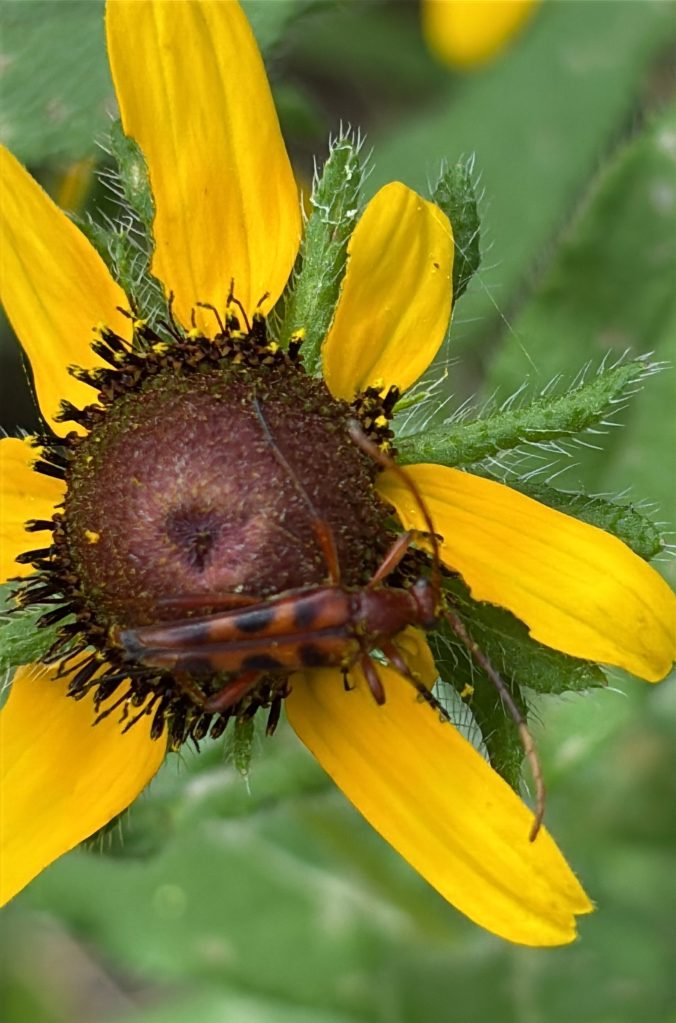
Continuing around the preserve, I found a tiny juvenile bush katydid with black-and-white banded antennae on the flower of a Lanceleaf Blanketflower, and then a Six-spotted Flower Longhorn Beetle crawling over a Black-eyed Susan flower. On a walk like this, the insects provide so many fascinating forms and colors.

Six-spotted Flower Longhorn Beetle

I arrived within the woodland at the crown of the hill, and the clouds had broken up so that there was bright sunshine and lower humidity. At 11:20am I lay on my back and watched the low fragments of cloud drifting swiftly to the north. At the ground there was a good breeze. A Tiger Swallowtail fluttered through the area, perhaps visiting the Standing Cypress that are scattered wherever there is a small opening in the oak woods.

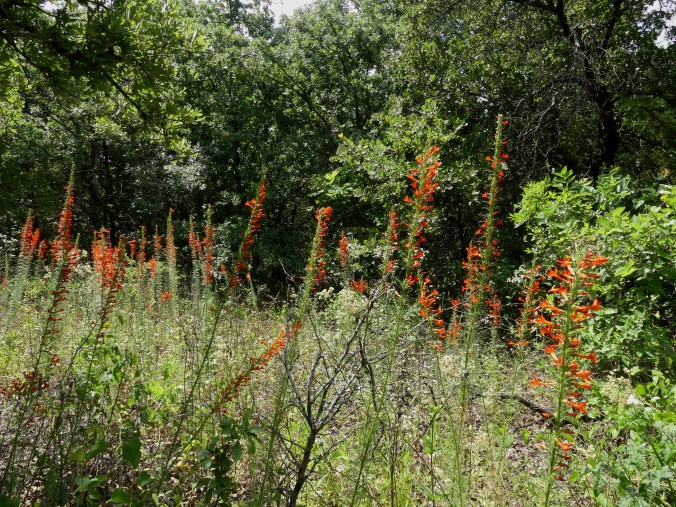
And the Standing Cypress is having such an amazing year at the preserve. You first see them in winter, growing as a delicate rosette of thin, fern-like leaves. But in spring the plant sends up a tall stem that can grow up to six feet, with a flower spike at the top that produces clusters of red, tubular flowers.

Standing Cypress

It was over two hours of delight, despite that warm blanket of humidity. After the first hour I was pretty well adapted anyway, or else all the wonderful stuff outweighed any discomfort. We are all lucky to be able to go and be part of this wild piece of Arlington.

Yuccas and Moths Need Each Other

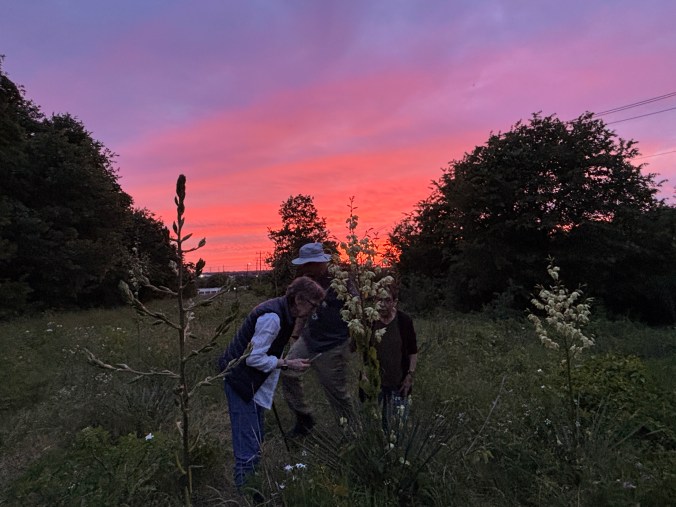
Saturday the 10th, a group of us took a walk at Sheri Capehart Nature Preserve to find moths at sunset. They are very special moths that pollinate and in turn are fed by the Glen Rose Yuccas that live there. It’s a great example of biological mutualism, and it’s the subject of my most recent “Letter to Nature Folks.”

I hope you’ll visit the page with “letters” to you and download that May issue of Letters to Nature Folks – the one marked as “Yuccas and Yucca Moths.” And if it sounds like a good walk (it was a very good walk), thank John and Grace Darling for leading it and telling us the story of how the yuccas and moths completely depend on each other. And thank the Friends of Sheri Capehart Nature Preserve for offering this and other great activities. (Disclosure: I’m on the board of that Friends group, but I’m not the one to thank for the walk.)

Sanctuary!

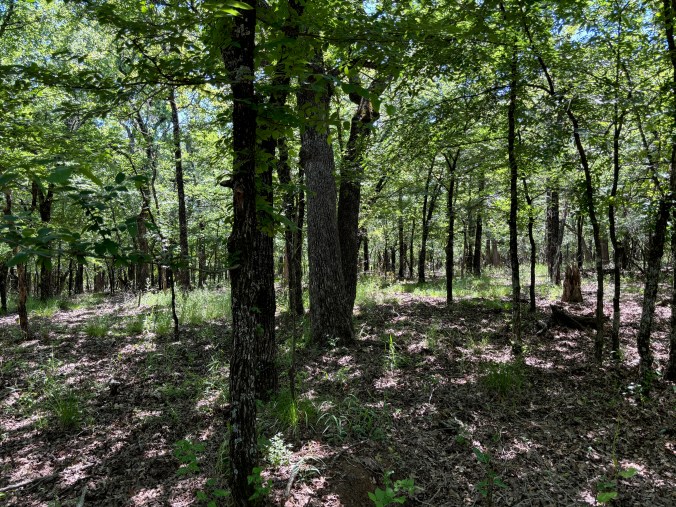
This new trail at Fort Worth Nature Center & Refuge is a favorite. I have walked it in winter with those bare tree limbs reaching up towards the sky and beautiful patterns of shed leaves on the ground. Now I have been there when it is greener and darker with all those new leaves shading the ground. The trail winds among the tree trunks and I can hear the quiet and the birds and the soft crunch of footsteps. That quiet and the new leaves as well as the carpet of old ones makes for a woodland sanctuary. A protected woods becomes a protective place for all who walk there.

I remember the 1939 film – “The Hunchback of Notre Dame” – in which Quasimodo rescues the wrongly condemned Esmeralda and flees to the cathedral, crying “Sanctuary! Sanctuary!” Notre Dame is a place of safety and protection from a corrupt French Chief Justice. Both the disfigured Quasimodo and the Romani girl Esmeralda are safe within its walls.

I respond to the prairies, woods, and wetlands as places of safety and protection, sanctuaries from thinking about the current regime and worrying about how it will play out. Extrajudicial abduction, defiance of courts, hate and scapegoating, wrecking the economy that sustains us, and on and on. We might imagine that, like Esmeralda, we all need to be taken to some place of safety, away from the worst of our fellow humans.

At the same time that such things are going on in human society, the sun keeps rising each morning, birds sing, water flows, plants give us oxygen and food, and there is quiet and peace in the woods and fields. I am very thankful that they are part of the world. As Robin Wall Kimmerer said, “Even a wounded world holds us, giving us moments of wonder and joy” (Braiding Sweetgrass, p. 327).

Sanctuary! I need to be in such places. I must do whatever good that I can in the world, and then for a time I need the shelter of nature.

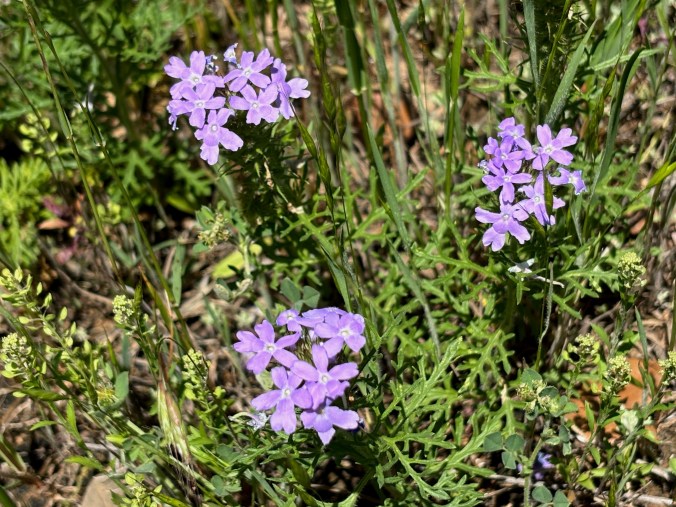
Flowers of Dakota Mock Vervain

And so I went to the nature center yesterday, the day before Earth Day. The sun was shining in a clear blue sky, and a Northern Cardinal’s call was joined with those of other birds in the patch of prairie where I started. The temperature was still in the 70s, but not for long.

In the meadow with butterflies and bird song

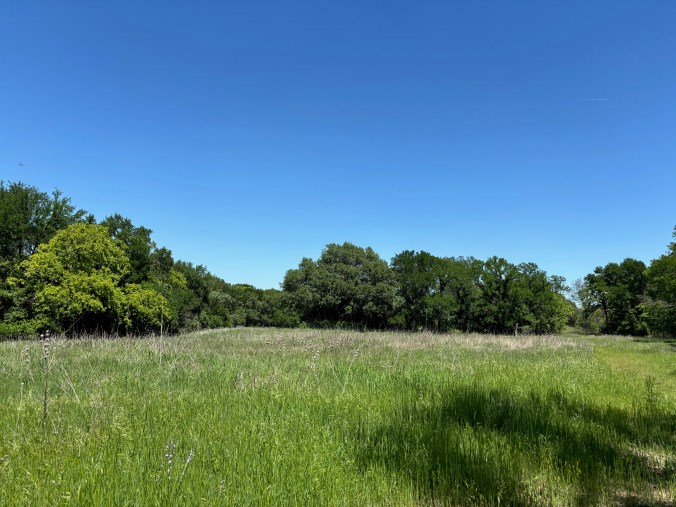
After a time in the trees, the trail entered a big meadow or prairie surrounded by trees. This, to me, is the heart of this trail. There were flowers visited by butterflies – a Common Buckeye, several Goatweed Leafwings, and over by the bench, a Painted Lady. Once I settled in, I saw some species of sulfur flying and fluttering a little above the tops of the grasses. Most of the time the nearby air traffic did not disturb the place, so I could hear the Northern Cardinals and also Carolina Wren, Carolina Chickadee, White-throated Sparrow, and Tufted Titmouse (much of the identifying was with the Merlin app, but even if they were not identified the songs in the meadow were beautiful).

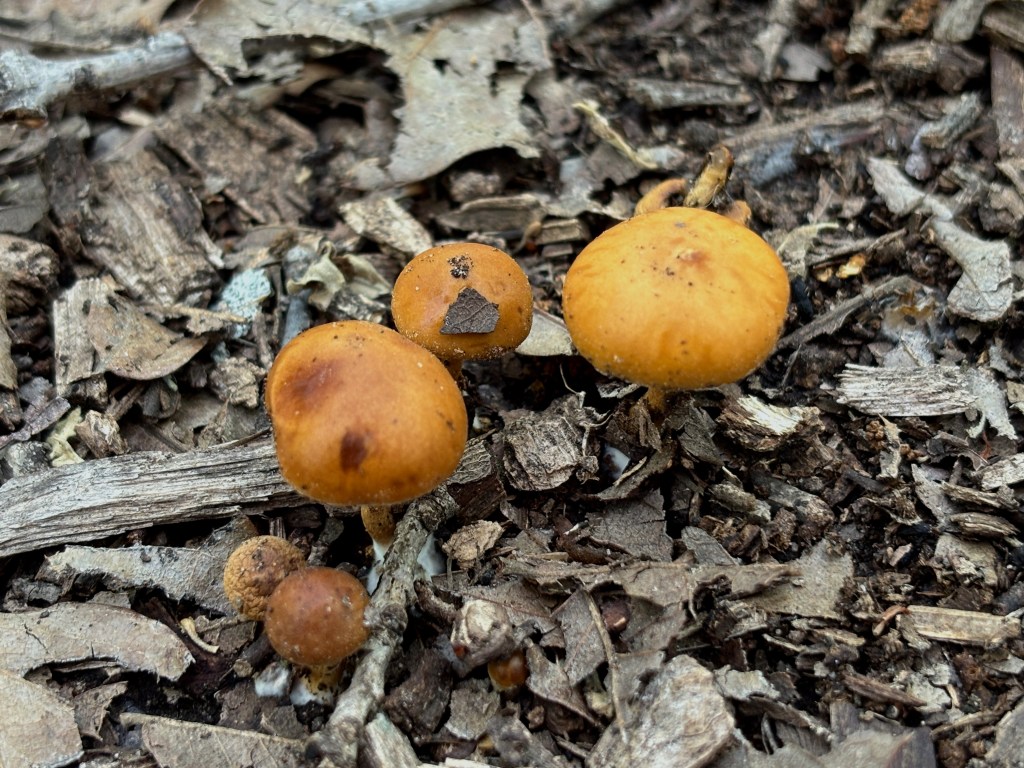
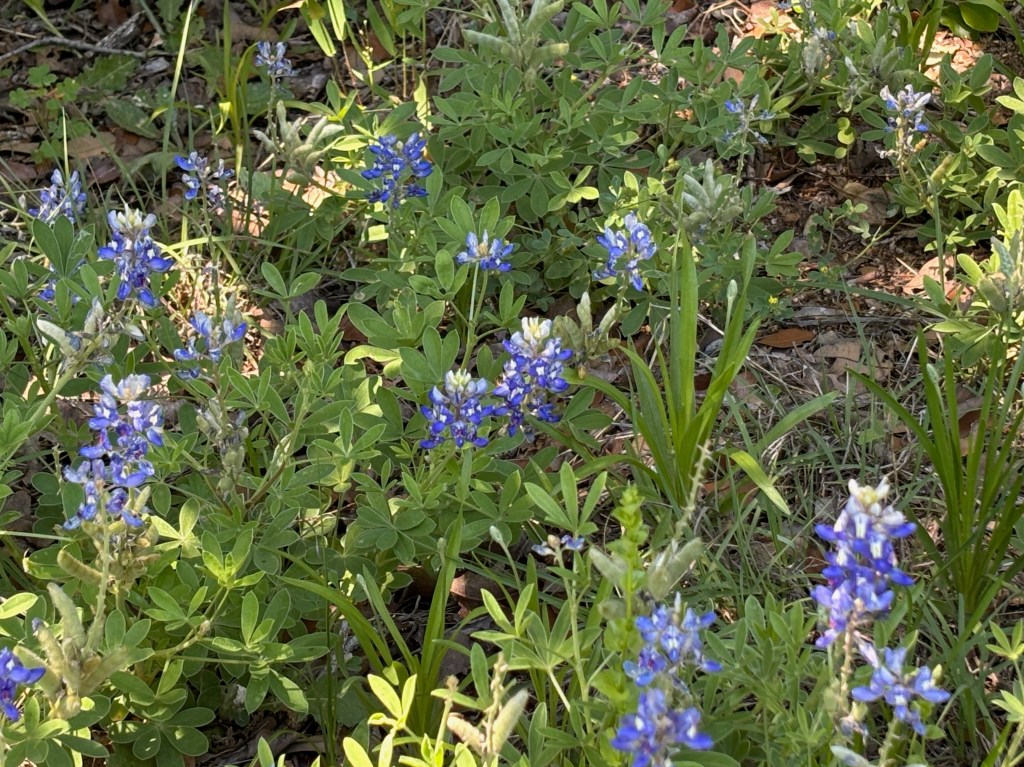
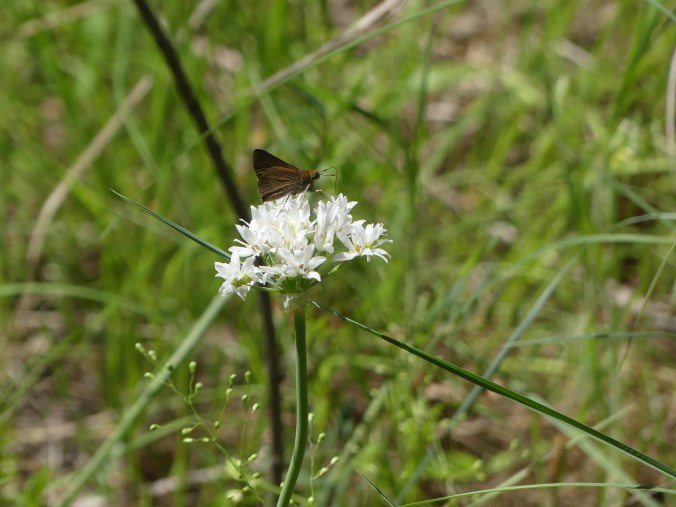
From there, the trail meandered through the woods some more. Sometimes I got on the ground to examine mushrooms; other times it was to see a small jumping spider. There were more flowers: Smallflower Desert-Chicory, Fraser’s Wild Onion, and at the end, a few patches of Texas Bluebonnet in clearings as the woods opened onto another prairie.

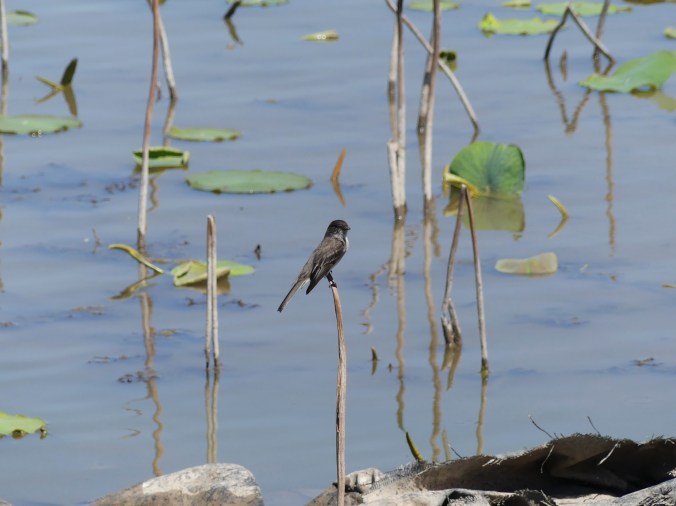
When I reached the end of the trail, the marsh boardwalk was a short walk away, and so I headed down to the marsh. Black Vultures were examining some exposed mud, a Great Egret flew by close to the boardwalk, and at some lotus stems in the shallow water an Eastern Phoebe perched. Then it flew to a nearby spot, disappeared, and returned. Once it dipped to the water’s surface, apparently to capture something. It is a busy life for a Phoebe on the hunt.

The Eastern Phoebe, scanning for insects

It was three hours well-spent. We all need this kind of sanctuary, and such places can be an important sort of self-care. I wish everyone could take an hour or so and be held in the peace and beauty of places like this. If you can, go and sit for a while in mindful stillness or walk the trails and notice the unending stream of wonderful things that you will find.

Small Wonders

I’ve added another downloadable “Letter From the Woods,” this one is about a recent walk at LBJ National Grasslands. The link takes you to a PDF of that letter that you can download, print, and share if you like. Or, if you would prefer, I posted it yesterday at Rain Lilies on Substack, and you can see it here. Either way, have a look and see how great it was to visit the grasslands again!

Letters to “Nature Folks”

For about three years I’ve been publishing a short, free publication that is like a letter. At least that’s my intention – an informal, even personal style like a letter. My original idea was to write to older kids who like nature and like to read. I started out on a December day at Fort Worth Nature Center & Refuge, seeing wasps, turtles, egrets, and talking about leaves. I wrote:

Do you know what a hundred tons of leaves smells like, laying on the ground? (I’m not really sure if it was a hundred tons, or even a ton, but they covered the ground everywhere I looked.) In my walk, the smell was really strong in a spot between two little hills where the air stays still. Now sometimes when people say that a smell is “really strong,” it’s a polite way of saying it stinks. That’s not what I mean. I loved that smell, but I don’t have good words to describe it. The leaves fall and they break down and return to the soil. That smell is leaves turning into soil.

That was the first issue of Letters to Nature Kids, and I kept writing, at least several times a year. I tried to bring the reader along on my walks, or talk about nature journaling or coming to terms with things like fears of spiders. Another goal was to not talk down to kids, and while I don’t get technical or in-depth in the letter, I do think there’s an appeal for adults as well.

I’ve experimented with something called Letters From the Woods, something taken essentially from my nature journal so that it is a letter written “from” the woods or prairies. I hope to come back to that.

But the latest I’ve written is a letter not just to nature kids but to nature folks. I hope you will download this March, 2025 issue and give it a try. Pass it around if you know someone who might like it. And if you have any thoughts about it that you would like to share, please do send me an email. Writers often get little feedback; we send something out there, and hopefully some folks read it, and hopefully it lands in a good place for them. But how wonderful it would be to have a bit of dialogue about it! If you are inclined to reply, please do (use the email address at the end of the letter or the contact form from the Lives in Nature website). Thanks!

A Winter Walk, January 12th

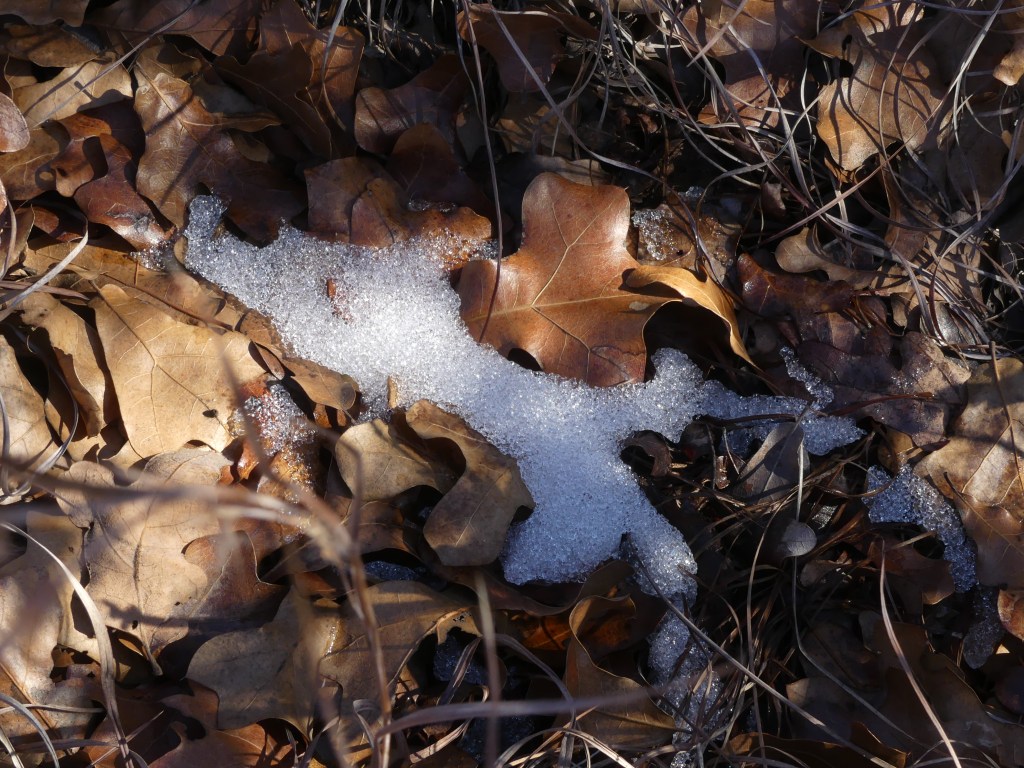
An hour’s walk at Sheri Capehart Nature Preserve provided a few impressions of winter here in North Texas. We had sleet and snow three days ago. We laugh at ourselves about how we overreact to snow and ice although occasionally, like in February of 2021, it becomes deadly serious. Mostly we get a brief taste of snow and it seems to us that we’ve had a brush with glaciers and blizzards and we know the depths of winter.

A remnant of snow up on the bluff

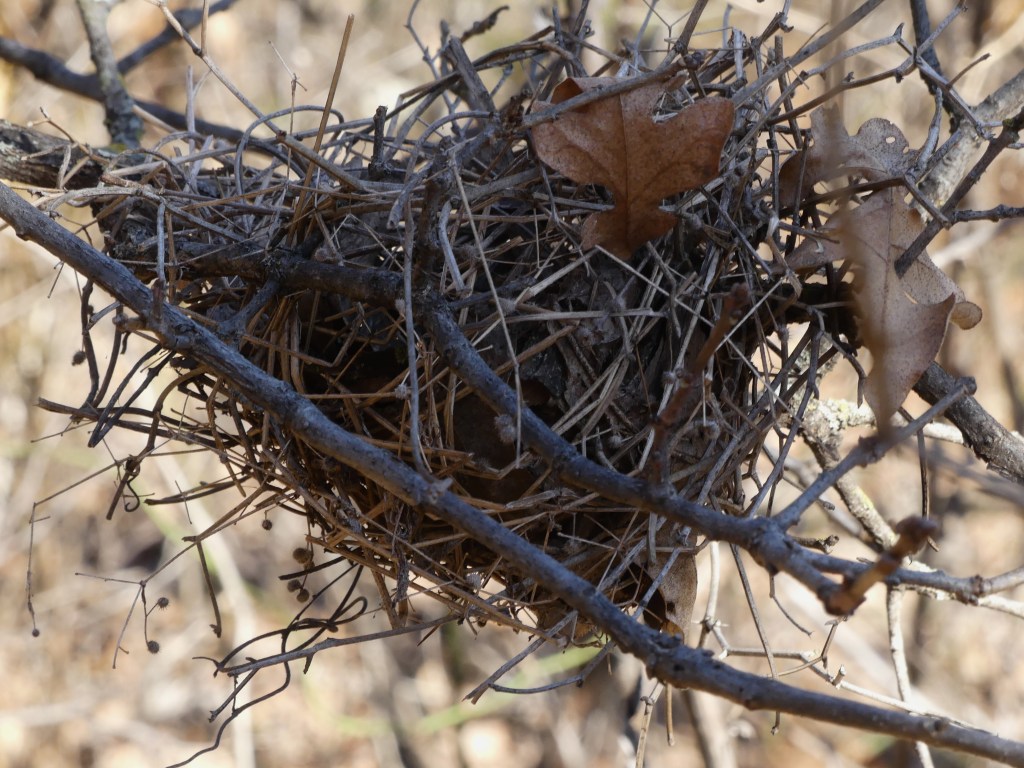
It is always a delight to find a bird’s nest, even the loose arrangement of twigs and grasses I found today. When winter leaves the trees mostly bare, old bird nests are sometimes exposed even very close to the trail. Some time last year this would have been a concealed refuge where eggs could hatch and baby birds grow and, after a while, fledge. I’m drawn to these relics of avian architecture. The birds weave and knit with such skill, and find ways to incorporate so many materials – lichen, moss, hair – so that I’m reminded of woodland faeries. And yet I don’t know why I should go to myths and stories when the birds are miracle enough.

Maybe another reason to be drawn to birds’ nests is how they resonate with our own efforts to bring a new generation into the world. The birds prepare and so do we; once the young hatch they are constantly busy feeding them, and we can relate to that. The young of both species go through an ungainly adolescence, partly feathered and awkward. And learning to fly is stressful, but our hopes are pinned on that day when they fledge and fly off into the world successfully. I hope that the ragged nest I saw today has such a story attached to it.

Wherever those birds are now, apparently it was not at the preserve, or maybe an hour in mid afternoon wasn’t the best time to see and hear them. The sounds today came from the surrounding traffic. Neither my ears (with high mileage and wear, not the most sensitive instruments) nor the Merlin app detected any.

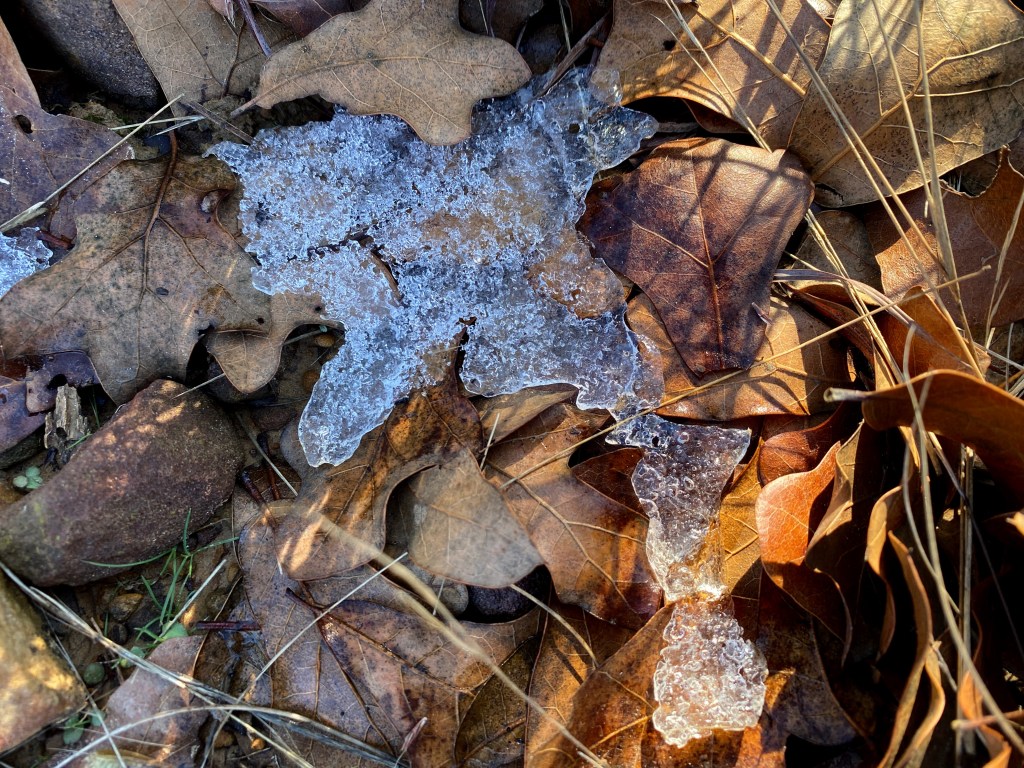
My eyes saw the remnant ice and my skin felt the cold, not that friends and family in Minnesota, Illinois, and Colorado would agree that it was really cold. My thermometer, placed in the shade while I wrote in my journal, dropped degree by gradual degree until reaching 55.5F. Not exactly the arctic.

But at some point during the walk through bright sunshine and shadow, past little patches of remnant snow, I had a momentary recollection of being a kid outside in a Colorado winter, with a cold breeze stinging my skin a little. Up there, at the end of the 1950s I remember two- and three-foot snowfall and I also remember how bright a winter day can be, especially when reflected off of all that snow.

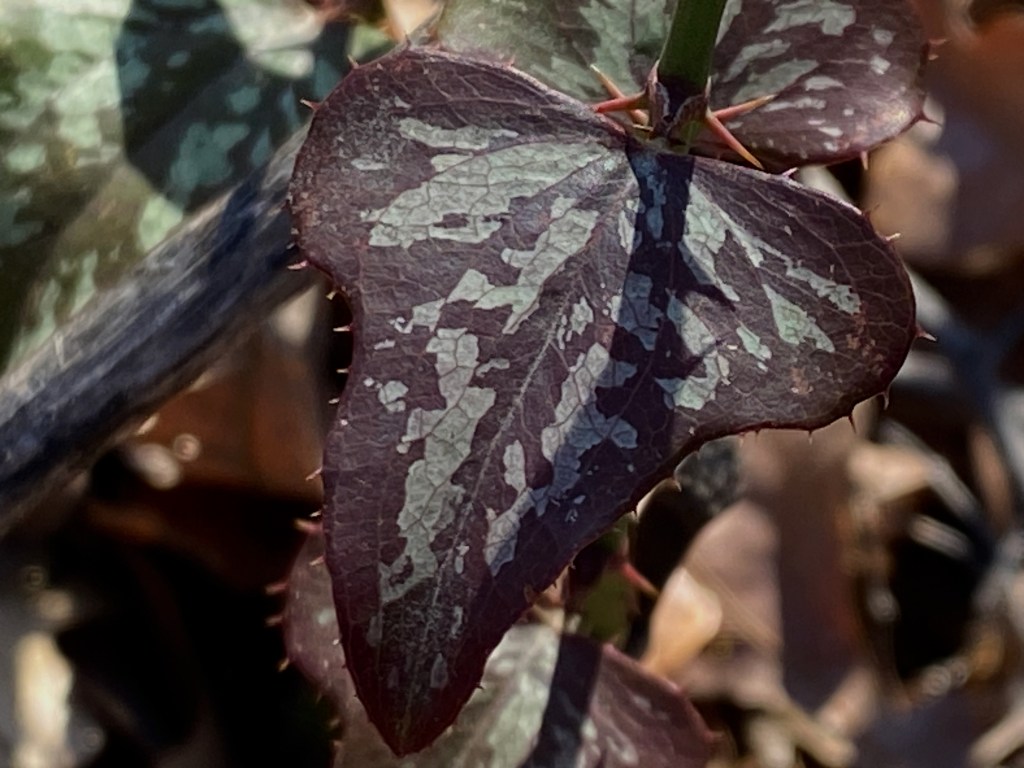
The darkened, mottled leaf of saw greenbrier rimmed with those little spines along the edge

There was one more small thing. Greenbrier is a thorny vine that grows commonly on the preserve, and the name I’ve heard for this one is “saw greenbrier.” While I haven’t seen an explanation, I’ve thought that the name might refer to the little spines all along the leaf edges, like a saw blade (but perhaps it’s something else).

Greenbrier leaves are usually mottled, and in winter the leaf may become dark and purplish while the mottled areas remain green. It occurred to me that each leaf was a small bit of abstract art, and that we could let our imaginations go and see if the patterns suggest something, sort of like Rorschach ink blots. Go ahead, see what comes to you when you look at the pattern. I love the way it splatters out from the central vein.

Just an hour in a place that offers wonder after wonder, in all seasons.

A little remnant ice among the oak leaves

Safe (But Not Too Safe)

I recently wrote about our fears of nature, whether it involves spiders, snakes, or whatever. I mentioned that sometimes a fear gets triggered by an actual negative experience in nature, like being stung or spraining an ankle (or more uncommon events like venomous snakebite). Before discussing what to do about fears, we need to discuss actually staying safe.

As I put ideas together into a list, I was thinking of children exploring in the woods or at a creek, and the sort of guardrails that would keep them safe. But really, the ideas pertain to adults, too. Some items – like taking an adult along – are more obviously for children. Even there, the general idea of not going alone and letting someone know where you will be applies to all of us.

Following the road further into nature

I go out on my own quite often to nearby nature centers and to the LBJ National Grasslands (about an hour away), so am I being hypocritical when I suggest “not going alone”? Would some things on my list involve hovering and overprotecting children? There has been a lot of commentary about how overprotecting our kids deprives them of self-reliance and makes them anxious. A couple of sources to check out are here and here. In Last Child in the Woods, Richard Louv writes about how our concern for children’s safety can get the better of us (see the chapter titled, “The Bogeyman Syndrome Redux”).

As always, we have to weigh the issues and consider the needs of the particular person when thinking about safety. What I’ve done is to list some guidelines and then add a couple of “on the other hand…” comments.

Go together, not alone

If children want to walk to a nearby pond or nature preserve, they should talk it over with a parent or other responsible adult. The adult might say that they have to accompany the children or might set some boundaries concerning how far or how long. It is also good for two or three children to go together rather than one alone. An adult who is going on an outing has much more discretion, but it’s still a good idea to let someone know where we will be and when we plan to return, and maybe go with a partner. The wilder or further away the destination, the stronger my recommendation.

On the other hand, we can all benefit from opportunities for solitude, and being by ourselves in nature can be wonderful, even for a short time. Among those benefits are self-confidence and self-reliance. Parents should always consider the age and abilities of any child and might want to start with just a little independence while out in nature.

Don’t show off or be a daredevil

That is, don’t focus on how impressed others will be or how you can get a laugh, focus on doing something well and safely. Find a better reason to stand out in a crowd. For example, a great many venomous snake bites occur because someone was doing something foolhardy (out in the field, on YouTube videos, or at rattlesnake roundups).

On the other hand … well, there’s not much “other hand” here, just don’t. You can find safe ways to challenge your abilities and do exciting things. Climbing a rocky hillside or wading a creek with a strong current are examples of putting your abilities to the test. Such skills can be built gradually and carefully.

Pay attention to your surroundings

This could be a plug for mindfulness, for being in the present and not walking along on autopilot or while distracted. If we’re not paying attention we might miss a drop off ahead, poison ivy growing at the edge of the trail, a strange dog sizing us up, or a wasp nest where we were about to reach. Not only that, we would miss interesting and beautiful things along the way. Being “lost” in conversation is not a great way to spend time in the woods.

On the other hand, who but a Grinch would tell you that you can’t talk with a friend on a walk? Or check the weather on your phone? As much as I love practicing mindfulness in nature, we should also be able to do other things. I suggest that we practice shifting attention back and forth, between the path and our friend, the trees and our phone. Think of it like driving and keep an eye on the road.

Don’t put your hands (or feet) where you cannot see

A centipede under a log

If you see something you want to examine on the woodland floor, or you would like to look for mushrooms, insects, or other things under a log, watch where you put your hands. In the last post, I talked about a time when I was a child and reached down a hole and brought up a tarantula. That’s a good example of why you should not put your hands (or feet) in some hidden spot. Walking barefoot at night, unable to see where you are stepping, occasionally results in a snake bite. Use a flashlight, and don’t reach under that log with your fingers.

On the other hand, find ways to explore safely and have fun. Probe under things with a stick or position yourself where you can see, and then take a look at what’s under the log.

Don’t touch wildlife or approach too close

A person who is learning about snakes and finds a pretty one out in the field may be tempted to assume it is harmless and pick it up. Most snakes are not venomous, but the cost of a mistake can be high. People who think of deer as cute (not saying they aren’t!) might approach one too close if it doesn’t run off. Aggressive behavior from white-tailed deer happens from time to time, so give Bambi some distance. I should add here that we should have at least as much caution around strange dogs. We can still observe wildlife, learn about them and enjoy them, from a safe distance. Knowing what that distance is depends on the kind of animal, how it is behaving, and the surroundings we are in. Expert guidance is needed here.

On the other hand, catching grasshoppers and frogs is one way to feed a child’s (and our) sense of wonder and curiosity. My own journey as a naturalist and nature writer was launched when I was about ten years old and we caught dragonflies and garter snakes. It seems silly to argue that no kid should ever catch a crayfish or pick up and examine a toad, but I believe a knowledgeable parent or nature educator should provide guidance and set limits.

Bring water and dress appropriately outside

Here in Texas, everyone hears warnings about the weather. In the spring we watch for storm fronts with the risk of tornados, lightning, and hail. In the summer we make sure to drink water and avoid heat exhaustion or heat stroke. Even walking a nature preserve for an hour or so, I encourage people to bring water, especially in summer. With kids we have to remember that smaller bodies overheat or lose heat more quickly than big bodies, so taking breaks and getting into shade is important in summer and extra protective clothing may be needed in winter. We also need to think about clothes that help protect from thorns and rocky terrain. Hiking boots or sturdy shoes are recommended.

On the other hand, depending on what we’re doing and whether we are using sunscreen, shorts can feel great on a walk outside. Just avoid the poison ivy and bull nettle in places where they are common. Flip-flops or barefoot ought to be OK sometimes, too, if we do a scan for cacti, stickers, and half-buried trash like broken bottles.


One additional thing: The more we know (like recognizing kinds of plants and animals and knowing the behavior of local wildlife), the safer we will be. And the more rewarding our time in nature will be. That’s not to say that we have to be experts to enjoy nature, but it is good to have some level of “nature literacy.” If we visited another country, it makes sense that being somewhat literate in the culture, language and geography of that country would be an advantage. We need to be able to read a few signs, understand what someone says to us, and know the places where we might run into trouble. In the same way, basic knowledge about wild places will help us know what to expect and how to interact with the lives we will encounter in those places.

More Thinking About (And Photos From) FW Nature Center

I’ve walked trails and sat on benches at the Fort Worth Nature Center & Refuge (FWNCR) a couple of times in the last week or so and cannot get it out of my mind. I’m happy to let the marsh, the woodlands, prairies, and bottomland forests take up space in my brain. It’s the worries on their behalf that I’d like to shake off.

The marsh at FWNCR

I recently wrote about the FWNCR and its 3,650 acres where a substantial bit of North Texas wildness lives on. Green Source DFW had just published my article about discussions between the City of Fort Worth, the Botanical Research Institute of Texas (BRIT), and the Friends of Fort Worth Nature Center & Refuge about the future of the nature center. BRIT now manages the Botanic Gardens and is now eyeing the nature center.

The City of Fort Worth website quotes BRIT CEO Patrick Newman saying, “The biodiversity crisis is affecting plants that are our food and possible cures for diseases. As we try to identify these plants, we want to link arms with the Nature Center and continue their great work as we move towards and create this possible partnership.” Does this mean BRIT wants to study the biodiversity crisis? Medicinal plants? Wouldn’t the easiest thing, the thing that would call for them to “link arms,” be to work together with the nature center through a research partnership? Without either one taking over the other, that is.

But the stated goals for the nature center, again quoting the city website, are, “increasing attendance and use of the center, membership, educational programs, and private support for research, conservation and investment.” One of the three issues being considered is, “Economic benefits for the City and BRIT.” In my Green Source article, I noted that the city’s Mark McDaniel said the plan was for attracting more visitors, ramping up marketing, and enabling more facilities and capital improvements. 

You can see how I might worry about whether the nature center and refuge would stay wild. It’s not that we shouldn’t let more people know about FWNCR and invite them to visit. As I said a month ago, “We want everyone to share the refuge, learn from it, and fall in love with it. But not everyone all at once, and not by offering so many built attractions that people miss the point, which is the wildness.”

A pocket prairie along the Deer Mouse trail

Please do not let this issue be buried in all the other news that we are preoccupied with. Let the City of Fort Worth Park & Recreation Department know what you think. Speak up for the nature center.

The gallery of photos below is from my recent visits to FWNCR. If you click the photo you can see it full-size.