I read a post from Diana Butler Bass about the wilderness, saying she hated it. My impulse was to go on to something else, because someone who hates wilderness could not have anything meaningful to say to me, right? Bass is a Christian writer (I would say among the progressive Christians) and she was writing in part about the temptations of Jesus after spending 40 days in the desert. But she was particularly interested in the wilderness as a liminal space, an in-between transitional borderland that may feel so unfamiliar as to be disorienting or frightening.
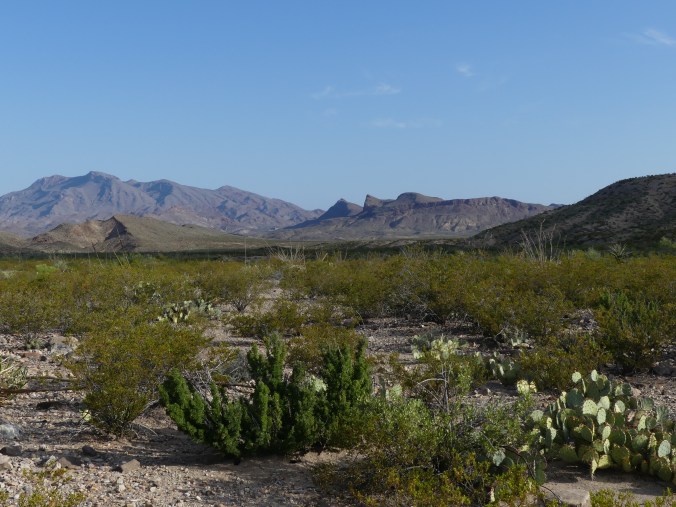
Most of my experience with the wilderness has been in the Big Bend region of Texas, with deserts and mountains relatively untamed by modern humans. Yes, there are roads and visitor centers, but not many. Yes, the Basin is a tourist destination with a resort and hiking trails up into the Chisos Mountains. But in the Big Bend it is easy to get to a place where you are unlikely to encounter anyone, it is quiet, and smartphones are mute and useless for a time. How can you hate it?
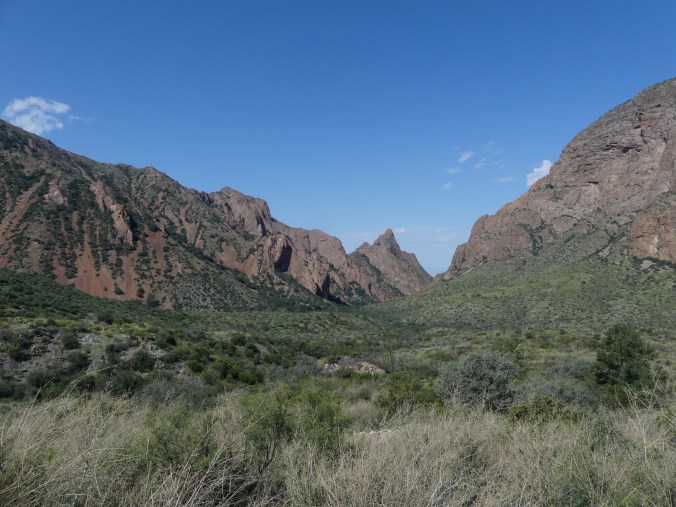
I admit that the prospect of spending 40 days there with no car and no easy source of water or food makes me uneasy. But in my mind those are just practical considerations; being in that wilderness is something that otherwise sounds wonderful. But I think I understand where Bass is coming from with her talk of it being a liminal place. She says,
The wilderness is an encounter with what is otherwise unknowable. We contend with that which the cozy and familiar obscures. … And there is no wilderness without danger. There is no liminal space without danger. This is the fearsome holy, the unsettling sacred. – Diana Butler Bass
The “fearsome holy” and “unsettling sacred” sound to me like ways of talking about awe. That emotion – awe – involves being taken out of that familiar perception of “having it together” and knowing what’s going on. We generally think of awe as a good experience when confronted with things like beauty or moral courage. The psychologist Dacher Keltner, in his wonderful book about awe, defines in this way:
Awe is the feeling of being in the presence of something vast that transcends your current understanding of the world. – Dacher Keltner, Awe, p. 7
Bass talks about the wilderness opening us up to whatever “the cozy and familiar obscures.” After you strip those things away, what then? She recalled sitting in Wyoming among petroglyphs and thinking about the people who, over a thousand years ago, went into the wilderness. Perhaps they had visions, or maybe, out there with only themselves, they had spiritual experiences that cut to the heart of who they were and what they would do if tempted to be someone they were not. Was their belief or their identity tested by an impulse to throw themselves down from the mountaintop? Was this a place of testing, discovering the strength or limit of who they were and what they believed?
I’ve been to the Big Bend plenty of times, and experienced awe frequently. Not necessarily a primal testing of who I am or what I believe, but the stripping away of the cozy and familiar so that you feel yourself in some more essential way, and you might reconsider how you fit within that vast, beautiful space.
In Mindfulness in Texas Nature, I wrote about places where we can look for miles without seeing houses and cars:
…places where, when we look around us, we do not see a mirror reflecting ourselves. I think there should be places where we are able to say, “This is what nature is like if we leave it alone.” When almost every place reflects back something about ourselves, does that foster an unhealthy self-preoccupation? We are estranged from, and many of us are a little afraid of, truly wild places. – p.123
I wish we could, all of us, come to love wilderness and vow to protect it for each other and for its own sake. Wilderness as a liminal space, a place that brings us back to our essential selves, where we can experience awe or even some dislocation as we get a perspective about who we are and maybe where we want to go with ourselves.
Discover more from Our Lives In Nature
Subscribe to get the latest posts sent to your email.
 Our Lives In Nature