(Reprinted from “Rain Lilies” on Substack)
A lot of parents hope that their kids will enjoy being outside and maybe even become “nature kids” – the kids that love the trees, water, grasses, bugs or birds, and may have familiar and beloved places in nature. Some other parents have kids who, on their own, have become interested in nature and love getting out. Such parents may be willing to support their child’s interest. I screwed up my first attempts, but have better ideas now that I’d like to tell you about.
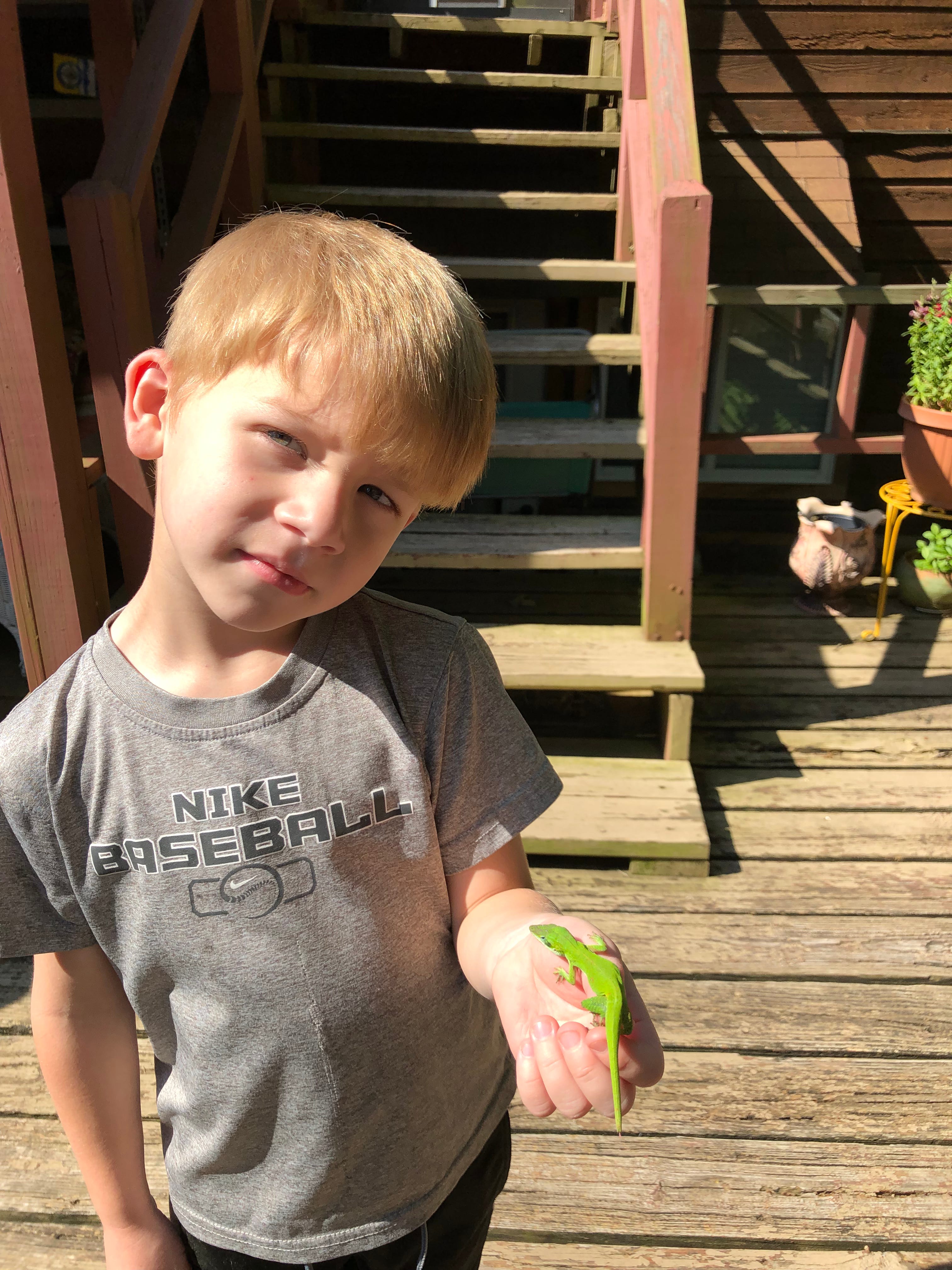
Like many other parents, I hoped my son would enjoy being in nature and even be a partner with me in exploring the woods and creeks. All these years later, I understand some things better than I did then. What is wonderful to me may not be attractive or interesting to someone else. To share an experience or a place with someone, it is important to be tuned in to how they will experience it. These ideas will seem obvious to you, and thirty years ago those ideas – put into those words – would have been obvious to me, too. But sometimes I was blind to their meaning.
So here’s what I did that may have sunk any chances of my raising a nature kid. When he was five, I took my son to the creek that meant so much to me when I was growing up. He rode on my shoulders through the tall grass, and then we walked the limestone creek bed where water trickled and gathered in pools. I turned over a piece of wood to find a couple of plain-bellied water snakes hiding beneath. They are harmless, so I grabbed for them and caught one.
For someone with a serious interest in field herpetology, “harmless” means “this snake is going to bite you if you pick it up, but there is no venom and it only leaves scratches.” Others might not necessarily agree that “harmless” is the right word, but there it is. Geoffrey was not thinking the snake was harmless as it repeatedly bit my arm and drew blood. I got control of the snake’s movement and it stopped thrashing, and Geoff’s eyes were wide with fear. I was clueless enough to offer to let him touch the snake somewhere away from its head.
“No-o-o-o-o-o,” was the answer.
I hadn’t bothered to ask if he wanted to find a snake, and then had not paid attention to how he was responding when I did find one. I was very mis-attuned to my son and too focused on what was a wonderful experience for me and thus I thought surely would be for him. Geoff tells me that he would not have become a nature kid regardless, but I’m sure this experience did not help.
Maybe if I had talked with him before our walk to see what he would like to get out of it, or at least prepared him for how it might go if we found a snake. And maybe if he shrank back as I discussed it, I would know that it’s better to just walk around the creek and not look for snakes this time. You would think that my Master’s degree in psychology would have told me this.
At a later point in my career, I was trained in parent-child attachment relationships and a program called the “Circle of Security,” a way for parents to pursue attuned, secure attachment with their children. The “circle” is a graphic that shows us as the secure base from which the child goes out to explore and grow but also comes back in for reconnection and help.
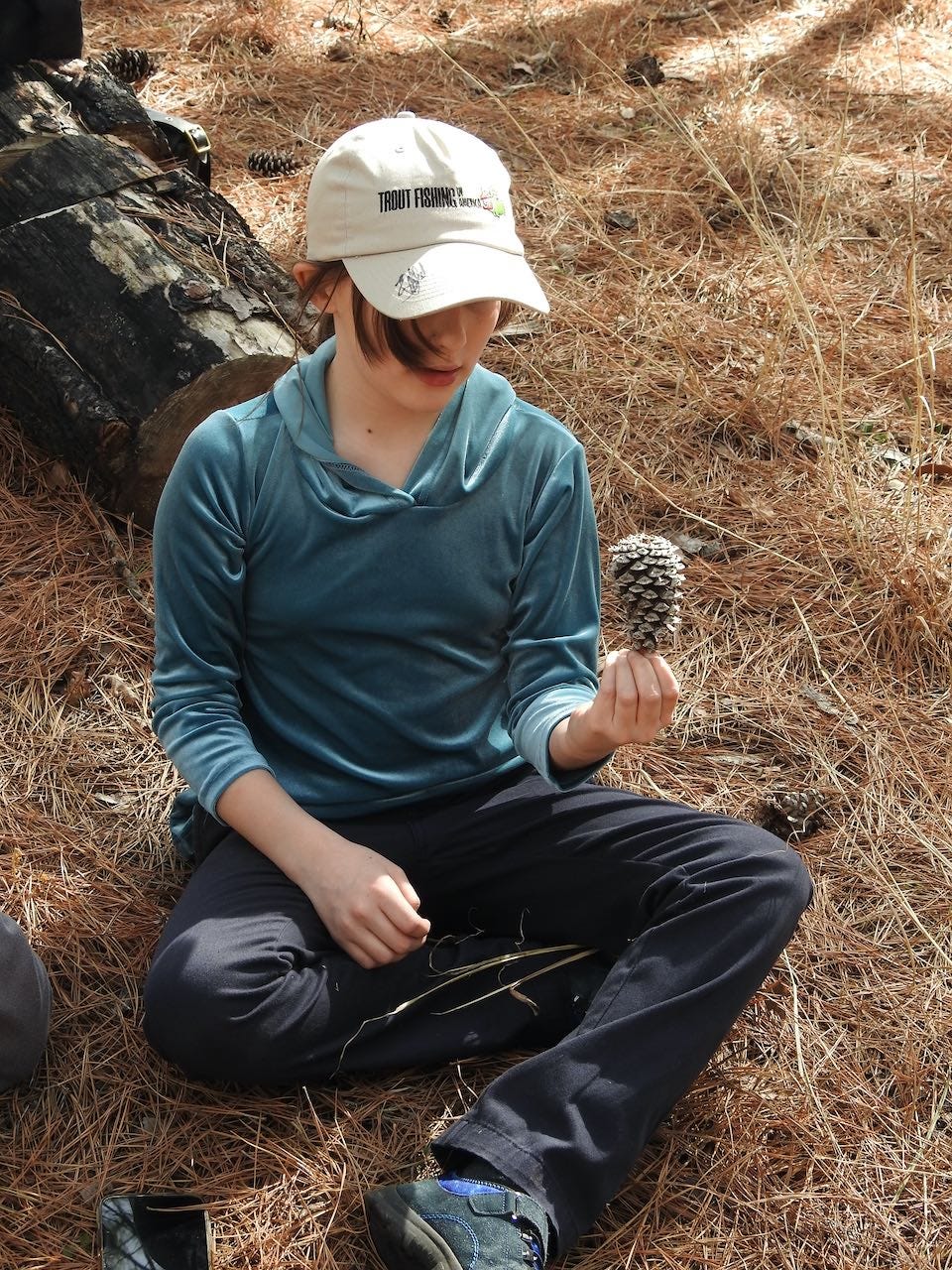
Having a secure relationship with someone means we work to be reliable partners for each other, whether we’re a parent with a child, two close friends, or a married couple. We try to respond to each other’s emotional cues and act in the other person’s best interest, and when we screw up, we try to fix it. We can take delight in each other without being overly controlling, but we can also step in and be protective when needed. We wish we could succeed at this all of the time but we never perfect it. There are mistakes in the relationship from time to time, and what counts is how we repair it. The cycle of rupture and repair can strengthen relationships in ways that perfection probably could not.
Early research on attachment involved mothers and babies or very young children, but the themes follow us into adulthood. Our relationships, how we trust others, how we maintain (or don’t maintain) boundaries with others, and how we handle conflicts, tend to reflect to one degree or another how those early relationships worked. And so these ideas are very relevant to our parenting of school-aged children and beyond.
Much of the Circle of Security approach seems relevant to encouraging children to spend time in nature. We surely don’t want to make it a battle, as if to say, “You’re going to march right out there and hang out with the birds, or you’re grounded!” I don’t think it works out well to make it a chore, a sort of outdoor homework in which we say, “Stop having fun, it’s time for nature; and remember, there will be a quiz afterward.” No one would really say that, but you know what I mean.
So what can happen when we take children to the prairies and woodlands? We can support their exploration while watching over them, staying closer when they’re younger and giving them more independence and space when they are older. We can give help when it is needed and genuinely wanted, and also enjoy the experience with them. With Lilly’s earliest walks in the woods, I stayed very close but I generally followed her lead. When she stopped to play in the sand of the trail, I stopped with her. I’ve taken older kids who also wanted to play in soft sand, and I’m happy to stay nearby and watch that happen. Once I joined an elementary school-age girl who was throwing a few small branches and sticks into a pond and describing the results, in one case creating a small wave in the water “like an angel’s wing.”
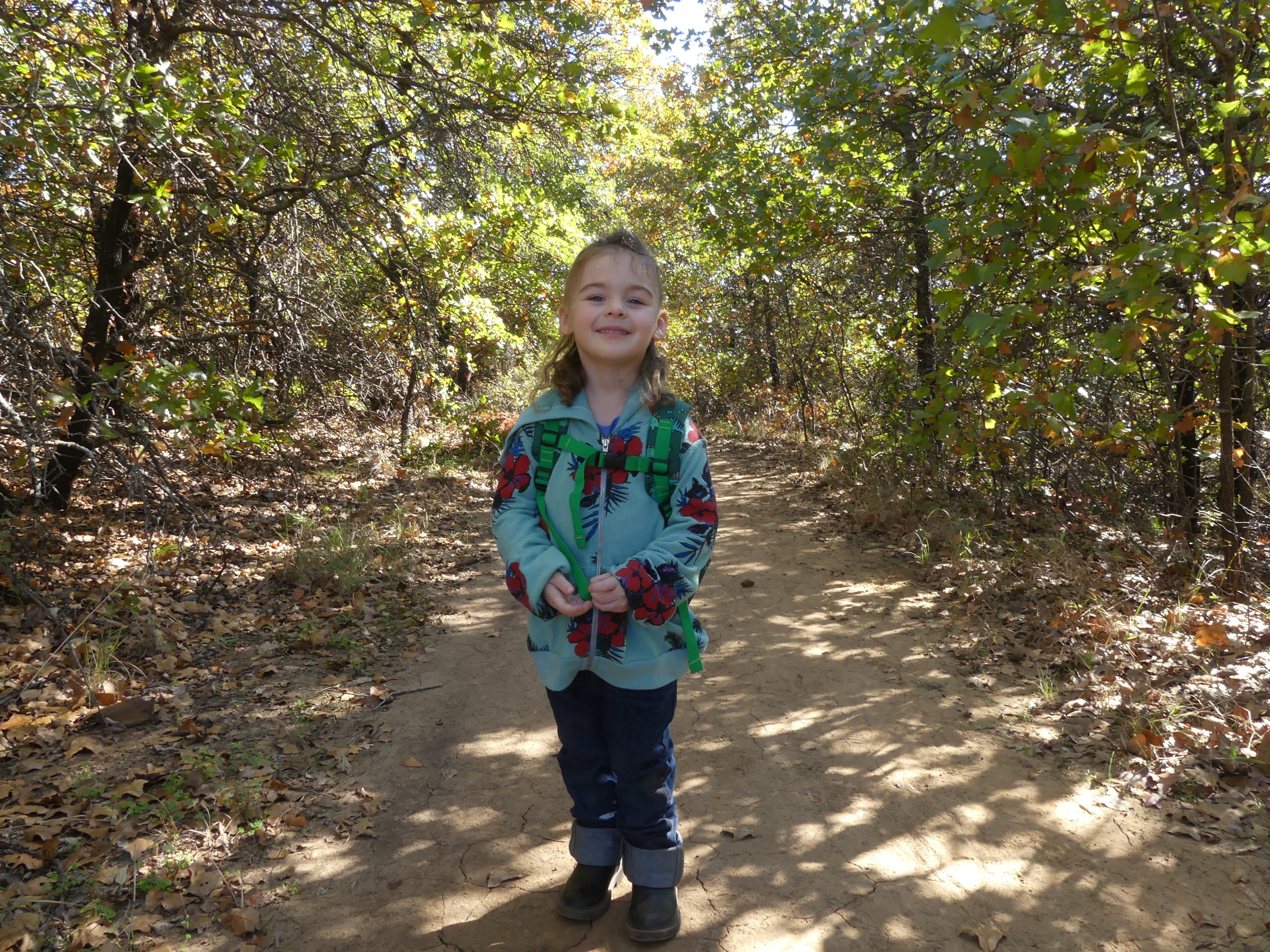
In Circle of Security terms, these are things that happen on the top half of the circle, when the child is playing under our watchful eye and sometimes needing us to delight in what they are doing. It doesn’t all have to be free play; we can and should offer ideas and help. We can engage kids in some structured activities or games while in nature. But it helps if some of that time in nature involves following the child’s lead, and if our time in nature feels like something that we create together.
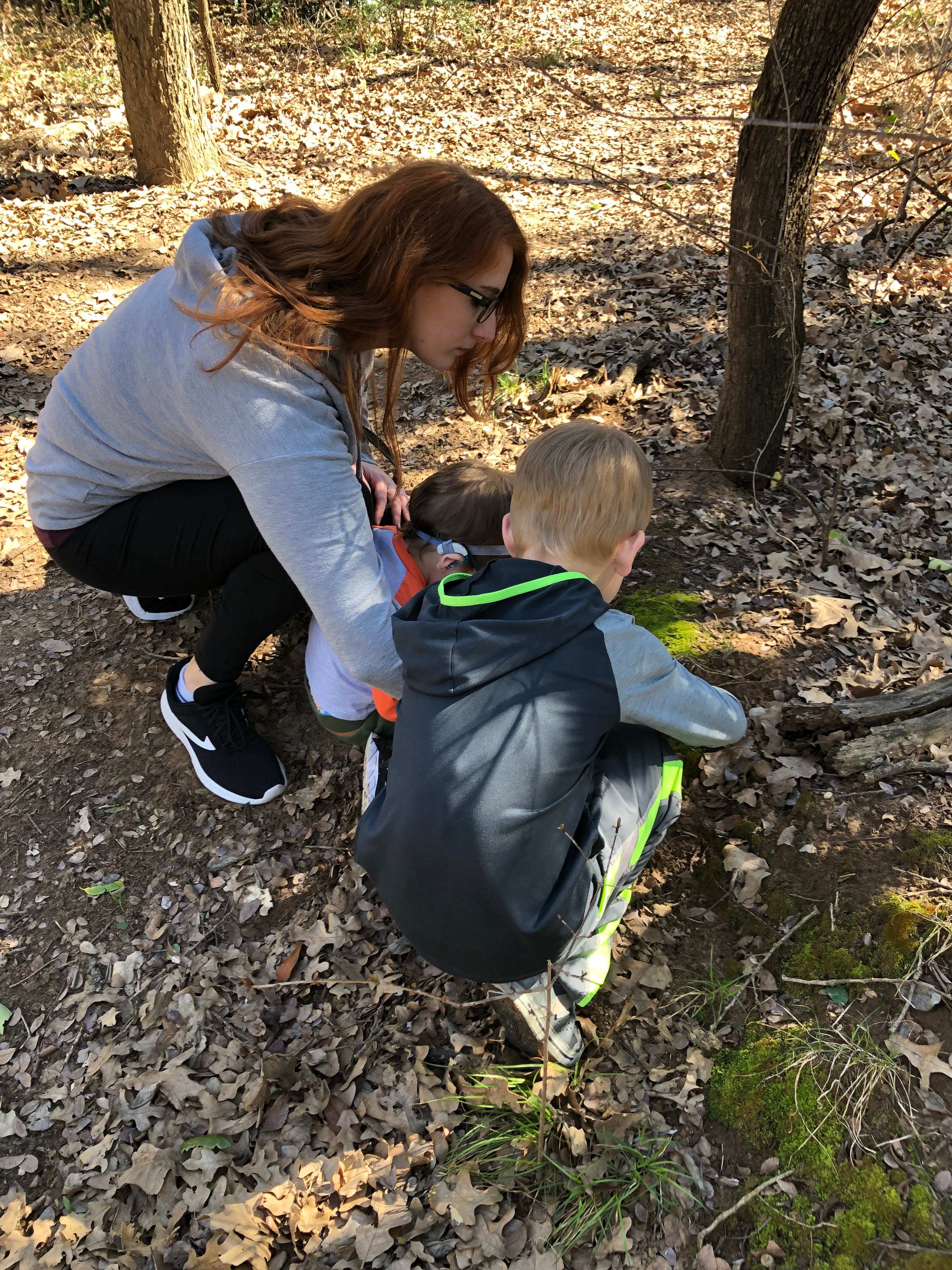
What about the bottom half of the Circle of Security? That’s when the child needs to return to you for support, to take out that splinter or reassure them that the bee that’s buzzing around isn’t trying to attack. Or maybe when the younger child falls apart in frustration or the older child has a conflict with another child. It might be when she or he is getting near some place that could be dangerous, and we have to step in and set limits. In Circle of Security terms, it’s when the child needs us to welcome them, protect them or comfort them, and help them manage overwhelming feelings.
There are always hazards of some sort. Not long ago I stopped Lilly just before she walked into a patch of cactus. I took a group of people on a walk at sunset at LBJ National Grasslands (no young children on that walk). Copperheads are fairly common there, and I prepare folks accordingly and would set limits on risky things like walking around barefoot at such times. Coyotes began to yip and howl in the darkness, and a little reassurance was needed for one of the participants. These are all moments that occur on the bottom half of that circle, in which the other person wants to reconnect or needs help or limit-setting.
The helpful phrase that the program taught us was, “Always be bigger, stronger, wiser, and kind.” We are bigger and stronger in the protective sense – with four-year-old Lilly I will hold her hand as we cross an elevated walkway and would not let her fall. With young children it is also protective when, if necessary, we pick them up and move to a safer or quieter area in the middle of a tantrum. We also aim to be wiser in the sense that we decide when we can follow their lead and when it is necessary to step in and assume control. It takes wisdom and self-awareness to avoid using our strength just to “show them who’s boss.” And kindness is that crucial ingredient that can make the bigger and stronger part not frightening and (at least sometimes) not escalate emotions into a fight.
Taking kids out into nature needs the right blend of following the child’s lead, offering ideas, and making the outing a working partnership between adult and child. It also requires judgment and protectiveness on our part. If we can be a secure base for children, as described in the Circle of Security, and remember to be bigger, stronger, wiser, and kind, we will all benefit.
Discover more from Our Lives In Nature
Subscribe to get the latest posts sent to your email.
 Our Lives In Nature
As always, there is much wisdom here.
LikeLiked by 1 person
Thank you!
LikeLike