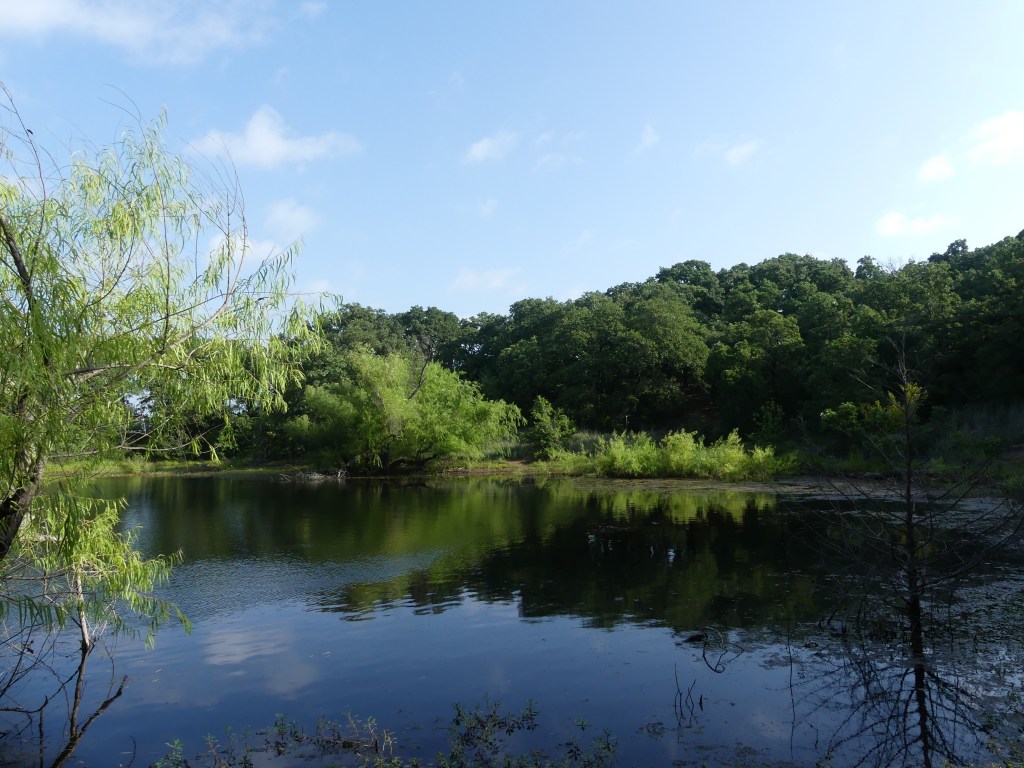
In recent years, many articles have appeared with titles saying that we are “loving nature to death.” Most of the ones I have read pertain to national parks and wilderness, but the issue applies equally to small preserves and urban parks. During the first year or so of the Covid pandemic, people lost jobs or worked from home and had extra time on their hands with fewer things to do because we were trying to practice social distancing. Many discovered – or rediscovered – getting outside.
For those of us who recognize the benefits of time spent in nature and hope for a reconnection between people and nature, more people outside is good news. But the amount of public space available for wildlife refuges, preserves, and nature parks did not increase. Neither did the budgets for taking care of such places. As a result, public natural areas have to contend with more traffic and the accompanying litter and the impact of our camping spaces, fires, new “rogue” trails, and other wear and tear.
There’s a little preserve in Arlington where I volunteer. (And my comments here are my own and do not necessarily reflect the thoughts of the group that I am affiliated with.) I spend a lot of time there because it is near my house. I have walked its trails, sat watching and listening, and become very familiar with its ponds, woods, and meadows. It is a resilient place, but these days it is contending with lots of traffic. That results in rogue trails, soil compaction and erosion wherever people walk off-trail, litter, issues with dogs and horses, dirt bikes and mountain bikes (which are not allowed), discarded or lost fishing tackle, and the occasional improvised shelter although no camping is allowed.
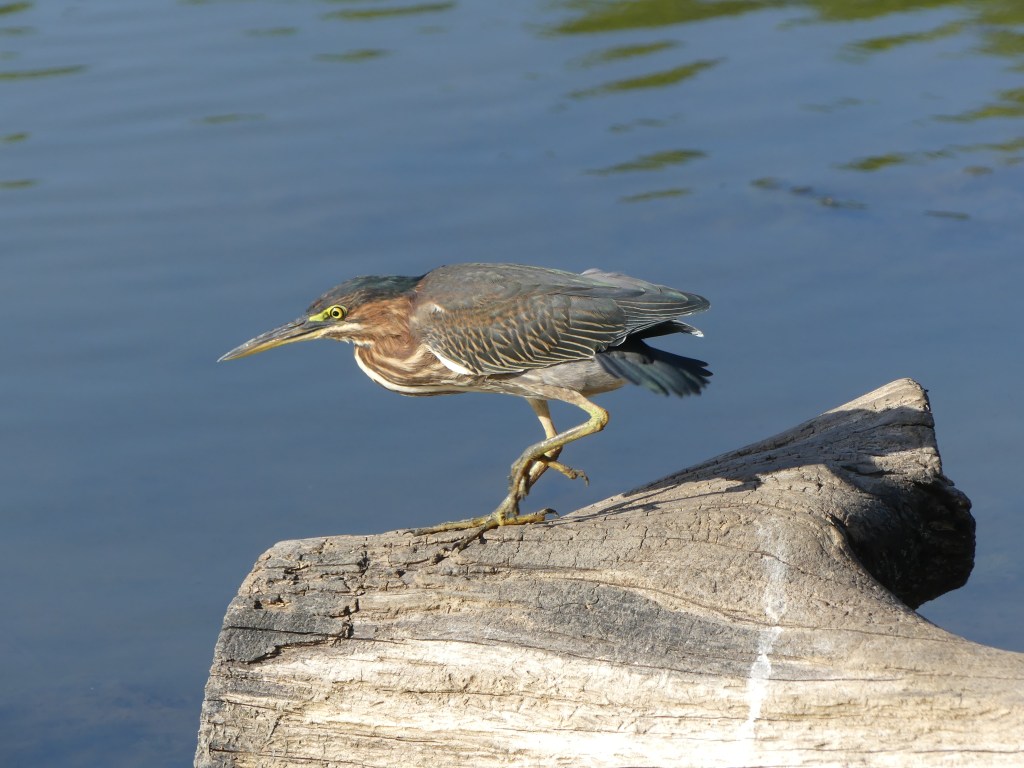
Urban nature preserves and urban parks share some similarities, but they are also fundamentally different. The preserve is land set aside and protected in a nearly natural state, so that people can see how the surrounding land once was and can enjoy some of the communities of flowers, trees, and wildlife that are part of our heritage. You can see it as a living museum of natural history, letting us experience the place like it once was, at least to a degree. At the same time, you can see it as our wild neighbors, the plants and animals that are our companions who deserve a chance to live alongside us at least somewhere.
Urban parks, lovely as they may be, are usually modified for human use so that little of the original nature remains. There may be lawns, sidewalks and soccer fields, jungle gyms and ponds with domestic ducks. We need such parks, but they are not nature preserves. We might be urged not to leave litter, but hardly anyone feels the need to say, “leave no trace” of our visit there.
By contrast, many of us would urge each other to leave no trace when we visit wild places and nature preserves. There is an important movement that promotes this idea, and one organization, Leave No Trace, promotes seven principles that will help us. “Leave no trace” is a plea for us to visit nature in the spirit of cooperatively and respectfully sharing a space where many of our wild neighbors live and where other humans will visit. Yes, it is there for our enjoyment and learning, but it is not ours alone, and its purpose is not really entertainment.
The first Leave No Trace principle is to Plan Ahead and Prepare. In a small urban preserve that might mean taking the time to review the preserve’s rules, seeing when it opens and closes, and getting a copy of a trail map. Many preserves allow your dog to come if they are on a leash. Almost all prohibit motorized vehicles.
Another principle is to Travel (and camp, if allowed) on Durable Surfaces. In small preserves this translates to “stay on the trail.” Wandering off-trail means trampling plants, compacting soil, and creating conditions where rainfall will erode the soil away. When a place gets trampled, others assume it is a trail, and soon there is a “rogue” trail. When a small preserve gets criss-crossed by lots of such trails, serious damage is done. From wildlife’s perspective, there is no safe place away from people. The habitat that these animals use is of much lower quality, and when rain comes, there will be much more erosion.
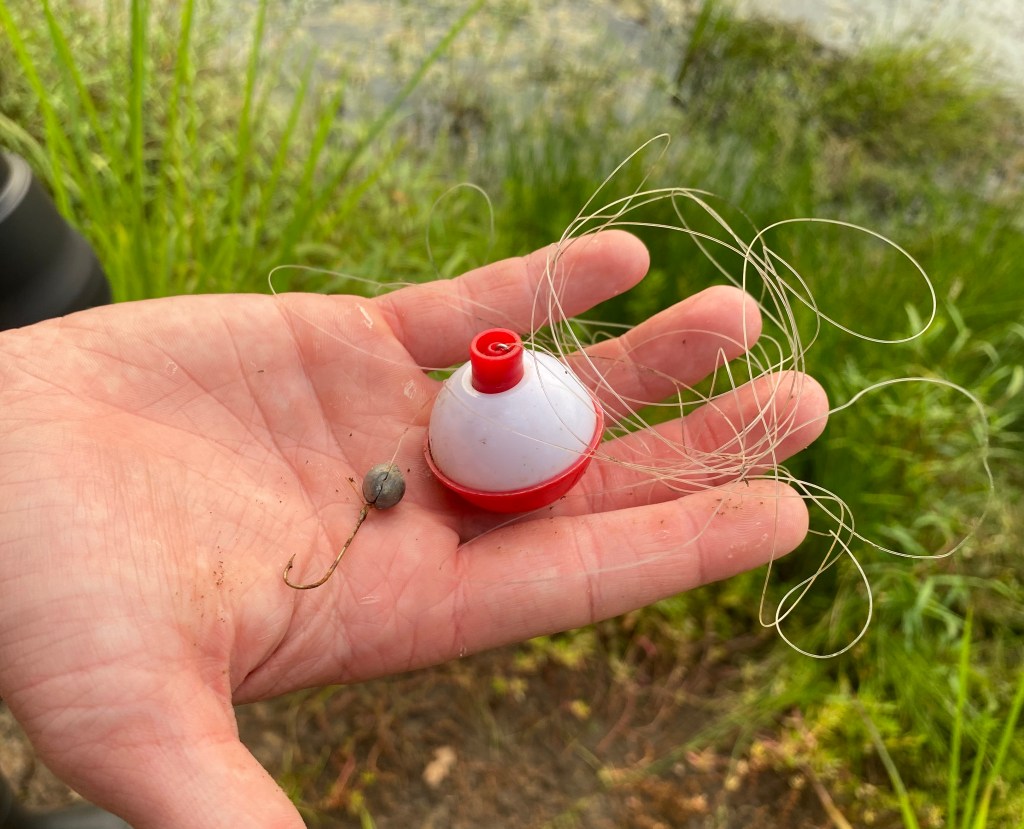
Next is Dispose of Waste Properly, and simply put, it means everything you pack in should be packed out. It’s easy to bring a small bag in your backpack or even your back pocket so that you don’t leave litter. Snack wrappers, water bottles, fishing gear, even Kleenex should be bagged and taken with you. I know that when fishing line snags and breaks, it can be difficult to retrieve it. However, hooks, lines, and lead sinkers are responsible for many wildlife injuries , and hooks can cause human injuries. And here’s another difficult but important thing: use the bags provided to pick up your dog’s waste. If it is left in the preserve, not only is it unpleasant, it is potentially a source of new parasites for wildlife. (The waste from the resident wildlife contains stuff that’s already found in the preserve, things the residents are already adapted to.)

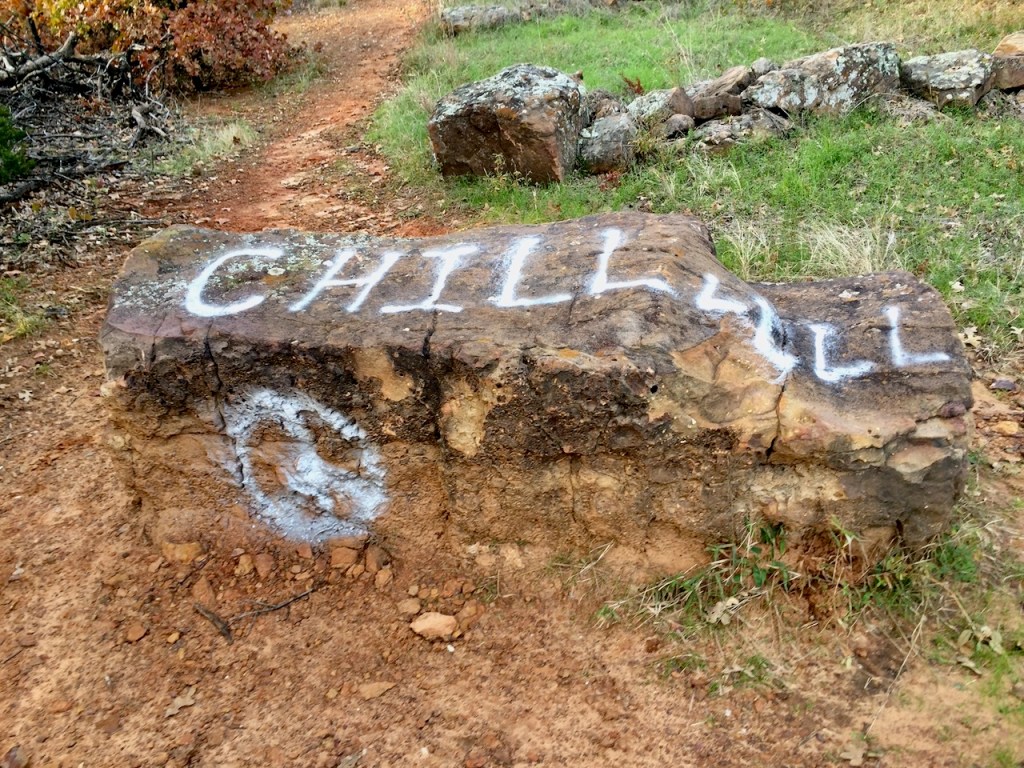
The Leave What You Find principle means leaving the living things how you found them, and don’t introduce non-native species. It also means not collecting artifacts like arrowheads and not “tagging” or carving initials into rocks and trees. We all have a tendency to think, “It’s just this one little thing, it won’t hurt anything.” But if you dig up a few plants, you won’t be the only one, and the losses add up. It’s the same with animals. That lizard might look cute, but don’t catch it! And please do not add things that did not come from the preserve. We’ve seen raccoons relocated and dumped at our preserve, and once at one of our national grasslands I found someone had released goldfish into a pond. They probably thought they were doing the fish a favor. When we add things or take things away from a natural community, the negative consequences might not be easy to foresee.
Minimize Campfire Impacts, in small urban preserves, really means “don’t,” because making a fire is almost certainly prohibited. There is the risk of a fire spreading and also the gathering of firewood and tinder removes homes and hiding places for small wildlife.
The next principle is to Respect Wildlife. Every time we see a photo of someone taking a selfie with a bison, we are reminded of how much people misunderstand wildlife. In general, if we are far enough away they may ignore us but if we get too close they may respond in self-defense and we (or they) may be hurt. Or our getting too close may disturb nesting, courtship, hunting, or other important activity. We should not only be aware of how we may affect wildlife, but also how our pets may do so. One reason our dogs should remain on-leash is to keep them from running ahead and investigating the nooks and crannies that small wildlife shelter in.
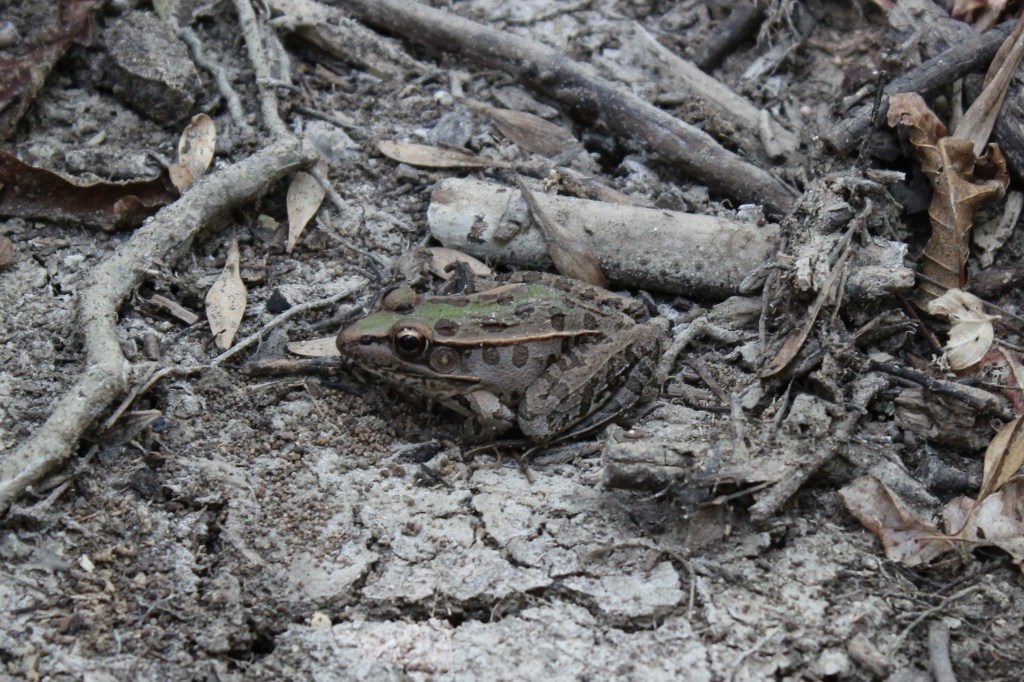
Finally there is Be Considerate of Others. People have different ways of enjoying a small preserve, and we can try to see to it that everyone has a good experience. Some of this involves little courtesies such as stepping a little off the trail to let people pass and minimizing noises (ear buds will let you listen to music without others having to do so). If dogs are allowed in small preserves, it is crucial to keep them on-leash and do not let them threaten other dogs or people.
When you think about it, all this follows pretty naturally when we visit a small preserve with respect for what it represents and gratitude for what it provides us. I hope if you visit one of our small, urban preserves, you will keep these principles in mind. That way, those living museums of natural history can continue to thrive.


Discover more from Our Lives in Nature
Subscribe to get the latest posts sent to your email.


It always baffles me when people don’t follow at least some basic rules of LNT, especially not littering. And then I wonder what was taught to them as kids and how they grew up to ignore picking up their litter.
We have an exponential litter problem and I’m unsure how we even tackle it other than reducing consumption considerably.
LikeLiked by 1 person
Much of it baffles me – dirt bikes on the trails, people being half-dragged by their big, aggressive dogs, people pitching fast food wrappers into the flowers. It’s like the place is just one more meaningless backdrop in people’s lives.
LikeLike
Absolutely. I think the vast majority of people operate this way.
LikeLike