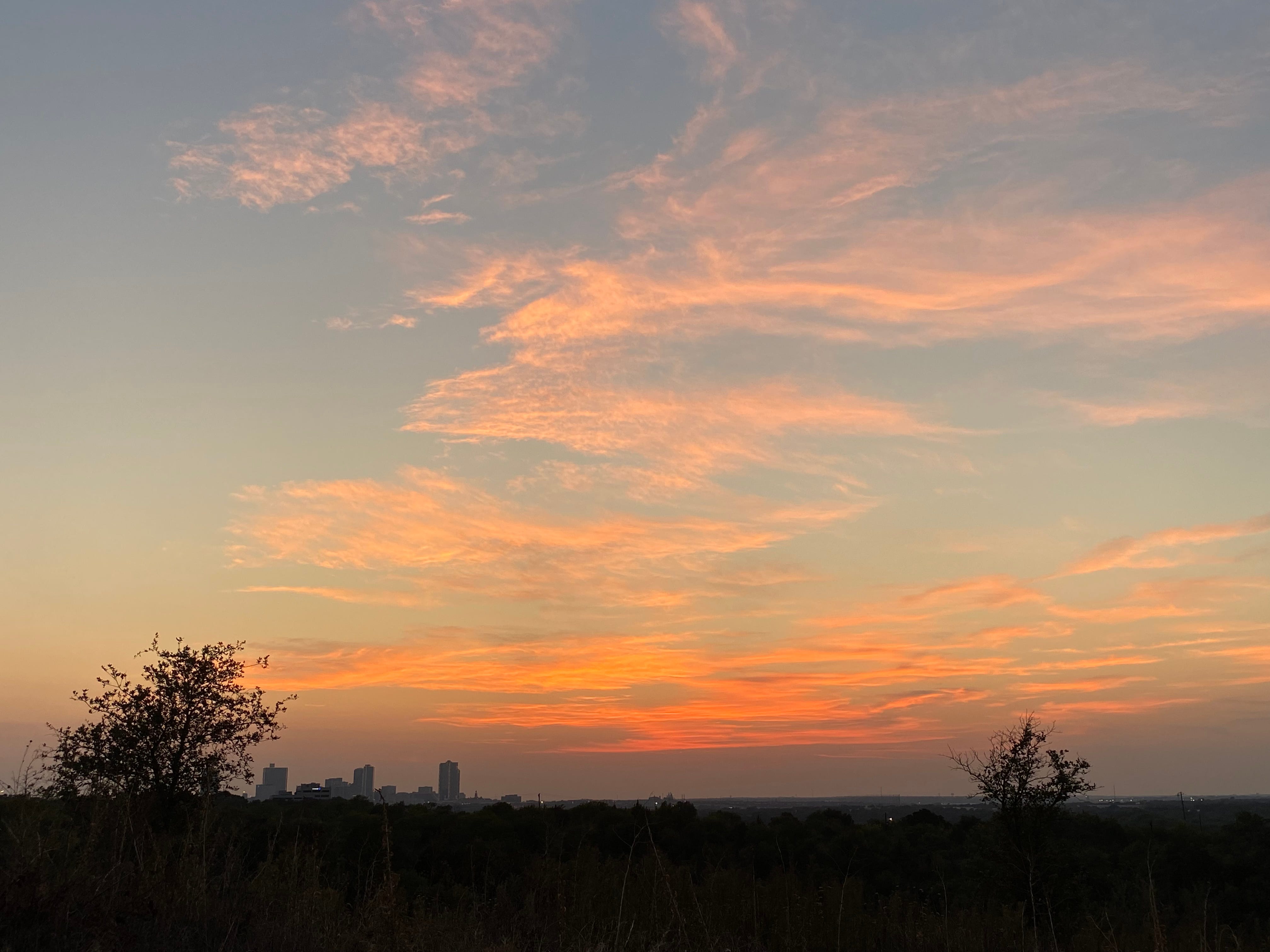
Tandy Hills on December 12th

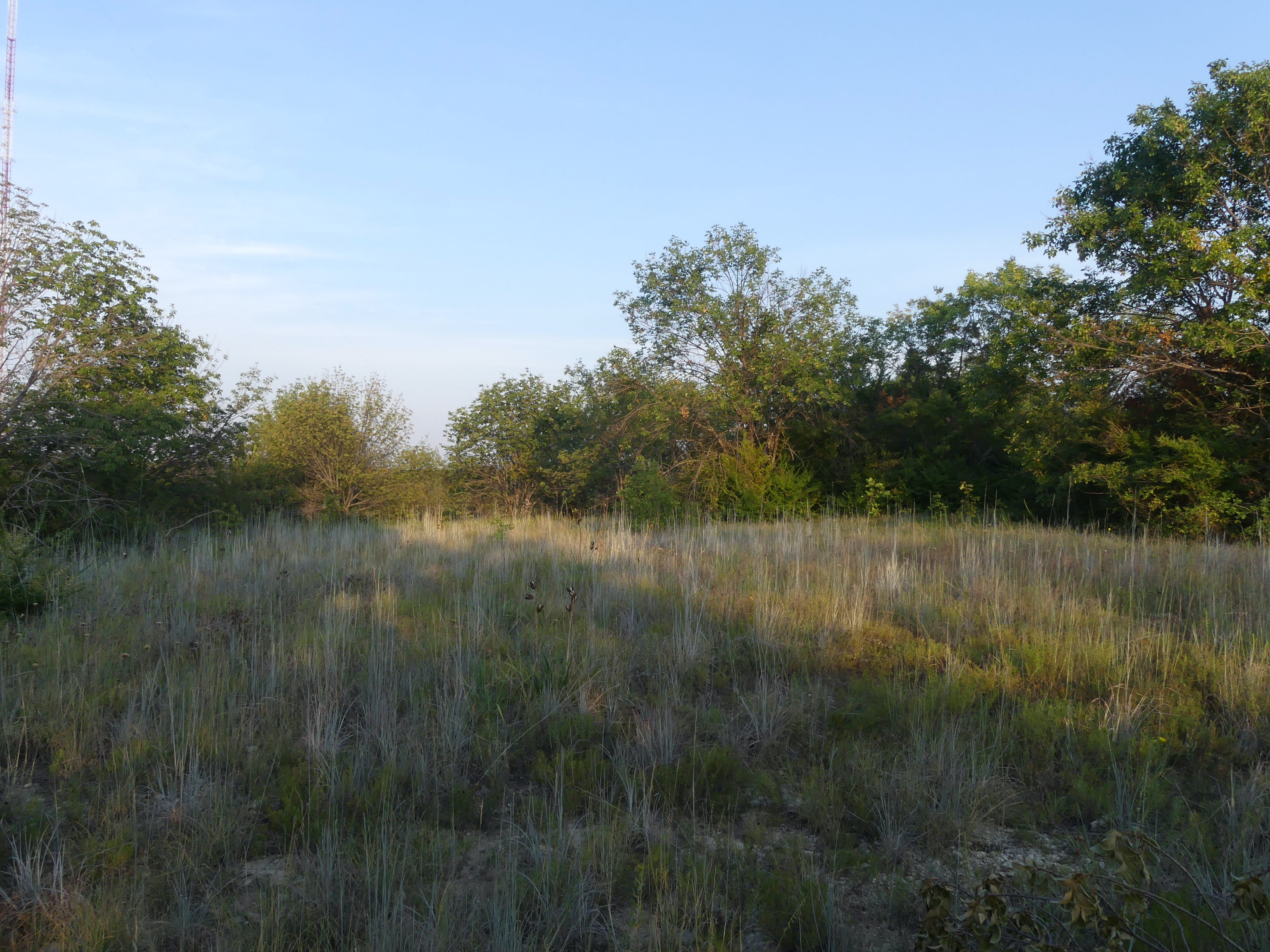
Tandy Hills Natural Area is over 200 acres of prairie in east Fort Worth. In spring there are beautiful wildflower meadows at the top of a ridge, and then the prairie drops down toward the Trinity River (on the other side of Interstate 30) to the north. The whole area has stands of oaks and other trees, with many of the ravines having thick stands of juniper.
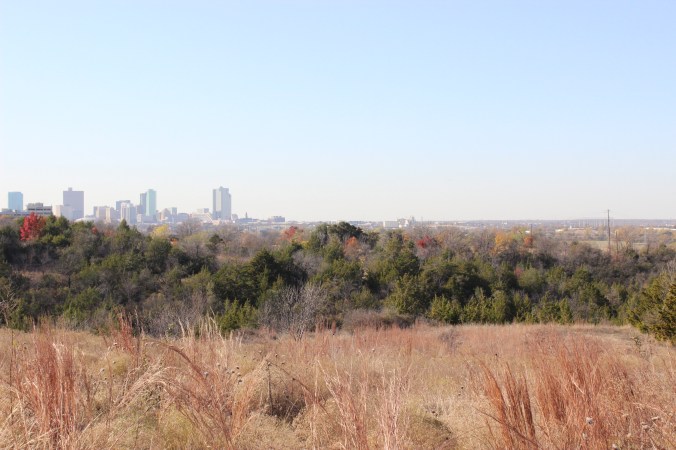
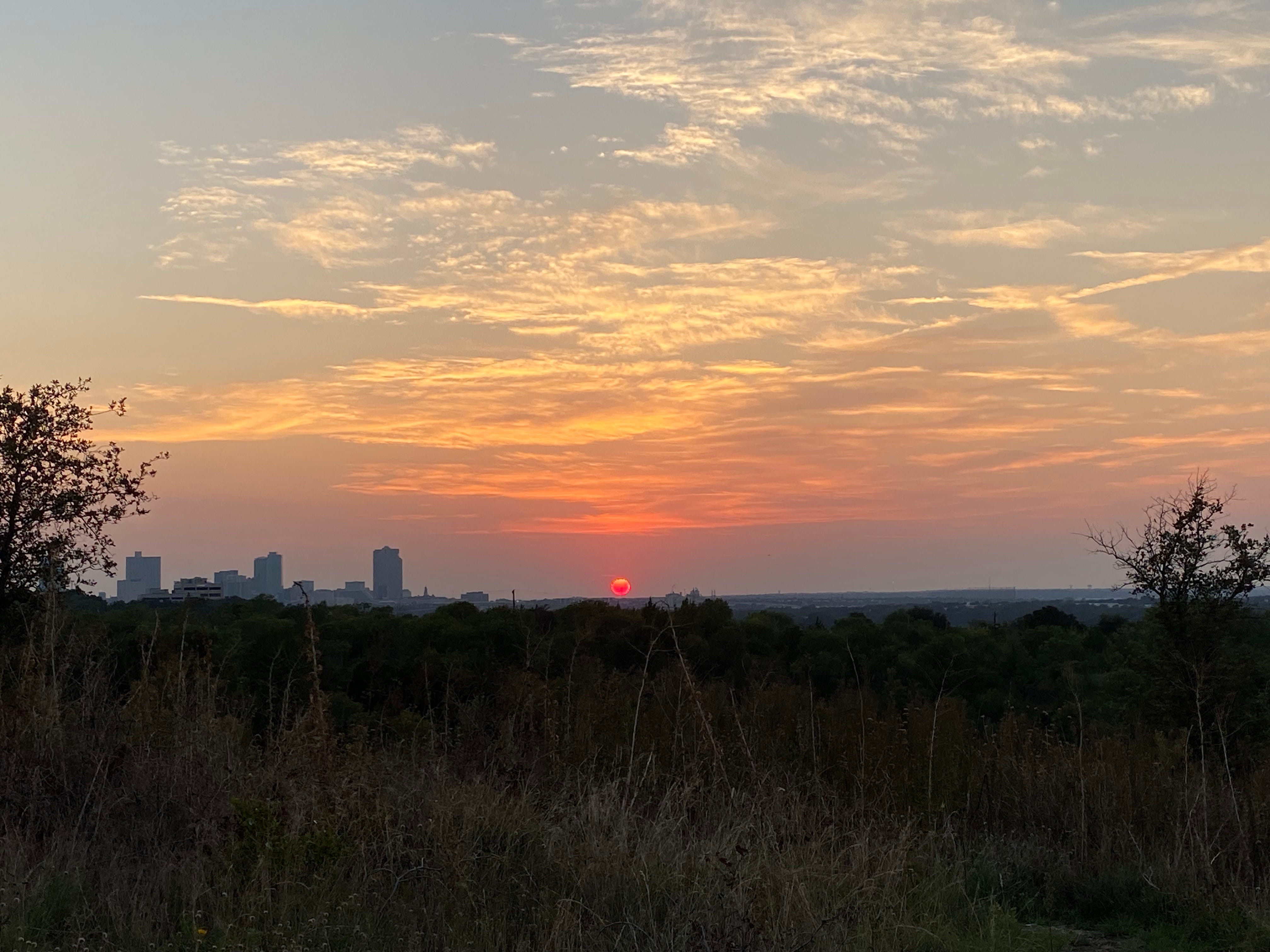
The Fort Worth skyline seen from the Tandy Hills prairie

I paid Tandy Hills an overdue visit today. It had been a while, and I missed this lovely place. When I wrote Mindfulness in Texas Nature I wanted to wrap up the purpose and the message of the book in an epilogue, and a late winter visit to Tandy Hills was just right. Its significance was that it is a survivor in spite of everything, and it offers small and humble but beautiful gifts like the annual appearance of trout lilies. Its resilience and the broad support it receives gave me reason to hope for a renewal of connection between humans and nature.
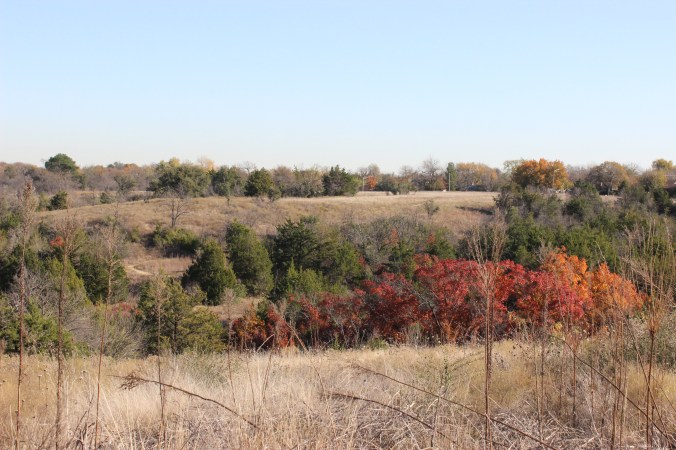
I talked about it as an island of nature that was under constant pressure by the surrounding city. The city has done many things right, from buying the property to the support of the parks department. What I meant was that it absorbs the impact of a lot of human visitation, including prohibited motorized vehicles (for example, I saw motorcycle tracks in a muddy spot today) and certain commercial photographers who cynically treat it as a backdrop while trampling the area. Its boundaries do not shut out the nearby highway noise, and invasive plants – especially privet – are constantly trying to make inroads, choking out the native species.

Tandy Hills Natural Area is looked after by a devoted group, the Friends of Tandy Hills, who work with the city to battle invasive plants, manage and improve trails, catalogue the over 2,000 species of plants, animals, and other organisms, and offer programs to the public.
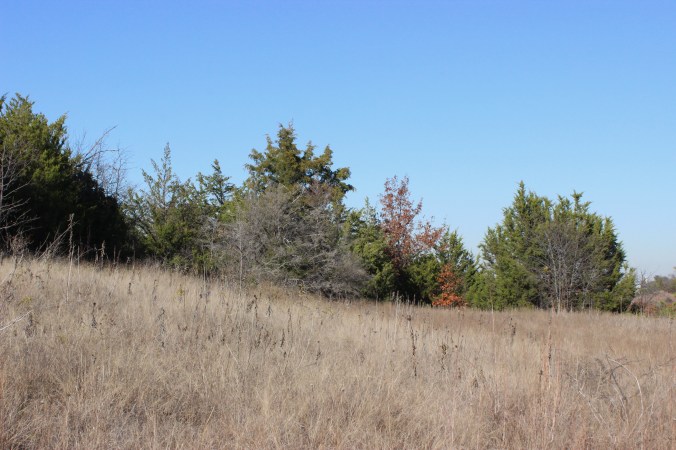
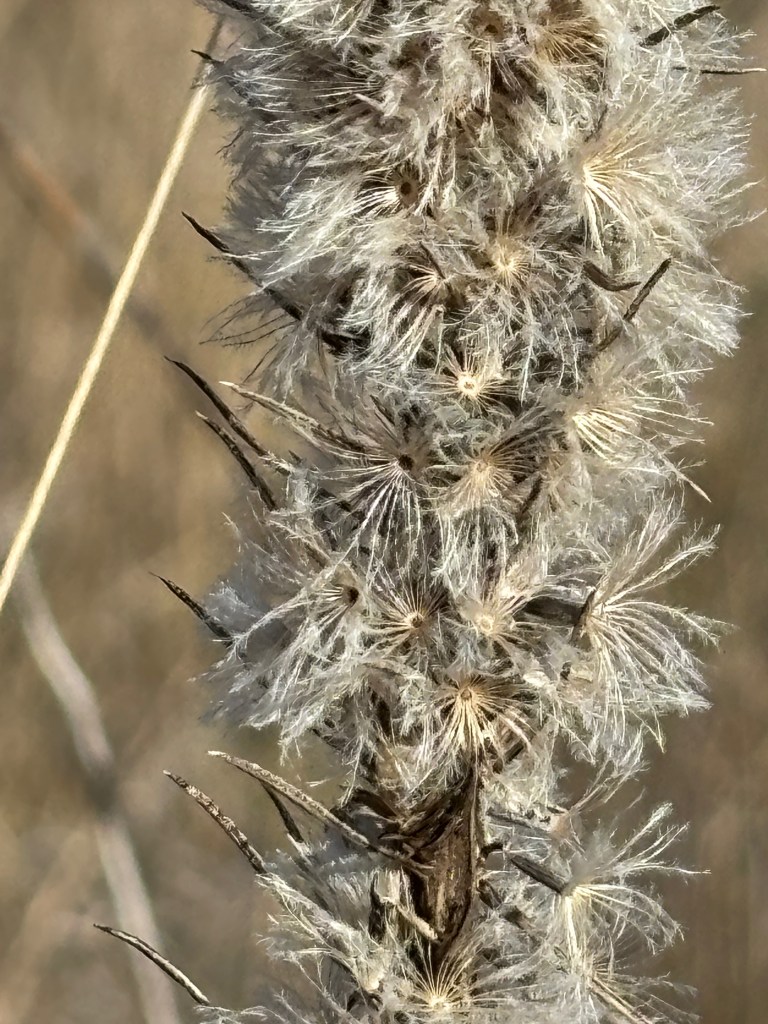
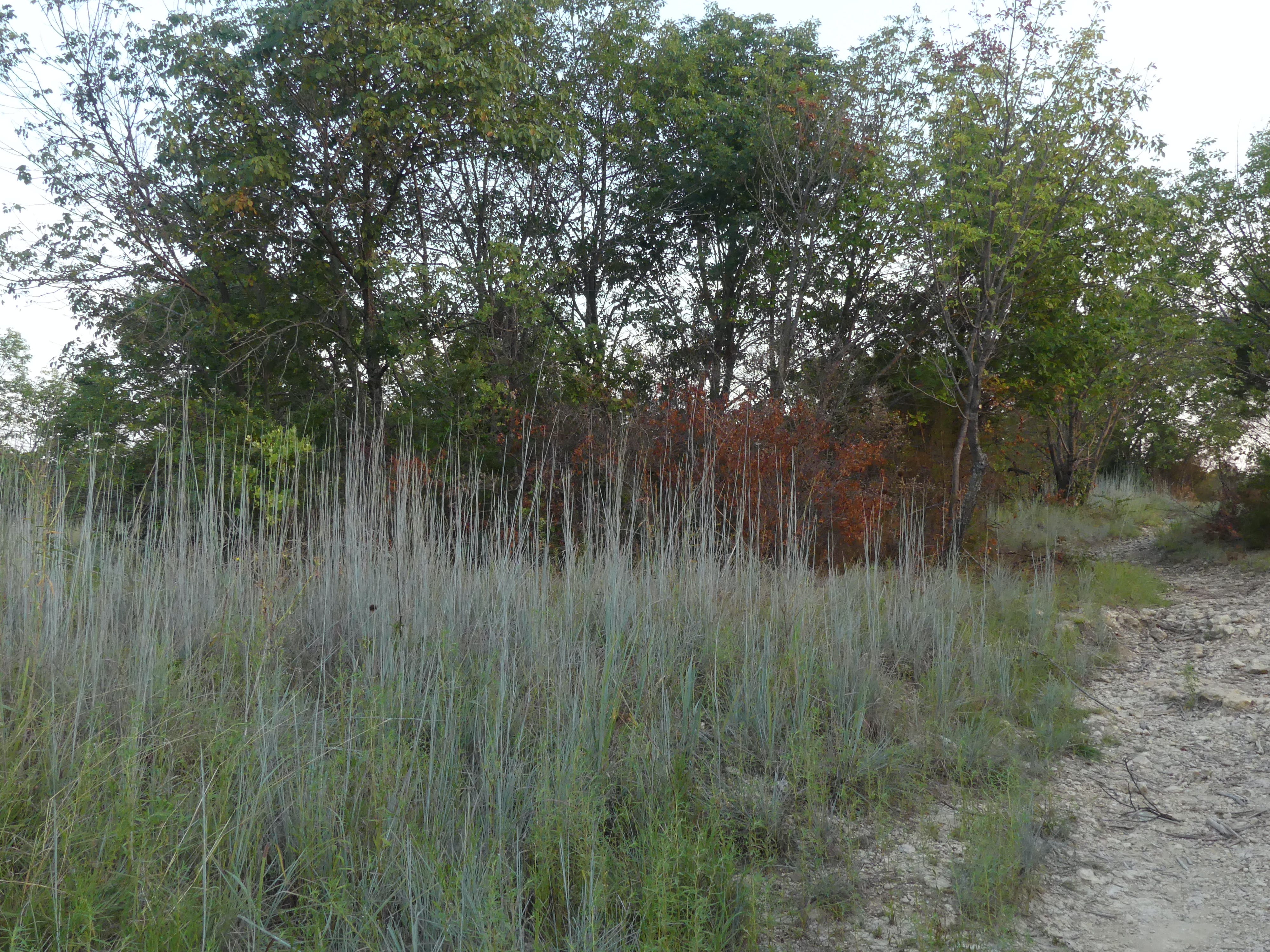
The prairies are beautiful, and they remind me of the places I explored at the western edges of Fort Worth as a kid. Thin, dark soil over white limestone, and a treasure trove of grasses and other plants: little bluestem, Indiangrass, eryngo, basket flower, gayfeather, and many others. And even at this time of year, in their dormant state, they amaze me. There are the subtle colors as well as the beautiful shapes of flowers and seeds.

This was one of those days when the weather is unusually warm, and I go for walks in a t-shirt and enjoy the bright blazing sun when it is low in the sky and makes everything just a little bit warmer in color without the walk itself being overly hot. A few grasshoppers hopped and flew away and several dragonflies hovered and darted around. The prairie changes in each season, and much of it may become dormant in winter, but it is never quiet for long.

Thank you to the prairies, oaks, and junipers. And thank you to the people who keep this place as natural and undamaged as it can be.
Sunset in an Urban Oasis

As Fort Worth grew, with buildings and highways proliferating, a little patch of the east side remained in a natural state. Much of it is dominated by hills and ridges, making it less attractive to developers. Over the years it was sometimes treated as a dump and also as a playground for recreational vehicles, but the native grasses, flowers, juniper, and lots of other life persisted. Finally, it was recognized and protected as a Fort Worth treasure, Tandy Hills Natural Area.

Yesterday, at the end of a hot August day, I took a walk there with my friend Kat as the sun sank toward the city skyline. We followed those beautiful limestone trails through native grasses and the stalks of the past spring’s basketflower, over patches of prairie and along the ridge.

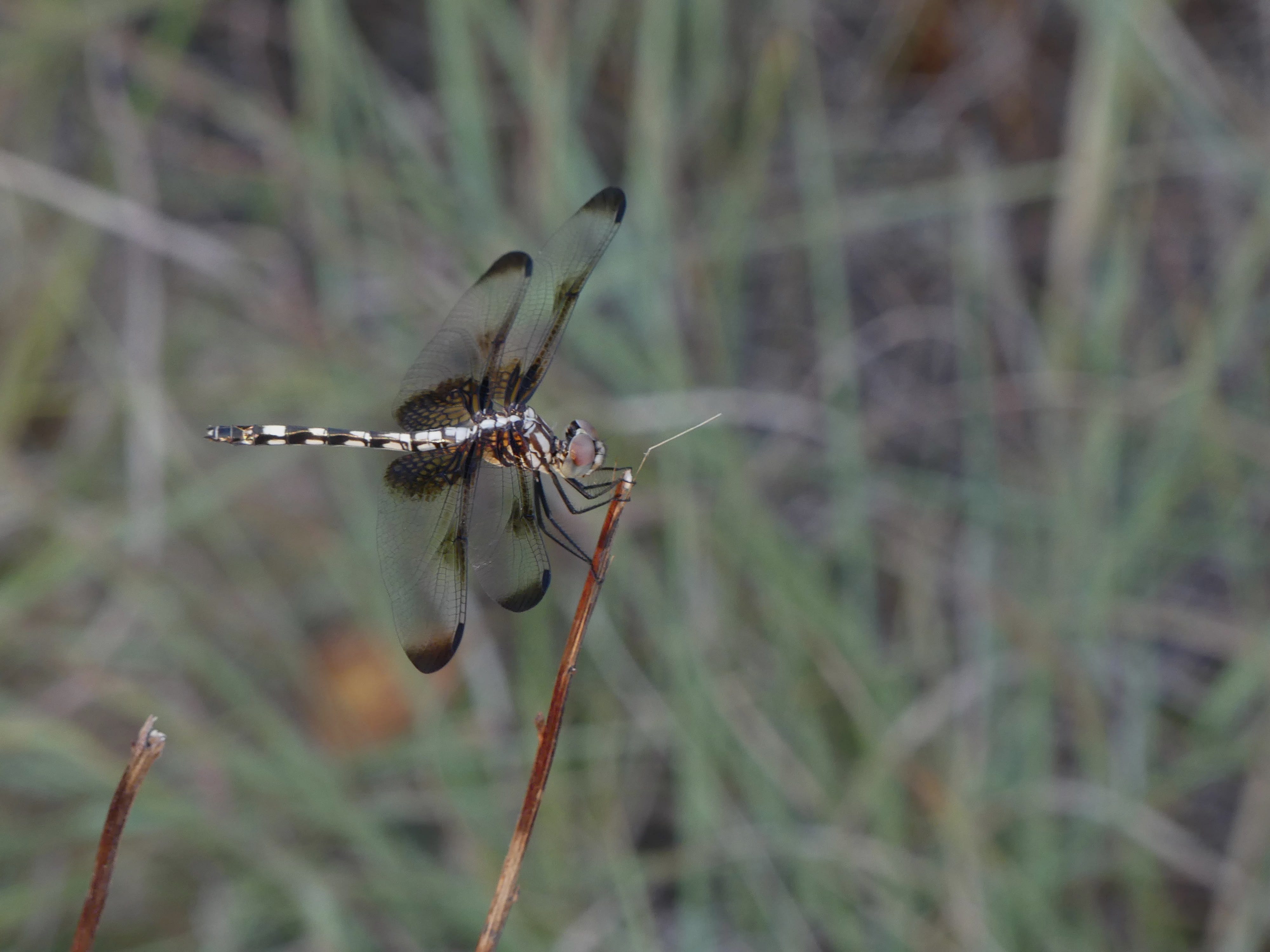
A checkered setwing

Kat is an ideal person to take a walk with, to share these hills with. We talked about absent friends and missing their presence, and we talked about the dragonflies and the succession of prairie plants around us. Snow on the prairie is starting to make its late summer appearance, and the little bluestem is beautiful as always. Kat and I discussed how we look for the myriad subtle colors of this grass, pastel blue-green with a few scattered suggestions of almost-violet. On a previous walk I told her that I’ve described those tall thin stems as “vertical brush strokes” on the prairie’s canvas and complained that I had no other way of describing little bluestem. She immediately suggested, “icicles,” and yes, they are like upside-down thin icicles!

Hardly anything allows a person to unwind and become content and restored like a walk at the end of the day in a place like this, with a friend like this. The shadows lengthened and the heat diminished, and there was always something wonderful to pull us around the next bend of the trail. However, our plan for the evening brought us back to the top of the ridge just at 8:10pm as the orange disk of the sun touched the horizon. Having found a quiet place to sit, we wordlessly watched what unfolded.

It took five minutes for the sun to disappear beyond the horizon, and it continued to illuminate the streaks of cloud in red, orange, and pale yellow. A good, fairly steady breeze blew across the ridge as we sat. The pale, almost pastel blue sky shaded deeper blue to the south, where the half-moon shone in the sky.

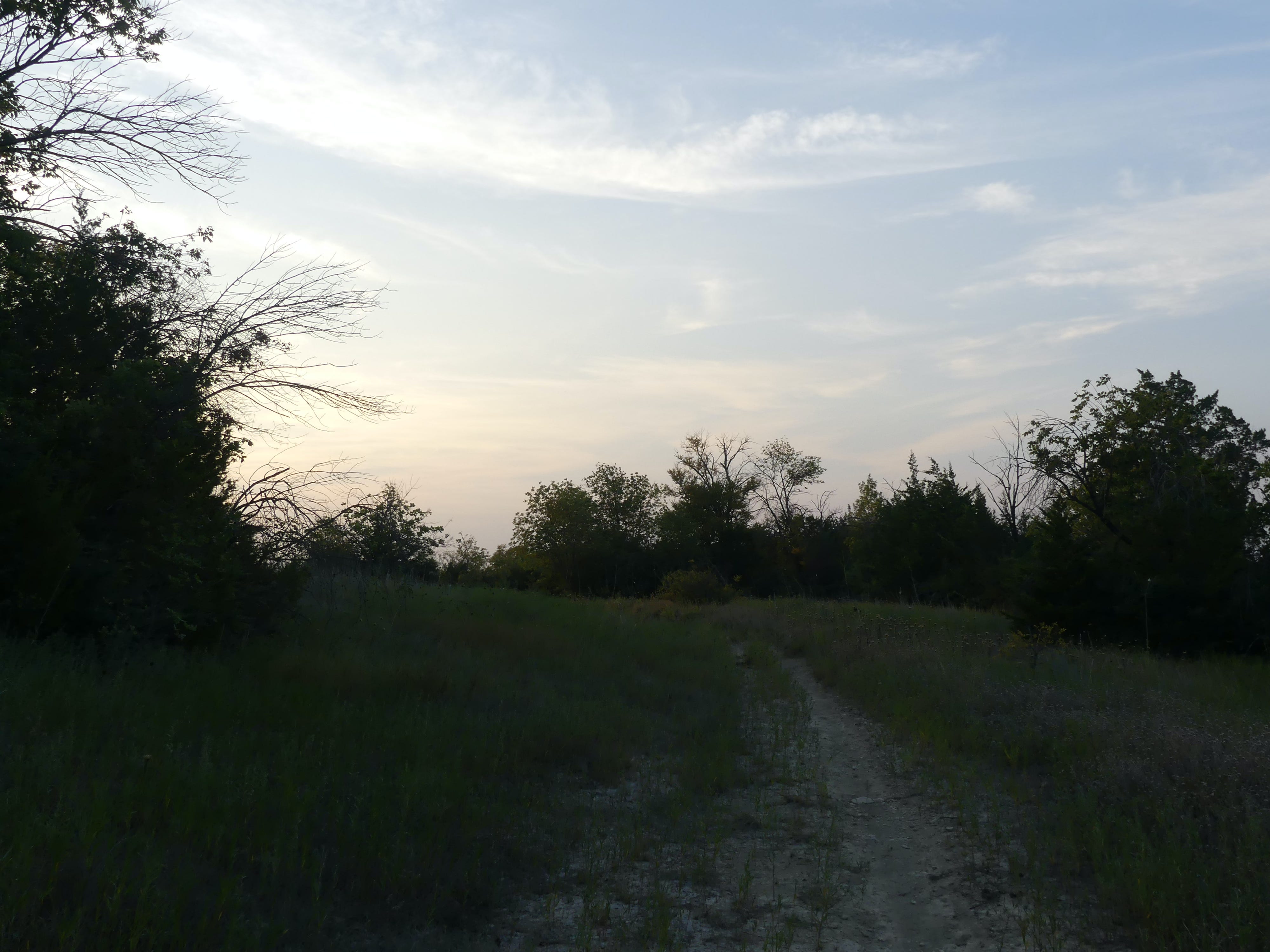
As light faded, we could see the rocky limestone path in front of us bend and disappear behind the taller dried plant stalks and the green growth near the ground. The ground dropped away and there was a dark sea of green tree tops beyond, stretching out toward the city.

It struck me that the clouds near the horizon rippled and waved in bright sunset colors like waves on water somewhere. And then the angle of the sun hit the clouds in a particular way for one more bright moment, and those clouds were bright streaks of orange against a turquoise sky. Even the hazy clouds above us were rose pink.

At 8:27pm the drone of insects began from nearby trees, and after a short time they just as abruptly stopped. We were left wondering if some disturbance, maybe people leaving the area, caused this, but I don’t know.

Sitting and maintaining our attention on the sky, there were several subtle shifts. Color faded from parts of the sky in a couple of places, probably when some irregularity of the land to the west blocked the sun. Where the color drained away, the clouds were left like patches of ash in the wake of the fiery sunset. Above us, the traces of cloud were white again. The western sky became more pale, no longer turquoise, while behind us the blue was deepening.

By 8:35pm the steady breeze carried less warmth – the heat of the day was fading along with the twilight. And even with the surrounding city lights and nearby highway, it felt quieter and calmer with the oncoming darkness. We heard a few dogs bark in the distance. When we finally spoke, Kat agreed that it seemed quieter, and yet we wondered if sound levels had actually decreased. Maybe the enveloping darkness brings a perception of quiet that is not about measured sound levels.

At 8:50pm we picked up our stuff and walked out, in silence or else speaking in quiet voices as if not wanting to disturb the tranquility of the night. Kat said that I could expect a different sort of sunset when there are more clouds, and she wondered what the winter sunset will be like on the ridge where we sat. I look forward to finding out.


(This article first appeared 8/13/24 at Rain Lilies on Substack)