Safe (But Not Too Safe)

I recently wrote about our fears of nature, whether it involves spiders, snakes, or whatever. I mentioned that sometimes a fear gets triggered by an actual negative experience in nature, like being stung or spraining an ankle (or more uncommon events like venomous snakebite). Before discussing what to do about fears, we need to discuss actually staying safe.

As I put ideas together into a list, I was thinking of children exploring in the woods or at a creek, and the sort of guardrails that would keep them safe. But really, the ideas pertain to adults, too. Some items – like taking an adult along – are more obviously for children. Even there, the general idea of not going alone and letting someone know where you will be applies to all of us.

Following the road further into nature

I go out on my own quite often to nearby nature centers and to the LBJ National Grasslands (about an hour away), so am I being hypocritical when I suggest “not going alone”? Would some things on my list involve hovering and overprotecting children? There has been a lot of commentary about how overprotecting our kids deprives them of self-reliance and makes them anxious. A couple of sources to check out are here and here. In Last Child in the Woods, Richard Louv writes about how our concern for children’s safety can get the better of us (see the chapter titled, “The Bogeyman Syndrome Redux”).

As always, we have to weigh the issues and consider the needs of the particular person when thinking about safety. What I’ve done is to list some guidelines and then add a couple of “on the other hand…” comments.

Go together, not alone

If children want to walk to a nearby pond or nature preserve, they should talk it over with a parent or other responsible adult. The adult might say that they have to accompany the children or might set some boundaries concerning how far or how long. It is also good for two or three children to go together rather than one alone. An adult who is going on an outing has much more discretion, but it’s still a good idea to let someone know where we will be and when we plan to return, and maybe go with a partner. The wilder or further away the destination, the stronger my recommendation.

On the other hand, we can all benefit from opportunities for solitude, and being by ourselves in nature can be wonderful, even for a short time. Among those benefits are self-confidence and self-reliance. Parents should always consider the age and abilities of any child and might want to start with just a little independence while out in nature.

Don’t show off or be a daredevil

That is, don’t focus on how impressed others will be or how you can get a laugh, focus on doing something well and safely. Find a better reason to stand out in a crowd. For example, a great many venomous snake bites occur because someone was doing something foolhardy (out in the field, on YouTube videos, or at rattlesnake roundups).

On the other hand … well, there’s not much “other hand” here, just don’t. You can find safe ways to challenge your abilities and do exciting things. Climbing a rocky hillside or wading a creek with a strong current are examples of putting your abilities to the test. Such skills can be built gradually and carefully.

Pay attention to your surroundings

This could be a plug for mindfulness, for being in the present and not walking along on autopilot or while distracted. If we’re not paying attention we might miss a drop off ahead, poison ivy growing at the edge of the trail, a strange dog sizing us up, or a wasp nest where we were about to reach. Not only that, we would miss interesting and beautiful things along the way. Being “lost” in conversation is not a great way to spend time in the woods.

On the other hand, who but a Grinch would tell you that you can’t talk with a friend on a walk? Or check the weather on your phone? As much as I love practicing mindfulness in nature, we should also be able to do other things. I suggest that we practice shifting attention back and forth, between the path and our friend, the trees and our phone. Think of it like driving and keep an eye on the road.

Don’t put your hands (or feet) where you cannot see

A centipede under a log

If you see something you want to examine on the woodland floor, or you would like to look for mushrooms, insects, or other things under a log, watch where you put your hands. In the last post, I talked about a time when I was a child and reached down a hole and brought up a tarantula. That’s a good example of why you should not put your hands (or feet) in some hidden spot. Walking barefoot at night, unable to see where you are stepping, occasionally results in a snake bite. Use a flashlight, and don’t reach under that log with your fingers.

On the other hand, find ways to explore safely and have fun. Probe under things with a stick or position yourself where you can see, and then take a look at what’s under the log.

Don’t touch wildlife or approach too close

A person who is learning about snakes and finds a pretty one out in the field may be tempted to assume it is harmless and pick it up. Most snakes are not venomous, but the cost of a mistake can be high. People who think of deer as cute (not saying they aren’t!) might approach one too close if it doesn’t run off. Aggressive behavior from white-tailed deer happens from time to time, so give Bambi some distance. I should add here that we should have at least as much caution around strange dogs. We can still observe wildlife, learn about them and enjoy them, from a safe distance. Knowing what that distance is depends on the kind of animal, how it is behaving, and the surroundings we are in. Expert guidance is needed here.

On the other hand, catching grasshoppers and frogs is one way to feed a child’s (and our) sense of wonder and curiosity. My own journey as a naturalist and nature writer was launched when I was about ten years old and we caught dragonflies and garter snakes. It seems silly to argue that no kid should ever catch a crayfish or pick up and examine a toad, but I believe a knowledgeable parent or nature educator should provide guidance and set limits.

Bring water and dress appropriately outside

Here in Texas, everyone hears warnings about the weather. In the spring we watch for storm fronts with the risk of tornados, lightning, and hail. In the summer we make sure to drink water and avoid heat exhaustion or heat stroke. Even walking a nature preserve for an hour or so, I encourage people to bring water, especially in summer. With kids we have to remember that smaller bodies overheat or lose heat more quickly than big bodies, so taking breaks and getting into shade is important in summer and extra protective clothing may be needed in winter. We also need to think about clothes that help protect from thorns and rocky terrain. Hiking boots or sturdy shoes are recommended.

On the other hand, depending on what we’re doing and whether we are using sunscreen, shorts can feel great on a walk outside. Just avoid the poison ivy and bull nettle in places where they are common. Flip-flops or barefoot ought to be OK sometimes, too, if we do a scan for cacti, stickers, and half-buried trash like broken bottles.


One additional thing: The more we know (like recognizing kinds of plants and animals and knowing the behavior of local wildlife), the safer we will be. And the more rewarding our time in nature will be. That’s not to say that we have to be experts to enjoy nature, but it is good to have some level of “nature literacy.” If we visited another country, it makes sense that being somewhat literate in the culture, language and geography of that country would be an advantage. We need to be able to read a few signs, understand what someone says to us, and know the places where we might run into trouble. In the same way, basic knowledge about wild places will help us know what to expect and how to interact with the lives we will encounter in those places.
About Our Biophobia

I’ve given a number of talks to groups of kids after being asked to help with their fear of snakes. Even when addressing fear was not the primary reason for the talk, the adults may reason that knowledge and experience will inoculate the kids against fear and will feed the experience of curiosity and wonder in place of fear. Those are wonderful reasons for me to pack up some snakes and a few pictures and go talk with the kids and the adults. Knowledge will help counteract fear, but experience is what works the real magic, and that’s true for any of the phobias of critters in nature and for the general fear of nature that some people have.

We live almost all our days surrounded by our own stuff, our technology and built structures, and our lives become more and more separate from nature. Food and water are treated more like commodities, and even the air is conditioned and filtered. And so, wild places may feel dangerous or unappealing and wildlife may seem more frightening. Fears of various things in nature (collectively referred to as biophobia) become more prevalent. A vicious cycle sets in. As nature becomes more unfamiliar and threatening, our fear or disgust makes us avoid the experiences which might counteract the fears. The “extinction of experience” robs us of the sense of being at home among our non-human kin.

I’m not naive; I recognize that there are dangers in nature just like there are dangers in our homes, neighborhoods and on our freeways. Some of the snakes that I love to observe or photograph are dangerously venomous, especially when we accidentally get too close or try to show off with them. But most people are not bitten, especially when equipped with a little knowledge and common sense.

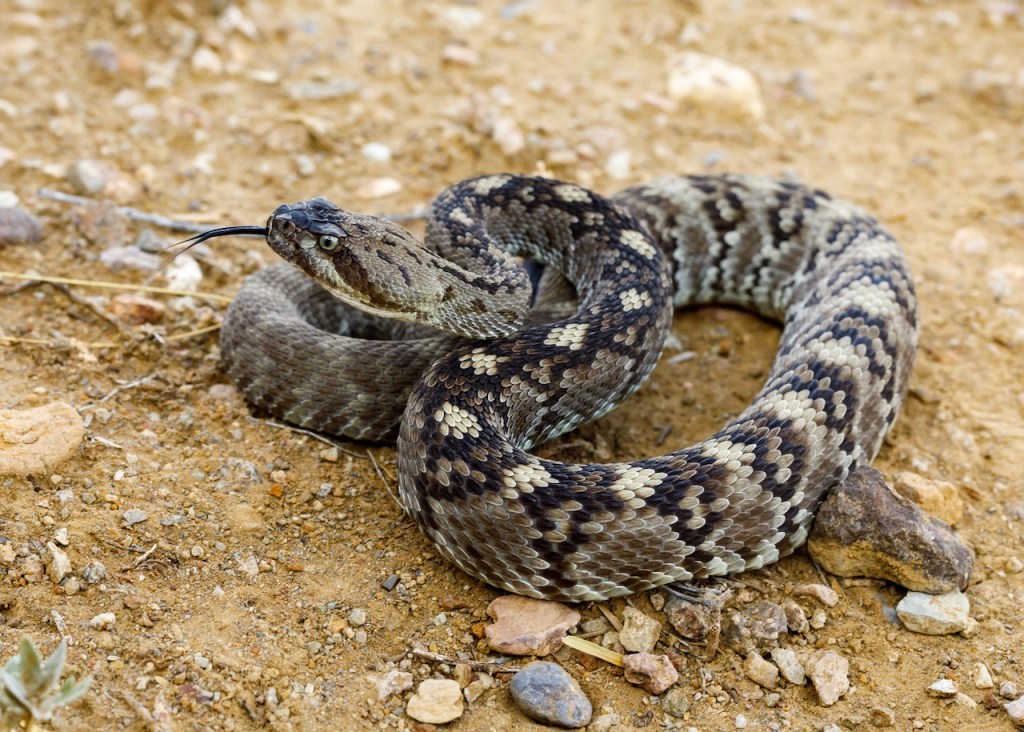
A black-tailed rattlesnake photographed by Meghan Cassidy during our trip to the Big Bend while working on a book on mindfulness in nature. The snake is venomous but we negotiated our encounter with each other well, and the snake never attempted to bite.

Coyotes are among the wildlife that people tend to assume are dangerous. A 2009 study searched for reports across the U.S. over a 46 year period and found 142 attacks during that time (with attacks defined as encounters in which a person was bitten). Very few of those occurred here in Texas. Some (30%) were related to coyotes that had been fed by people, accidentally or intentionally. Steps for staying safe around coyotes include not feeding them, limiting the outdoor activity of pets like small dogs, and not running from them (triggering a built-in tendency to chase). To keep it in perspective, the reported dog bite fatalities (not just attacks) from 2020-2022 ranged from 47 to 56 per year. We are in much greater danger from dogs than we are from coyotes.

The idea that we are in greater danger from the things most familiar to us, like our cars (one reportable car crash every 57 seconds in Texas in 2021) or our dogs, is a hard sell for most folks. That is because we are around them all the time, and our experience is usually safe and rewarding. We adults understand intellectually that cars, dogs, household chemicals, electricity, and so on can be dangerous. We do what we can to make the risk manageable and continue to enjoy the benefits. Being careful does not mean that accidents are impossible, but even though there is some chance of accidents, we are not afraid.

Here are some reasons why so many of us are afraid of things in nature:

Limited contact

We are comfortable with what is familiar. A strange place in nature, or certain things in natural spaces, may feel foreign and unpredictable. We don’t know what that bug might do, nor do we know if the coyote howls and yelps might mean they are hunting us down, and so we keep away from contact with those things, thus guaranteeing that we will not have experiences that might teach us what is realistic. Additionally, many people live in cities with no nearby natural spaces and limited transportation, and so they miss out on walks in the woods and encounters with wild things.

Not knowing what to do

Many people would not know what to do in a wetland, prairie, or woods. If they visit, they may bring with them the things they know from everyday life, like listening on headphones, chatting on the phone, riding bicycles or off-road vehicles. I do realize that some people know their way around the woods and still enjoy listening to music or bicycling, but I imagine that there are others who would be bored and lost in nature without gadgets and vehicles. Many people do not know the names of plants or animals and what they do, and would be uncomfortable finding their way through the woods or across a creek.

The culture often teaches fear

Our minds are wired to look for danger, and sometimes we enjoy the thrill of finding it or hearing about it. And so we tell each other stories of the time an uncle killed a big snake or we went camping and were frightened by sounds in the night. We watch movies about bear attacks, snakes loose on an airplane, werewolves, bats that want to suck our blood, and on and on. We warn each other or see overblown news reports of killer spiders or murder hornets. Our culture portrays nature as full of danger, and unless we get out there and discover that nature is mostly safe, we become fearful.

Actual negative experiences in nature

Sometimes we become afraid of something in nature because we actually did have something bad happen there, like a near-drowning incident or being stung by a jellyfish on the beach. At other times, being startled or surprised will trigger fear. As an eight-year-old child, I reached into a hole and felt something soft. Cupping my hand around it, I slowly removed it and discovered a tarantula, triggering a phobia that was pretty severe for the next couple of years (despite the fact that the tarantula kindly refrained from biting the invader to its home). Only after I developed other interests in nature and as a result began to have safe, incidental encounters with spiders and their webs did the fear gradually subside.

Possibly inherited predisposition

Could it be that some of us are just put together that way? It is true that some of us have a greater general predisposition to being fearful, and part of that appears to be genetic. And do we inherit fears of snakes and spiders? There are some studies that give at least a guarded answer of “yes,” such as one in which babies (too young for culture or experience to be a factor) were shown pictures of various animals and their pupillary reactions revealed that they react to spiders – and to some extent snakes – in a more anxiety-related way than their reactions to other pictures.

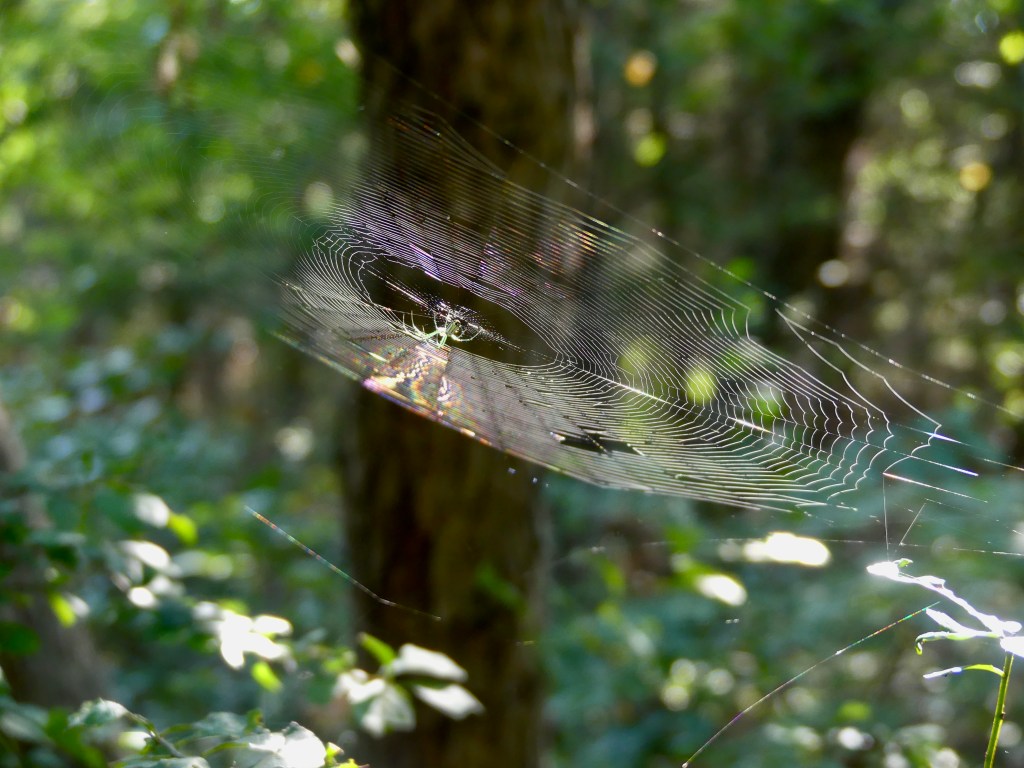
An orb-weaving spider at Dogwood Canyon Audubon Center

Since time spent in nature provides us a great deal of benefit (here is a review that sorts some of these benefits based on our senses: vision, hearing, smell, etc.), giving people the tools to decrease fears of nature would be a very helpful thing. We can do something about several of the issues I listed above. What if we helped people – particularly children – have more contact with nature in enjoyable ways that could contribute to exploration, safety, discovery, and wonder? I plan to write more about that in this space, so I hope you’ll check back or subscribe so that new posts are emailed to you.

More Children in the Woods

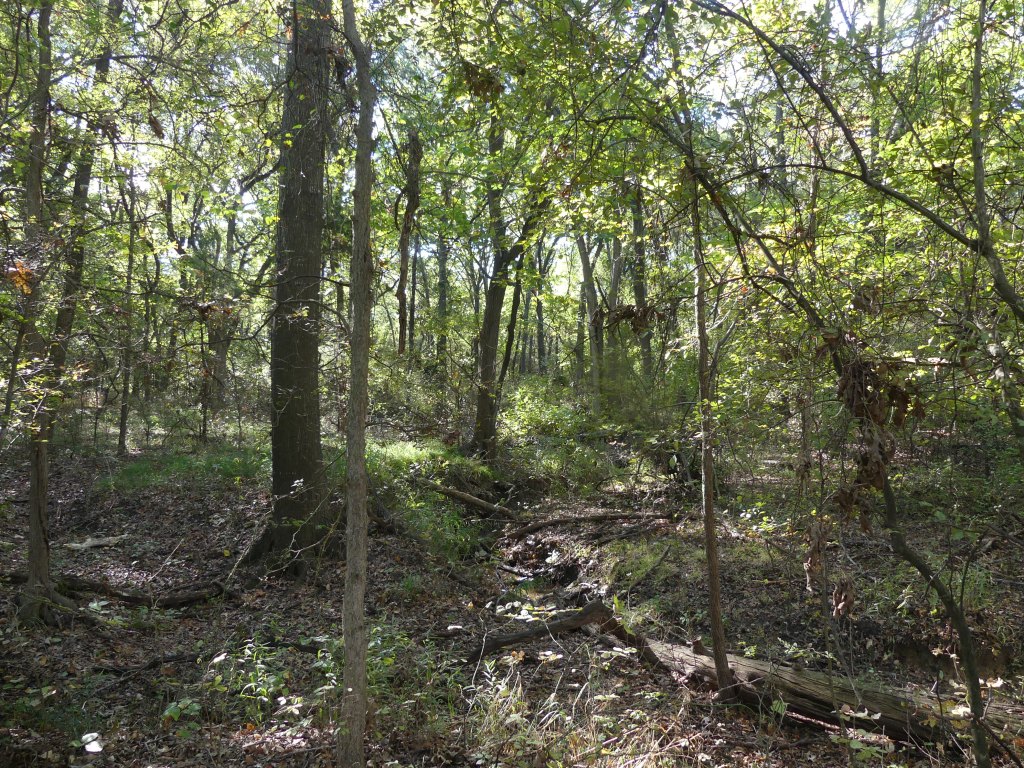
Children should walk in the woods, often. They should be able to do so fearlessly, knowing how to explore safely, with wonder and confidence. That doesn’t happen enough for kids growing up in urban areas. Recently, I was asked to talk with a group of kids at TR Hoover Community Development Center in Dallas. Despite living near the Great Trinity Forest, I was told that a concern about the presence of snakes kept many of the kids from exploring the woods. Volunteers from Master Naturalist programs thought I could help the kids understand snakes in a more realistic way. I was eager to try to help with that.

There are lots of possible reasons that urban kids might not visit the woods. There can be the fear that dangers lurk in the woods. Some of that can be realistic, and some not so much. When I asked about their worries, one of the children mentioned wolves. I could reassure her that there would be no wolves, but some of the wildlife might potentially be dangerous. Surprise close encounters with feral hogs, for example, or a copperhead half-hidden in the leaves. Kids need to know about watching where you are going and knowing what to pay attention to.

A young copperhead

If they haven’t developed the skills that can make a walk in the woods full of delightful discoveries and minimal risk, it would not be surprising. In cities and suburbs, children play inside most of the time, and a lot of that time is spent in front of a screen of some kind. The American Academy of Child & Adolescent Psychiatry reports that elementary school-aged kids spend four to six hours a day in front of games, TV, tablets and phones, and the number is even higher for high school kids.

In 2005, Richard Louv published his book Last Child in the Woods, introducing the term “nature-deficit disorder.” It wasn’t a formal disorder, just a convenient shorthand for the way children – and the rest of us – are becoming estranged from nature. In the years following the book’s publication, a lot has been done to try to address that widening gulf between children and nature. I hope to contribute as much as I can to bringing us back together.

I talked with the kids at TR Hoover about what makes a forest and that we need all the “ingredients” in order for it to be a real forest. I said that most of the snakes they would find would be harmless, but that they should not count on that. The rules I suggested that they follow were:

  • Your EYES go first before your hands or feet
  • Don’t touch or pick up an animal when you aren’t sure what it is – no guessing!
  • If you see a venomous snake – walk away

In other words, never put your hands or feet somewhere until you know what is there. And don’t be quick to touch (I worry that a child will become overconfident and assume that they know something is harmless when it is not). And last, when you see what may be a venomous snake in the wild, there’s no need for panic and certainly no need to kill it. Sometimes a person has a well-intentioned but mistaken belief that they will make nature safer for the next visitor by killing a snake. They endanger themselves when they come in close contact and make the snake panicked and defensive. Killing the snake only opens up a place for another snake to fill the gap left by the dead one.

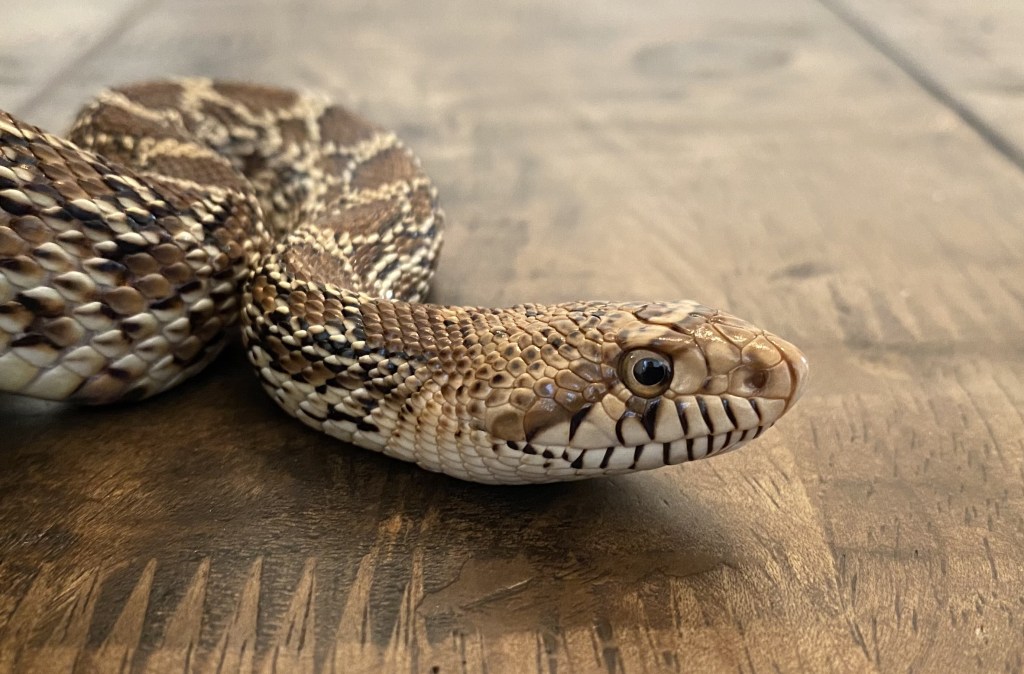
The kids loved the young bull snake I brought with me. She is a gentle example of one of our biggest native Texas snakes, and most of the children wanted to touch her. I would have gladly allowed this except that having thirty kids touch you (and perhaps a few try to grab you) is pretty stressful for a snake. Toward the end, I brought out a Texas garter snake, a subspecies that Texas Parks & Wildlife Department considers endangered in our state. His three pretty stripes and graceful body charmed the kids and the adults in the room.

The young bullsnake

I hope these kids are more comfortable and more prepared to get out there and safely explore the woods. I loved their questions and their energy, and would love to see them out there walking on a trail and discovering all kinds of wonderful things in the woods.