For some time I have been focused on travel and writing for the planned book on mindfulness in Texas nature. Part of those plans involved visiting the Big Thicket, and that was a highlight on my calendar. Meghan and I spent a weekend in late April wandering through some of the forests, wetlands, and pine savannas of that incredible place. I have visited the Thicket on and off for nearly twenty years, and each visit is a treasure.
On a map of southeast Texas, if you drew a triangle between Livingston, Jasper, and Beaumont you would capture much of the region traditionally known as the Big Thicket. Originally it was a big, wild place with old growth forest and a tangle of vines and understory plants that could be nearly inaccessible. There were also open savannas with ferns and pitcher plants growing in the spaces between pine trees, as well as ponds and sloughs. The settlers came, and later the timber industry cut down big swaths of forest. Then the discovery of large deposits of oil in 1901, with the Spindletop gusher near Beaumont, initiated the oil boom. The Big Thicket could easily have disappeared, but environmentalists and a few politicians fought to save as much of it as they could. The Big Thicket National Preserve was established in 1974 and in 1993 additional land was added to it. The “units” of the Preserve are scattered patches of forest, wetland, and other habitat with protected corridors along creeks, bayous, and the Neches River connecting many of the larger units.
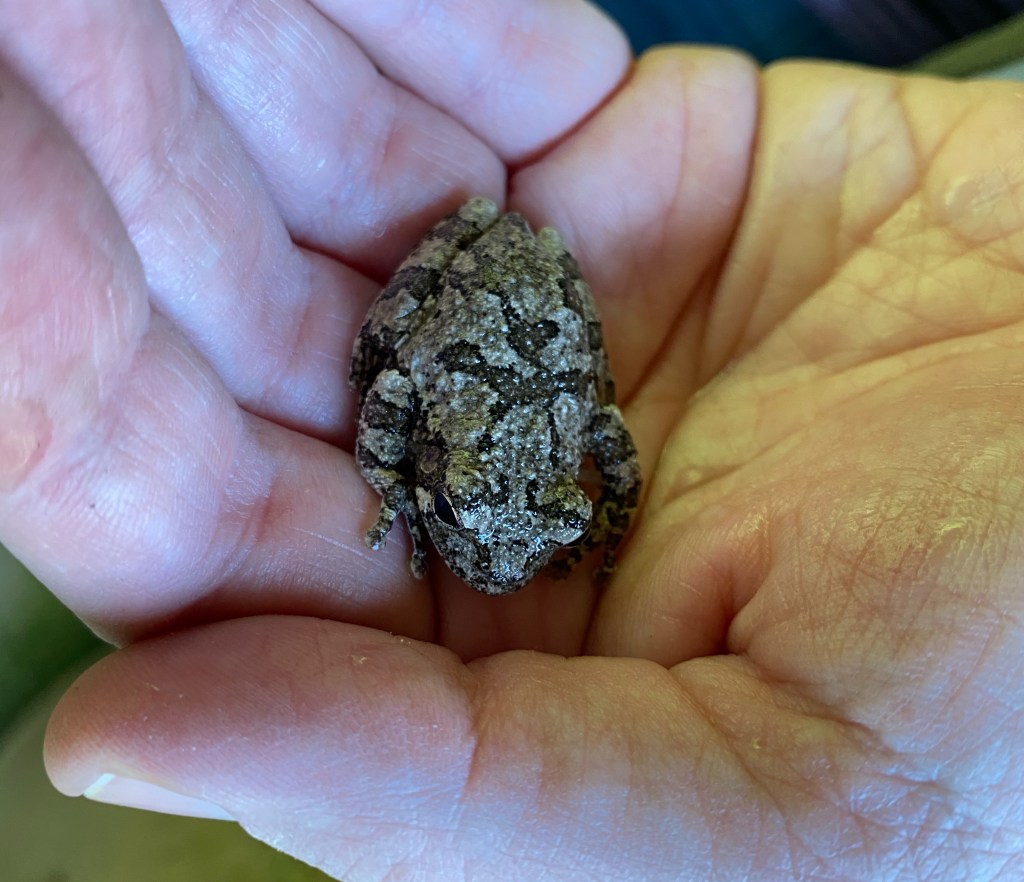
We arrived following a big rainstorm, and treefrogs and a few other frog species were calling. It is otherworldly to stand in the darkness next to a thicket full of chorusing frogs, listening to a wall of amphibian voices competing to attract females. The first night was dominated by gray treefrogs with fluttering, fairly musical trills loudly filling the dripping woodlands and seeming to come from everywhere. It is nearly disorienting, but in a good way!
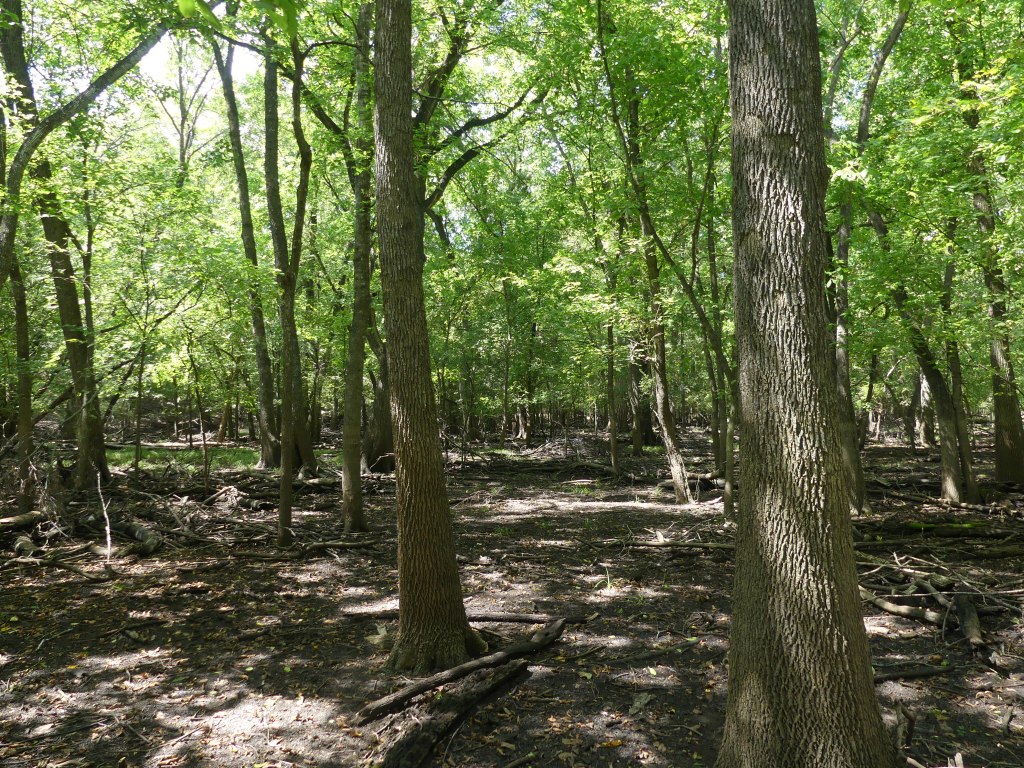
After about six hours’ sleep, we were ready to walk the Kirby Nature Trail. The trailhead is near the visitor’s center at the south end of the Turkey Creek Unit, an ecologically very diverse area between Kountze and Woodville. When I think of the American beech-southern magnolia-loblolly pine ecosystem that I associate with the Big Thicket, I picture this unit (although it contains multiple ecosystems, not just this one). We walked among tall trees and thick understory, with bird song echoing through the forest. Leaves were still wet with the previous night’s rain, making the woodland bright and fragrant.
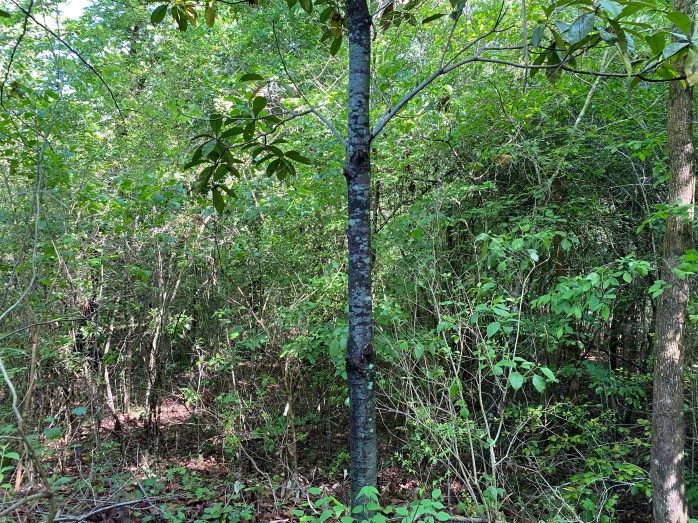
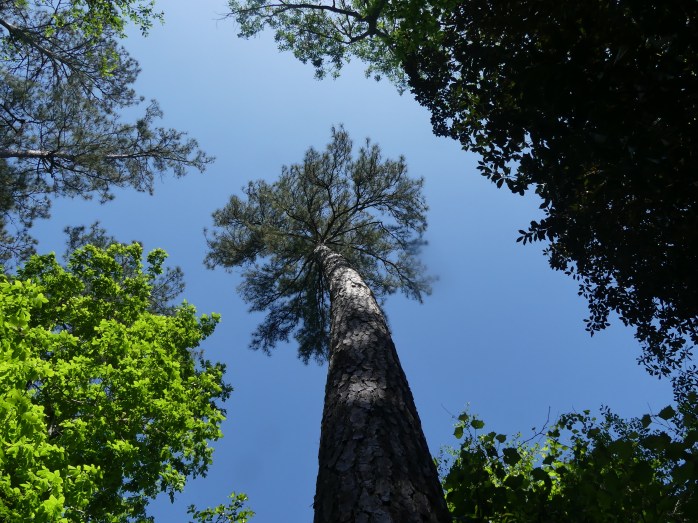
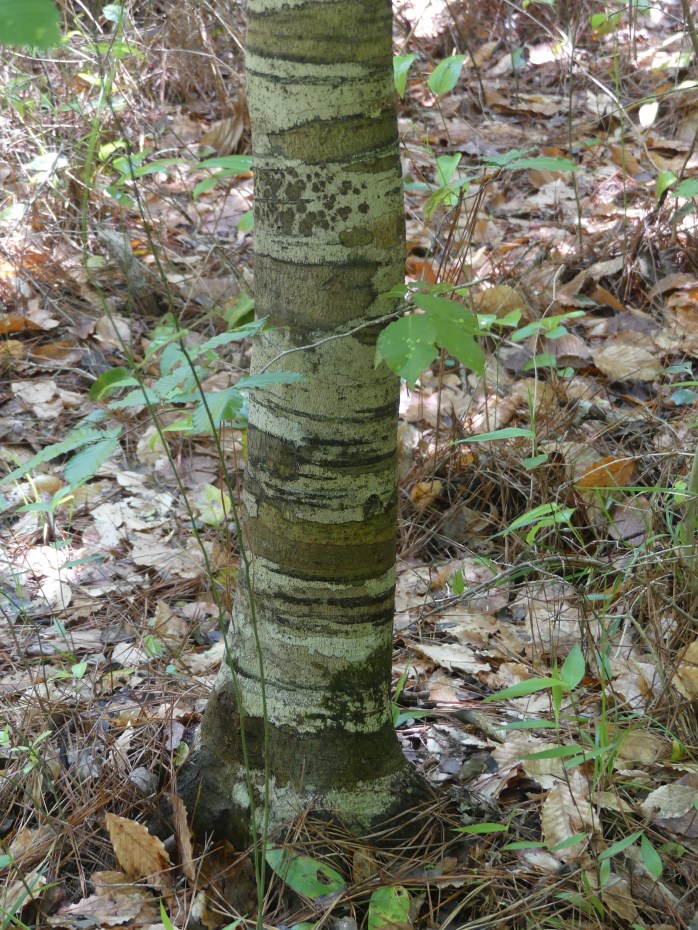
I sat on a bench looking around at the trees, including the occasional fallen tree whose trunk can stretch for a considerable distance through the forest. I listened to the breezes in the crowns of those trees and the birds calling back and forth. Sometimes I could empty my head and focus mindfully on these experiences, noticing them almost as if for the first time, without commentary or comparison with other years. At other times I did reflect on the span of time during which I’ve been able to come here, and how fortunate we all are that this place persists over the decades and will not be cut and cleared for a store or to plant a monoculture of slash pine for harvesting.
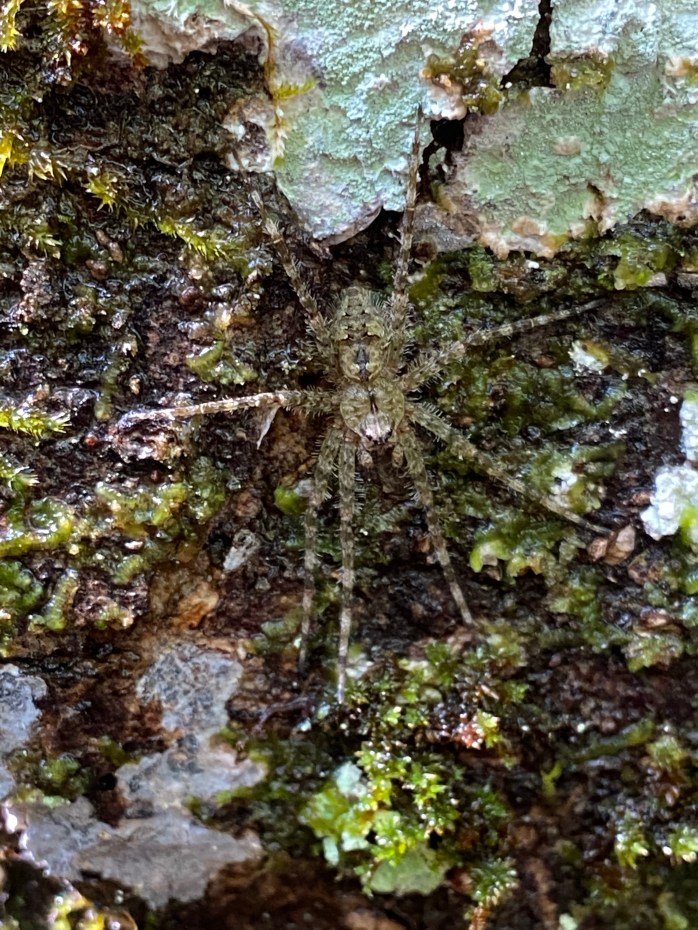
Meghan and I also wandered along the trail, taking in everything around us from big trees to invertebrates like a fishing spider who remained motionless, tucked back into the bark, lichen, and tiny mosses growing on a tree trunk. It is best to go slow, give yourself plenty of time to discover these things by wandering a little and then stopping. I agree with Meghan’s assessment: it’s good to really see what’s in front of you, “and if it takes all day, it takes all day.”
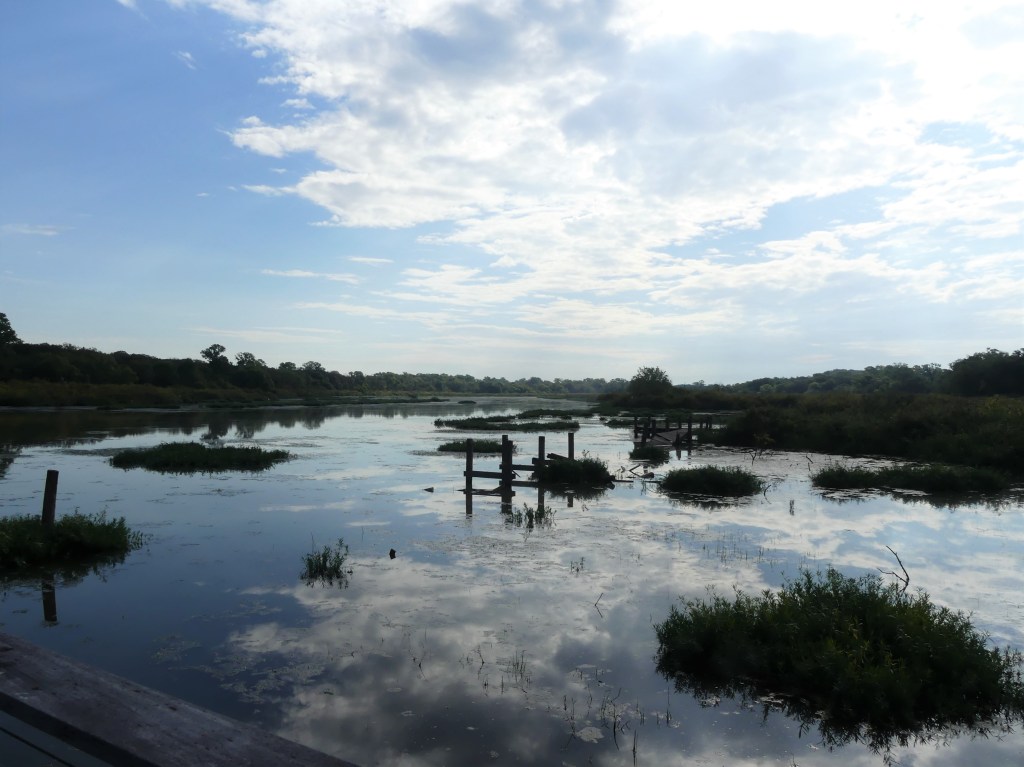
We came to a bridge that crossed a slough, a sort of swampy little wetland flowing toward Village Creek. Sitting on the edge of the bridge, we could take photos from between the rails or just lean on them and imagine floating on this lazy stream through the forest. We spent a while lost in the sights and sounds of the slough. Much of the surface reflected the tree trunks and leaves like a mirror. I focused on an area of this reflection and was completely absorbed in how the occasional dropping of a leaf or small insect would set up ripples through the beautiful reflected image of the woodland. After a time, I decided to lie on the bridge between the water and the sky. Clouds passed overhead, and there was a sense of floating, a sort of suspension between the slow current of water below and a flowing stream of air above.
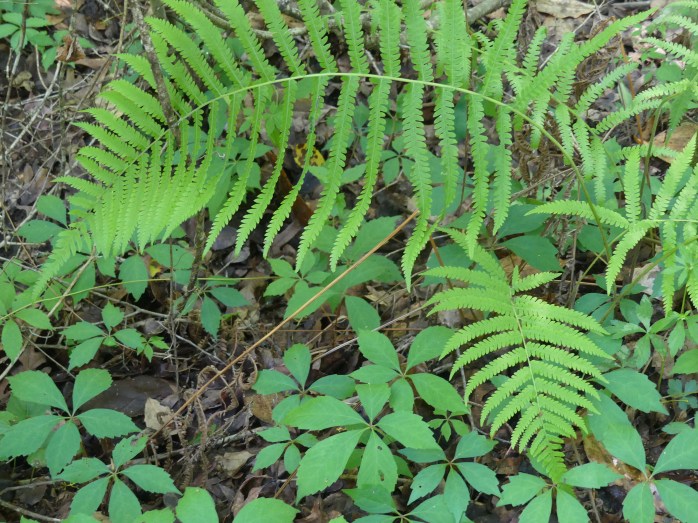
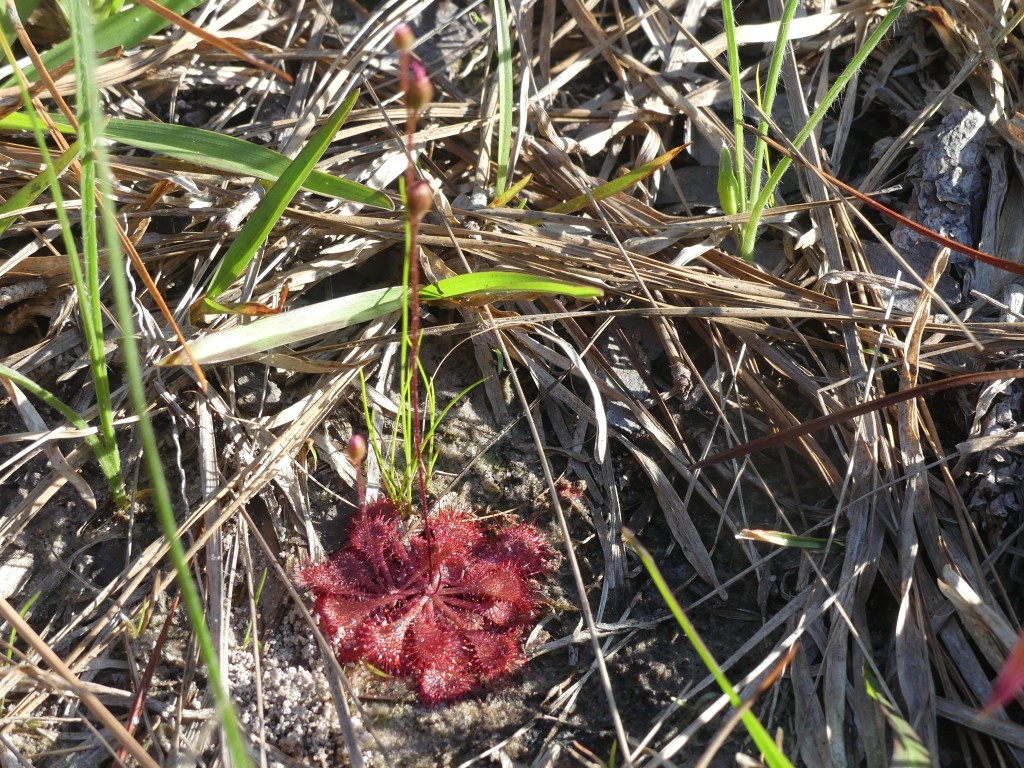
In the afternoon we visited the Hickory Creek Savannah Unit so that we could walk the Sundew Trail. This is a short trail through ecosystems such as the Pine Savannah Wetlands where scattered pine trees tower over several species of ferns as well as pale pitcher plants and sundews. In other areas, water seeps through thickets of azalea and other shrubs. The sundews are miniature ground-hugging plants with flat, reddish leaves covered in sticky hairs. When a small insect touches those hairs, each of which ends in a dab of glistening, dew-like goo, it is stuck and ultimately digested.
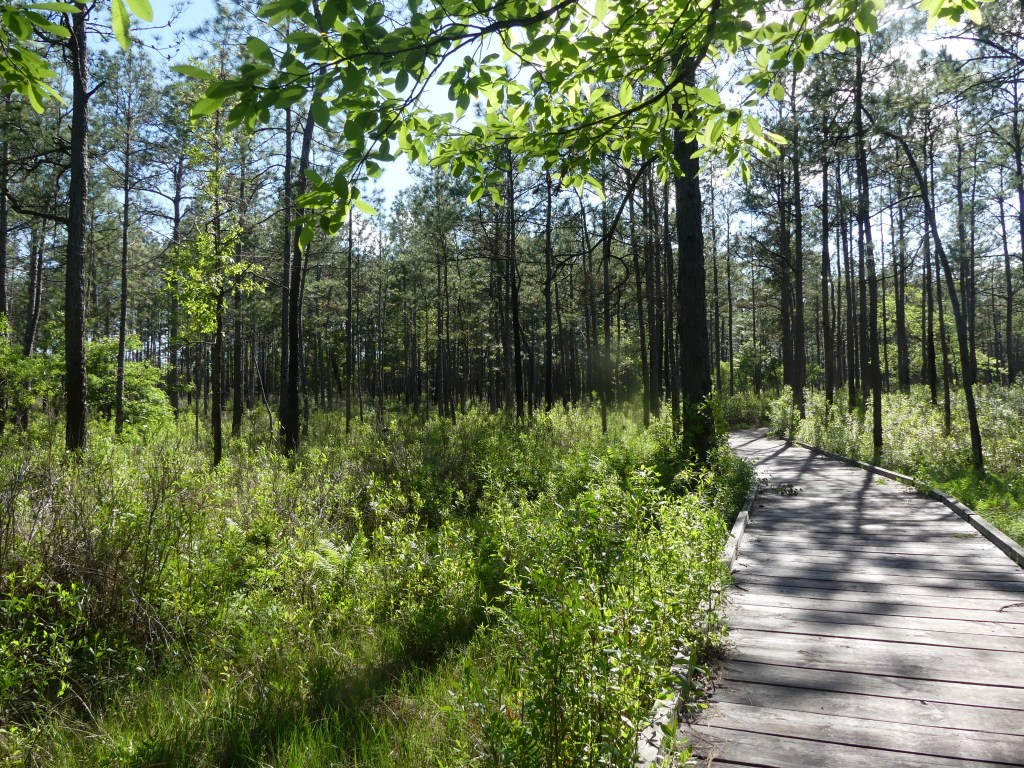
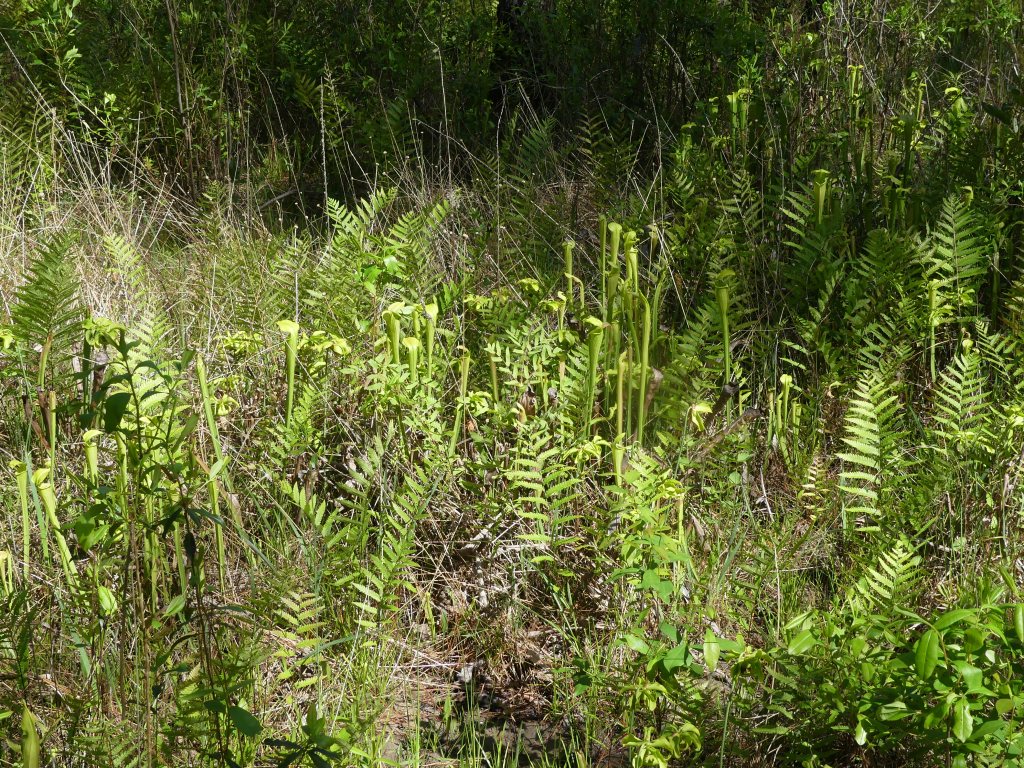
We walked along the boardwalk and stopped for a while in one of the more open areas to sit quietly and watch the floating, darting flight of dragonflies among the scattered pine trees. There was barely any noise from nearby roads, and so we enjoyed the quiet space within which bird song and breezes in pines sound so incredibly sweet.
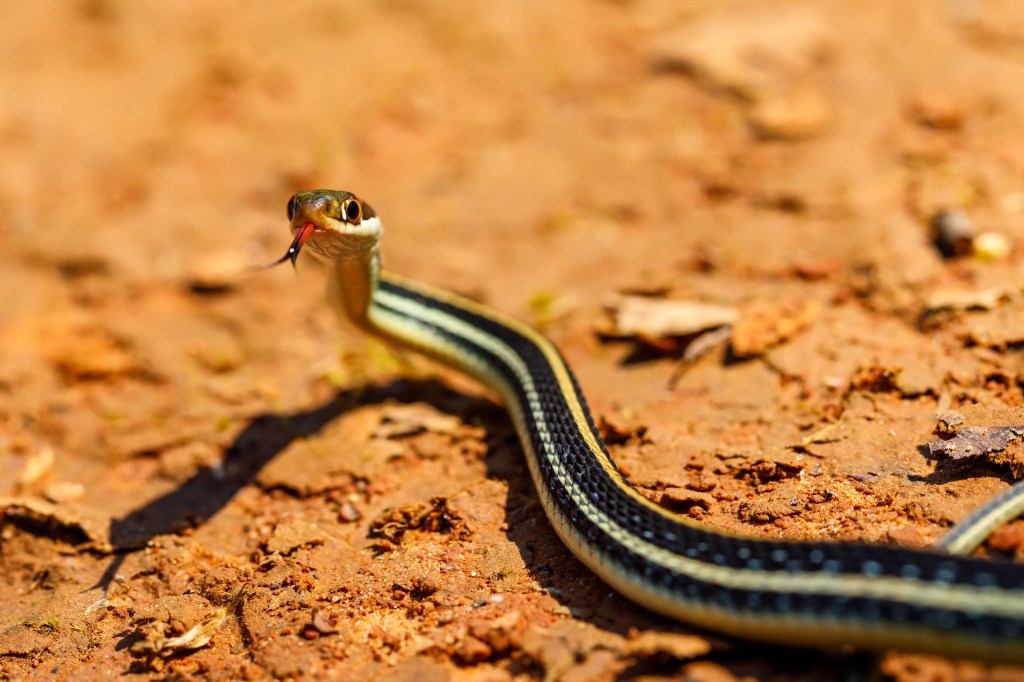
At the end of the day we wanted to see what reptiles and amphibians might venture out. Right away we found a young ribbonsnake, a common and beautiful species. Despite the cool night and nearly full moon, it was going to be a good night.
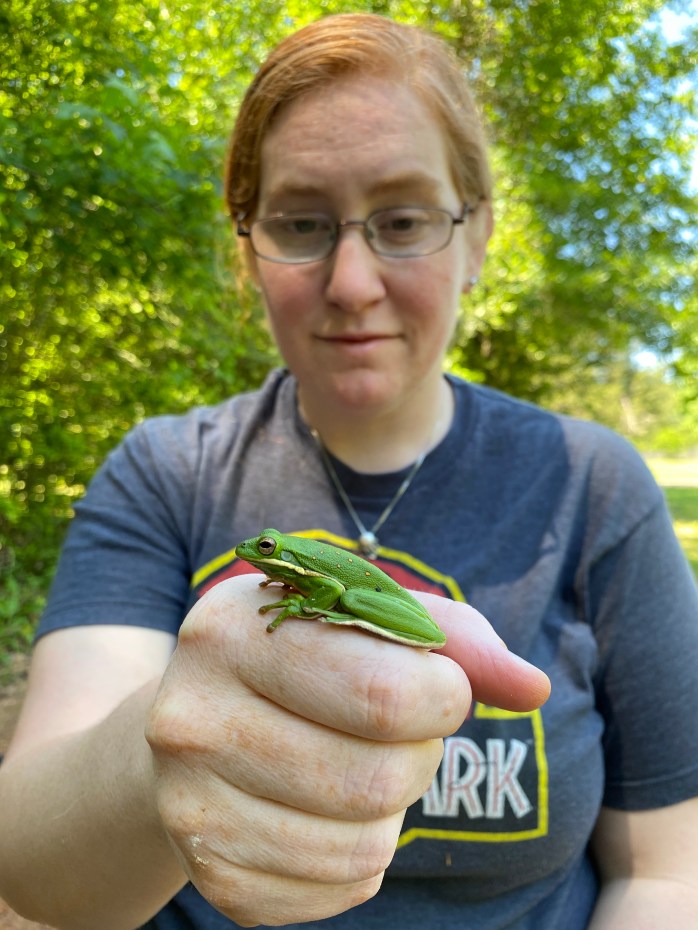
Frogs were calling again as we made our way along the sandy and muddy back road, east of the Preserve. We could have mapped the wetlands in the dark just by noticing where we found big choruses of frogs. Some of them were dominated by gray treefrogs, but in other places the dominant voice was that of the green treefrog. While the former is a slightly flute-like trill, the latter is a sort of repeated quacking. It seemed to me that it resembled a big, intense gathering of space alien ducks whose quacking was a little too metallic and nasal to come from a real duck. Never mind all that, it was once again mesmerizing to stand in the dark and let all that amphibian energy surround you.
Roadside ditches were filled with water from the previous night’s rain, and in places the water contained juvenile bowfin from nearby flooded creeks. These little fishes may have been part of the reason that snakes were out hunting the ditches. We found a young broad-banded watersnake and a juvenile plain-bellied watersnake swimming in the narrow waterway at the edge of the road. Then Meghan found a baby cottonmouth, reddish and banded in its juvenile coloration. They are often confused with copperheads (to which they are related) because of those wavy bands. Meghan aptly described the young cottonmouth’s bands as looking more “pixelated” than those of the copperhead, and they are somewhat more ragged-looking.

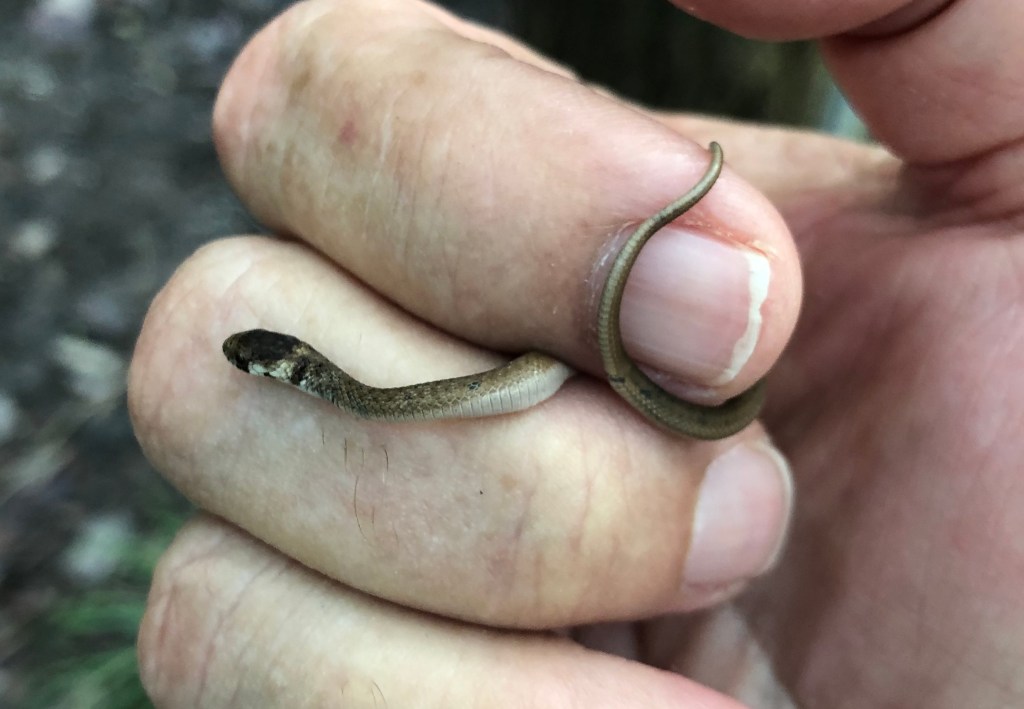
The last snake of the evening was a beautiful DeKay’s brownsnake, paler than we usually see in north Texas. This one was another reminder of how the more common snakes, even those without bright patterns, can be interesting and attractive.

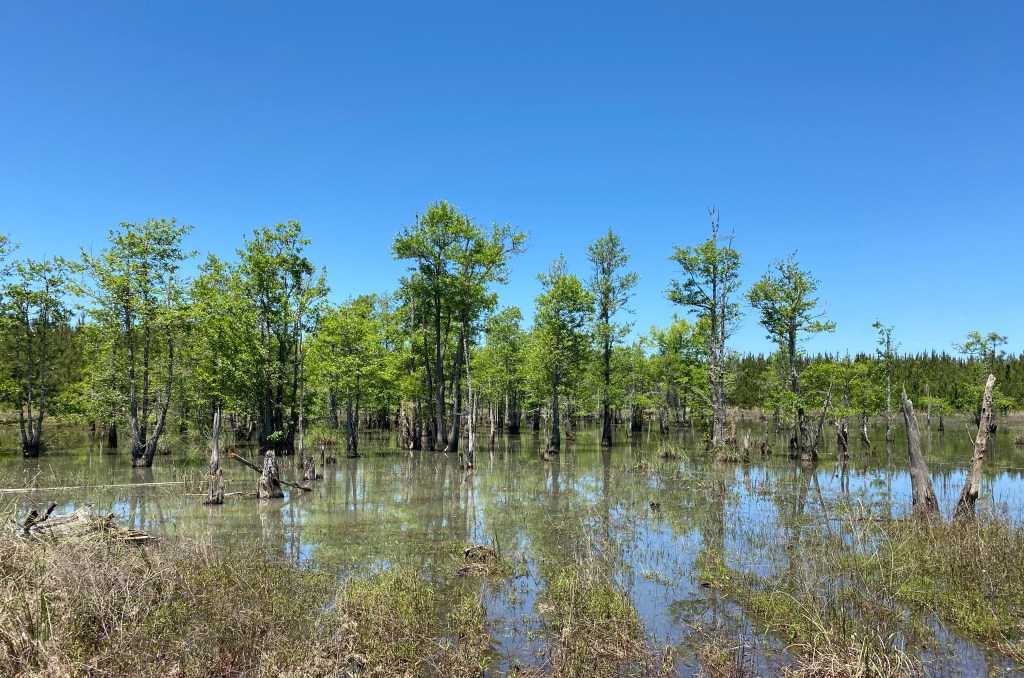
Next morning, we re-visited the road to release animals we had held overnight for photos. We did not see more herps on the road, but did get to see some of the wetlands where frog choruses had been focused.

 Our Lives In Nature