Our responses to losses and extinction of our fellow creatures should reflect our complete selves, not just what we make of the losses intellectually but also how they resonate in our hearts and souls. When a species is gone, it should pull from us something beyond what is measured in statistics. Birds do that, as you can hear in the magnificent elegy by Christopher Tin, called The Lost Birds. It’s a collection, a heartbreaking instrumental theme memorializing the Passenger Pigeon (“Flocks a Mile Wide”) and songs, some with original lyrics and some drawing on others’ poems such as “Hope is the Thing with Feathers.” Those lost birds, our distant relatives, deserve memorials such as this.
Of course, it’s not just birds. Many of our other animal relatives are disappearing, and some of them have eloquent advocates. Wolves have passionate defenders, and even the Monarch butterfly inspires legions of helpers planting milkweed for their caterpillars.
Amphibians and reptiles have captured my interest and affection all my life. A great many are declining, and the loss of many amphibians has been deemed an extinction “crisis.” At least, it’s a crisis as seen by herpetologists and some others. Turtles are disappearing, too, along with many reptile species.
You can see where I am headed. No elegies for the disappearing Louisiana Pine Snake or the Yangtze Giant Softshell Turtle. Our culture does not elevate them in that way. The flight of birds symbolizes freedom for us. Our cultural stories equate birds with hope; a dove with an olive branch signifies peace, and those feathered wings remind us of angels. The snake, in Western culture, brings up temptation, fall from grace, and being condemned to crawl on the belly. We have to look elsewhere, like Asia or Indigenous Americans to find some positive cultural meanings.
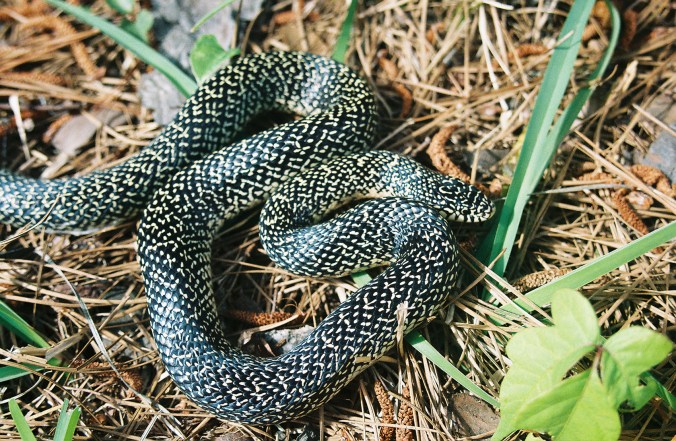
Speckled kingsnake
My point is not a resentment of birds, just a wish that we could do for other animals what we’ve done for birds. I wish we had stories and images in our culture that found more positive inspiration and affection for the animals without beautiful songs and wings, with no soft fur or expressive eyes. It would make it easier for us to find room for them in the family of living things. It might give a little boost to our willingness to go out of our way to conserve them, and maybe we would need fewer elegies.
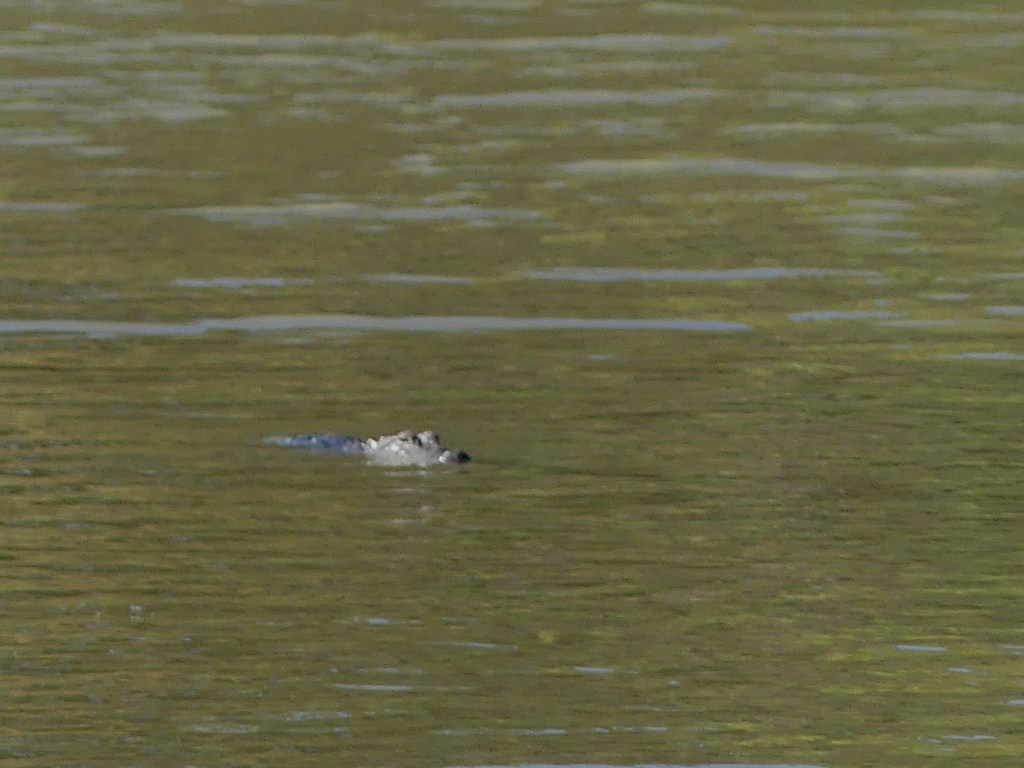
An American alligator (Alligator mississippiensis) seen by the group on our first field trip
It is fun to learn some of the details about the reptiles and amphibians that live in North Texas, getting a grasp of how they live in woodlands, marshes, and other places. It’s great when people get comfortable being around these animals and understand the conservation challenges they face. Those have been my goals as I’ve been teaching a great group of people about reptiles and amphibians (herps) and how to look for them in the field (herping).
Almost all the participants are Master Naturalists, so they start with a certain level of understanding about nature and wildlife. Because I teach incoming trainees for a couple of Master Naturalist chapters on the subject of herps, I had already met some of these folks. But two or three hours introducing herps seems like just scratching the surface. So I came up with a plan that involved four class sessions and several field sessions.
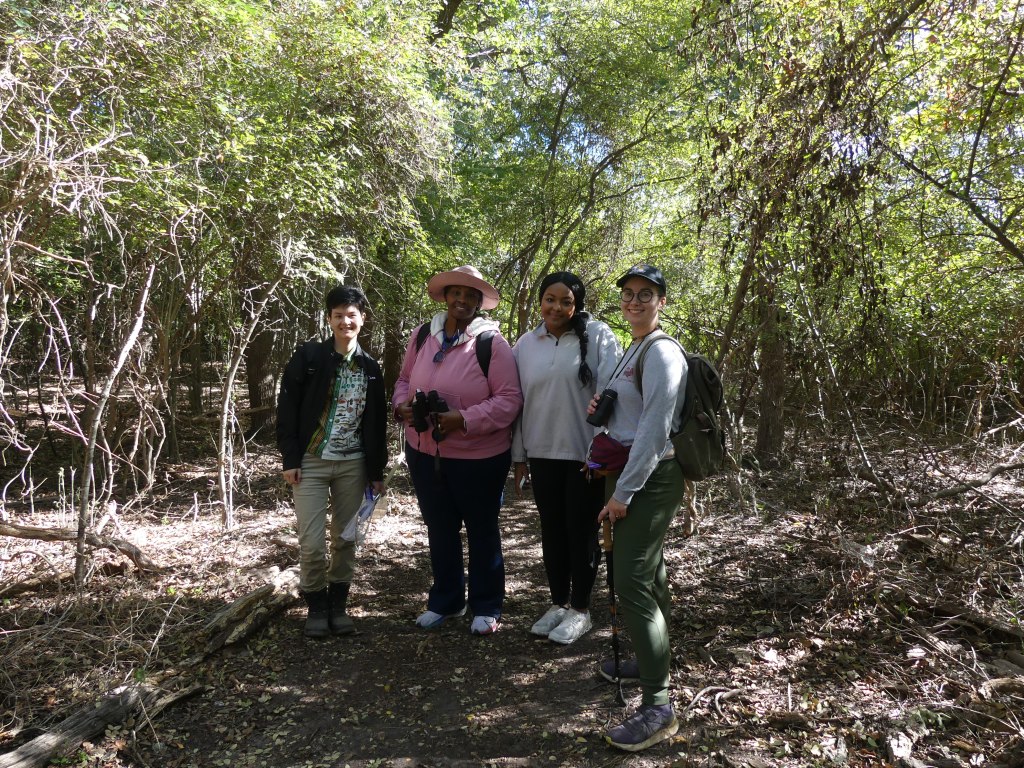
Alex, Kristina, Triniti, and Alaina
I have offered it in October and November as a sort of trial run. This is not exactly prime time for finding herps in North Texas, though we’re doing OK. We’re grateful to Fort Worth Nature Center & Refuge for offering facilities and time in the field. In the first session, after we talked about some basic concepts, Dr. Jared Wood (Natural Resource Manager at the refuge) shared some of his knowledge of the American alligator. He has been studying these reptiles in southeastern Oklahoma and will continue the nature center’s research on the alligators of Lake Worth.
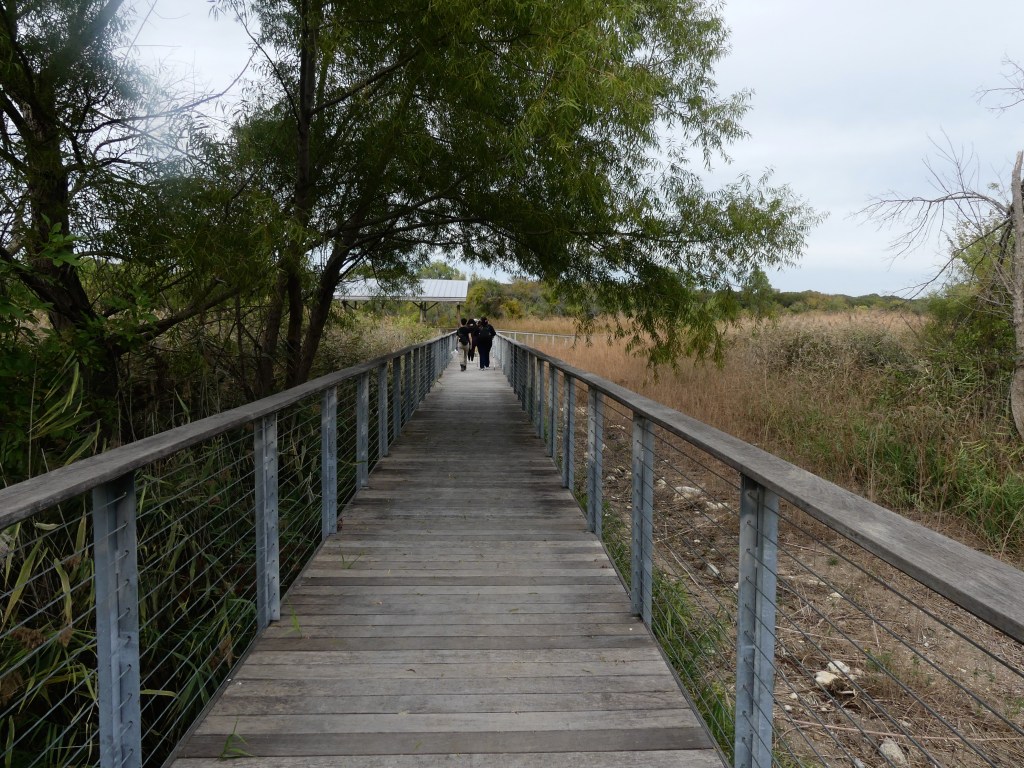
We then headed for Greer Island to look for good herp habitat. While walking down the causeway, members of the group spotted a small American alligator cruising along a few hundred feet out in the water. What a wonderful follow-up to the discussion by Dr. Wood!
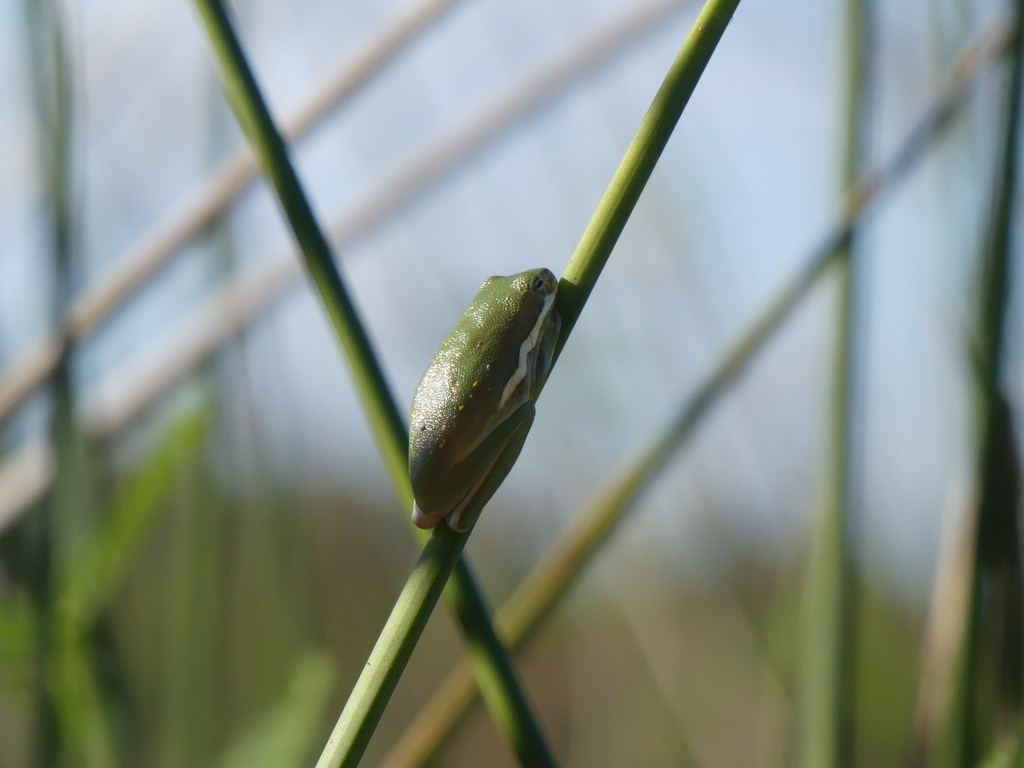
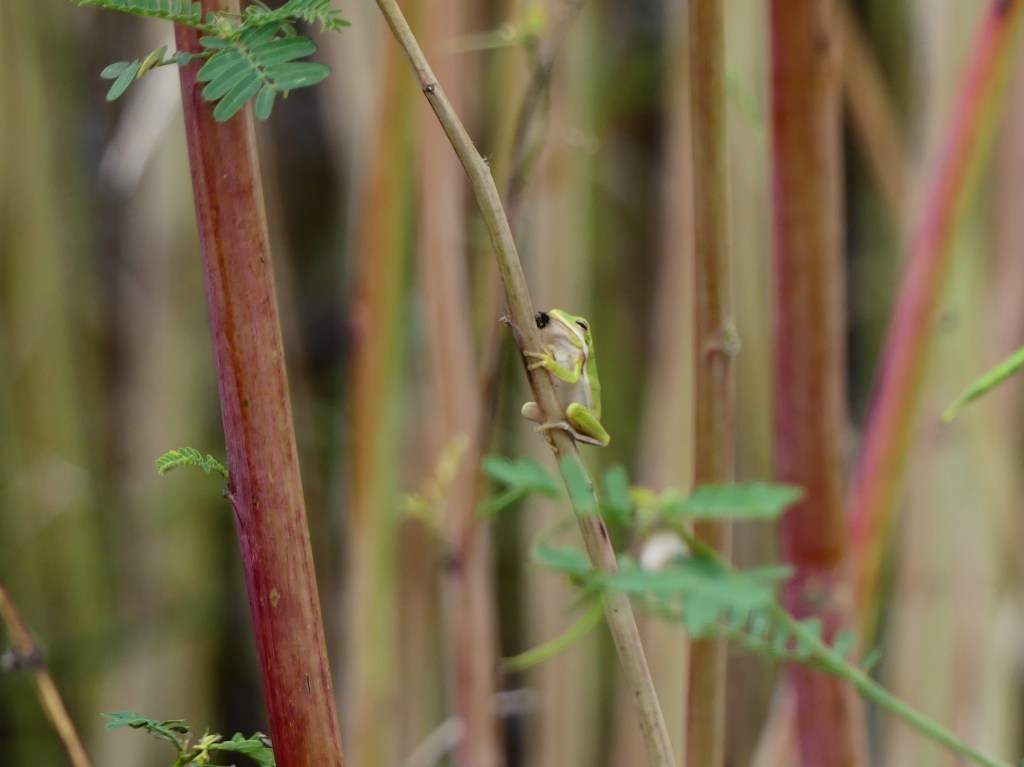
Green treefrog (Hyla cinerea)
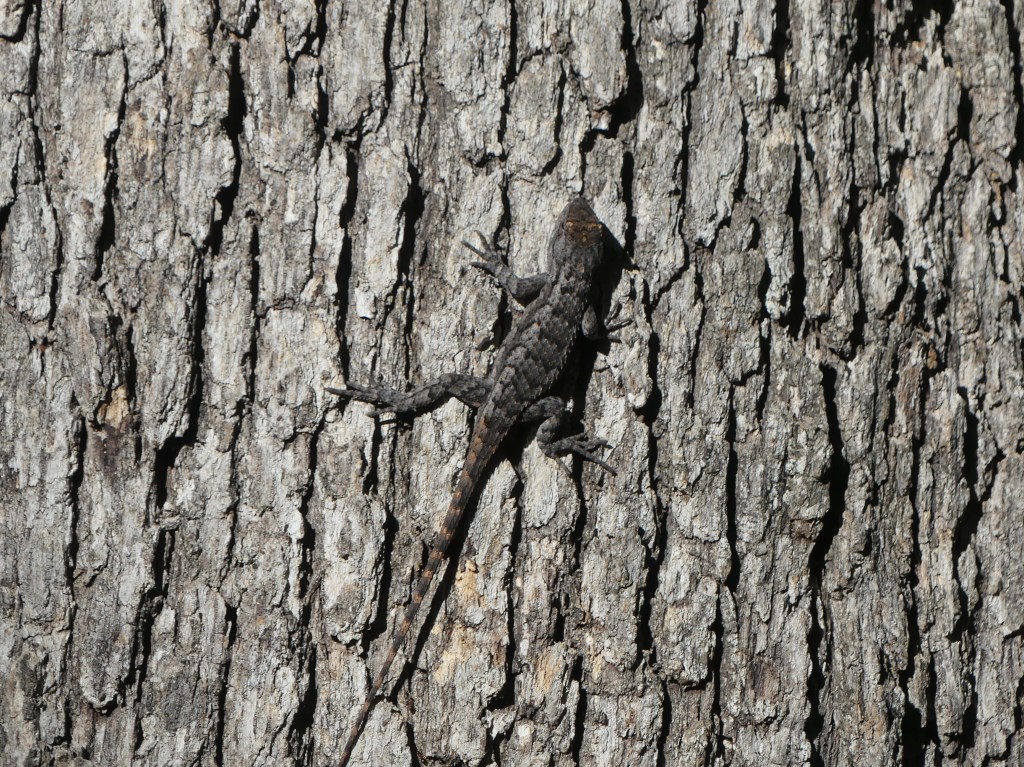
On the island, we wanted to see what we could find without damaging habitat or collecting anything. Our goal was to identify fallen logs that offered good refuge underneath and could be investigated without tearing them up. We also talked about what species would more likely be seen in spots like the water’s edge among tall reeds, or dense mid-story vegetation in the woodland. We did not really expect to see much on a cool October day, but these are very observant folks. We found a little brown skink, a green treefrog sleeping on a reed at the water’s edge, and a Texas spiny lizard before we were done.
Texas spiny lizard (Sceloporus olivaceus)
In our next session we focused on the amphibians of North Texas. We are fortunate to have a number of frogs and toads, and even a few salamanders (occasionally seen in a few locations). We talked about diet, drinking through the skin, secreting toxins through the skin that may confer some protection from infection as well as from some predators. We talked about frog calls and played audio samples of many of them. And then we headed out into the field.
The group, on their way to finding frogs and toads at the marsh
One of our goals was to practice the amphibian monitoring protocol that involves systematically listening for frog or toad calls, identifying for each species whether we heard a few individuals (isolated and non-overlapping calls, which would be Call Index = 1), a larger group (numerous overlapping calls but you can identify individuals calling, which is Call Index = 2), or a full chorus (lots of overlapping calls and individuals cannot be identified, Call Index = 3). The end of October was not the best time for frog breeding, so we were not surprised when we did not hear any calls.
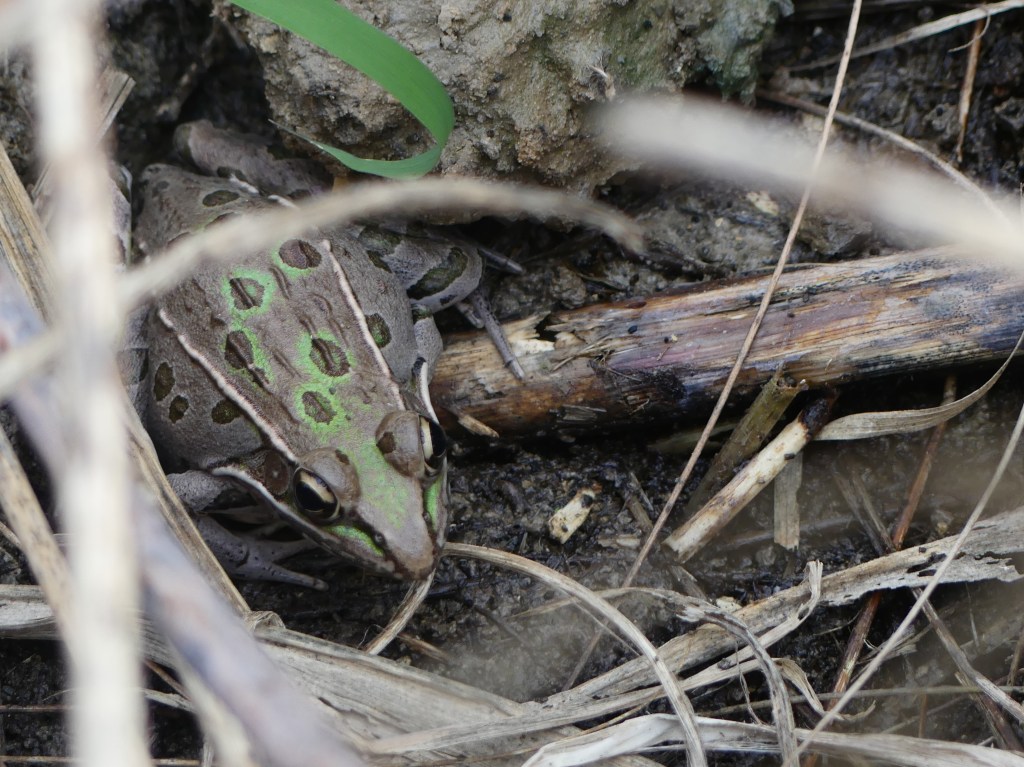
But earlier we had seen several species; they were present but not breeding. People in the group saw leopard frogs, and then we found a small green treefrog. As we watched, it spotted an insect, then jumped, caught it and gulped it down. More green treefrogs were seen, and Alex found a juvenile western ribbonsnake and a couple of cricket frogs. Sheryl found a Gulf Coast toad.
Young green treefrog, in the moment just after catching a “bug”
We’ll turn our attention to turtles next, and in the last session tackle lizards and snakes. To get some good field time for these last species, we may have to reconvene next spring when snakes and lizards are more active.
I’m having a great time getting to know this group of herpers and sharing what I know. They are showing me what good observers they are, and how willing to ignore some mosquitos as we sit in darkness, listening for frogs. Kristina held a snake for the very first time. Some of them are interested in volunteering in the nature center’s alligator research efforts. All of this is great news for reptiles and amphibians and for the broader natural world.

 Our Lives In Nature