Connection and Compassion With Lives Unlike Ours

An article at a UC Berkeley website reports that “We are currently losing species hundreds or thousands of times faster than normal background extinction rates. If this continues, Earth’s biodiversity will plummet.” And biodiversity is a big deal, supporting the healthy functioning of the Earth. Animals, plants, bacteria, fungi, bryophytes – all these lives are interrelated, creating complex systems that keep the Earth going. The way the survival of every species is related to the well-being of the rest makes ecosystems resemble very complicated jenga games. You can remove a few pieces and the structure still stands, but it gets progressively more unstable. It could reach a tipping point in which further species loss brings whole ecosystems down.

Playing Jenga. Photo by Ron Lach on Pexels.com

Slowing the rates of extinction and leaving ecosystems in greater health will depend on us. Among the things we can do is to recognize which species are in trouble and take actions to conserve them. How do we encourage those things? How do we get enough people to care what happens so that they help fund conservation efforts and agree to limit some of the extraction and development so that species can survive?

An important insight from Senegalese conservationist Baba Dioum is:

“In the end we will conserve only what we love, we will love only what we understand, and we will understand only what we are taught.”

We conserve what we love. And it is easier for us to love some species than others. Part of our biological inheritance is that we are drawn to such things as big, expressive eyes, soft sounds and soft touch. And so we want to pick up and cuddle babies, we make cooing noises back to them and describe them as cute. (I don’t want to reduce the love of babies and children solely to genetic wiring, but the wiring helps.) And that response is usually extended at least a little toward cute puppies and kittens. And to baby tigers and bears, wolves and other furry, expressive animals.

Animals with strange faces, fixed expressions, and unusual body forms don’t pull us in so much, unless they are beautiful to look at or hear. A Monarch butterfly doesn’t have a face a human mother would love, but its beautiful wings and flight win our affection. Bird faces are less expressive than those of puppies, but many of us associate wings and flight with such spiritually uplifting things as heaven and angels. And there’s the beauty of their feathers and songs as well.

Reptiles and amphibians are a harder sell. For most people, they are among the less-charismatic animals to worry about and go out of our way to protect. In a world of soft and furry animals like ocelots and wolves with their expressive faces, can turtles or frogs pull at our hearts? Could the handsome colors and patterns of a Louisiana Pinesnake have a place in our affections alongside the lovely feathers of a Golden-cheeked Warbler? Could the nighttime calls of a Gray Treefrog have a place alongside the songs of Bewick’s Wren? For me, the answers are all “yes.” Part of the wonder of the natural world, and a key to its magic, is the diversity of forms, sounds, colors, and lives. Everything belongs. It’s the natural world’s equivalent of the way some of us talk about human inclusion: “Y’all means all.”
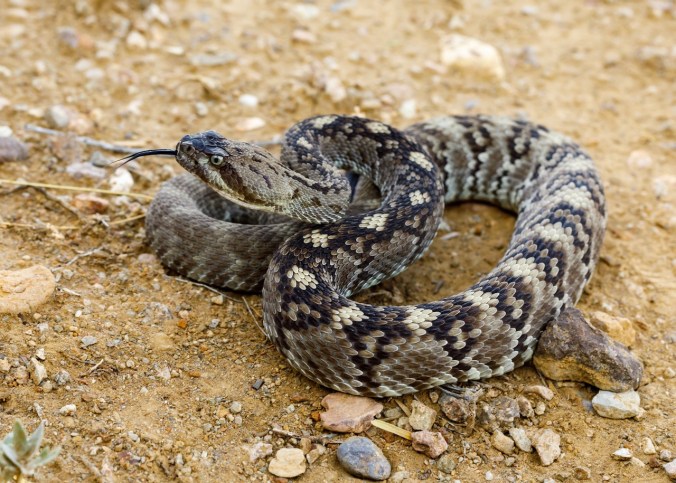
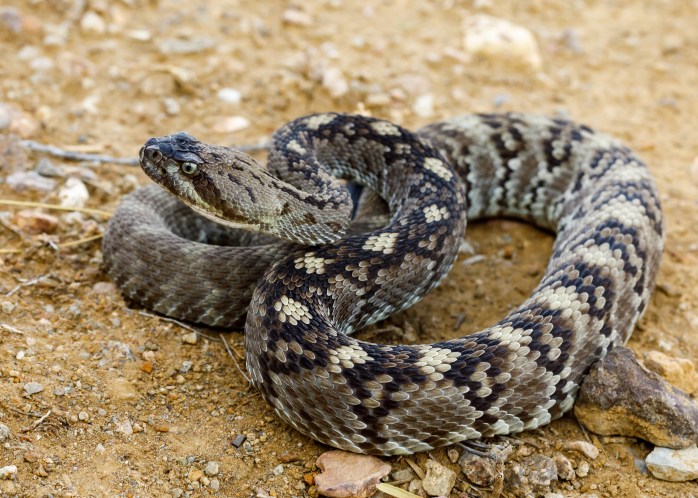
A black-tailed rattlesnake, whose very different face and body form, not to mention being venomous, might make it harder to see its beauty (photo by Meghan Cassidy)

It is important to consider why all of this matters, and why “y’all” should be interpreted so broadly. Everything matters because of that ecosystem jenga game mentioned earlier. And what about the tangible benefits that many species provide for us?

We are accustomed to environmentalists citing the many ecosystem services that various species provide, including cleansing the water and air, providing food, controlling agricultural pests and pollinating crops, breaking down the tissues of things after they die and returning nutrients to the soil, making new medicines possible, and so on. I’m grateful for all those ecosystem services – glad that the Earth and all those living things take care of us. The problem is when we take and do not give back, when we place ourselves at the center of everything. Believing that everything revolves around us is part of how the Earth got into so much trouble. We matter; humans are a part of all that glorious biodiversity, but the rest of the Earth matters, too, even when we don’t seem to get anything out of it.

The old story tells us that the Earth was given to us to use as we wish. That story led most of us into a relationship with the world in which we are the shopper and the Earth is the store as well as the sewer. We are the owners and the planet is our house, to be remade as we would like it. But there are other stories, other wisdom. We might find truth in the ones saying that all those other lives are our brothers and sisters, that we are all related such that when we treat others with respect and affection, we get a great deal in return. In that story, told by many Indigenous cultures, the world operates based on reciprocity and love, and when that breaks down, things fall apart. You can find a beautiful exploration of those ideas in Robin Wall Kimmerer’s recent book, The Serviceberry: Abundance and Reciprocity in the Natural World.

Those beloved, despised, ignored reptiles and amphibians provide beauty, pest control, medicines, and cultural meaning – and regardless of what they provide for us they have value. They are members and sometimes key players in communities of plants and animals. The great ecologist Aldo Leopold taught us that none of the members of ecosystems can be discarded:

“If the land mechanism as a whole is good, then every part is good, whether we understand it or not. If the biota, in the course of aeons, has built something we like but do not understand, then who but a fool would discard seemingly useless parts?” – Aldo Leopold, Round River

For those who see the world through a spiritual or religious lens, the quote carries the same wisdom. It changes only how we name the creator; substitute “God” or “Great Spirit” for “biota,” and discarding the parts still seems foolish and arrogant.

So if we conserve what we love, and we love what we understand, how do we bring about that understanding? It’s through experience and information, the teaching that Dioum mentioned. The more time I spend with rattlesnakes, for example, the more I am able to notice how they move through the world without malice (though their bite is dangerous if threatened), but rather with curiosity and skill. We increasingly read researchers’ accounts of problem-solving ability and maternal care. In Tracks and Shadows, herpetologist Harry Greene reports on observations of baby rattlesnakes staying with their mother, basking together, and retreating behind her if disturbed. Then, after their first shed skin, the babies disperse and mother finally has a chance to hunt for a meal (Pp.165-166). With information such as this together with my own field experience, I have plenty of respect for and caution around these animals, and also considerable affection.

It is not necessary to seek encounters with rattlesnakes or read extensively about them in order to support their continued existence. But some level of familiarity, some acquaintance with wildlife and nature is needed. The more we understand the lives around us and the places they depend on, perhaps the more we will understand the importance of the whole thing. We need to hear the stories and hopefully have firsthand experience with some of the hard-to-love, non-charismatic wildlife, showing us that they, too, have some of the qualities that stir our compassion and empathy.
Mindfulness, Mountains & Snakes in the Big Bend

A few weeks ago, it was back to the Big Bend region with Meghan Cassidy for one of the last trips for the book on mindfulness in nature. I’ve made a number of trips there during the past twenty years, and my attachment to and fascination with that region keeps growing. I felt really fortunate to introduce Meghan to the Chihuahuan Desert and the mountains out there.

We stayed in a cabin at Wild Horse Station, just a little bit north of Study Butte near the Christmas Mountains. There are extruded columns of lava and thin soil where scattered desert plants grow. It is a strange and beautiful place, and that cabin on the hillside has a broad porch that looks out toward more hills and mountains to the west. This trip included some times for sitting on that porch, watching rainstorms or sunsets, and writing. I’m very grateful for that porch and for those moments.

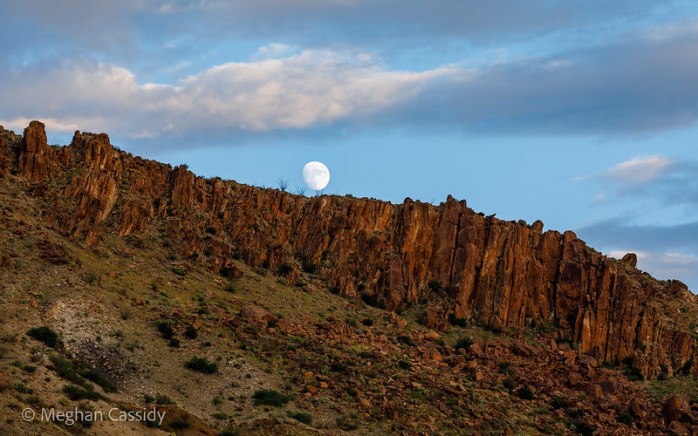
A ridge just behind our cabin, at moonrise. Photo by Meghan Cassidy

In the early years, my visits to this region were very focused on finding snakes and other reptiles, although my companions and I always knew this was a place to be savored and soaked in. We rarely took much time to do it, and whatever we gained in total snakes seen, we lost in really getting to know the region. Each year has brought a broader interest in the ecoregion and a willingness to slow down and pay attention to more of it. This trip was a combination of mindful attention to the mountains and desert and some very fine observations of snakes.

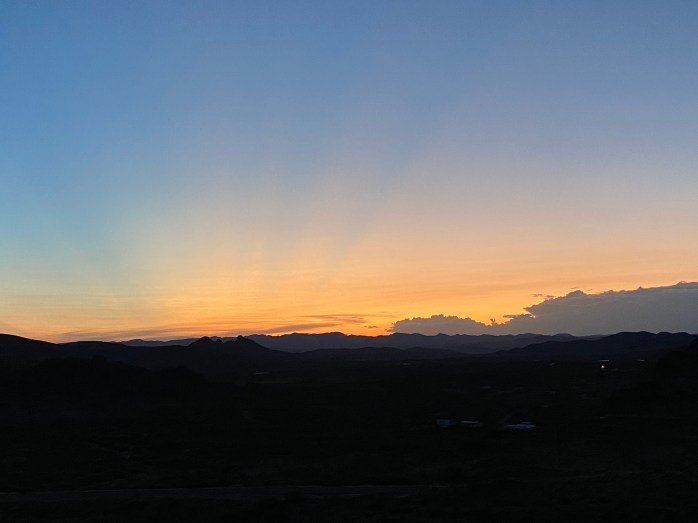
Sunset (photo by M.Smith)

Our arrival at the cabin was interesting. Darkness had just fallen when we walked across the porch to find the front door open and, inside the dark cabin, the television was on. We did the ‘police knock’ standing to the side of the open doorway, and when there was no response – human, javelina, or otherwise, we turned on the inside light and began to check the rooms. I glanced to the side to see Meghan holding a knife, and I knew I had a capable partner out here where there is little phone service and self-reliance is important. Everything was fine; I like to think that a coyote – not the human trafficker but Canis latrans, the trickster of Native American legends – had let himself in, watched a show, and left the place open for us.

In the morning there was coffee, the shadows of nearby mountains with rosy light growing overhead, and that wonderful porch overlooking it all. After a beautiful sunrise, we got ready and headed into Big Bend National Park.

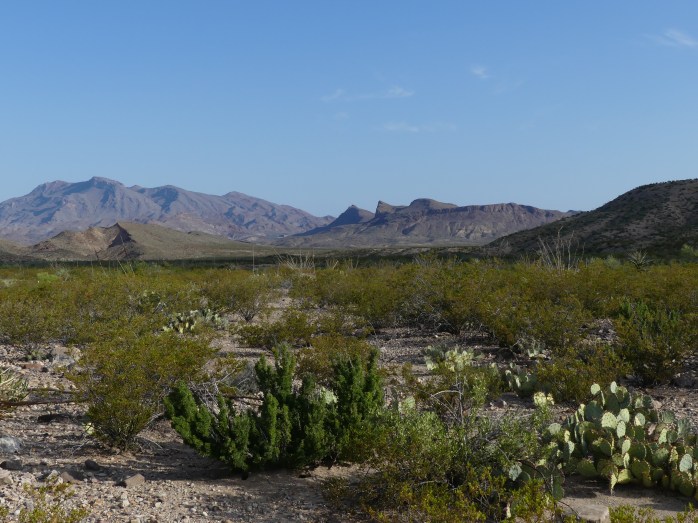
Chihuahuan Desert within Big Bend National Park (photo by M.Smith)

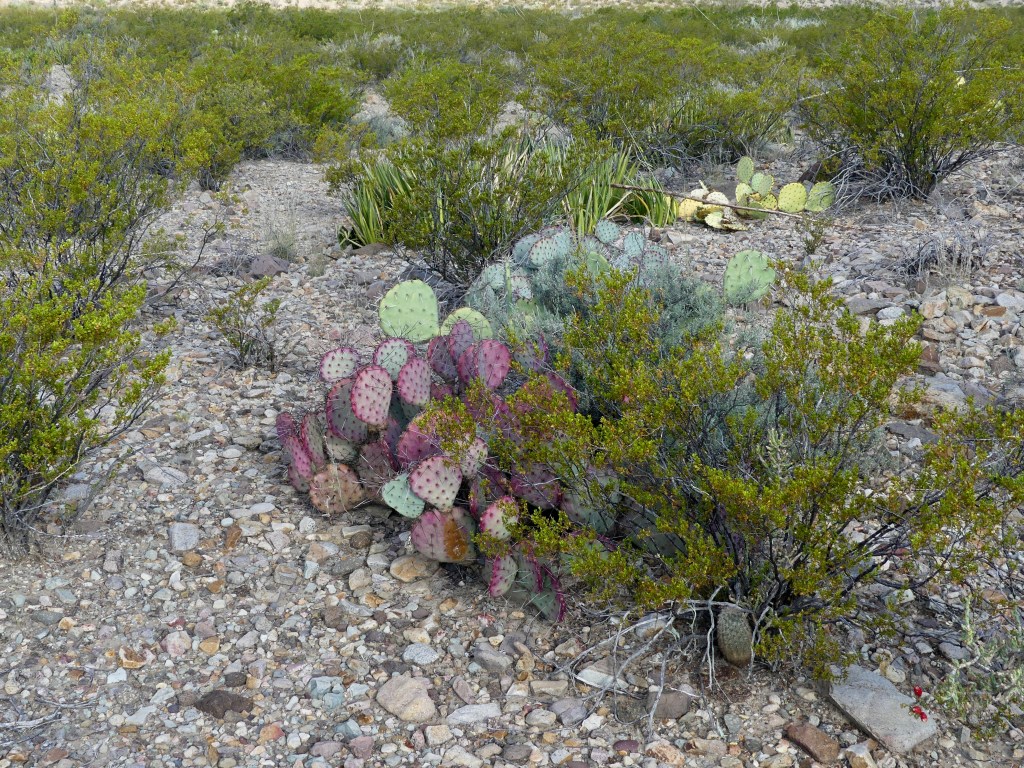
We walked around on the hot, gravelly desert floor, around prickly pear, creosote bush, and other characteristic desert plants. Lechuguilla, an indicator plant of the Chihuahuan Desert, grew in patches of upright succulent leaves. Many had remnants of the tall stalk they send up in late summer with clusters of flowers. The leaves are often described as like an upside-down bunch of green bananas, partly because they often curve inward a little. However, no bananas ever dreamed of having two rows of sharp recurved hooks on leaves tapering to a hard, sharp spine that can even puncture a car tire!

Creosote bush and prickly pear (including the purplish variety) in the foreground, with a patch of lechuguilla behind them (photo by M.Smith)

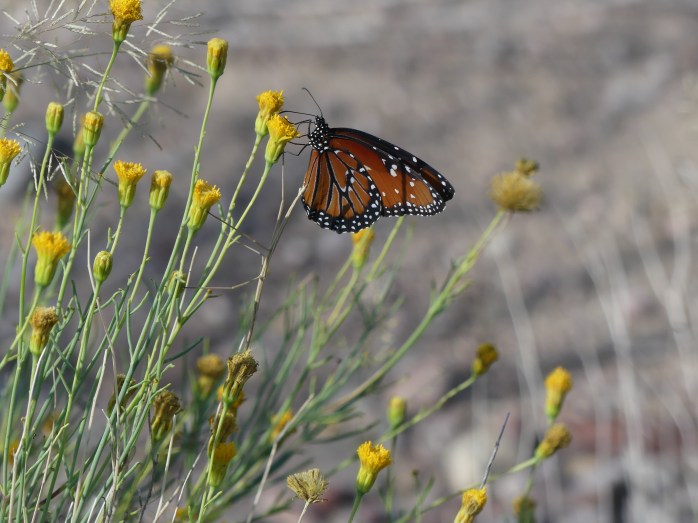
We walked a small dry arroyo as a couple of big black birds flew past. We weren’t experienced enough to call them as Chihuahuan ravens, but from the overall size and chunkier neck, they seemed more likely to be ravens than crows. There were a few places in the arroyo where the sandy soil had piled up and grew a small garden of flowers. Those flowers attracted butterflies. Perhaps they would seem out of place in the desert, particularly if we made the mistake of thinking of the desert as barren. The desert is a harsh place, by our standards, and it requires adaptation to extremes of heat and limited rainfall – but it is full of life.

Queen butterfly in a desert arroyo (photo by M.Smith)

We came back to the cabin during the hottest part of the day, and the shade of the porch and the breeze at the top of our hill made the perfect place for reflecting on our morning and writing about the desert plants, butterflies, and the value of long vistas in which nature has free reign.

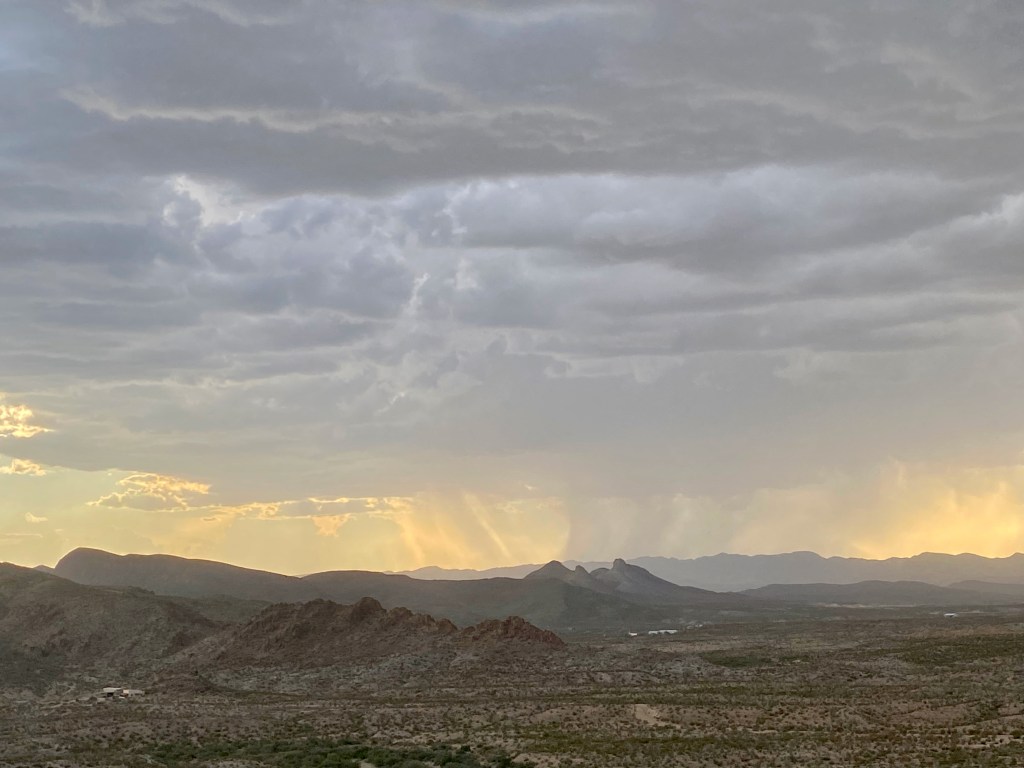
The clouds were building in the west, and under dark clouds were blurs of falling rain. The low rumble of thunder rolled in, and as the system marched toward us, bright lightning was visible as the power of the storm reached down to touch the earth. Announcing the storm’s arrival, the outflow winds were strong and I had to stop for a moment and think how many times this little cabin perched on the edge of the hill had withstood storms just like this. I needed that reassurance as raindrops began to slam into the porch and torrents of rain blew by outside our windows. This is how the monsoon season works in the Trans-Pecos: It’s hot and sunny, then clouds build into storms, the thunderstorms dump a lot of rain (and maybe hail) in a short time, and then they move on and it’s done.

The storm approaching (Photo by M.Smith)

When we walked out onto the porch, the cool air was laden with the smell of rain and creosote. The desert here is full of creosote bush, a shrub with very small green leaves with an aromatic resin and waxy coating that helps protect the plant from drying out. If you crush the leaves, the resin has the familiar, vaguely tar-like smell of treated railroad ties or telephone poles. After a heavy rain, the resin is released into the air and the aroma is strong, fresh and wonderful.

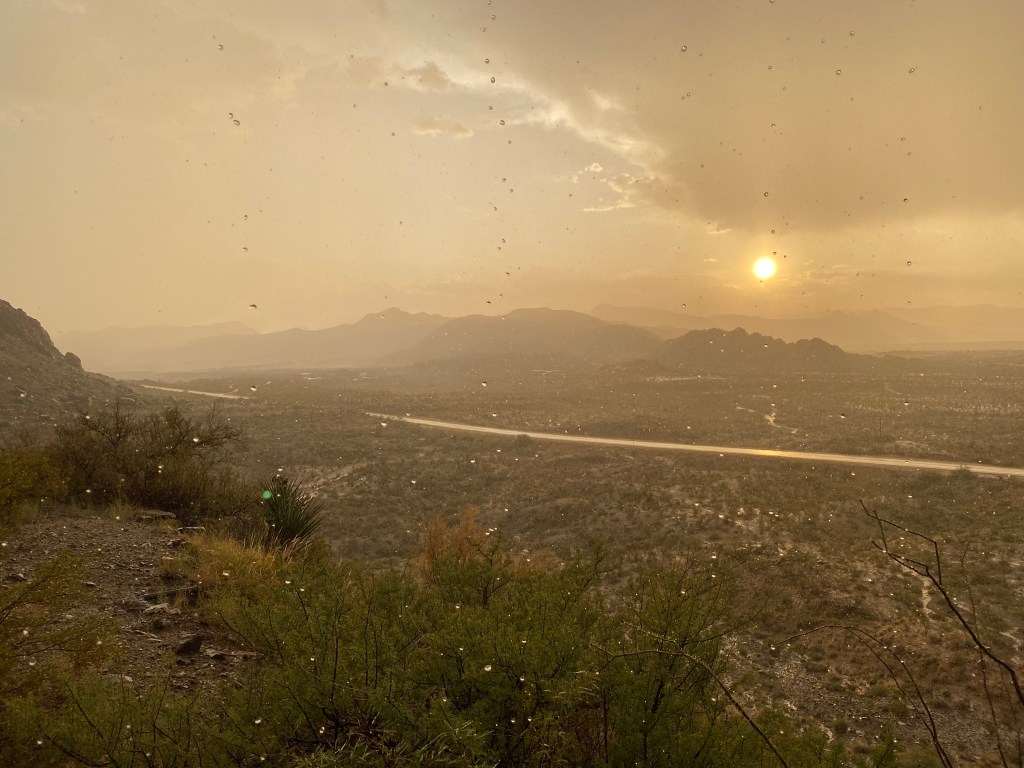
At the end of the storm (Photo by M.Smith)

The next day, September 17, was our day to be in the Chisos Mountains. The Chisos is the only mountain range entirely contained within one national park. Driving up into “The Basin” within the mountains, the vegetation changes, reflecting slightly cooler temperatures and a little more rainfall. As you begin the climb into the mountains, you enter a woodland of small oak trees, junipers and pinyon pine. Tall slabs and columns of reddish igneous rock stretch toward the sky.

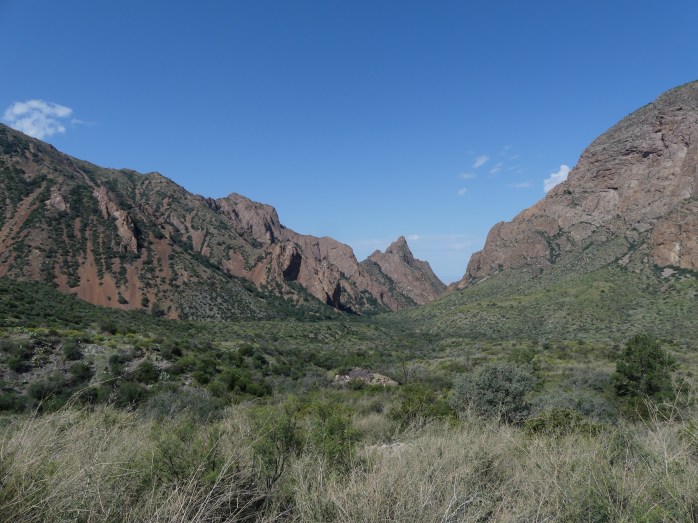
In The Basin (Photo by M.Smith)

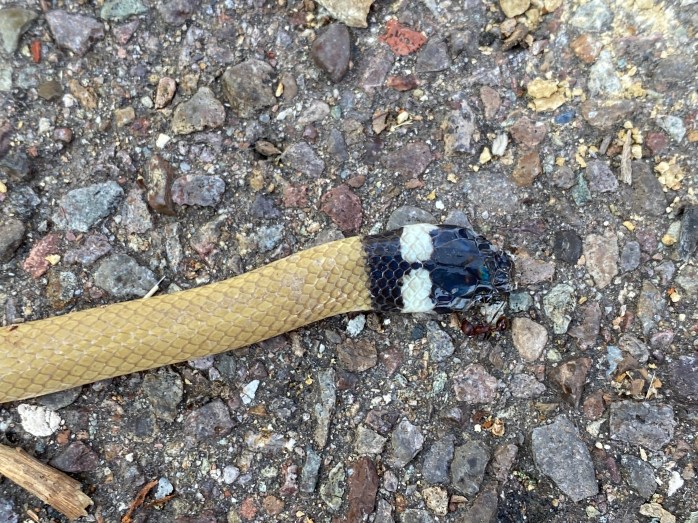
The previous day, driving around the Chisos Mountains Lodge, in The Basin, we had come across a sad, significant find. There was a small snake on the pavement that had been run over some time earlier that morning. There was a dark head with an interrupted white collar behind it, and the body of the snake was a pale tan. This was the first Trans-Pecos black-headed snake that I had come across, and it was a real shame that it was dead. It belongs to a group of snakes with enlarged rear teeth and a salivary toxin to help subdue its prey (but is harmless to humans), and it is the largest species within that genus, Tantilla. It’s still a small snake, often growing no longer than about a foot. It is listed by Texas as a threatened species, but neither that nor its presence in a national park had kept it from being run over.

Trans-Pecos black-headed snake, Tantilla cucullata (Photo by Meghan Cassidy)

Now it was time to climb the Lost Mine Trail up past the Casa Grande peak, to a point where the view opens to the south. The climb is fairly gentle, through mountain woodlands and small grassy openings dotted with beargrass, sotol, and Havard agave. This latter species, also known as “century plant,” sends up a fast-growing stalk at the end of its life with short branches bearing clusters of yellow flowers. The base of the plant is a rosette of thick, stiff, bluish leaves with sharp hooks along the leaf edges and a hard black spine at the leaf tip.

At this elevation it is cooler and there is greater rainfall. In the shade of the mountain there are ferns and beautiful flowers including mountain sage, the red starburst blooms of mountain catchfly, goldenrod, and penstemon. It is easy to stop along the way, on a bench or a boulder, and be still for a while, taking it all in.

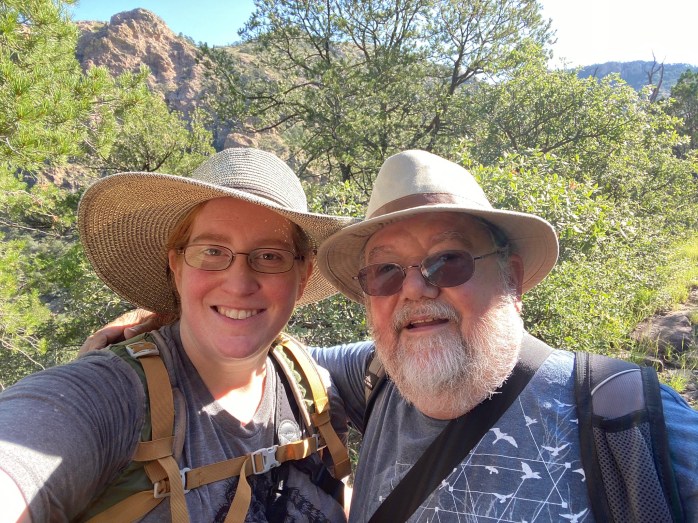
Meghan and Michael on the Lost Mine Trail

This trail in these mountains means a great deal to me, and I’ve written before about what it is like to be here in its quiet and beauty. And when we reached the place where we could look far away to the south, I spent a while under a pinyon pine looking at what I think is one of the great places within Big Bend.

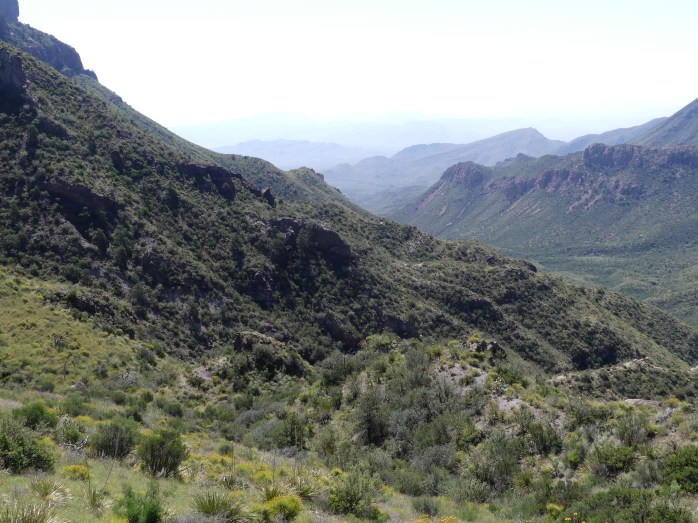
On the Lost Mine Trail, looking south (Photo by M.Smith)

That night, our thoughts shifted away from the book and toward the variety of wonderful snakes that can be found in this area. We stayed along Highway 118 north of Study Butte up through the Christmas Mountains and along the desert flats. Our first snake was a black-tailed rattlesnake that, as I walked up to it, seemed to be ‘periscoping’ up to look around. It turned out to be blind in one eye, and was trying its best to figure out what was going on as we approached on its blind side. Like many black-tailed rattlesnakes, it was slow to get frightened or aroused, and it never rattled or threatened us in any way as we used snake hooks to move it away from the road so that it would not be run over.

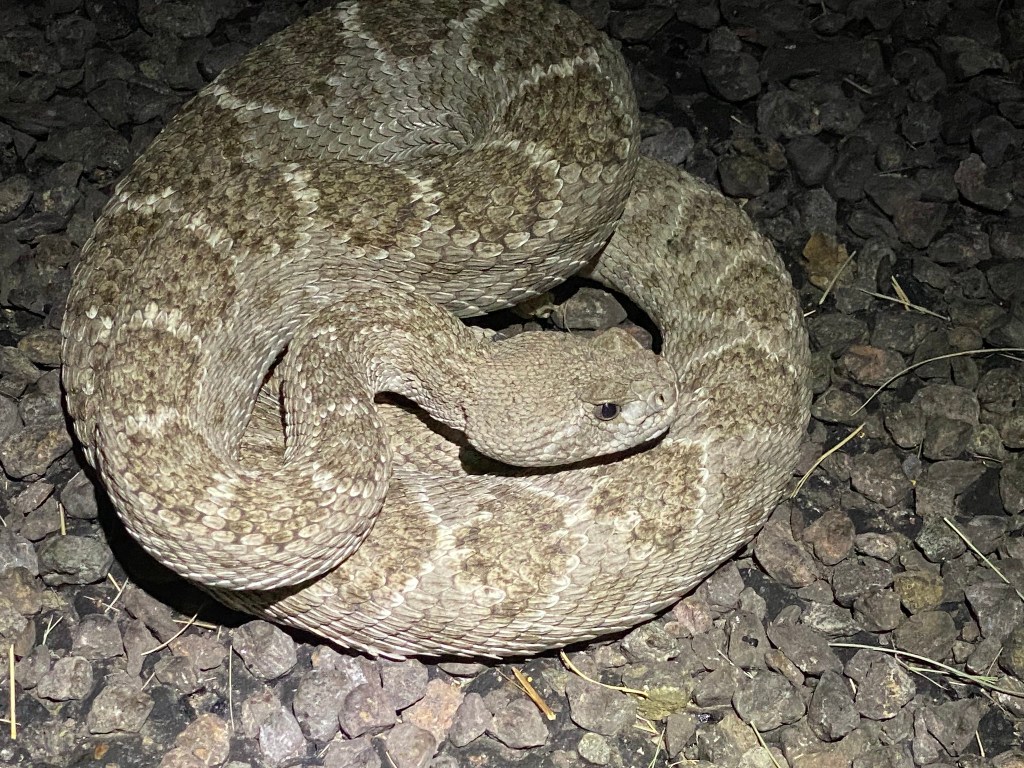
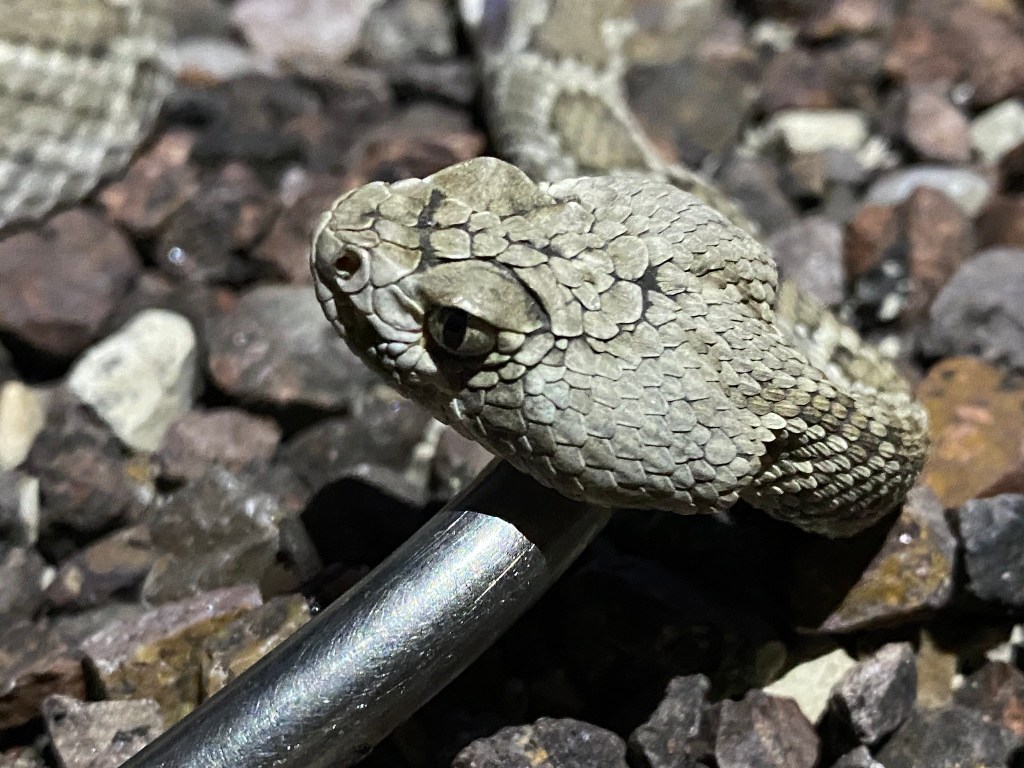
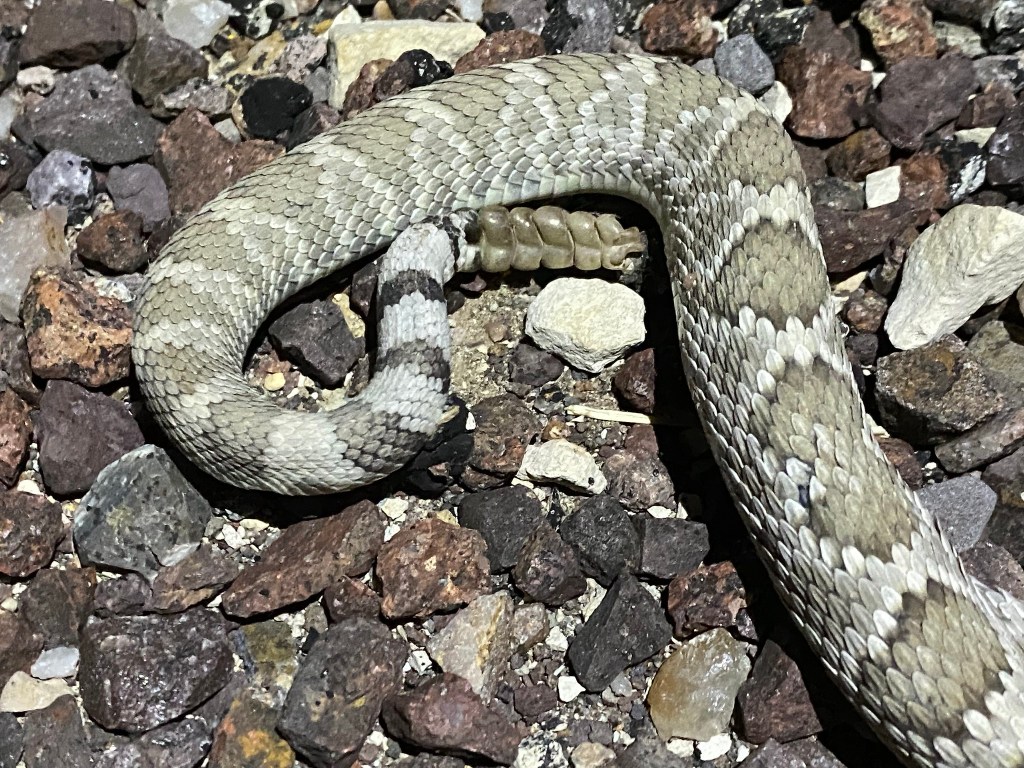
We were on the lookout for Mojave rattlesnakes (Crotalus scutulatus). Meghan wanted to see up close the distinction between this species and the similar-looking western diamond-backed rattlesnake (Crotalus atrox). The immediate visual differences have to do with the width of the black-and-white bands on the tail, the pattern on individual scales, the light diagonal marks on the face, and the size of the scales on top of the head. The rings on the tail of the western diamondback are of roughly equal width, while those of the Mojave emphasize white, with black rings spaced more widely. Both snakes have roughly diamond-shaped blotches down the back, but each scale on the Mojave rattlesnake tends to be mostly one color (resulting in a crisp pattern almost like a mosaic), whereas the colors may transition and almost smear on the diamondback’s scales. The two diagonal lines on the western diamondback’s face both end at the mouth. In contrast, the diagonal stripe behind the Mojave’s eye bends and continues back behind the jaw line. Finally, the scales on the top of the western diamondback’s head (between the eyes and toward the snout) are small. A Mojave rattlesnake has larger scales on top of the head.

Western diamond-backed rattlesnake (Photo by Meghan Cassidy)
Mojave rattlesnake, showing larger head scales (Photo by Meghan Cassidy)
Mojave rattlesnake, roughly the last third of the body showing the pattern of the scales and the wide white areas on the tail (Photo by Meghan Cassidy)

The one Mojave rattlesnake that we found had been run over, unfortunately. We positioned the head and tail for photos to illustrate these differences. This is the snake that folks in the Big Bend may be most concerned about, because populations of this species in Texas and elsewhere have venom with high neurotoxic activity. A bite might produce less swelling and bruising but more systemic effects, including respiratory problems. My experience with living Mojave rattlesnakes is that their temperament varies and, like other rattlesnakes, they would prefer to be left alone and are not especially aggressive.

That sort of peaceable behavior was true for every living snake we found that night. Every live western diamondback or black-tail greeted us with inquisitive tongue-flicks or attempts to get away, but none attempted to bite. One snake rattled, but the rest did not even become nervous enough to do that. Meghan is good at using a hook to move a venomous snake, and we both do so gently and without presenting a threatening target to the snake, and this may have contributed to their laid-back behavior. However, Meghan was looking for more examples of hooking defensive (or even irate) rattlesnakes, and she wasn’t getting to see any of that. (She did, at least a little bit, the following evening near Black Gap Wildlife Management Area, where the diamondbacks quickly rattled even if they did not strike at us.)

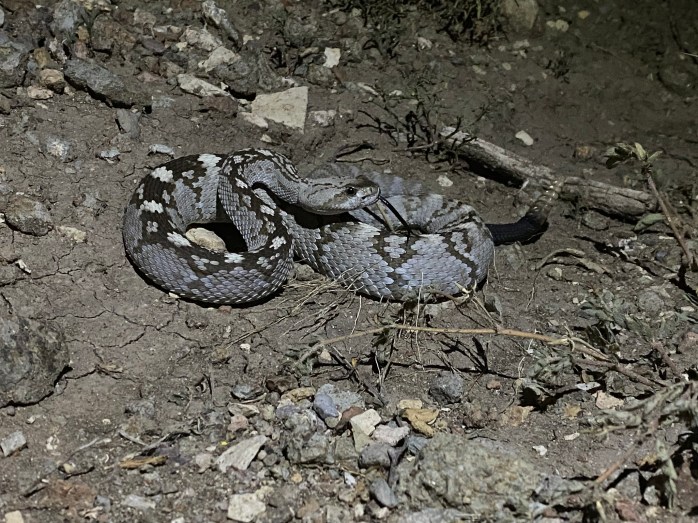
One of the black-tailed rattlesnakes at night (Photo by Meghan Cassidy)

It was getting late. As we drove back up the hillside to our cabin, there was one more black-tailed rattlesnake for us, a beautiful adult. We decided to ‘bucket’ her for good photos in the morning. Once again, this snake was simply curious about what we were doing, and tolerated Meghan’s hooking her and placing her in the snake bucket with little reaction.

(A couple of side-notes. First, the ‘snake bucket’ is a five-gallon bucket with a screw-on lid with air holes drilled in such a way that a venomous snake could not get close enough from the inside to get a fang through the hole. It is essentially snake-proof, so that we could sleep comfortably with a rattlesnake in the front room of the cabin. Second, part of being a safe, competent herper is constantly maintaining awareness of yourself and your surroundings when interacting with venomous snakes, even those who are being complete sweethearts. Neither Meghan nor I took these snakes’ temperaments for granted, because a moment’s slip-up with a “sweet” rattlesnake – especially in the isolation of the Big Bend at night – can be incredibly serious.)

Morning photo of the black-tailed rattlesnake (Photo by Meghan Cassidy)

The next morning, Meghan took a series of photographs of this black-tailed rattlesnake, and we released her. We were happy to have her as a neighbor during our stay!

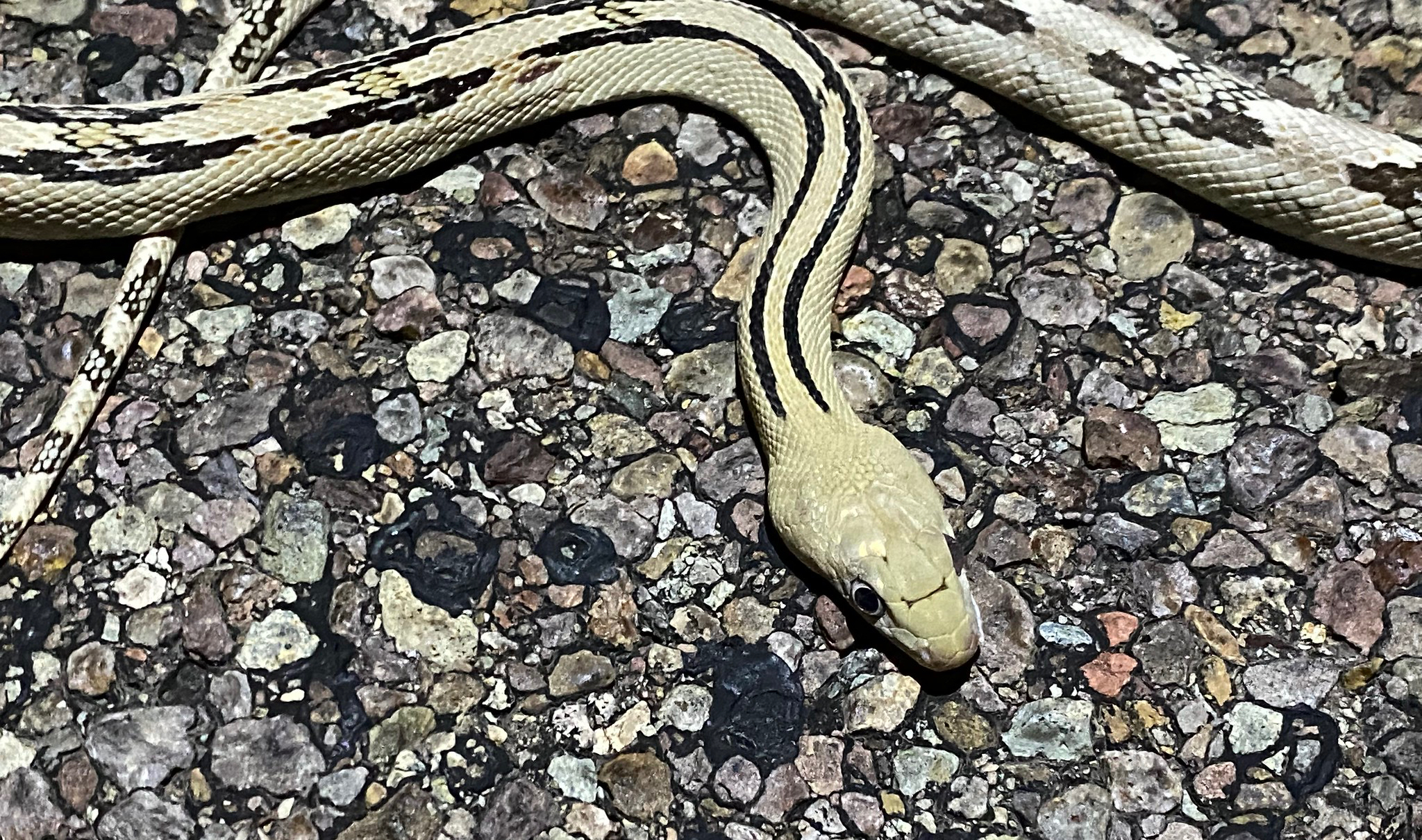
The following night, we were able to see a couple of Trans-Pecos ratsnakes, a favorite for both of us. One had been hit, but the second was wonderfully alive and gentle as we got it off the road so that it would not be run over. These slender, harmless snakes are pale yellowish (almost like the inside of a banana, leading Meghan to playfully call it a ‘banana snake’) or straw color with black markings. Two lines down the neck separate into something like blotches connected across the back in an “H” shape. They are nocturnal wanderers with big eyes to gather as much light as possible.

Trans-Pecos ratsnake (Bogertophis subocularis) – Photo by Meghan Cassidy

The final day in the Big Bend included a drive down FM 2627 past Black Gap WMA to the La Linda international crossing into Mexico (the bridge is barricaded, though crossing the Rio Grande at that point looked like it would not be difficult). The landscape and nearby mountains were beautiful, but it was virtually all private property and so we could not walk around and explore.

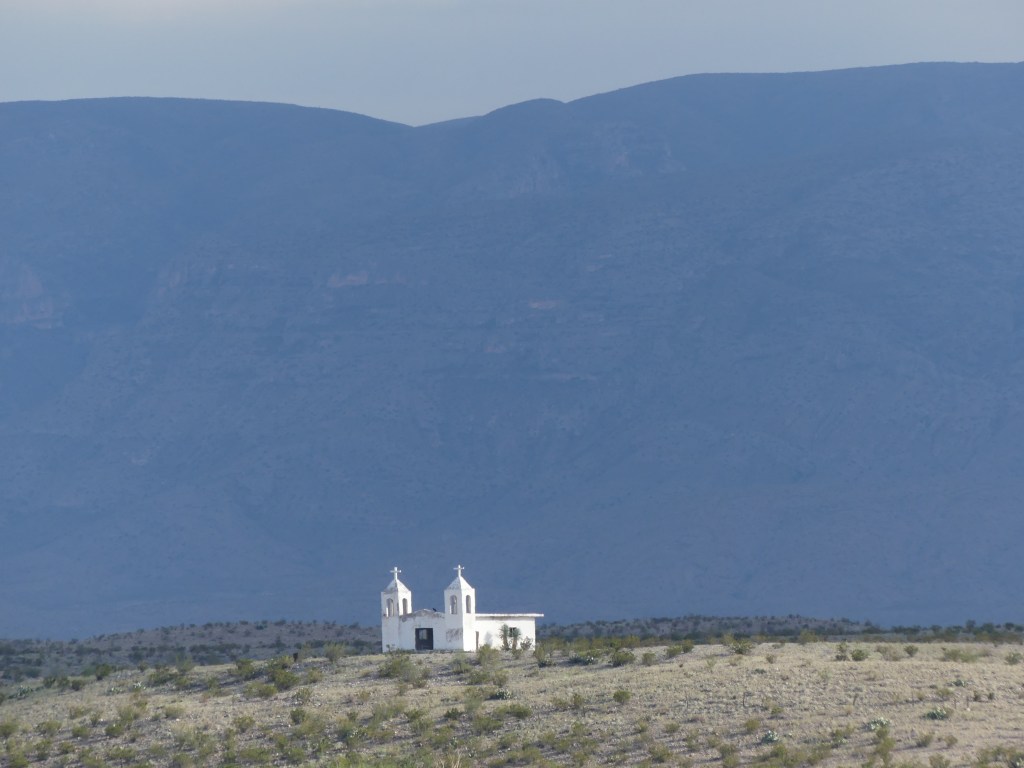
A church, looking across into Mexico at La Linda (Photo by M.Smith)
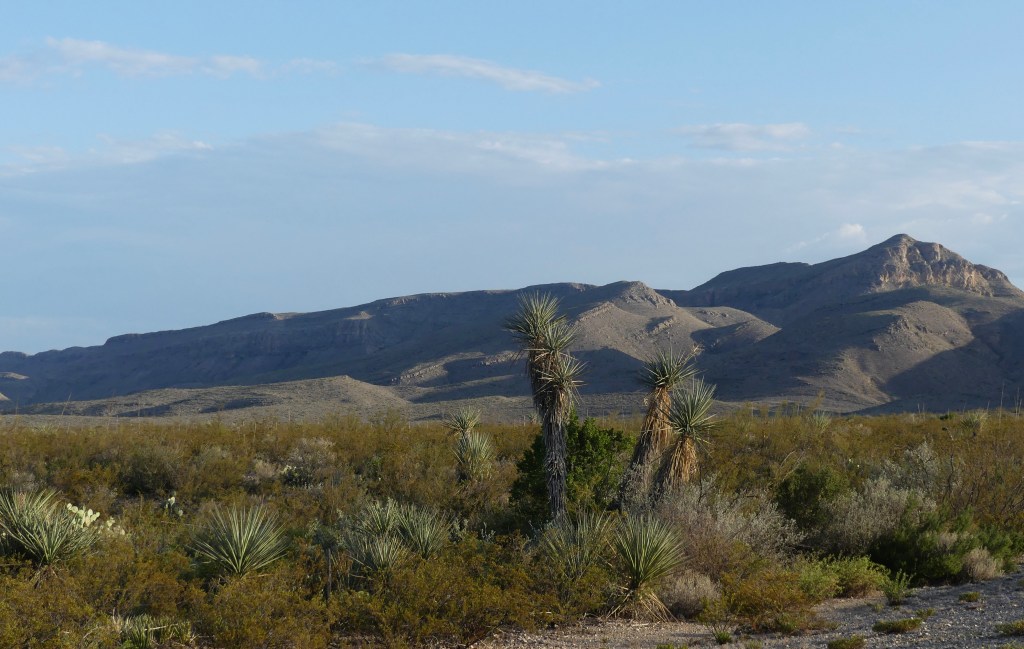
Near FM 2627 (Photo by M.Smith)

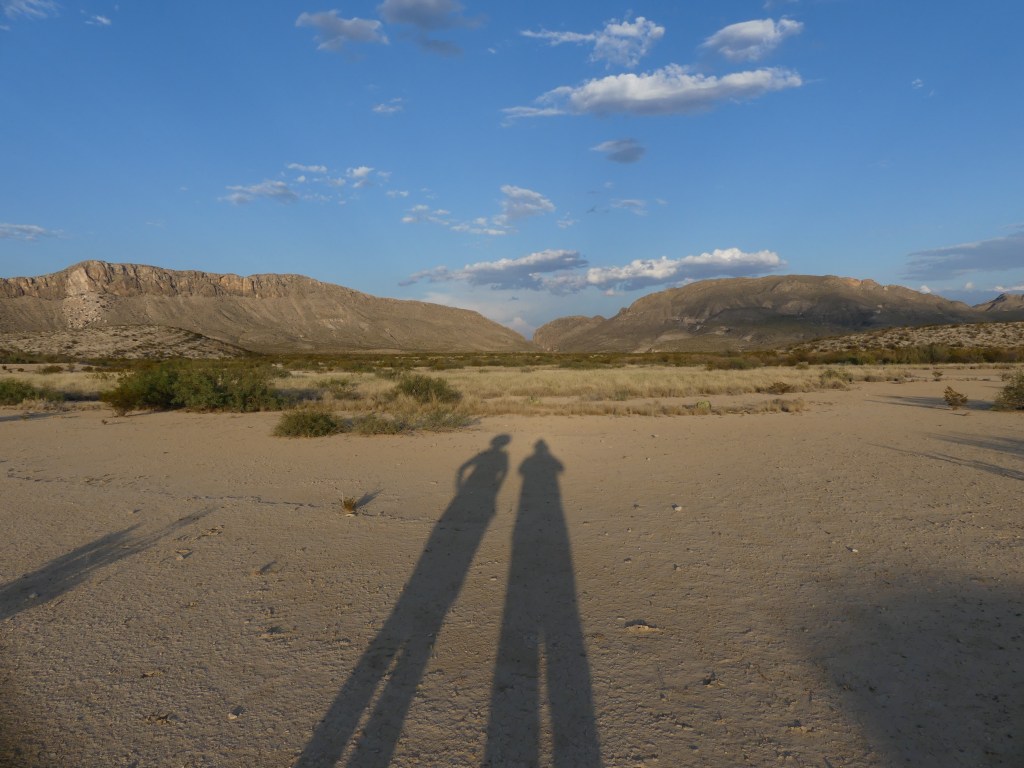
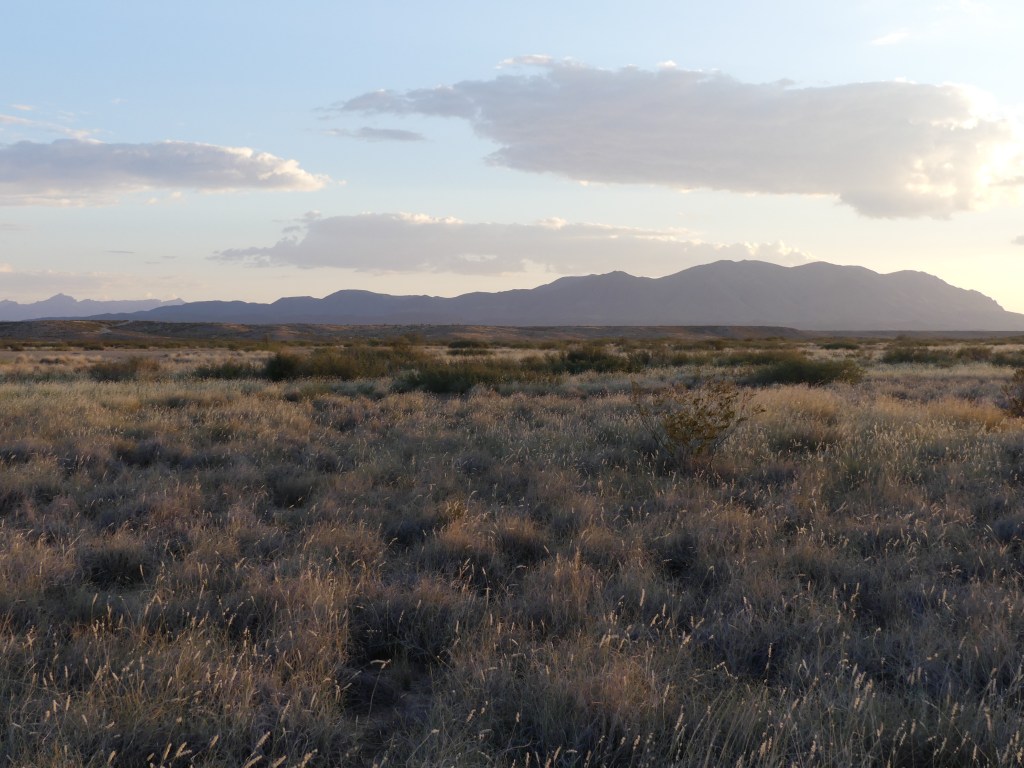
Back within the park we walked part of the trail leading to Dog Canyon, in the Dead Horse Mountains, and also westward in some sparse grasslands looking toward the Rosillas Mountains. I wrote about this later, about the long shadows toward sunset and the sense of solitude and even isolation there, as the sun was setting.

Long shadows, looking toward the Dead Horse Mountains (Photo by M.Smith)
Sparse grasslands and the Rosillas Mountains (Photo by M.Smith)
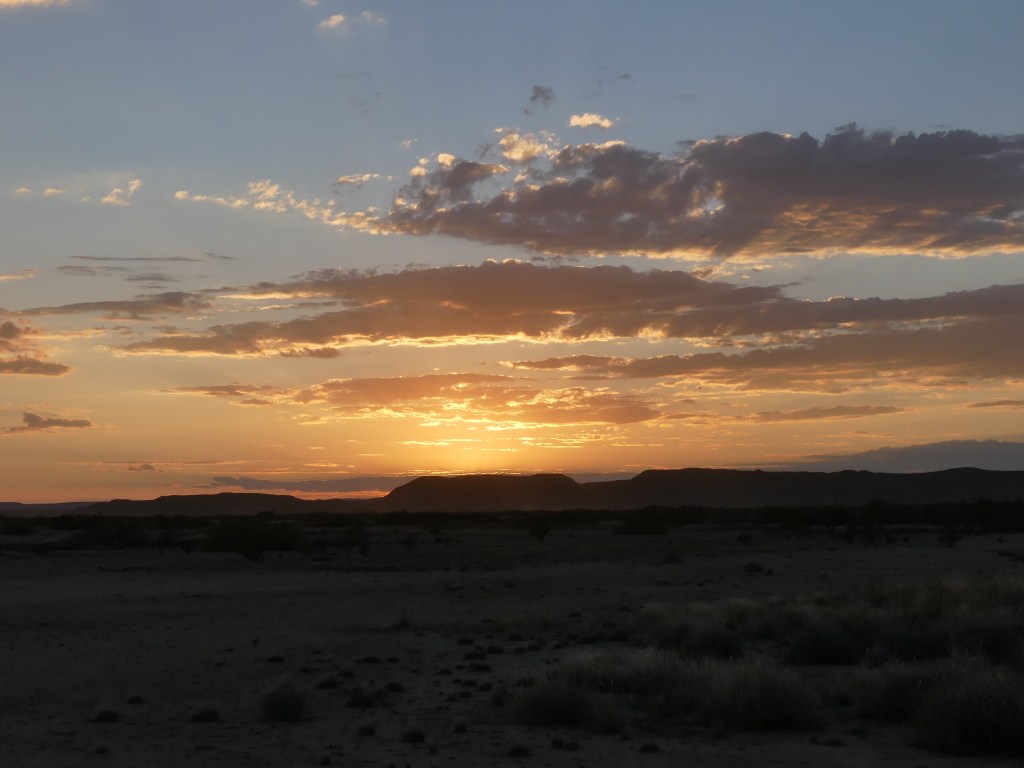
Sunset on our last day (Photo by M.Smith)

Our Venomous Snakes

Avoiding Encounters and Enjoying Them When They Do Occur

(I wrote this for The Post Oak, newsletter of the Arlington Conservation Council. It appeared in the June, 2021 issue.)

It is spring, and now we’ve had rain, and so the abundance of life is particularly evident. People are reporting wildlife sightings everywhere, including plenty of snake encounters posted to social media. Some reflect delight and appreciation, or even boasting about lucky finds in exactly the way a birder would report a new “lifer.” Others are nervous pleas to identify a photograph of a snake that is feared to be a threat to the lives of humans and pets. 

Venomous snake bite is an uncommon event in the U.S., although it is a potentially very serious medical emergency when it does occur. Cases of venomous snake bite from ten states were reported to the North American Snakebite Registry for three years from 2013 through 2015 (Ruha, et al., 2017). Most of the 450 cases were from Arizona and Texas, and 19% of the bites resulted from intentional interactions (with captive snakes, showing off, attempting to kill the snake, etc.). Almost all the bites came from pit-vipers – rattlesnakes, copperheads, and cottonmouths. Only three coralsnake bites were reported. There were no deaths among these 450 cases.

Western diamond-backed rattlesnake from near Austin

The small field guide by Andy Price, Venomous Snakes of Texas (Price, 2009), includes a table showing annual deaths in Texas from 1997 to 2005. Most years there were no deaths from snakebite, and only five deaths were reported for those nine years. Deaths from venomous arthropods (spiders, wasps, etc.) far outnumbered those from snakebite. If you are interested in, or worried about, Texas’ venomous snakes, get this guide. Price discusses how venom works, what to do in case of snakebite, and he provides information about where each one is found, what its habits are, and what it looks like. Alternately, you can download my pdf guide to venomous snakes in north Texas.

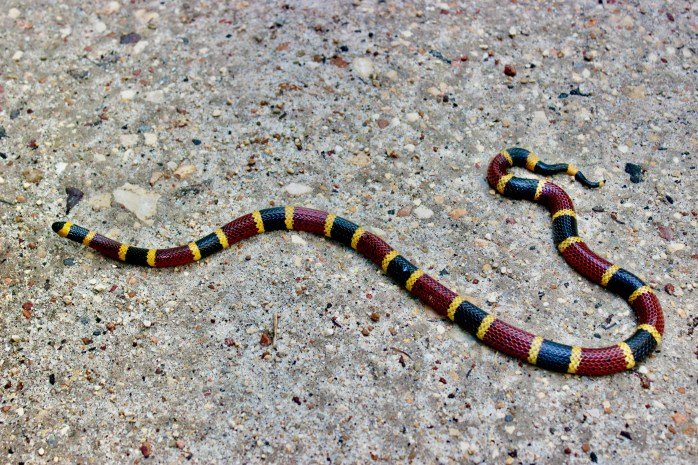
A Texas coralsnake seen in the Piney Woods

Coralsnakes are often thought of as among our more deadly snakes, but a 2009 article in Toxicon reported the first U.S. death from coralsnake bite in over 40 years (Norris, et al., 2009) It is also instructive to note that this death occurred when some men who had been drinking discovered the snake, captured it, and then tried to kill it. The person who died used a broken beer bottle to try to stab the snake, was bitten, and then did not pursue treatment. Unfortunately, carelessness, attempts to kill the snake, and failure to seek treatment were pivotal factors in this man’s death.

The point of all this is to say that venomous snakebite – especially the risk of dying from one – is low among the risks we face in daily life. The majority of snakes in Texas are nonvenomous, and all of them (venomous and nonvenomous) want nothing to do with us. Great care must be taken when we encounter a venomous snake, and that is the subject of the rest of this article. 

Someone whose position about snakes is generally “live and let live” may still believe that a snake near their house must be killed in order to prevent future encounters. It is hard to argue with someone who says “if I find a rattlesnake in my yard, I’m killing it.” Nevertheless, I’m going to attempt that argument, not because I value snakes over people, but because I think there’s a better solution. Let’s look at the points in my argument:

  1. If you live in an area where snakes show up from time to time, then killing that snake creates an opening for another snake to move in. If you live in an area that has recently been cleared for homes to be built, or if your house adjoins “wild” property, chances are that that will not be the last snake you see. What if you sprayed the snake with a garden hose from a safe distance, frightening it and running it off your property? Snakes learn about their surroundings, and that snake may learn that people and houses are scary and it’s best to stay away. 
  2. By the way, when threatened by a human, a snake experiences fear and agitation – it may look “mad” but it is really frightened; it will not hold a grudge and go on the offensive if it sees you again.
  3. Do you have loose items stacked outside your house, wood piles, or an old shed with a space underneath it? A wandering snake will think of these as shelter and a place to hunt a mouse or lizard to eat, and it may settle in and stay a while. You can minimize encounters with snakes by clearing out these items.
  4. The most dangerous encounter with a venomous snake is the one that you stumble into, unprepared and unaware. That happens when people walk barefoot at night in places where a snake might show up. It also happens when people reach down with bare hands to pick things up without being able to see what’s nearby. Better to use a stick or a tool to probe around the hidden nooks before putting your hand there. The same principle applies when you are hiking or camping – watch where you step or put your hands.
  5. Many snakebites occur when someone tries to kill the snake. You may be more careful and better organized than the guy who tried to kill the coralsnake with a beer bottle, but you are still going to have to get close to the snake. As you attack it, the snake will make frantic attempts to defend itself or get away, and this is a high-likelihood situation for you to be bitten.

You may or may not be convinced, but I think the best strategy is to prevent snake encounters around the house and to safely frighten away any unwanted snakes that you find. There’s one additional thing: snake “repellents” are not going to help. Wishful thinking and good salesmanship sells a lot of bags of stuff based on ingredients similar to mothballs or some other chemical scent-based substance. One snake control company in Arizona posts photos of rattlesnakes they find resting on top of the stuff or sheltering behind a bag of it. That speaks volumes about the effectiveness of the product.

What about the naturalists and wildlife-watchers among us? What if we find a snake and want to watch it or photograph it – can that safely be done? The answer is “yes,” and it depends on our dispelling the myth that venomous snakes chase people. I don’t mean to insult anyone who came across a rattlesnake that crawled toward them in a way that looked like it was chasing them. That has happened to a friend, actually, but a lifetime of experience and study tells me that he was just in the way of a snake trying to escape to safety. I describe this encounter in Herping Texas (Smith & King, 2018) and I will briefly re-tell it here.

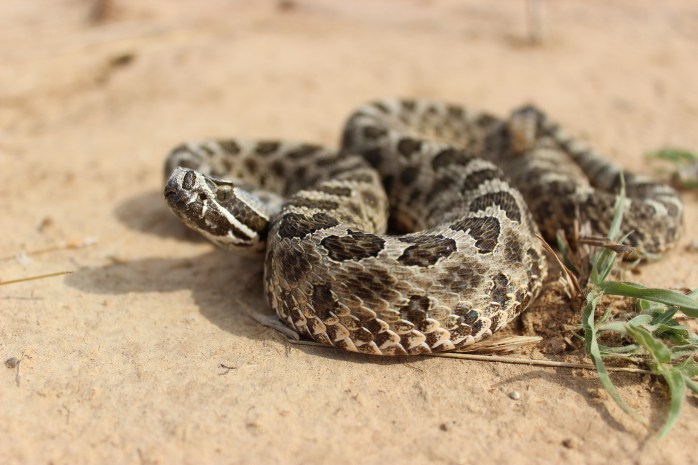
A western massasauga like the one Steve and I saw

Steve and I found a massasauga rattlesnake one night years ago, and we crouched around the snake to admire it. The snake was still as a statue, probably confused by our lights and hoping we would pass on by. I wanted to see it in a different position and so I touched the snake with my snake hook. At that point, convinced that hiding had failed and it was now under attack, the little rattlesnake flew into action, coming straight at Steve. That caused Steve to fly into action as well, practically back-flipping out of the way. The snake kept on going, past us and into the roadside vegetation. That’s all it was – no attack, just a blind attempt to get away. However, when something like that happens, the natural assumption people make is that the snake was attacking or chasing. 

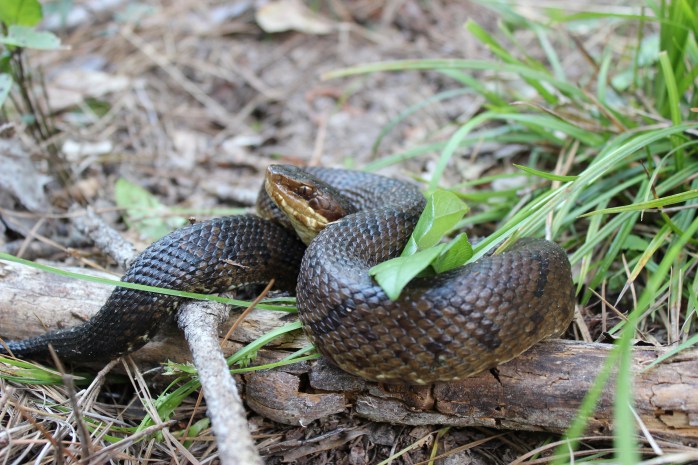
A northern cottonmouth, another venomous snake that will not chase you

With that in mind, let’s think about how you can safely observe a snake. When you first spot it, think about how close you are and what it is doing. If the snake is very close, check your footing and step away or to the side until you’re about ten feet away. If the snake is moving, don’t get in its way and remain still so that you can watch what it does. You may get a great opportunity to observe how the snake’s amazing body moves among rocks and branches, or see it swim (a beautiful display of graceful curves). From a safe distance, it doesn’t matter if you are able to identify it, because even if it is venomous it cannot hurt you from ten feet away. If the snake moves in your direction, just remember that this is just a navigation error on the snake’s part and move out of the way. 

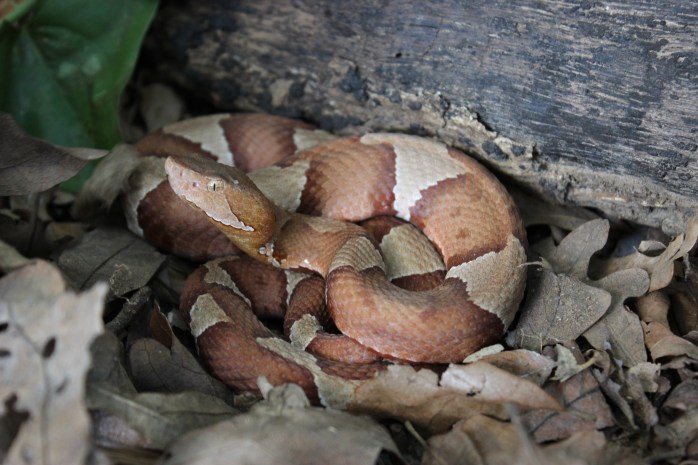
A Broad-banded copperhead from Wise County

I do not mean to suggest to anyone that venomous snakes are no big deal. Just as these snakes are not “mean” or “bad,” they are also not “friendly” and they do not know if our intentions are benign. They are simply wildlife – fascinating, often beautiful, and potentially quite dangerous if we don’t keep our distance. What I have learned is to respect them without undue fear and to understand their habits well enough to watch them in the field without incident. 


Norris, R.L., Pfalzgraf, R.R., & G. Laing. 2009. Death following coral snake bite in the United States – First documented case (with ELISA confirmation of envenomation) in over 40 years. Toxicon, 53, 693-697.

Price, A.H. 2009. Venomous Snakes of Texas: A Field Guide. Austin: University of Texas Press.

Ruha, A., Kleinschmidt, K.C., Greene, S., Spyres, M.B., Brent, J., Wax, P., Padilla-Jones, A., & S. Campleman. 2017. The Epidemiology, Clinical Course, and Management of Snakebites in the North American Snakebite Registry. Journal of Medical Toxicology, 13:309-320.

Smith, M.A. & C.R. King. 2018. Herping Texas: The Quest for Reptiles and Amphibians. College Station: Texas A&M University Press.