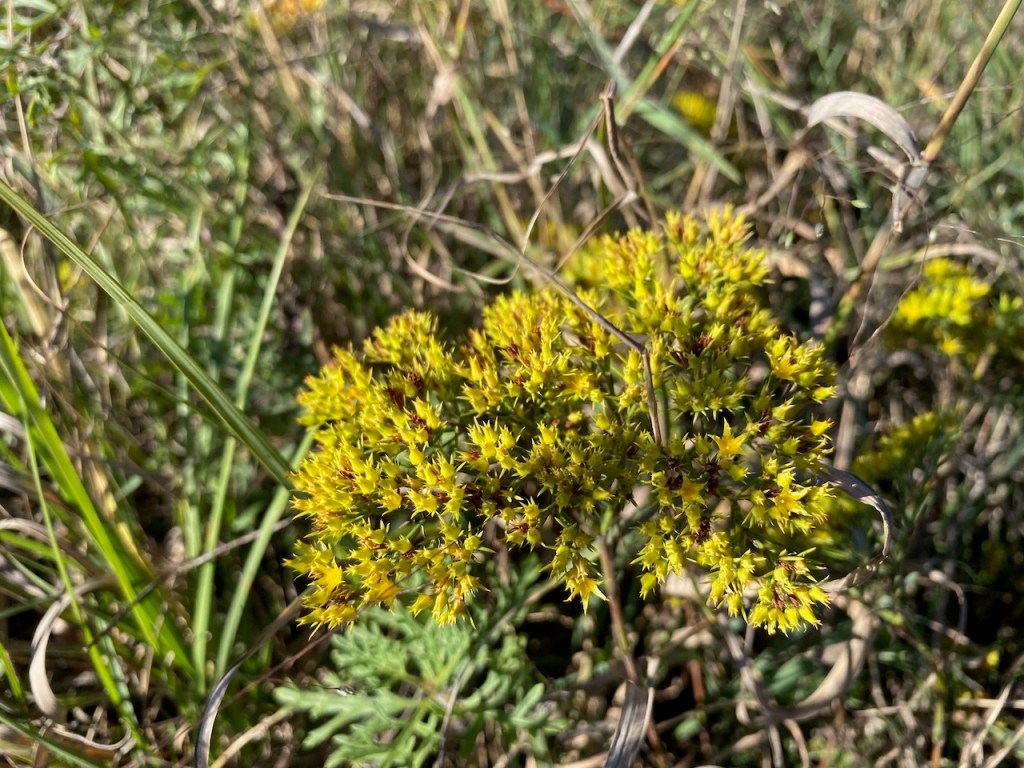
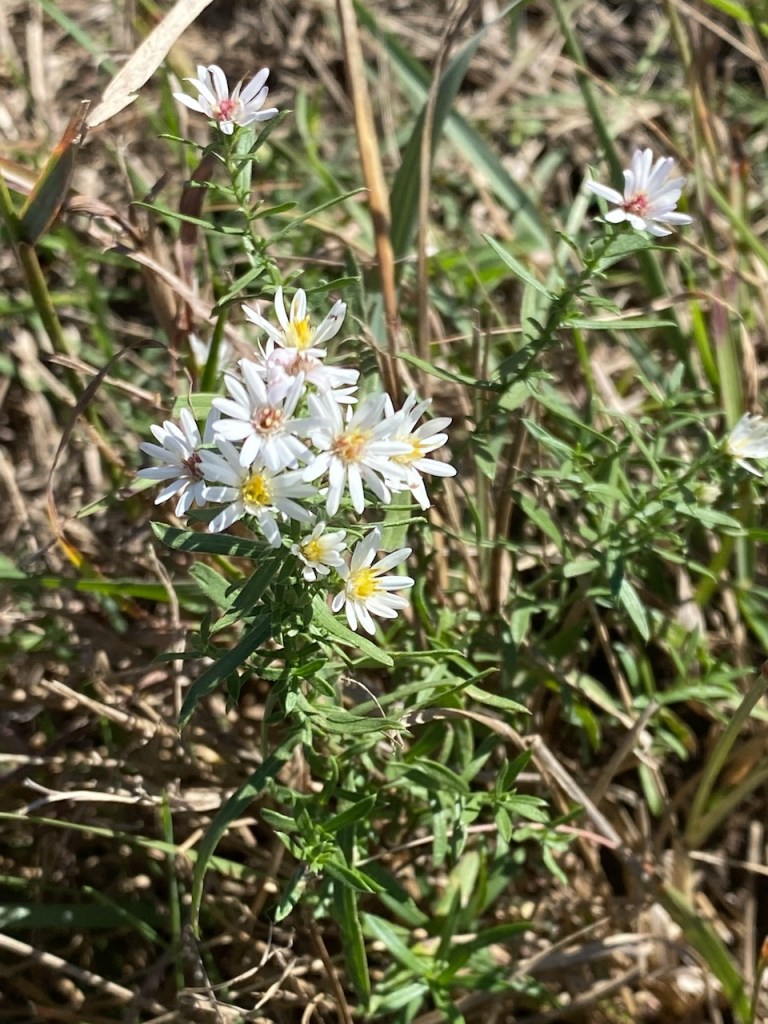
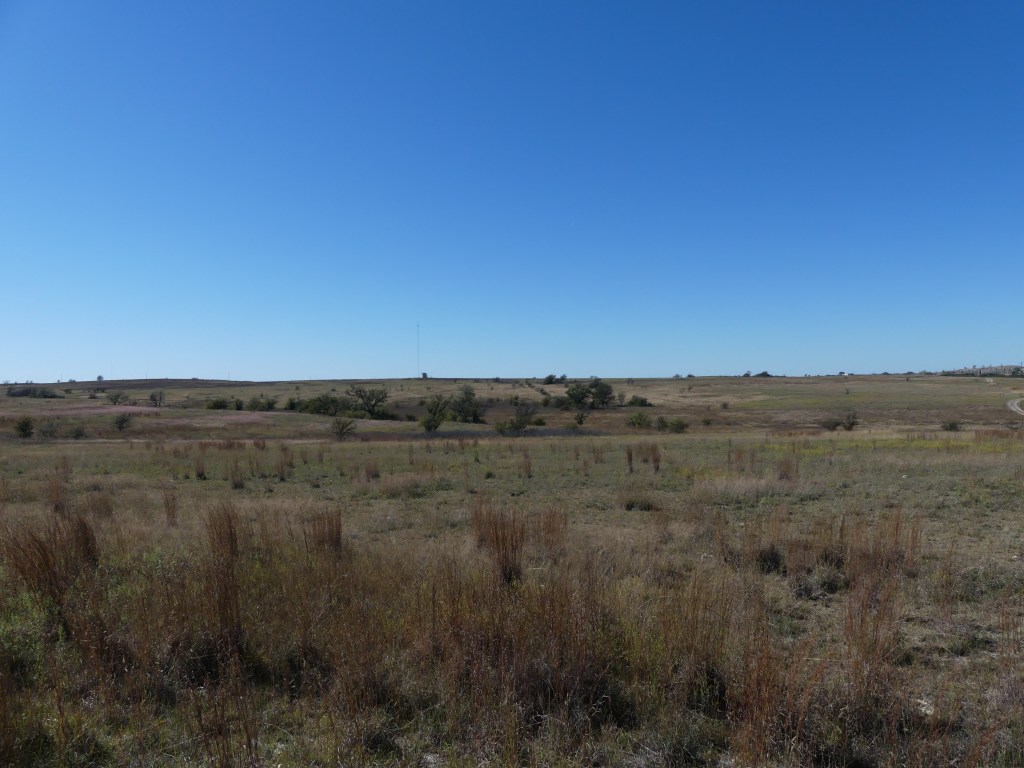
Tandy Hills on December 12th

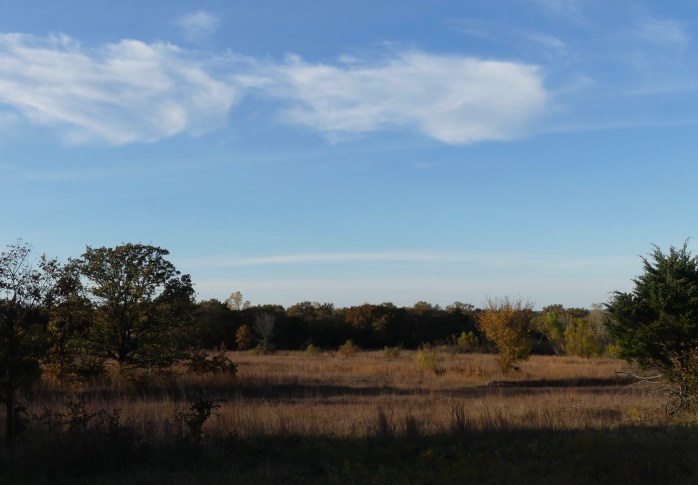
Tandy Hills Natural Area is over 200 acres of prairie in east Fort Worth. In spring there are beautiful wildflower meadows at the top of a ridge, and then the prairie drops down toward the Trinity River (on the other side of Interstate 30) to the north. The whole area has stands of oaks and other trees, with many of the ravines having thick stands of juniper.
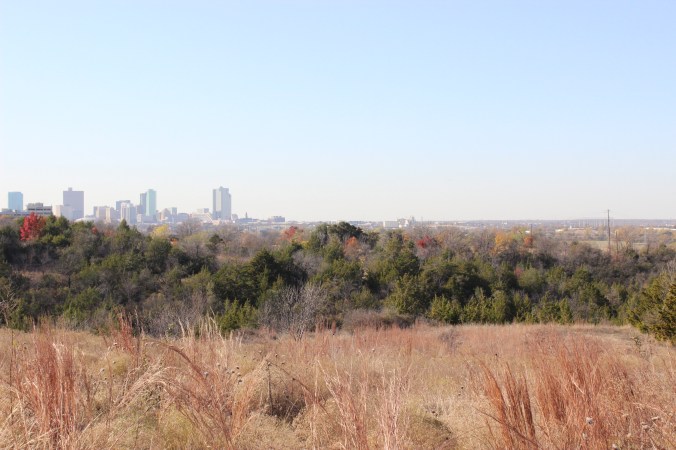
The Fort Worth skyline seen from the Tandy Hills prairie

I paid Tandy Hills an overdue visit today. It had been a while, and I missed this lovely place. When I wrote Mindfulness in Texas Nature I wanted to wrap up the purpose and the message of the book in an epilogue, and a late winter visit to Tandy Hills was just right. Its significance was that it is a survivor in spite of everything, and it offers small and humble but beautiful gifts like the annual appearance of trout lilies. Its resilience and the broad support it receives gave me reason to hope for a renewal of connection between humans and nature.
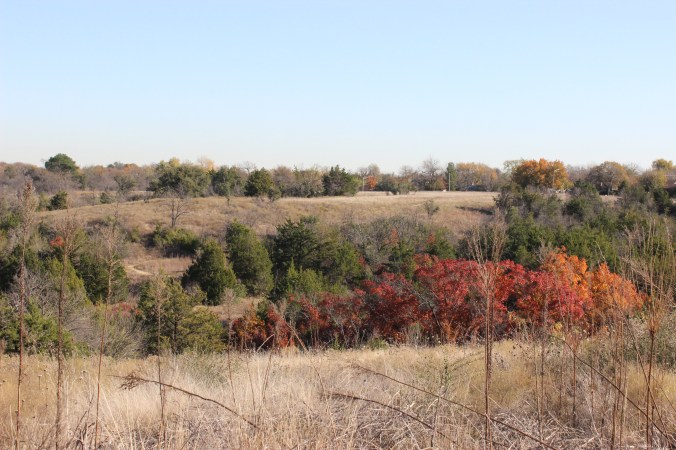
I talked about it as an island of nature that was under constant pressure by the surrounding city. The city has done many things right, from buying the property to the support of the parks department. What I meant was that it absorbs the impact of a lot of human visitation, including prohibited motorized vehicles (for example, I saw motorcycle tracks in a muddy spot today) and certain commercial photographers who cynically treat it as a backdrop while trampling the area. Its boundaries do not shut out the nearby highway noise, and invasive plants – especially privet – are constantly trying to make inroads, choking out the native species.

Tandy Hills Natural Area is looked after by a devoted group, the Friends of Tandy Hills, who work with the city to battle invasive plants, manage and improve trails, catalogue the over 2,000 species of plants, animals, and other organisms, and offer programs to the public.
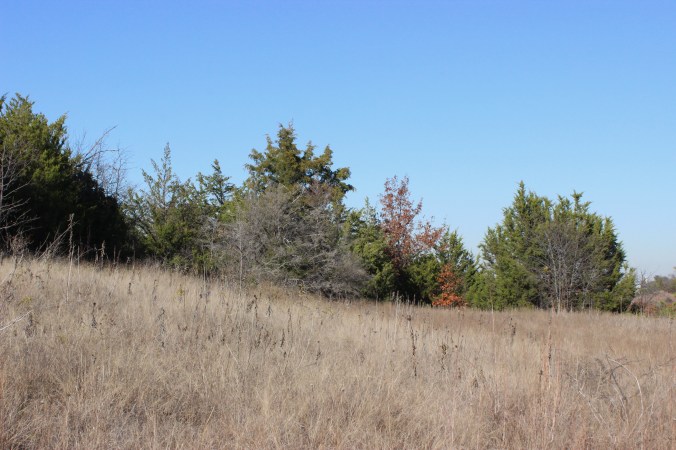
The prairies are beautiful, and they remind me of the places I explored at the western edges of Fort Worth as a kid. Thin, dark soil over white limestone, and a treasure trove of grasses and other plants: little bluestem, Indiangrass, eryngo, basket flower, gayfeather, and many others. And even at this time of year, in their dormant state, they amaze me. There are the subtle colors as well as the beautiful shapes of flowers and seeds.

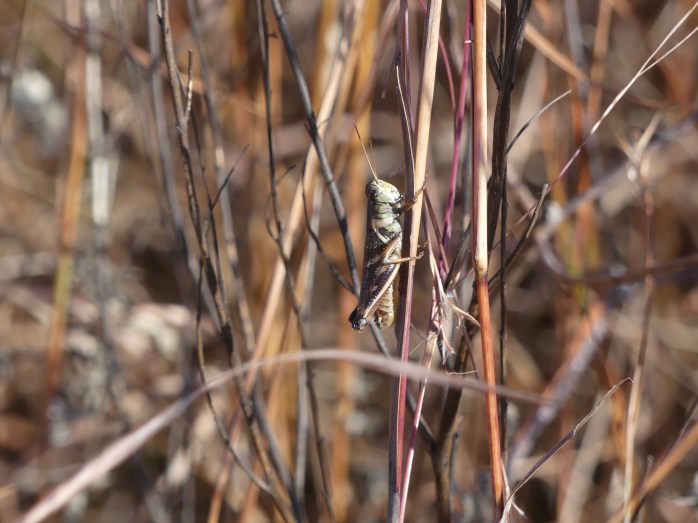
This was one of those days when the weather is unusually warm, and I go for walks in a t-shirt and enjoy the bright blazing sun when it is low in the sky and makes everything just a little bit warmer in color without the walk itself being overly hot. A few grasshoppers hopped and flew away and several dragonflies hovered and darted around. The prairie changes in each season, and much of it may become dormant in winter, but it is never quiet for long.

Thank you to the prairies, oaks, and junipers. And thank you to the people who keep this place as natural and undamaged as it can be.
In the November Woods

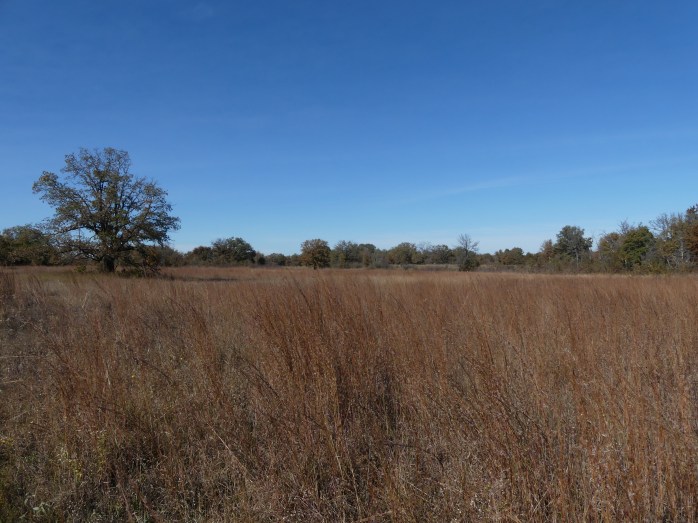
Hardly anything is finer than a green Forest Service gate opening onto trails that lead through the grasslands and oak woodlands of LBJ National Grasslands. Those meadows and woods change throughout the seasons, and each of those changes is beautiful. If I had to pick a favorite, it would be autumn (but ask me again in the spring). The low-angled sun highlights details of light and shadow, the colors of leaves and grasses are wonderful, and afternoons can be sun-warmed but cool at the same time.

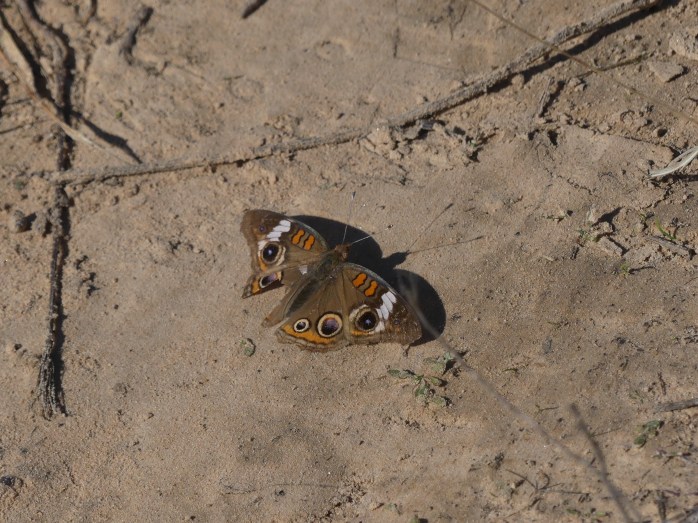
A common buckeye

Yesterday I opened one of those green gates that was new to me and walked a trail back through rust-colored little bluestem grasses and oaks with leaves now tinged with yellow and caramel, and a little red here and there. Much of it was familiar, like the way the sun makes little bluestem sparkle when it shines through the little tufted seeds tucked away along the stems. What made it wonderful was that it was more of the things that are always on the verge of being lost. Ranches are sold and turned into houses and lawns, and so a walk through a new patch of Cross Timbers felt reassuring. 

Croton and bitterweed along the trail
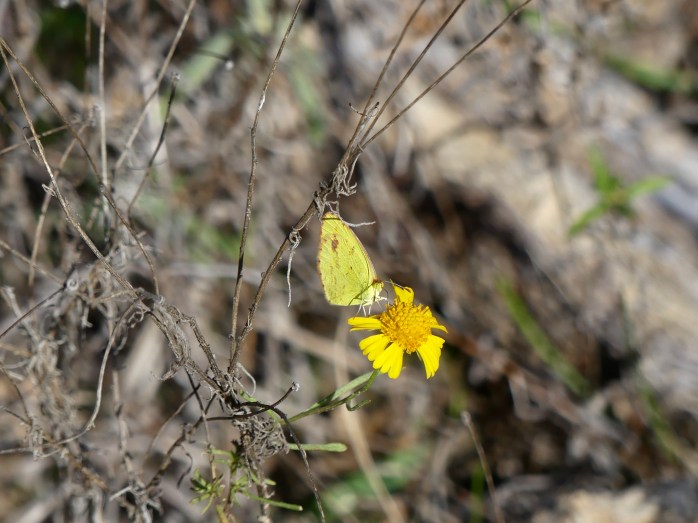
A sulphur visiting a bitterweed flower
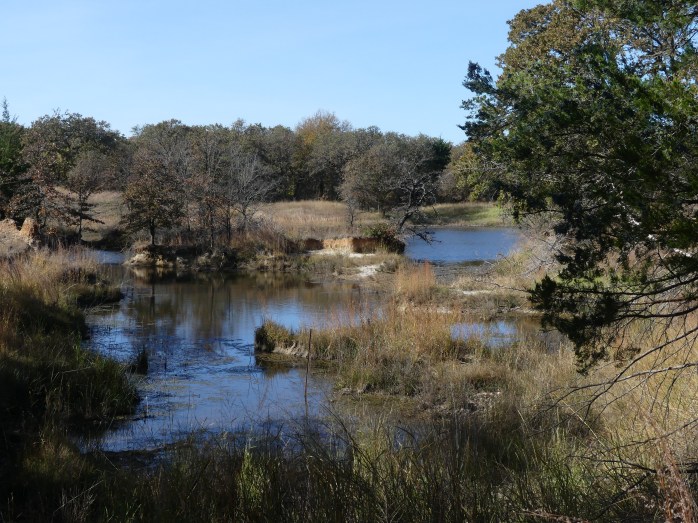
A small pond

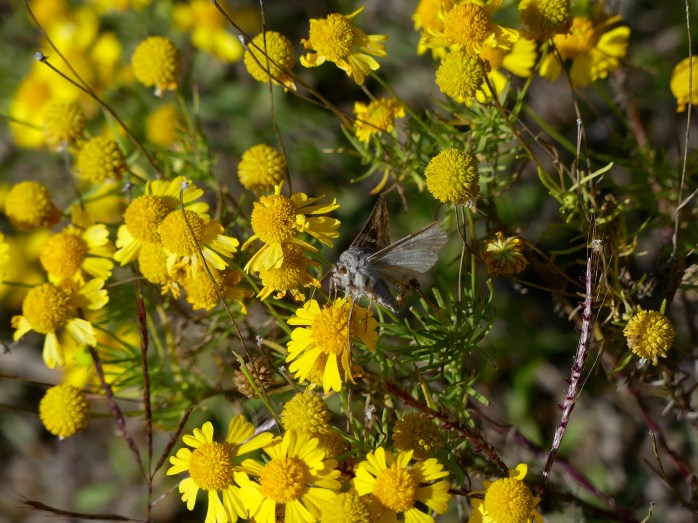
Along with the taller prairie grasses were areas with lots of croton (“prairie tea” for some folks), western ragweed, and bitterweed. I love this last plant, whose yellow flowers bloom so late in the year. Clusters of yellow bitterweed blooms were visited by bees and butterflies. Grasshoppers jumped in front of every step I took, taking advantage of these last warm days to nibble at the remaining vegetation. 

A skipper visiting the bitterweed
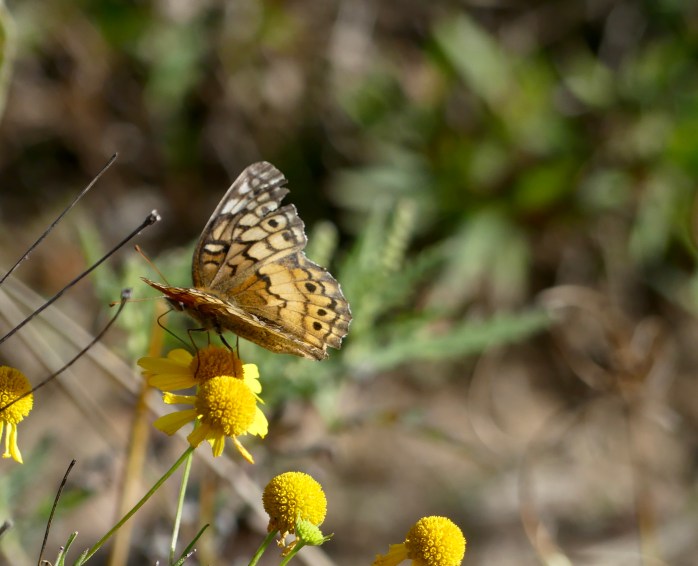
A variegated fritillary
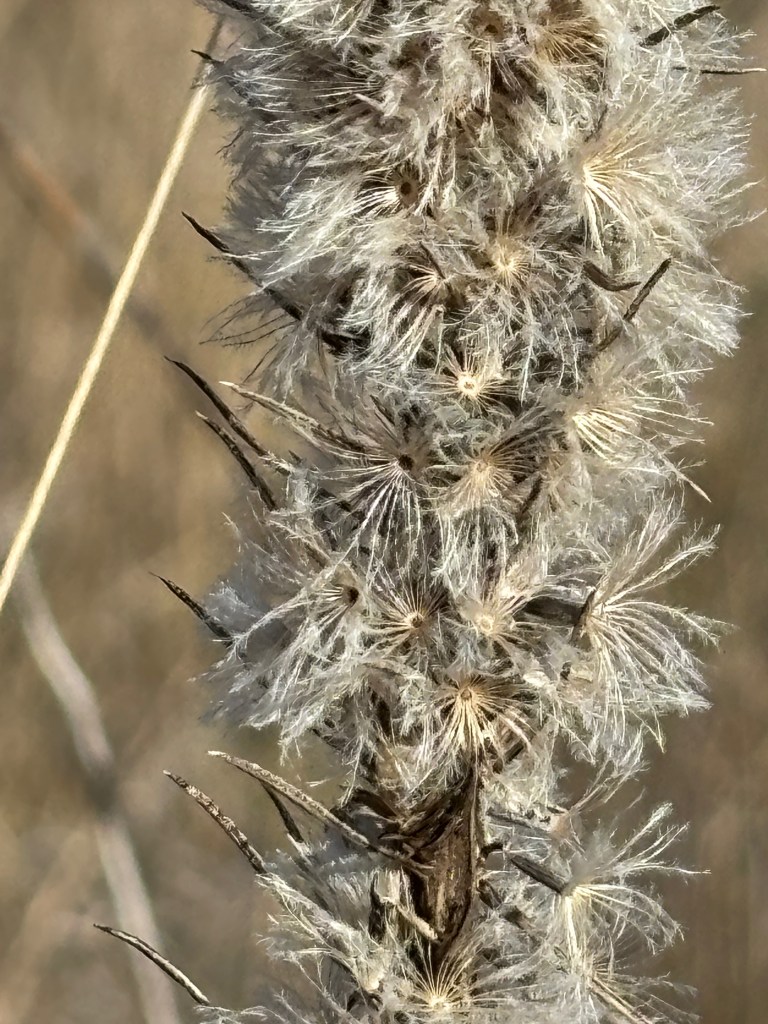
Sunlight through bluestem seeds
“Me and my shadow.” A harvestman (daddy longlegs) and its shadow, wandering the prairie

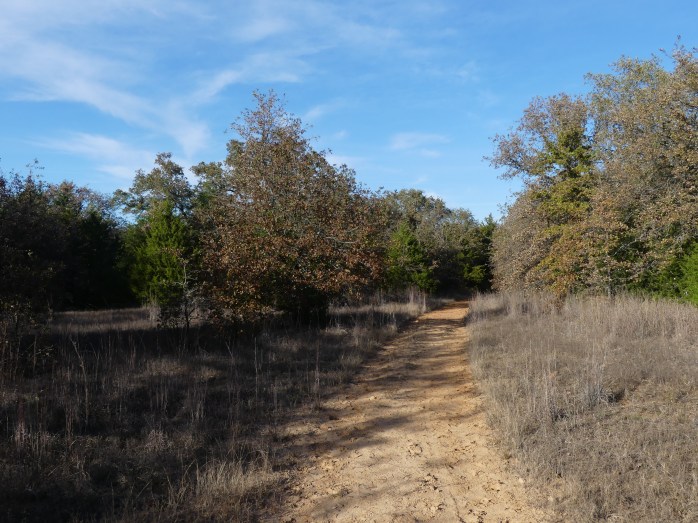
After about an hour, I went down the road to another of those green gates, this one opening onto a trail that Meghan Cassidy and I walked a year and one week ago. After crossing a nice patch of prairie that very gradually slopes down to a line of trees, the trail turns and traces its way through oaks, junipers, and prairie openings. 

I stopped at the same post oak where we had stood and watched leaves drop, the air so quiet that I could sometimes hear a leaf bump into a branch on the way down. And then we would hear a wave of breeze approach through the treetops, stirring the top branches and releasing a few more leaves to pinwheel down to the growing carpet of leaves on the ground. Although not many leaves were falling from that tree yesterday, there was some of that sense of solitude and peace in the quiet of the woodlands.

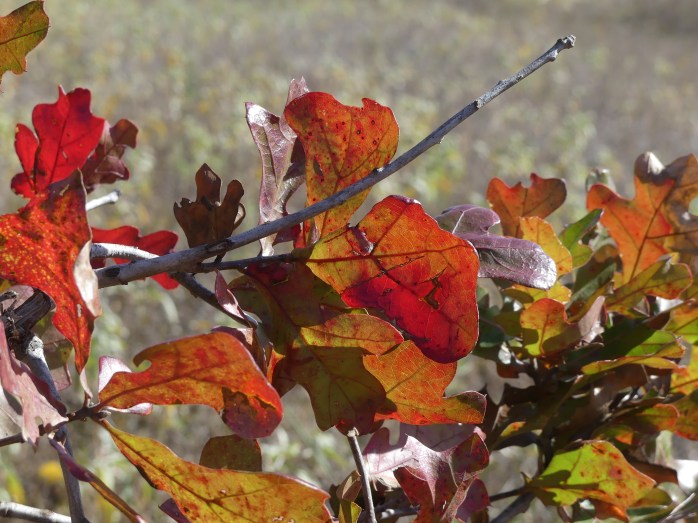
Further down the deep sandy trail some of the same young oaks were turning, with leaves glowing scarlet when backlit by the sun. The woods were full of shade behind the trees which really had yet to lose many leaves. In other places the low mid-afternoon sun struck grasses and leaves with bright, warm light. The sunlight seemed that much brighter for the contrast with the shaded and darkened places deep among the trees.

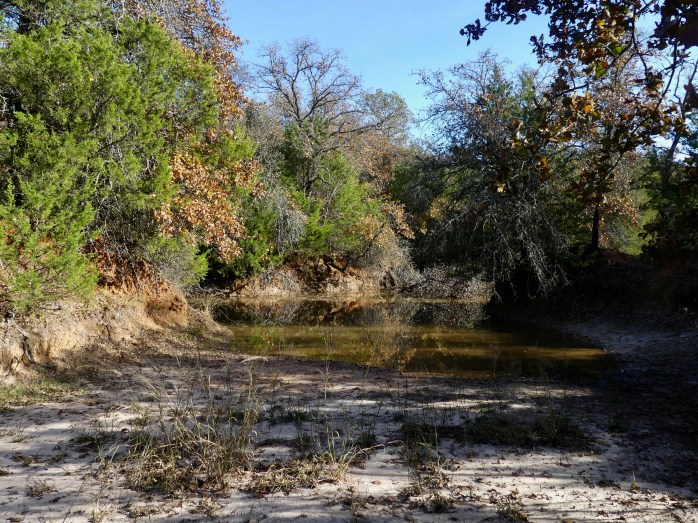
The pond

I reached a place where the soil is cut by erosion and drops, exposing red and pale sandy soil in an irregular set of steps and furrows down to a small pond. Meghan and I sat here a year ago on a stretch of slightly damp sand tilting down to the water. I was entranced by a play of the light in which the late afternoon sun was reflected by ripples, sending squiggles of light up onto a shaded bank under a juniper. The very same thing was happening yesterday, with a tiny light show playing on the shaded bank of the pond. It was a very small thing, and also an example of something that seems important to me: Nature is so often a consistent, stable presence in a world that can seem chaotic. Places in nature can be anchors in our lives to which we can return over and over for reassurance that some good things persist in spite of all the changes around us. 

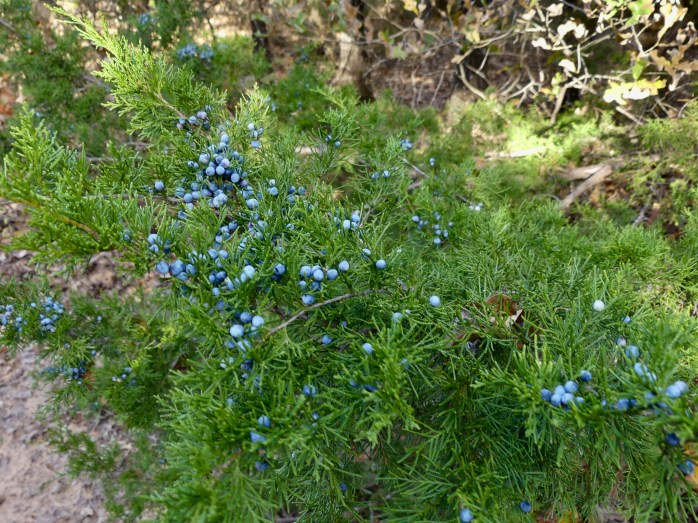
Juniper berries!

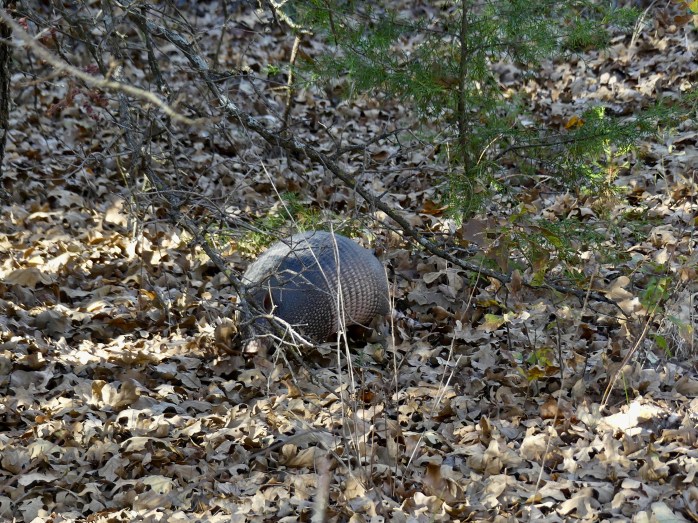
On the way back there was movement in the leaf litter a small distance off the trail. It was a nine-banded armadillo, snuffling along the woodland floor, oblivious to the human standing nearby. Once again last autumn’s walk was being repeated, as we saw an armadillo on the return walk on that day, too. This one kept searching for insects and grubs to eat while I took a couple of photos. I shifted and made a little noise and the little armored one stood up to look around and sniff the air. I coughed, and he crashed off through the brush. 

The armadillo
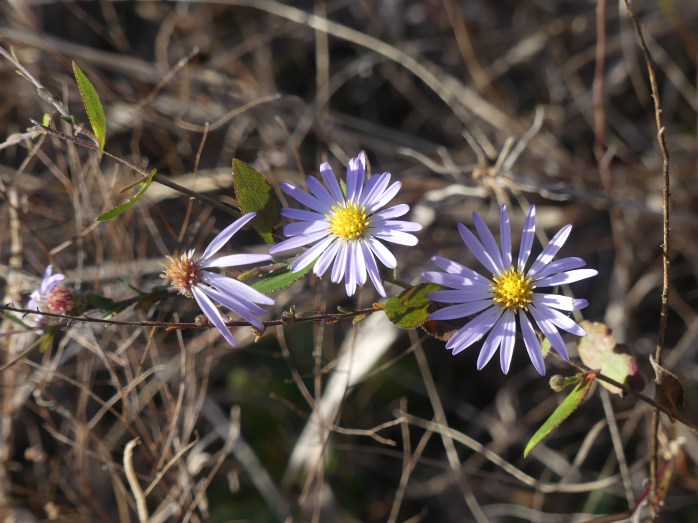
Tiny asters blooming along the trail
Grasshoppers were everywhere
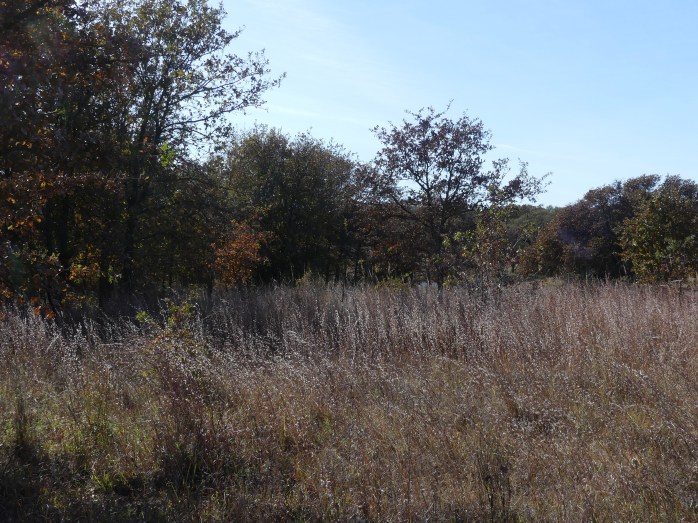
More prairie

It was getting near sunset, and my walk was done. It is hard to put into words just what this time of year, this quality of light, this quiet woodland feels like to me. In the “Autumn” section of the book Meghan and I have been working on, I wrote this: Things come to an end / Be still in the golden autumn light / And consider how to make a good end of the year / With affection and acceptance. This season does feel like an ending of the year, and it seems like a good idea to spend some time being still and quietly reflecting on all that the year contained. This November walk at the LBJ National Grasslands had been perfect for that.

Falling Deeper into Prairie Magic

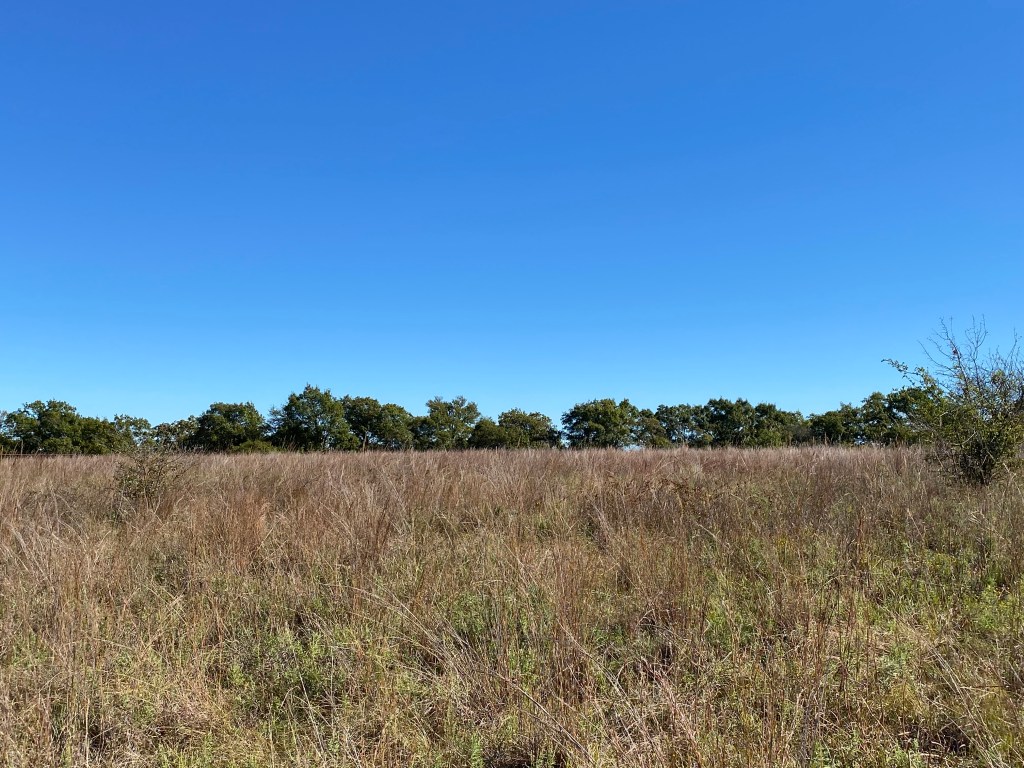
Fields of grasses and flowers stretching into the distance pull me into some sort of enchantment. In late autumn and winter their colors and textures could keep me wandering for hours, with the sun glinting through the tufted seeds of little bluestem and the inflorescences of Indiangrass waving at the tops of tall and slender stalks. 

On October 30th, I had the opportunity to learn more about prairies and how they work, by attending the Prairie Seekers training provided by the Native Prairies Association of Texas (NPAT), in conjunction with the Dixon Water Foundation. The group of us met at the Dixon Water Foundation’s Leo Ranch, located northeast of Decatur in a portion of the Grand Prairie (the ecoregion, not the city). It is an area where grasses and forbs (flowering plants that are not grasses and not woody) grow in fairly shallow soil with limestone below it. Because of the limestone near the surface, the trees around creek corridors often include escarpment live oak. 

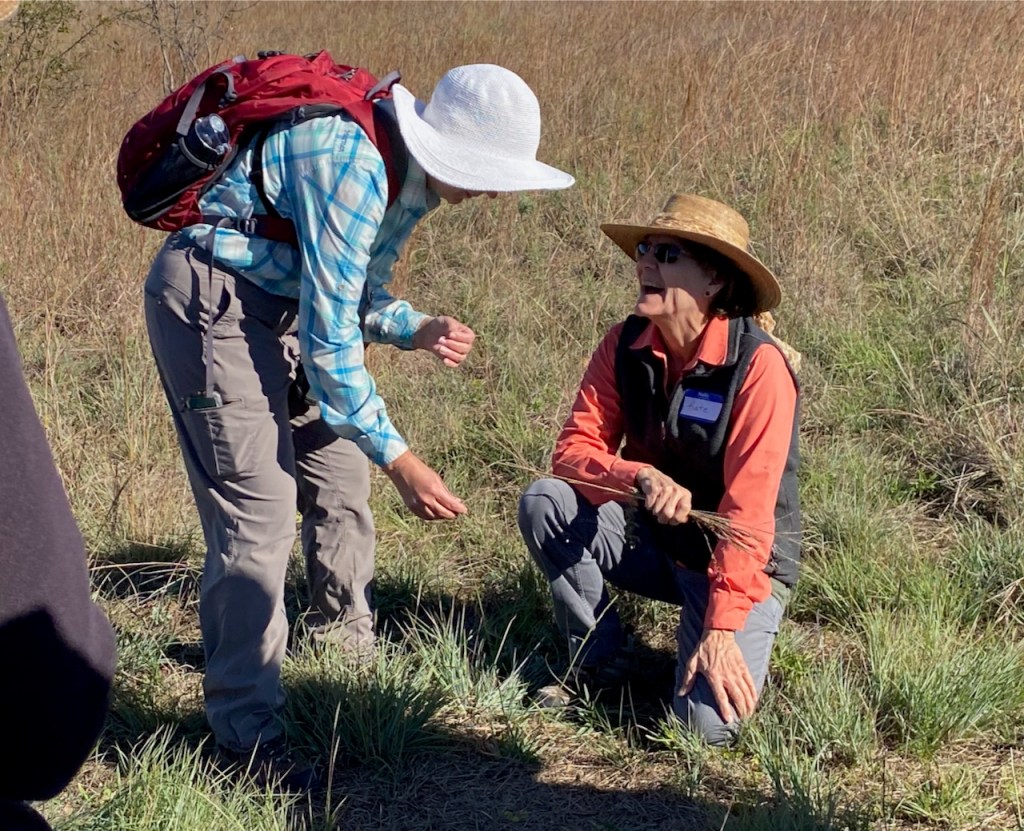
Suzanne Tuttle (L) and Kate Morgan (R) share a laugh

Many thanks to Dr. Carly Aulicky, North Texas Outreach and Stewardship Director of NPAT, for her role in organizing the event and helping teach us. Others who taught us on walks through the prairie included Suzanne Tuttle, Kate Morgan, Michelle Villafranca, Mary Curry and others. Each of them is a priceless source of prairie wisdom. We were lucky to be able to spend the day with them.

A prairie is a constantly shifting community of plants and animals, changing or renewing in response to things like rainfall, the grazing of animals like bison, and occasional fires. Shrubs and trees are constantly looking for an opportunity to get started, and without grazing and/or periodic fire, woody plants will gradually take over and the prairie will disappear. 

A healthy prairie has many different species of grasses and forbs living together. There is diversity in any square yard of prairie, but prairies may also have patches where different plants predominate. This may be the result of dips in the land or swales that are wetter because they collect more rainfall, areas of shallower or deeper soil, and so on. That mosaic of different plants makes the prairie stronger and more resilient.

Whitlow-wort

We started the walk with examples of big bluestem and Indiangrass, two grasses characteristic of north Texas and among the tallest. Soon we came across a low-growing plant with mats of yellow flowers, identified as Whitlow-wort. Our prairie experts considered it a great plant, associated with healthy prairies. 

There were many other grasses pointed out: little bluestem (a favorite of mine), and side-oats grama, the state grass of Texas, with seeds hanging off one side of the stem like little flags. There were low-growing clumps of heath aster with beautiful white flowers. And there was the invasive KR (King Ranch) bluestem and a bit of Johnson grass in a few places. Exotic grasses such as these have been imported to Texas from time to time and promoted as being good forage for cattle. It generally does not end well, with the imported grass tending to crowd out the native species.

Heath aster

Many other topics were covered, such as how a disturbed area or bare soil is colonized by species that can grow quickly and prepare the way for later plants, which eventually give way to later ones, in what is known as succession. We visited other places, including a small grotto where an intermittent stream has created a cool, wet place where maidenhair ferns grow beneath a limestone shelf. There was a lot to see and learn.

And all of that brought me more deeply under the spell of prairie magic, which does include natural history facts but beyond that it involves being drawn to the beauty and complexity of prairies. The experience of being in a prairie seems to nurture some part of me that needs to walk through a sea of flowers and waving grasses. All those Prairie Seekers at the NPAT/Dixon Water Foundation event are like the extended family members who will help keep that magic alive.