Hi everyone. You may have seen that I have a Substack titled Rain Lilies. It has been a kind of parallel creation to Our Lives in Nature for some time, and I am going to move everything there – and I really hope you’ll follow me over to Rain Lilies.
Much of it is similar to blogging here. If you subscribe at Substack, you get new posts emailed to you, with photos. There are more options for feedback and community, including “liking” posts, posting notes and participating in site-related chats. I’m interested in taking advantage of some of their podcasting options, too. One difference is that there is not an option for downloadable PDF documents such as my letters or some of the herpetology resources (but see below).
There is an option to be a paid subscriber, but I want to share what I write without money getting in the way, so it will be much like here: contribute if you like and can afford to, or subscribe for free if that works better for you.
Here’s what I said at the Rain Lilies site about its contents: Subscribe to see if my thoughts offer any light about nature, community, society, and how we navigate the world. I am a nature writer who had a career in psychology and I am deeply concerned with our well-being and how we live out our values. I’m also deeply grateful for unspoiled places in nature.
I’m very glad for everyone who has subscribed here, and I hope you’ll give Rain Lilies a try if you haven’t.
I’m also happy to tell you that Rob Denkhaus and I have decided to restart “Cross Timbers Connection,” which was a nonprofit nature organization some years ago. This time it will be more informal. We do want to make some resources available for download, so some of the resources here may be available from the forthcoming Cross Timbers Connection website. And other resources will include the Post Oak & Prairie Journal (POPJ).
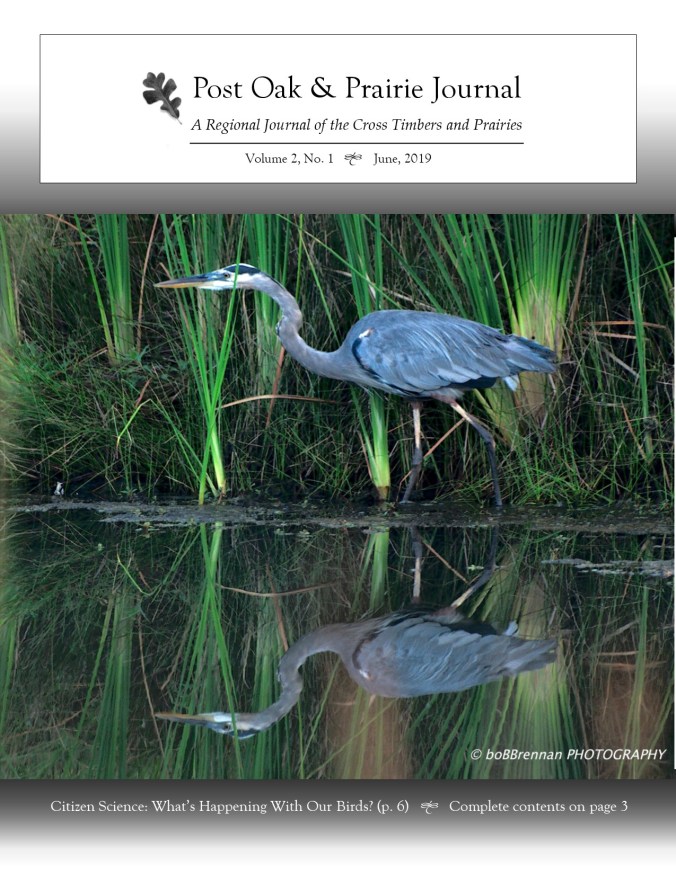
POPJ was “A record of observations, description, and analysis of plant and animal communities in North Texas. The focus of the Journal is on the Cross Timbers, the Blackland Prairies, the Rolling Plains, and the Post Oak Savanna ecoregions.” There was and will be everything from data-driven natural history reports to essays about the places and how we fit in those places – our roles in understanding, managing, and conserving. Authors of articles are largely Texas naturalists ranging from university faculty and students to naturalists with less formal training. Have a look at the sample issue and see if you might want to write for it!
Thanks, y’all!

