A Big Place on a Winter Day

Sitting beside the Trinity River, on the Crosstimbers Trail, I wrote, “The place is so big that it makes the voices of the occasional human visitors seem small.” On a warm Friday in February, there were quite a few people at the Fort Worth Nature Center and Refuge, making bigness an important quality if the trail was going to live up to the name “refuge.”

This is a big place, as nature centers go. Its 3,621 acres are loved by many, and that is partly because it is big enough for a little solitude. The Crosstimbers trail borders the river for the first half-mile or so, and that’s a popular walk for people who want to see the water and maybe hope to see a ‘gator. Once the trail bends back into the woods, there are fewer people, and once you get pretty far back on that loop trail, you might be on your own for a good while.
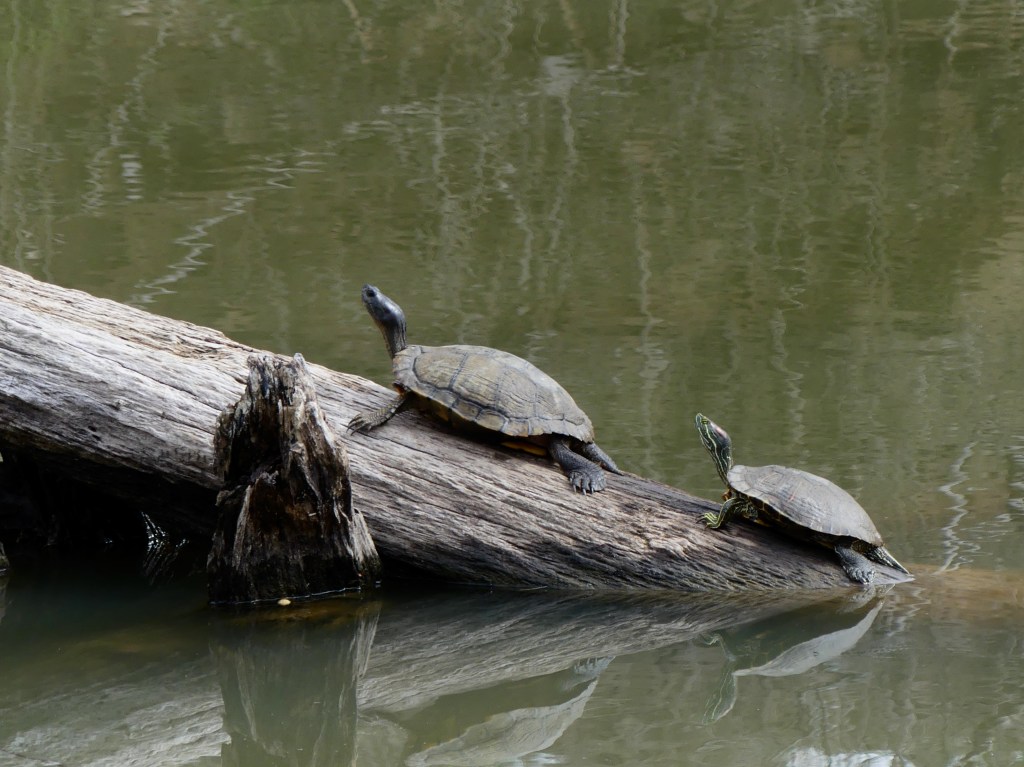
Two red-eared sliders – an old melanistic male and a younger one on the log below him

I got started at 10:40am on a day when thin clouds could not hide the sun and you could walk comfortably in a t-shirt. I watched a great blue heron fly over the nearby marsh and said hello to the cooters and sliders basking on fallen logs and branches in the water. There were plenty of American coots swimming nearby.
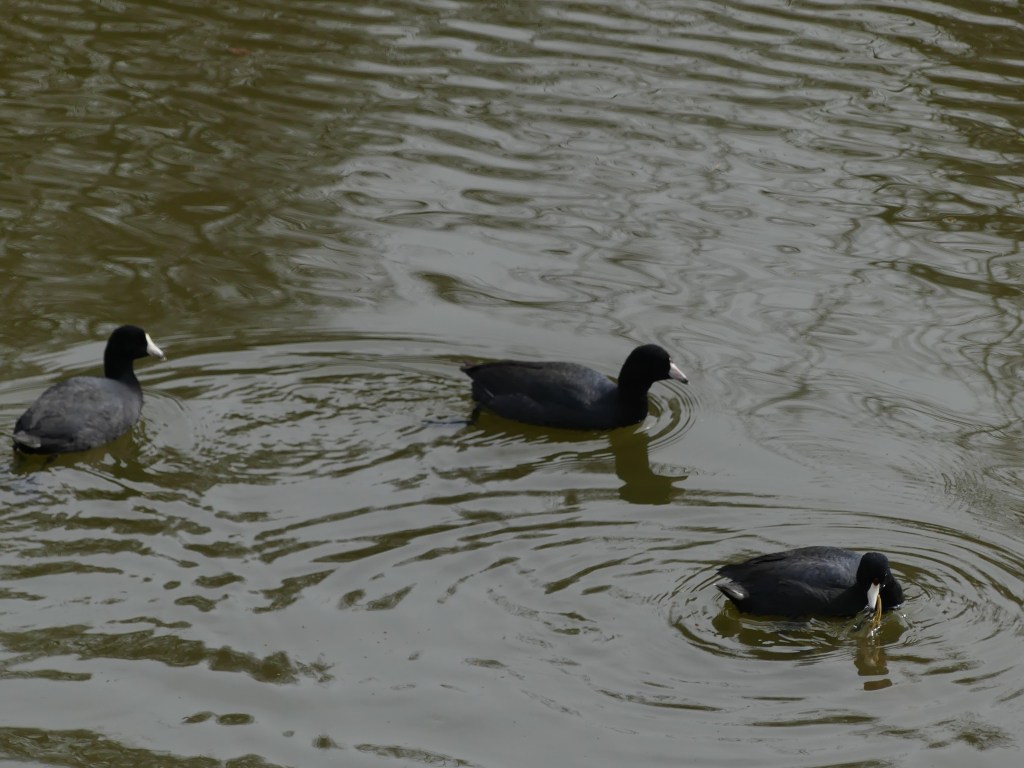
Three American coots swimming in the river

The bottomland forests beside the river were full of stately old trees – cottonwoods and other species – and they are often entwined with one or another climbing vine including poison ivy. One old cottonwood tree has huge vines braiding around its trunk.
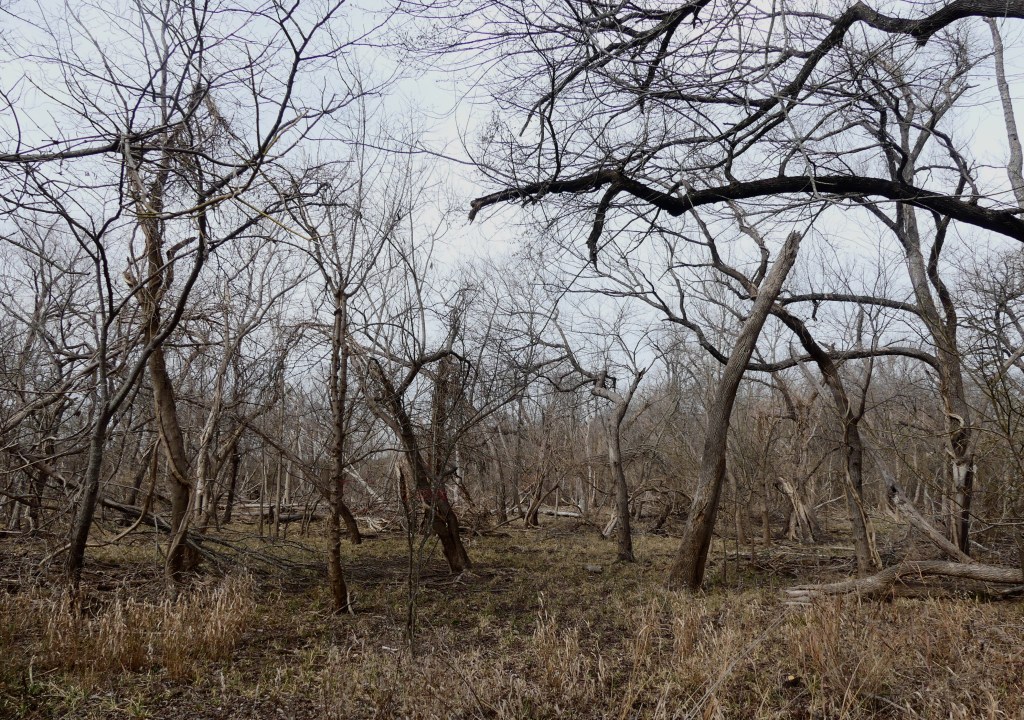
Bare woody branches of shrubs frequently contained a spray of bright red berries where a kind of holly called possumhaw grows. And around me in the woods were the calls of many birds, including Carolina chickadee, tufted titmouse, and northern cardinal (identified by the Merlin bird ID app). My thermometer showed that it was 71.8F at 11:25am.

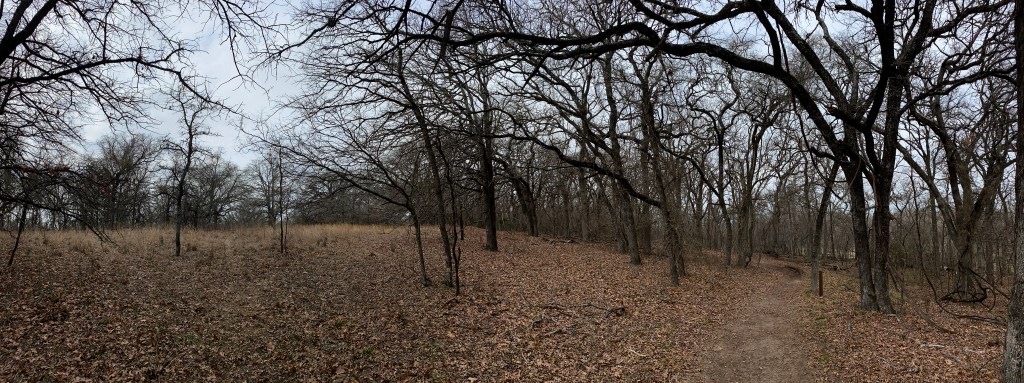
Then it was time to follow the trail back into the woods. There are plenty of oaks; big bur oaks with big notched leaves and the post oaks that are a signature species of the Cross Timbers region. There is ash, cedar elm, and some hackberry trees. Here and there the woodland opens up to a little glade or pocket prairie with native grasses. I took a few photos on the “pano” setting because today the place seemed so big that only a very wide photo might do it justice.

The trail leads through galleries of old trees and the land slopes away to the north toward a wetland. On the other side, the woodlands and open grassy patches gently climb toward a high place. On my walk, the winds seemed to shift around 11:35am and become cooler.
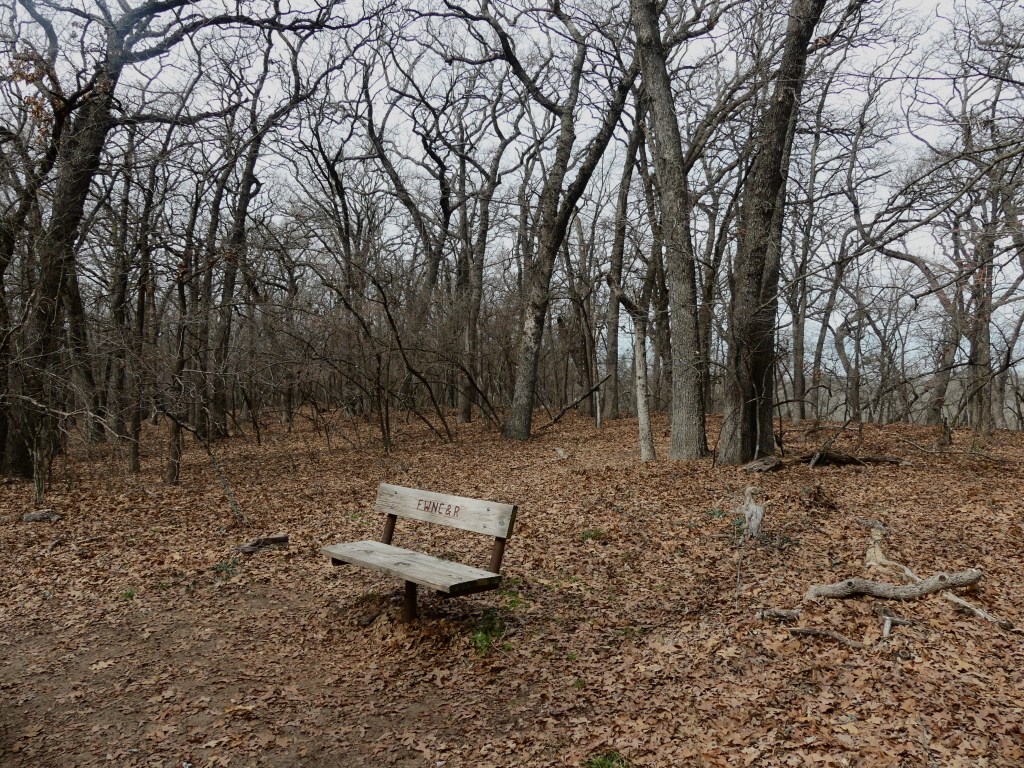
At what seems to be the highest point, there is a bench, perfect for sitting and taking in the wonderful forms of the trees, the carpet of dropped leaves, and the birds. Today it was very quiet and peaceful.

I started back, and as I walked the breeze scattered leaves ahead of me on the trail. That breeze was strengthening and making its voice heard through the tangle of trees. The branches shredded the current of air. Sometimes it was a whoosh and sometimes a soft roar, falling away to silence.
As I got further along, at one point I looked down the trail to see two deer looking back at me. They were silent and still as statues, sizing me up and deciding if I was a source of trouble. After a moment, the group took off, with those white tails flashing a warning to the rest of the group.

Two white-tailed deer froze on the trail as I came into view

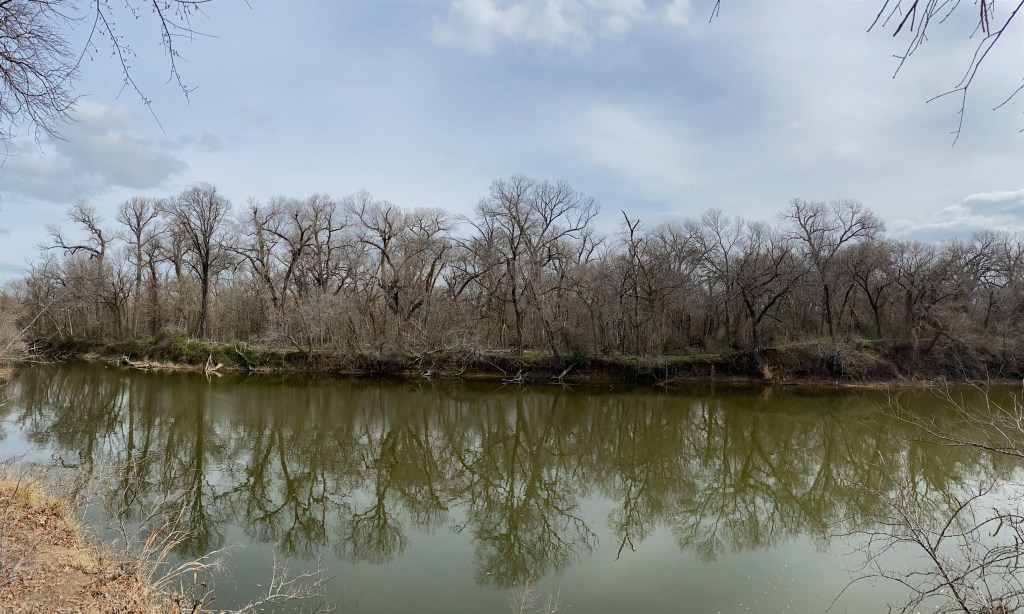
When I reached the river and sat on a bench, there was the chatter of a belted kingfisher somewhere nearby (though I could not see it). Merlin also identified the call of a northern flicker. The thin clouds were pulling apart, and when the sun shone down it felt warm. The temperature had fallen a little to 67.6F, but in the little nook where I sat on my bench, the sunshine felt good.
The kingfisher clattered persistently. Another bird came in for a dramatic fast landing, wingbeats skimming the surface of the river. The bird then paddled around as if nothing had happened, sometimes diving down into the water. With the lens on my camera I got a good enough look to see that it was a pied-billed grebe.

Pied-billed grebe

The relatively thick bill with a dark ring around it was a giveaway. The Cornell website gave more information about what I observed about its diving: it was hunting. This bird likes crayfish and also eats small fish, dragonfly larvae, and it would not mind a leech or a small frog.

In that last hour I was grateful to have seen no one along the trail, and was happy to be by myself. I do like walking with others, but on some days like today, the solitude was peaceful. I am so thankful that Fort Worth has one of the biggest urban preserves in the country – and that it “feels” big.
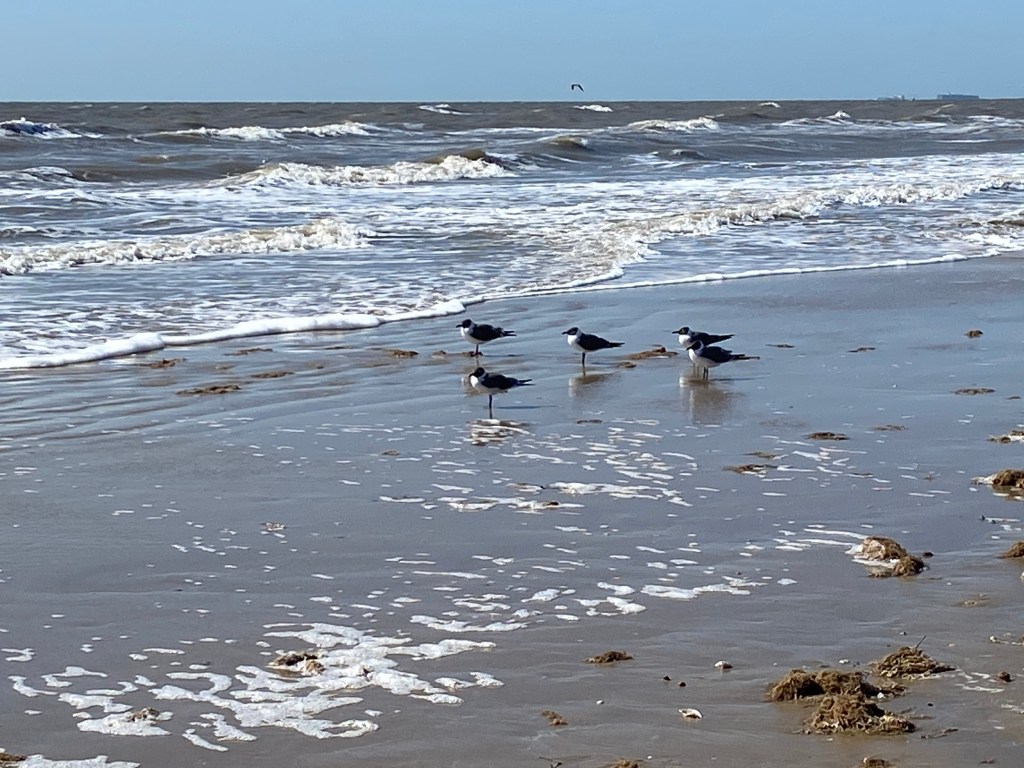
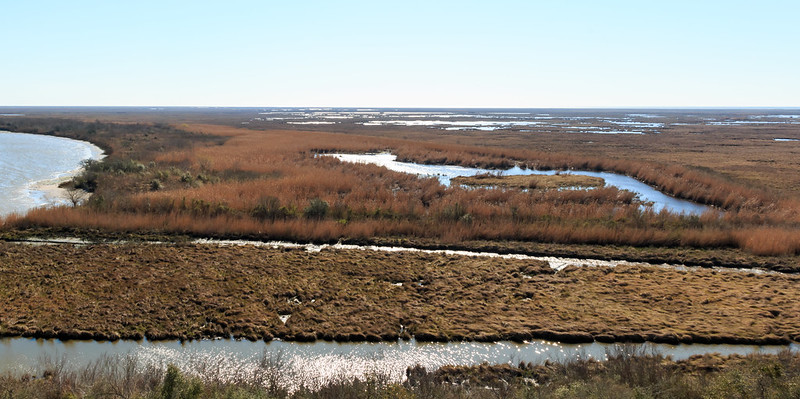
End of Winter, at the Coast

A cold morning beach on the Bolivar Peninsula (photo by M. Smith)

Meghan Cassidy and I traveled to the upper Texas coast the weekend of March 6, working on the book project about mindfulness in nature in Texas. I am posting a few preview photos and a little description of what Anahuac National Wildlife Refuge and Sea Rim State Park were like, here at the end of winter. Most of the photos here are mine (they won’t be in the book; I snap pictures but Meghan takes photographs on a whole other level!) and a few are Meghan’s.

From the High Island Bridge (photo by M. Cassidy)

It’s the end of winter if you count the seasons according to equinoxes and solstices. By that reckoning, we’re still in winter until March 20th, but that first weekend in March felt like the cusp of spring. The smallest wildflowers were beginning to bloom, and the sun was higher and stronger, to the delight of all the wildlife.

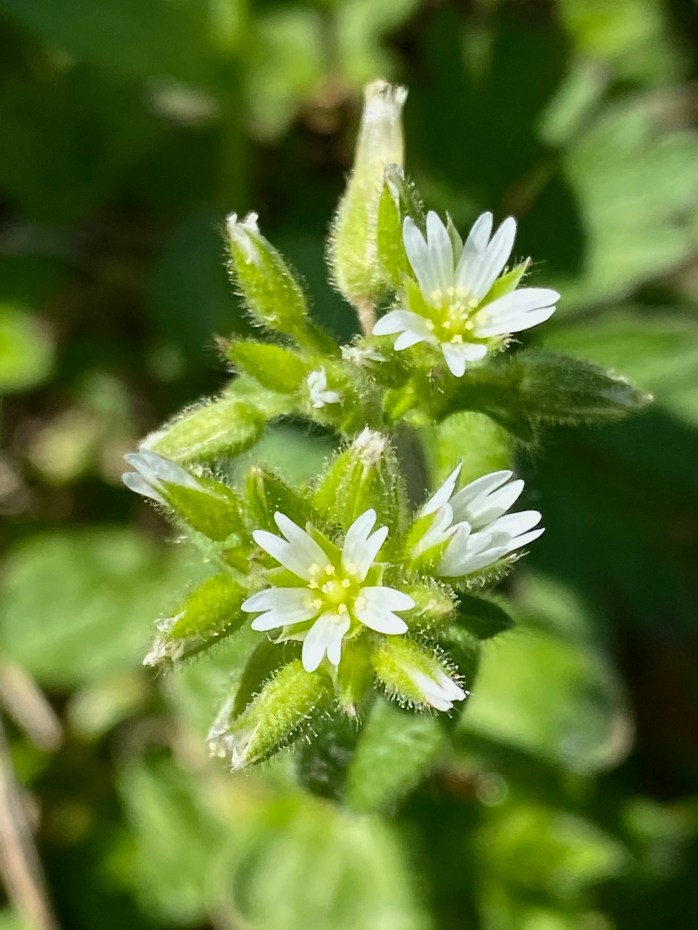
A humble plant with a fantastic name: Sticky Mouse-ear Chickweed (photo by M. Smith)

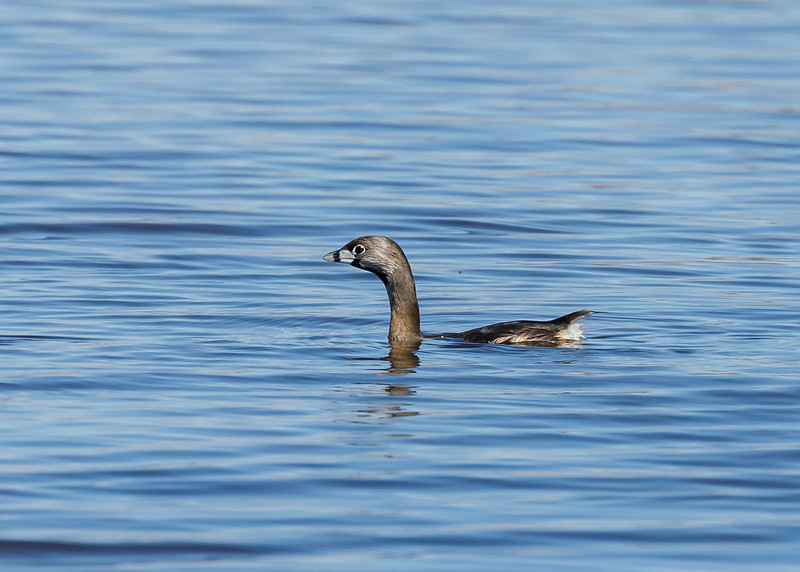
The bird population was busy and diverse. We saw White Ibis, American Coots, shovelers and other ducks and the occasional Pied-billed Grebe like the one below.

Pied-billed Grebe (photo by M. Cassidy)

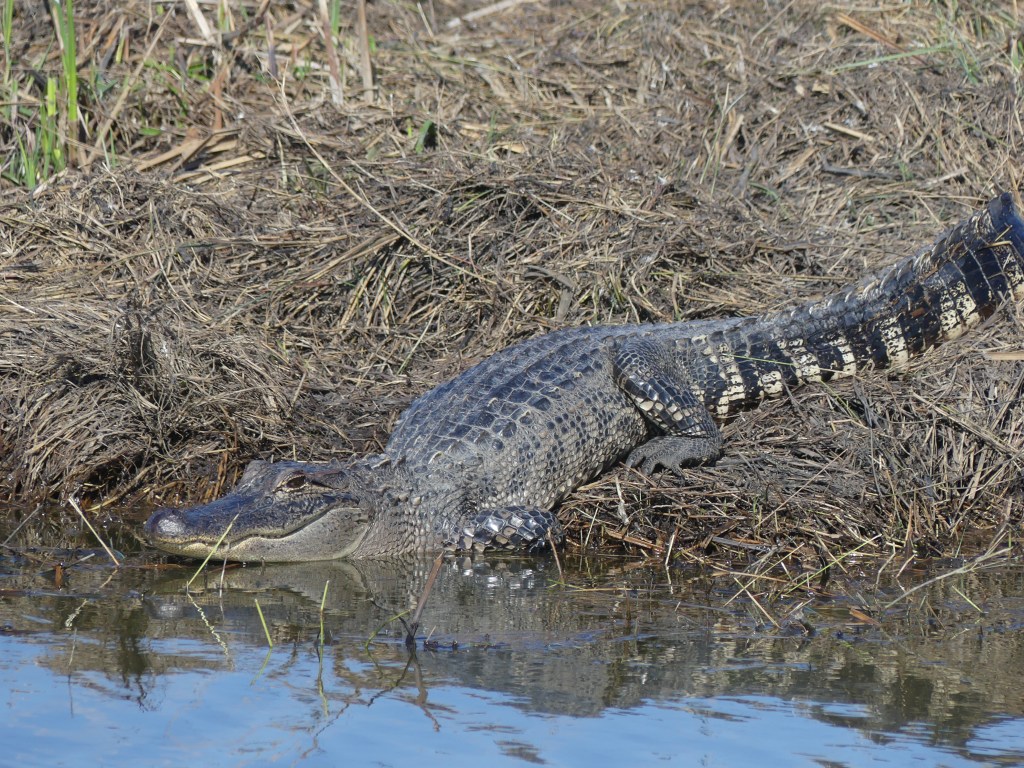
Anahuac is the first place where I saw American Alligators in large numbers, years ago on another early March weekend. They were out basking in the sun then and they were doing the same thing now, resting on the banks of waterways like inert statues. The alligators here seem to be accustomed to the many birders and naturalists who pass through without getting too close. Make no mistake, if disturbed they are capable of instantly plunging into the water to get away, or even charging a person if they harassed a ‘gator. And for short distances, they can move faster than we can.

American Alligator (photo by M. Smith)
Another alligator, re-entering the water (photo by M. Smith)

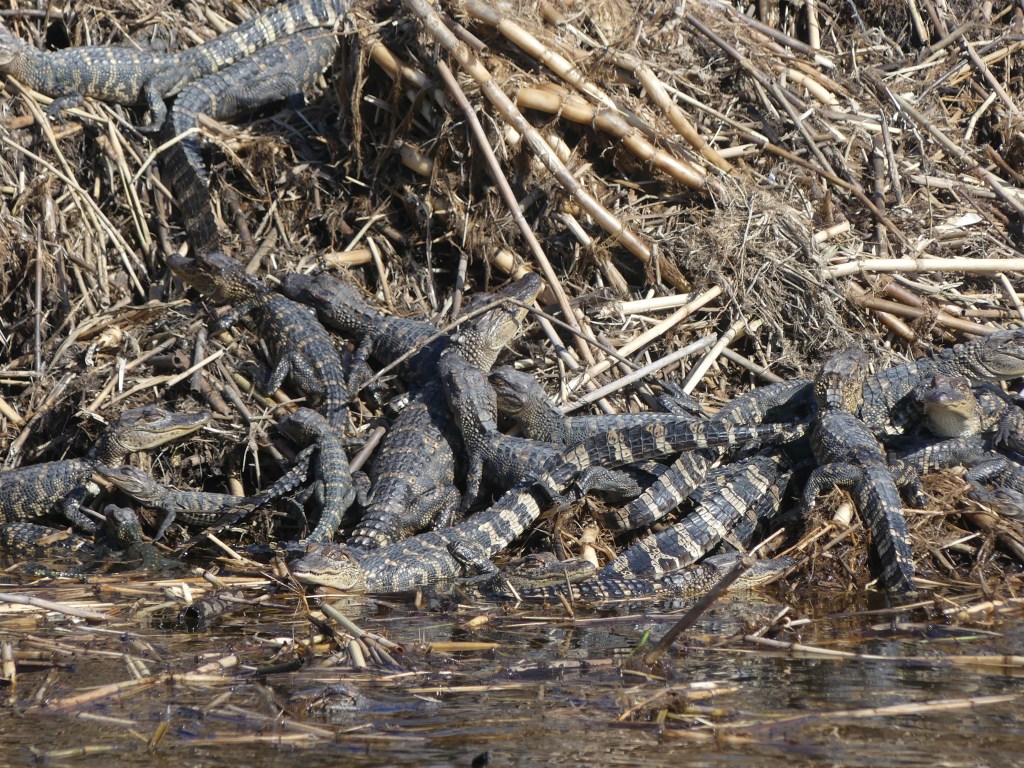
We came to a place where over forty young alligators were basking, piled on top of each other in many cases. Some were adolescents and some appeared to be last season’s hatchlings, so they were not one nest of alligators. I have described for the book what happened when a little water snake came cruising by and decided, through the worst decision making ever, to swim over to the edge right where the greatest concentration of little alligators lay.

The World Conference of Young Alligators, or so it seemed (photo by M. Smith)

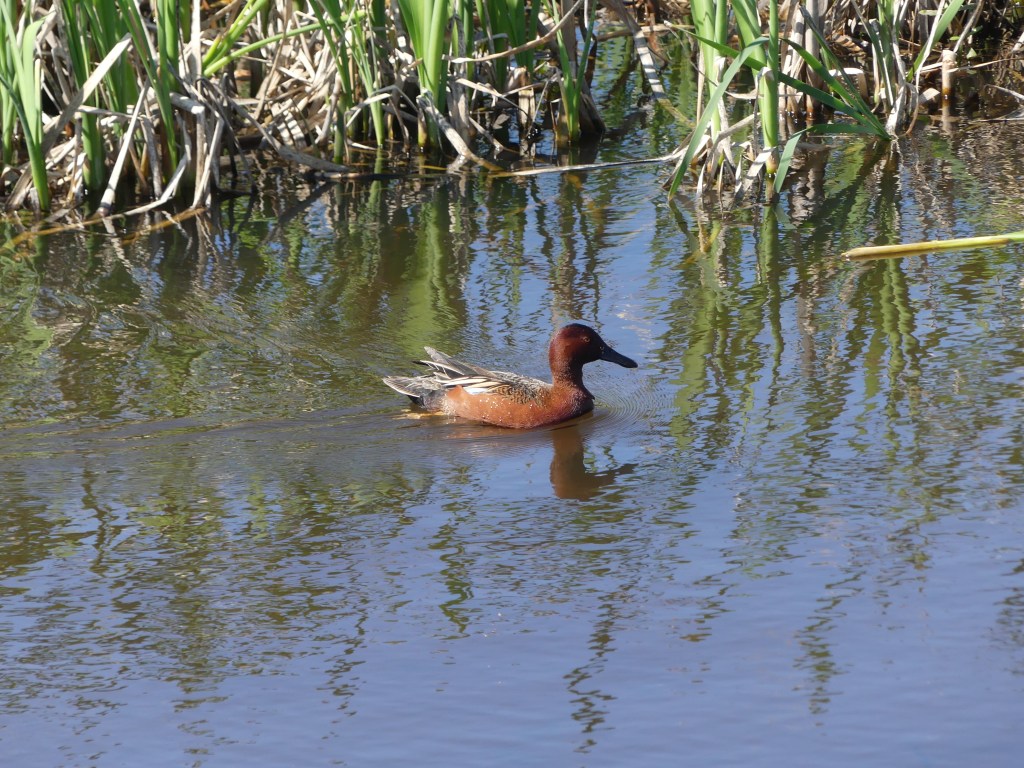
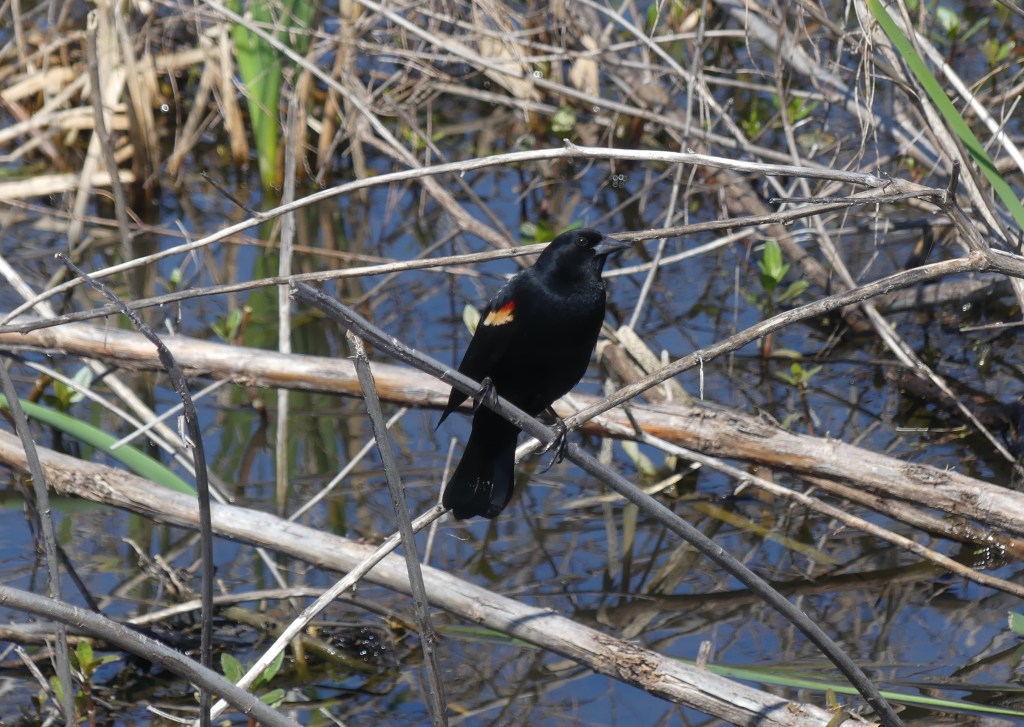
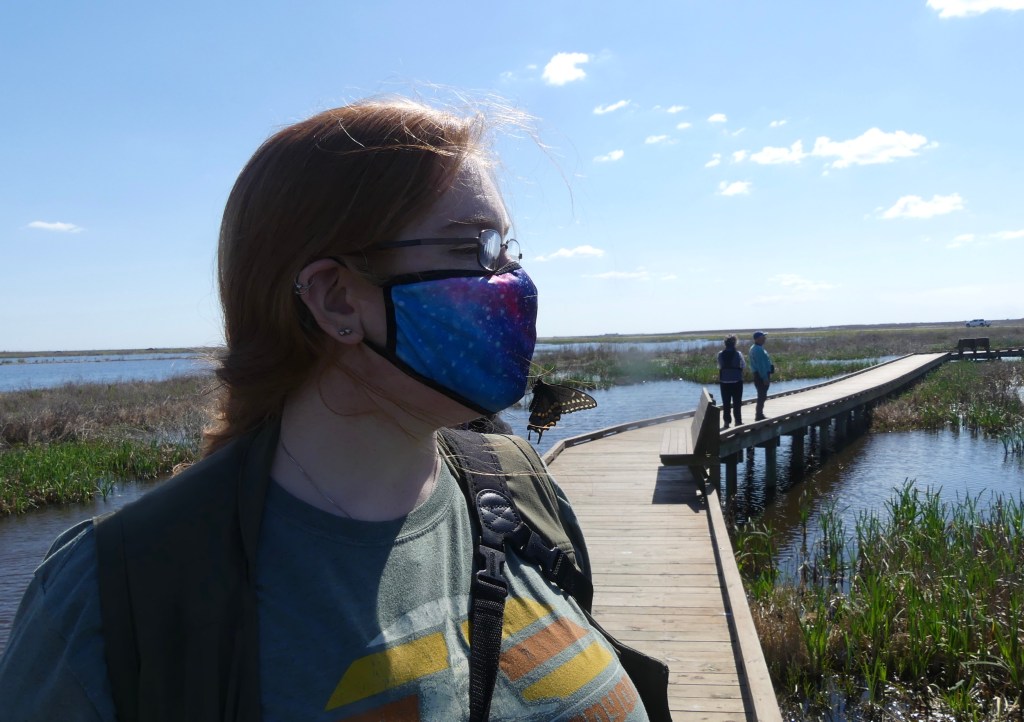
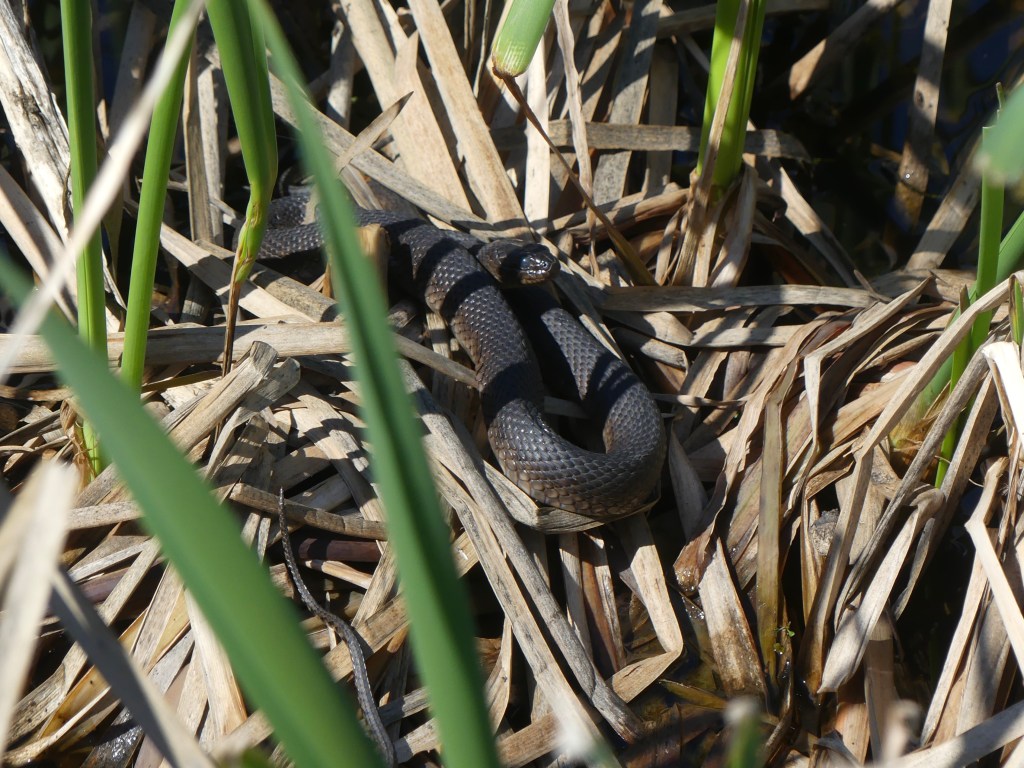
The boardwalk on the Shoveler Pond at Anahuac NWR is a wonderful place, extending over a marsh and ending with an observation deck. There was an amazing variety of bird life, including a Cinnamon Teal that swam near the deck for a while. Turtles were basking, Red-winged Blackbirds were busy among the reeds, and a couple of Mississippi Green Watersnakes basked very close to the boardwalk. Those were life-listers for me, as I’ve seen almost all of Texas’ watersnakes but not this one until now.

Cinnamon Teal (photo by M. Smith)
Red-winged Blackbird (photo by M. Smith)
A swallowtail greets Meghan on the deck (photo by M. Smith)
A gar waiting in the shallows (photo by M. Smith)
Mississippi Green Watersnakes – the tail of the second one extends up from the bottom of the photo (photo by M. Smith)

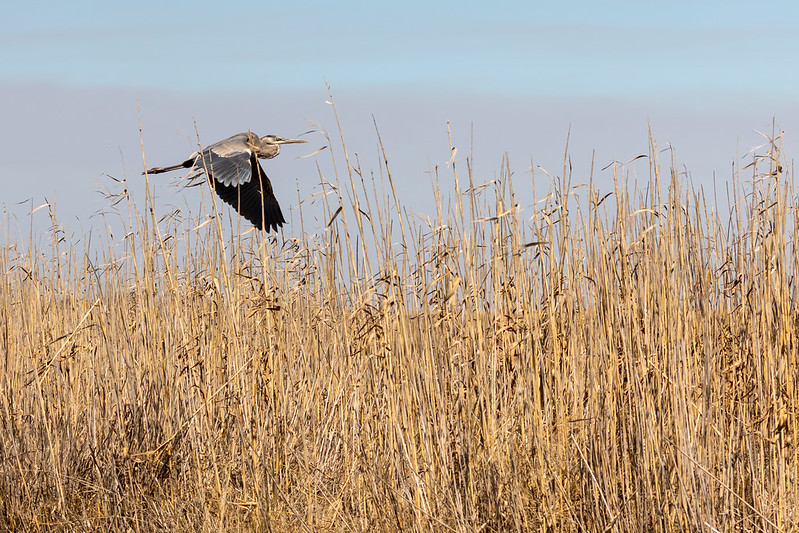
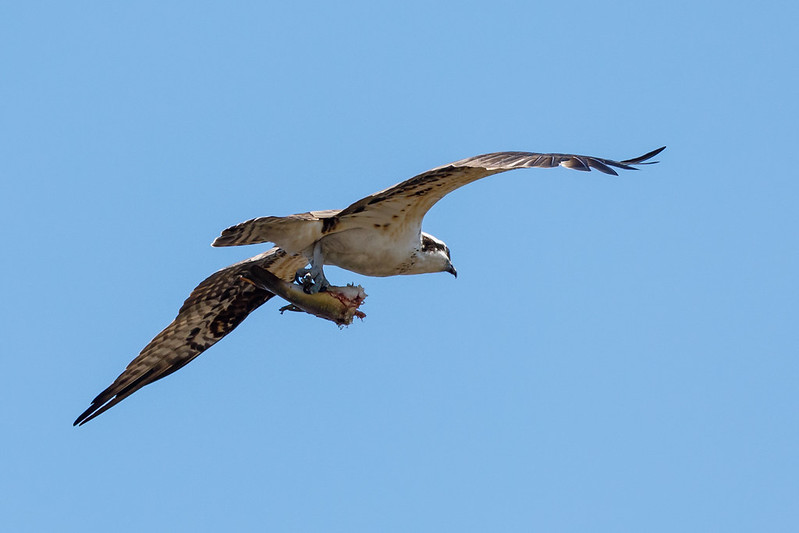
The Great Blue Herons were very common, and we spotted one that had just captured one of the local snakes. Meghan did get a couple of photos as it lifted off ponderously and flew away (that shot should be in the book). There were other larger birds such as an Osprey we saw in McFaddin NWR.

Great Blue Heron (photo by M. Cassidy)
Osprey with a half-eaten fish (photo by M. Cassidy)

There was a mindful component to all of this, staying in the moment and fully attentive to the experience. In the car (on the Shoveler Pond Auto Loop, for example) we weren’t driving around with the radio on and chatting about various things. There were periods of silence along with times when one might get the other and say, “look at that!” We spent the time absorbed in the experience of the sunshine, bird calls, wildlife, and the various textures and colors of the water and vegetation.

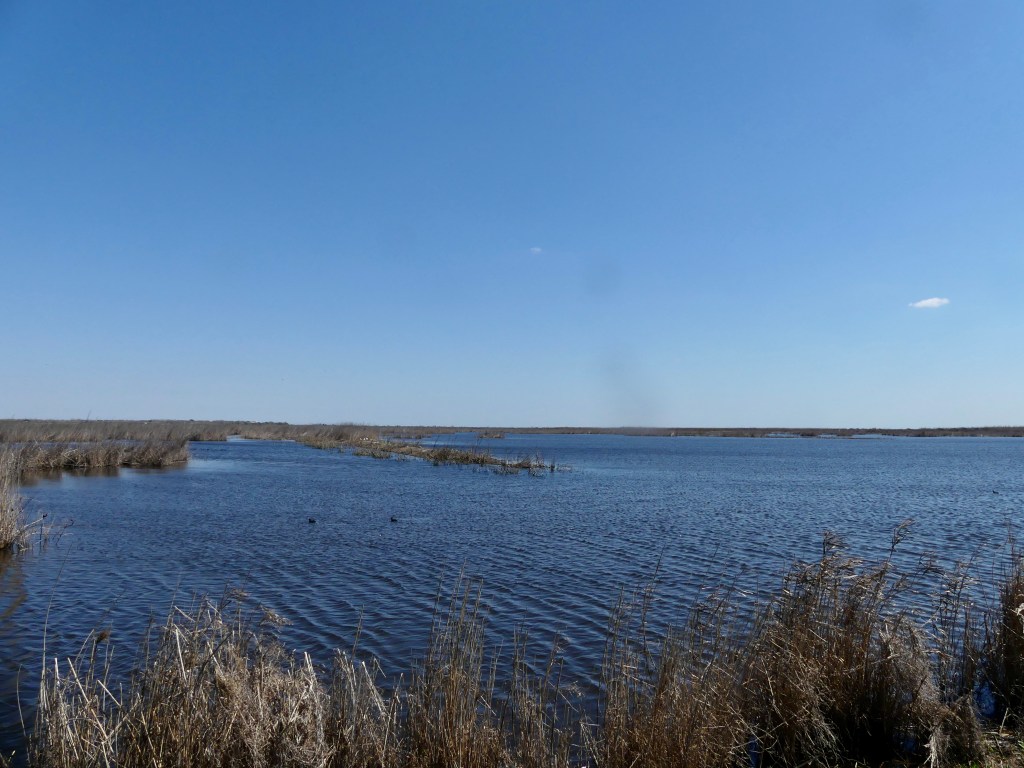
The varieties of blue in the water and sky at Shoveler Pond (photo by M. Smith)

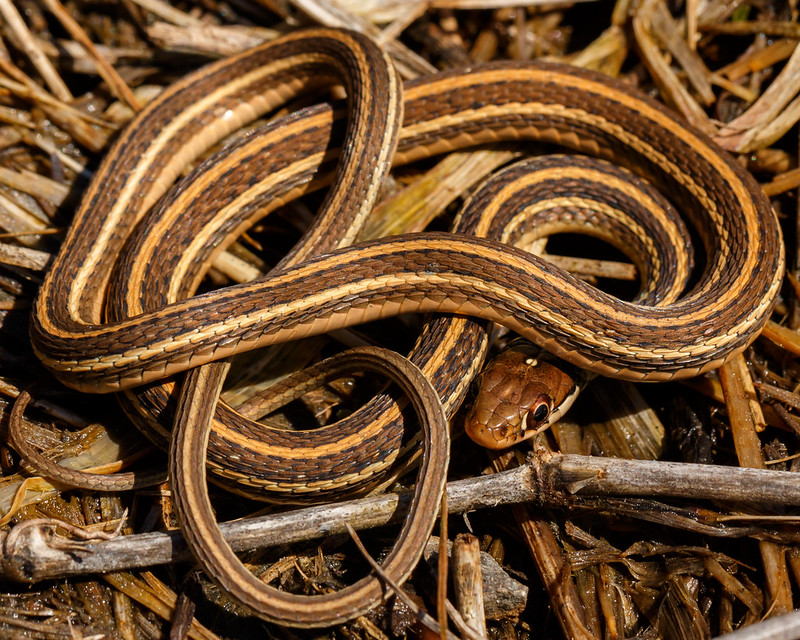
One a drive near the beach, going to McFaddin NWR, Meghan spotted a juvenile Gulf Coast Ribbonsnake, and we were able to get some photos. Ribbonsnakes are always elegant and graceful, and I am a big fan of the brown and golden colors in the Gulf coast subspecies.

Gulf Coast Ribbonsnake (photo by M. Cassidy)

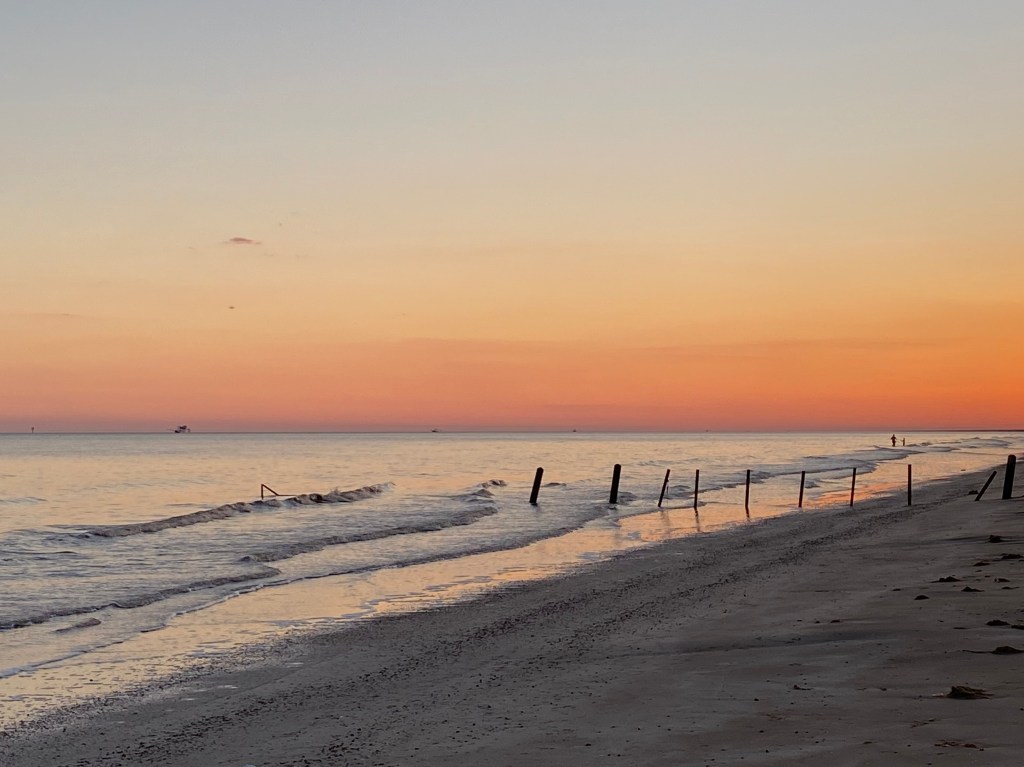
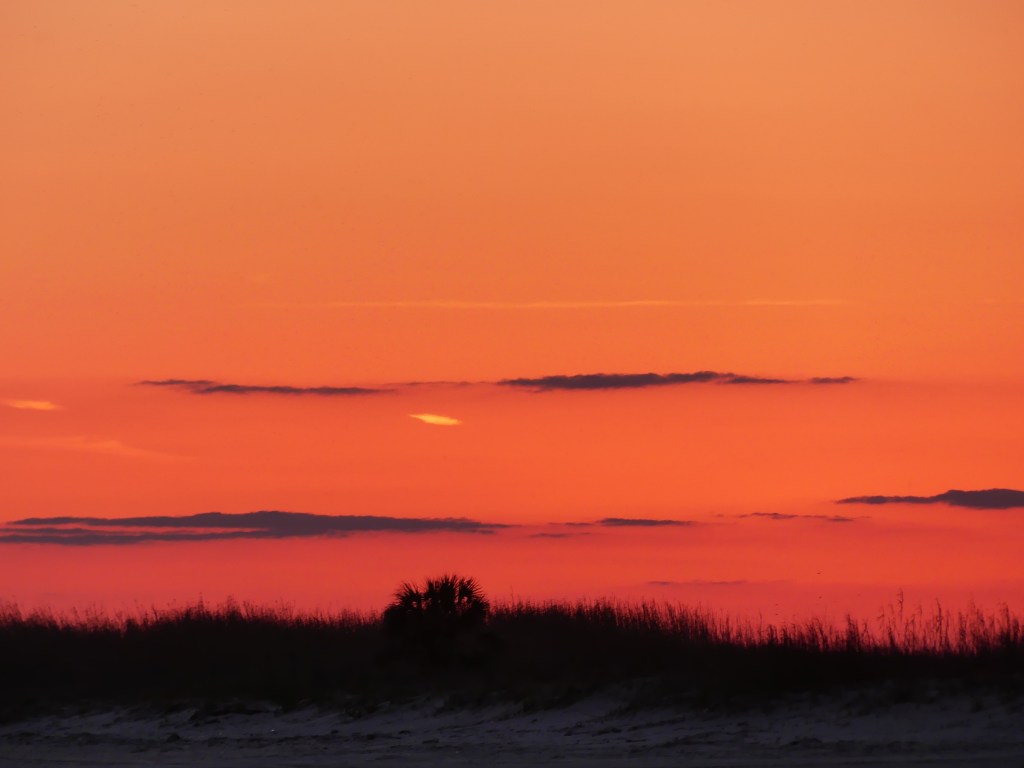
The beach at Sea Rim State Park, when sunset came on the first day, was memorable. The beach was nearly deserted, which is a gift in itself for someone who wants to experience the waves and sand in their full depth and breadth, without the cars, radio, and chatter. As the sun went down we saw a child far away, standing in the waves fishing. I began to think about the possibilities – what a child like that might carry with him or her from that day. A beautiful sky, the wild Gulf of Mexico, imagining some amazing creature that might appear at any moment on the fishing line. I hope that the adult who was there with the child provides many other days and nights when such magical experiences can occur.