Kids in Nature – Mindfully

I will be focusing more time on inviting others to some semi-wild place and experiencing it mindfully, doing some nature journaling, and learning a little about the plants and animals that live there. I’ve led nature walks before (with the LBJ Grasslands Project, for example), but these outings will more explicitly focus on mindfulness and nature journaling. If you are reading this in the North Texas area and would like to join me, please use the Contact page to send me an inquiry. At this point there is no fee, but I’ll check the status of the “tip jar” at this website in case anyone would like to contribute! Some of these outings may be more for adults, but some will be for families with kids at least ten years old or older.

Getting children out to experience nature mindfully involves their being less “somewhere else” and more “right here, now.” Somewhere else is thinking about something that happened this morning or hoping you can do something tonight, wishing your friend was here with you, and imagining how Batman could knock that tree down. Being right here is noticing the shapes of clouds, feeling how the ground feels under your feet, listening to a frog call, and recognizing prickly pear cactus and walking around rather than through it. Mindfulness involves paying attention to the present moment, without judging it as good or bad and without wishing it was different. 

Some kids may like the idea of taking a walk in which we will see everything more clearly, hear more things, notice smells, and touch a few things to see how they feel. I might explain to them that we will “turn down the background noise” of our thinking and talking while on the walk, so that we can experience the walk more fully. I will mention that this is not always easy for any of us. Our brain wants to turn the volume back up, and that’s normal, it’s what brains do. So when we notice that we’re thinking about something else, we just let the thought go, let it float away, and bring our attention back to what is happening now. We may have to do that over and over, and that’s OK.

Some kids may be used to blasting through a nature walk while talking to friends. If a nature walk seems unfamiliar or boring, they may be escaping by thinking of other things and going through the walk on autopilot. The job of a teacher or parent is to invite them in and make it seem worth a try. One way to do that is with nature games that provide a little structure for paying attention to the things around them. Or it might add interest to offer some natural history information (“That bird over there is getting ready to fly to South America!” “That rock is the silt and seashells from a beach where dinosaurs walked”). We may want to alternate periods of quiet attention with times when kids talk with each other and with us.

A nature journal is your own personal story, in words and pictures, of places you visited and things you experienced. You write a little and maybe draw a few pictures in a blank book or notebook – nothing fancy is needed. The idea is to stop and think about what you’re experiencing and preserve a little bit of it on paper. For some people, an entry might be mostly contain information about the place, the weather that day, and seeing a kingfisher fly over the pond. Someone else might write a poem about sun reflected on the water and the flight of that kingfisher, or maybe they would just draw the bird with a few notes about seeing it. There’s more than one way to keep a nature journal.

The only way I know to do this with kids is to have a responsible adult (family member or family friend) who brings the child and stays with us. It really cannot be a drop-off, but we would be happy for the adults to join in the activities. The ideal group, with kids or adults, is small – perhaps five or six. A small group just seems quieter, more focused, and better able to get to know each other, and so I will limit the group size.

What is my background for doing this? I have been licensed as a Psychological Associate for over 38 years and have led walks in nature for adults and kids. I’ve written two books about reptiles and amphibians and, most recently, a book about mindfulness in nature.

We’ll plan a walk when we are edging toward spring and have some sunny, warm-ish days. I will either use urban preserves and parks like Fort Worth Nature Center & Refuge, Tandy Hills Natural Area, or Sheri Capehart Nature Preserve, or places that are a little bigger and away from the city like LBJ National Grasslands. I hope you can join us!

A Letter for Halloween

Some of you download and read the Letters to Nature Kids that I write periodically. They’re available within the “Publications” page. I may not post about each one, so they may be overlooked by some who might want to read them. (Parents or teachers might download them and pass them along to kids, but adults read them at least sometimes.) This time I thought I’d put in a word for the Halloween issue.

The first thing I thought about was, of course, how we hijack things in nature, presenting them in ways that make them fearful. Bats, spiders, owls and such. On the one hand, I don’t want to get on my high horse and spoil the fun. I even tried to join in the fun a little by saying: “Bats live in the opposite of the bright daytime world in which we see and hear birds. When people think of angels, they give them feathered wings, but images of demons often have bat wings.”

On the other hand, after Halloween is over, kids should not be left with fears of these things. So I said, “People make up stories, either for fun or as a way to try to explain what they don’t really understand.”

The issue I feel most strongly about is kids (or anyone, for that matter) who take it too far. Halloween should not be an excuse to badly scare some child. I said, “It can be fun to be scared just a little, when we’re with friends and we know the scary thing isn’t real. … Sadly, some people enjoy scaring others because it makes them feel more powerful or stronger than the person that they scared. I’m not talking about kids having fun with each other, I’m talking about a person who enjoys seeing someone really afraid in a way that’s not fun. That’s bullying and it is not OK. Stay away from someone like that.”

If you know someone who might enjoy this Halloween issue, download it and pass it along. And have a safe, fun Halloween!

How It Works

Sharing the adventure, being a partner in discovering the world, feeling the excitement when the fish stirs beneath the water – the joy and wonder are mine, too, because we are connected.

We are connected by experience together, the shared looks and little acts of attunement. I step up to help or protect and she answers with confidence, love, or protest, and the dialogue continues.

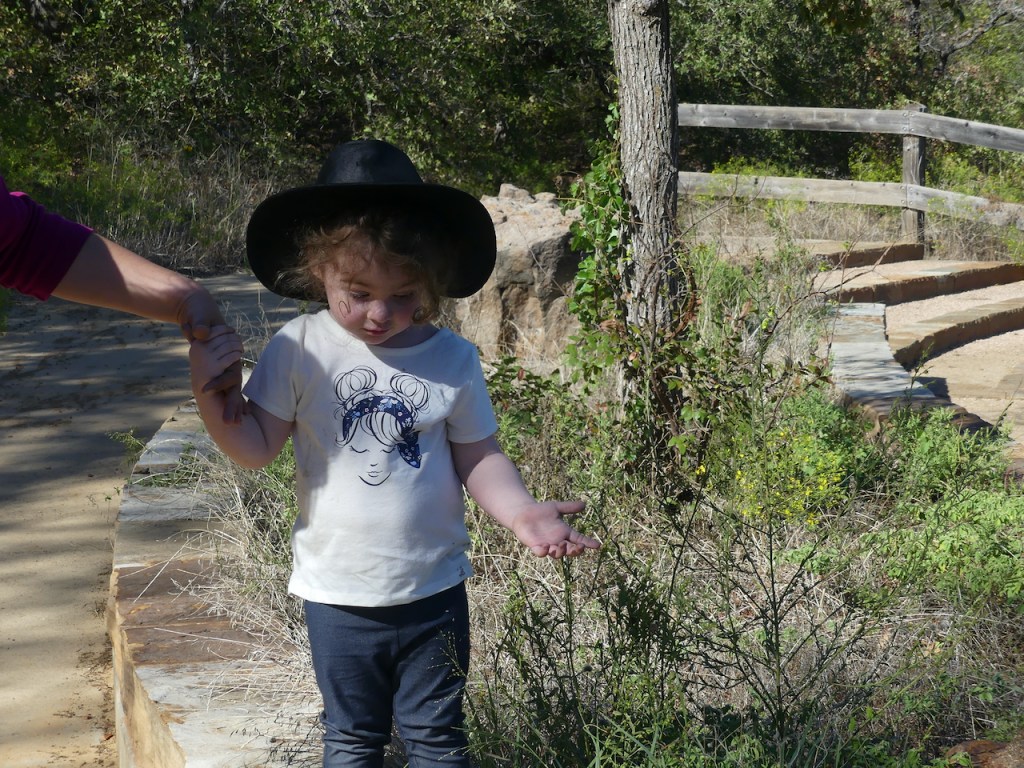
She is on the ground observing an inchworm and I sit with her. Afterward, she climbs the boulders while holding my hand, and so I am the scaffolding that keeps her upright, her partner again.

Fearlessly pushing her coordination and balance to the limit,  she has that smile that says, “I got this,” and she does for a while. When she falls, I comfort her, safe harbor and a little repair and back out again.

Words and roles change, the scaffolding takes other forms at different ages. But shared looks, partnership, those little acts of attunement, with understanding and empathy – that’s always how love works.

Giving Thanks for Nature Kids

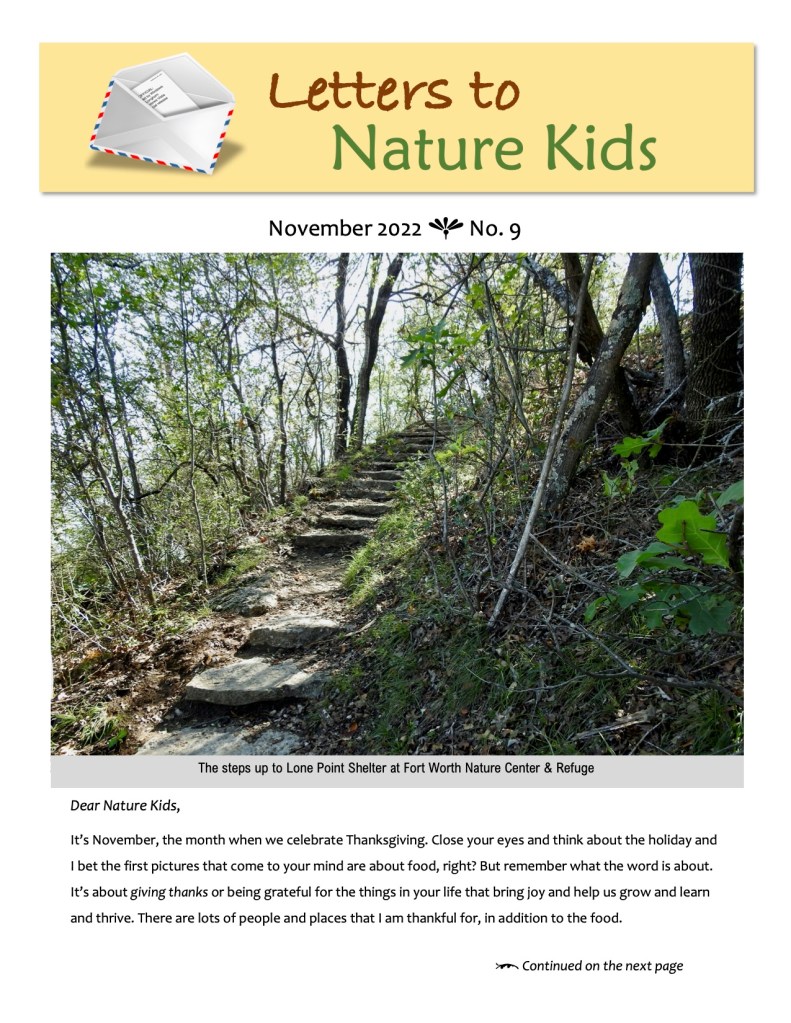
“Nature kids” are those children and young people who appreciate nature and understand its magic. I enjoy writing “Letters to Nature Kids” and offering them to nature kids and their families, and to some adults who may enjoy them as well. This month I wanted to write about gratitude (it will soon be Thanksgiving, and it ought to be Thanksgiving every month). I hope you will download this free issue and share it with anyone who might want to read the letter and see some photos from the Fort Worth Nature Center & Refuge.

“I Hope One Day They Will Be Protected”

Today I talked with a great group of kids at River Legacy Nature Center in Arlington. The twenty or so children were in a week-long “Hands-On Herpetology” class, having fun and learning about native reptiles and amphibians. I brought a few snakes and we talked about things like how they live as well as being safe when around them.

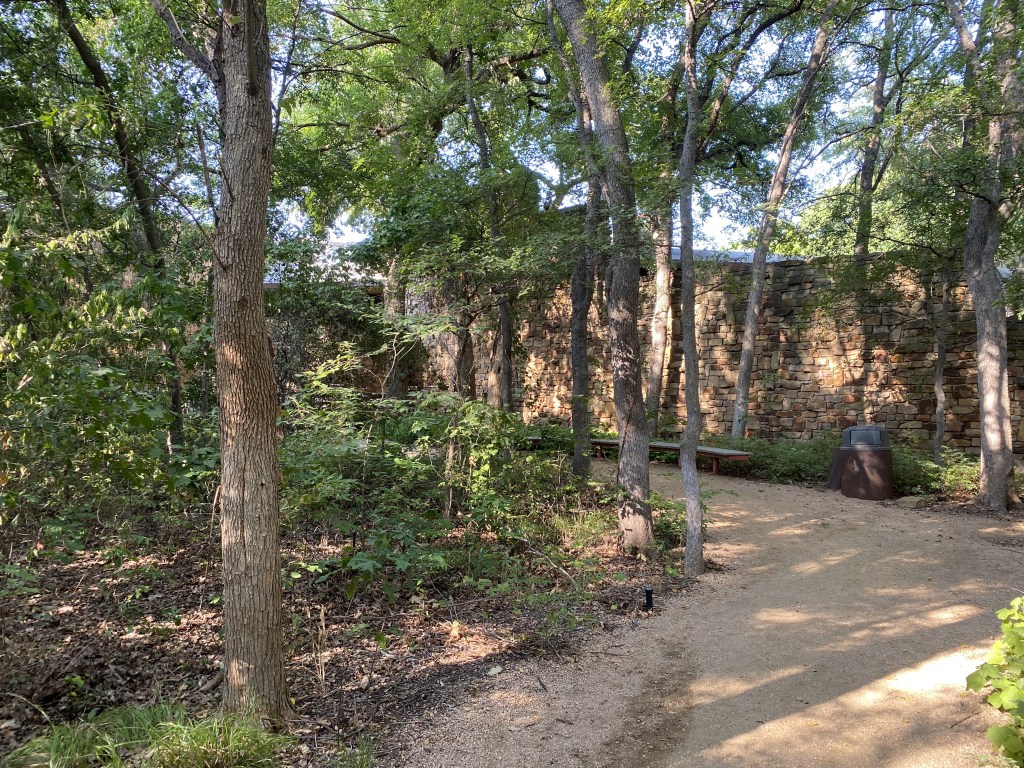
The trail approaching the River Legacy Living Science Center

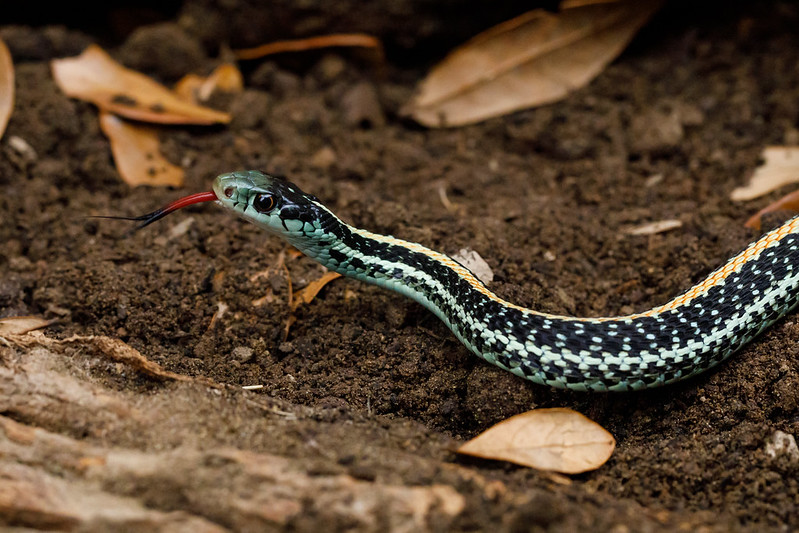
One of the snakes I brought is a Texas garter snake. He has a dark background color and three light stripes, big inquisitive eyes and an active, athletic build. We talked about how snakes with stripes generally rely on speed – and a sort of optical illusion – to get away from predators. The thing is that when “Tex” or other striped snakes move, it’s hard to see their motion. If they had spots, it would be easy to see the spots move as the snake’s body slipped away. The stripes, however, seem to stay where they are, until the stripes converge on the narrowing tail and then the snake is gone. The predator may be left empty-handed.

There’s a tendency for people to think of garter snakes as common “garden snakes,” but in the case of Tex it just ain’t so. He’s a member of an uncommon subspecies of garter snake whose fate is not well understood. The Texas Parks & Wildlife Department considers the Texas garter snake to be critically imperiled. It appears never to have been actually common, but there were places here and there (particularly within prairie habitat) in which they might be found at times. A recent study noted that despite trying to find these snakes in the field in 2013 and 2014, researchers were not able to find any. Tex is a long-term captive donated to me years ago by a landowner in Hill County so that more people might see and understand Texas garter snakes.

The Texas garter snake (“Tex”) – photo by Meghan Cassidy

My discussion about this was much more brief with the kids, but they got it that this is a snake that may be disappearing. When I mentioned that they are not legally protected, a girl commented, “I hope one day they will be protected.” Me too. I hope one day we will understand the reasons for the snake’s decline in more specific ways that allow us to protect it. And I hope we continue to have children who, when they learn about a species that is in trouble, want to protect it.

We talked about being safe when out in the field where there could be venomous snakes, and I showed the kids a prairie kingsnake and the young bullsnake that was a big hit with kids in Dallas earlier this week. The kids asked good questions and they already knew a number of things from their week at River Legacy. But nothing quite equalled that girl’s comment. It was an offhand remark that revealed her empathy or her capacity to care about a unique, lovely little member of the natural community. It made my day.

More Children in the Woods

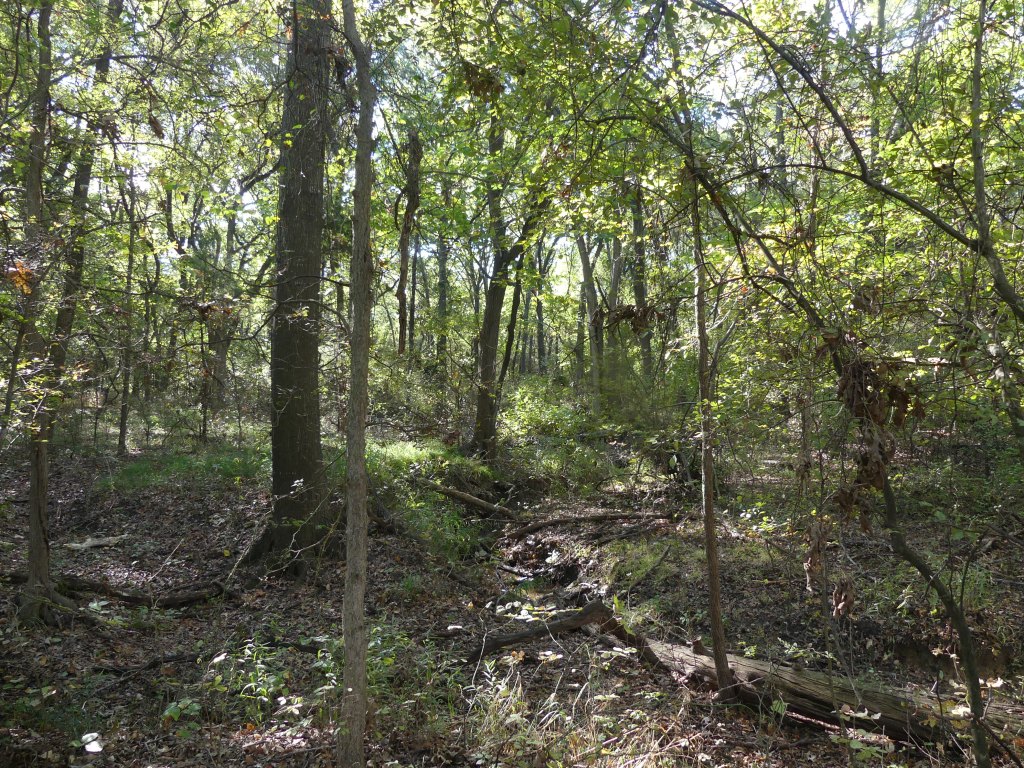
Children should walk in the woods, often. They should be able to do so fearlessly, knowing how to explore safely, with wonder and confidence. That doesn’t happen enough for kids growing up in urban areas. Recently, I was asked to talk with a group of kids at TR Hoover Community Development Center in Dallas. Despite living near the Great Trinity Forest, I was told that a concern about the presence of snakes kept many of the kids from exploring the woods. Volunteers from Master Naturalist programs thought I could help the kids understand snakes in a more realistic way. I was eager to try to help with that.

There are lots of possible reasons that urban kids might not visit the woods. There can be the fear that dangers lurk in the woods. Some of that can be realistic, and some not so much. When I asked about their worries, one of the children mentioned wolves. I could reassure her that there would be no wolves, but some of the wildlife might potentially be dangerous. Surprise close encounters with feral hogs, for example, or a copperhead half-hidden in the leaves. Kids need to know about watching where you are going and knowing what to pay attention to.

A young copperhead

If they haven’t developed the skills that can make a walk in the woods full of delightful discoveries and minimal risk, it would not be surprising. In cities and suburbs, children play inside most of the time, and a lot of that time is spent in front of a screen of some kind. The American Academy of Child & Adolescent Psychiatry reports that elementary school-aged kids spend four to six hours a day in front of games, TV, tablets and phones, and the number is even higher for high school kids.

In 2005, Richard Louv published his book Last Child in the Woods, introducing the term “nature-deficit disorder.” It wasn’t a formal disorder, just a convenient shorthand for the way children – and the rest of us – are becoming estranged from nature. In the years following the book’s publication, a lot has been done to try to address that widening gulf between children and nature. I hope to contribute as much as I can to bringing us back together.

I talked with the kids at TR Hoover about what makes a forest and that we need all the “ingredients” in order for it to be a real forest. I said that most of the snakes they would find would be harmless, but that they should not count on that. The rules I suggested that they follow were:

  • Your EYES go first before your hands or feet
  • Don’t touch or pick up an animal when you aren’t sure what it is – no guessing!
  • If you see a venomous snake – walk away

In other words, never put your hands or feet somewhere until you know what is there. And don’t be quick to touch (I worry that a child will become overconfident and assume that they know something is harmless when it is not). And last, when you see what may be a venomous snake in the wild, there’s no need for panic and certainly no need to kill it. Sometimes a person has a well-intentioned but mistaken belief that they will make nature safer for the next visitor by killing a snake. They endanger themselves when they come in close contact and make the snake panicked and defensive. Killing the snake only opens up a place for another snake to fill the gap left by the dead one.

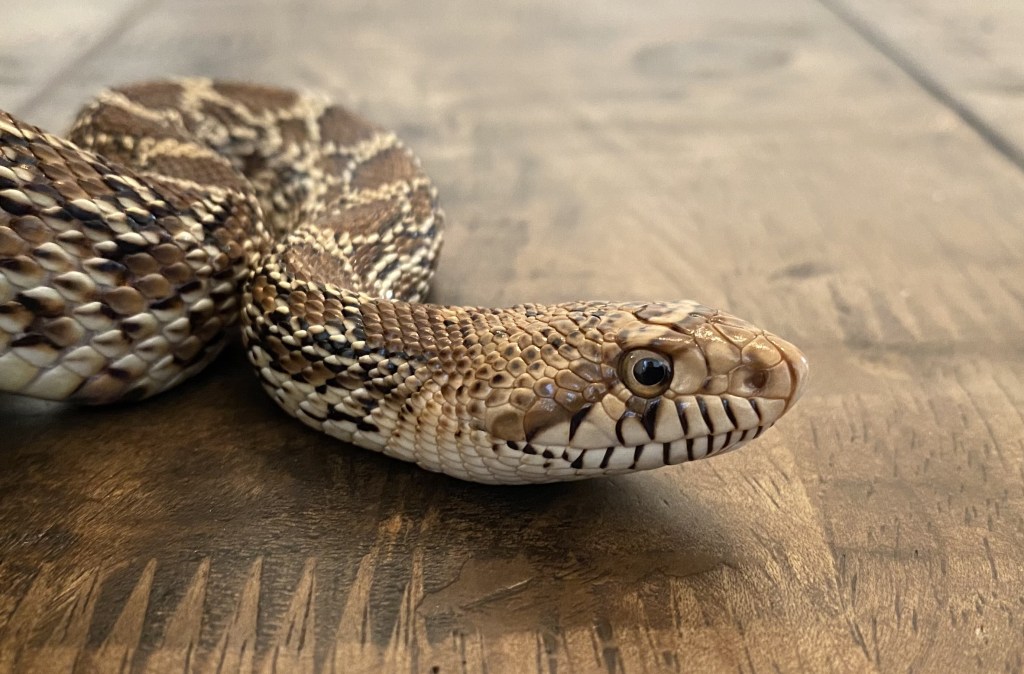
The kids loved the young bull snake I brought with me. She is a gentle example of one of our biggest native Texas snakes, and most of the children wanted to touch her. I would have gladly allowed this except that having thirty kids touch you (and perhaps a few try to grab you) is pretty stressful for a snake. Toward the end, I brought out a Texas garter snake, a subspecies that Texas Parks & Wildlife Department considers endangered in our state. His three pretty stripes and graceful body charmed the kids and the adults in the room.

The young bullsnake

I hope these kids are more comfortable and more prepared to get out there and safely explore the woods. I loved their questions and their energy, and would love to see them out there walking on a trail and discovering all kinds of wonderful things in the woods.

“Letters to Nature Kids”

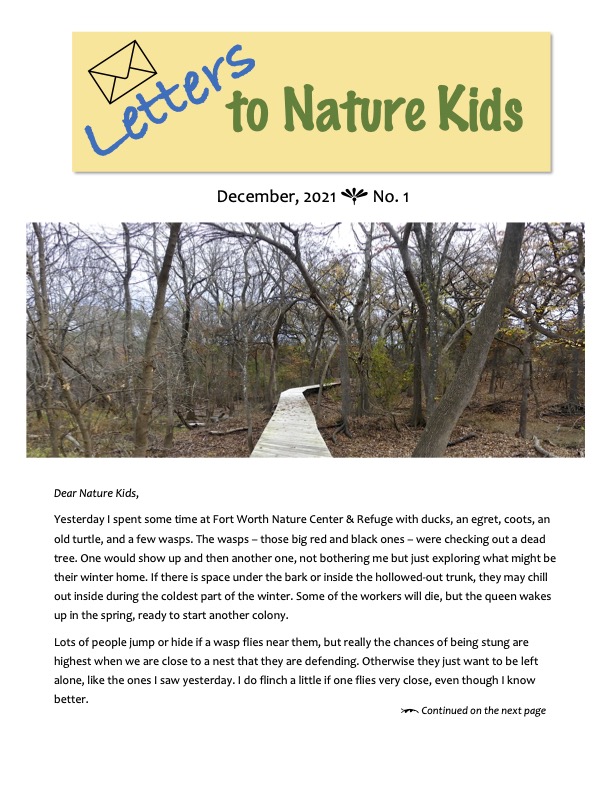
I’m adding something new: free, downloadable “Letters to Nature Kids” that I will write from time to time. As I noted on the page for this publication, we “don’t send letters so much any more, but a good letter can feel like part of a long-distance conversation, informal and personal.” The first issue is only a few pages of text and photos, that includes a little information about wasps, egrets, turtles, and trees, without getting in-depth. The idea is for the natural history facts to be incidental to the telling of a story about something (in this case, about a walk I took at Fort Worth Nature Center & Refuge).

We will see how future letters go; they probably will not all be about future walks I’ll take. They might be about a particular kind of animal or plant, or something about how people and nature are related. In each one my purpose will be to “send” a letter to anyone who enjoys nature and would like to share a little bit of it. Readers might be around ten or older – including adults who, like me, can be “nature kids” at any age.

I hope you or someone you know will enjoy it. And I hope you’ll let me know what works and doesn’t work, what topics would be good. Please – write back to me!