A Summer Adventure Walk

Lilly began visiting the preserve with me when she was still two years old. She was captivated by grasshoppers and loved climbing on the sandstone boulders there. I guided and protected her as she visited the ponds and watched bees flying from flower to flower. She called them “adventure walks,” and that’s an important part of what we do together, grandpa and granddaughter. We have gone adventuring in several semi-wild places nearby over the last couple of years.

Now she’s four and she grabs her backpack, picks out several essential snacks, gets her hat, and is ready for another adventure walk. Back to Sheri Capehart Nature Preserve where she still loves ponds and grasshoppers – and sand!

We hop out of the car around 8:15am, while it is still pleasant outside, and head for the north pond. Along the path, we find footprints in the dry mud, and I point out the miniature hand prints of a raccoon. Lilly is not too sure she likes having a raccoon nearby, but I tell her that the raccoon is sleeping. She said we have to “walk like this,” tiptoeing past the imagined sleeping raccoons.

The north pond a couple of weeks ago

As we arrive at the pond, she says she would be afraid of a bumblebee “because it could sting you,” and the dragonflies that swooped around us make her a little jumpy at first. I would love for her to be mostly fearless but careful when caution is needed, and so I invite her to watch for a dragonfly to land, greeting them joyfully.

Maybe we haven’t done this regularly enough to make ‘bugs’ seem familiar and fear unnecessary. Or maybe during a child’s development we have to keep revisiting potentially scary things, at each age, to push back against fear.

She wants to explore further, so we climb the hill toward the north prairie, stopping to rest – well, grandpa needed a little rest – under the oaks. For Lilly it’s time to break out some snacks.

I’m not sure how the I Spy game started. I had pointed out the thorny Greenbrier and asked her to listen to a bird. She looks at me and invitingly says, “I spy, with my little eye … something green!” I make a wild guess, pointing to some plant, and she laughs and shows me the right choice. Now it’s my turn, and then we keep taking turns. She picks up a piece of wood which becomes the pointer and also the baton, passed to show when it’s my (or her) turn.

“I spy, with my little eye … something wrinkled and tall,” I say. She immediately points to the same tree trunk I have in mind. It’s a fun game, and I think of how it encourages attending to what is around us in a mindful sort of way. Not a bad way start to a naturalist’s way of noticing our surroundings. But, importantly, it’s a game that Lilly initiated and is delighted to play.

When the game is over and we emerge from the woods into the bright sunshine of the north prairie, Lilly decides she’s really done, so we start walking back. Down the hillside, around the pond and past the sleeping raccoons, with her suggesting that she’s tired and I might have to carry her. She’s four, and every experience and state of mind or body is pretty intense.

And then we reach a part of the trail with some of that soft, beautiful sand from the constant weathering of the sandstone in this place. Sand can be a tactile wonderland if you don’t mind it sticking to your skin and getting in your hair and clothes. Lilly absolutely doesn’t mind!

And so she drops to her hands and knees and digs through the sand, scooping and raking and feeling the slight dampness beneath. She wants to lie in it – and so she does. On our adventure walks, experiencing nature can be immersive as long as it’s safe and won’t do any harm. And when is the idea of immersion any more powerful than when you’re very young? She experiments with touching her face to it, and comes away with a sandy nose. Next, her shoes come off. All thoughts of tiredness are gone!

The tiredness has disappeared to the point that, when we reach the car, she is ready for more. We stash the backpacks in the car and head for the south pond. Along the way, we pass some boulders and I remind her how she used to climb onto them and say she’s “on top of the world!” But the desire to stand on top of them seems to be pushed aside at the moment, and we walk down the sidewalk to the pond.

In the terraced seating area known as the “amphitheater” we find a grasshopper. Remembering some recent fun in the back yard in which she loved seeing and holding them, I catch this one and she is delighted with the little insect. She cups her hand and then covers it with the other, gently trapping the grasshopper inside.

Looking at the tan thorax, short antennae, and legs results in a couple of escapes but I am able to recapture the fugitive. I have to tell Lilly that we cannot take the little guy home.

“But I love him,” she protests. And then accepts that he needs to stay here, in his home. That our delight with him should not translate into harming him.

The beloved grasshopper, a member of the family Acrididae (Short-horned Grasshoppers)

We agreed that she could carry him some distance as we returned to the car. We see a couple of other grasshoppers, but she has hers and that is enough. And then it is time to release him and I ask her to pick a spot. She gives him a small toss toward some grasses, laughing as she sees him go.

I’m very grateful for these adventure walks, and I think she is, too.

The Road and the Refuge

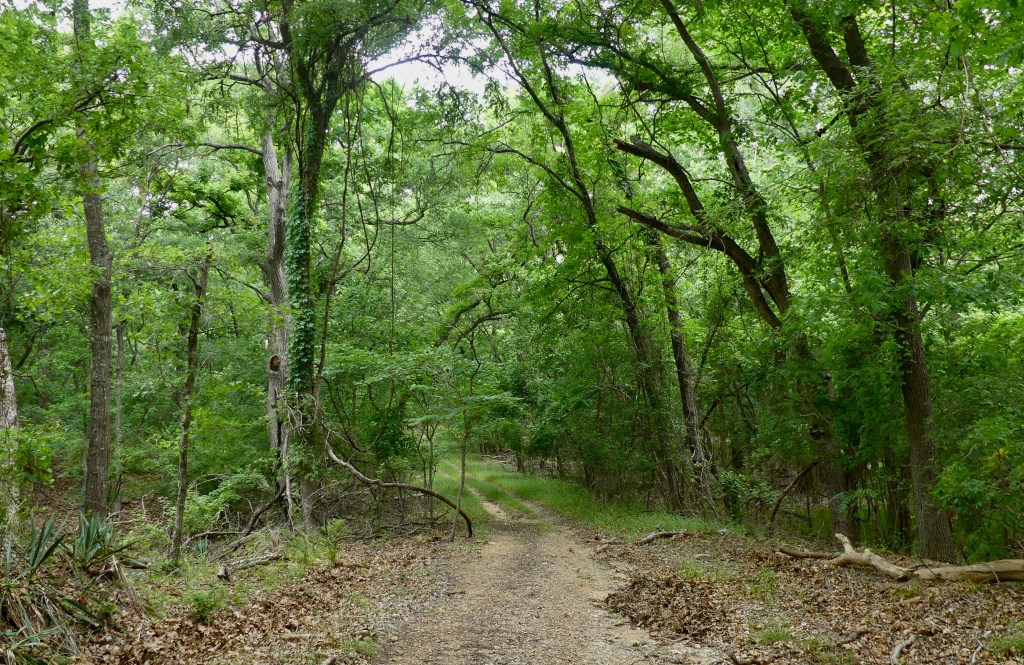
The road meanders ahead, 
Slips easily through trees and dappled light. 
Twin tracks through soil and grass 
Disappear at the edge of sight. 

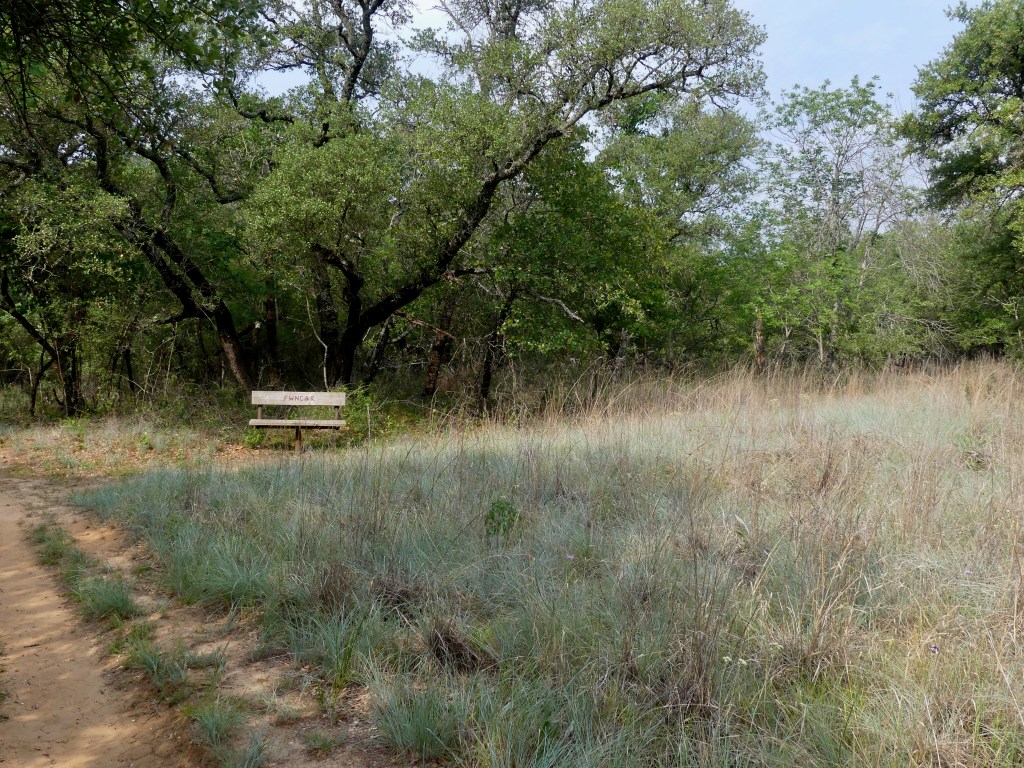
Today I followed some trails and roads at Fort Worth Nature Center & Refuge. I needed some time to sit at “my” bench, located in a little patch of live oak and bluestem savannah. Under a live oak, the bench faces a little patch of little bluestem and a nice community of other plants.
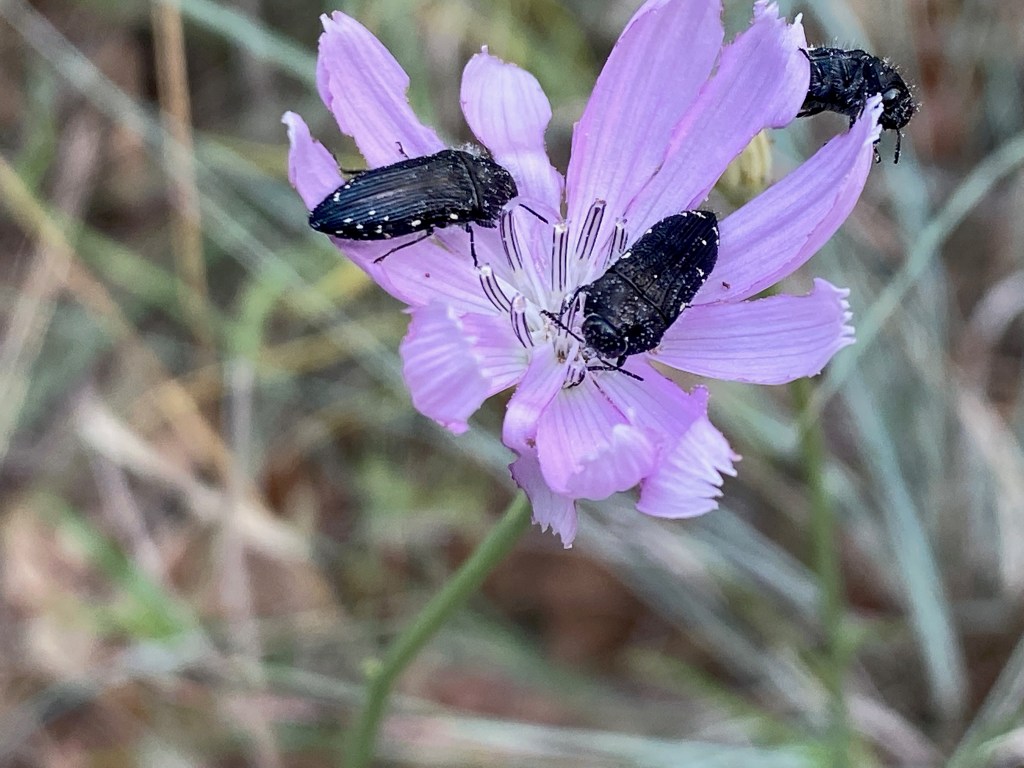
The first thing I noticed were a few scattered slightly purple-pink flowers on slender stalks; Texas skeleton plant, according to iNaturalist. Each of these flowers had several small beetles rummaging around within it. They appear to be a species of metallic wood-boring beetle (the larvae may be wood-boring but the adults seem to love flowers). This place is very familiar from my winter visits but it was delightful to find out how spring changes it. There were other plants – tall wooly whites with their clusters of flowers and a plant with clusters of long, oval leaves with red stems extending up into the central leaf vein.
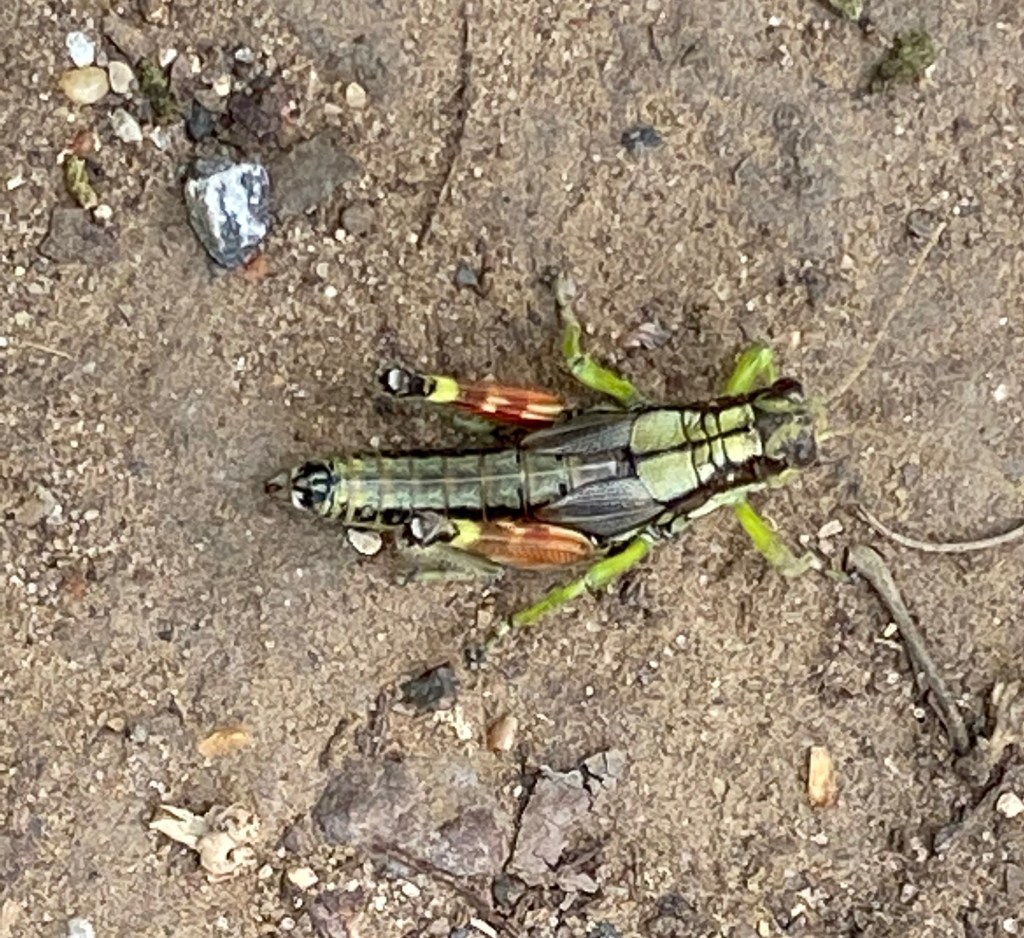
I also found a new grasshopper, identified by iNaturalist as a post oak grasshopper (and there were certainly post oaks nearby). Green and black striped bodies with orange and yellow back legs – wow, what a beautiful insect!

Birds were calling all around. There were northern cardinals singing, “cheer! cheer! cheer!” and one that sounded like “cheater-cheater-cheater!” I liked the first version best.

This road might bring us 
To some new place full of mystery, 
Or perhaps to a familiar spot 
With bees and songbirds for company. 

I followed the trail to the edge of the marsh, past a twenty foot tall dead tree whose bark had the appearance of being twisted, as though earlier in its life something grabbed it and gradually twisted it as it grew. There was also a hole, very much suggesting a woodpecker’s cavity nest, but it was only about seven feet off the ground. At the water’s edge there were dragonflies and a handsome brown duskywing skipper to see.
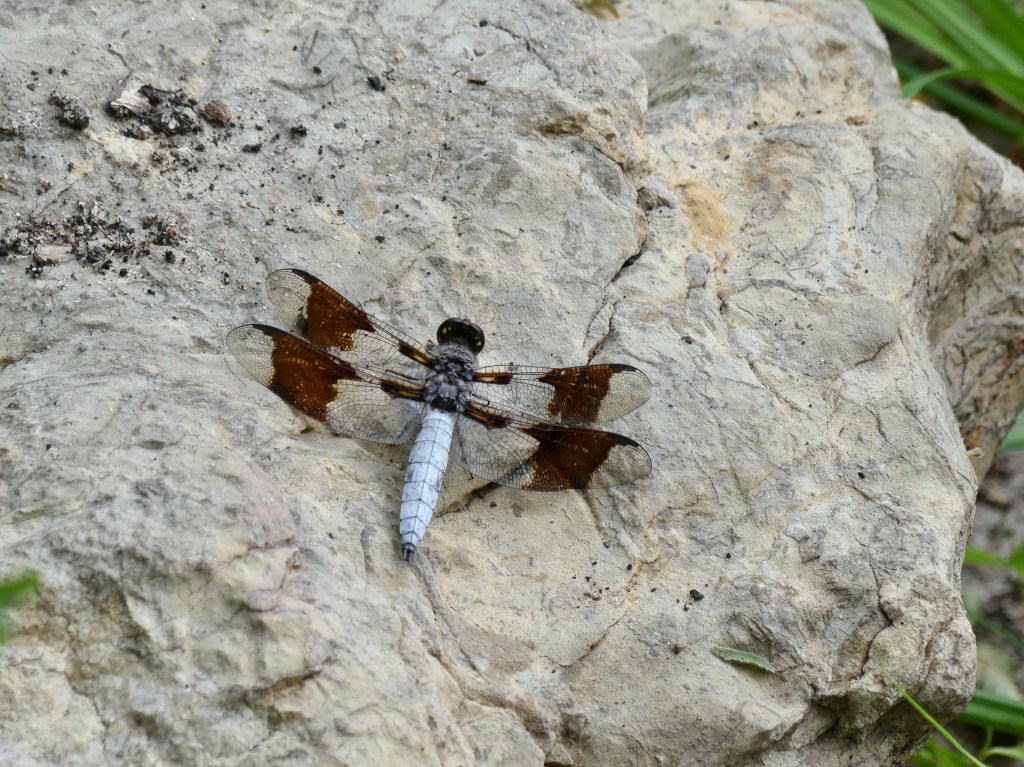
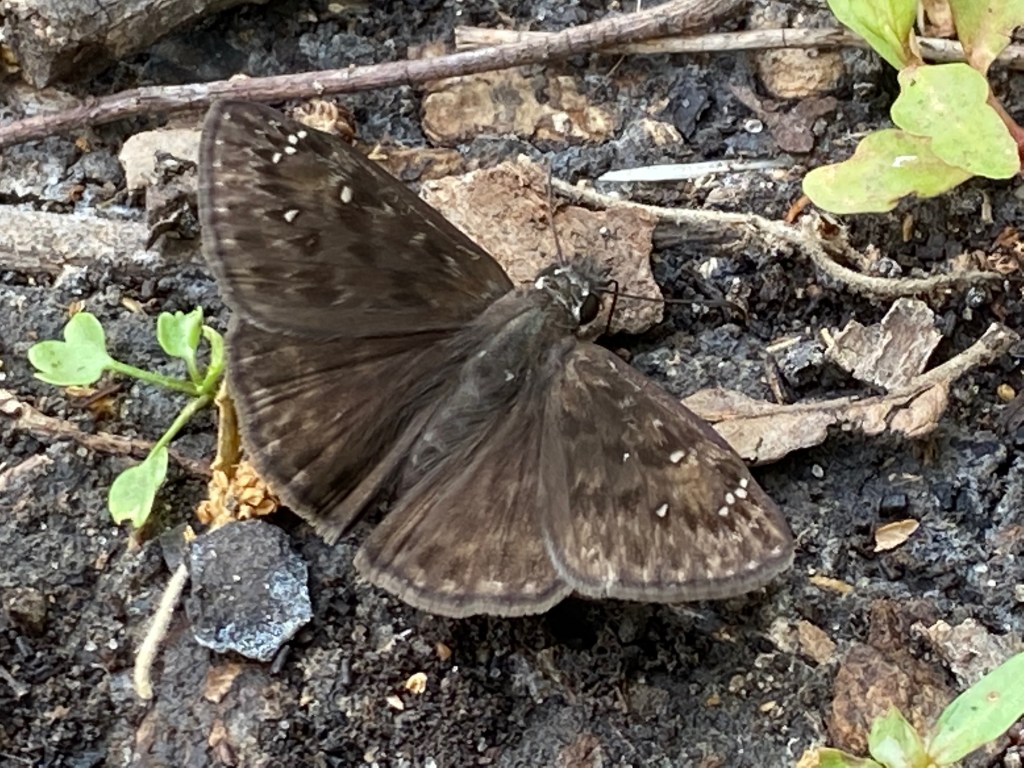
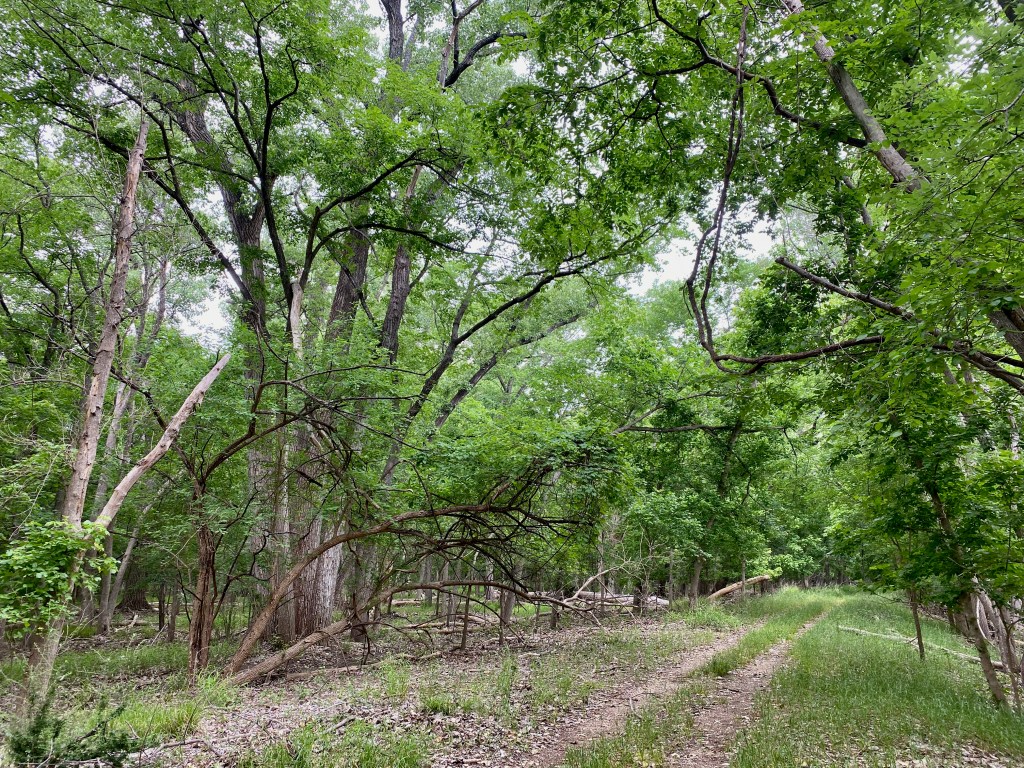
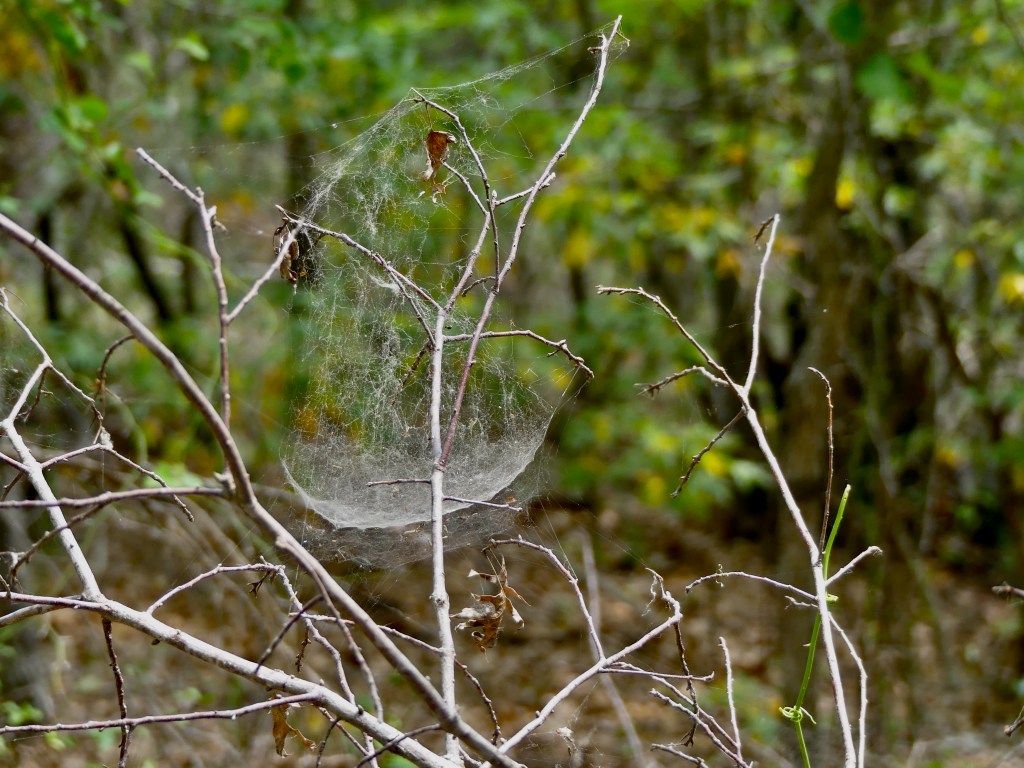
There was another road to walk, the familiar old path down into the bottomlands. The giant cottonwoods and other trees were like the pillars of a giant cathedral, and the place was full of life. One of the things I noticed was a bowl-and-doily spider, a small woodland spider whose web looks like a bowl suspended over a flat, old-fashioned doily.
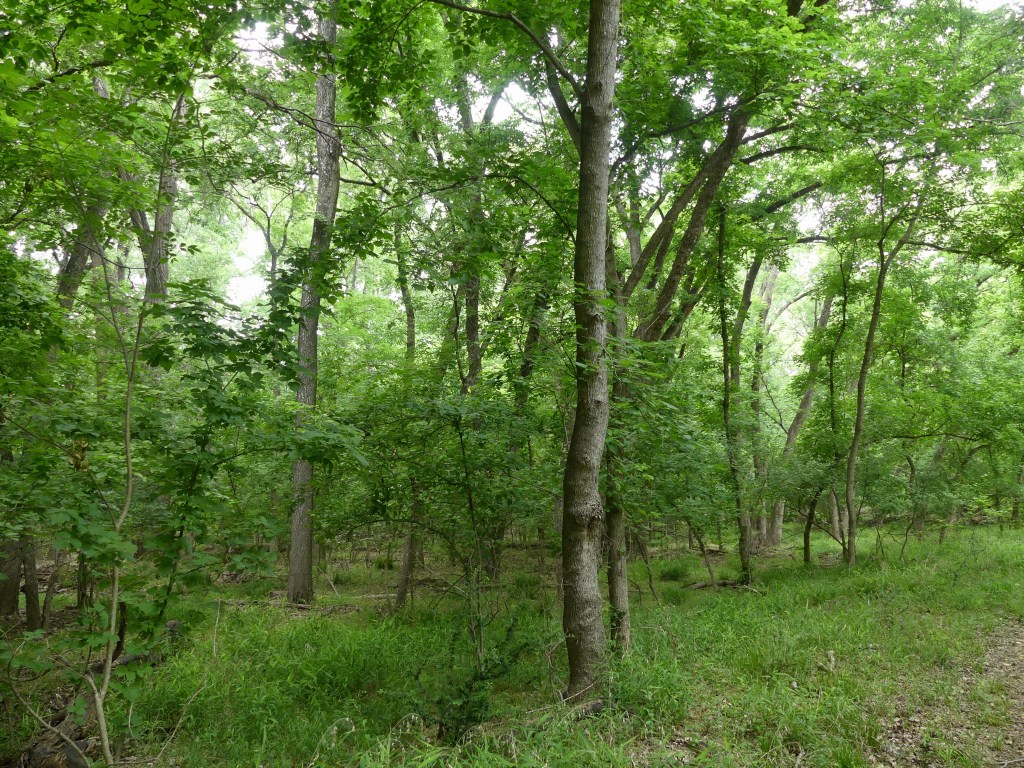
I’m glad for this place – these trees – and all the other living things here. Fort Worth Nature Center & Refuge lives up to that part of its name, “refuge,” as we can escape deeply enough into the woods and prairies to reach a place of sanctuary and safety.

The road continues on and on 
To quiet places where, with feathers and trust, 
We soar above grief and fracture 
And continue the journey as we must.