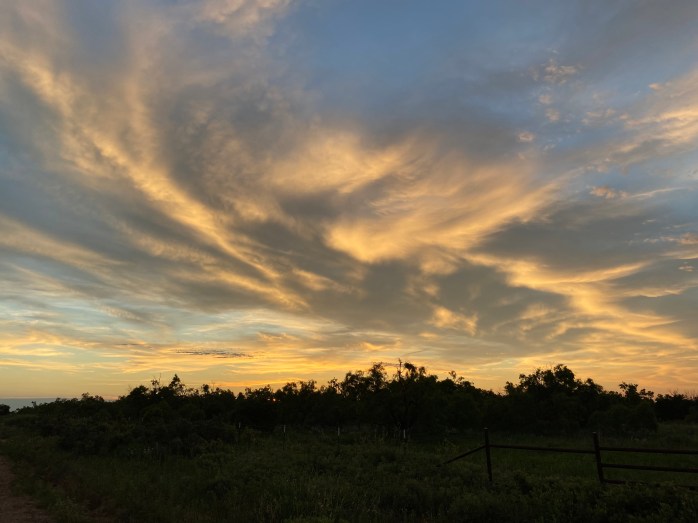
The Emotional Cost of Climate Change

“To sharpen our gaze is to behold not only the passing beauty of this world, but also its deep suffering, and I’m afraid of the pain and purgation such vision will entail, that it will break my heart open in ways I’ve only begun to fathom.”

Fred Bahnson

We know the trouble we are in, and we feel the stress of it. The Sixth Assessment Report of the Intergovernmental Panel on Climate Change (IPCC) tells us that human-induced climate change has caused widespread damage to nature and people. This does not just represent normal weather variability. Over 3 billion people live in situations that make them very vulnerable to climate change, and a “high proportion” of species is vulnerable. Further, “current unsustainable development patterns” are increasing our danger.

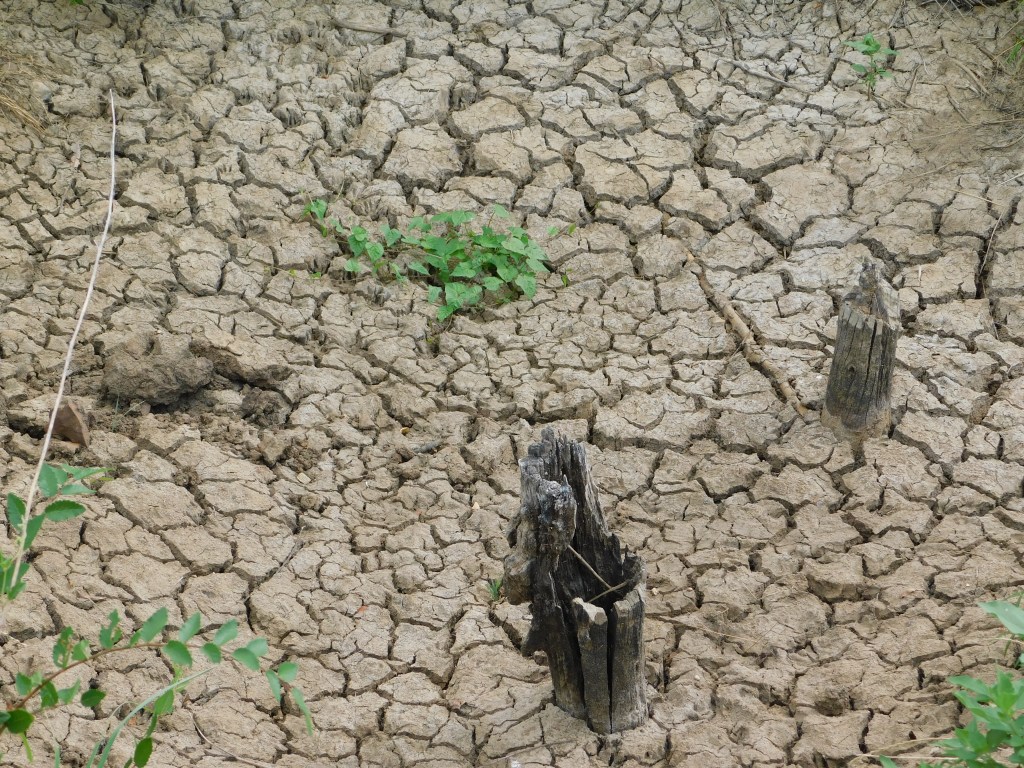
The danger includes more wildfires in various parts of the world, “100-year” floods now happening every few years, glaciers melting, stronger and more frequent hurricanes, drought, and extreme heat. Warmer climates allow mosquitoes and other pests to thrive, leading to disease for humans and trees (milder winters let bark beetle populations expand).

Our sense of safety erodes and the world feels less familiar as we watch world leaders make excuses and see too many fellow humans who are unconcerned or too preoccupied with their immediate challenges to take action. That can lead to helplessness and despair if we’re not careful.
How did we get here?

How did we get to a point where things are so crazy? Who is to blame? We elect leaders, we use fossil fuels and buy all kinds of stuff – are we to blame? I’ve been on the planet for over seventy years, surely there’s more that I should have done. On the other hand, we were born into a culture of growth and consumption. Many of the world’s cultures see nature as a sort of big-box store where it’s all for sale and the more you buy, the higher your status. Western culture enshrines unending economic growth as the only possible path to a satisfying life. It’s hard to swim against those cultural currents. And no matter how much I recycle or try to live “off the grid,” the fracking wells keep getting drilled and Congress keeps giving about $20 billion a year to the fossil fuel industry.

We can’t wait for the culture to change. The culture is us, even if each individual is a drop in the ocean. But we do what we can, even if it’s just for our own sense of integrity. And we reach out to others, pulling drops together until we fill a bucket, and buckets become waves, until we can get something done. Our actions can be guided by what is good for more than just “me,” we can place the well-being of living things above the acquisition of more things, and we can be satisfied with what we have.

The toll it takes

The damage to the planet takes a heavy toll on us, whether we’re watching from the sidelines or working hard in climate activism. A report from the American Psychological Association and others discussed the impact of the anxiety and loss that people are experiencing. There can be trauma from climate-worsened disasters such as tornadoes, floods, and fires. Sometimes the images and fear of future harm can lead to pre-traumatic stress.
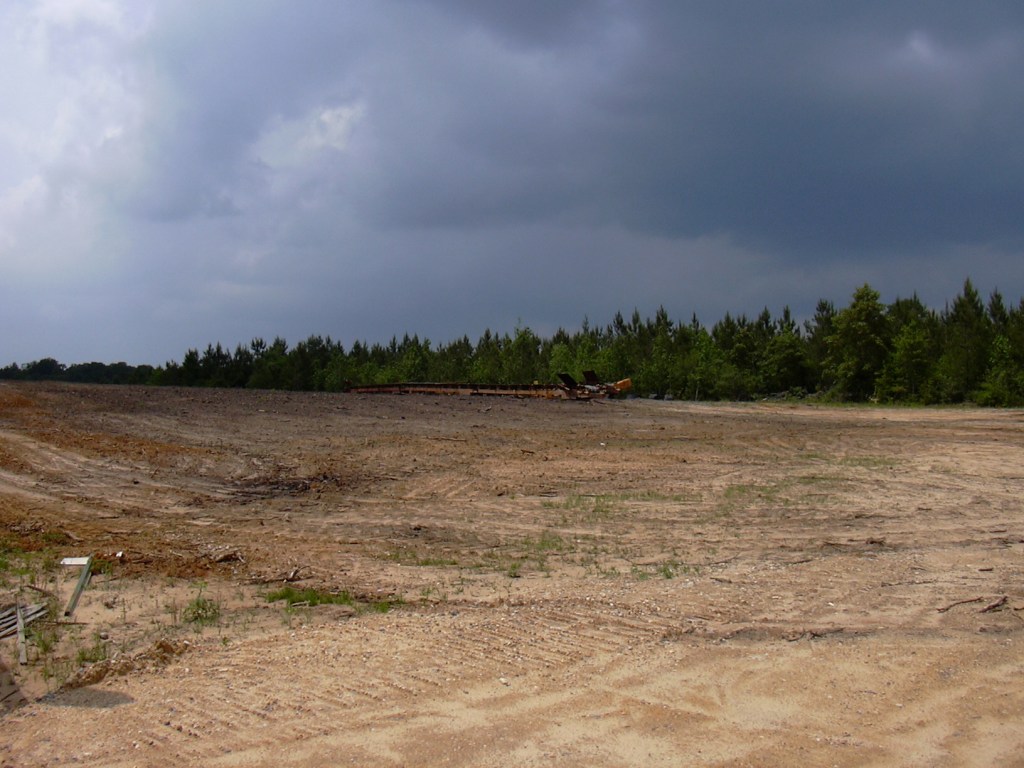
There can be a loss of a physical place (a home, a favorite creek, a glacier, etc.), and a person may experience pain and longing when such a place is gone. Such an experience has been termed “solastalgia.” In the opening chapter of Richard Louv’s Last Child in the Woods, there is a fifth-grade girl whose loss of an important place sounds like solastalgia. The girl loved being out in nature:

“I had a place. There was a big waterfall and a creek on one side of it. I’d dug a hole there, and sometimes I’d take a tent back there, or a blanket, and just lie down in the hole, and look up at the trees and sky. Sometimes I’d fall asleep back in there. I just felt free; it was like my place, ….

“And then they just cut the woods down. It was like they cut down part of me.”

– Last Child in the Woods, p.14

Some environmental losses may be very significant, even when they are on a smaller scale than melting glaciers or burned forests. 

Many people are experiencing anxiety and other emotions. A survey of 10,000 teenagers and young adults in various countries found that 59% of them were very or extremely worried about climate change. Most had feelings such as sadness, anxiety, anger, helplessness, and guilt. 

It’s not just the kids. Many of us – whatever our age – are grieving for the loss of a healthy and familiar climate. This past summer reminded us how much has already changed, and how we took for granted summer days when you could take a walk or work in the garden without risking heat stroke. We might not have thought about how good it was to live in the old climate. With the new climate, we watch the sense of normal and safe begin to slip, and it’s slipping on a planet-wide basis. 

Is it too late?

In some places, especially among young people, you hear considerable hopelessness about climate. We have missed many opportunities to act, and the further we go, the harder it will be to slow down that enormous freight train of climate warming. The question that keeps coming up is, “are we doomed?”

A recent book by Rebecca Solnit, Thelma Young Lutunatabua and other contributors has the title “Not Too Late.” It is certainly not an optimistic book, if optimism is believing everything will be OK, don’t worry. Solnit writes that “to hope is to accept despair as an emotion but not as an analysis.” She makes the case that there are still possibilities for action and she reminds us of all the times that something looked impossible until it actually happened. Public opinion has shifted, over $40 trillion has been divested from fossil fuels, and renewable energy is becoming more feasible and affordable. The outcomes are still uncertain; the authors’ point is not that everything will be fine. Maybe it won’t. But uncertainty means that things could turn out better than our fears suggest.

Taking care of ourselves

Even if we accept that things are not hopeless, we are still left with more frequent, climate-driven catastrophes and losses. What do we do about the resulting grief and anxiety? We can share grief – including grief for losses we see coming – with trusted others. We can put anxieties into words and make them more manageable. We can figure out ways to keep from being overwhelmed and actions that reduce our sense of helplessness. 

There are already some avenues for doing this, such as the “Climate Cafés” provided through the Climate Psychology Alliance. These are online gatherings where people can discuss climate fears and anxieties, led by the Alliance’s facilitators. There is also the Good Grief Network, “a peer-to-peer support group for people overwhelmed by eco-anxiety, climate grief, and other experiences of eco-distress” (quoting from their website). At least in Texas, all such events are available online only. 

I recently started a small face to face discussion group where we can talk about environmental anxieties and grief. There are real advantages to talking with a few trusted others in a situation where we feel heard and understood. The group is for adults – people 18 years old or older. Children’s understanding of these issues and ways of coping with them and expressing feelings about them are somewhat different, so the group does not include children.

My professional career and training has been in psychology and I am a licensed Psychological Associate. That does not mean that this is group therapy, and participants are not clients. I simply support and facilitate our discussion and gently keep us within the boundaries of supporting each other and encouraging self-expression. There is no charge for the group.

One of the central issues for the group will likely be what we can do to take care of ourselves. I recently wrote about coping with the record-breaking heat this summer and I outlined the following ways to help cope with the anxiety and loss:

  • Express yourself – talking, journaling, drawing, etc. Most things are easier to carry when we share them with people who listen with empathy. Writing in a journal or drawing are other helpful modes of self-expression.
  • Practice mindfulness and acknowledge beauty. When in natural settings, paying attention to the present moment, with an attitude of acceptance, is a helpful way to let go of persistent thoughts and emotions. The beauty we find in flowers, a woodland, or a sunset reminds us of the good that still exists.
  • Accept uncertainty. Mindfulness is a good way to work on this one. It is hard to live with uncertainty, but letting go helps more than trying to control what is not controllable. We can still take helpful action (see below) but with less struggle.
  • Engage and act. We can easily feel helpless with a problem this big and complex. It helps to find something to do (as noted above, drops come together to fill buckets and buckets become waves). We can be part of something bigger, such as Arlington Conservation Council, 350.org, or other groups.
  • Find a therapist. If things become too heavy, we can seek out a counselor or therapist. Climate Psychology Alliance-North America maintains a climate-aware therapist directory.

It’s easy to be anxious or sad in an uncertain climate future, with painfully slow progress in fighting climate disruption. If those are your feelings, you’re not alone. A recent poll by the American Psychiatric Association found that more than two-thirds of Americans are “somewhat” or “extremely” anxious about climate change. Do what you can, find a community of people who understand, and take care of yourself. 


(The epigraph at the beginning of this article is from Fred Bahnson’s “The Ecology of Prayer” (2017) in Orion, v.36 No.4. More information about my climate grief/anxiety group can be found on the climate anxiety & grief page of this website. This article was also published in the November issue of The Post Oak, newsletter of the Arlington Conservation Council)

Grief and Hope on the Rolling Plains

Meghan and Carly

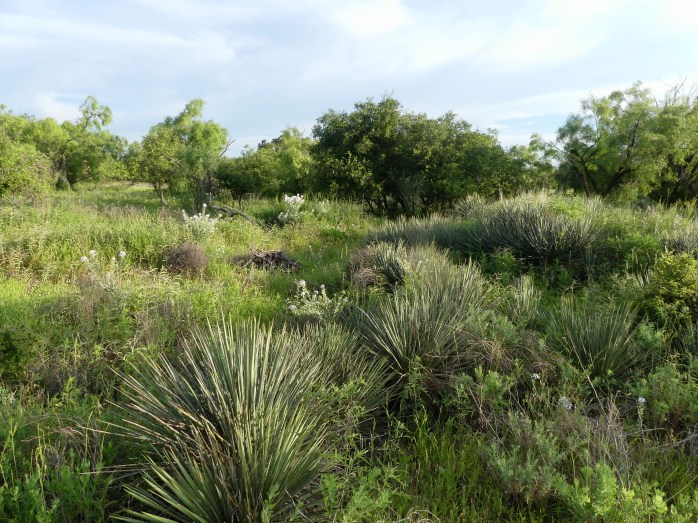
We were driving west, toward a respite from the city, a quiet refuge out in the Rolling Plains. That part of Texas shows us how much beauty there is in openness and how much richness and life can be contained in a sparse landscape. Along with me were Meghan Cassidy, a wonderful naturalist, photographer, and book collaborator, and Carly Aulicky, a field biologist with an amazing understanding of birds and prairies, and with a quiet wisdom and humor that makes you want to sit and keep listening. If only for a few hours, we would wander among prickly poppies and horned lizards and watch Mississippi kites and roadrunners.

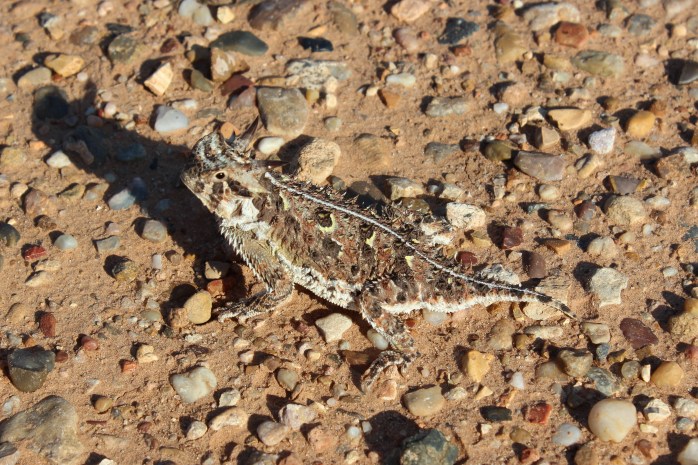
Texas horned lizard seen in 2014

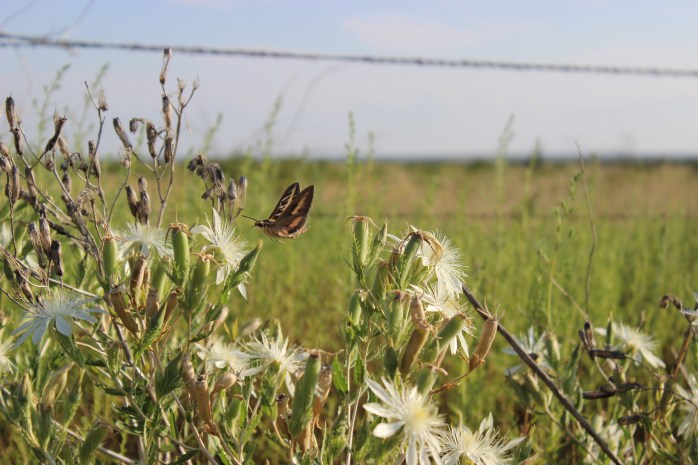
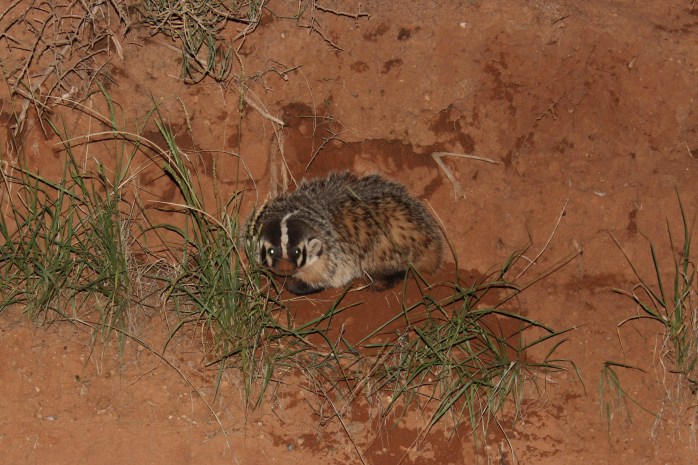
It had been seven years since Clint King and I visited the area between Lubbock and Abilene, finding a half-dozen Texas horned lizards along the red dirt roads that cut through the ranchland. There was no park or preserve to visit there, but we spent a very enjoyable afternoon driving and walking road rights-of-way. The big red harvester ants are still doing well in the area, and so the horned lizards have lots of food. We found big sphinx moths hovering like hummingbirds around beautiful white flowers, and greater roadrunners hunting along the roadside and either running off or jumping into low, short flight into a nearby thicket when we approached. At the end of the day we had surprised a pair of badgers, one of whom could not climb an embankment and was unable to dig quickly enough into the red dirt, and so he faced us menacingly until we drove off. Getting too close to a cornered badger would have been a really bad end to a wonderful day.

Sphinx moth (2014)
American badger (2014)

I told those stories as we headed northwest from Abilene past ranchland, a few small towns, and a huge array of solar collectors. That solar array is good news in a world desperately needing to break the addiction to fossil fuels. But it replaces many acres of prairie and Carly talked about the reflective surfaces leading some birds to crash into them. A small example of our imperfect solutions to problems that must be solved, as the clock keeps ticking. All those interrelated crises with climate, loss of biodiversity, the rigged competition between corporate profit and human well-being, and an increasingly crowded world where a mutating microorganism can easily spread into a pandemic. We are even losing our shared fragile agreement about the nature of truth and how we should find it. Much of the world seems to be flirting with the false solution of authoritarian government. In my seventy years, I do not remember a time when the world seemed in so much trouble from so many directions, with hope for the future so hard to come by. Some of us experience grief from the losses that we have already sustained, along with grief and stress as we anticipate future losses.

Grief is a universal part of life because we all experience losses of significant people, loss of our health or physical integrity, loss of jobs or important roles in our community, and loss of emotionally significant places. When we have attachments to particular places in nature, then the loss (even the anticipated loss) of such a place is termed “ecological grief.” When that loss feels like homesickness for a place, not because we are distant but because the place itself has been lost, the experience is called “solastalgia.” Additionally, the sense of helplessness and anxiety at the impending loss of nature is referred to as “eco-anxiety.” These concepts and experiences are being given serious scholarly study1 as well as exploration of their ethical and spiritual significance.2 Within the discussion is an acknowledgement that grief should lead to understanding of what the loss means to us, how our lives will now be different, and whether there is guilt or anger regarding how the loss occurred.

While Exxon was discovering the truth about climate change and concealing that truth from the public,3 when forests and prairies were cut down, and life on earth was being assaulted in many ways, what did we do? I ask myself questions like that more seriously and more often these days. Among the tasks of growing older is to reflect back on our lives and decide whether it was well spent. What kind of a life did we make out of the chances that were given us? Did we build a life with things to celebrate and with relatively few regrets, or do we desperately wish there was a chance to do it over? Psychoanalyst Erik Erikson described these as the fundamental issues of the final stage of our lives: ego integrity vs. despair.4 Part of the work of this stage of life, for many of us, is to decide if we made things better for those who came after, and to wonder whether it was enough. 

Riding through the Rolling Plains with Meghan and Carly, talking about our love for nature and the challenges ahead of us, how could I think that my past actions were enough? Is this the world I want them – and many other young people – to inherit? I say to myself: “I have done what I could,” but I know that we must do more. The problems we face are embedded within large systems and widespread practices, and the isolated actions of one or a few of us are swallowed up and amount to nearly nothing. I could stop driving my car, and climate change would continue advancing. It takes a great many of us acting together to bring about meaningful change. Thus do we individually feel helpless, and thus do we continue sleepwalking through our days. And thus might we experience what Erikson termed despair.

We are not destined to sleepwalk through the destruction of nature. Our individual efforts can make a difference when they help shape and sustain little communities that value nature. Those little communities are the molecules that can link together and create change on a meaningful scale. Bringing someone along to experience a day on a river or in a woodland may be one of the most powerful ways to build those little networks and communities. And in the process, we experience joy when we share nature with another person. 

Joy, connection, purpose, even transcendence can happen when you walk through a wild and diverse place like the ranchland we found on this trip. Those things are what hold a love of nature together, in a more visceral way than do ecosystem services like pollination or clean air. Those benefits are more abstract, and they operate in the background, mostly out of our awareness. A day spent in a fairly intact ecosystem fully engages your awareness, your body and spirit. As a result, you can fall in love with a place. As you spend more days in more places, you can come to love landscapes and ecosystems. And once you love them, grief becomes a possibility when they are threatened. It is analogous to love for a friend or family member – they complete you and enrich you beyond imagining, and you would grieve their loss. 

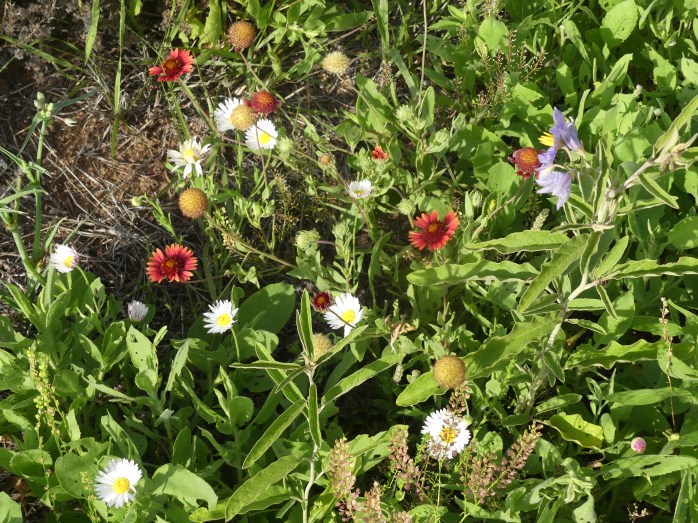
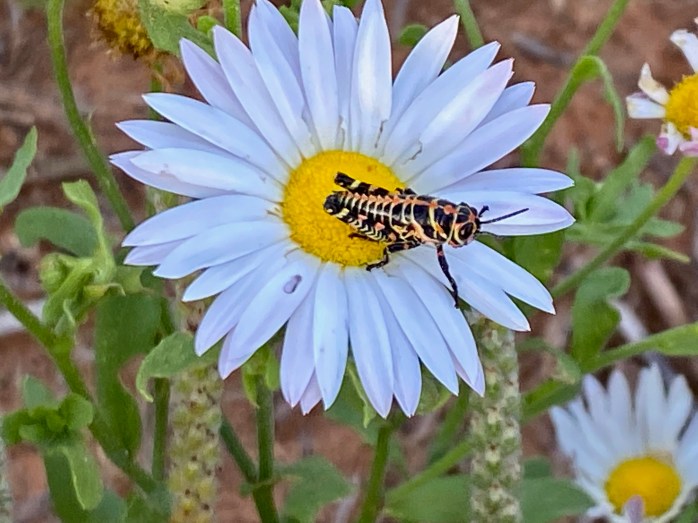
We discussed these issues along with many less-serious things as we drove, and eventually we arrived at quiet farm roads through mostly flat plains. A huge variety of plants were blooming, visited by large numbers of insects. Roadsides were covered with daisies, white prickly poppy, peppergrasses, and many other flowers. Grasshoppers were abundant, including at least one rainbow grasshopper. Meghan found multiple species of velvet ant, which is really a wingless wasp. The common name for one of them, “cow-killer,” conveys something of the power of their sting. Around the fenceline there was low-growing Havard oak, and yuccas grew here and there. 

Rainbow grasshopper

It was quiet, and the absence of highway noise and planes flying overhead made it that much easier to be immersed in the experience. It also framed the natural sounds clearly (especially for those whose hearing is better than mine), and bird calls were beautiful and distinct. A nearby group of coyotes began to yip and howl before moving off. It is a strangely haunting and wonderful thing to listen to the song-dogs at sunset. 

Mississippi kites appeared here and there, and Carly talked about these sleek raptors being pretty social, often roosting or hunting in small groups. I loved seeing scissortail flycatchers, and Carly spotted a male painted bunting. Many other birds, including nightjars and a red-tailed hawk, enriched our visit.

Along those red dirt roads we saw the occasional broad circle that signaled a harvester ant colony. A central opening was surrounded by a scattering of pebbles and material that the ants have excavated, and the ants were busily coming and going. If you watch their movements, you find little ant trails that the workers use like highways linking the colony to the areas where they forage for food. Along those ant highways you sometimes find the Texas horned lizard. We walked around the colonies and followed ant trails, and Meghan spotted a young horned lizard. It disappeared into the base of some vegetation and we were not able to find it. The lizard might have been tucked away in some refuge under the plants or may have sneaked away while we weren’t looking. Although Meghan only got a brief look, it was reassuring to know that the horned lizards are still there. 

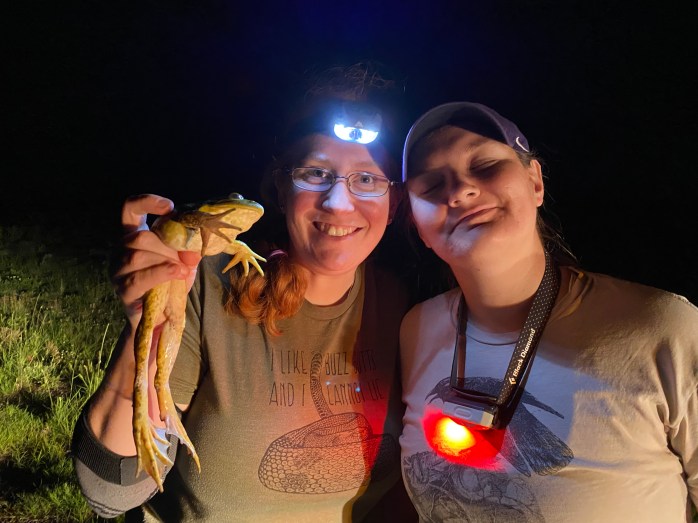
With the American bullfrog
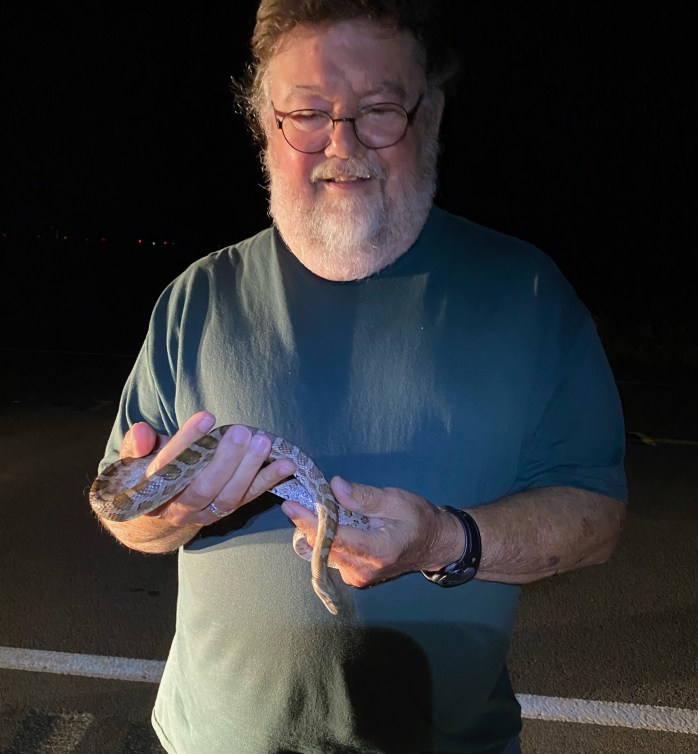
Me, with Great Plains ratsnake (photo by Meghan Cassidy)

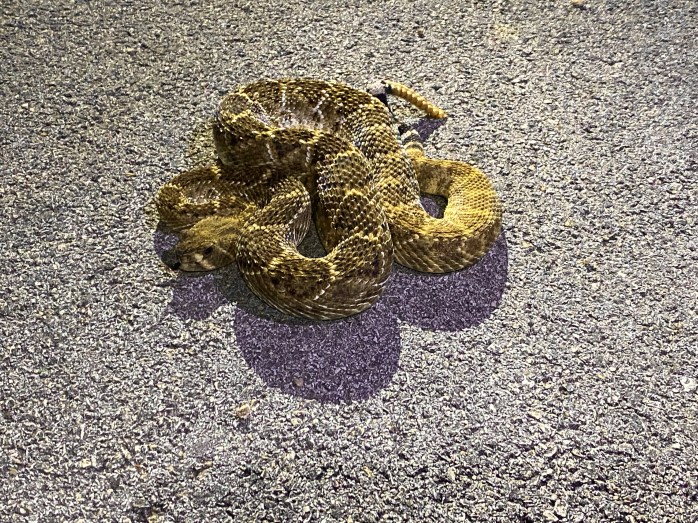
Darkness arrived, and we looked for reptiles and amphibians on the roads. Early on, there was a Woodhouse’s toad and then a Couch’s spadefoot (an odd sort of toad with vertically elliptical pupils and a hard spade-like structure on each back foot to facilitate digging). Then we came upon a sizable American bullfrog – you have to be impressed at the ability of a frog like this to make a living on the semi-arid plains with only a few scattered ponds to sustain you. As we made our way home there were Great Plains ratsnakes and a nice western diamond-backed rattlesnake who tolerated my using the snake hook to move him back onto the road so that we could get a good look. Meghan then used her hook to carry him to the other side of the road, where he had been heading. Throughout all that, he never even rattled. 

Western diamond-backed rattlesnake (photo by Meghan Cassidy)

The richness of life in this region is both invigorating and reassuring. There was so much to see and understand, and there seemed to be little chance that all that life would be cut short by a housing development. We hold out the hope that not much of it will be plowed and planted in row crops, although we did see some of that. Today was a beautiful gift, a chance to be in the present where ghosts of loss do not live. Tomorrow we can think about the future and think about what we can do, while at the same time carrying the hope of more days like today.


References

  1. Comtesse, H., Ertl, V., Hengst, S.M.C., Rosner, R., & G.E. Smid. 2021. Ecological Grief as a Response to Environmental Change: A Mental Health Risk or Functional Response? International Journal of Environmental Research and Public Health. Online: https://doi.org/10.3390/ijerph18020734  
  2. Sideris, L.H. 2020. Grave Reminders: Grief and Vulnerability in the Anthropocene. Religions. Online: https://www.mdpi.com/2077-1444/11/6/293
  3. Cushman, J.H. Harvard Study Finds Exxon Misled Public about Climate Change. Inside Climate News. Online: https://insideclimatenews.org/news/23082017/study-confirms-exxon-misled-public-about-climate-change-authors-say/?gclid=Cj0KCQjwh_eFBhDZARIsALHjIKcqM3trUhJ6VldiGflM12FCtvxJ05ylHnm2TI2gJ0gRyOSiMjn_cVwaAu4vEALw_wcB
  4. Erikson, E.H. 1950. Childhood and Society. NY: W.W. Norton and Co.