A New Year: Needing Nature’s Continuity

We have this urge to mark the end of the old year and welcome the new one, so we gather to wish each other a happy New Year. We think about the coming year as a new beginning. Sometimes we want to try for a new beginning for ourselves, with new year’s resolutions to start doing this or to do less of that. Midnight on December 31 marks a change, for good or ill (mostly for good; it feels like a bad omen to even consider that it could be a change for the worse). Another year older, another chance, another spring.

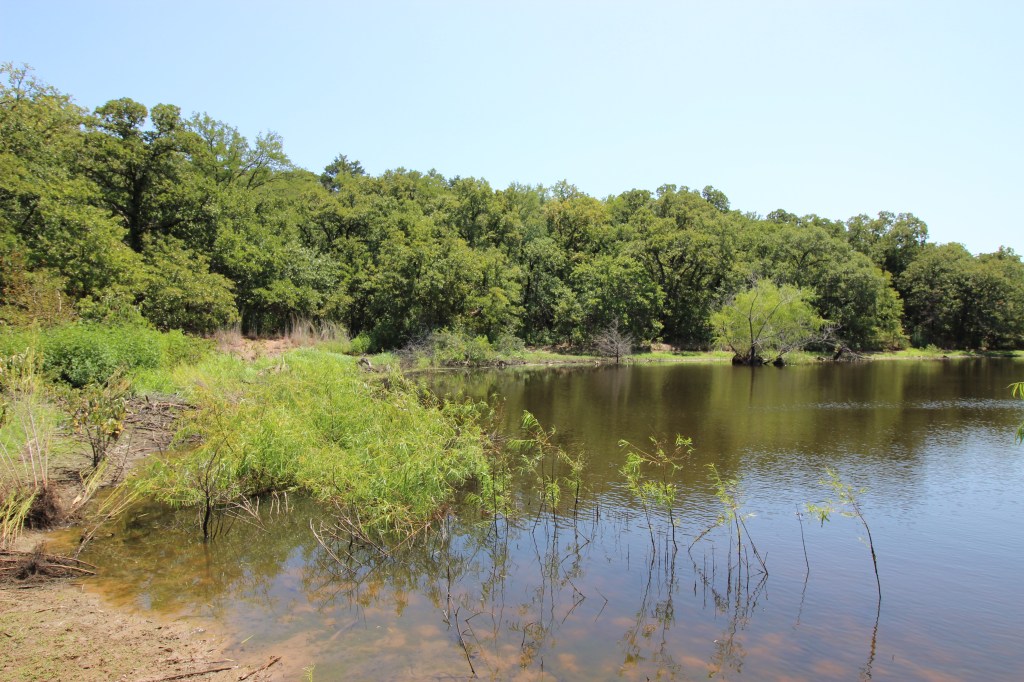
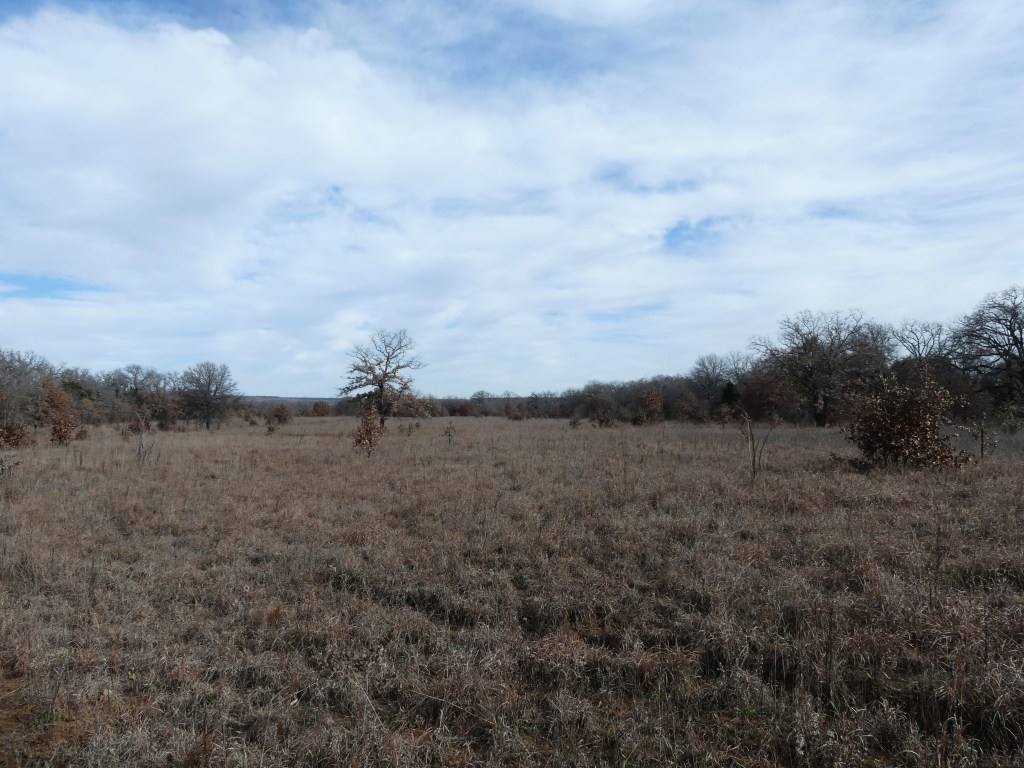
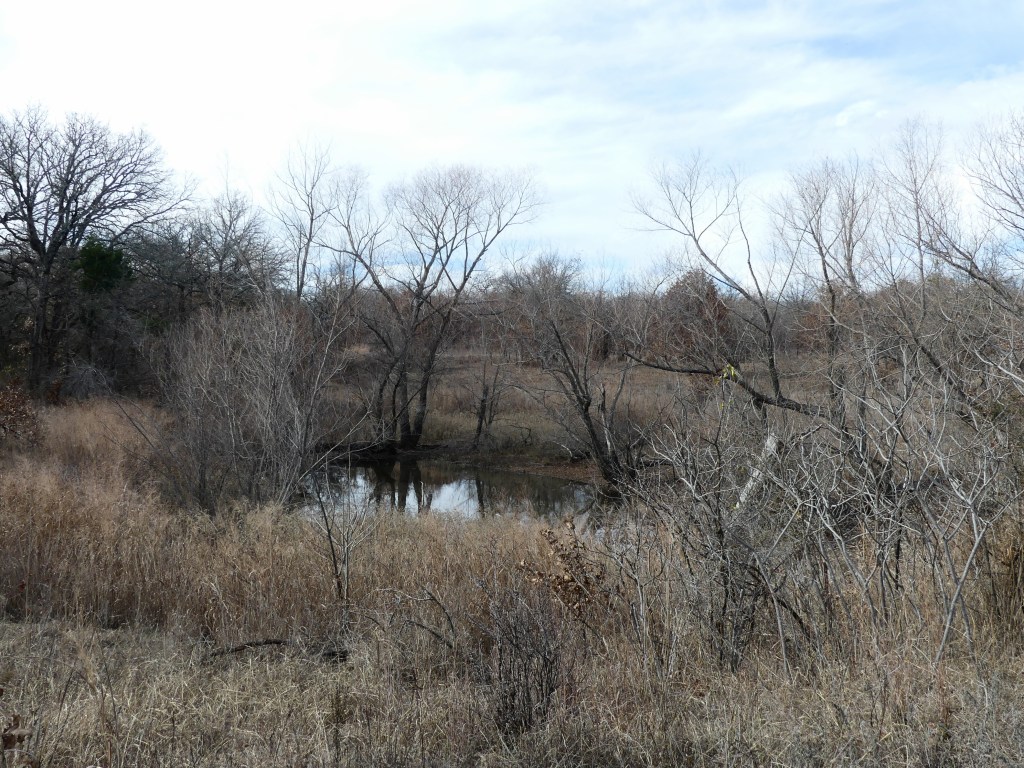
LBJ National Grasslands, in Unit 29, on the last day of 2023

But spring is months away and our transition to 2024 is completely arbitrary, unless you consider that it’s pretty close to the winter solstice when everything really does begin to change, in ever so gradual degrees toward greater light and warmth. Nevertheless, yesterday was the end of 2023, and among some members of my nature tribe the right way to mark the occasion was to walk the woods and prairies one last time.
Alaina, Sheryl, and Jake met me at LBJ National Grasslands under a warming sun with scattered clouds. It is a familiar and welcoming place, and if we needed reassurance that some good things can be counted on to stay consistent despite the turning of the year, this was it. We did not talk about it, but I expect that this dependability of nature is part of the appeal of a walk here on New Year’s Eve. Many of us are ambivalent about change, considering what we have been through in recent years. The pandemic, a worsening climate crisis, the creep toward fascism in many places across the world; these things make the woodlands and prairies more precious than ever. The cycles of growth, flowering, the shedding of leaves and winter dormancy make up a background of dependability. That, and the love that truly close friends and family have for each other, keep us going when everything else seems to be falling apart.

Alaina and Sheryl

The earth tones of the prairies have become quite “earthy” and the straw and sienna colors have faded, but there was still some warm brown in the woods. And the liberal scattering of junipers adds some touches of green, so it was hardly a colorless winter scene. When you add the ponds with reflective water and surrounding bare trees, the grasslands in winter have a visual beauty beyond compare. Spring and summer are also lovely, just in a different way. The Western Cross Timbers is an amazing gift that every season makes into something new and wonderful.
There is life in every season. We saw a few dragonflies, and I mentioned to my friends that I believe seeing a dragonfly on the last day of the year should be a sign of good luck. Spread the word – let’s make a “lucky dragonfly” tradition and invite urban folks into a new little connection to the natural world. These insects are already associated with good luck in some Asian and Native American traditions, so it shouldn’t be a stretch.

A common buckeye

We also saw some butterflies. We often see them deep into the winter if the day is sunny and has some warmth. They flutter along and bring extra movement and color to the day. One of them was a buckeye, a species with colorful round “eye spots” on their orange, brown, and white wings.

Our walk helped end 2023 in a good way, and we are ready to carry that through into the new year. Here’s to everyone having a year with beauty and wonder, surrounded by those you love (even if from a long distance*) and filled with empathy, compassion – and healing whenever that may be needed. Happy New Year!


* Looking at you, Meghan and Carly!
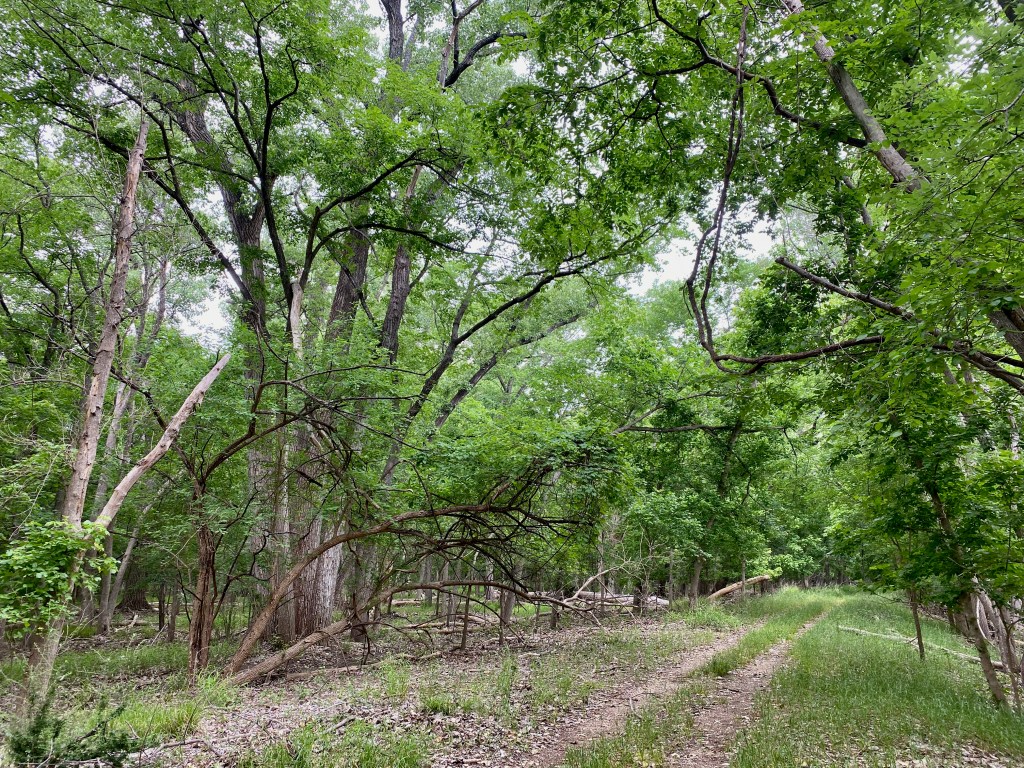
The Road and the Refuge

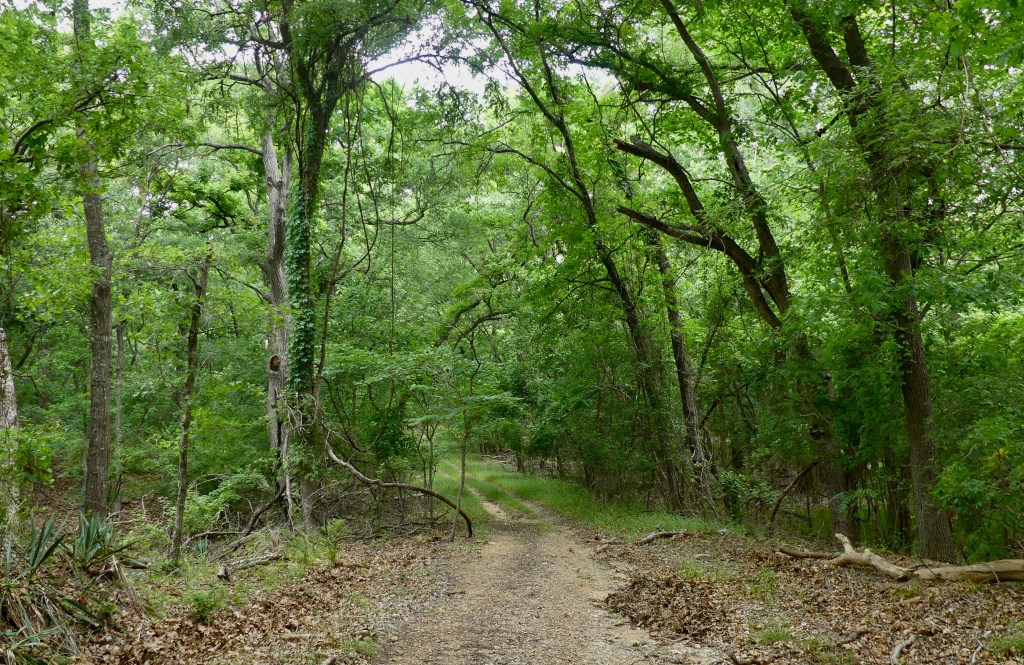
The road meanders ahead, 
Slips easily through trees and dappled light. 
Twin tracks through soil and grass 
Disappear at the edge of sight. 

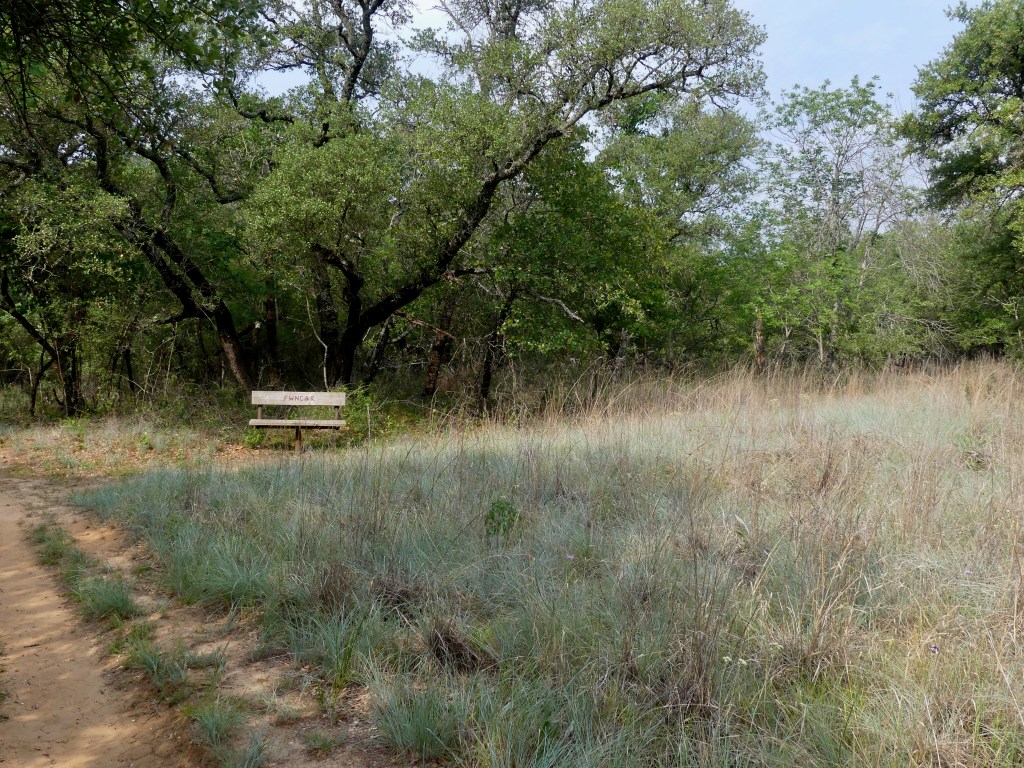
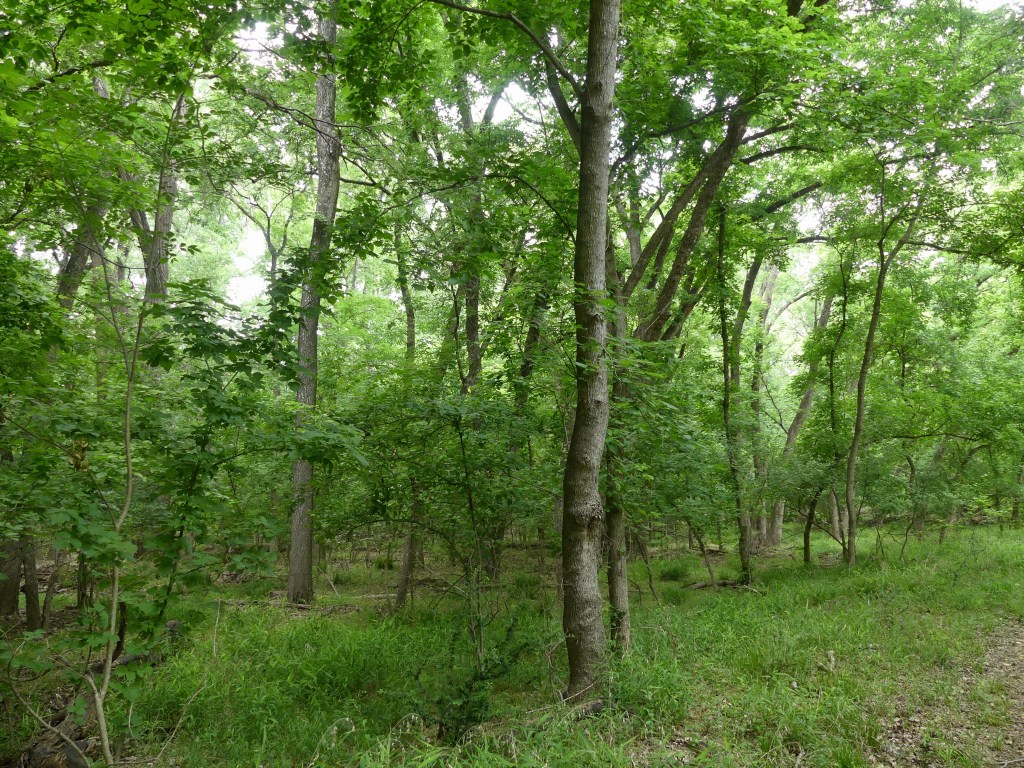
Today I followed some trails and roads at Fort Worth Nature Center & Refuge. I needed some time to sit at “my” bench, located in a little patch of live oak and bluestem savannah. Under a live oak, the bench faces a little patch of little bluestem and a nice community of other plants.

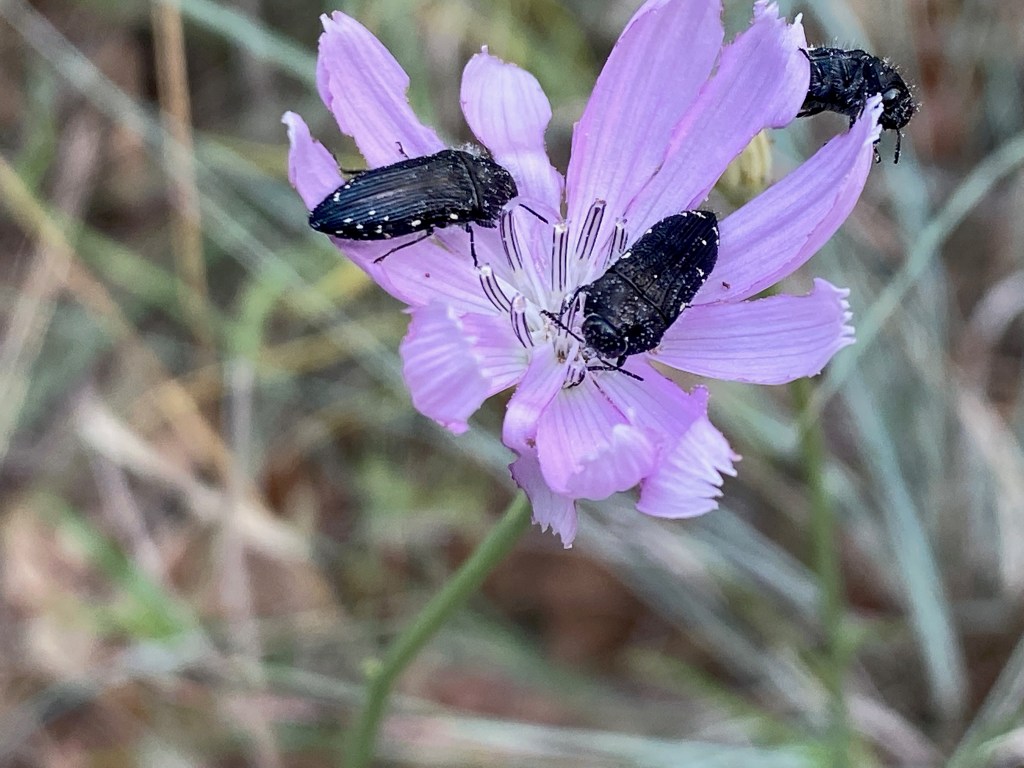
The first thing I noticed were a few scattered slightly purple-pink flowers on slender stalks; Texas skeleton plant, according to iNaturalist. Each of these flowers had several small beetles rummaging around within it. They appear to be a species of metallic wood-boring beetle (the larvae may be wood-boring but the adults seem to love flowers). This place is very familiar from my winter visits but it was delightful to find out how spring changes it. There were other plants – tall wooly whites with their clusters of flowers and a plant with clusters of long, oval leaves with red stems extending up into the central leaf vein.

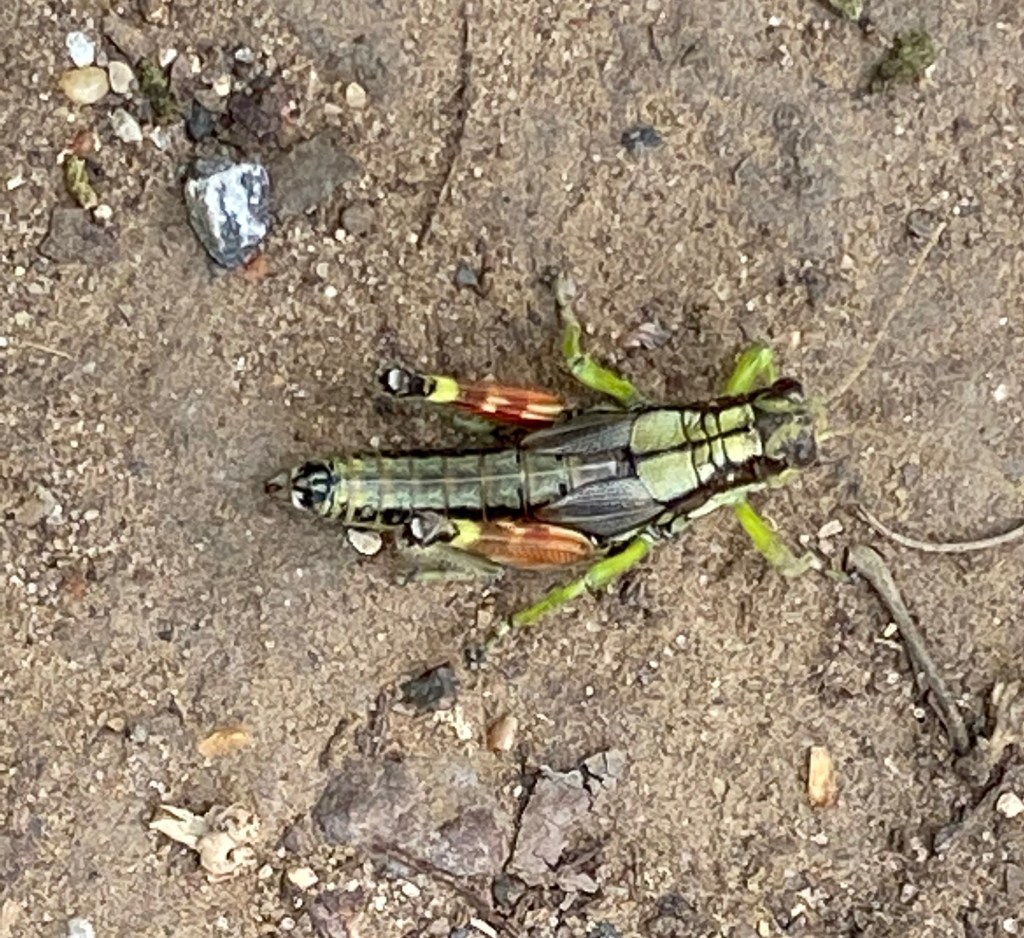
I also found a new grasshopper, identified by iNaturalist as a post oak grasshopper (and there were certainly post oaks nearby). Green and black striped bodies with orange and yellow back legs – wow, what a beautiful insect!

Birds were calling all around. There were northern cardinals singing, “cheer! cheer! cheer!” and one that sounded like “cheater-cheater-cheater!” I liked the first version best.

This road might bring us 
To some new place full of mystery, 
Or perhaps to a familiar spot 
With bees and songbirds for company. 

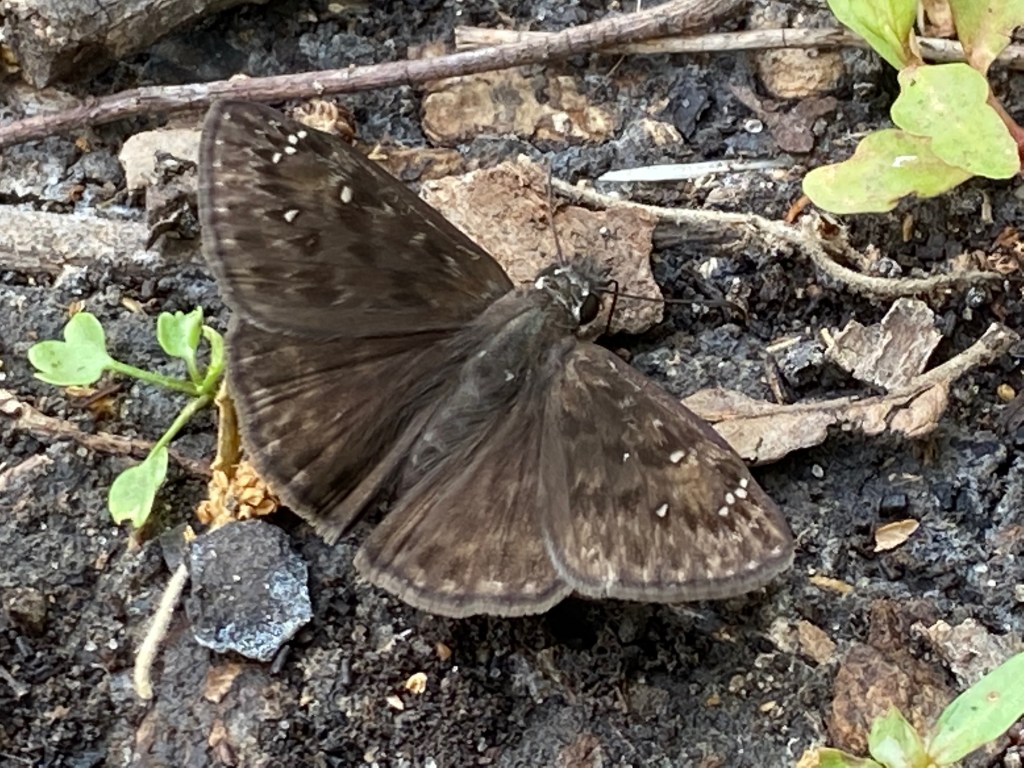
I followed the trail to the edge of the marsh, past a twenty foot tall dead tree whose bark had the appearance of being twisted, as though earlier in its life something grabbed it and gradually twisted it as it grew. There was also a hole, very much suggesting a woodpecker’s cavity nest, but it was only about seven feet off the ground. At the water’s edge there were dragonflies and a handsome brown duskywing skipper to see.

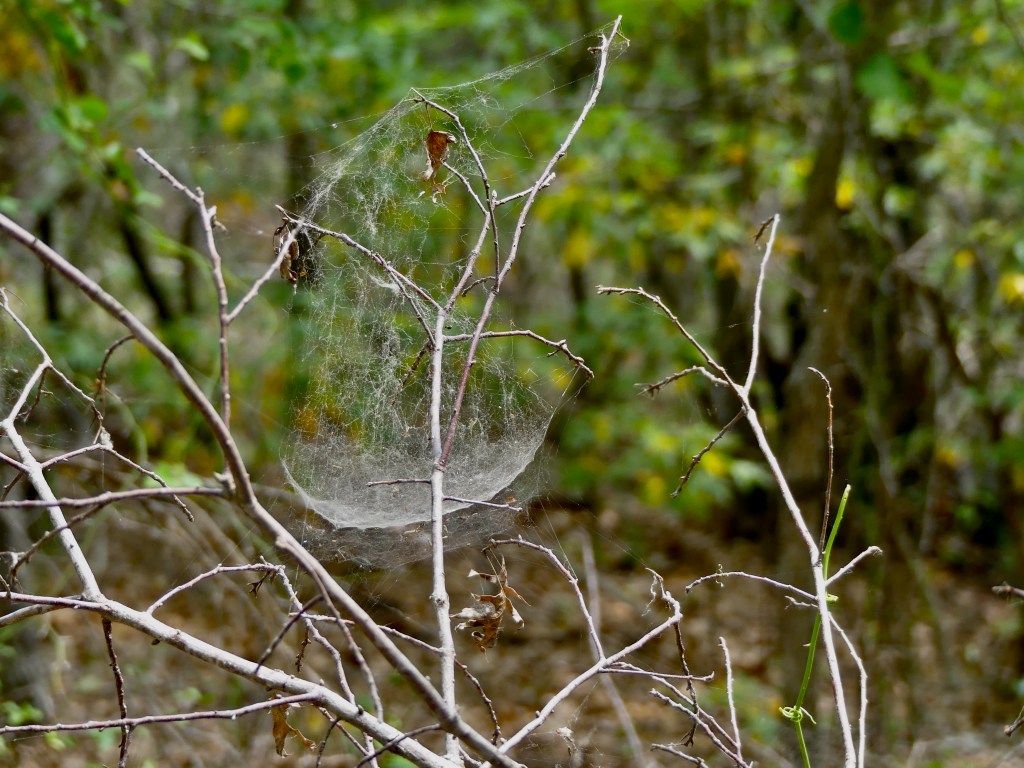
There was another road to walk, the familiar old path down into the bottomlands. The giant cottonwoods and other trees were like the pillars of a giant cathedral, and the place was full of life. One of the things I noticed was a bowl-and-doily spider, a small woodland spider whose web looks like a bowl suspended over a flat, old-fashioned doily.

I’m glad for this place – these trees – and all the other living things here. Fort Worth Nature Center & Refuge lives up to that part of its name, “refuge,” as we can escape deeply enough into the woods and prairies to reach a place of sanctuary and safety.

The road continues on and on 
To quiet places where, with feathers and trust, 
We soar above grief and fracture 
And continue the journey as we must. 

High Summer at Southwest Nature Preserve

After the long reprieve from Texas heat, with the rains of spring and early summer, we’re back to a more typical August. With temperatures climbing and the sun beating down, I decided it was time to take a walk at Southwest Nature Preserve. I was there from about 1:45-3:15pm.

The North Pond

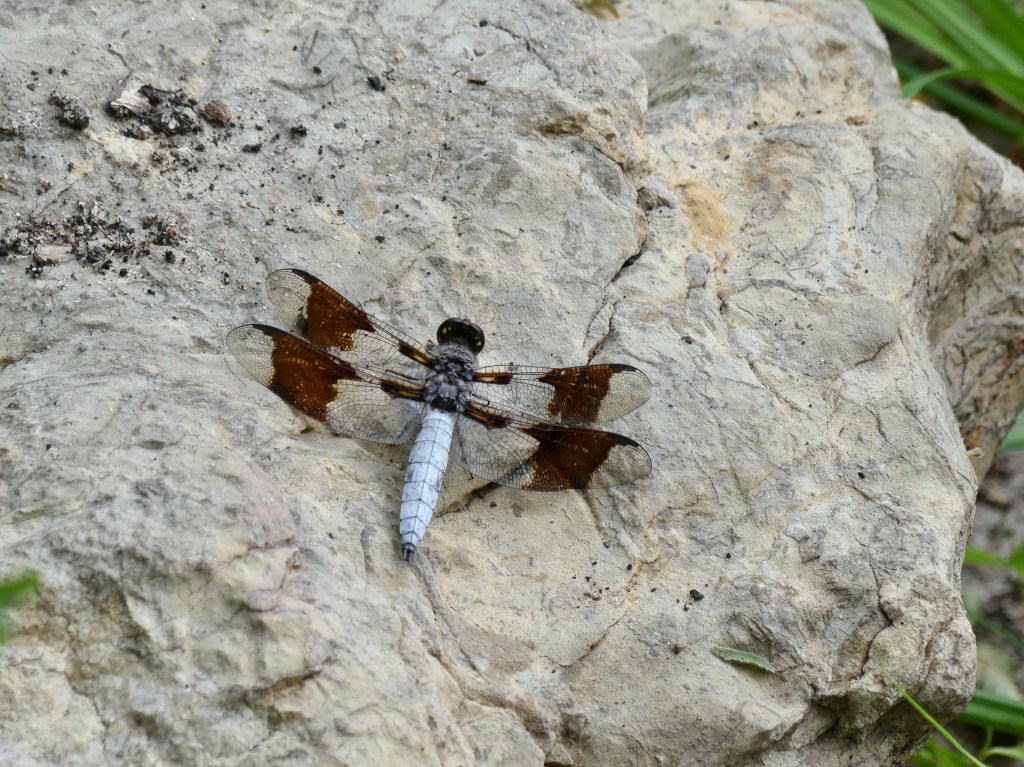
Cricket frogs and turtles were busy at the North Pond, and dragonflies busily and silently did their dance, swooping and hovering. The Common Whitetail more than justified its name as the commonest of the dragonflies I saw.

A Common Whitetail, perched on a branch

I watched all this for a while, but the sun was merciless and I wanted a shadier place to roost. Up the red sandy trail and under some oaks, I turned to see a Texas Spiny Lizard on a Post Oak trunk, her body making an arc as she hung upside-down there, head pulled up to look at me and tail drooping a little away from the tree trunk. Like all such lizards who survive to adulthood, she was wary, and disappeared around the trunk as I moved in to ask for a photo.

Texas Spiny Lizards have had a heck of a year, with rain and runaway plant growth supporting a bumper crop of bugs. I hope they persist (as they always do, in some numbers) during the dry periods that may come. I never get tired of seeing these cute little reptiles that sometimes tolerate you coming close but always at some point scamper away, up and around the trunk, too fast for your eyes to follow.

I followed the trail at the back of the preserve and climbed up to the ridge where there could be more breeze. Around the little loop trail at the crown of the preserve, there is an old concrete pad left over from when it was a working farm, and I sat there for a while, enjoying the quiet. There is almost always some airplane noise, but the spot is on the other side of the ridge from most traffic and so you can escape much of the mechanized soundtrack of modern life, for a little bit.

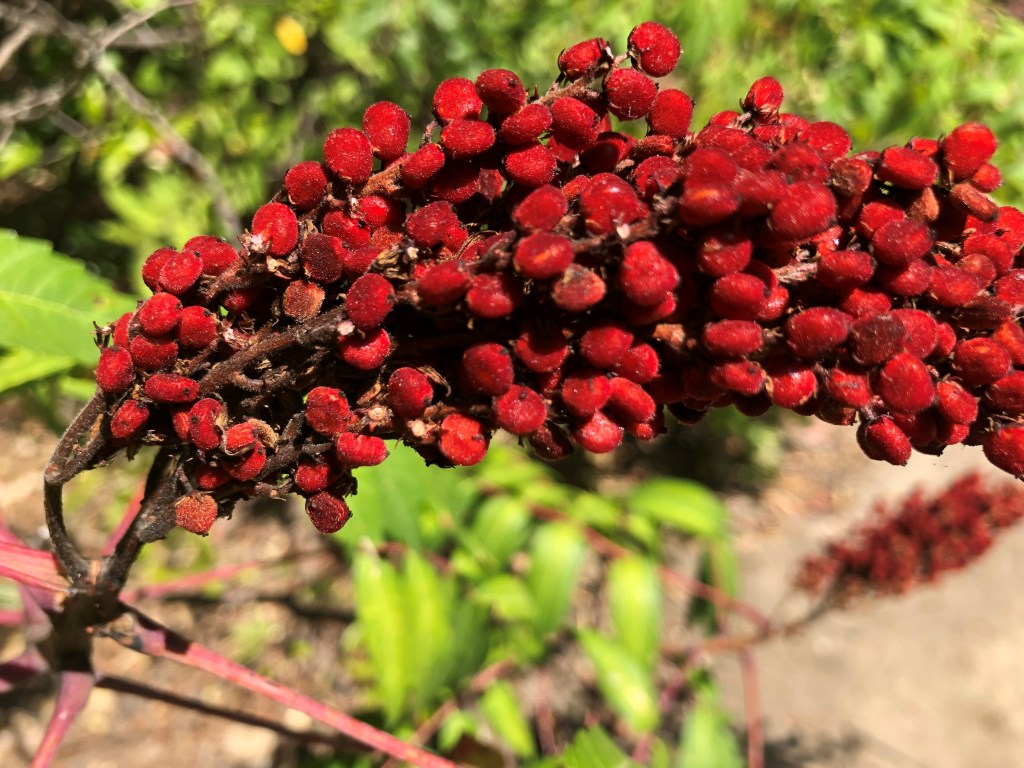
A Sumac seed head

Sumac is common in places at the preserve, and their seed heads can be a bright, velvety red before drying and darkening into the color of dried blood. Rob Denkhaus tells me I could make a tea out of it, and I’d like to find some growing somewhere that I could harvest a seed head or two and try it!

Looking down from the ridge onto the trail below

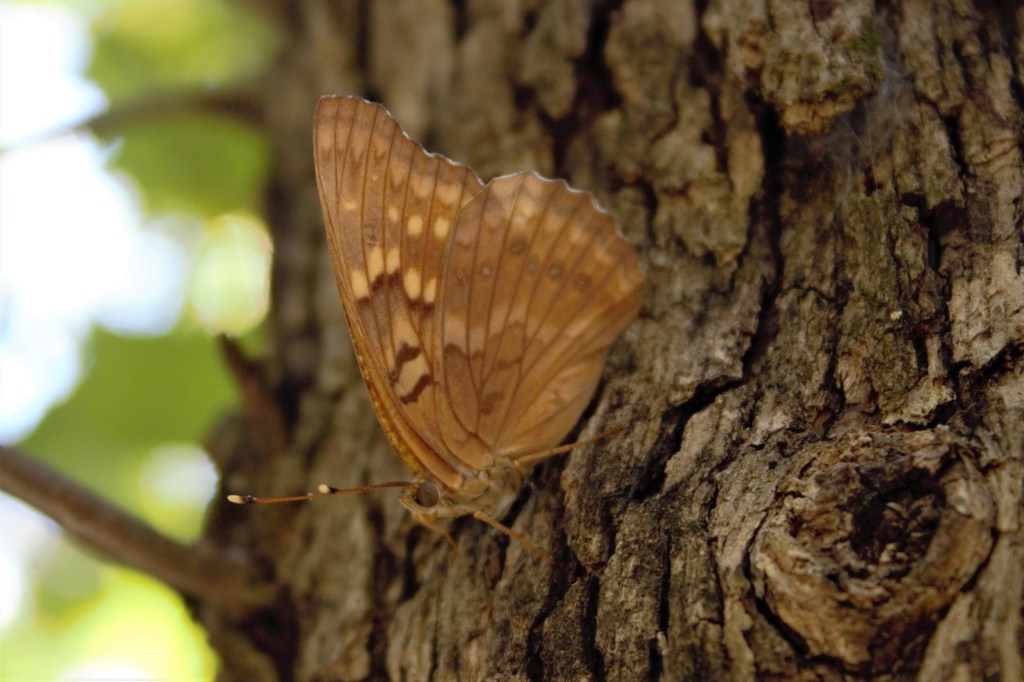
On the walk back to the trailhead, I saw one more of a kind of butterfly that seemed familiar – was it a Hackberry Butterfly like one I’d seen on a previous walk? I got a photo, and it appears that I was right. (Thanks, iNaturalist!)

A Hackberry Butterfly, according to iNaturalist

At the end, Weather Underground was reporting that the temperature in Arlington was 101ºF, with a heat index making feel like 117ºF. So it got pretty hot today, though the lizards and insects didn’t seem to care. It’s a little more troublesome for those of us whose bodies only operate in a narrow range around 98.6ºF, but a little shade and a little breeze got me through.