Turning Away from What’s Essential for Humanity

The news is full of war, hatred, assassination, and cruelty. Right wing media, from what I can see, appears to be telling people that what we need is power, domination, and ruthlessness. Much of American Christianity is saying that empathy and compassion are weaknesses at a time when we need strength. Our neighbor, we might infer, is whoever is in our tribe and thinks like us. Everyone else is expendable or perhaps needs to be eliminated (by deportation or deadlier means).

The thing is that the world’s major religions disagree. Or – wait – the major teachings of major religions disagree, while the practices of their followers may not. The history of how religion has been expressed in different cultures contains plenty of hatred and murder, war, torture, and slavery. But what do you find in the teachings of Buddhism? You find compassion playing a major role, relief from suffering alongside not being held captive by possessions or attachment to the way things are. What do you find in Christianity, by which I mean the actual teachings of Jesus? Compassion, forgiveness, empathy, and love.

One of my heroes, the farmer, writer, and poet Wendell Berry, put together a small book on the subject of “Christ’s teachings about love, compassion, and forgiveness.” It is titled Blessed Are the Peacemakers, and it is in print and inexpensive. He wrote that in the U.S., Christianity seems to be fashionable, but “It seems to have remarkably little to do with the things that Jesus Christ actually taught.” He went on to write that “…I know of no Christian nation and no Christian leader from whose conduct the teachings of Christ could be inferred.” And so, he decided to put together this little book containing Gospel passages in which Jesus addressed issues of “human strife, forgiveness, compassion, and peacemaking.” It’s a good antidote for those politicians who paint a portrait of Jesus as a Proud Boy, storming the Capital and proclaiming white supremacy.

Similarly, the books of Thich Nhat Hanh spell out the wisdom of the Buddhist tradition. He was born in Vietnam and became a Buddhist monk, then went on to teach at Columbia and Princeton, to write numerous books, and work tirelessly for peace. In Peace is Every Step, he wrote that, “Real strength is not in power, money, or weapons, but in deep, inner peace.” In The Art of Living, he wrote about mindfulness, the ways we are connected with everything around us, and the importance of transforming pain and suffering.

What does science have to say about these things that I’m claiming are essential for our humanity? One place to look is in the work of Dr. Bruce Perry, a child psychiatrist who knows a thing or two about love and connection, and what damage trauma and neglect can do. Using neuroscience and our understanding of human attachment relationships, he writes (in The Boy Who Was Raised as a Dog) that humans “…could never have survived without deeply interconnected and interdependent human contact. The truth is, you cannot love yourself unless you have been loved and are loved. The capacity to love cannot be built in isolation.” He goes on to write about love and empathy in Born for Love: Why Empathy Is Essential-and Endangered. As a retired psychological associate, it troubles me to see popular culture asserting that empathy is a defect, and this book is an excellent answer to that claim. We need each other. The ideal of the tough guy who is entirely self-reliant is not a healthy model for raising children. It typically results in adults whose idea of love is more like transaction and manipulation.

Like many people, I look at what our popular culture and right-wing politics is promoting and I fear for how the future will go. Fear, but not despair – not yet. For my brothers and sisters who feel like they are bystanders to the world’s death spiral, I suggest reading Rebecca Solnit (titles like Hope in the Dark) as well as Joanna Macy (for example, Coming Back to Life, with Molly Brown).

What does all this have to do with Our Lives in Nature, the title and theme of this blog? It is all related; how we see ourselves shapes our relationship with the Earth, how we treat each other and how we treat nature are intimately related.
For the Kids in My Family

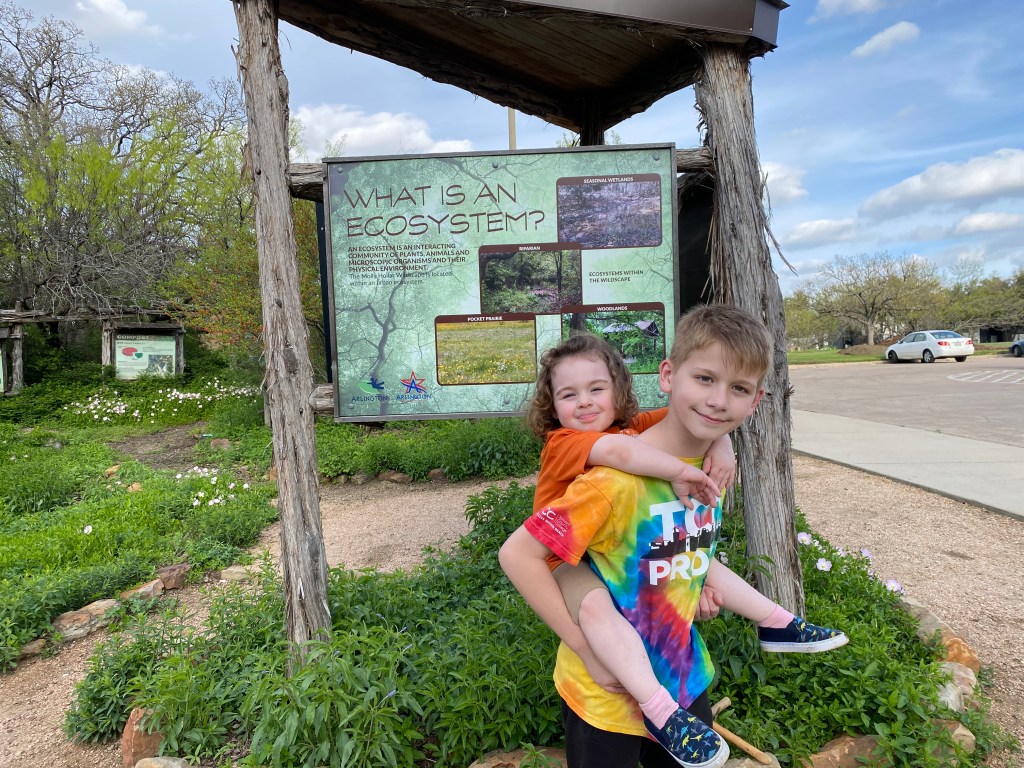
This is heartfelt but maybe preachy, so bear with me. And it’s particularly for Eli and Lilly, should they want to read it at some future time. I was thinking of boys in particular as I wrote it, but it’s for anyone. Especially for those raising boys or having influence in their lives, and for anyone whose life is woven together with the lives of boys.

Lilly and Eli

I hope you will question what means to be a boy, and a man. Don’t just absorb what the culture teaches without some careful thought.

The culture (schools, places of worship, movies, social media, etc.) shapes what we expect of boys and men. But we don’t have to follow the culture when it holds up domination or aggression as ideals. We can turn away when it yells, “do it!” because stopping to think before acting is supposed to be weak. We don’t have to end up as men who are hardened, isolated, determined to win no matter who gets hurt. And we don’t have to raise our sons that way.

So … who do you want to be? I don’t mean work or a career, I mean what values could guide you as you make your way through the world?

Here are a few that are worth thinking carefully about: equality, empathy, truthfulness, integrity, compassion, kindness, and work as well as play.

Equality ought to be easy, right? People talk about it, even in our Declaration of Independence, the part about believing that “all men are created equal.” Nobody is above another person. It’s a great idea, and yet they wrote “men” and left out women. They left out people of color, too. Over the next couple of centuries, we began recognizing what we left out, and a lot of people have tried to correct that.

I hope you’ll think about equality on a very personal level, about you and the people around you. They way you are with girls, women, people of color, people with less money. Older people, like me, often used the right words about others being equal, but didn’t act like it. Our sisters and girlfriends were equal, but … boys and men needed to do things for them, speak for them, and make the important decisions. We said one thing but acted like it wasn’t true. Equality was mainly just a nice word. I think many younger people are doing better, but the problem is still here. In fact, some churches and politicians want to go back to the time when women were supposed to be quiet and obedient.

Women and girls should matter just the same as men and boys. Neither one should try to control the other, as if they were better. This especially includes the old problem of men and boys thinking they can control the bodies and the affection of women and girls. If we really mean it about being created equal, then we each make our own decisions about what to wear, who to hug, when it’s OK to touch or be touched. And of course that goes for any gender, gay, straight, transgender, or other way of recognizing who we are.

And being treated equally goes for any other person who is different in ways like race and skin color, or what country you are from, or how much money you have. I’m not better than a person who is different in those ways, and neither are you.

People who are opposed to these ideas may try to make it seem like we are saying that everybody has more rights than men or boys, like we are getting left out and these others are getting special rights. I guess what bothers them is that we men have less of a special privilege than before. We are used to having a special status, and so just being equal to everyone feels like we lost something. But the deal is, no one has more rights or is “more” equal than anyone else.

With equality, being female doesn’t give girls and women special rights, just the same rights.

And it doesn’t give Black people special rights over White ones, just the same rights.

And so on, with other kinds of differences.

So I hope you will think about the values that you want to guide your life, and I hope that equality is one of them.


I want to write more about these issues, maybe touch on those things like empathy, truthfulness, integrity, compassion, kindness, work, and play. What is happening in our country right now seems to challenge and distort those qualities, and some people are glorifying power and even violence. They would give special privileges to the rich and make women conform to mistaken ideas of what is required to be virtuous. They would re-define truth to be whatever is convenient at the moment. If we think such ideas are wrong, we have to speak up.

What Will We Do Now?

I write about nature, about the experience of nature and the cost of losing our connection to it. What could I have to say about this new world we are about to step into and what we can do about it? This space is about “our lives” in nature, and those lives – really all lives in nature – will change with the incoming administration.

Our country and the world is enduring a time of breaking, of desecration, when the worst impulses of many people are enabled and encouraged. And yet, there are a lot of us who know better, were raised to be better, and maybe we can lessen the damage. We have to try. We’re allowed to grieve the better world that is postponed or maybe lost, but our love for this world and for each other calls us out to do what we can.

Photo by Anugrah Lohiya on Pexels.com

The first thing we can do is to support ourselves and each other. Think about what the airlines say to do first if the cabin loses oxygen: grab the mask and make sure you have the oxygen that will let you function to rescue your child or your neighbor. We can do no good if we spiral into despair or exhaustion.

We cannot support each other if we’re isolated, and we need to work on this. Our Surgeon General called loneliness a public health epidemic, and a poll from the American Psychiatric Association said that 10% of Americans report being lonely every day. An NPR report stated that, across two decades, young people aged 15-24 now had 70% less social interaction with friends. As communities, we are often fragmented and isolated, and that might be a significant factor in our sense that we are falling apart. We increasingly keep to ourselves, and sometimes that results in thinking which becomes rather paranoid, and we become less patient, understanding, and skillful when dealing with fellow humans. The phone becomes our social partner and our way of interacting with the world, but social media is no substitute for face-to-face communication. And I say that as an introvert who hates parties and large social events. Find people with whom you can really talk as well as listen. Don’t forget their importance.

Nature, of course, can play a role in our self-care. In times to come we have to remember how the woods can be a refuge and wetlands can help wash away anxiety, trauma, and anger. Just as we need connection with allies, friends, and relatives, we need connection with trees, prairies, wetlands, and wildlife.

Such places will be more threatened than ever. The incoming administration has pledged to “drill, baby, drill,” and is also interested in selling off federal land to developers for housing. Project 2025, which (despite early denials) seems to be the blueprint for the incoming administration, intends to dismantle much of the Environmental Protection Agency (EPA), reverse what it considered the Biden administration’s “climate fanaticism,” forbid any scientific investigations by the EPA that are not explicitly authorized by Congress, and undo any progress toward clean energy. We know that climate scientists have said that much damage has already been done and we see the fires, floods, droughts, and hurricanes all over the news. Every year without significant climate progress will result in worse damage. How bad and how soon is hard to predict, but after the election, things look much less hopeful.

The new administration wants to convert civil service positions into political appointees. People working in civil service mostly have the independence and professional expertise needed to guide the implementation of environmental (and other) regulations. You can call them “bureaucrats,” but we probably want independent professionals helping determine the safety of our water or what sort of protection is needed to save a species from extinction. That may work out better than promoting opportunists willing to say anything to show their loyalty.

There are other threats, of course, like the stated intention of rounding up millions of our neighbors and deporting them, of giving up on real equality and justice, and marginalizing and harming our LGBTQ+ friends and loved ones. All this is interconnected. A government that treats some of its citizens with contempt will treat the land with comparable contempt.

We are going to need to try to stay informed about these things and know how to speak up. Perhaps we can choose an organization or two that we trust and channel some of our support and our advocacy through them. Perhaps it’s the Center for Biological Diversity, Earthjustice, or 350.org. Or it might be some other organization.

Here in Texas, the old-fashioned way of writing to elected representatives now seems a little … quaint. They do not represent us and are willing to harm us to get what they want. The head of Project 2025 wants a right-wing revolution which will be bloodless only “if the left allows it to be,” presumably meaning that they use violence if we don’t go along with what they want. The incoming President wants to be able to use the military against the “enemy within.” Significant portions of our own government are aligned with this view of us as the enemy (or are subservient to those who do). Somehow “please, sir, would you consider voting for this” does not seem like it will be effective with such people.

That is not to say we should not write to, say, Ted Cruz or Dan Crenshaw so that they know what their constituents think and maybe feel some pressure that might restrain them. We might share such letters publicly, in social media or a letter to the editor that says, “here’s what I wrote to Senator Cruz.” Normalize resistance, and let others know they are not alone.

But there is something else. How has it happened that more of our population shifted to the right? How have Proud Boys, bullies, and fascists become OK? How do Christians come to disavow Jesus’ teaching in the Sermon on the Mount as “too weak” and embrace hatred and exclusion? What drives the love of violence and responding to disagreement or differences with bullying? How did so many of us (very often men) define their personal adequacy by their ability to humiliate or harm others?

I hope that we can be examples of a different way. We can be models of empathy, respect, and a recognition that how others are doing is important to our own well being. I hope we teach our children, and particularly our boys, that we can be both strong and gentle, and we should always look for non-violent ways to protect what we love. These things should not be confused with weakness and passivity. Sometimes physical strength is needed, but the most important strength is moral strength and the courage to stand up for principles without being a bully. Too many of us, particularly boys, have not seen examples of this or have watched those around them treat such qualities with contempt. That needs to change.

Don’t let the ugliness blind you to the beauty that is also around us. Take time for that beauty; let it in.