Looking Beyond Ourselves

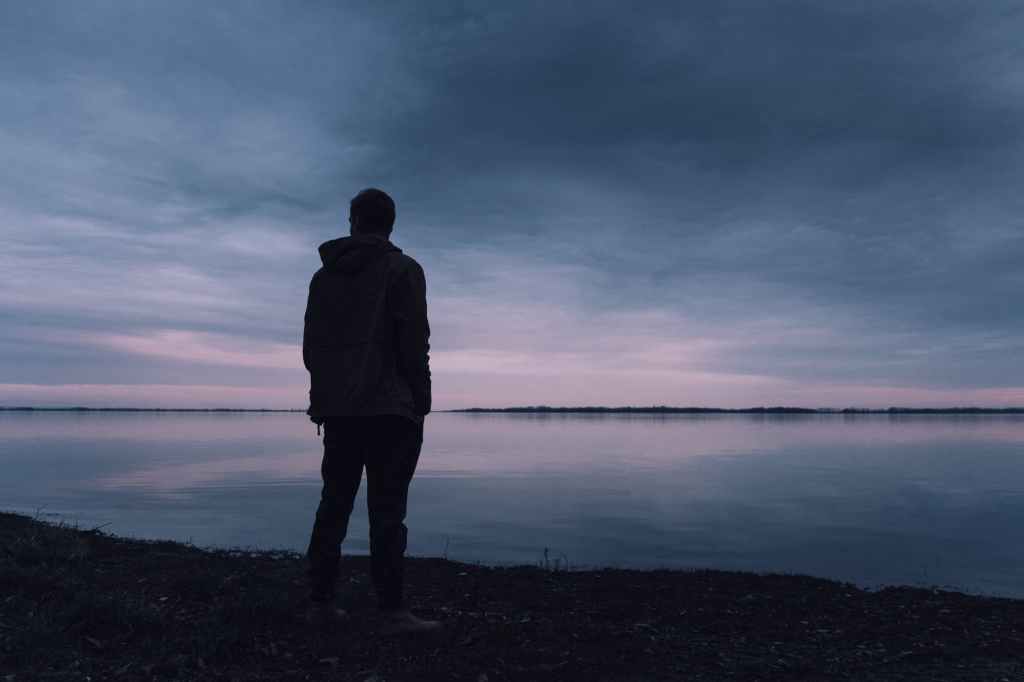
Our lives have taken a dark turn, bringing a foreboding that cannot be wished away with reassuring words. Our physical safety, health, economic security, community integrity, and the already unstable environment are threatened. As we work on the practical issues of taking care of ourselves and resisting what is coming, we may want to reach beyond ourselves for some sort of transcendence, to be part of something bigger and better than the mess we find ourselves in.

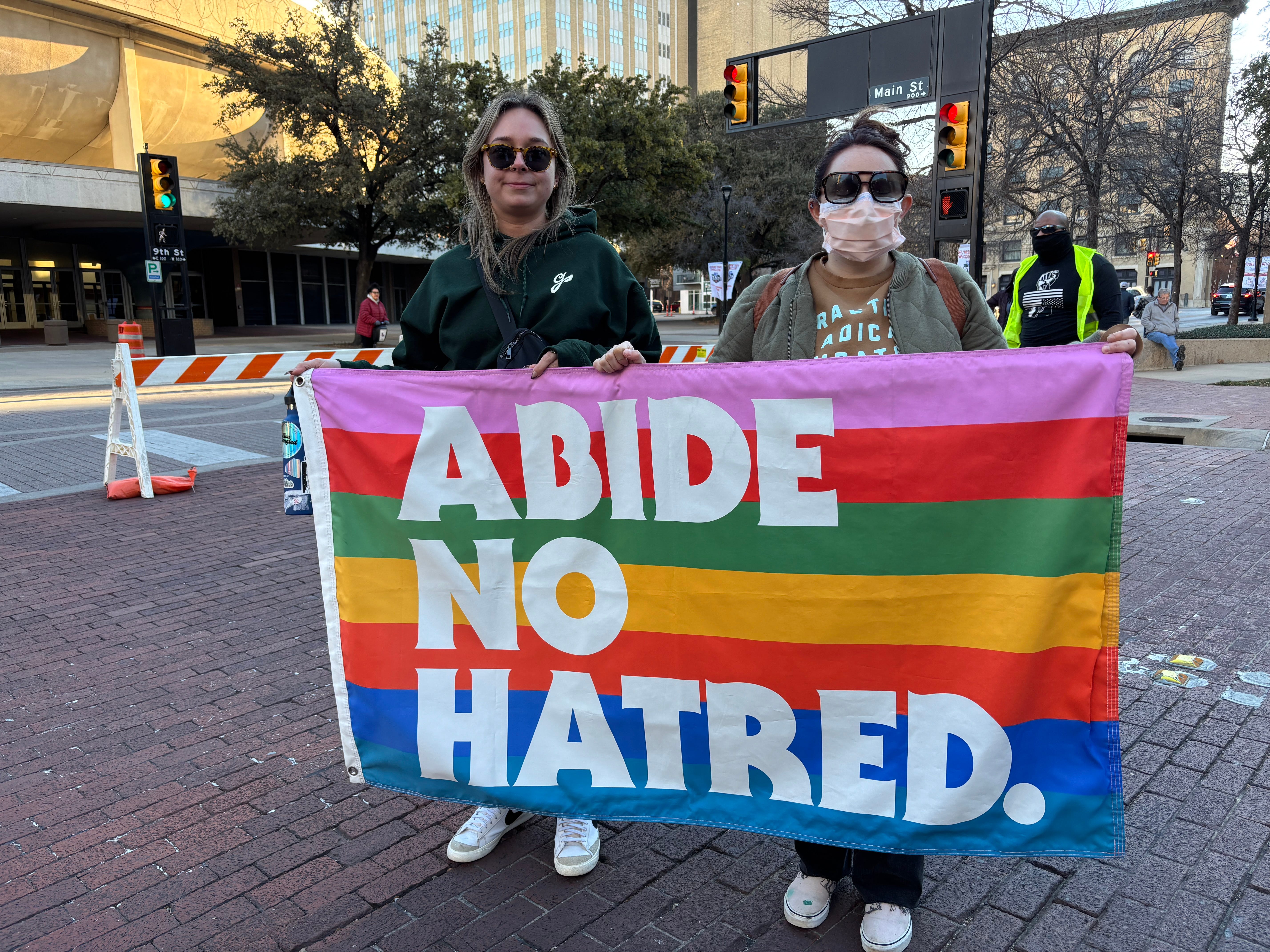
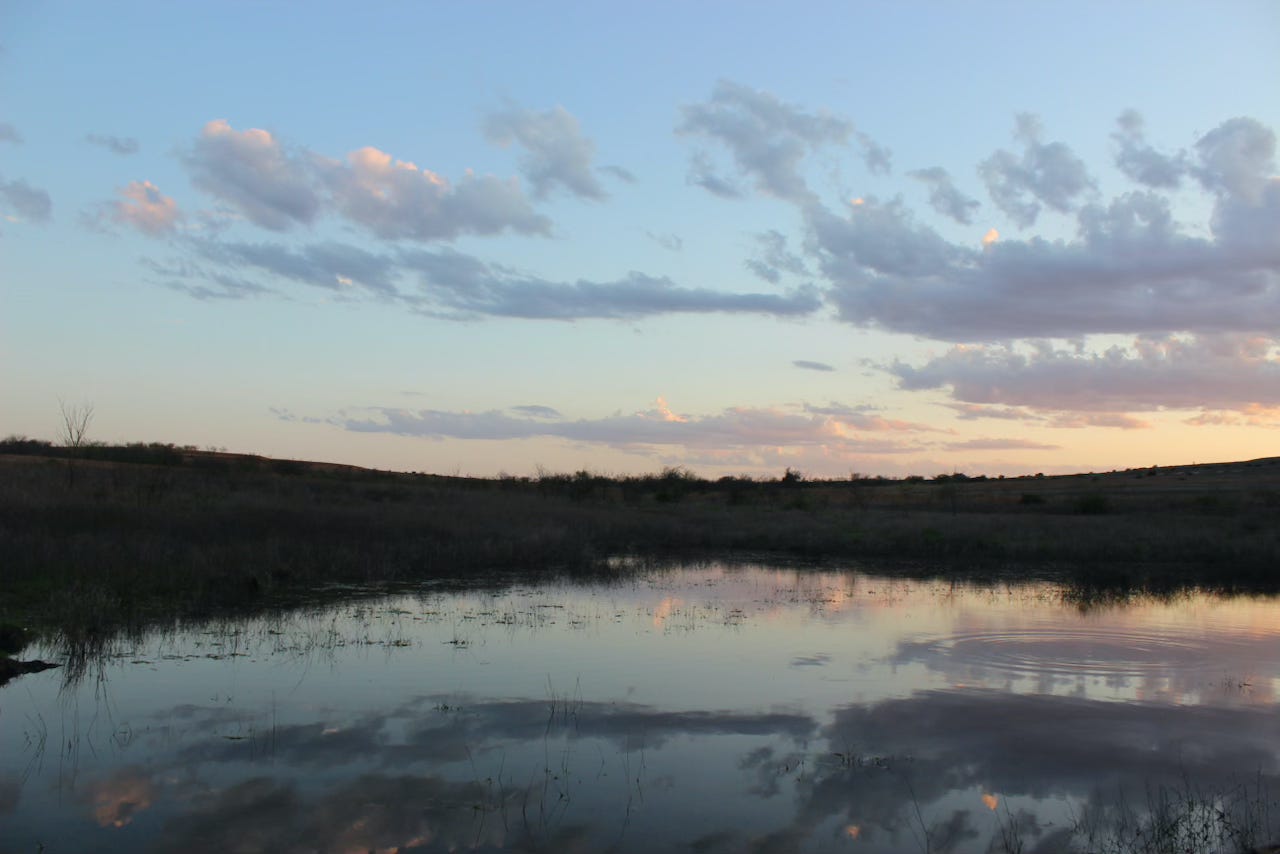
I’m not recommending that we check out and abandon the work that must be done to resist the oligarchy and the bullies and enablers that now constitute most of our government. I hope we will stand up against that which is wrong, support organizations and communities that remain committed to truth and democracy, and embody what we want to see around us (such as compassion, humility, and integrity). I will still visit the woods and prairies and try to be open to experiences of transcendence and spiritual renewal, but I also hope to do those other things.

How do we find strength and keep from getting swallowed up by what we are facing? One honest answer is “I don’t know,” but I’m thinking that it will involve reaching beyond our worries and things we use for distraction. And if we reach into the part of life that we refer to as “spiritual,” would we find strength or would we struggle too much with all the baggage that the word carries? Hopefully we could resolve the issues about religion and control that many of us think of first when that word comes up. Various religions have hijacked spirituality and confined it to the “right” beliefs, orthodoxy in our practices, and condemnation of others. A great deal of cruelty and killing have resulted, and many of us want no part in that.

But some do. For example, we hear about Christian Nationalism and those who want to rule in the name of Christianity. I’ll single out Christianity, knowing that the other Abrahamic religions could be part of this discussion, too. I have been dismayed to hear reports of self-identified “Christians” disavowing the Sermon on the Mount (including “blessed are the merciful” and “blessed are the peacemakers”) as being irrelevant now and too weak. It is revolting that the “Rod of Iron Ministries” venerates the AR-15 and has a compound in Texas preparing for war with the rest of us.

At the opposite end of the spectrum is the Episcopal Diocese of Washington (DC), where Bishop Mariann Budde spoke directly to Trump at a prayer service yesterday, saying:

“I ask you to have mercy upon the people in our country who are scared. There are gay, lesbian, transgender children, Democratic, Republican, independent families — some who fear for their lives” … “I ask you to have mercy, Mr. President, on those in our communities whose children fear that their parents will be taken away.”

Trump later asserted that she was “nasty” (another “nasty woman”) and should apologize. Given his penchant for revenge, I would say she was courageous. And her words were consistent with the teachings of Jesus – for anyone interested in exploring what he actually taught about love and compassion, I highly recommend Wendell Berry’s Blessed Are the Peacemakers, in which he pulled together the New Testament statements attributed to Jesus concerning these topics. In the Introduction, Berry said that Christianity was fashionable in the U.S., but “It seems to have remarkably little to do with the things that Jesus Christ actually taught.”

But back to the broader topic of spirituality. Definitions of “spirituality” include references to the sacred, to transcendence, reverence, awe, and seeking meaning and purpose, and being in the right relationship with everything that is. My source for these can be found at a webpage at the National Center for Cultural Competence.

If I look for experiences and activities that go beyond me as an individual human, that connect with something meaningful and enduring, perhaps I will be shielded a little bit from the hurts of the world even while staying engaged with that world. It might be finding and sharing beauty and harmony, responding to the needs of others, or participating in religious beliefs that are not a mask for power and greed. It might be understanding that I can be a part of a love that is bigger than individual people and even inclusive of all lives. Such spirituality might provide a sort of sanctuary, in the sense of a place of refuge and safety.

The Power of the Everyday World

I get up. The kitchen becomes light when I flip the switch. The day starts with some small reassurance of the world’s predictability.

The coffee beans grind with a satisfying aroma, and the coffee tastes good. Things work. Things are OK. 

The car starts. Another data point stacks up in favor of a beneficent world. 

Against these meager but welcome signs that the world makes sense, there is the news. I don’t want to watch the news, but I am drawn to watch it anyway, the way a traumatized child’s play is drawn toward re-enactment of the trauma. This “trauma play” can crowd out the child’s ordinary, creative, fun play, just as the televised discussion and reporting of bad news can crowd out time that might be better spent elsewhere. But we want to be able to predict what may happen, to know what’s coming. The obsession with knowing “what happened” is a way of trying to make sense of the world and what might happen next. 

Oh, good, the trash was picked up, and the recyclables, too. Things are working as they are supposed to.

I think about the health of the people I care about. If there is trouble, I can prepare myself for how to be supportive, and maybe predict how events might play out and what we could do in each situation. Our brains are wired to anticipate the future and try to prepare, in every area of our lives. 

Part of our brain can be something like a “situation room,” a place where the experts and leaders gather to try to work their way through a crisis. And if the situation room is always running hot, problems occur. After a while, someone yells, “Turn off the damn alarm,” as the jangling autonomic nervous system keeps us in a panic, but the bell keeps ringing. Everyone sits around the table, exhausted, reviewing the information for the fiftieth time. The more we ruminate, the more dysfunctional the situation room becomes. Exhausted, irritable people do not solve problems well. Neither do chronically stressed or traumatized brains.

I grew up in a world that seemed safer and more predictable. 

Stepping back from what I just wrote, it sounds ridiculous, impossible. When I grew up, White State Troopers were beating Black civil rights protesters nearly to death in Selma. Boys were being drafted to go die in the war in Vietnam. We had nuclear attack drills in school, practicing how we would get under our desks to survive hydrogen bombs that seemed likely to fall on us any day. The world would end. How could such a world ever seem safer and more predictable than it does today?

It seemed safer, but it was not. Why did it seem safer – why did the world make more sense in my childhood?

My parents could not take away the threat of nuclear war but they could help support an everyday world in which things happened sensibly, often with happiness and wonder. There was carefree backyard play. There was the sound of waves, the smell of the Gulf, and a young child’s fascination with lightning whelk seashells. And then there were lightning bugs on summer nights, dragonflies in a scrubby vacant lot, and camping in the mountains. The immediate, direct experiences of the day. Having parents to share those gifts and cushion the disappointments and challenges made the day-to-day world a place that seemed mostly safe and predictable. In the fourth grade, if the everyday world is in good shape then nuclear attack drills can be just something that you do, with little connection to the cataclysmic threat and the absurd idea of surviving underneath that desk.

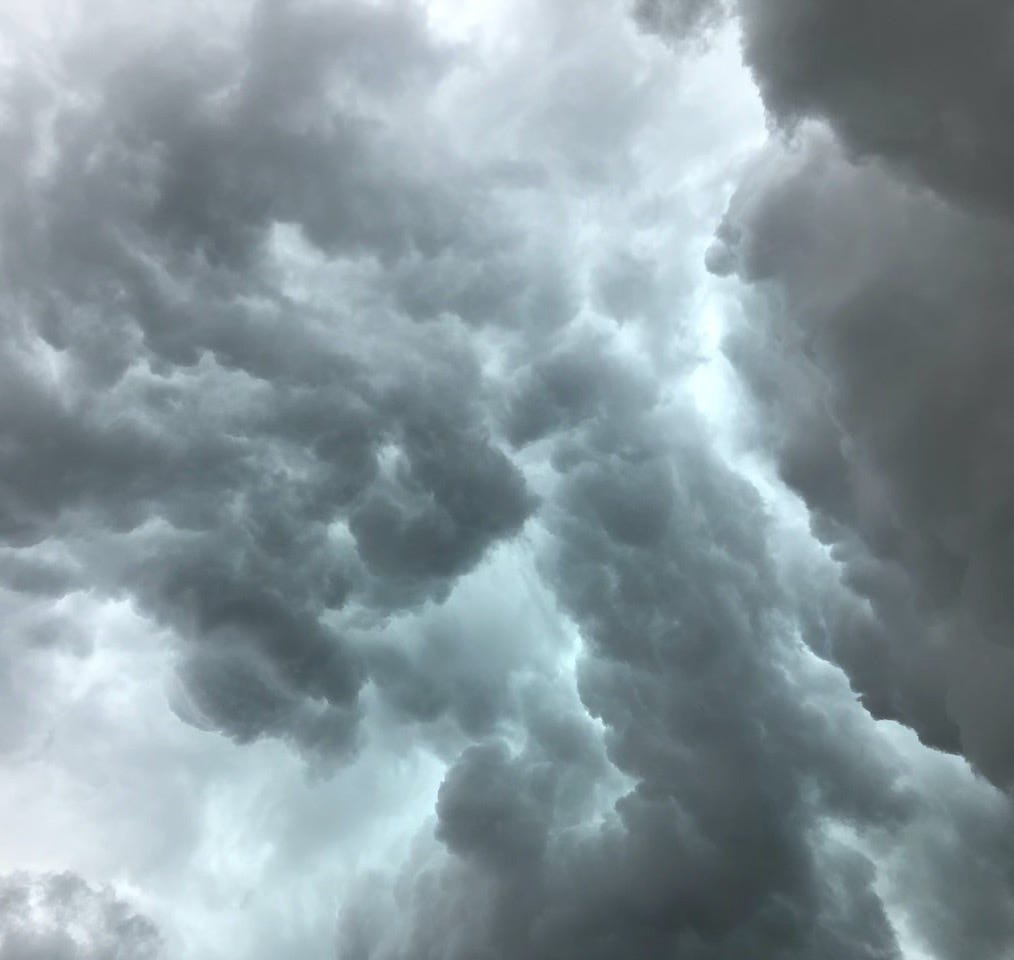
In the everyday world, I watch clouds slide to the north, piling up to great heights with edges lit brilliant white by the sun. They cross the pale blue sky slowly and peacefully. This world, at this moment, is a good place.

Regardless of what the world presents us with, we want it to be sensible, predictable, and safe. Even thrill-seekers want that security after the thrill is over. After the free-fall, after the parachute opens, we want gravity to give us a landing we can walk away from, ready to do something else.

With pandemics, insurrections, and a climate spinning out of control, it is easy to doubt that we can walk away from our landing. Road-rage killings, people assaulting others on airplanes, neighbors stockpiling weapons of war. People gathering to scream utter nonsense opposing a vaccine that could save us. For many of us, the world appears to be less predictable, sensible and safe with each passing year. What do we do with that?

One way of coping with the world’s trouble is to purposefully set aside time for living in the present, the world that we are in contact with each day. We cannot let the world’s troubles make us numb to the little gifts of our everyday lives. Those are the moments in which we visit a friend, listen to a bird, or write a letter (or an email). They are moments of contact with what we see and hear around us, what we touch with our fingers. 

My grand-daughter’s beautiful smile draws me into more play. I think what a gift this is, something that makes the everyday world a good place to live.

I know that our everyday lives can be difficult at times. Things break down, a loved one gets sick, we have loss and sorrow at times. But in between those times are the moments when the world offers its most precious gifts of beauty, sustenance, love and joy. 

Living in the present is not shirking responsibility or escaping from the world. There are times when we do need to think about the bigger world and contribute what we can to try to bring about change. And when we have done what we can, then it is good to let all that go and spend time living in the everyday reality that we have been given. 

I sit and listen to Beethoven’s String Quartet No. 14, completely absorbed in those four interwoven melodies.


(My life as a naturalist and conservationist is balanced by my career as a Psychological Associate. As I wrote a while back, “our lives” is as important a part of this blog as “in nature.” I know that my focus here is our lives in nature – the interrelated ways that humans and other species make their way through the days and years. I will try to stay focused, but sometimes an article will tilt toward the “‘our lives” part of the blog.)

Hope

Look at what’s going on around us. World events, greed, cynicism, hate and disinformation squeeze our capacity for hope into a narrow thing, almost hidden away. And yet hope is essential. We have to believe in the possibility of good things and good people. We must have some expectation that things could get better, and that our actions could make a difference sometimes. We have to believe that there will be a flower among the thorns and that somewhere in our numb, angry or sad feelings there are moments when we will smile. Without hope, we would sink into despair. Hope keeps us from giving up, from spiraling ever downward. If we are lost to despair, everything gets worse. 

Hope is a belief or an expectation, even if it sometimes exists below our awareness. Where does it come from? It doesn’t depend on thinking that a steady stream of good things will happen, or else hope would only belong to the naive and the lucky. Life is rarely like that. Hope sometimes appears when things are looking grim, and can get us through hard times. How is it that when we’re confronted with hardship, sickness and conflict, we can experience hope?

Does it depend on faith? Not religion, necessarily, but a belief in the future even without evidence. A belief in the world’s capacity for good, sometimes when there is evidence all around us that the world can be cruel and corrupt. By “the world,” I mean human societies and governments. 

We have to be able to stand with one foot in the world of bad news and the other in the world in which people are good and kind. We have to face corruption, greed and incompetence in order to oppose it where we can. Standing a little in that world, we do our best to learn how and where bad things happen in order to keep ourselves and our loved ones as safe as possible. 

But planting the other foot where we find good things is essential. If we are completely immersed in a world dominated by lies, cruelty and such things, we risk losing our perspective, becoming cynical, and slipping into despair – we lose hope. We have to remain some of the time in a place where our reality is shaped by things like kindness, generosity and peace. 

I’m thinking of the person who does not sugar coat the problems of the world, but keeps looking for and noticing good things, nurturing and holding them in a place where they will not be overwhelmed by the bad news of the world. Where does that ability come from? I think such people are mostly made by experience, not born to be “immune” to troubles and worries. My training and experience with families and young children inform this opinion.

I think this ability to keep finding positive things in a difficult world is more likely to be present if we have had experiences early in life with a mostly trustworthy, loving world. It happens when we have had attuned caregivers, usually (not always, for we are all imperfect) meeting our needs and showing that they care. Such a person might be a parent, grandparent, or someone else with whom we live or spend a lot of time. As babies and toddlers, we still have moments of frustration and rage, and we might overwhelm our caregivers occasionally. But afterwards, they welcome us back and heal the breaks in our relationship. 

There are people with a capacity for hope whose start in life did not include relationships like that. I’m sure that somewhere, later on, they had a teacher, relative, foster parent, or other important person who was steadfast, caring, and able to do their part to rebuild a relationship when it gets torn. These are the things we need to make sure to do for each other now. (If you are interested in how people who had early difficulty can later develop secure attachments, read this article by Dr. Hal Shorey.)

Regardless of what happened in the past, at times like these we can use a little nudge toward hopefulness, an idea or two about finding hope. Here are some thoughts to consider:

  1. Stay close to those significant people who help you keep standing with one foot in what’s good. These are the trustworthy ones, those who really listen, reach out, forgive, make amends, and accept who you are. No matter how much people like me seek solitude, we are wired for relationships, and those relationships are the engines of hope.
  2. Figure out how to budget your time so that you spend some of it in what’s beautiful and good in the world. Nature, art, time with friends, projects that contribute to what’s generous and good. Remember the difference between the distraction that comes from fun and the sustenance that comes from what is really good. (If you’re working very many hours, caring for children or those who are sick, there may seem to be no time for this. If that is the case, even a little bit of time spent in this way may make a difference.)
  3. Find some time for quiet and stillness, time to reflect or at least to rest from the constant barrage of sounds and images we are confronted with. For some people, learning meditation or yoga can be helpful. 
  4. Find time and energy for self-care in whatever way you can. You could consider the first three ideas above to be self-care, but there may be specific problems needing to be resolved. Any improvement with such problems will free up emotional energy needed for hopefulness.
  5. Remember that when you are stressed, tired and discouraged, the way you think about things is affected. It’s helpful to step back from your thoughts and conclusions and see them as your perception of reality and not reality itself. How you see your situation can be colored by the weight of what you are carrying. A more hopeful view may become visible once you recognize this.

(A version of this post first appeared on the website for my activities as a Licensed Psychological Associate.)