Did I mean that life was a destructive force, an enemy to be resisted? Is it our fate to fight and ultimately lose? Life cannot be an enemy, because what would be left if we defeated it?
“Time will wear you down,” was my revised thought.
Things change. To be present on earth is to see gravity, erosion, and the cycles of seasons take their toll. It is to experience developmental growth but also decline, the arrival of every good thing that comes to our doorstep and, eventually, its departure.
“Life will change you,” I decided. “It will raise you up from the ground and clothe you in fragrant woodlands, but sometimes strip you bare. The rains will soften your features, or give them a newly grooved and wrinkled expression. Birds will sing in your hair, and then the music ends until a new season renews the song.” Always a new season is arriving.
(A fragment from my notebook in September of 2021 when Meghan and I were in the Big Bend working on the mindfulness book.)
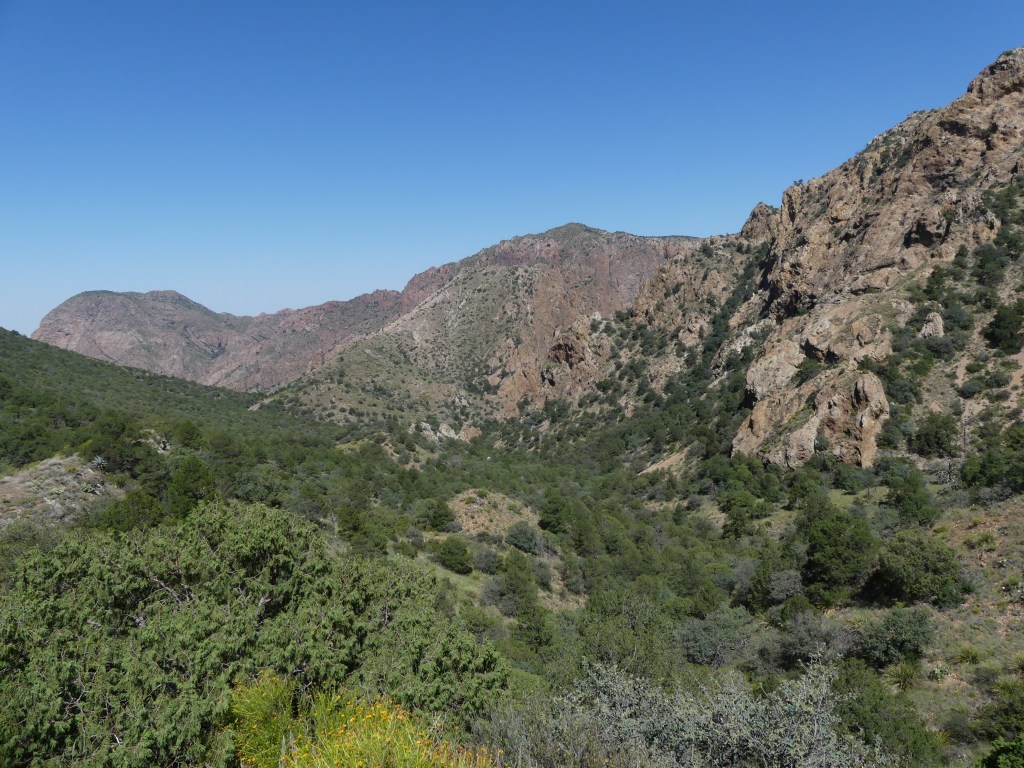
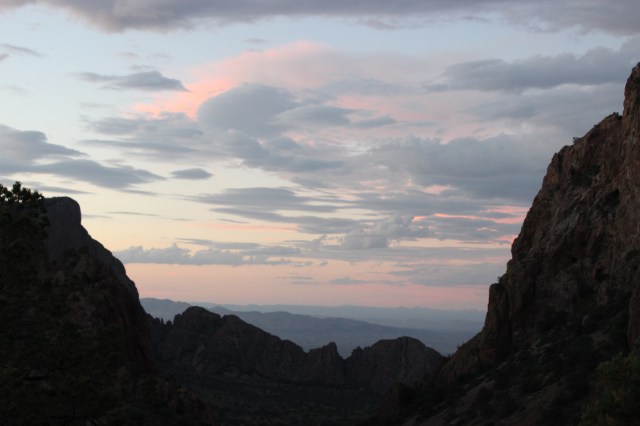
A view from the Lost Mine Trail, in the Chisos Mountains
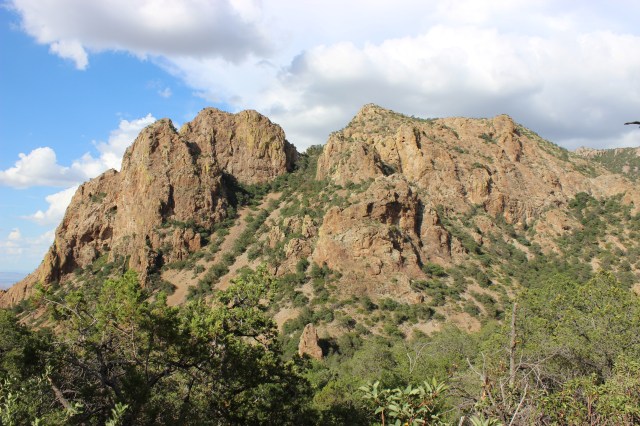
On June 19 of 2018, I hiked most of the way up the Lost Mine Trail in the Chisos Mountains within Big Bend National Park, and lost myself for a while in the silence and beauty and peace of the place. I wrote the following:
In one of Beethoven’s final string quartets (Op. 132), he wrote a slow, hymn-like movement titled, “Song of Thanksgiving of a Convalescent to the Deity,” expressing his gratitude as he recovered from a serious illness. (An absolutely mind-blowing deconstruction and analysis of what Beethoven does in this incredible movement can be seen and heard here.) It is a profound, beautiful hymn, not sweet or sentimental, but exactly as I imagine how his soul would express what it means to be alive, in the full realization of how easily life could be gone.
I am hearing the opening notes of that quartet movement now, sitting on a bench in the Chisos Mountains. I have not had a close brush with death such as Beethoven had, but I do have deep gratitude for experiences like today’s walk up the Lost Mine Trail. Here, there is a sense of connection and healing of things that are broken, in a sanctuary where troubles cannot reach. No gift could be more appreciated than this.
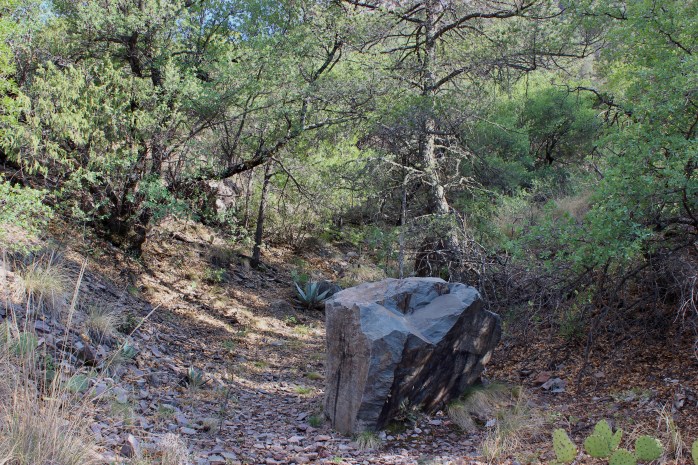
Within the mountain woodland
It is completely quiet except for occasional distant thunder, birdsong here and there, and the beginning sounds of insects here at the end of the day. I keep returning to this theme, how genuine quiet brings such tranquility. That is especially true here in the calm mountain woodland just before sunset. The hikers have gone. Even the knowledge that black bears live on these slopes does not cause concern, perhaps because it is one more indication of how raw and unspoiled this place is.
Here I am, after sixty-seven years still able to climb this trail – not that it is an especially difficult feat – and sit in the silence, watching the shadows lengthen and listening to the song of this earth, uninterrupted by noise. It is a rare privilege in a world that spins and spins, this opportunity to sit still.
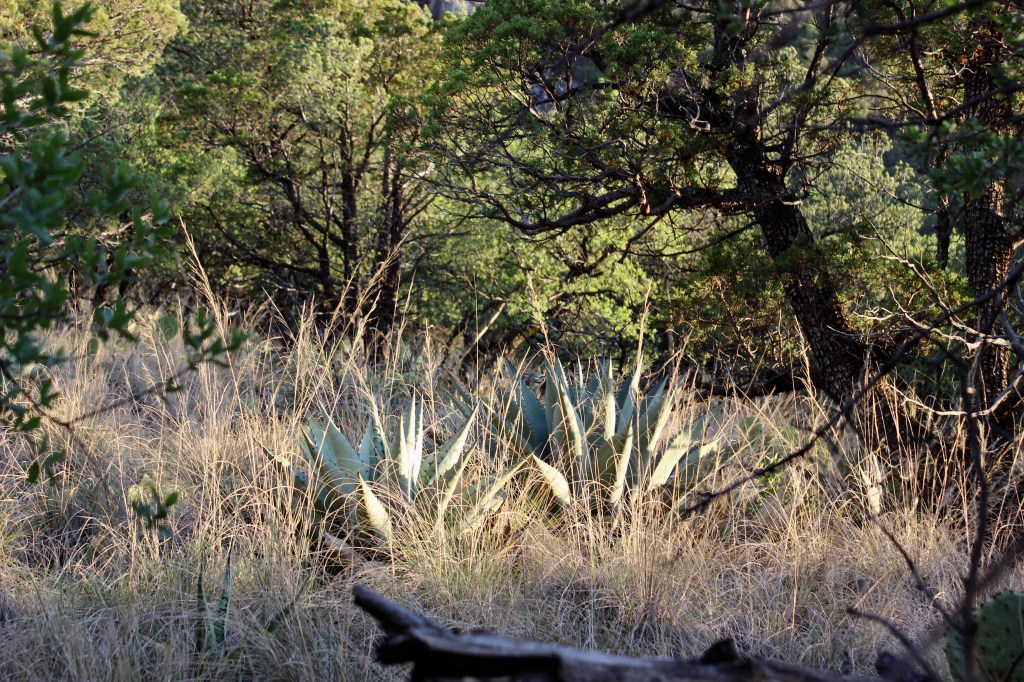
Blue-green spikes of Havard agaves on the mountain slopes
A thunderhead builds, and I watch it expand and drift this way. The thunder is still distant, one of those sounds that can be so relaxing from afar. The long, slanting rays of the sun highlight the tops of piñon pine and Emory oak. A nearby solitary bird trills and occasionally chirps, as the clouds turn rose-colored and the last light glows on the mountaintops. Soon it will be dark, and I will have to go, but I will remember these moments of solitude in the Chisos Mountains.
 Our Lives In Nature