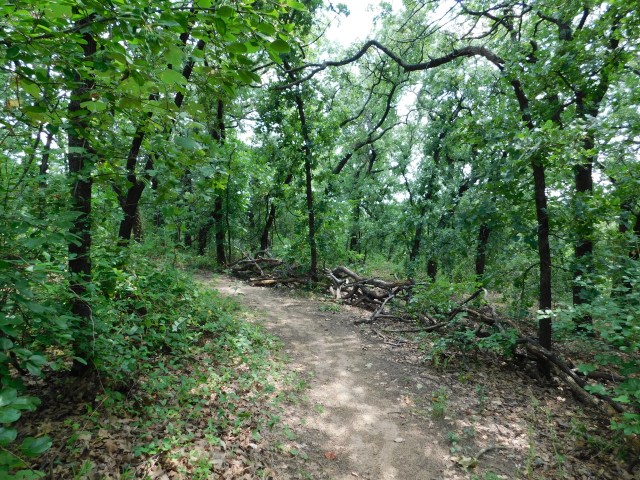
Sanctuary!

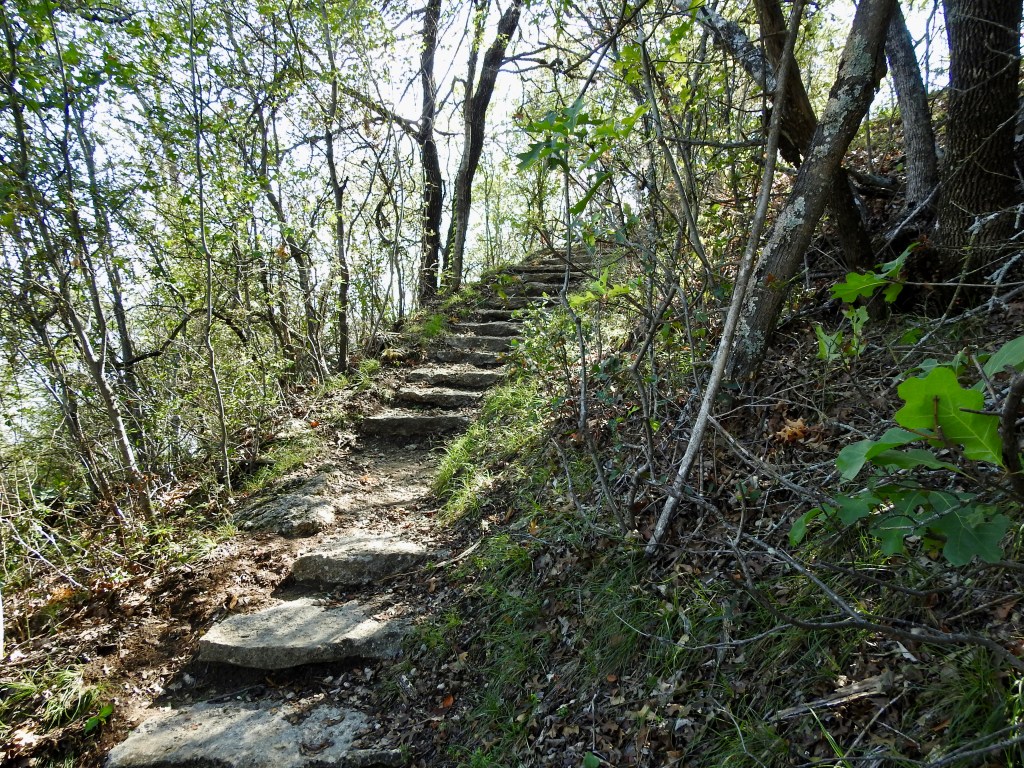
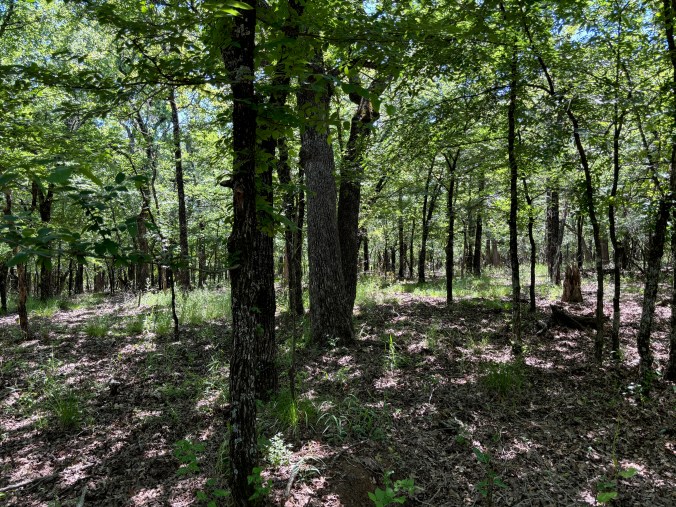
This new trail at Fort Worth Nature Center & Refuge is a favorite. I have walked it in winter with those bare tree limbs reaching up towards the sky and beautiful patterns of shed leaves on the ground. Now I have been there when it is greener and darker with all those new leaves shading the ground. The trail winds among the tree trunks and I can hear the quiet and the birds and the soft crunch of footsteps. That quiet and the new leaves as well as the carpet of old ones makes for a woodland sanctuary. A protected woods becomes a protective place for all who walk there.
I remember the 1939 film – “The Hunchback of Notre Dame” – in which Quasimodo rescues the wrongly condemned Esmeralda and flees to the cathedral, crying “Sanctuary! Sanctuary!” Notre Dame is a place of safety and protection from a corrupt French Chief Justice. Both the disfigured Quasimodo and the Romani girl Esmeralda are safe within its walls.

I respond to the prairies, woods, and wetlands as places of safety and protection, sanctuaries from thinking about the current regime and worrying about how it will play out. Extrajudicial abduction, defiance of courts, hate and scapegoating, wrecking the economy that sustains us, and on and on. We might imagine that, like Esmeralda, we all need to be taken to some place of safety, away from the worst of our fellow humans.

At the same time that such things are going on in human society, the sun keeps rising each morning, birds sing, water flows, plants give us oxygen and food, and there is quiet and peace in the woods and fields. I am very thankful that they are part of the world. As Robin Wall Kimmerer said, “Even a wounded world holds us, giving us moments of wonder and joy” (Braiding Sweetgrass, p. 327).

Sanctuary! I need to be in such places. I must do whatever good that I can in the world, and then for a time I need the shelter of nature.
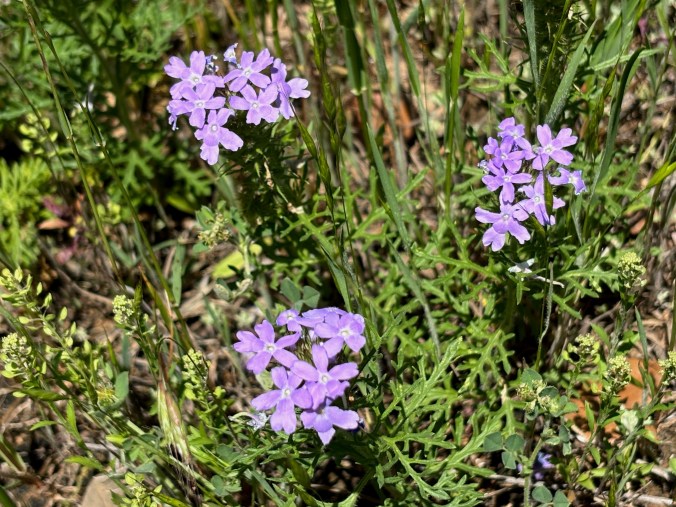
Flowers of Dakota Mock Vervain

And so I went to the nature center yesterday, the day before Earth Day. The sun was shining in a clear blue sky, and a Northern Cardinal’s call was joined with those of other birds in the patch of prairie where I started. The temperature was still in the 70s, but not for long.
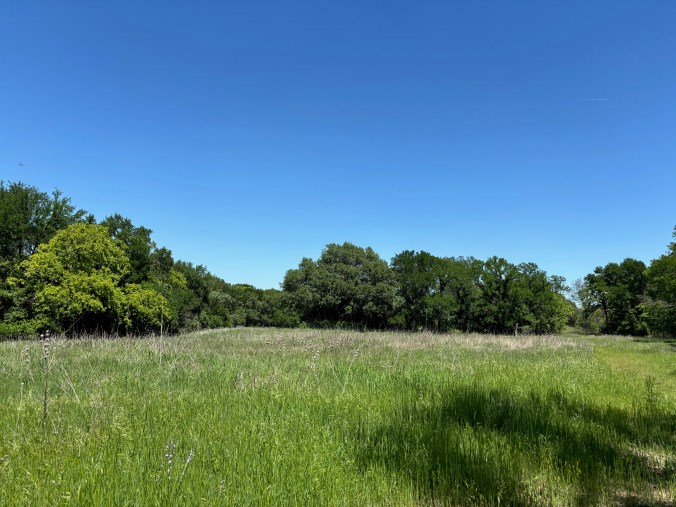
In the meadow with butterflies and bird song

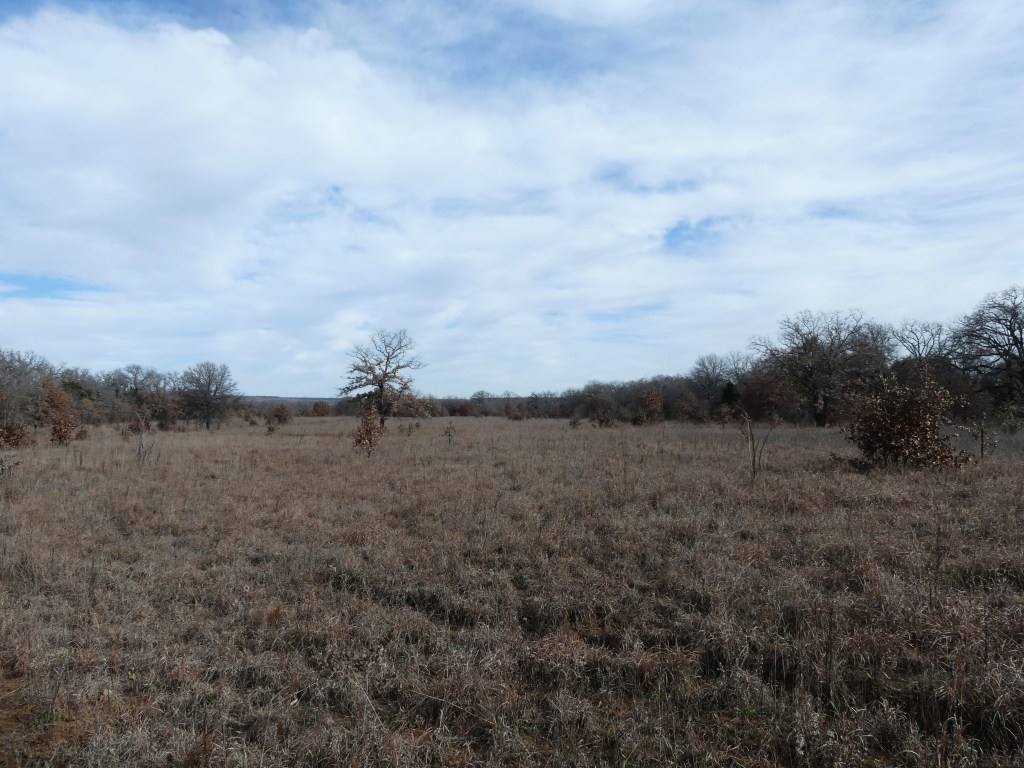
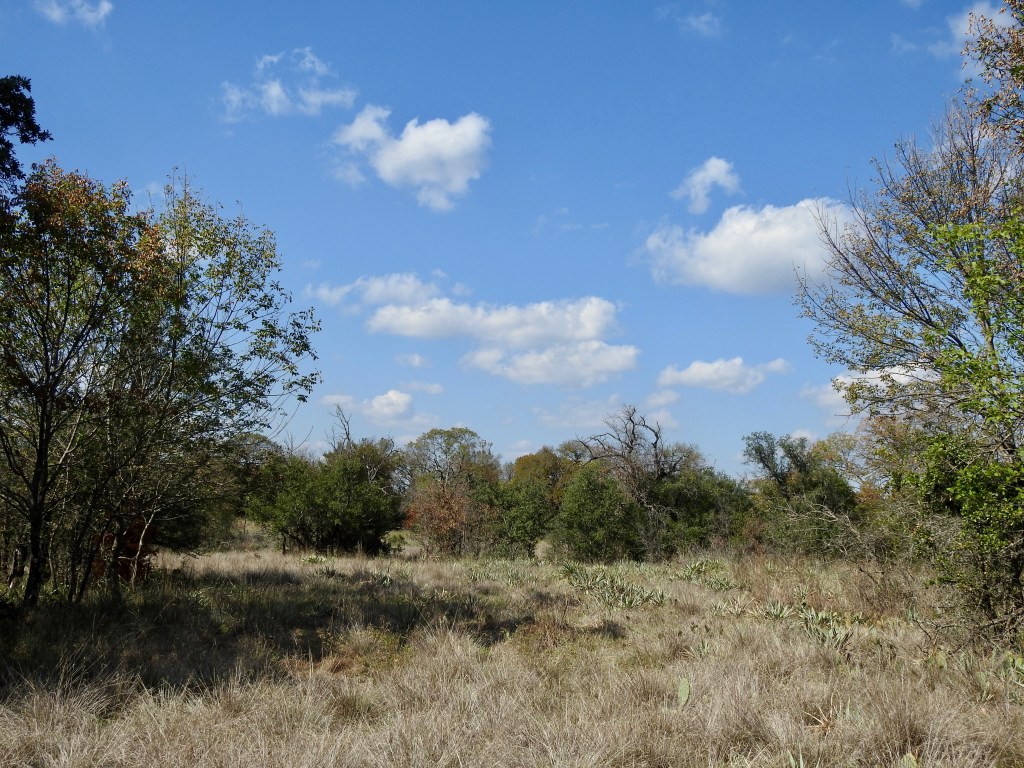
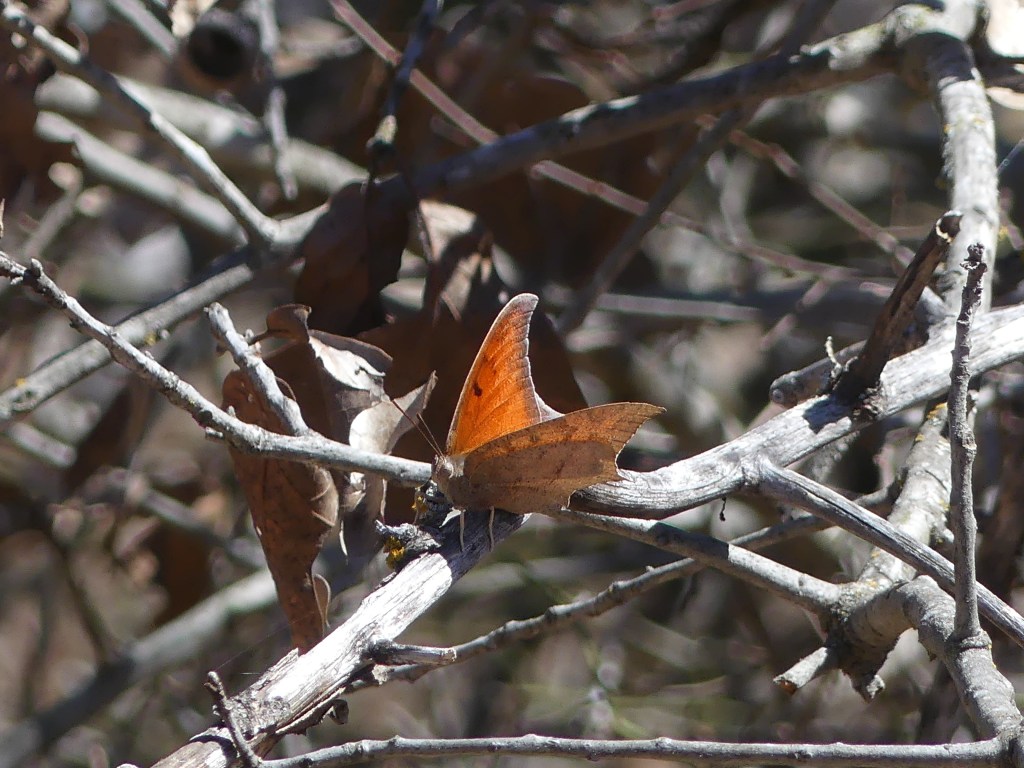
After a time in the trees, the trail entered a big meadow or prairie surrounded by trees. This, to me, is the heart of this trail. There were flowers visited by butterflies – a Common Buckeye, several Goatweed Leafwings, and over by the bench, a Painted Lady. Once I settled in, I saw some species of sulfur flying and fluttering a little above the tops of the grasses. Most of the time the nearby air traffic did not disturb the place, so I could hear the Northern Cardinals and also Carolina Wren, Carolina Chickadee, White-throated Sparrow, and Tufted Titmouse (much of the identifying was with the Merlin app, but even if they were not identified the songs in the meadow were beautiful).

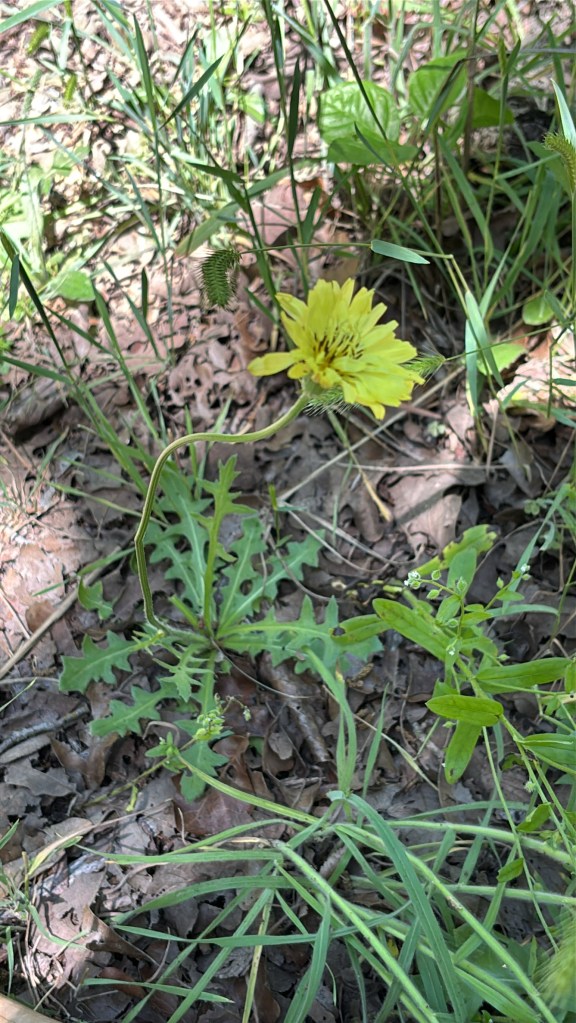
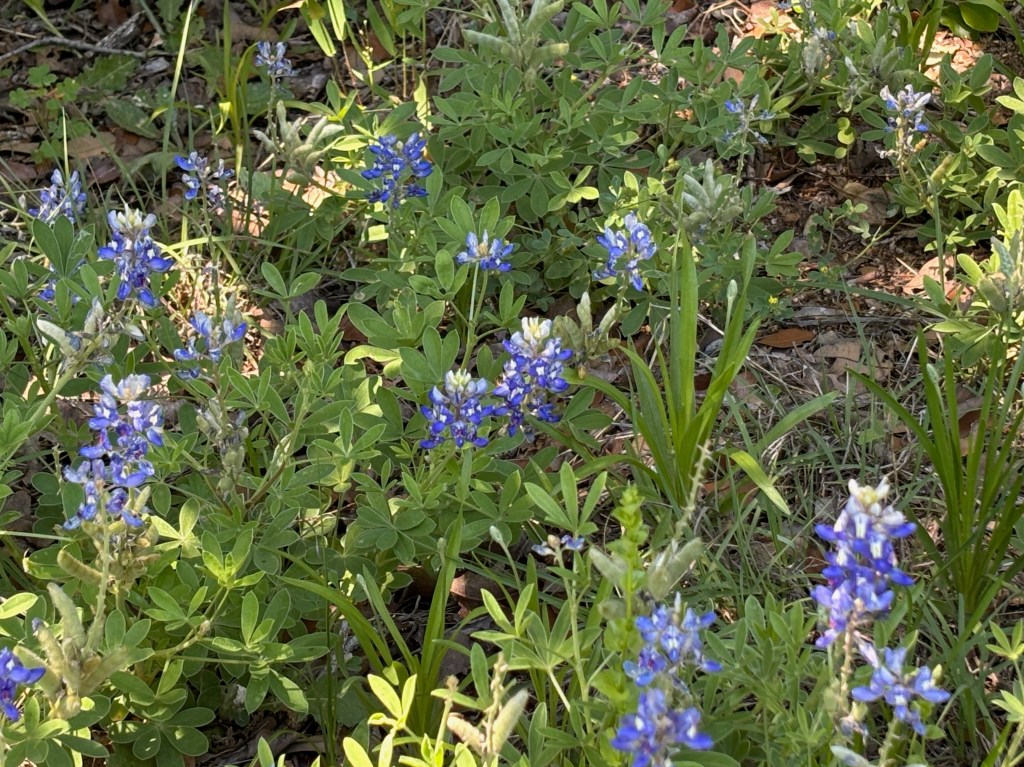
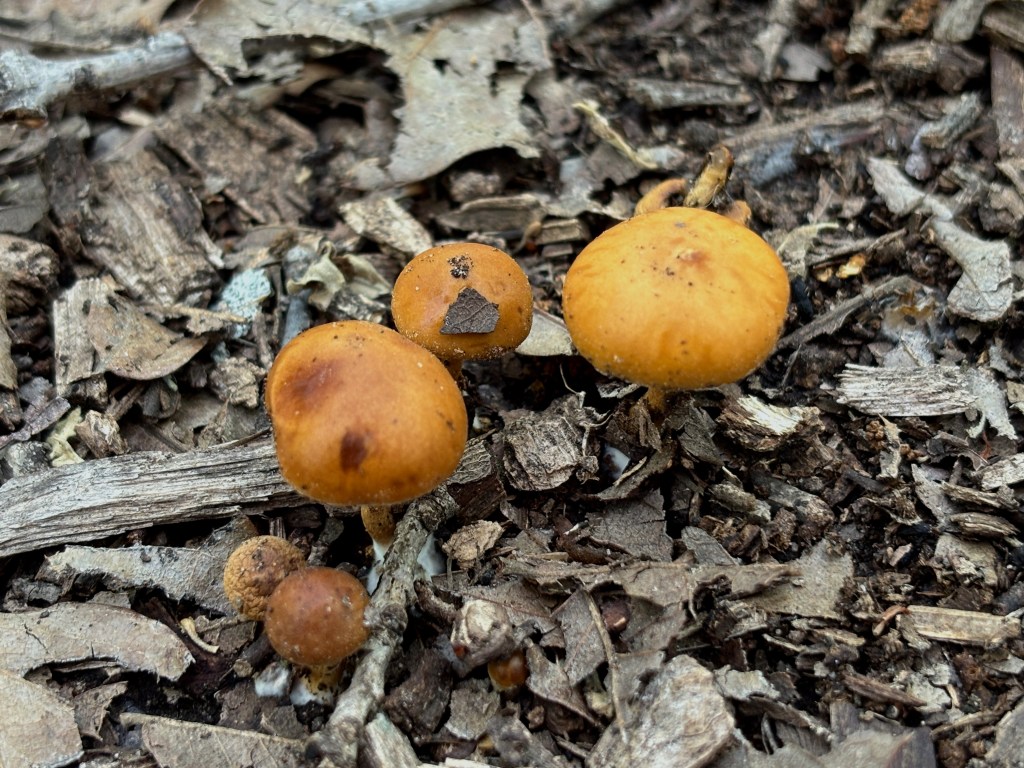
From there, the trail meandered through the woods some more. Sometimes I got on the ground to examine mushrooms; other times it was to see a small jumping spider. There were more flowers: Smallflower Desert-Chicory, Fraser’s Wild Onion, and at the end, a few patches of Texas Bluebonnet in clearings as the woods opened onto another prairie.
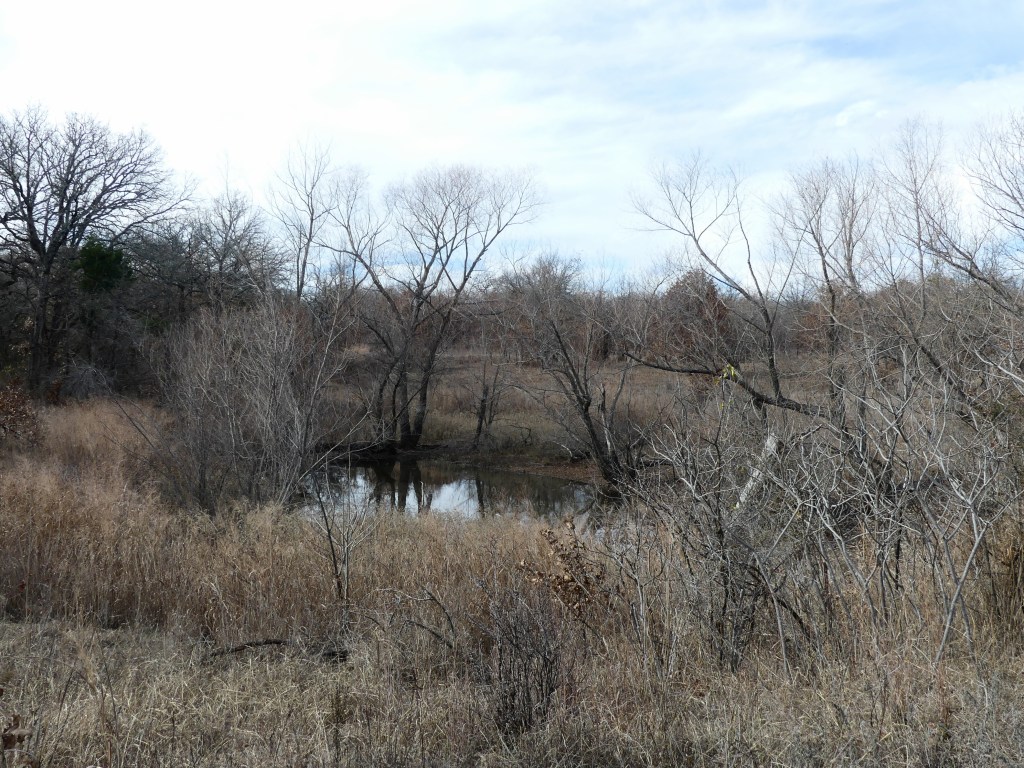
When I reached the end of the trail, the marsh boardwalk was a short walk away, and so I headed down to the marsh. Black Vultures were examining some exposed mud, a Great Egret flew by close to the boardwalk, and at some lotus stems in the shallow water an Eastern Phoebe perched. Then it flew to a nearby spot, disappeared, and returned. Once it dipped to the water’s surface, apparently to capture something. It is a busy life for a Phoebe on the hunt.
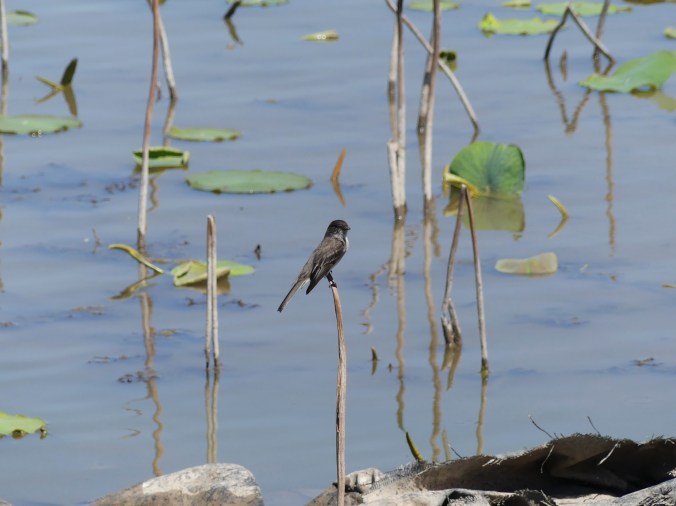
The Eastern Phoebe, scanning for insects

It was three hours well-spent. We all need this kind of sanctuary, and such places can be an important sort of self-care. I wish everyone could take an hour or so and be held in the peace and beauty of places like this. If you can, go and sit for a while in mindful stillness or walk the trails and notice the unending stream of wonderful things that you will find.
A Small Restoration

I had to go to the woods today. Among my frequent visits to those places, some are for spiritual and psychological first aid. Today was a day like that.

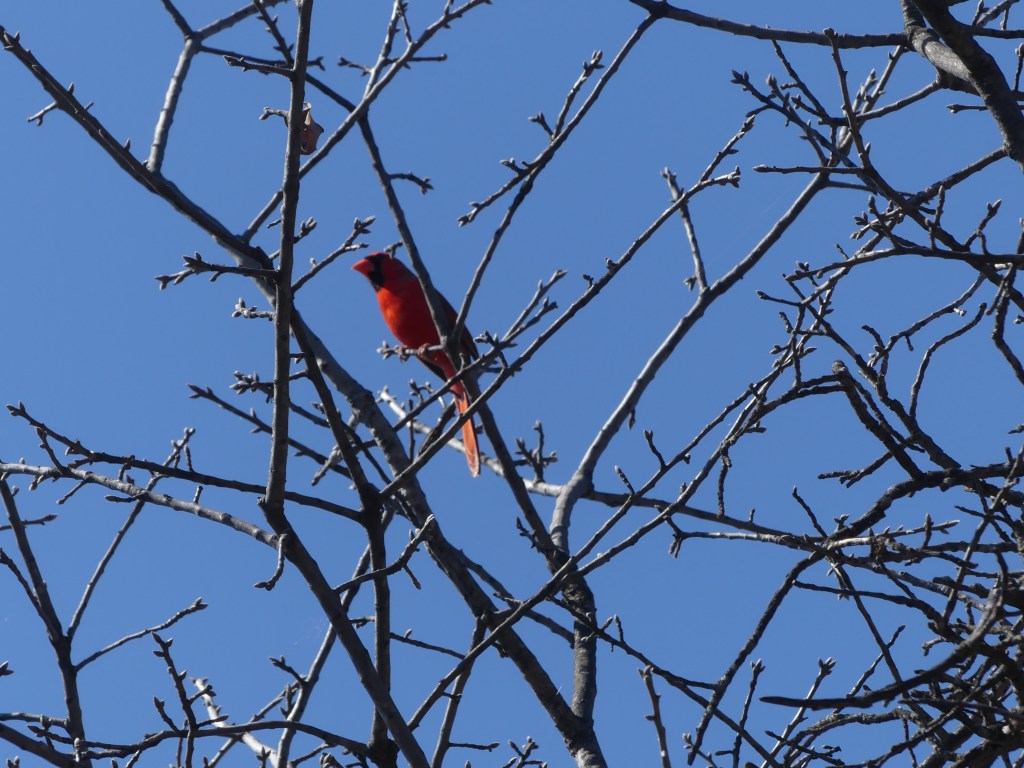
Cardinals like this male were singing throughout the preserve

Here at Sheri Capehart Nature Preserve, I can sit on the ridge and look down into the brown and gray woods, still in those colors for a while before the leaves appear. There are some glimpses of green, bits of juniper seen through oak branches, and patches of moss at the base of tree trunks. And there is a flash of reddish feathers from a female northern cardinal.

Yes, there is traffic noise and a barking dog somewhere, but it feels quiet and there is a stillness to the dormant woods, here at the edge of spring. I needed this respite. Not a respite from my home, except that home is where the news arrives. Home is where I get sucked into the Internet, with stories from the world: destruction, corruption, and bullying. Here, I don’t allow the news to appear on my phone, which is used only for photos or checking the Merlin app to identify some unseen bird.

The sun is at my back and a butterfly dances by. Mosses and lichens growing on the stones of the ridge provide endless color, life, and art. And there is the stillness that hardly seems able to be found in the city.

Butterflies agree that spring is ready to arrive. On the trail from the ridge to the boulders, a fritillary glides in toward me on rigid orange wings. It sails on past, wings now flapping to carry it up to the treetops. Nearby, a pair of butterflies suddenly appear and spiral up in their fluttering flight, above the crown of the nearest tree. When I reach the boulders, a pair of sulfurs chase each other down the path. The fluttering, erratic flight of butterflies might make us think they cannot control their flight very well, but have you noticed how often they can weave among obstacles without hitting them? That erratic flight seems to be a gift, an ability to make quick turns and maneuvers that help them escape predators.

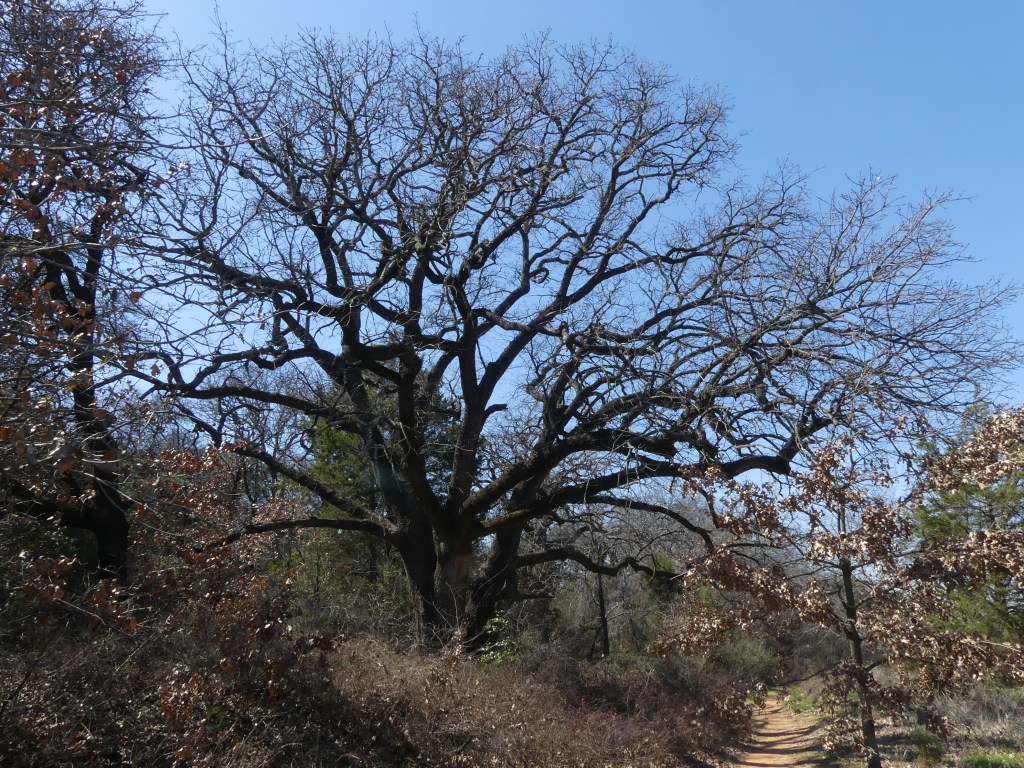
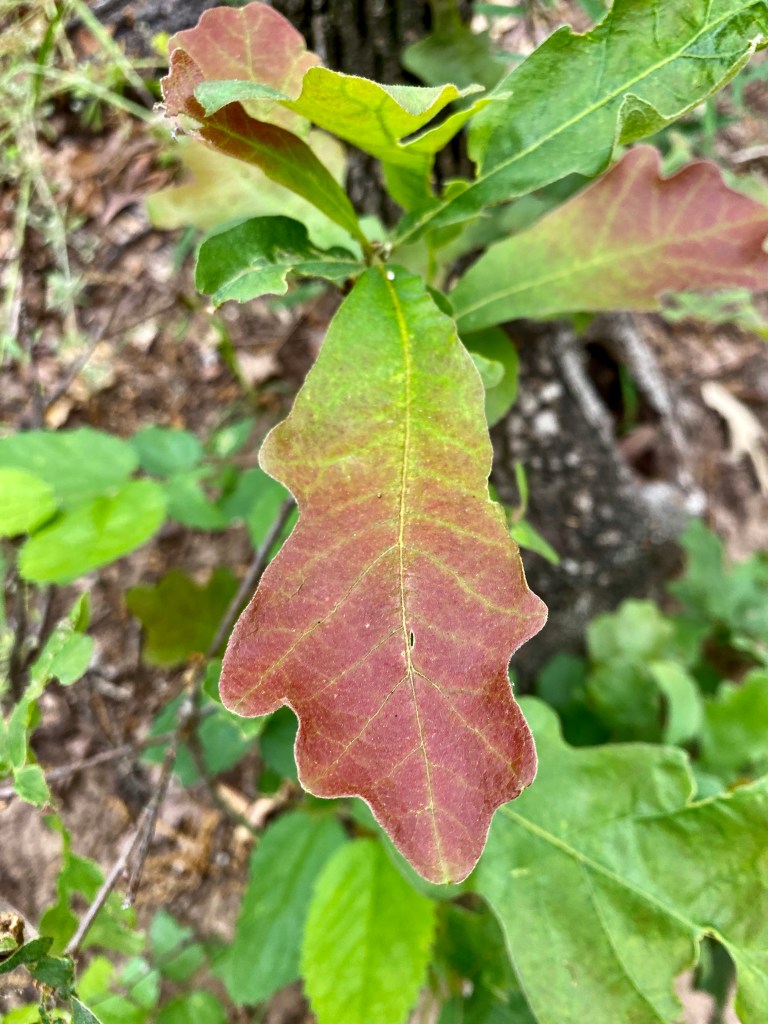
The historic 200-year-old post oak referred to as the Caddo oak

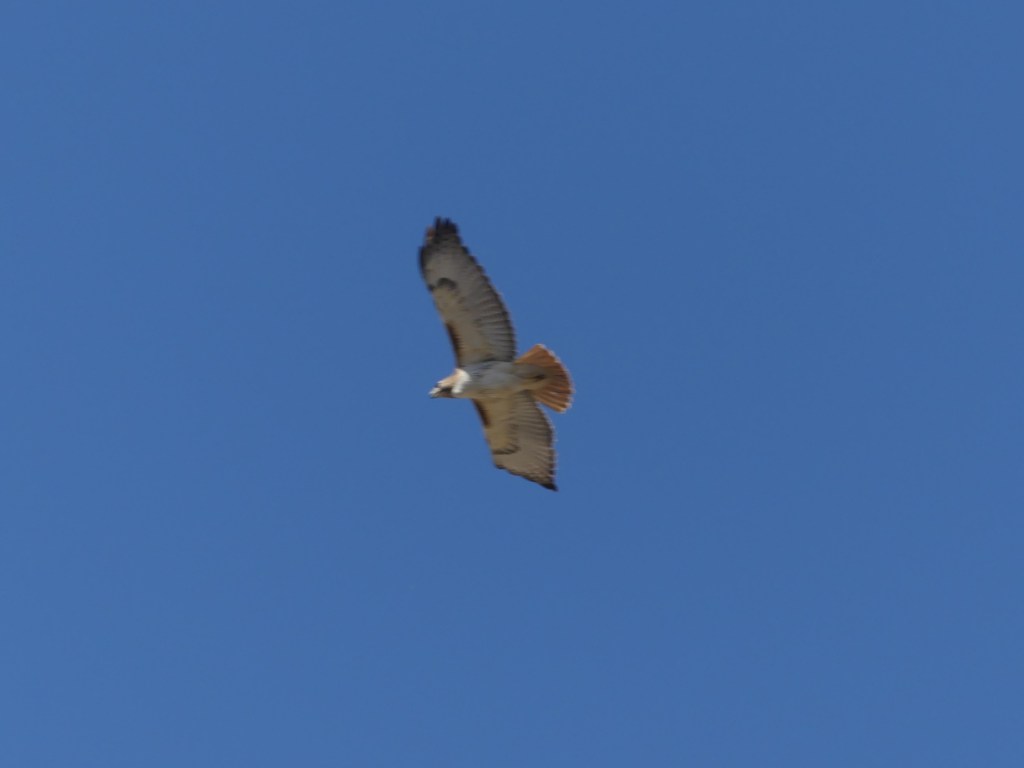
I walk around the preserve, past the historic Caddo oak, seeing many more butterflies and hearing a number of bird species: Carolina wrens, tufted titmice, a chickadee or two, an eastern phoebe, and many northern cardinals. I see a red-tailed hawk overhead, soaring and then turning on powerful wings.

A slightly fuzzy photo of the red-tailed hawk

Arriving near the north pond, I think about how much data we have about the benefits of mindfulness and time spent in nature. There is the reduction in stress, the cardiovascular benefits, an immunologic boost, reduction in depressive rumination, and increases in empathy among other gifts. Those things make time in the woods not some privileged escape or ignorance of the troubles of the world. It is a sort of refueling for the work that lies ahead. It is restorative – a little like sleep – and so it should not be undervalued.

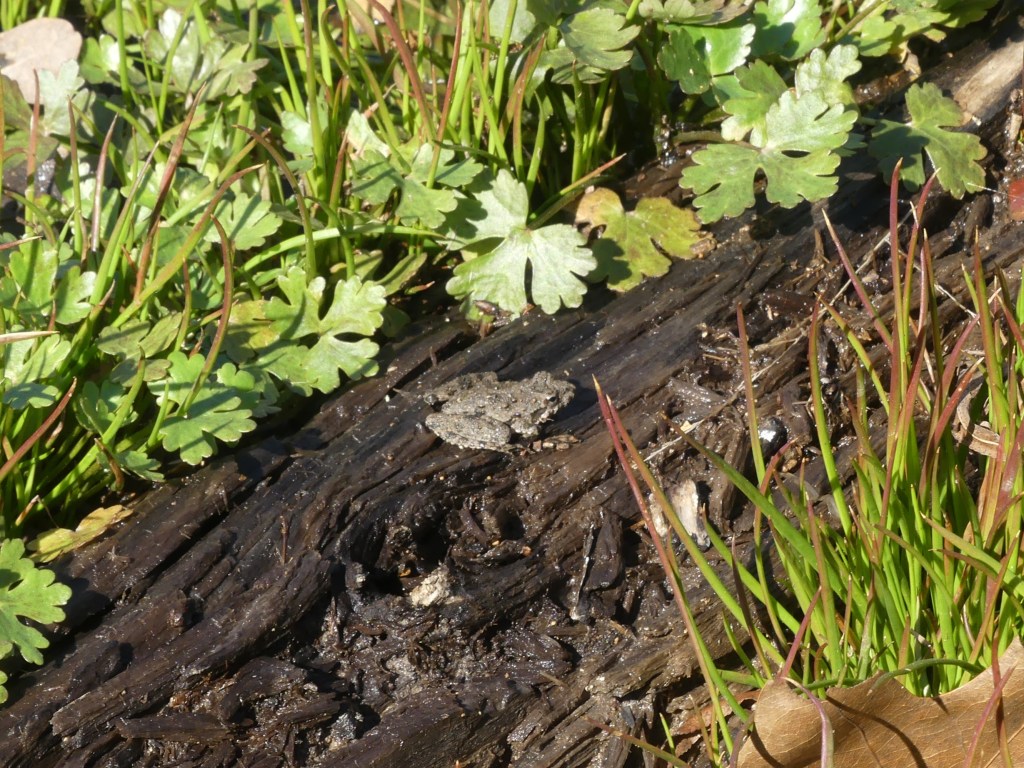
It is now 77F in the shade. Down at the north pond, life is in full swing. red-eared sliders swimming or pulling out and basking in sunshine. Cricket frogs jumping into the water as I get too close to them. All that is needed is the emergence of dragonflies, and the pond will seem complete. I walk back to the car after nearly two hours of walking, sitting, and noticing things in a world that seems so different from the big events of the wider world. It has been a small but important restoration.

“Kaleidoscope of Color”

All around, kaleidoscope of color

I think that maybe I’m dreaming

–The Byrds, “Renaissance Fair”
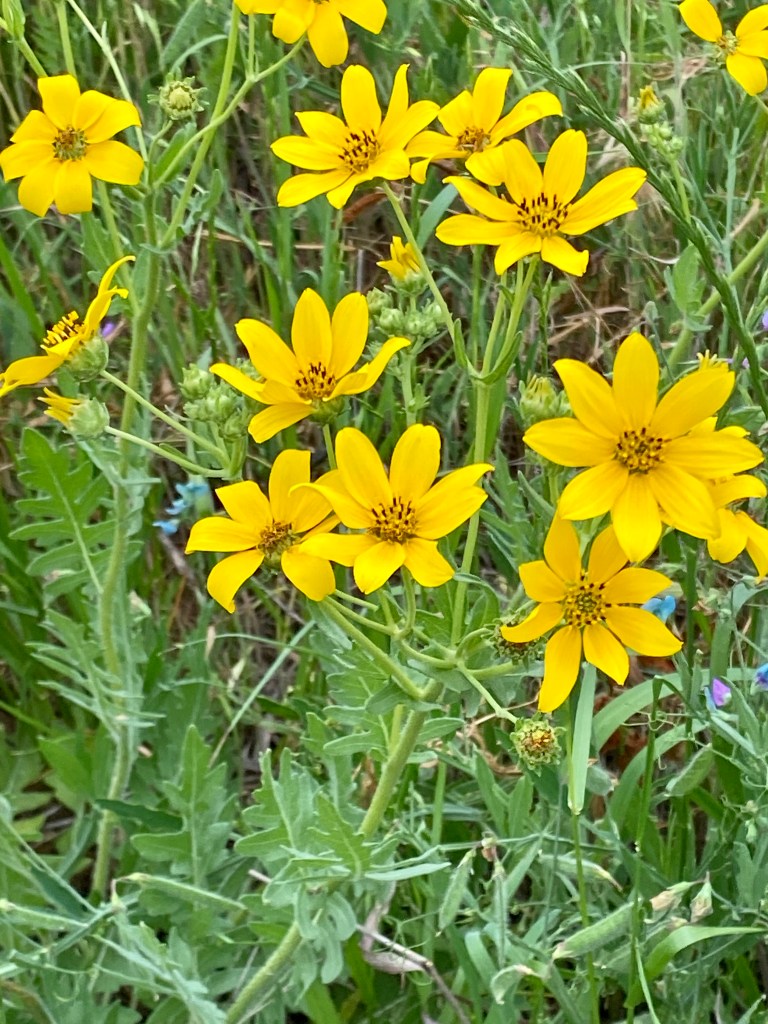
Engelmann daisies

So far this year, Tarrant County rainfall is about 3 inches above normal according to drought.gov. At Sheri Capehart Nature Preserve, the plants have responded with an explosion of growth and flowers.

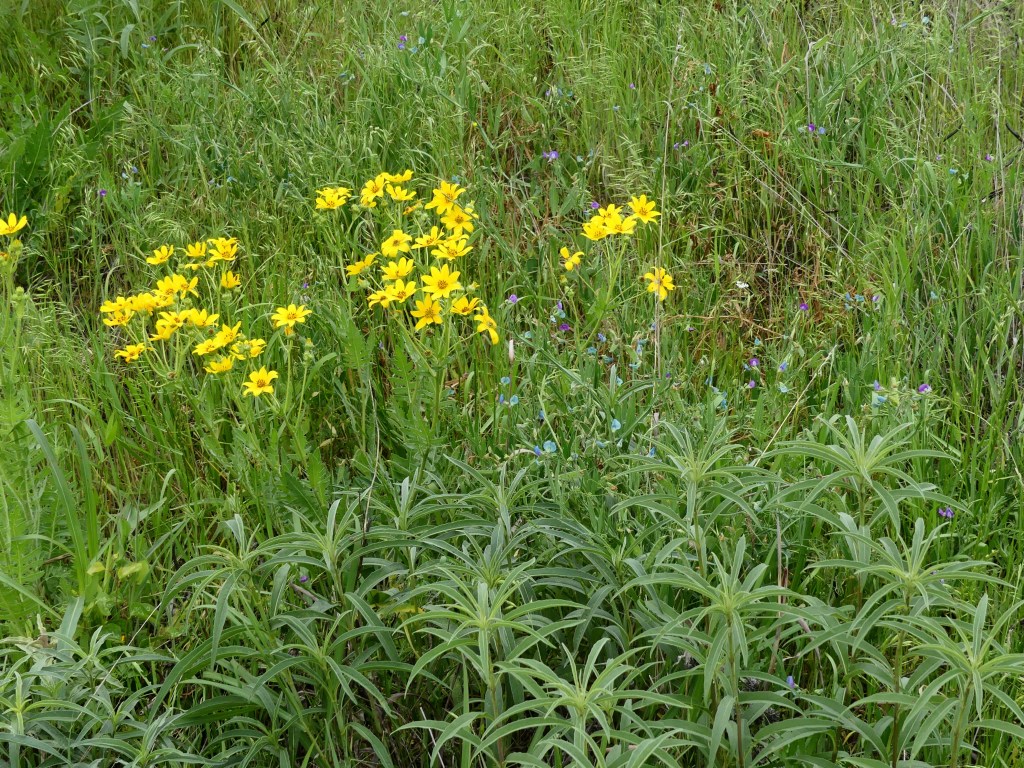
Walking up the switchback trail to the bluff, I have never seen so many spiderworts, their blue-purple flowers dotting the trail’s edge and the openings in the woodlands. Engelmann’s daisies grew in a few of the sunny spots, and the brighter yellows of chickory were common.

It was cloudy, and an Arlington weather source said that it was 61 degrees. The next day was predicted to be full of rain; I could imagine tomorrow’s shining raindrops on the leaves and the water soaking into the sandy places and forming pools where there is clay. But during my walk it was cool and dry.

At the boulders the green stems and leaves of vetch are overflowing and the bees and butterflies are feasting on clusters of purple flowers. And there were a couple of patches of firewheel (Indian blanket).

Question mark butterfly

The butterflies scattered up from the trail as I walked, including sulphurs, red admirals, and question marks. This last butterfly has a small mark on the underside of the hind wing that is said to look like a question mark, but for the most part with wings folded it looks like a dead leaf and the opened wings are a beautiful study in smudged and burnt orange.

It’s remarkable how different plant species have their time and then move on. The year progresses in a “kaleidoscope of color” as each one has its appointed time. There was no sign of toadflax blooms, even though only recently they seemed like the prominent flowers of the hillside. Near the trailhead, Maximilian sunflower was getting started, although we won’t see their blooms for some time.

Change is constant; nothing stays the same. The woods, prairie openings, and ponds change from season to season, and even within a season everything is in motion. And yet it’s the same place, a constant familiar presence even as it constantly shifts. How wonderful is that!

The Morning of the Year

I have been walking a lot at Sheri Capehart Nature Preserve lately, and maybe it is still winter, but everything that is alive seems to know that it is spring. Some count the beginning of spring according to months, starting with March. Others mark the start of spring when the length of days and nights becomes equal (the “vernal equinox,” March 19th). For wild things that grow and breathe, spring is about temperatures and the length of daylight, and it is also about everything else around them. Spring is a team effort, so that new plant growth and flowering, the awakening of insects, the migration of birds, and lots of other things need to happen together for everything to work right. 

A sulphur, probably the clouded sulphur

In the middle of the day on February 20th at the preserve, it was 81.1F in the shade, and insects were on the move, including grasshoppers, wasps, and butterflies. As I walked down the trail, a small sulphur butterfly flew ahead of me to a new place to land among the emerging green plants. It found another sulphur and together they rose, circling each other, and flew away above the treetops. Along the boulder trail I could see six or eight of them at any one time. One would encounter another and they would briefly chase each other in a twirling pattern before separating. 

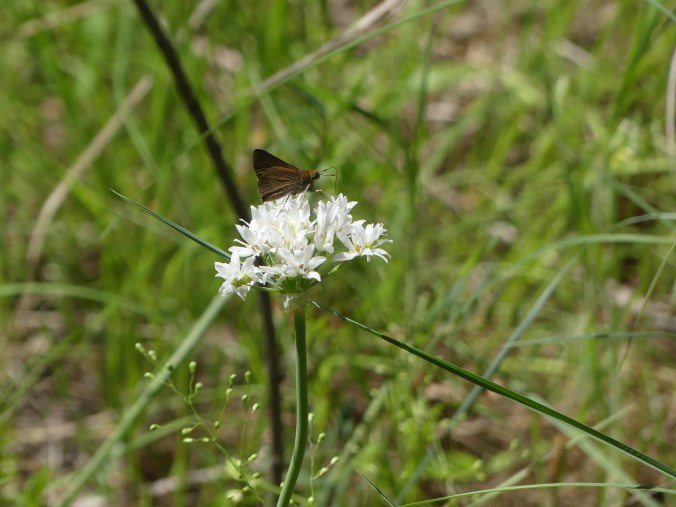
The white flowers of crowpoison, also called “false garlic.” It may be toxic to people, and maybe to crows as well?

On the 26th at midday it was 92.8F in the shade near the north pond, and I heard a few cricket frogs calling for the first time in months. Turtles basked in the sun. High above me, altocumulus clouds were arranged like balls of cotton in a patch of sky. Birds called from nearby trees – Carolina wrens, northern cardinals, Carolina chickadees, and a white-throated sparrow. Further along the trail was a spot with scattered white flowers of crowpoison and the yellow blooms of a plant called golden corydalis. Sometimes people call it “scrambled eggs.” 

Golden Corydalis, sometimes called “scrambled eggs”

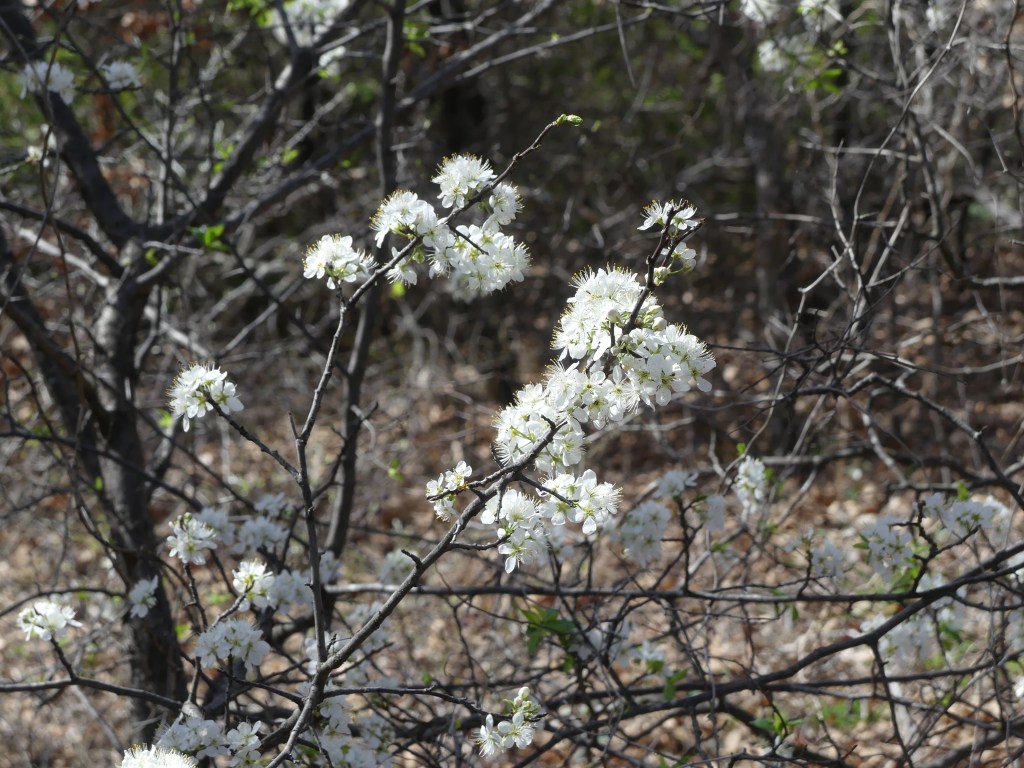
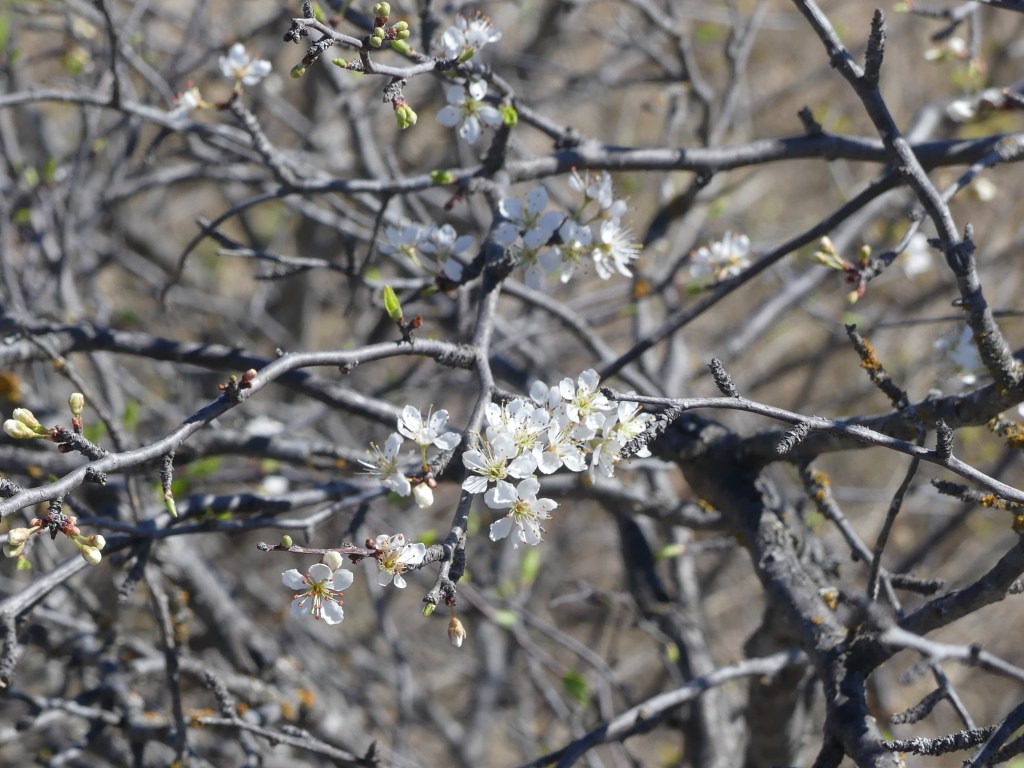
And then March arrived, and suddenly the plum trees were covered in clusters of white flowers. From a distance, other tree branches mostly looked gray and bare, but here and there you could see a slight green haze of budding leaves. Elbowbush was flowering. On the way to the north pond, when I looked closely I could see that most of the trees and shrubs were budding. 

Clustered flowers on a plum tree at the preserve

On March the 2nd according to the calendar it could barely be spring, could it? I sat in my back yard and made a few notes:

Here in this false spring, the tree blossoms are bright white. The winter sun, still low in the sky, makes the day look like perpetual morning. The sun-warmed air moves and is a soft breeze against the skin. It is the morning of the year, the beginning. The flowers and bees know it, and the birds announce it in the trees. What does the chickadee and the cardinal know that the calendar does not?

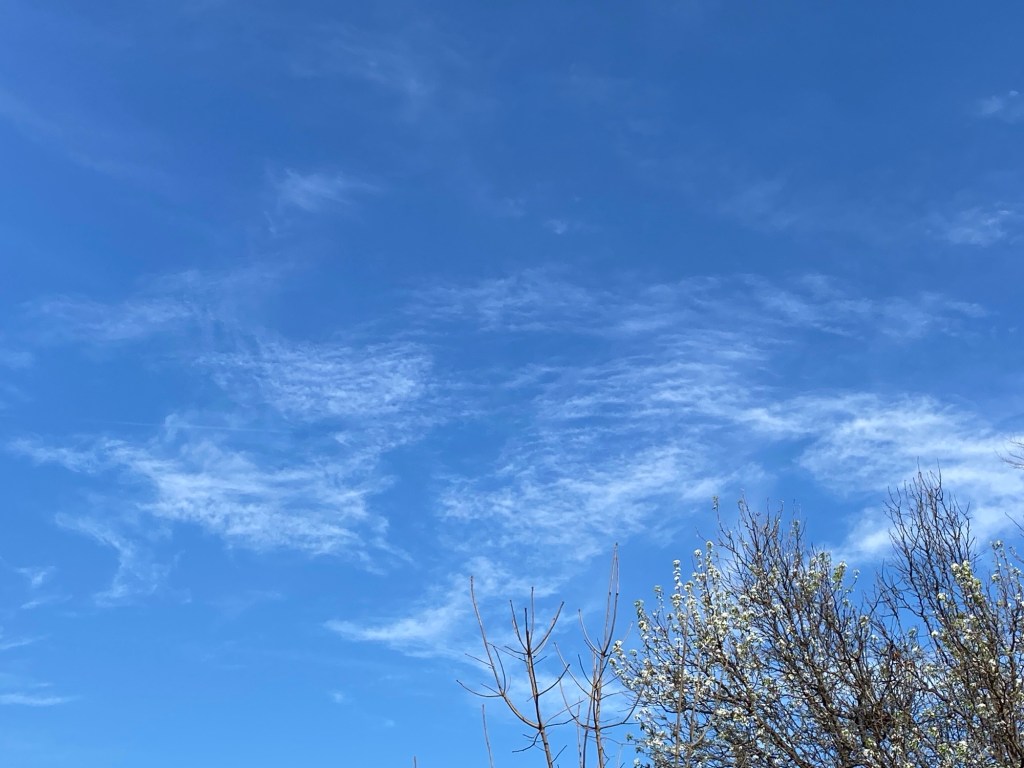
I sit and look at the sky, the blue canvas where wind, sun, and water scribble and paint. There are dabs, streaks, and lines, white images and symbols in a language familiar but still a bit mysterious. Thin brush strokes make a big heart with a few lines of text, maybe wishing us peace and well being. And then the wind moves it to the east and the canvas is cleared.

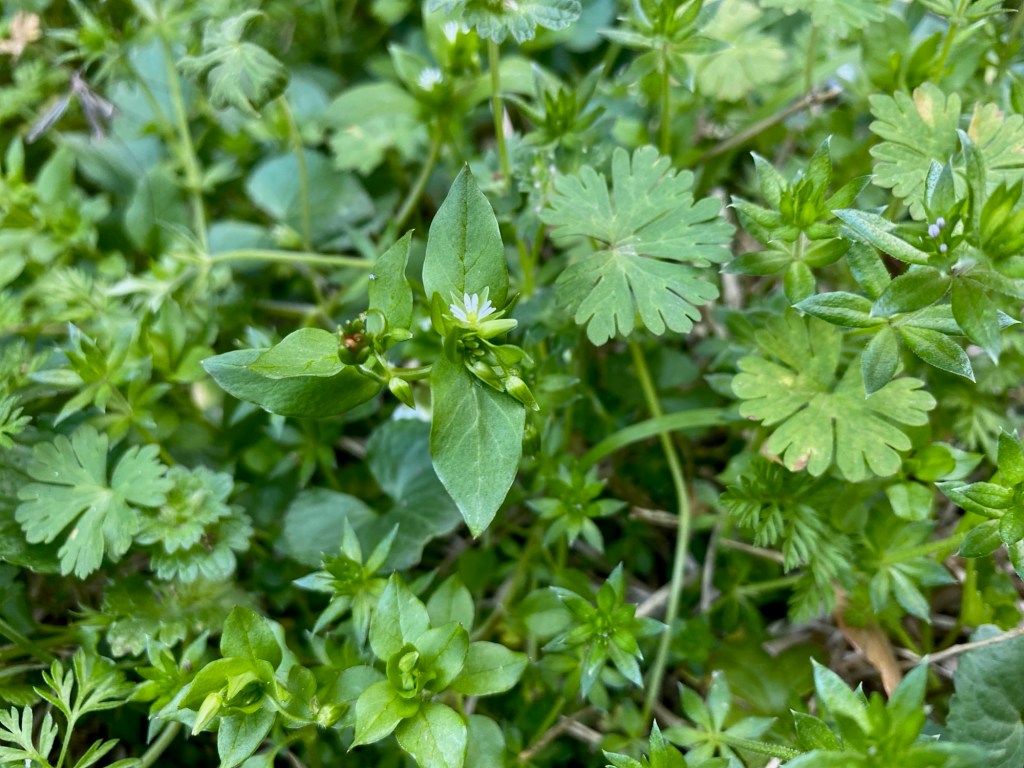
In my yard, when I looked down, I found a forest of little blue flowers among leaves of various shapes. In the midst of this two- to four-inch “forest,” the yellow sun of a dandelion shone. A honeybee visited the flower; dandelions are among the first flowers to feed the hive.

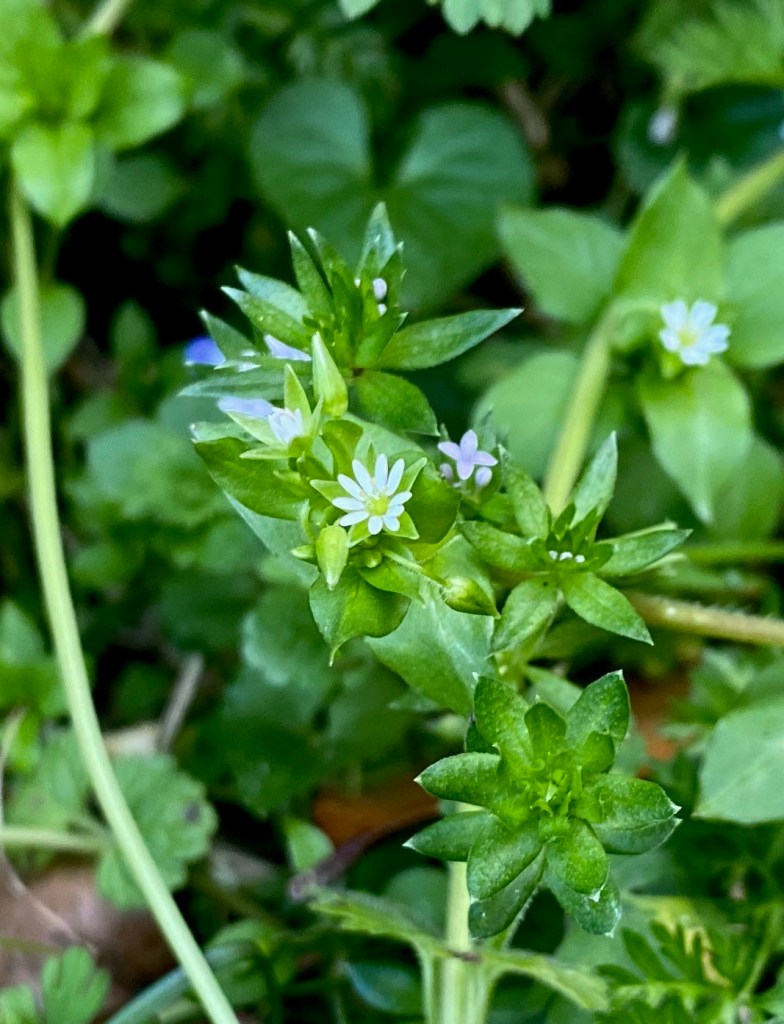
The ground was filled with such a beautiful jumble of green shapes. There were bigger, taller ones with leaves like umbrellas with notches and fingers. The appeared to be clusters of about four frilly leaves right at the top of the stem. There was chickweed with long, branching stems and arrow-shaped leaves. Nearby were plants with delicate stems with leaflets off to each side, in the way we think of ferns. 

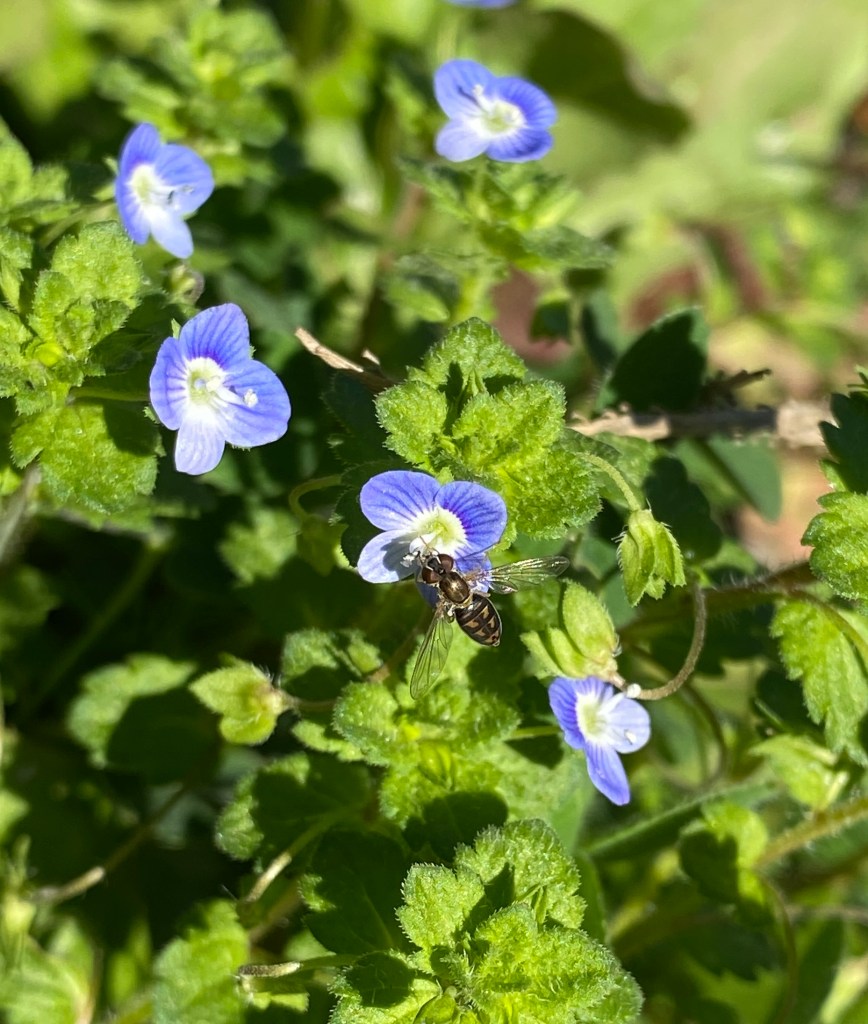
Bird’s eye speedwell

Scattered among these was bird’s eye speedwell, a beautiful little flower that some say was considered a lucky charm, speeding travelers on their way. The flowers are white in the center and have four baby-blue lobes with tiny darker blue pinstripes. Another little plant is called “henbit deadnettle,” with tubular purple flowers. Some of these plants have amazing names, don’t they?

Henbit
Common chickweed in the center, with a four-lobed flower of field madder just to the right

All these leaves and flowers made a tiny jungle inviting us to lie in their softness and explore smells and colors as if it was a tiny world all of its own, separate from streets and sidewalks and the things we normally notice. 

And so, never mind the calendar – it is spring. Good morning! May the year treat us well.

A calligrapher fly on bird’s eye speedwell

A New Year: Needing Nature’s Continuity

We have this urge to mark the end of the old year and welcome the new one, so we gather to wish each other a happy New Year. We think about the coming year as a new beginning. Sometimes we want to try for a new beginning for ourselves, with new year’s resolutions to start doing this or to do less of that. Midnight on December 31 marks a change, for good or ill (mostly for good; it feels like a bad omen to even consider that it could be a change for the worse). Another year older, another chance, another spring.

LBJ National Grasslands, in Unit 29, on the last day of 2023

But spring is months away and our transition to 2024 is completely arbitrary, unless you consider that it’s pretty close to the winter solstice when everything really does begin to change, in ever so gradual degrees toward greater light and warmth. Nevertheless, yesterday was the end of 2023, and among some members of my nature tribe the right way to mark the occasion was to walk the woods and prairies one last time.

Alaina, Sheryl, and Jake met me at LBJ National Grasslands under a warming sun with scattered clouds. It is a familiar and welcoming place, and if we needed reassurance that some good things can be counted on to stay consistent despite the turning of the year, this was it. We did not talk about it, but I expect that this dependability of nature is part of the appeal of a walk here on New Year’s Eve. Many of us are ambivalent about change, considering what we have been through in recent years. The pandemic, a worsening climate crisis, the creep toward fascism in many places across the world; these things make the woodlands and prairies more precious than ever. The cycles of growth, flowering, the shedding of leaves and winter dormancy make up a background of dependability. That, and the love that truly close friends and family have for each other, keep us going when everything else seems to be falling apart.

Alaina and Sheryl

The earth tones of the prairies have become quite “earthy” and the straw and sienna colors have faded, but there was still some warm brown in the woods. And the liberal scattering of junipers adds some touches of green, so it was hardly a colorless winter scene. When you add the ponds with reflective water and surrounding bare trees, the grasslands in winter have a visual beauty beyond compare. Spring and summer are also lovely, just in a different way. The Western Cross Timbers is an amazing gift that every season makes into something new and wonderful.

There is life in every season. We saw a few dragonflies, and I mentioned to my friends that I believe seeing a dragonfly on the last day of the year should be a sign of good luck. Spread the word – let’s make a “lucky dragonfly” tradition and invite urban folks into a new little connection to the natural world. These insects are already associated with good luck in some Asian and Native American traditions, so it shouldn’t be a stretch.

A common buckeye

We also saw some butterflies. We often see them deep into the winter if the day is sunny and has some warmth. They flutter along and bring extra movement and color to the day. One of them was a buckeye, a species with colorful round “eye spots” on their orange, brown, and white wings.

Our walk helped end 2023 in a good way, and we are ready to carry that through into the new year. Here’s to everyone having a year with beauty and wonder, surrounded by those you love (even if from a long distance*) and filled with empathy, compassion – and healing whenever that may be needed. Happy New Year!


* Looking at you, Meghan and Carly!

Fort Worth Nature Center, October 30

It was a sunny mild autumn day and impossible to stay inside, and so I climbed up to the ridge at the Fort Worth Nature Center & Refuge to visit Lone Point Shelter. The narrow path hugs the ridge, and on the last part you climb a series of stone steps.

Lone Point, when built by the Civilian Conservation Corps in 1935, offered a wooden roof as shelter, but now all that remains is the rock framework. Still you can sit on the inside rock ledges like benches, perfect for having a snack or writing in a nature journal.

Historic photo, from a sign at FW Nature Center & Refuge

I sat on the rock bench at 2:22pm, and it was sunny with scattered puffy clouds and a slight cool breeze. It was 74 degrees (and 46% relative humidity, according to the thermometer/hygrometer that I carry with me). Back to the northwest and away from Lake Worth, the trail circles a beautiful savannah with live oak, cedar elm, and open areas with grasses, prickly pear cactus, and Arkansas yucca.

Butterflies were everywhere – small yellow ones flying along the ground, bigger ones with pale yellow or brilliant yellow-orange bouncing among the yucca and cacti, American snouts, a red admiral, a hackberry emperor, and a big swallowtail (probably a tiger swallowtail from my glimpse of the yellow and black pattern before it disappeared around a possumhaw bush.

An American snout (lower center), camouflaged among the fallen brown leaves
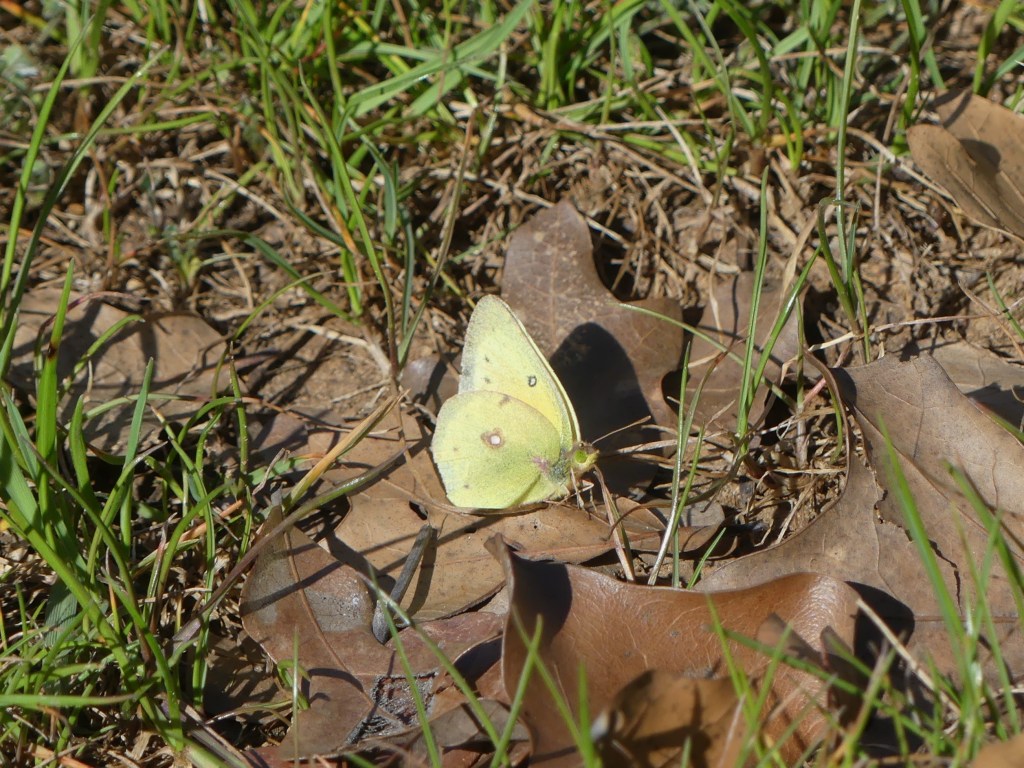
A clouded yellow butterfly caught in flight

I chewed a few juniper berries, which I think were not fully ripe but they did have a little of that wonderful aromatic taste. It was warm (79 degrees) but still very comfortable, and the sky was a clear and fairly deep blue. I walked back to the Lone Point structure thinking that today was really remarkable and feeling very grateful.

Here the savannah slopes down toward woodland
A common buckeye

I would gladly have stayed, watched the shadows lengthen and seen the sunset, but the refuge was going to close. I looked around and this beautiful place a little more, got a glimpse of Lake Worth below the ridge, and headed back down toward home.

A Woods Full of Hackberry Emperors

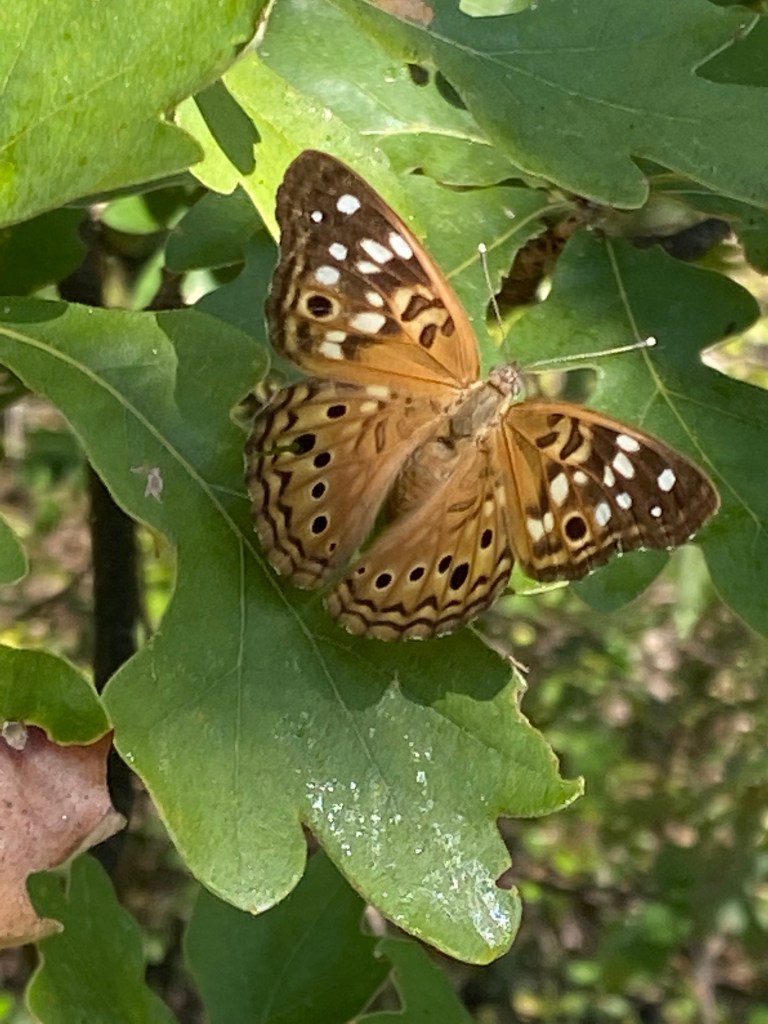
Sounds strange, right? What exactly is running around trying to be ruler of the woods? Butterfly folks know that the hackberry emperor is a butterfly whose earth-toned wings are beautifully spotted, not bright and showy like monarchs or fritillaries, but really lovely nonetheless. They are called hackberry emperors because the hackberry tree is the host plant that feeds the caterpillars of this species.

A hackberry emperor

Anyway, today the woods were alive with butterflies, mostly hackberry emperors but also snouts and others. There were small yellow butterflies and little gray-white ones flying near the ground. It was one more sign of autumn, as butterfly activity ramps up.
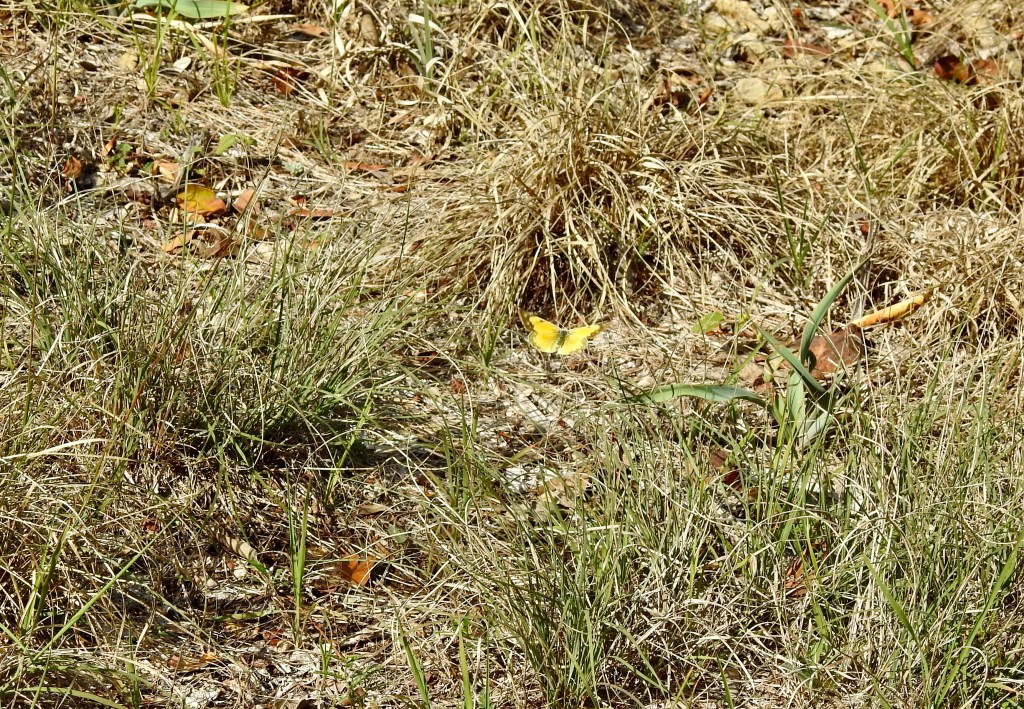
This afternoon I was at Sheri Capehart Nature Preserve, the wonderful little remnant of Eastern Cross Timbers in Arlington and an oasis for butterflies and many other things. It has been a difficult year at the preserve, full of drought and record high temperatures. Then, briefly, there was drenching rain, and a return to drought.

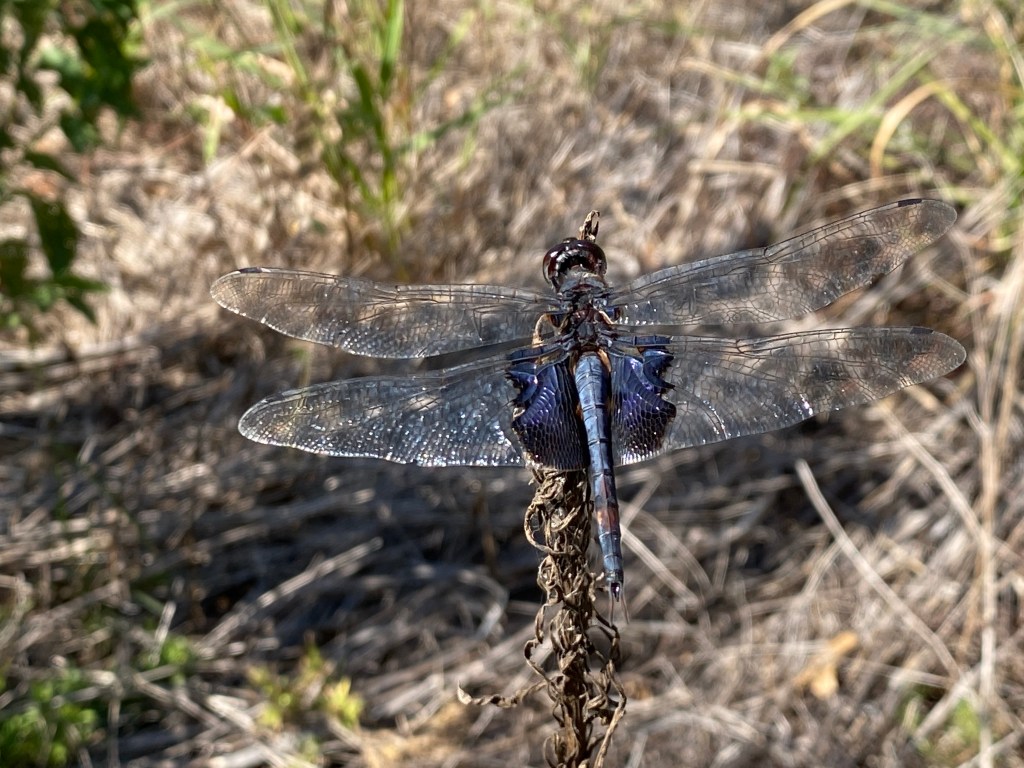
The water level in the north pond was low today, lower than I have seen it in quite a while. I could see the bottom, or at least could see the ragged layer of reddish algae growing along the bottom. Above the water were dozens of dragonflies darting and dipping, floating on the air and perching on twigs and reeds. They brought to the pond what the butterflies brought to the woods: a sort of dancing, whirling energy.

A black saddlebags, a species of dragonfly (note the dark “saddlebag” patches on the wings)

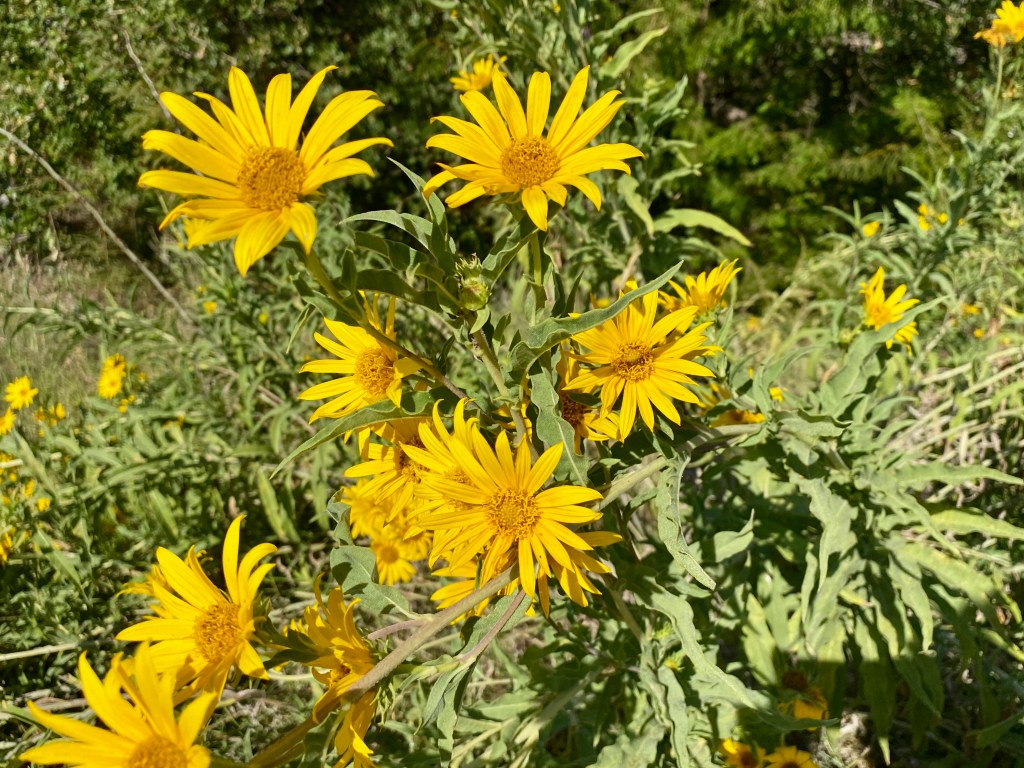
There was one last bit of autumn, adding just a little more charm to this afternoon with the sun at a low angle and cool breezes moderating the warm sun. Maximilian sunflower, a native prairie plant that blooms at the end of summer through the fall, was blooming at the preserve. Those clusters of big yellow flowers are a beautiful sight every year.

Maximilian sunflower

Goodbye, Winter

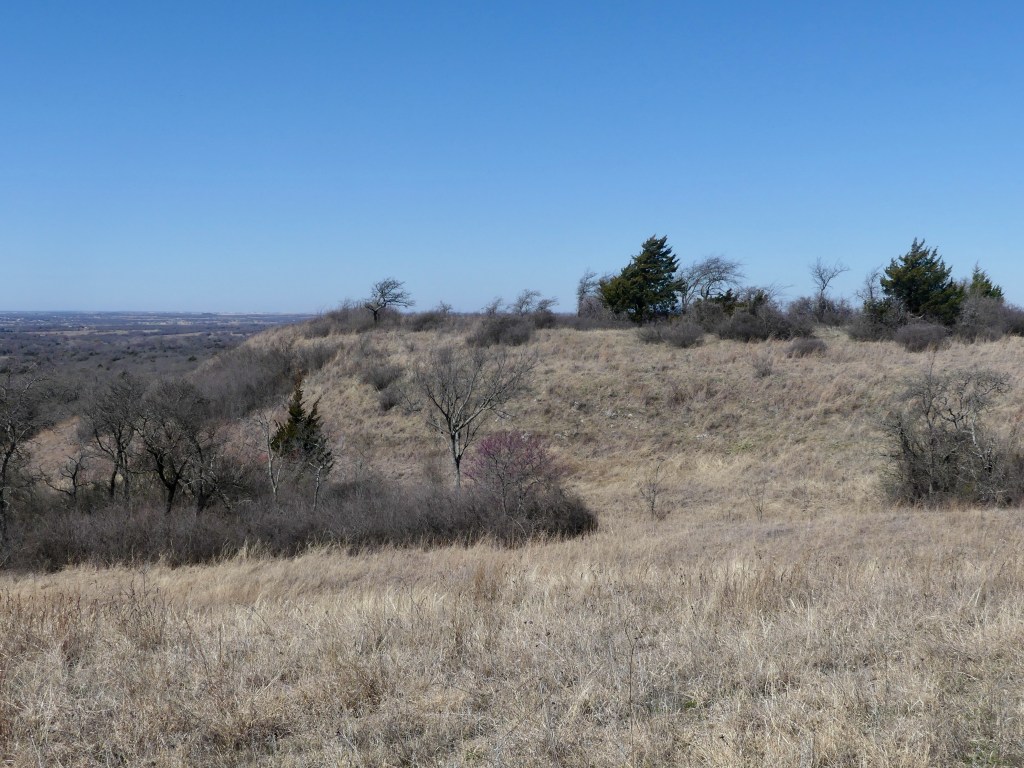
At LBJ National Grasslands yesterday, new green growth emerged from the soil everywhere. In this ecotone, this blended margin between prairie and woodland, what had been the sandy brown floor was now turning green. In some places it was hidden beneath last year’s grasses, and in other places around trees and shrubs the scattered green was unmistakable. In areas that were recently burned, where the soil now had the most contact with the bright, warming sun, the new growth was strong. 

It was March 19, the last day of winter. Tomorrow the Northern Hemisphere would be angled toward the sun just a bit more, reaching the vernal equinox. It would be the first day of spring. I spent most of the day at LBJ National Grasslands to say goodbye to winter in the biggest, quietest place I could wander through.  

It was bright and sunny, as if the weather had already passed the equinox and was intent on spring. I soon shed the hoodie I started my walk with, as the breeze warmed a little and the sun was higher in the sky. By the end of the day I would have a mild sunburn and no regrets for having walked and sat in so much sunshine. 

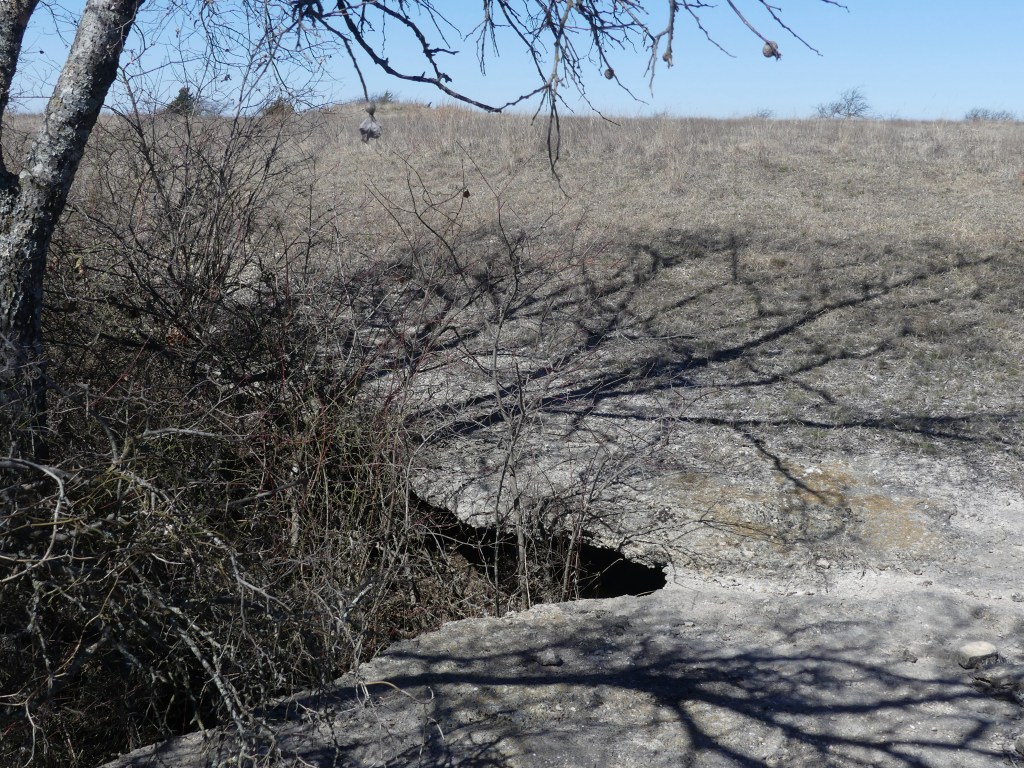
Limestone shelf at the top of an arroyo

I started up on a ridge where limestone lies beneath shallow soil. In places, erosion exposes the limestone from an ancient sea bed filled with small oysters. I walked around one spot where water had exposed a small limestone shelf and eroded back under it. This was at the top of one of those places where the land drops away from the top of the cuesta or ridge and forms a long arroyo down the hillside. Big junipers, hackberries, and woody shrubs fill these places where the land concentrates rainfall.  

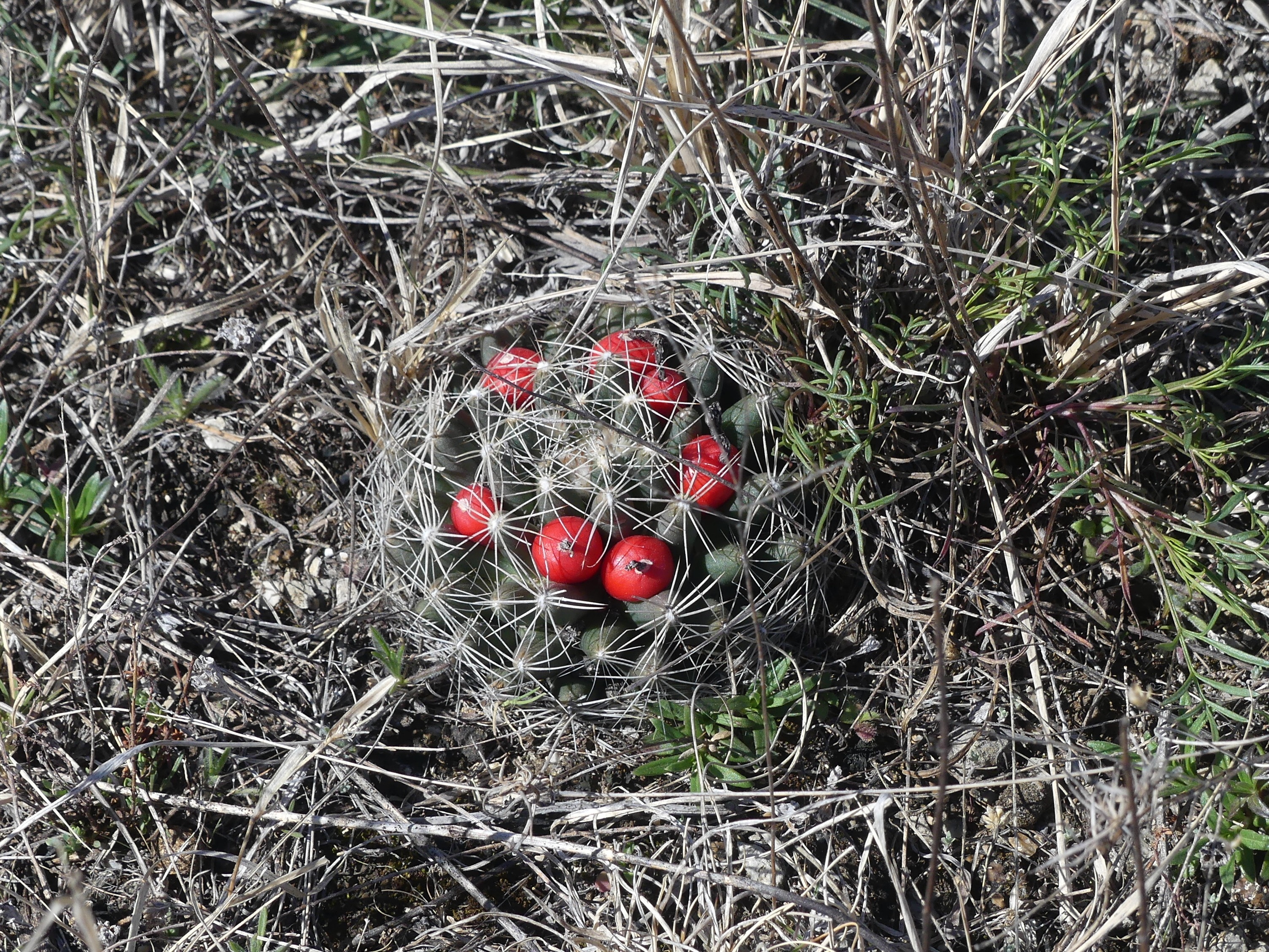
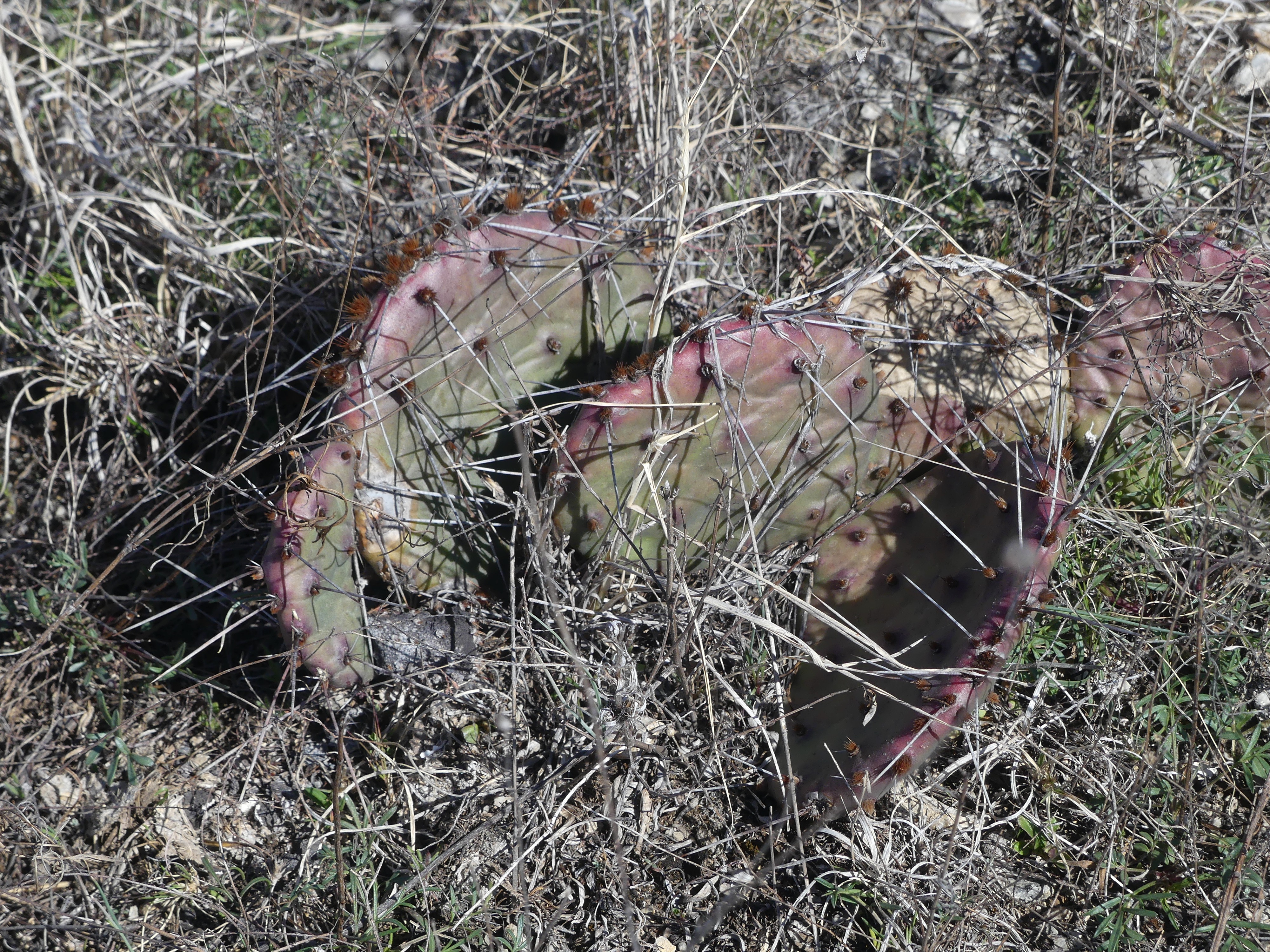
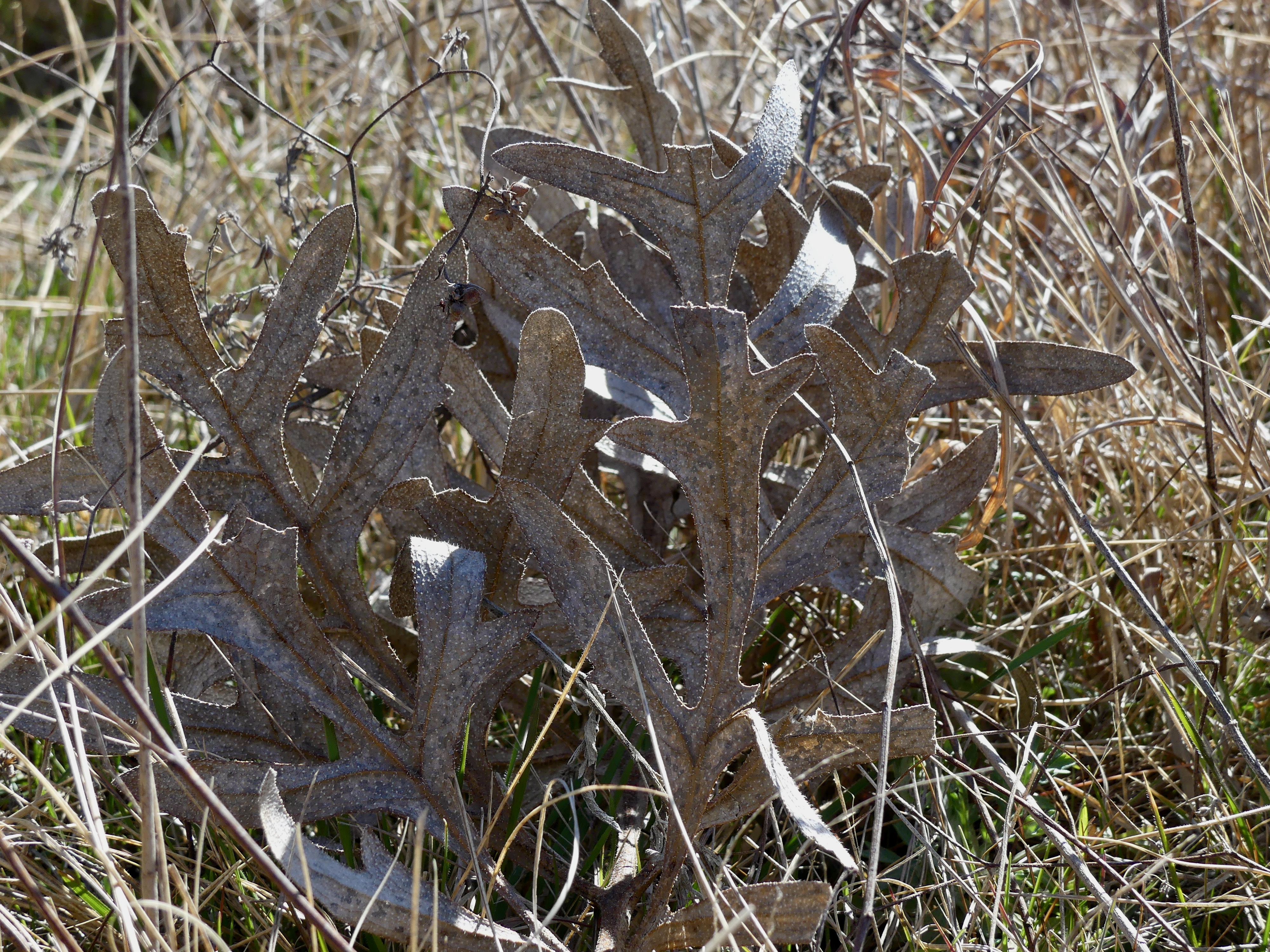
On the top of the cuesta, prairie grasses grow where the soil is deep enough. In shallow soil, even in areas with bare limestone, you can find clumps of cacti such as the grooved nipple cactus with stems like rounded domes covered with spines. There are also prickly pear cacti whose pads in winter are colored in shades of faded brick red and pink. Elsewhere up on the ridge there are clumps of compass plant. I love those long deeply notched leaves that feel as if they were cut from stiff sheets of sandpaper.  

Mexican plum

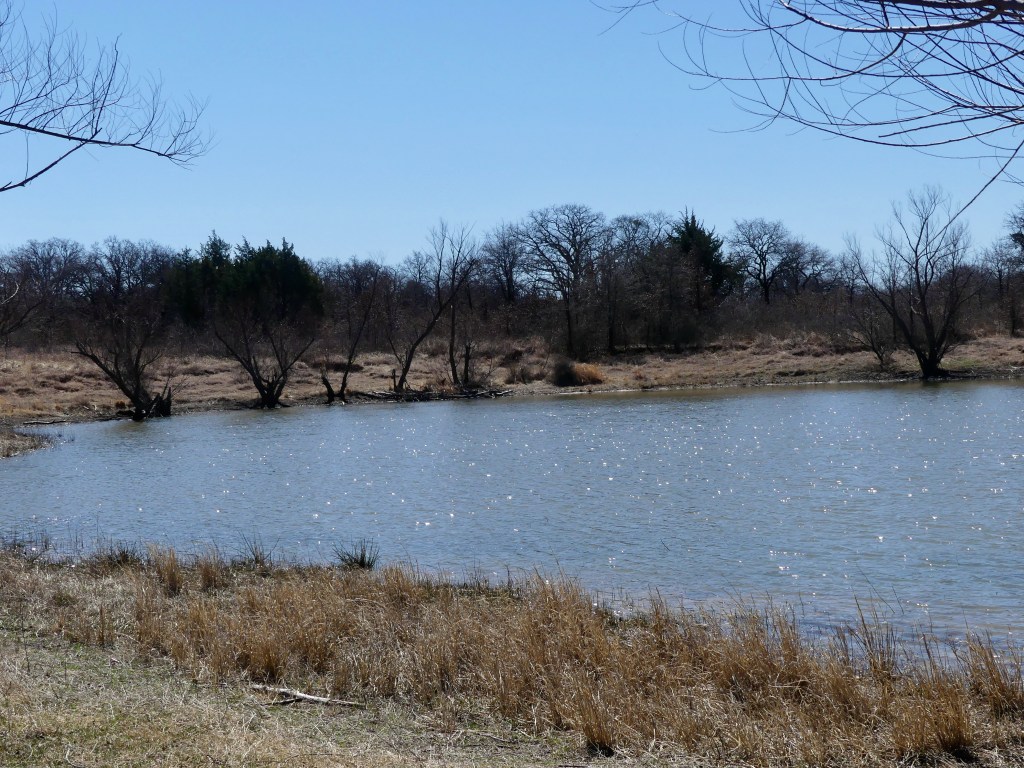
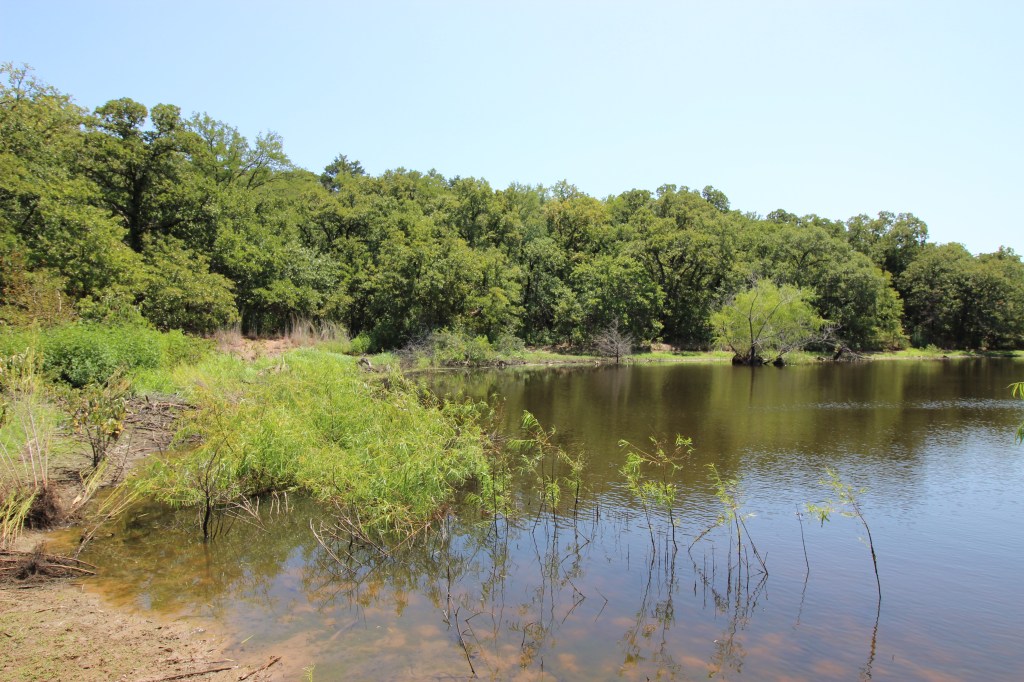
A couple of hours later I was in the Cross Timbers woodland below the ridge, visiting a small pond. The breeze stirred ripples on its surface. The sunlight glittered brightly from the tops of those ripples, so that the pond’s entire surface seemed covered in sparkling jewels. When I let my focus soften, it was like a very fast twinkling of a field of stars. Even in simple places like this, the rest of the world drops away and there is only the pleasure of this moment in this spot. How we all long for such a refuge, and here it was. 
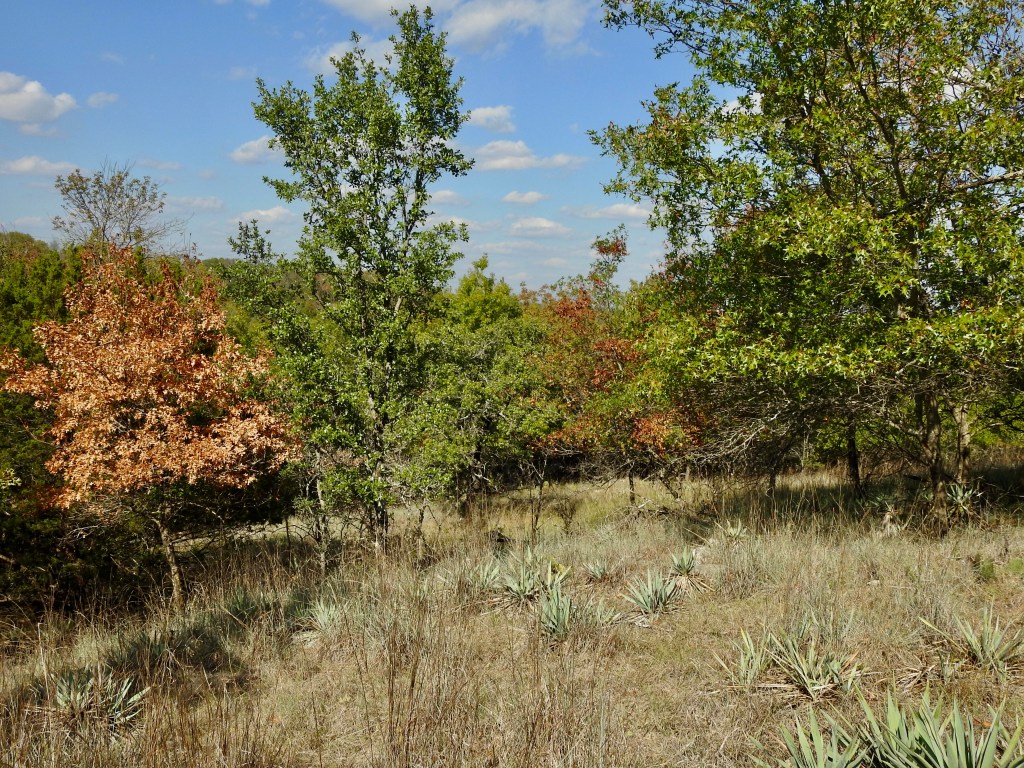
The stars in the water, only poorly represented in the photo

Throughout the winter the sulphur butterflies persist and dance across dormant prairies and sunny glades, but today more insect life was awakening. In one spot I began to see orange butterflies. At the edge of a clearing, two of them encircled each other and seemed to catch an updraft, swirling straight up to the crowns of the surrounding trees. When one landed, I saw that it was a goatweed leafwing. Their deep orange wings are scalloped, edged in ashen gray and the forewing and hindwing come to points. Their interesting name is based on description and natural history. The host for their caterpillars is “goatweed” or croton, and when closed the wings look just like a dead leaf.  

A goatweed leafwing

Finishing in this part of the grasslands, the practical but unimaginatively named unit 71, I drove to a couple of units near Alvord, including one of the beautiful and fragrant pine groves, and ended up in unit 30, one of my favorites. I let myself in through one of the green Forest Service gates and looked across the prairie and savannah toward the oak-juniper woodland. 

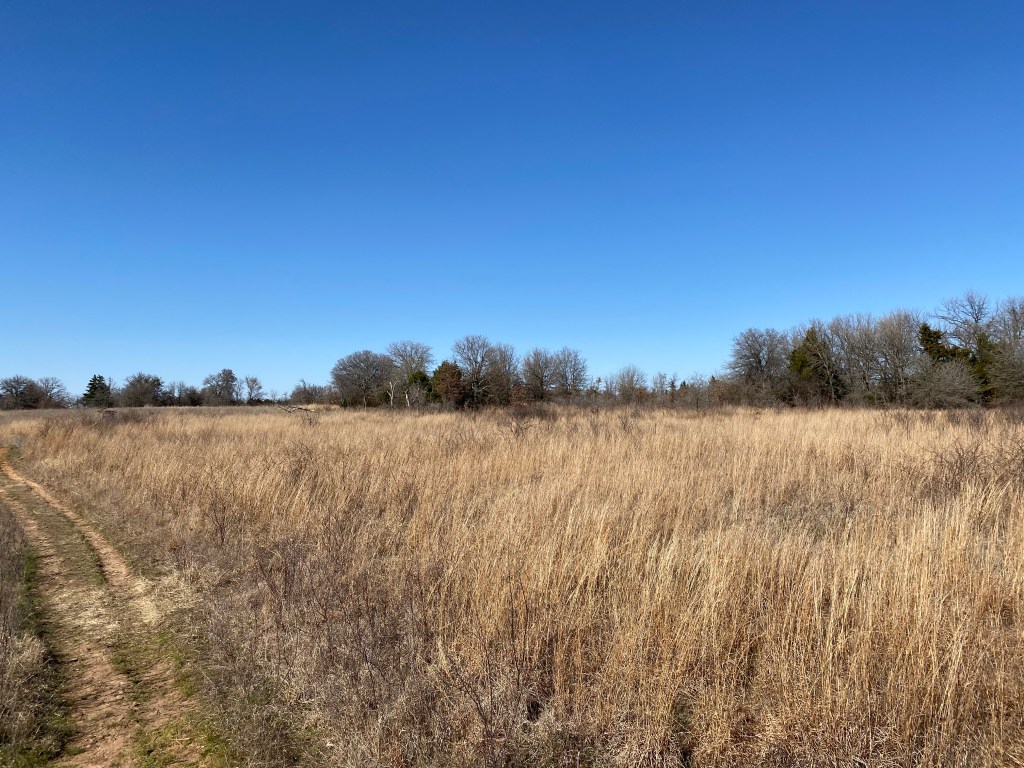
The prairie in “unit 30,” looking upslope

Here was that wonderful down-sloping prairie with little bluestem, Indiangrass, and flowering plants scattered throughout. Then the trail reaches the trees and turns sharply, losing itself in junipers, post oaks and other trees. The woods frequently open into little prairie patches as well as a few little ponds. I know the features of this part of the trail and I enjoy each walk there. I thought about why the places within LBJ National Grasslands have such an attraction for me, these “same old” trails. But the affection for the place holds. Walking here is visiting old friends, so why would I tire of it? And when I walk through spots in the grasslands that are new to me I usually see familiar landscapes, just arranged differently. Some of the appeal for me is the sense of being able to spread out, to be unconfined in grasslands and woods that keep on going. 

A nine-banded armadillo, oblivious to my nearby presence

So goodbye to winter, and welcome spring! I’m ready for frog calls and purple coneflower, and those spring evenings with distant thunder. And eventually I’ll come to miss the earth tones of dormant vegetation and quiet winter afternoons. In time I will welcome winter back again. 

High Summer at Southwest Nature Preserve

After the long reprieve from Texas heat, with the rains of spring and early summer, we’re back to a more typical August. With temperatures climbing and the sun beating down, I decided it was time to take a walk at Southwest Nature Preserve. I was there from about 1:45-3:15pm.

The North Pond

Cricket frogs and turtles were busy at the North Pond, and dragonflies busily and silently did their dance, swooping and hovering. The Common Whitetail more than justified its name as the commonest of the dragonflies I saw.

A Common Whitetail, perched on a branch

I watched all this for a while, but the sun was merciless and I wanted a shadier place to roost. Up the red sandy trail and under some oaks, I turned to see a Texas Spiny Lizard on a Post Oak trunk, her body making an arc as she hung upside-down there, head pulled up to look at me and tail drooping a little away from the tree trunk. Like all such lizards who survive to adulthood, she was wary, and disappeared around the trunk as I moved in to ask for a photo.

Texas Spiny Lizards have had a heck of a year, with rain and runaway plant growth supporting a bumper crop of bugs. I hope they persist (as they always do, in some numbers) during the dry periods that may come. I never get tired of seeing these cute little reptiles that sometimes tolerate you coming close but always at some point scamper away, up and around the trunk, too fast for your eyes to follow.

I followed the trail at the back of the preserve and climbed up to the ridge where there could be more breeze. Around the little loop trail at the crown of the preserve, there is an old concrete pad left over from when it was a working farm, and I sat there for a while, enjoying the quiet. There is almost always some airplane noise, but the spot is on the other side of the ridge from most traffic and so you can escape much of the mechanized soundtrack of modern life, for a little bit.

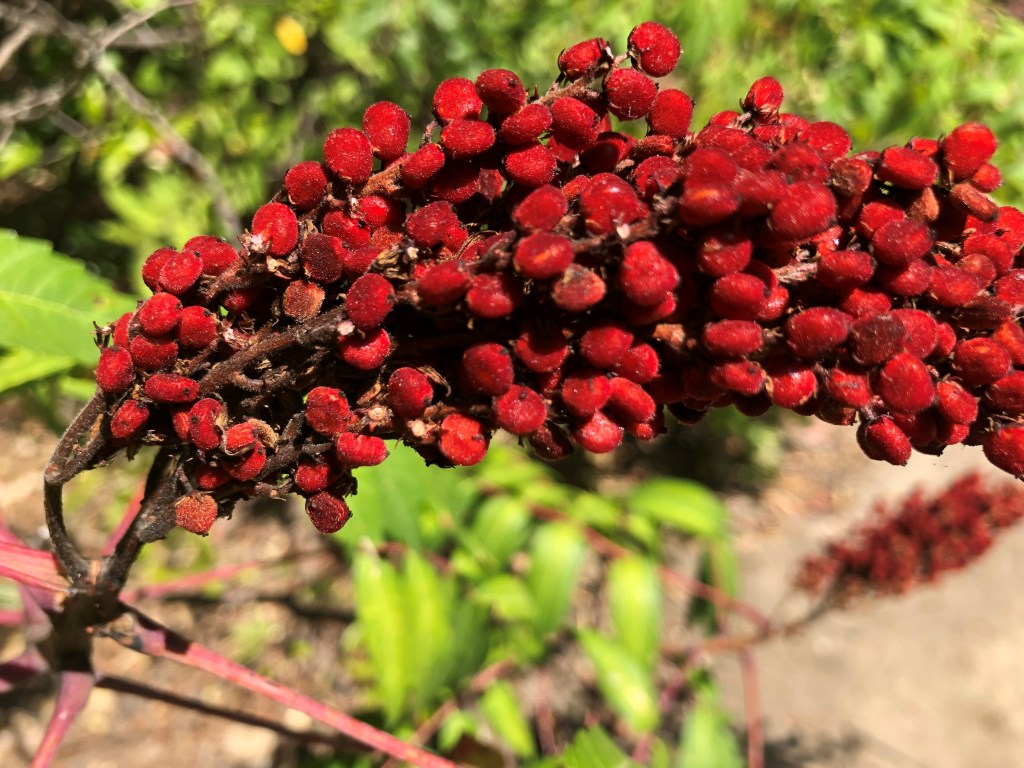
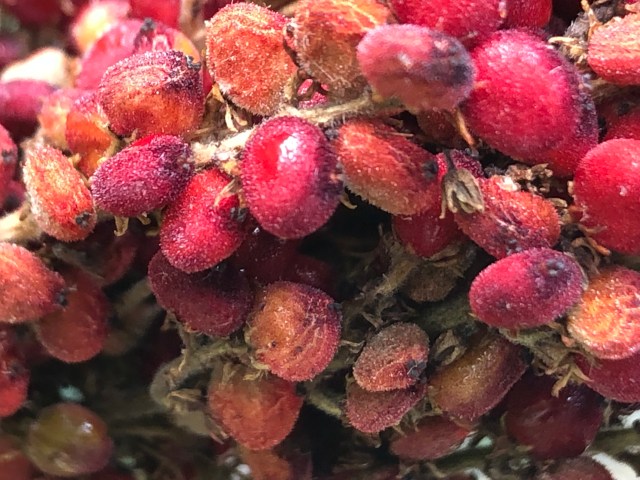
A Sumac seed head

Sumac is common in places at the preserve, and their seed heads can be a bright, velvety red before drying and darkening into the color of dried blood. Rob Denkhaus tells me I could make a tea out of it, and I’d like to find some growing somewhere that I could harvest a seed head or two and try it!

Looking down from the ridge onto the trail below

On the walk back to the trailhead, I saw one more of a kind of butterfly that seemed familiar – was it a Hackberry Butterfly like one I’d seen on a previous walk? I got a photo, and it appears that I was right. (Thanks, iNaturalist!)

A Hackberry Butterfly, according to iNaturalist

At the end, Weather Underground was reporting that the temperature in Arlington was 101ºF, with a heat index making feel like 117ºF. So it got pretty hot today, though the lizards and insects didn’t seem to care. It’s a little more troublesome for those of us whose bodies only operate in a narrow range around 98.6ºF, but a little shade and a little breeze got me through.

A Shortcut to Nowhere

I climbed up “Kennedale Mountain” today, an old-ish man with pulmonary disease scaling the summit easily. Kennedale Mountain is a ridge at the Southwest Nature Preserve. A primitive trail gently climbs to a sandstone ridge at the top via a series of switchbacks. On the lower slopes there is a section of plastic netting that urges people to stay on the trail and not climb straight up the hillside, where they would damage vegetation, churn up the sandy soil and make erosion likely.

Eastern Cross Timbers woodland at the preserve

I wish that unsightly barrier did not need to be there. Why would people take the short cut to the top? Is there a race? Frankly, I’d much rather take that slow, meandering path and see all the little wonders that can be seen on the way up. If you’re not in a hurry, there is a lot to see.

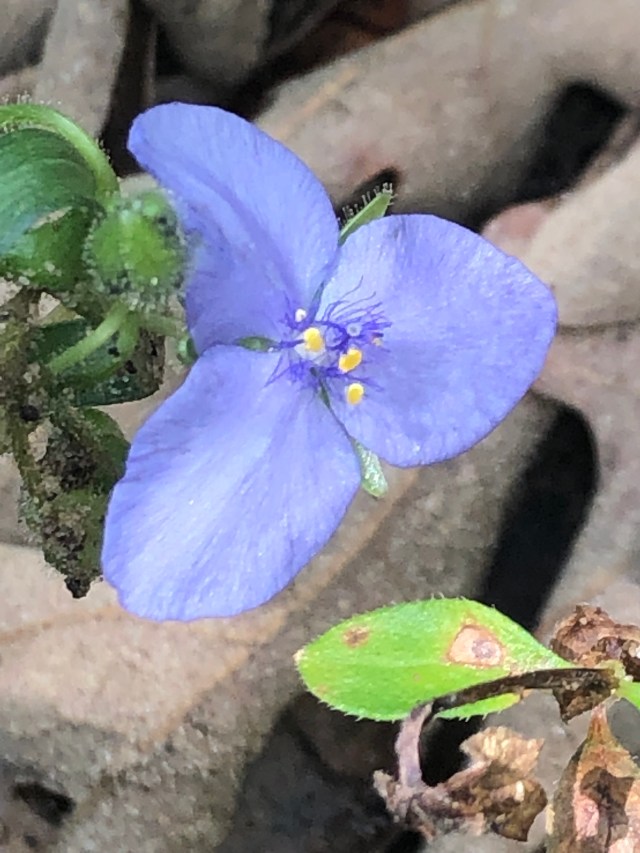
iNaturalist tells me that this is Bluejacket, a type of spiderwort

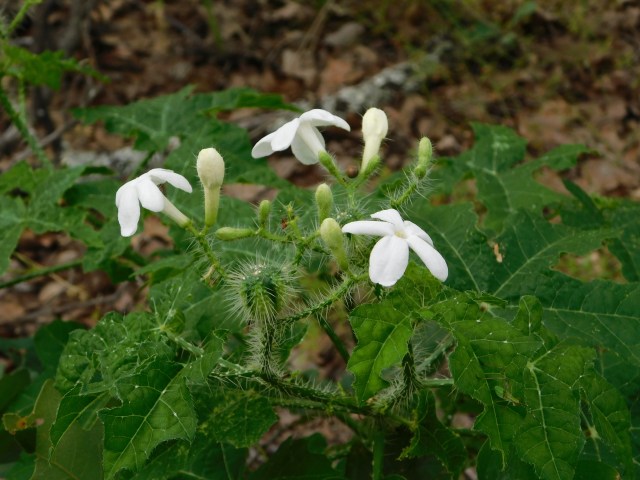
Even the plants that some would consider a nuisance can be pretty spectacular. It seems that sunny openings where there is adequate moisture and sandy soil are just great for Texas bull nettle, a plant that I carefully avoid brushing up against. Its hairy, spiny branches and leaves and the pure white blossoms are a real treat, though.

Texas bull nettle

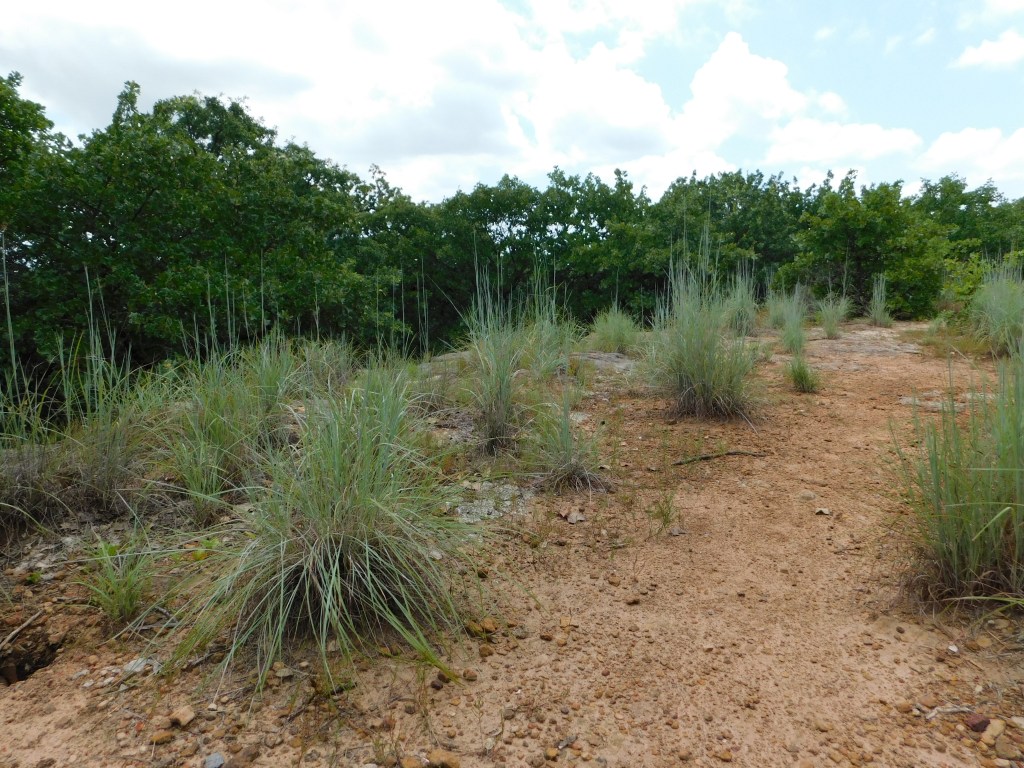
The ridge at the top has a flat, open area where Little Bluestem grows between scattered Blackjack Oak, and the shelf of iron-rich sandstone looks great, if you avoid places where people have carved initials.

Clumps of Little Bluestem, in little vertical brush-strokes of blue-green.

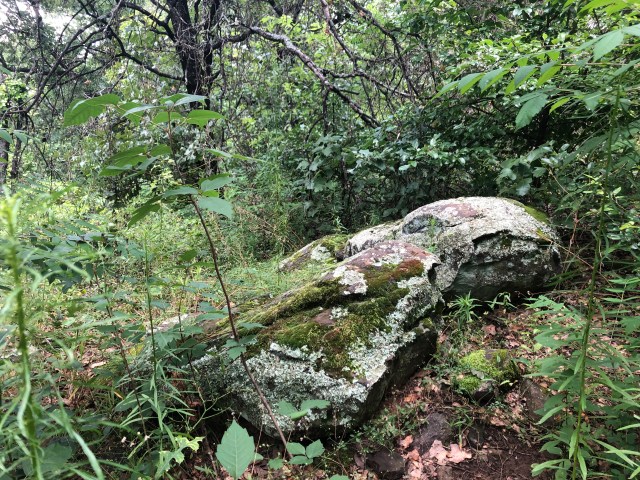
Elsewhere within the oak woods, which are a remnant of the Eastern Cross Timbers ecoregion, lichen-covered boulders are scattered among Blackjack and Post Oak, Sumac, and a wide diversity of other plants. Dragonflies hover and swallowtail butterflies flutter among the trees. There is really a fine diversity of butterflies and skippers to be found there.

The understory is like a beautiful jungle under the oaks
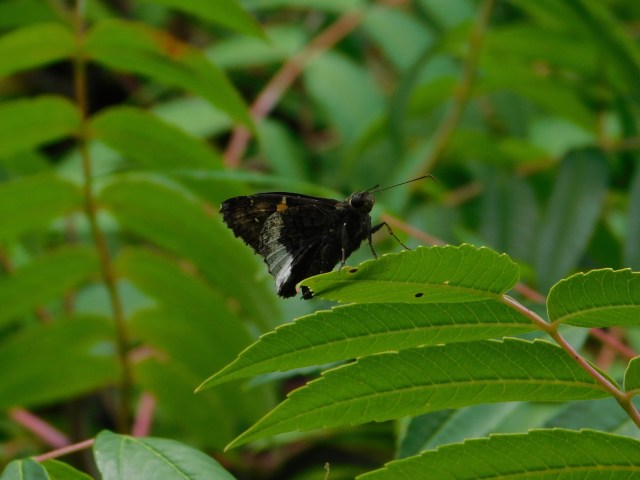
A skipper

The beautiful dark skipper was resting on sumac, a shrub which can easily get out of control but is a beautiful plant. Today the seed heads where brilliant red; in the fall the leaves will be even redder.

Seeds maturing on a sumac bush

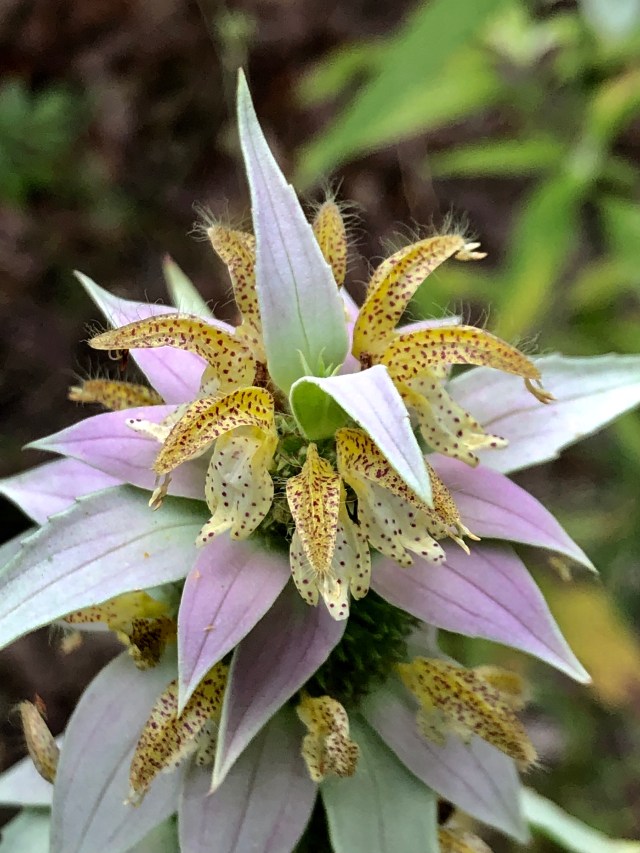
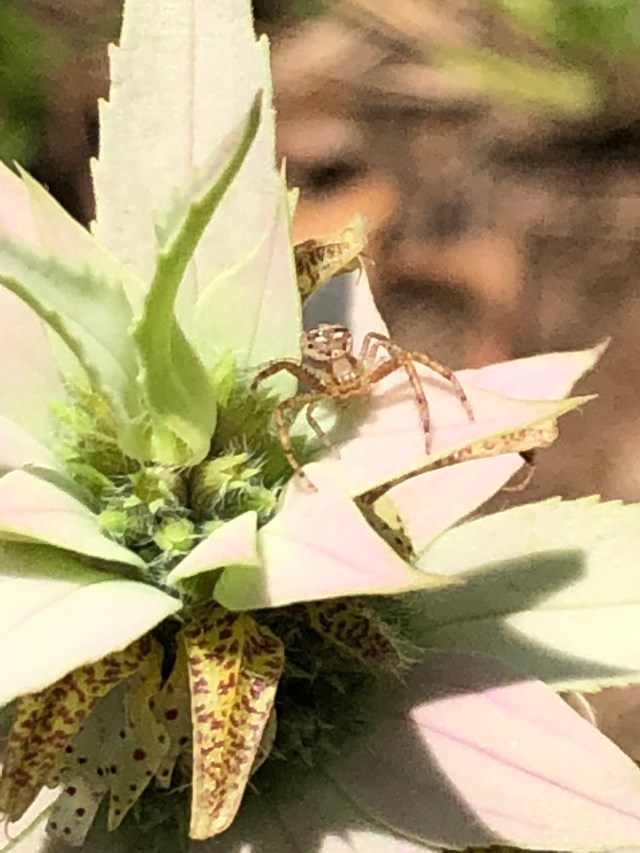
This season, horse mint is growing like crazy in places; in lower areas the purple Lemon Bee Balm is common, and in other areas the Spotted Horse Mint grows in profusion. It’s a nice-looking plant, but if you look closely, it’s a spectacular plant!

Spotted Horse Mint
A crab spider waiting in ambush on a Spotted Horse Mint

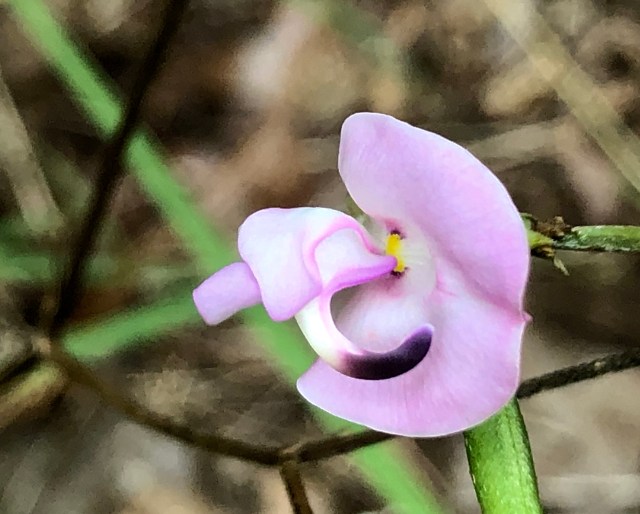
Speaking of looking closely, there was a gorgeous little bloom growing low to the ground here and there in the woods, and you have to stop and really look to appreciate it. Bend down, spend a little time, and notice that it grows on a sort of trailing vine and that some narrow green seed pods are developing. According to iNaturalist, it’s “Fuzzybean,” which sounds like a Sesame Street character but is actually a legume.

iNaturalist tells me that this is a Fuzzybean

Looking closely and taking your time pays off richly at the preserve. There are all kinds of flowers that you could lose yourself in. I stood in the steaming sunlight, admiring and trying not to drip on my camera. (Most of the close-ups were taken with an iPhone, and while I don’t claim that they’re anything special, I think that phone may be my best close-up camera.)

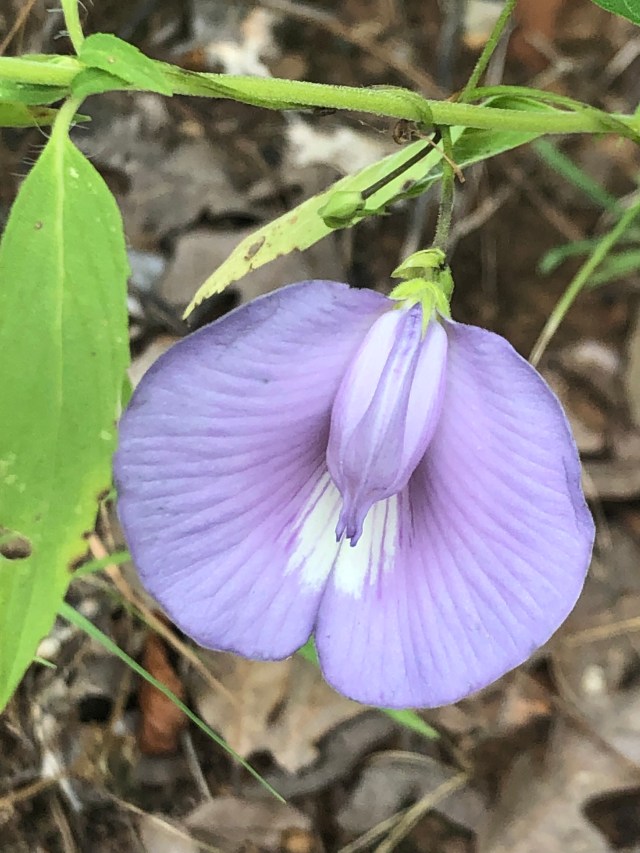
(I have no clue)
Butterfly Pea, according to iNaturalist

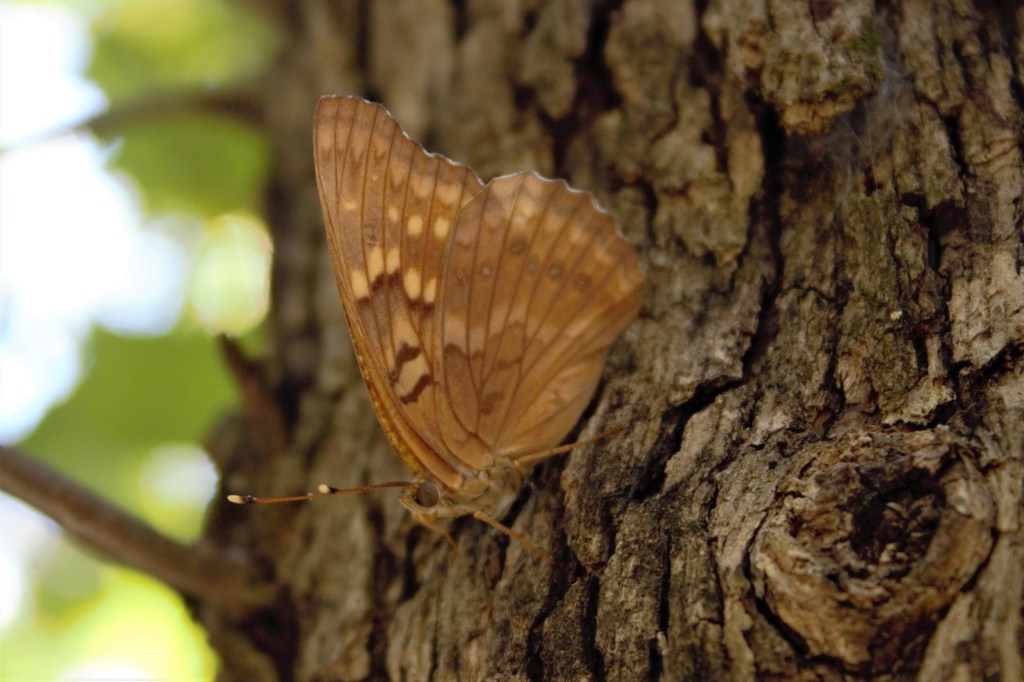
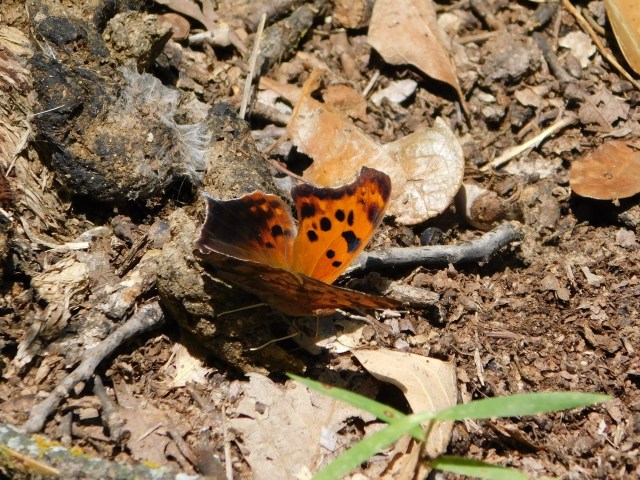
On the way back, there were more butterflies, including a beautiful Question Mark, a kind of butterfly that is utterly camouflaged with wings closed but is a beautiful study in orange and dark brown when it opens those strangely-curved wings. It was doing what butterflies do, sipping on a clump of scat. We don’t like to think about such beautiful insects getting nutrition from feces, but there you are.

Question Mark

On the way back, I passed the place where that rogue trail joins the “official” trail near the top. Stacks of tree branches were piled there to discourage the cut-through down the slope. I still cannot imagine why anyone would come to this amazing place and want to take the short cut. I hope that they at least stopped somewhere, took a good look at something, in their race to do whatever they were doing.

Branches piled along the trail, suggesting, “no short cut; take your time”

(You probably noticed a lot of references to iNaturalist. I use it pretty regularly and it’s a wonderful way to get suggested identification of what you’re seeing and also to share your observations with other naturalists and with the scientific community. I’m pretty well-versed in reptiles and amphibians and have learned as much as I can about the bigger picture, but there’s an incredible amount that I don’t know. The iNaturalist app helps a lot.)