Sanctuary!

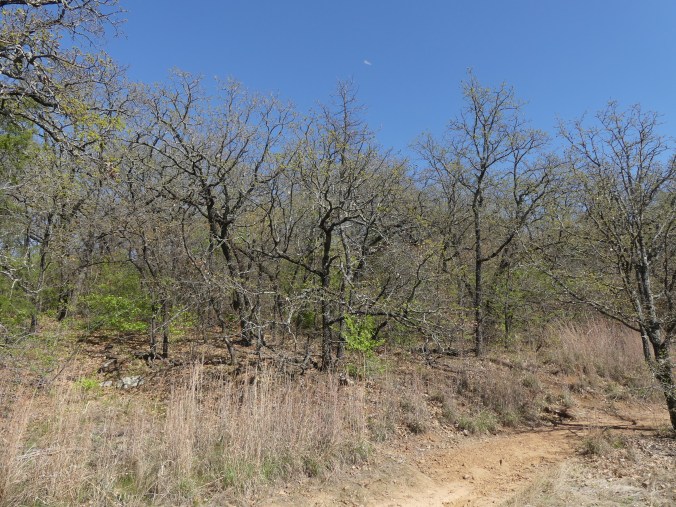
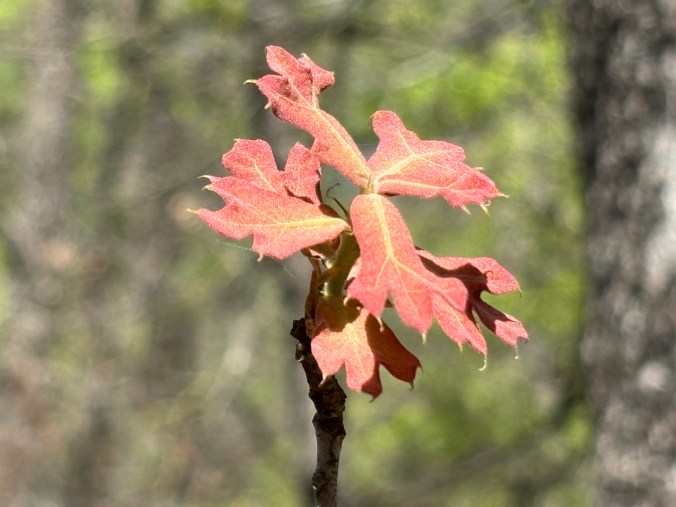
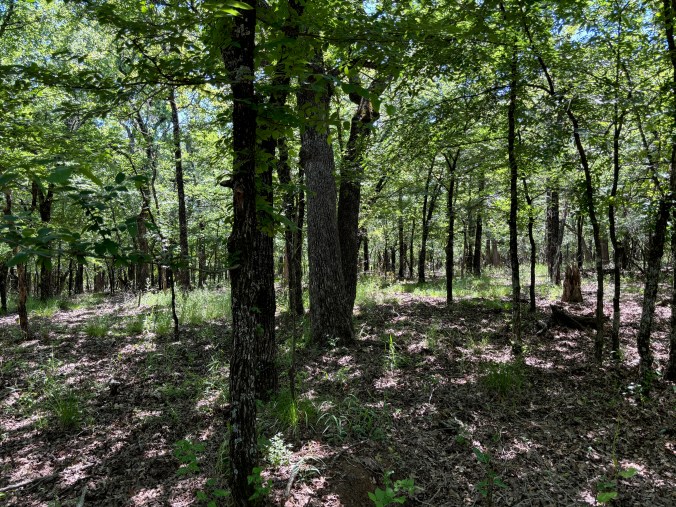
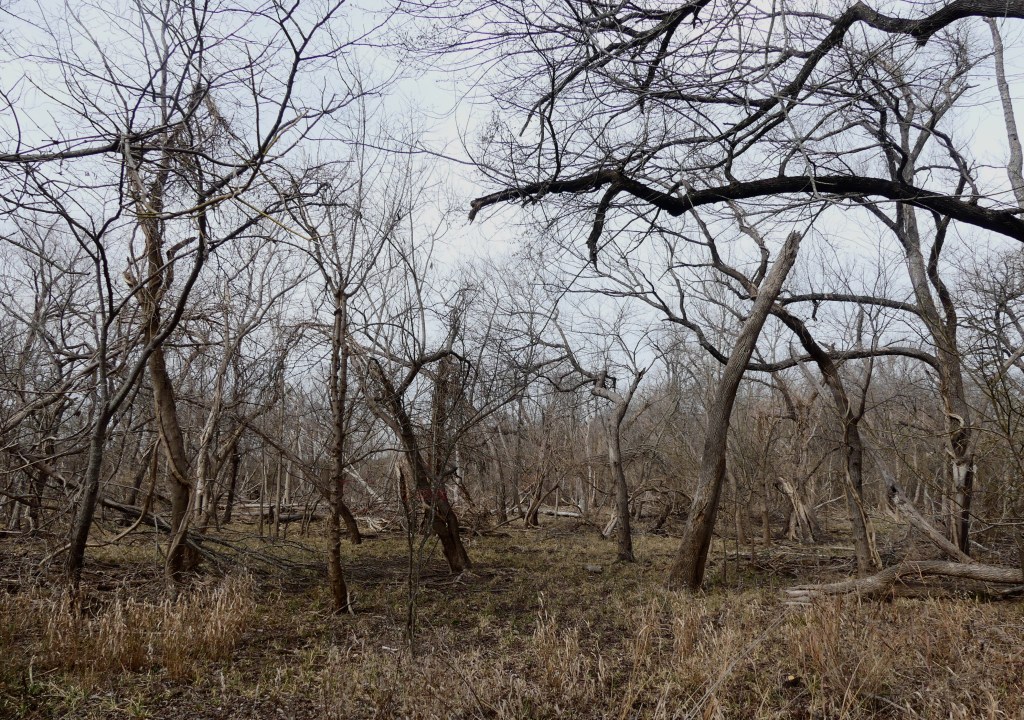
This new trail at Fort Worth Nature Center & Refuge is a favorite. I have walked it in winter with those bare tree limbs reaching up towards the sky and beautiful patterns of shed leaves on the ground. Now I have been there when it is greener and darker with all those new leaves shading the ground. The trail winds among the tree trunks and I can hear the quiet and the birds and the soft crunch of footsteps. That quiet and the new leaves as well as the carpet of old ones makes for a woodland sanctuary. A protected woods becomes a protective place for all who walk there.

I remember the 1939 film – “The Hunchback of Notre Dame” – in which Quasimodo rescues the wrongly condemned Esmeralda and flees to the cathedral, crying “Sanctuary! Sanctuary!” Notre Dame is a place of safety and protection from a corrupt French Chief Justice. Both the disfigured Quasimodo and the Romani girl Esmeralda are safe within its walls.

I respond to the prairies, woods, and wetlands as places of safety and protection, sanctuaries from thinking about the current regime and worrying about how it will play out. Extrajudicial abduction, defiance of courts, hate and scapegoating, wrecking the economy that sustains us, and on and on. We might imagine that, like Esmeralda, we all need to be taken to some place of safety, away from the worst of our fellow humans.

At the same time that such things are going on in human society, the sun keeps rising each morning, birds sing, water flows, plants give us oxygen and food, and there is quiet and peace in the woods and fields. I am very thankful that they are part of the world. As Robin Wall Kimmerer said, “Even a wounded world holds us, giving us moments of wonder and joy” (Braiding Sweetgrass, p. 327).

Sanctuary! I need to be in such places. I must do whatever good that I can in the world, and then for a time I need the shelter of nature.

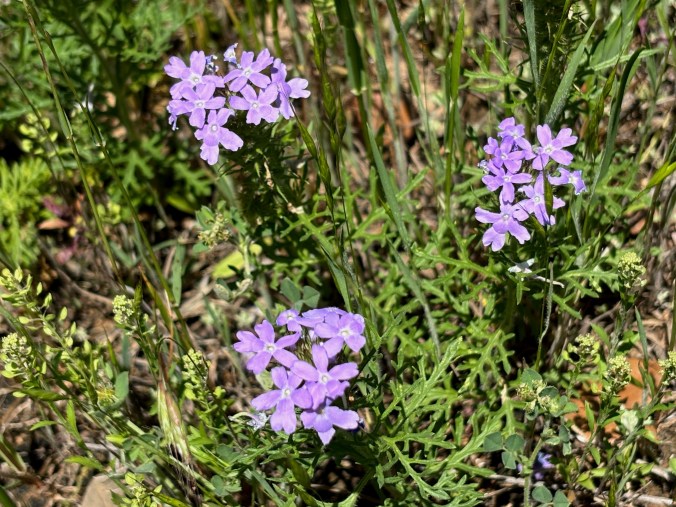
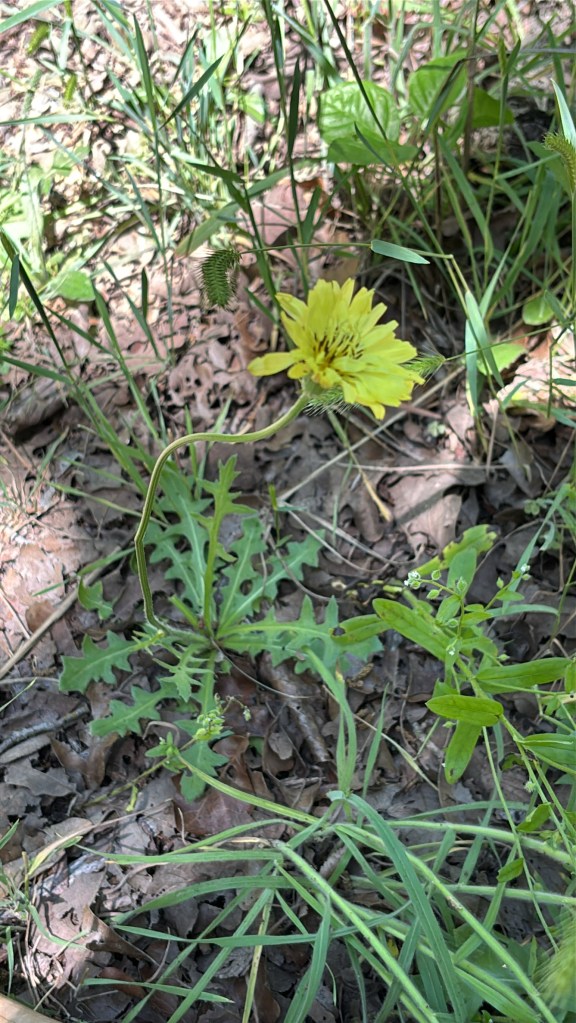
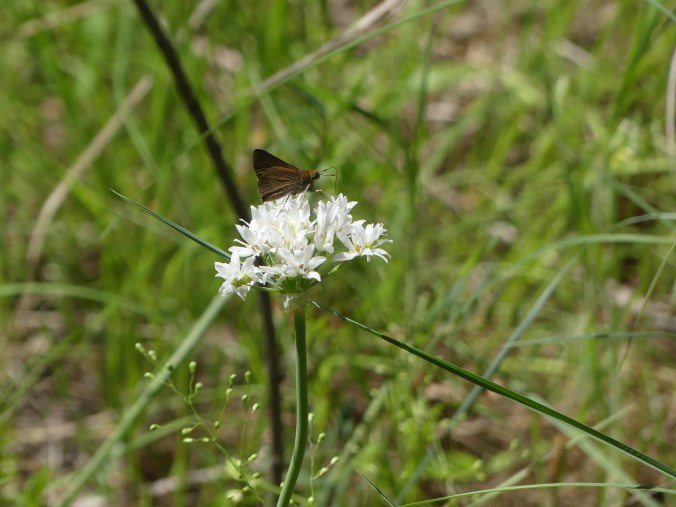
Flowers of Dakota Mock Vervain

And so I went to the nature center yesterday, the day before Earth Day. The sun was shining in a clear blue sky, and a Northern Cardinal’s call was joined with those of other birds in the patch of prairie where I started. The temperature was still in the 70s, but not for long.

In the meadow with butterflies and bird song

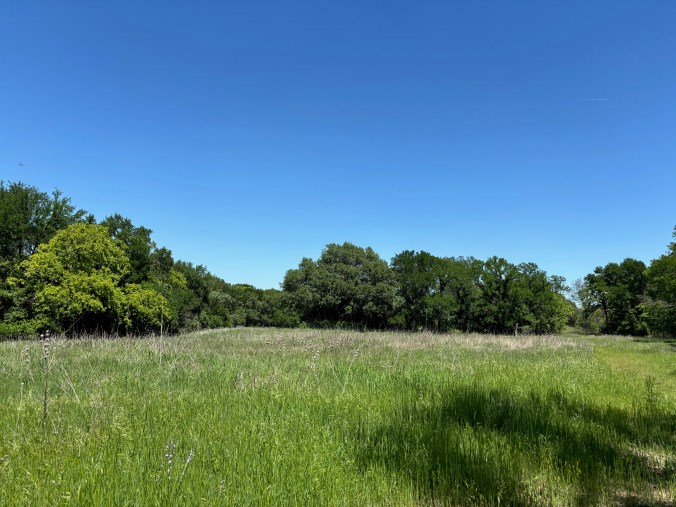
After a time in the trees, the trail entered a big meadow or prairie surrounded by trees. This, to me, is the heart of this trail. There were flowers visited by butterflies – a Common Buckeye, several Goatweed Leafwings, and over by the bench, a Painted Lady. Once I settled in, I saw some species of sulfur flying and fluttering a little above the tops of the grasses. Most of the time the nearby air traffic did not disturb the place, so I could hear the Northern Cardinals and also Carolina Wren, Carolina Chickadee, White-throated Sparrow, and Tufted Titmouse (much of the identifying was with the Merlin app, but even if they were not identified the songs in the meadow were beautiful).

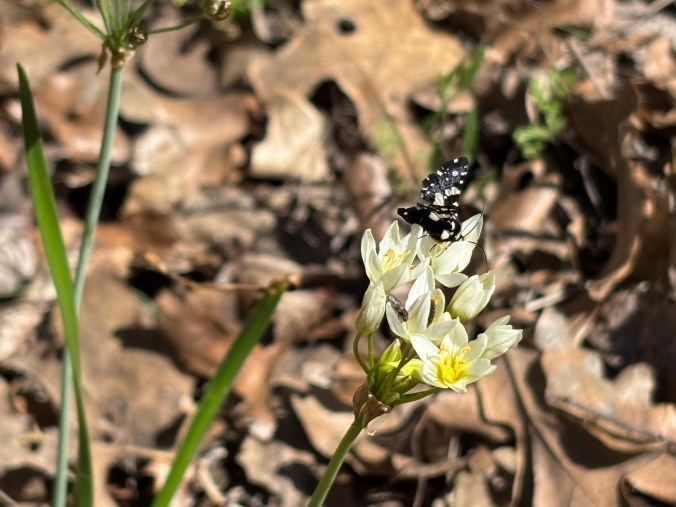
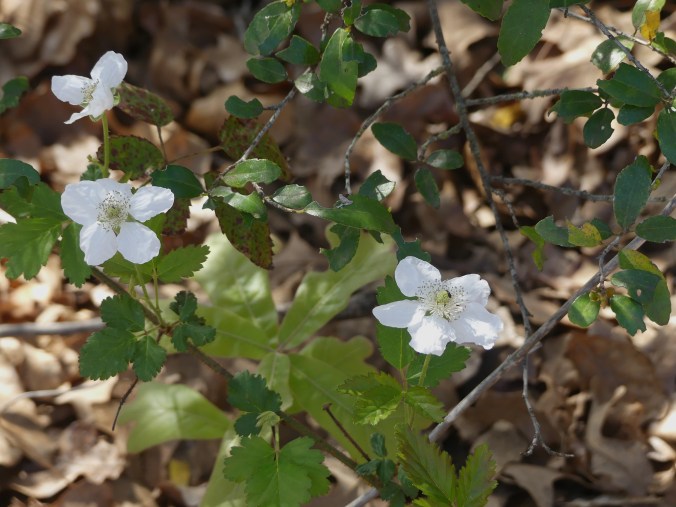
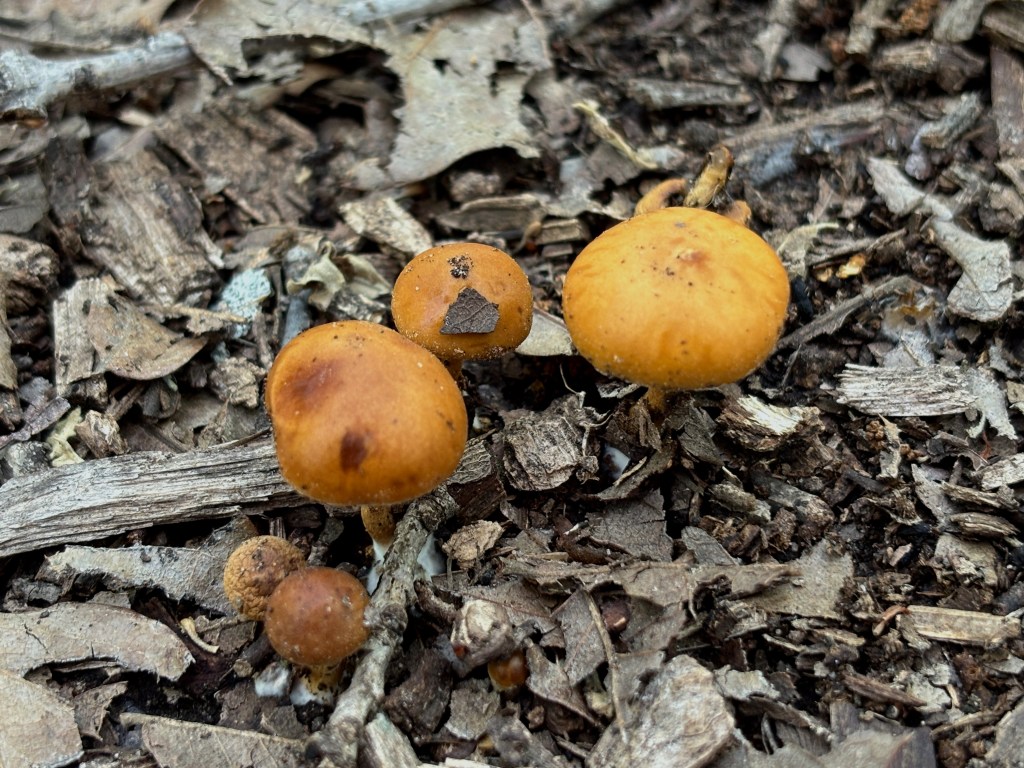
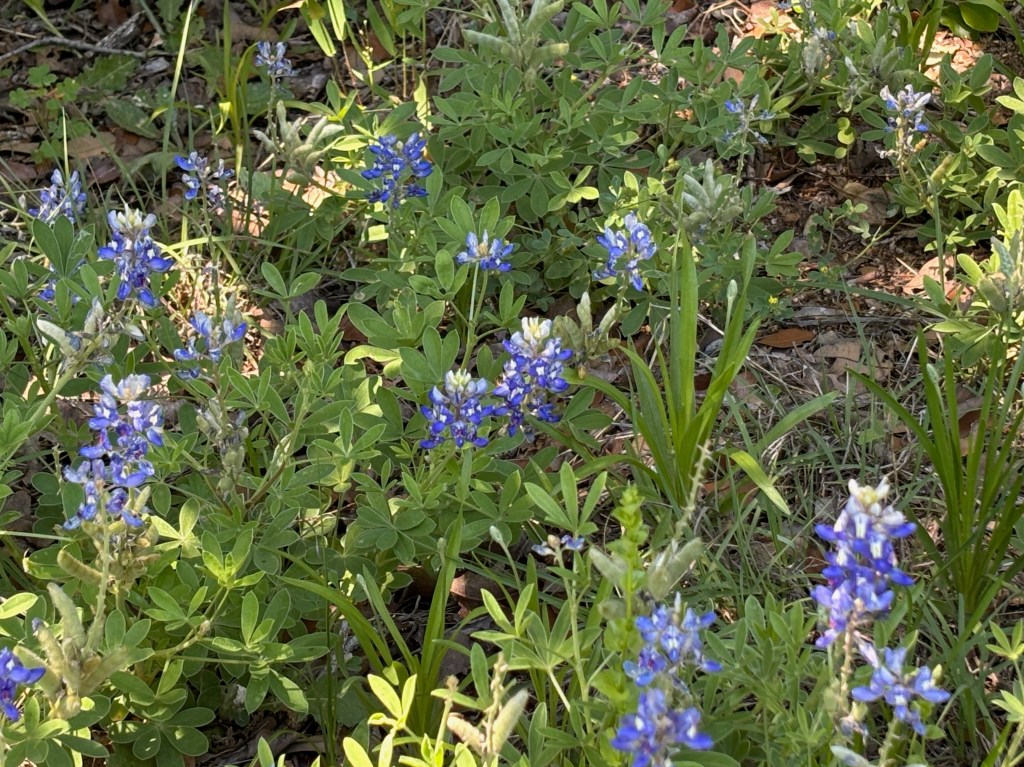
From there, the trail meandered through the woods some more. Sometimes I got on the ground to examine mushrooms; other times it was to see a small jumping spider. There were more flowers: Smallflower Desert-Chicory, Fraser’s Wild Onion, and at the end, a few patches of Texas Bluebonnet in clearings as the woods opened onto another prairie.

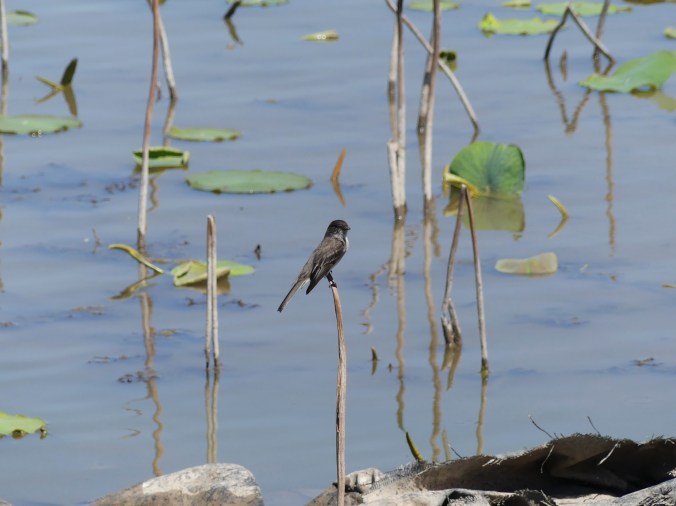
When I reached the end of the trail, the marsh boardwalk was a short walk away, and so I headed down to the marsh. Black Vultures were examining some exposed mud, a Great Egret flew by close to the boardwalk, and at some lotus stems in the shallow water an Eastern Phoebe perched. Then it flew to a nearby spot, disappeared, and returned. Once it dipped to the water’s surface, apparently to capture something. It is a busy life for a Phoebe on the hunt.

The Eastern Phoebe, scanning for insects

It was three hours well-spent. We all need this kind of sanctuary, and such places can be an important sort of self-care. I wish everyone could take an hour or so and be held in the peace and beauty of places like this. If you can, go and sit for a while in mindful stillness or walk the trails and notice the unending stream of wonderful things that you will find.

Elegies for Animals

Our responses to losses and extinction of our fellow creatures should reflect our complete selves, not just what we make of the losses intellectually but also how they resonate in our hearts and souls. When a species is gone, it should pull from us something beyond what is measured in statistics. Birds do that, as you can hear in the magnificent elegy by Christopher Tin, called The Lost Birds. It’s a collection, a heartbreaking instrumental theme memorializing the Passenger Pigeon (“Flocks a Mile Wide”) and songs, some with original lyrics and some drawing on others’ poems such as “Hope is the Thing with Feathers.” Those lost birds, our distant relatives, deserve memorials such as this.

Of course, it’s not just birds. Many of our other animal relatives are disappearing, and some of them have eloquent advocates. Wolves have passionate defenders, and even the Monarch butterfly inspires legions of helpers planting milkweed for their caterpillars. 

Amphibians and reptiles have captured my interest and affection all my life. A great many are declining, and the loss of many amphibians has been deemed an extinction “crisis.” At least, it’s a crisis as seen by herpetologists and some others. Turtles are disappearing, too, along with many reptile species. 
You can see where I am headed. No elegies for the disappearing Louisiana Pine Snake or the Yangtze Giant Softshell Turtle. Our culture does not elevate them in that way. The flight of birds symbolizes freedom for us. Our cultural stories equate birds with hope; a dove with an olive branch signifies peace, and those feathered wings remind us of angels. The snake, in Western culture, brings up temptation, fall from grace, and being condemned to crawl on the belly. We have to look elsewhere, like Asia or Indigenous Americans to find some positive cultural meanings.

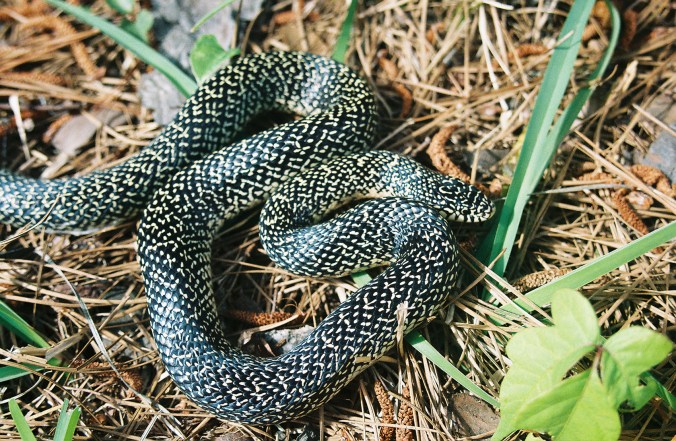
Speckled kingsnake

My point is not a resentment of birds, just a wish that we could do for other animals what we’ve done for birds. I wish we had stories and images in our culture that found more positive inspiration and affection for the animals without beautiful songs and wings, with no soft fur or expressive eyes. It would make it easier for us to find room for them in the family of living things. It might give a little boost to our willingness to go out of our way to conserve them, and maybe we would need fewer elegies.

A Small Restoration

I had to go to the woods today. Among my frequent visits to those places, some are for spiritual and psychological first aid. Today was a day like that.

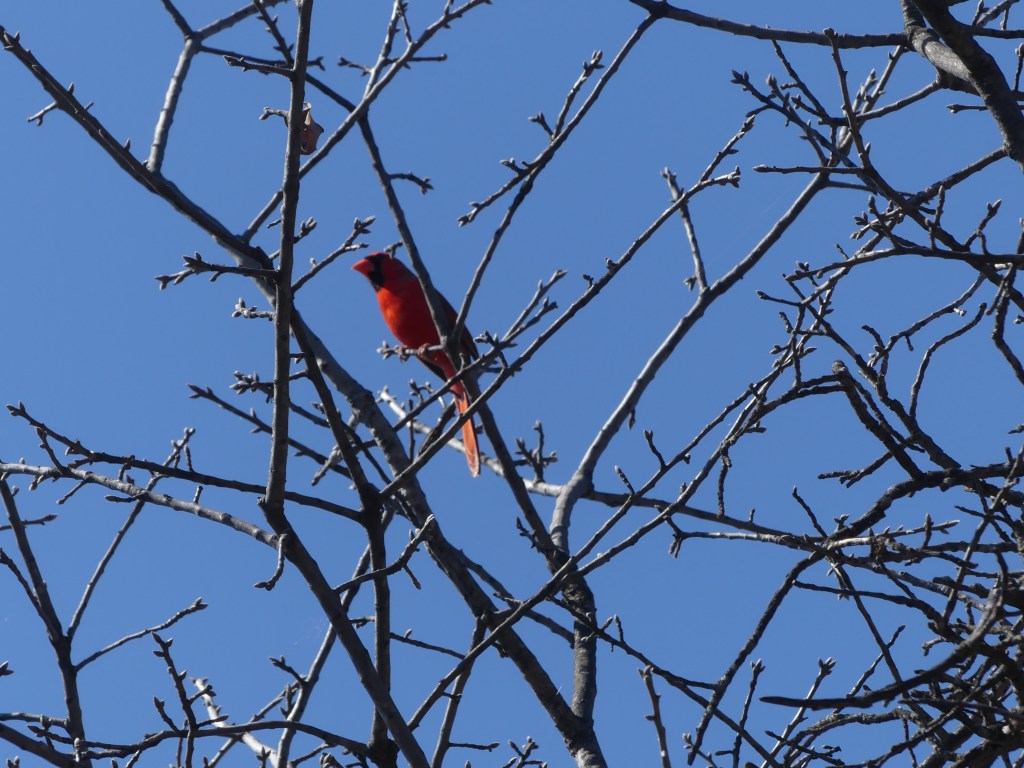
Cardinals like this male were singing throughout the preserve

Here at Sheri Capehart Nature Preserve, I can sit on the ridge and look down into the brown and gray woods, still in those colors for a while before the leaves appear. There are some glimpses of green, bits of juniper seen through oak branches, and patches of moss at the base of tree trunks. And there is a flash of reddish feathers from a female northern cardinal.

Yes, there is traffic noise and a barking dog somewhere, but it feels quiet and there is a stillness to the dormant woods, here at the edge of spring. I needed this respite. Not a respite from my home, except that home is where the news arrives. Home is where I get sucked into the Internet, with stories from the world: destruction, corruption, and bullying. Here, I don’t allow the news to appear on my phone, which is used only for photos or checking the Merlin app to identify some unseen bird.

The sun is at my back and a butterfly dances by. Mosses and lichens growing on the stones of the ridge provide endless color, life, and art. And there is the stillness that hardly seems able to be found in the city.

Butterflies agree that spring is ready to arrive. On the trail from the ridge to the boulders, a fritillary glides in toward me on rigid orange wings. It sails on past, wings now flapping to carry it up to the treetops. Nearby, a pair of butterflies suddenly appear and spiral up in their fluttering flight, above the crown of the nearest tree. When I reach the boulders, a pair of sulfurs chase each other down the path. The fluttering, erratic flight of butterflies might make us think they cannot control their flight very well, but have you noticed how often they can weave among obstacles without hitting them? That erratic flight seems to be a gift, an ability to make quick turns and maneuvers that help them escape predators.
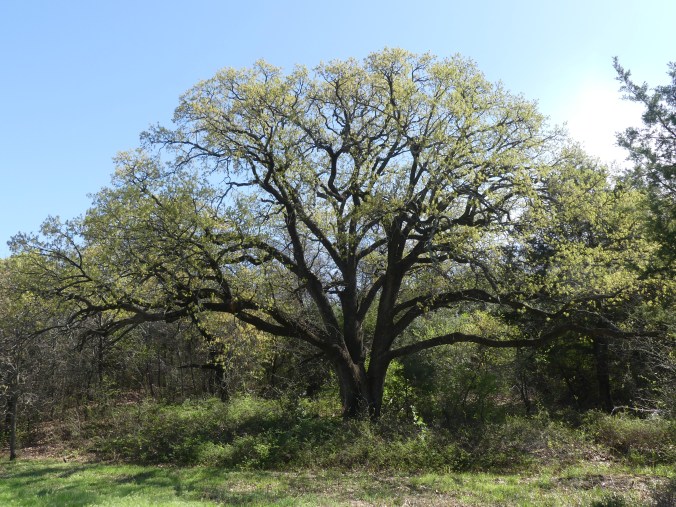
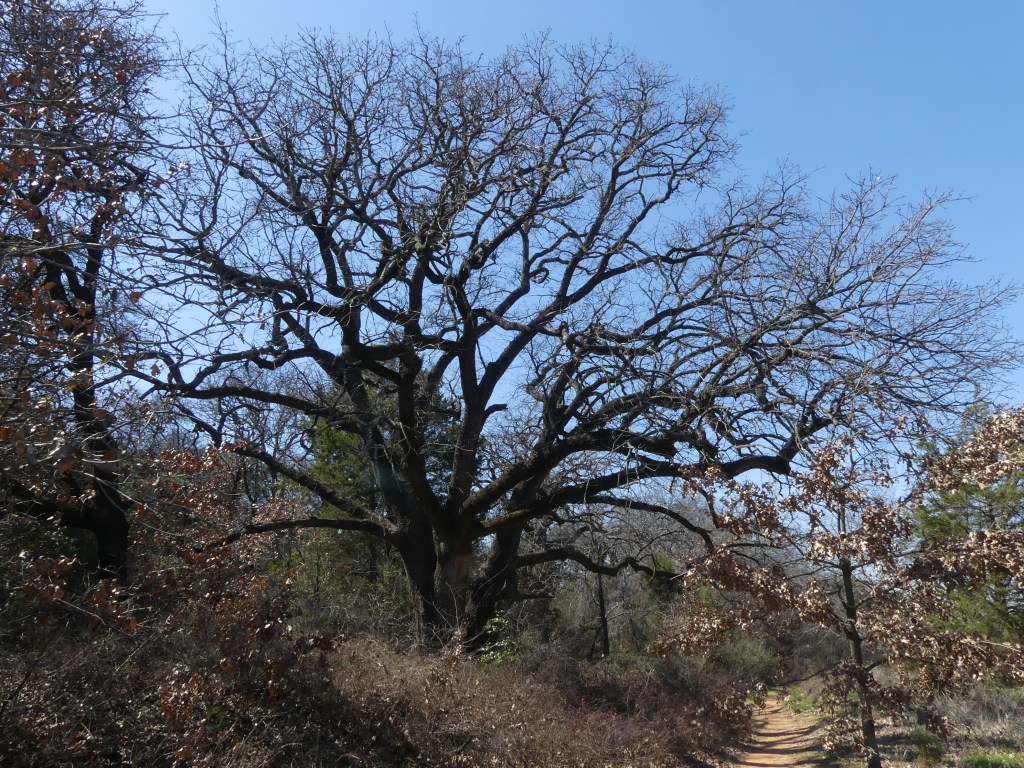
The historic 200-year-old post oak referred to as the Caddo oak

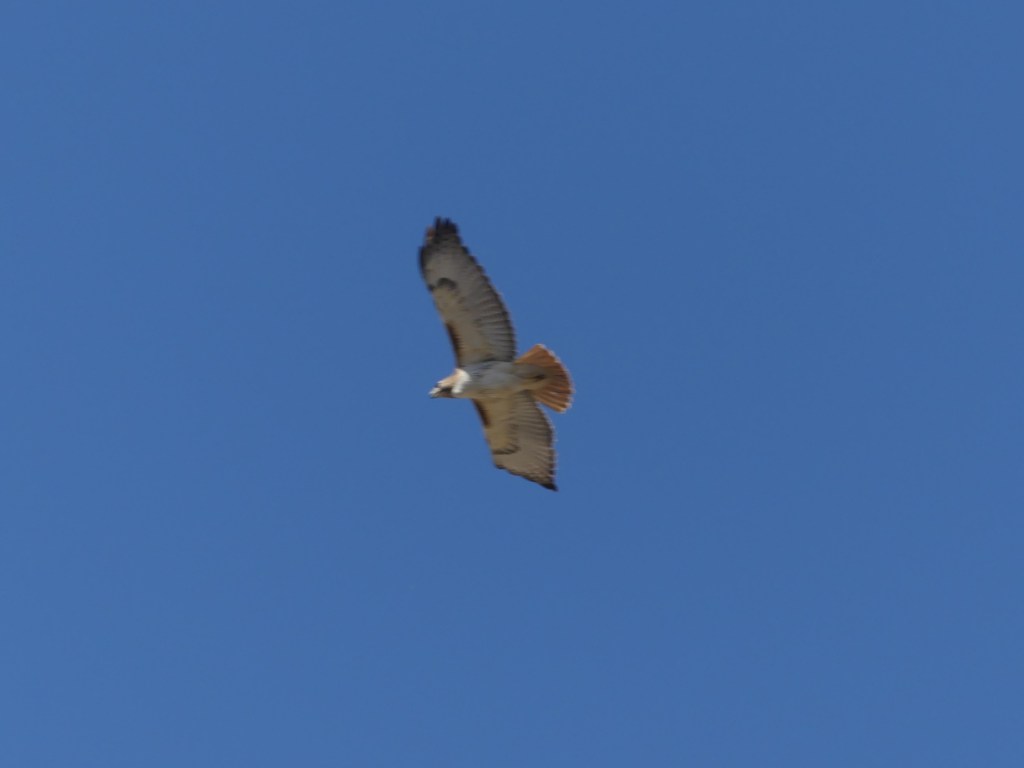
I walk around the preserve, past the historic Caddo oak, seeing many more butterflies and hearing a number of bird species: Carolina wrens, tufted titmice, a chickadee or two, an eastern phoebe, and many northern cardinals. I see a red-tailed hawk overhead, soaring and then turning on powerful wings.
A slightly fuzzy photo of the red-tailed hawk

Arriving near the north pond, I think about how much data we have about the benefits of mindfulness and time spent in nature. There is the reduction in stress, the cardiovascular benefits, an immunologic boost, reduction in depressive rumination, and increases in empathy among other gifts. Those things make time in the woods not some privileged escape or ignorance of the troubles of the world. It is a sort of refueling for the work that lies ahead. It is restorative – a little like sleep – and so it should not be undervalued.

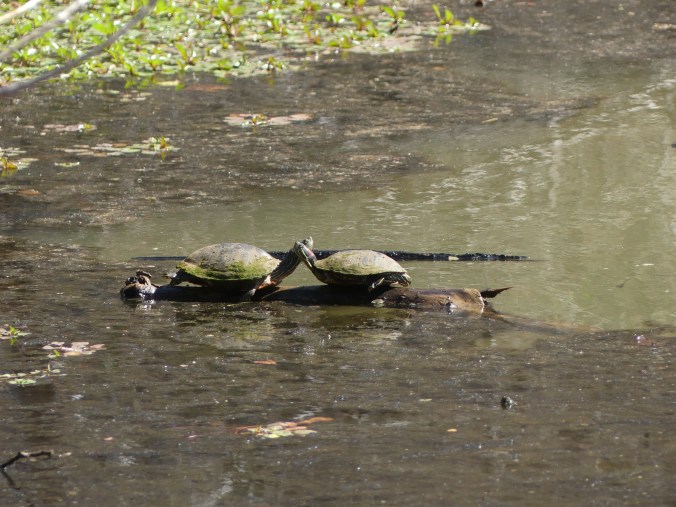
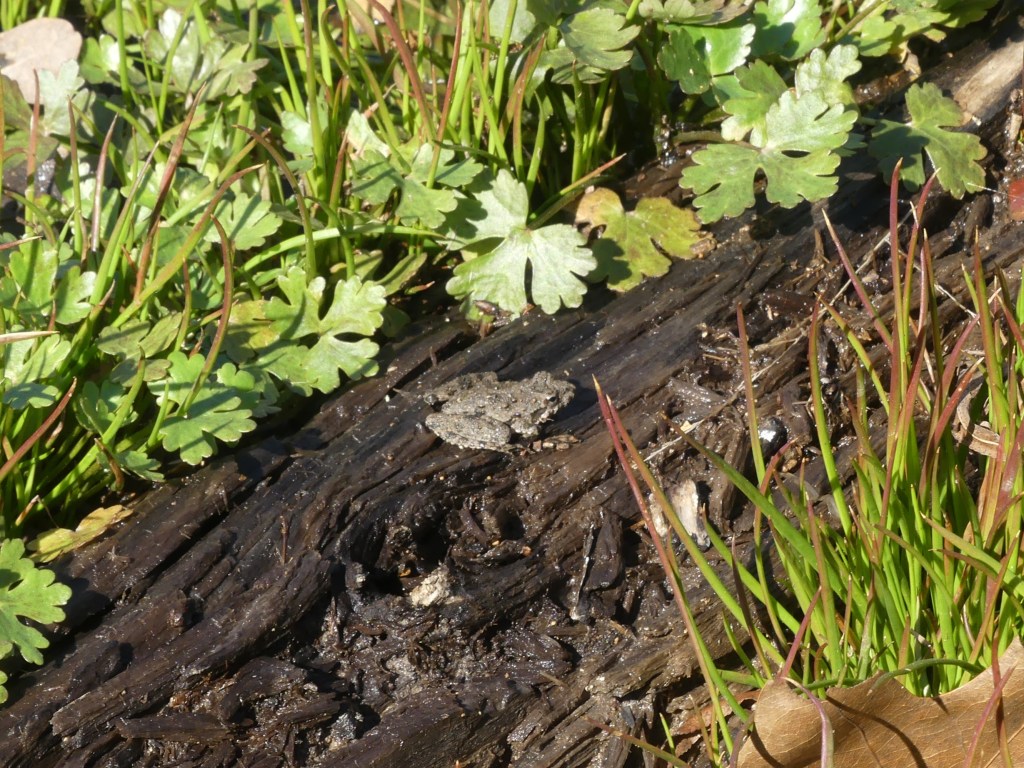
It is now 77F in the shade. Down at the north pond, life is in full swing. red-eared sliders swimming or pulling out and basking in sunshine. Cricket frogs jumping into the water as I get too close to them. All that is needed is the emergence of dragonflies, and the pond will seem complete. I walk back to the car after nearly two hours of walking, sitting, and noticing things in a world that seems so different from the big events of the wider world. It has been a small but important restoration.

Lilly’s Adventure Walks

This post is also at “Rain Lilies,” a Substack that I started when I considered leaving the WordPress platform. While it was sitting unused but not deleted, my friend Dresden Graff (read what he writes at “Human and Learning” over there) recommended me to his readers. And that spurred me to write about Lilly’s and my walks in nature. I’m getting my thoughts together to possibly write a new book, this one for families of kids. I would talk about introducing kids to nature, supporting their nature interests, and I would draw on my psychology career to include some things about child development and how the human lives part of our lives in nature works. I may try out some ideas over at Rain Lilies, in case you’d like to have a look.


Tomorrow (January 17), I plan to take Lilly to the woods and the marsh. We took a walk there a couple of weeks ago, and she’d like to return and maybe see birds. On our last walk, we heard crows, and one of them flew in and loudly announced his presence from a nearby tree. What a wonderful, big black bird, like a druid of the woods with secret knowledge of who lives among the trees, some to welcome and others to chase away. Did he welcome Lilly and me? I don’t know, but I think Lilly welcomed him.

Lilly and I have been taking adventure walks since she was two, and now she is four. She loves climbing on boulders and looking at creatures we find. A little before her third birthday, she discovered a small, harmless DeKay’s brownsnake on the trail. She had nothing but gentle curiosity with this little animal, and with my guidance she was able to touch it and wish it good-bye as it disappeared into the leaves and grasses. 

Lilly’s first snake – a DeKay’s brownsnake at Fort Worth Nature Center & Refuge

In that encounter, she embodied a significant issue for two-year-olds, as expressed by the famous psychoanalyst Erik Erikson as “holding on and letting go.” As they experiment with their increasing sense of what it is to have power, they may make demands, enjoy saying “no,” and become overwhelmed with the resulting emotion and have tantrums. Toddlers have to work out, with us big people, how to manage the impulse to be in charge of everything, to have and express choices while living within limits. A loving adult caregiver can be firm, yet reassuring, and help the child navigate the stage that Erikson called “autonomy vs. shame and doubt.” 

Lilly seemed to get through that stage amazingly well, with a healthy wish to be independent along with an ability, most of the time, to negotiate shared control. She has what psychiatrists Chess and Thomas would describe as an easy temperament, meaning that she is pretty adaptable to changes and new situations, her mood is generally positive, she is active but not so much that it interferes with everyday situations, and so on. Child development researchers tell us that temperament styles are largely a part of who the child is (they are not taught by parents), though they can shift some with experience and parents can bring their own flexibility into play and work around some difficult temperament. 

In one of our visits to Sheri Capehart Nature Preserve when she was still two, we looked at flowers of the tie vine (a kind of morning glory) where honeybees, bumblebees, and other bees were visiting. She was fearless but did not impulsively try to grab one (thankfully). We talked about just watching and not touching, and we had a good time. Her dad – my son Geoffrey – understands that the loving and careful grandpa is in charge of his own wild nature nerd impulses, and I’ve never brought her back with bee stings or other boo-boos. However, I encouraged and was proud of her fearlessness as we sat there.

Watching bees at Sheri Capehart Nature Preserve

As a three-year-old, we’ve been to a number of parks and preserves, and sometimes she would walk along the top of a series of small boulders, enjoying her physical ability and coordination (and being up there as tall as papa). She has spent plenty of time sitting in the trail drawing in the dirt with fingers or sticks. As the famous developmental psychologist Jean Piaget would tell us, the typical child at age 3 can think about things that are not present and talk about them or make drawings of them. Sometimes she may have been drawing herself, but there were also times that it might have been the turtles we saw earlier or a bird she wished to see. Drawing in the dirt is an imprecise thing, and I often could not tell.

Using a stick to draw, Oliver Nature Park

For Lilly, an adventure walk is a learning walk, but hopefully not because I’m turning it into “school.” I try to check myself if I start saying “…and that tree over there is an oak.” Better to follow her lead, and then I will throw in the name of something or ask a question we can both wonder about. If she almost steps into a cactus, I’ll help her stop and say a couple of things about it being “pokey” but also some animals do eat them. If she asks a question, I’ll try to answer it, but if she is ready to move on, I’ll go with that. (I did start a game at one point by saying, “Let’s see how many cacti we can see,” and she walked along noticing each one: “Cactus!”)

An adventure walk is also a way for us to learn about each other and share with each other. We get better at understanding each other’s likes, abilities, and attention spans. And we experience the delight of a pond, and ants following a path across the trail, or a crow fussing at us from a tree. We open each other’s eyes to wonderful things that we might have missed.

Being a guide for a child’s becoming acquainted with nature is a privilege to be honored and taken seriously. I’m enormously grateful. And I’m ready to see that crow tomorrow!


This is a short follow-up to yesterday’s post about Lilly’s and my adventure walks. As I mentioned in yesterday’s post, we went to Fort Worth Nature Center & Refuge today (January 17), so here’s what happened.

We arrived just after 2:00pm, when the clouds retreated and the sun warmed the afternoon. She had wanted to see birds, and we did see vultures as well as some sparrows (sorry, no specific ID) in the dead stalks and branches along the boardwalk. We wanted to get a photo of one of those turkey vultures, and I’m including one that Lilly took, with help with zoom and focus.

Lilly’s photo of a couple of turkey vultures

From a cloudy and cool morning, it was becoming a really wonderful day with beautiful clouds.

Looking east from the marsh boardwalk

We walked the trail eastward, and after a short walkway across a low area the trail climbs up a little, overlooking the marsh. Lilly had decided that we were pirates, and that I was to tell her “aye, aye, cap’n,” which of course I did. She runs a very egalitarian ship, trading off periodically and making me the captain. 

At a high spot along the shore there is a bench, and we stopped and had a drink. She dug for buried treasure in the gravel, and came up with some caps from acorns. We drank candy from these acorn cups, as pirates always do, and she even spoke in a harsh pirate voice. 

And so it was a great walk on a very nice day, and she noticed turkey vultures as well as greenbrier (she really doesn’t want to get scratched, so she kept calling out “greenbrier” when she would see one). A nice combination of natural history and pretend play!

A Big Place on a Winter Day

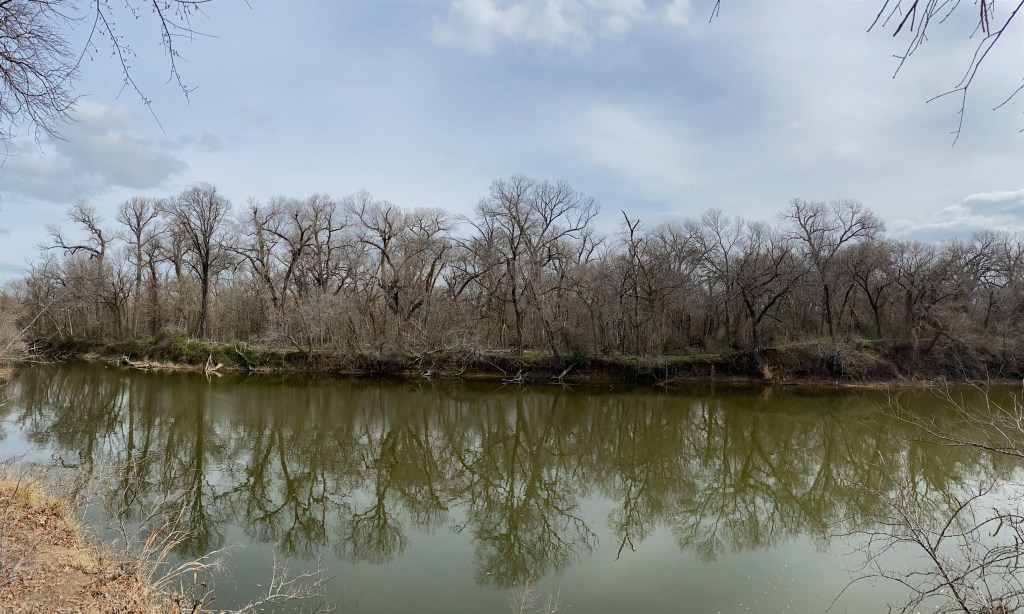
Sitting beside the Trinity River, on the Crosstimbers Trail, I wrote, “The place is so big that it makes the voices of the occasional human visitors seem small.” On a warm Friday in February, there were quite a few people at the Fort Worth Nature Center and Refuge, making bigness an important quality if the trail was going to live up to the name “refuge.”

This is a big place, as nature centers go. Its 3,621 acres are loved by many, and that is partly because it is big enough for a little solitude. The Crosstimbers trail borders the river for the first half-mile or so, and that’s a popular walk for people who want to see the water and maybe hope to see a ‘gator. Once the trail bends back into the woods, there are fewer people, and once you get pretty far back on that loop trail, you might be on your own for a good while.

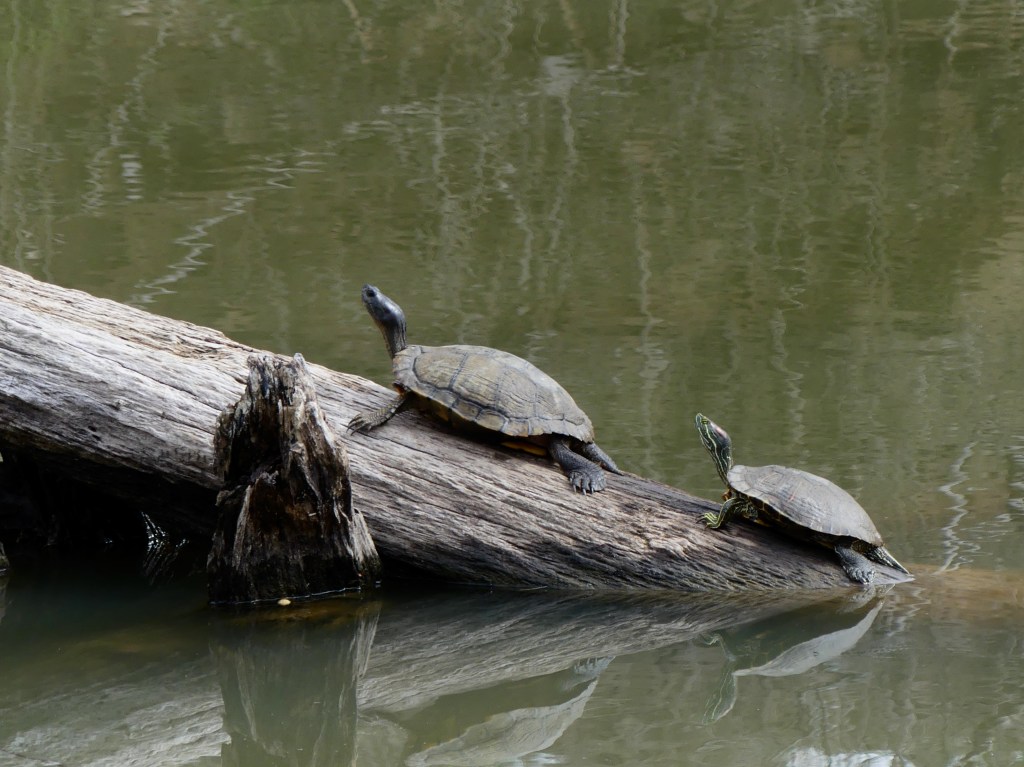
Two red-eared sliders – an old melanistic male and a younger one on the log below him

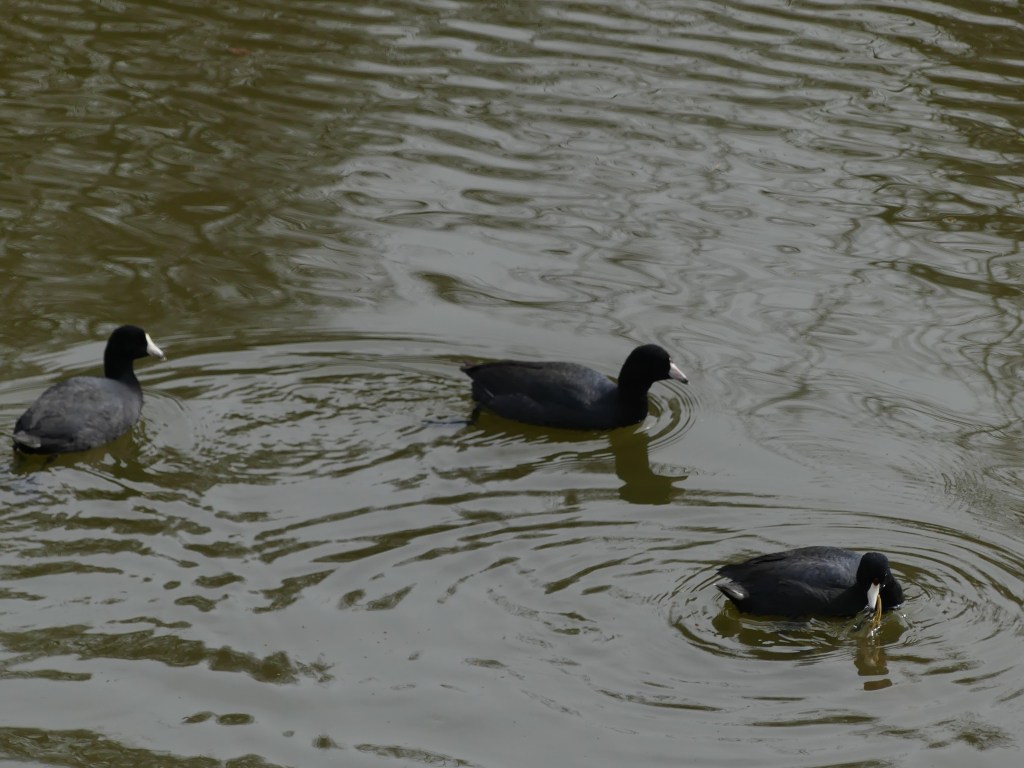
I got started at 10:40am on a day when thin clouds could not hide the sun and you could walk comfortably in a t-shirt. I watched a great blue heron fly over the nearby marsh and said hello to the cooters and sliders basking on fallen logs and branches in the water. There were plenty of American coots swimming nearby.

Three American coots swimming in the river

The bottomland forests beside the river were full of stately old trees – cottonwoods and other species – and they are often entwined with one or another climbing vine including poison ivy. One old cottonwood tree has huge vines braiding around its trunk.

Bare woody branches of shrubs frequently contained a spray of bright red berries where a kind of holly called possumhaw grows. And around me in the woods were the calls of many birds, including Carolina chickadee, tufted titmouse, and northern cardinal (identified by the Merlin bird ID app). My thermometer showed that it was 71.8F at 11:25am.

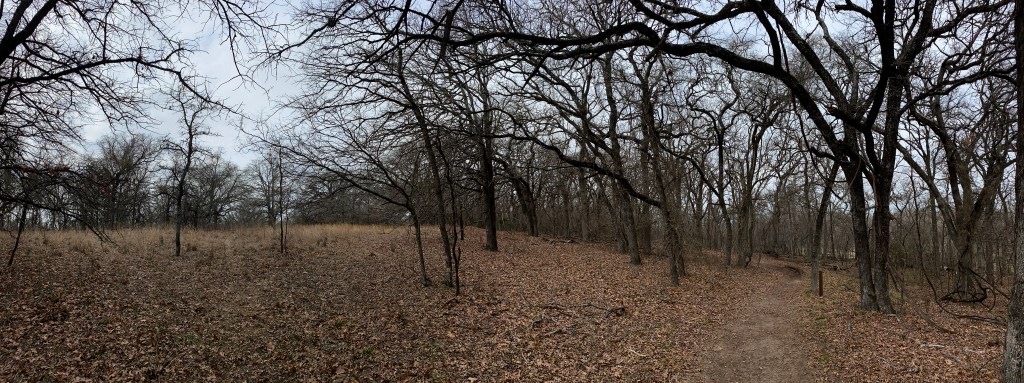
Then it was time to follow the trail back into the woods. There are plenty of oaks; big bur oaks with big notched leaves and the post oaks that are a signature species of the Cross Timbers region. There is ash, cedar elm, and some hackberry trees. Here and there the woodland opens up to a little glade or pocket prairie with native grasses. I took a few photos on the “pano” setting because today the place seemed so big that only a very wide photo might do it justice.

The trail leads through galleries of old trees and the land slopes away to the north toward a wetland. On the other side, the woodlands and open grassy patches gently climb toward a high place. On my walk, the winds seemed to shift around 11:35am and become cooler.

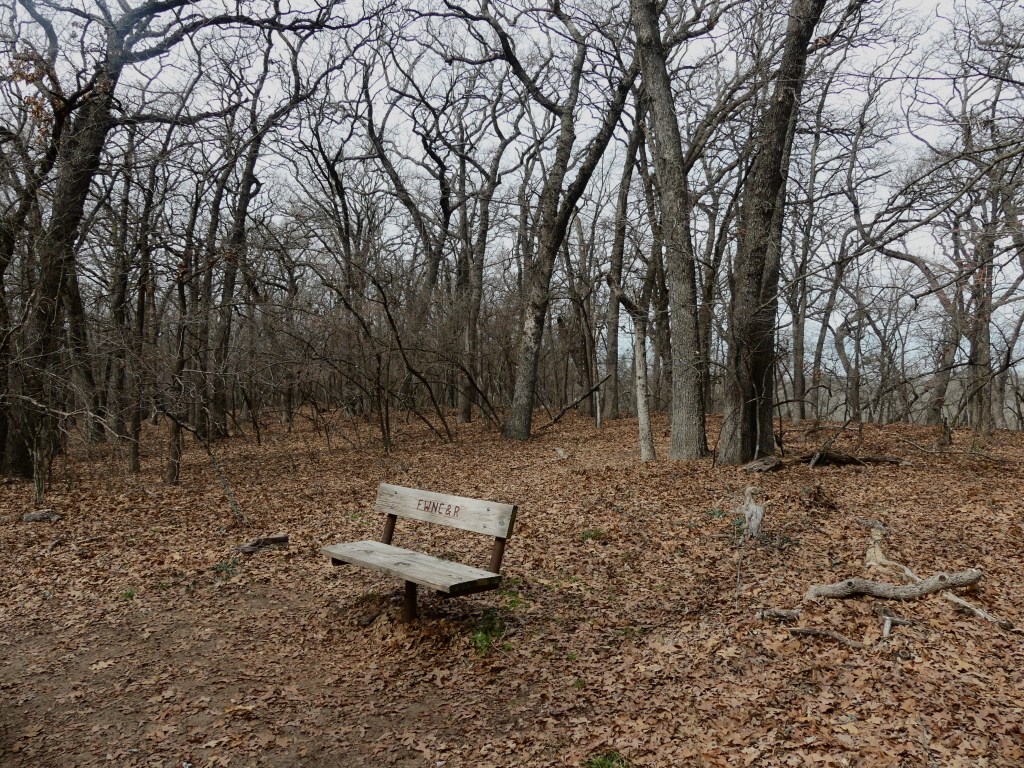
At what seems to be the highest point, there is a bench, perfect for sitting and taking in the wonderful forms of the trees, the carpet of dropped leaves, and the birds. Today it was very quiet and peaceful.

I started back, and as I walked the breeze scattered leaves ahead of me on the trail. That breeze was strengthening and making its voice heard through the tangle of trees. The branches shredded the current of air. Sometimes it was a whoosh and sometimes a soft roar, falling away to silence.

As I got further along, at one point I looked down the trail to see two deer looking back at me. They were silent and still as statues, sizing me up and deciding if I was a source of trouble. After a moment, the group took off, with those white tails flashing a warning to the rest of the group.

Two white-tailed deer froze on the trail as I came into view

When I reached the river and sat on a bench, there was the chatter of a belted kingfisher somewhere nearby (though I could not see it). Merlin also identified the call of a northern flicker. The thin clouds were pulling apart, and when the sun shone down it felt warm. The temperature had fallen a little to 67.6F, but in the little nook where I sat on my bench, the sunshine felt good.

The kingfisher clattered persistently. Another bird came in for a dramatic fast landing, wingbeats skimming the surface of the river. The bird then paddled around as if nothing had happened, sometimes diving down into the water. With the lens on my camera I got a good enough look to see that it was a pied-billed grebe.

Pied-billed grebe

The relatively thick bill with a dark ring around it was a giveaway. The Cornell website gave more information about what I observed about its diving: it was hunting. This bird likes crayfish and also eats small fish, dragonfly larvae, and it would not mind a leech or a small frog.

In that last hour I was grateful to have seen no one along the trail, and was happy to be by myself. I do like walking with others, but on some days like today, the solitude was peaceful. I am so thankful that Fort Worth has one of the biggest urban preserves in the country – and that it “feels” big.

To the Grasslands, With Gratitude

Yesterday, August 20th, several of us took a walk in “Unit 30” of the LBJ National Grasslands, and afterward I wrote this letter to the grasslands. Writing to the grasslands might seem odd. We often think of it as an inanimate “thing.” Why write words to something that has no comprehension? And yet, we speak or write to those with whom we have a relationship, and writing to the grasslands acknowledges that relationship. It affirms the feeling and connection that is present when I visit there.

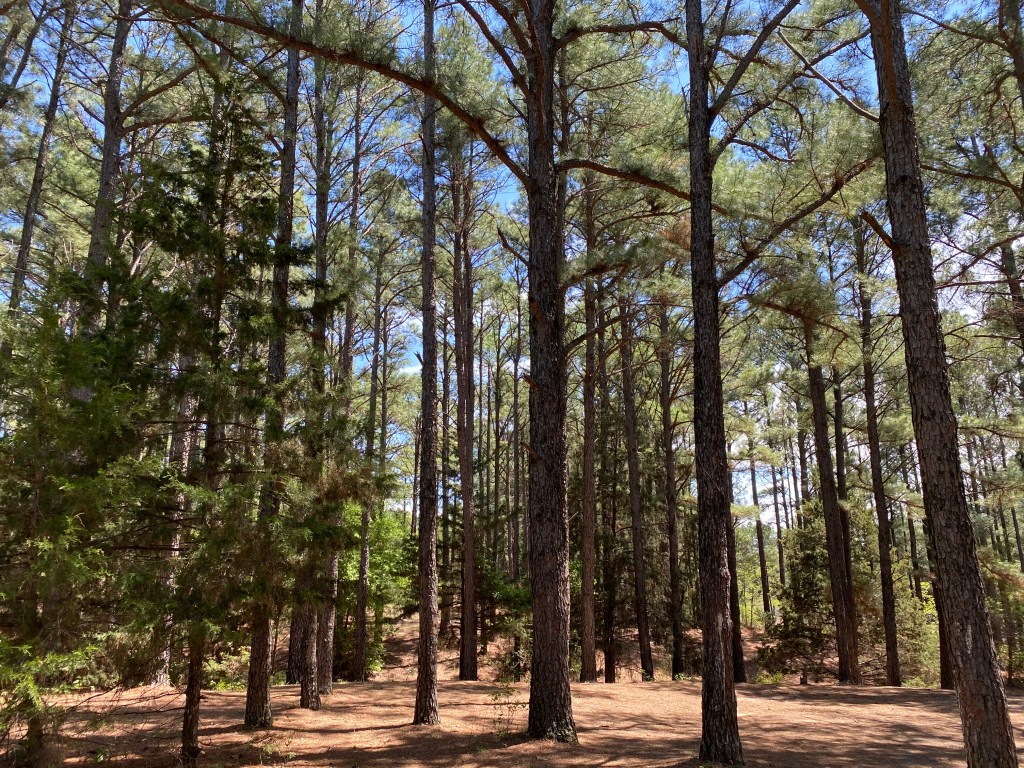
The pine grove, a beautiful, non-native oddity within the grasslands

Dear Grasslands,

I came to see you today, a little unsure of what I would find. After a brutal summer of heat and drought, could your oaks and greenbriers still be green, and could most of the lives you support still fly, jump and swim in something like the abundance and beauty that I’ve seen in all the previous years that I have known you? All of that wonderful, amazing life, and the breezes that come to the ridges and hills, and the bright sparkling ripples on the winter ponds, those are your gifts. Like a generous friend, like a nurturing mother, you offer those gifts to anyone who comes to visit.

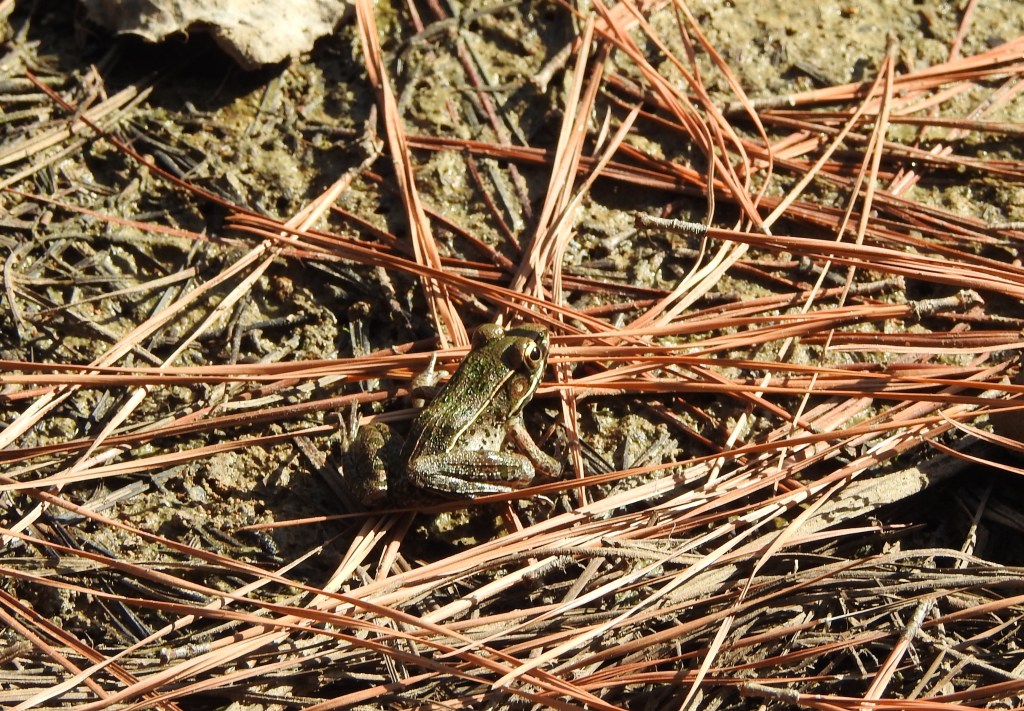
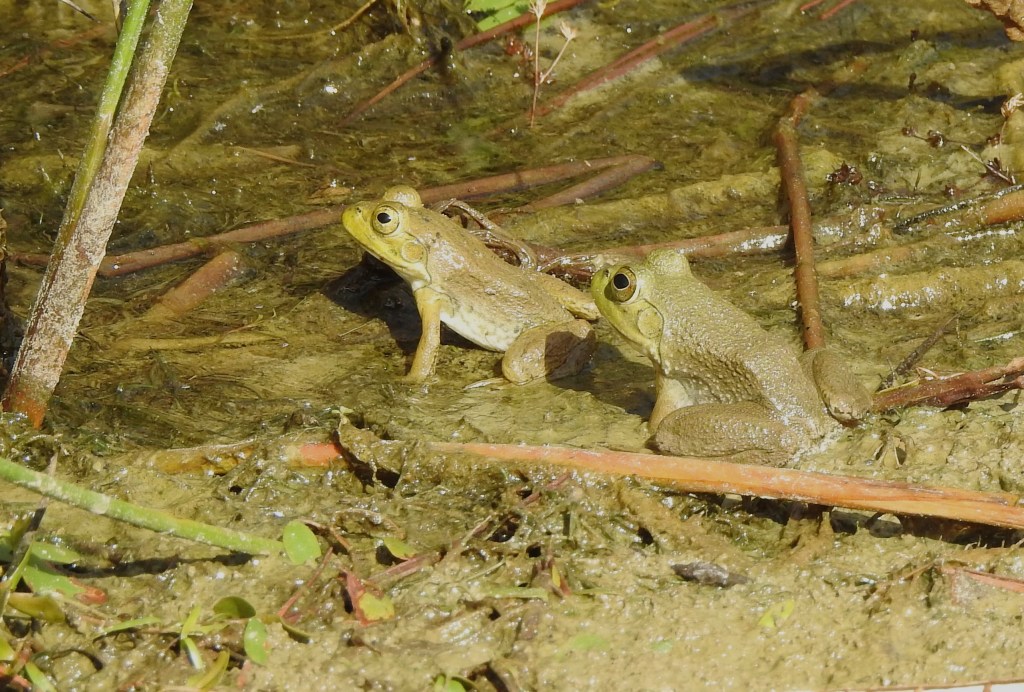
Several others came with me to get acquainted with you and experience some of those gifts. Gale, Cecily and Jim walked under those pine trees and investigated your ponds, reduced to smaller versions of themselves by summer’s drought but still home to so many frogs. As always, they break out of their camouflage and bounce frantically into the water when we come close, only occasionally giving us a glimpse of spotted skin, or pale green shading into a brighter color, or a mud-gray bumpy little cricket frog. These frogs were showing us that you were still full of life, and never more obviously than at your ponds.

Leopard frog
American bullfrogs

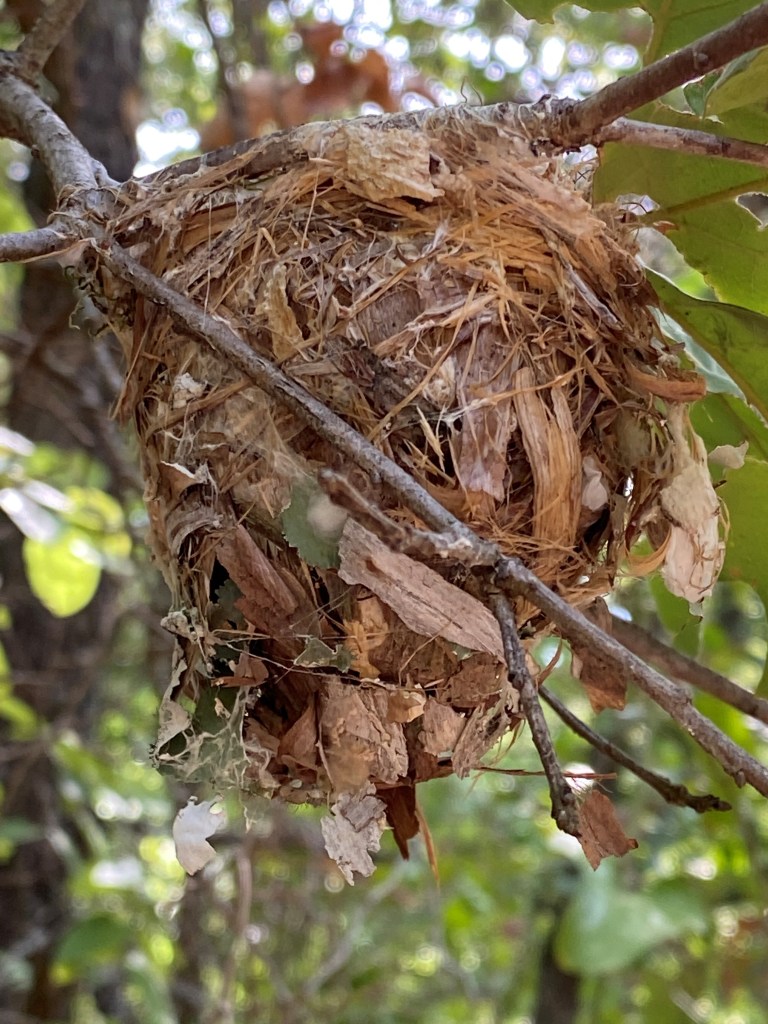
We followed one of the trails leading away from the ponds and into oaks, junipers, and pocket prairies. Jim found a small pouch of a bird nest hanging from the delicate ends of tree branches. We spent some time appreciating all the different materials that had been gathered and woven into this little cup. There were bits of leaf, lichen and grass creating a sturdy little shelter for a delicate egg and a tiny bird who embodied both engineering skill and attentive nurturing of new life.

Bird nest

The nest was, as I see you, a sort of fractal of who you are. Each part repeats the overall pattern of the whole grasslands. Here, you are warm feathered life with skill and determination to keep life going. There, you are cool aquatic life with jeweled eyes and an entrancing nighttime voice, re-creating life through egg, tadpole, and adult frog. Everywhere you look – and listen – there are individual lives doing fascinating and beautiful things to keep life going.

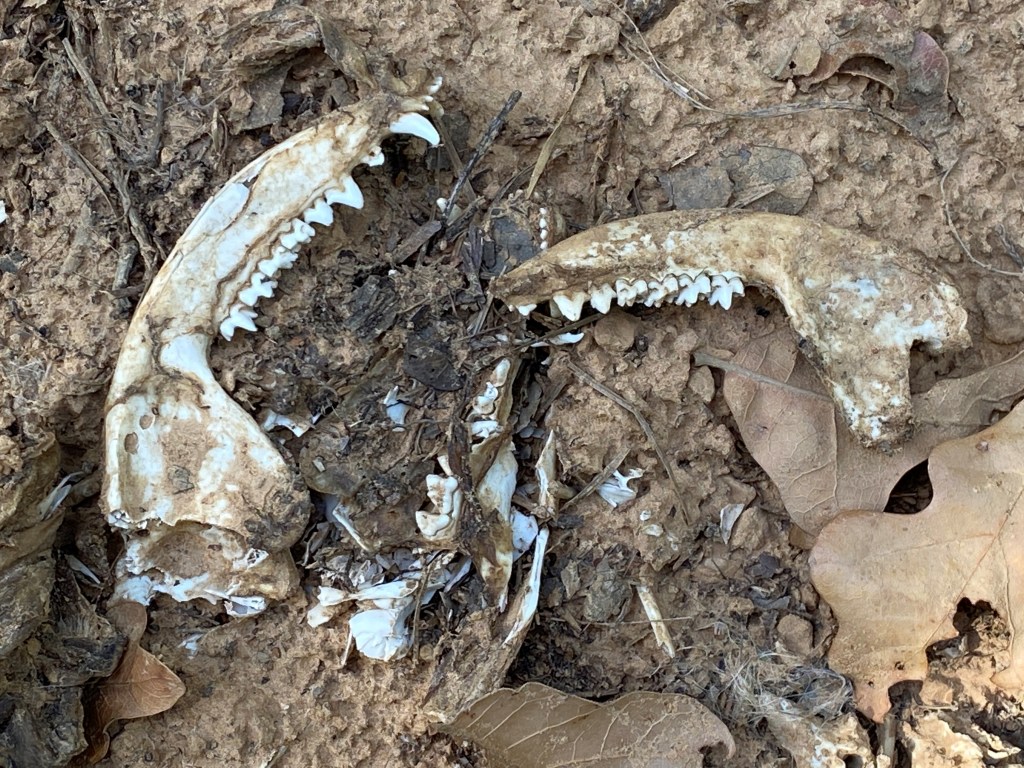
And we look at any part of you from another angle and we see the other part of life’s story. This time, it is life surrendered, either to feed another life or when an individual life runs its course. We discovered parts of a skeleton on the trail, including two nearly complete lower mandibles of some small mammal with the teeth of a predator. A part of you, living and hunting and contributing to new life for a time, and then feeding others after his or her own life ended.

Bones and teeth

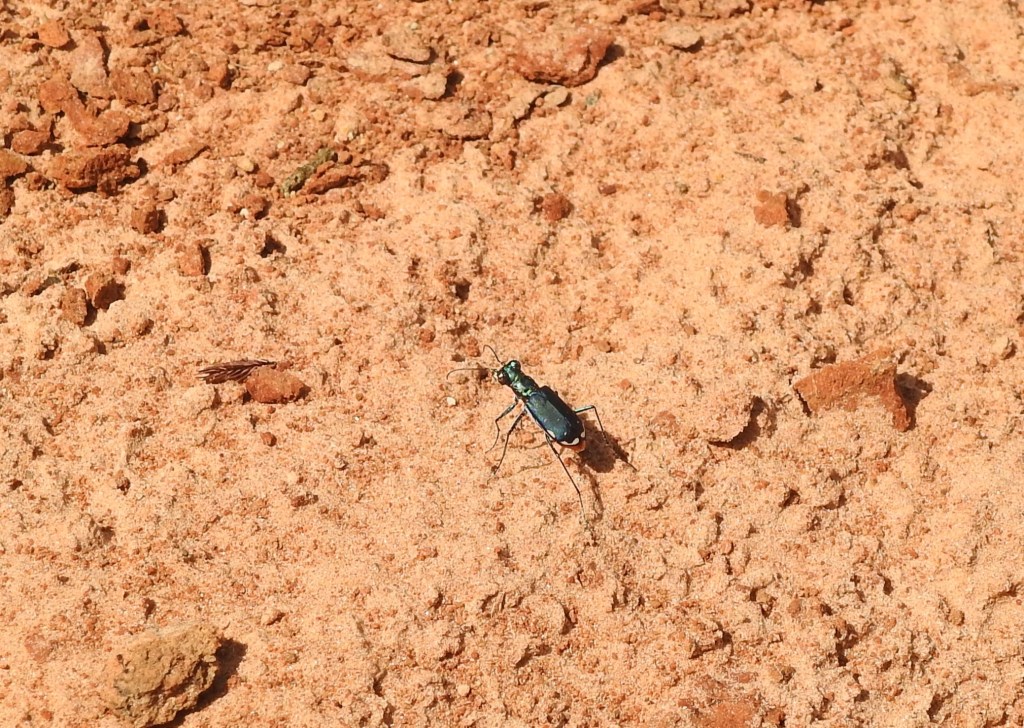
All along the prairie openings, grasshoppers jumped out of the way. They were a welcome sight after the prolonged drought that might have reduced their numbers and left so many animals without food. And we saw tiger beetles foraging along the sandy trail. Evidently there were enough smaller insects to keep those fierce little predators fed, too.

A tiger beetle

It was a privilege to visit you today and experience these things. It is encouraging to find resilience in a time when some things are falling apart. We might lose faith in the old, familiar patterns of the world, the continuing gifts of the world, without coming here and finding your generosity and predictability. Thank you.