The First Walk in the Wildscape
The morning of July 25 was very mild compared to the afternoon’s heat. It was a great morning for a group of about 14 kids and several adults to take a walk in the wildscape of a local Montessori school. I hoped that these mostly fourth through sixth-graders were ready to playfully explore the nature of their wildscape, and they were more than ready.
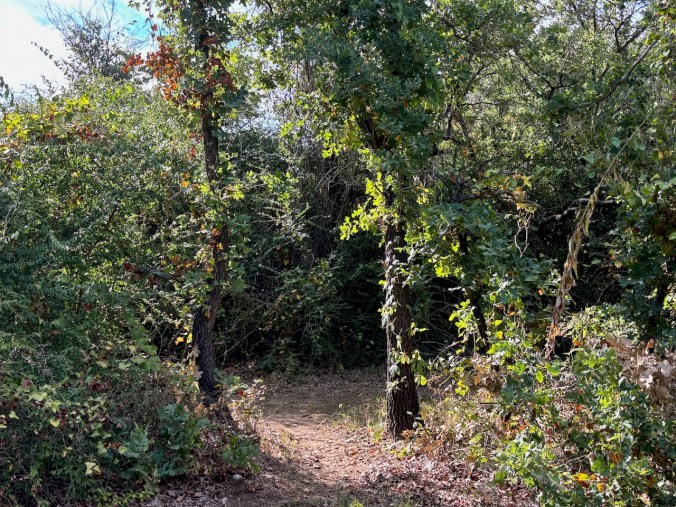
They knew the place better than Marylee and me. We were nominally in charge of leading the group and teaching about nature, but these kids would have been happy to have led the get-acquainted walk. They, or their predecessors at the school, had named the places within it: the Dark Forest, the Ranger Circle, Maria’s Meadow, and other spots within this little fragment of Eastern Cross Timbers woodland and prairie.
It’s such good news that the kids had named it and made it their own, that their school had this delightful patch of wildness and let each new group of kids belong in it and get to know it. So our role would be to help them get more deeply familiar with it, more acquainted with the lives that live there.
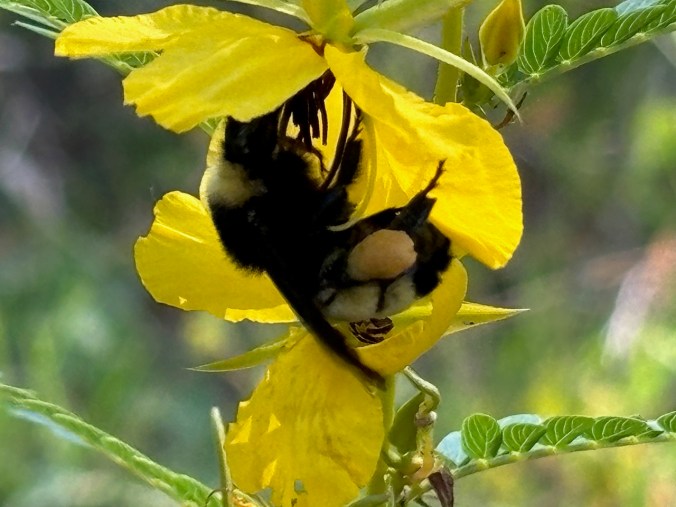
More acquainted with the bumblebees, for example. When everyone gathered in a circle around the old stump and we talked about likes and fears in nature, the dislikes were primarily spiders, snakes, and bees (which closely mirrors the things in nature that most nature fears are focused on). So when the group came to some flowering Partridge Pea that a bumblebee was feeding on, we didn’t pull back. We also, of course, did not swat at or otherwise make the bee feel that it was under attack. Any doubters might have seen that the bumblebee ignored us, even though I was pretty close.

Speaking of spiders, we came upon a small one in the low branches of a bush, within her web. One of the kids suggested that it was probably a wolf spider, and I agreed that the overall look was kind of like one of those. But, I commented, wolf spiders don’t trap prey with webs, they just chase down what they eat. This one’s body and web made me think of a young funnel-weaving spider, and just as I pointed toward where I thought her funnel was, she quickly scuttled down the hole made by her web.
We found and heard a lot that everyone could appreciate without overcoming a fear or aversion that they had been carrying. Bird song – especially from Northern Cardinals – rang out through the woods, and plenty of plants were still flowering. We found a butterfly and one of the boys looked for the extension of the hindwing that would make it some kind of swallowtail. (I noted to myself, “they know about swallowtails, how wonderful!”) It was a Gulf Fritillary, and when I asked if butterflies like this benefit us in some way, the kids quickly answered, “they’re pollinators!”
Did I mention that it was a real treat to be with these kids?
As we walked down the trail, I saw a telltale squiggle in the short grass at my feet. It was familiar enough that I dropped down immediately and tried to gently pin this little lizard so that we could have a look and then release him or her. It was a small Little Brown Skink. They already live up to the name – they are little and they are a coppery, two-tone brown, and this was a young one. I had it pinned briefly but could not get to where I could pick it up without risking breaking off the tail. And so it got away.
And that raises an interesting question: how much interference with nature is acceptable in a discovery walk such as this? It was important to me not to accidentally make the lizard lose its tail, but is it OK to catch wildlife? There is a kind of hierarchy of permissibility regarding what you can catch and handle. It runs up and down the phylogenetic ladder. We wouldn’t catch mammals, or birds like those Northern Cardinals. But starting with reptiles and amphibians and continuing through fish and then insects, it seems alright to most people. Catching frogs and bugs seems normal. And maybe that’s because many of them are harder to get a good look at unless we catch them. Frogs hop away, and so do grasshoppers. Also, briefly capturing them or scooping them up in a net can be pretty easy much of the time.
I wanted the kids to see the lizard I was talking about, but being captured is stressful. I make the assumption that briefly capturing such an animal for the sake of teaching, and then immediately releasing it unharmed, is completely fine. We want to teach kids compassion and respect for the lives they find out here (and anywhere), and so I’m open to revisiting and re-thinking this question.
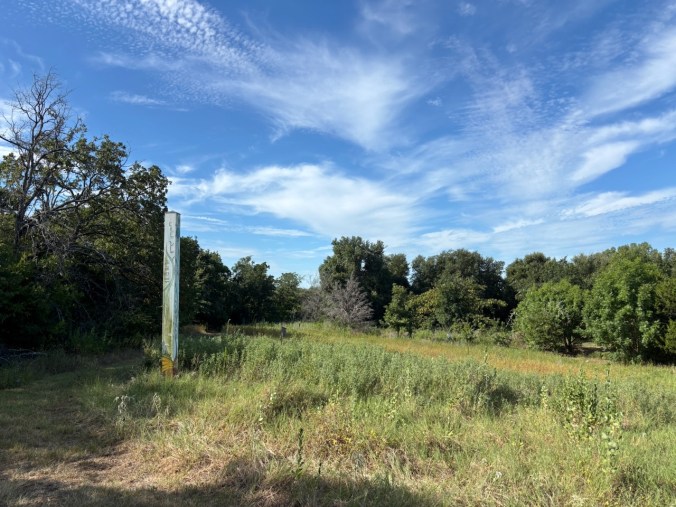
In a world in which most kids can recognize far more fast food logos than wildlife or plants, it was wonderful to be with these kids, who said at the end that they want to do more of it. It looks like Marylee and I will lead walks here about every four to eight weeks in the coming school year. We will get to know the wildscape through the seasons, and I look forward to all the discoveries we will make.
 Our Lives In Nature