Wear Your Love…

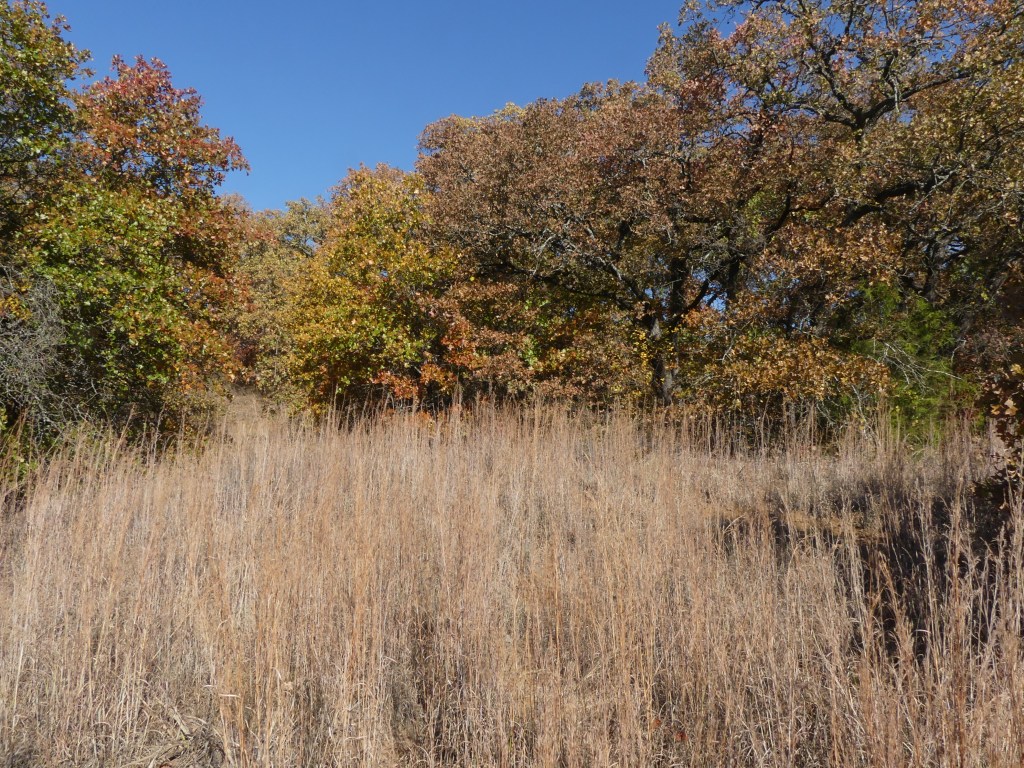
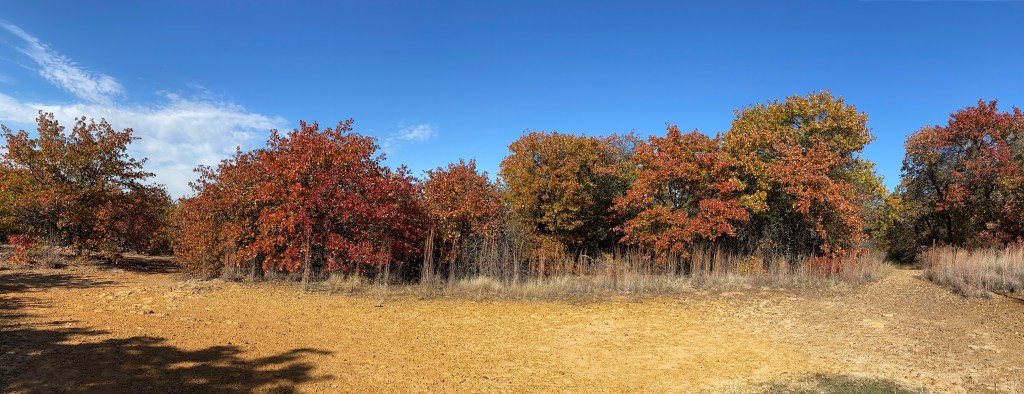
I sat beside the pond, looking at the line of trees outlined by a pure blue sky. The glossy green blackjack oak leaves were turning a mixture of caramel and ruddy red. In front of the trees was a stand of little bluestem, a native grass with subtle beauty. Each starts with a little clump of narrow, curled leaves at ground level, sending several tall stems to reach chest high. The tiny seeds along those stems are feathery, and in autumn sunlight they are like a constellation of stars scattered among the grasses. Altogether a lovely little spot on a fine late autumn day.

You might say that this preserve has been kissed by creation, filled with a beauty that it wears in one form or another throughout the seasons. Before long I was thinking of “Wear Your Love Like Heaven,” a song by Donovan Leitch that most of us – of a certain age – have some memory of. 

When it was released in 1967 I heard the song many times, but never listened to it well. I assumed it was a hippie love song (“kiss me once more”), the opening of the double album “A Gift From a Flower to a Garden.” But Donovan, with his soft Scottish voice, is often deeper than that. It is more like a prayer than a love song.

The verses suggest an artist with a beautiful palette of colors, or someone experiencing such a range of hues in nature. “Color in sky Prussian blue,” but the colors change with sunset as the “crimson ball sinks from view.” There are shifts to “rose carmethene” and “alizarin crimson.” It is easy to imagine being in a place where the land and sky overwhelm one with beauty, where any of us might ask for more such experiences of awe. Such a plea could easily be a prayer:

“Lord, kiss me once more
Fill me with song
Allah, kiss me once more
That I may, that I may
Wear my love like heaven”

What might it mean to wear your love like heaven? I suppose wearing it would be to let it show, not hide it, and offer it freely to anyone. And a state of bliss and love freely shared with everyone is one way to imagine heaven. 

Within such a state, Donovan experiences an extraordinary vision: 

“Cannot believe what I see
All I have wished for will be
All our race proud and free”

Perhaps he is seeing what follows from wearing our love like heaven. Generous and open-hearted, not trapped in greed or the desire for domination, free of self-destructive impulses and all the things that bind and restrict us. Wearing a transcendental love would make us proud and free. 

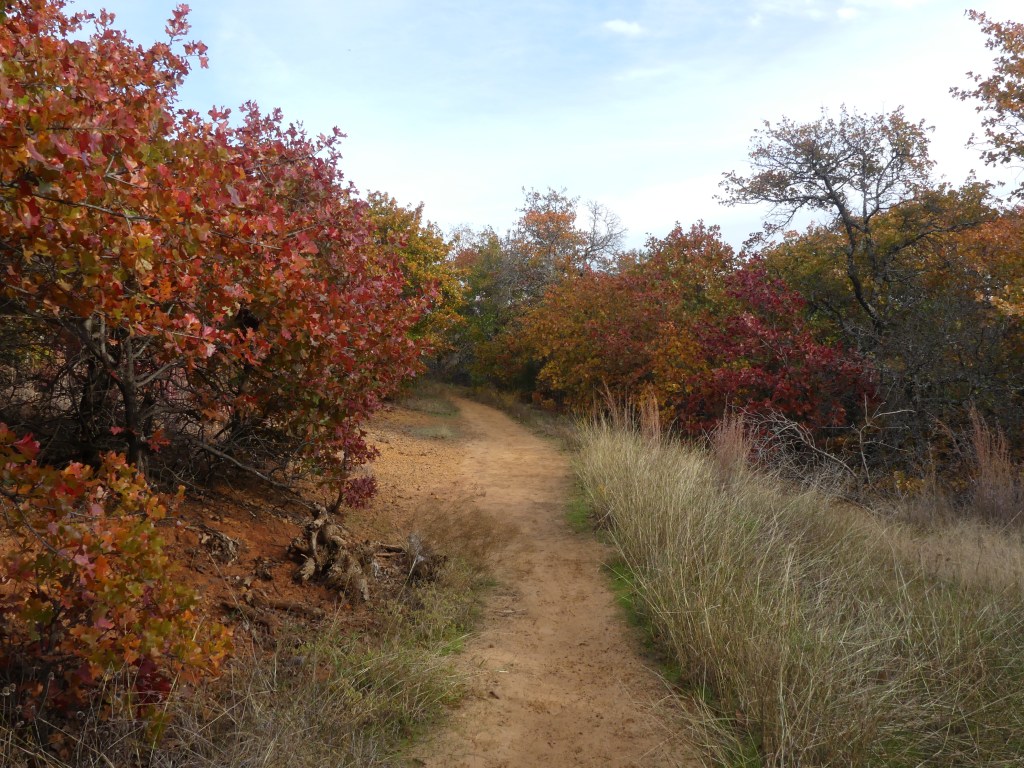
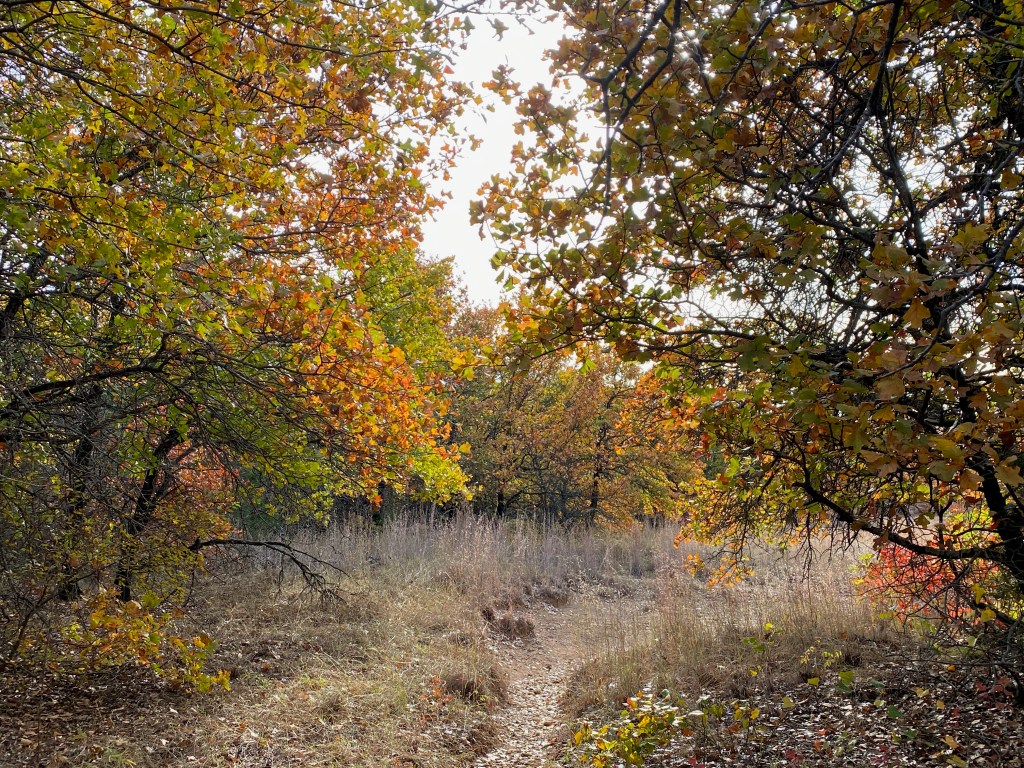
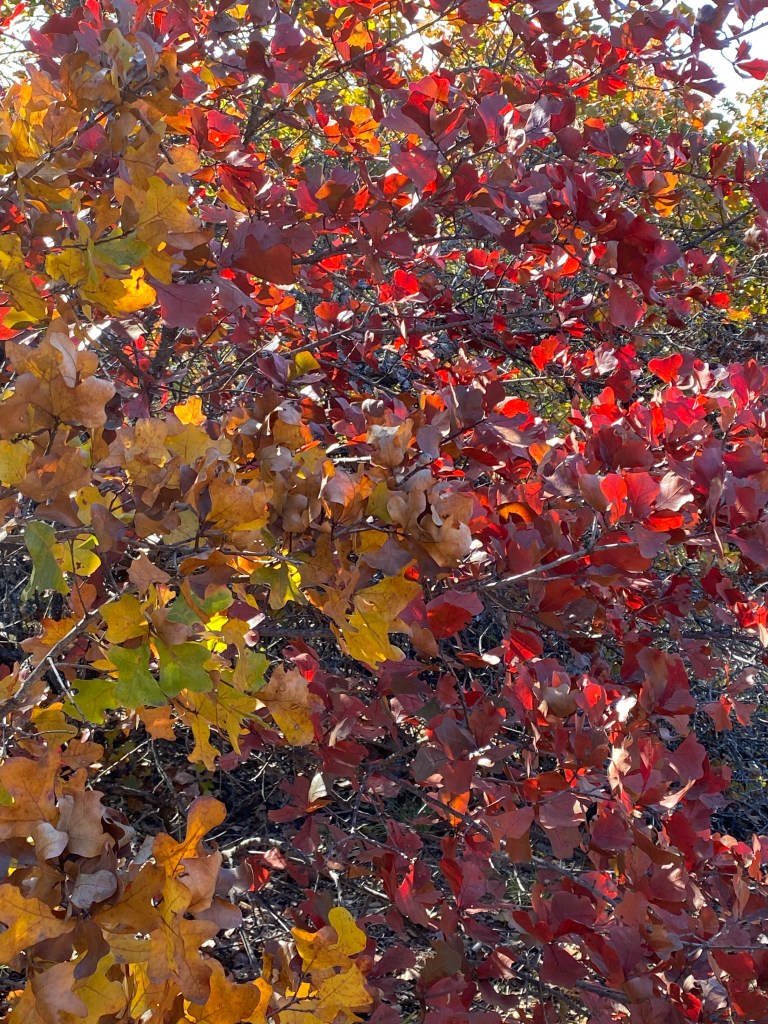
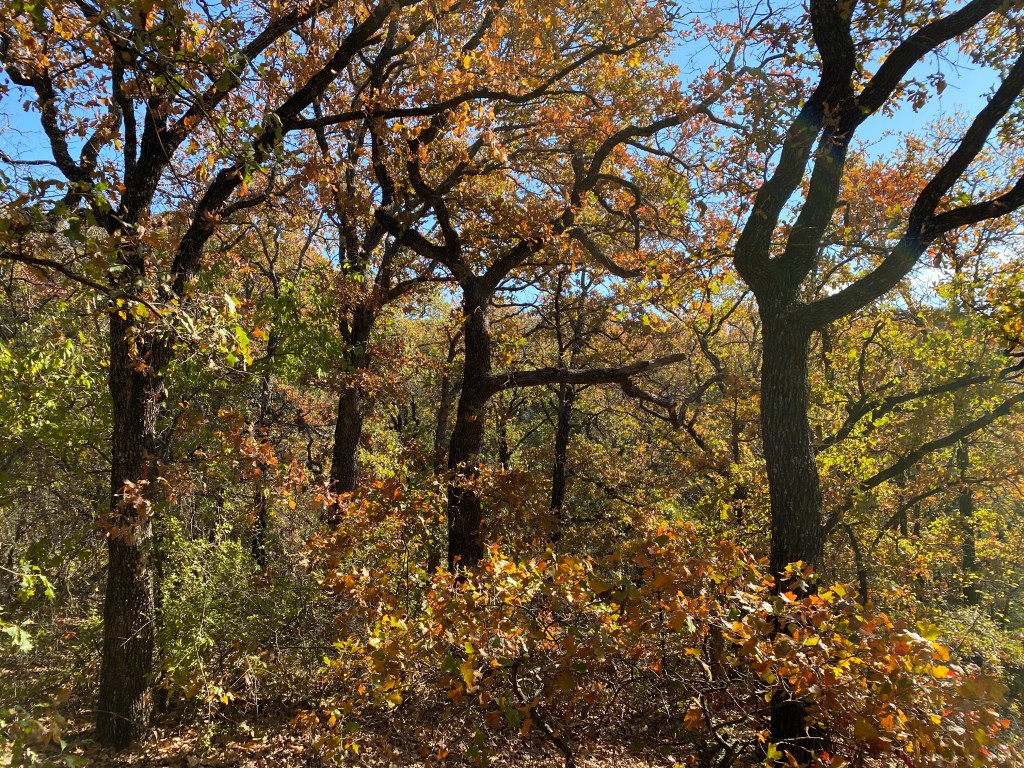
It was a beautiful vision to carry with me as I walked through oak woodlands and on trails along patches of prairie that are lovingly being restored. Some of the blackjack oak leaves have taken on a shade of alizarin crimson, and tonight, if the sky is clear enough, we might look up to see Prussian blue. 

To connect with and be blessed by the divine, filled with song, and to live in beauty and love. That’s a lot of message to be carried by a two-and-a-half minute pop song from 1967, but we are allowed our interpretations of the meaning of art and this is how I hear it. The song has been covered over the years by people I think of as serious artists. Ritchie Havens recorded it in 1969 and Sarah McLachlan covered it in her 1991 album, “Solace.”

Experiencing Awe

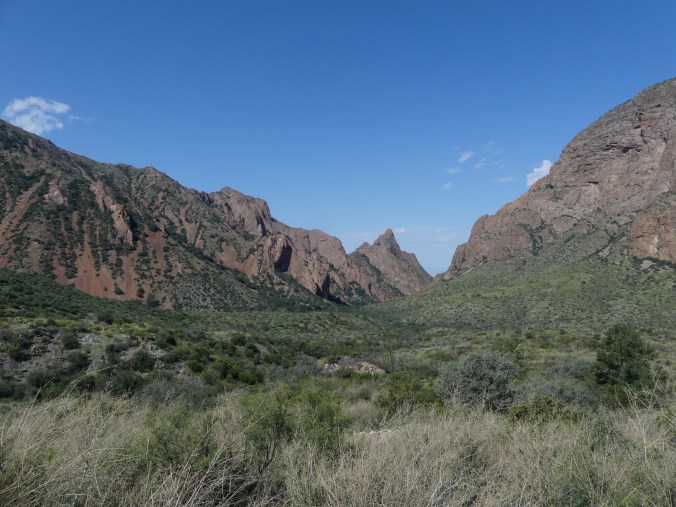
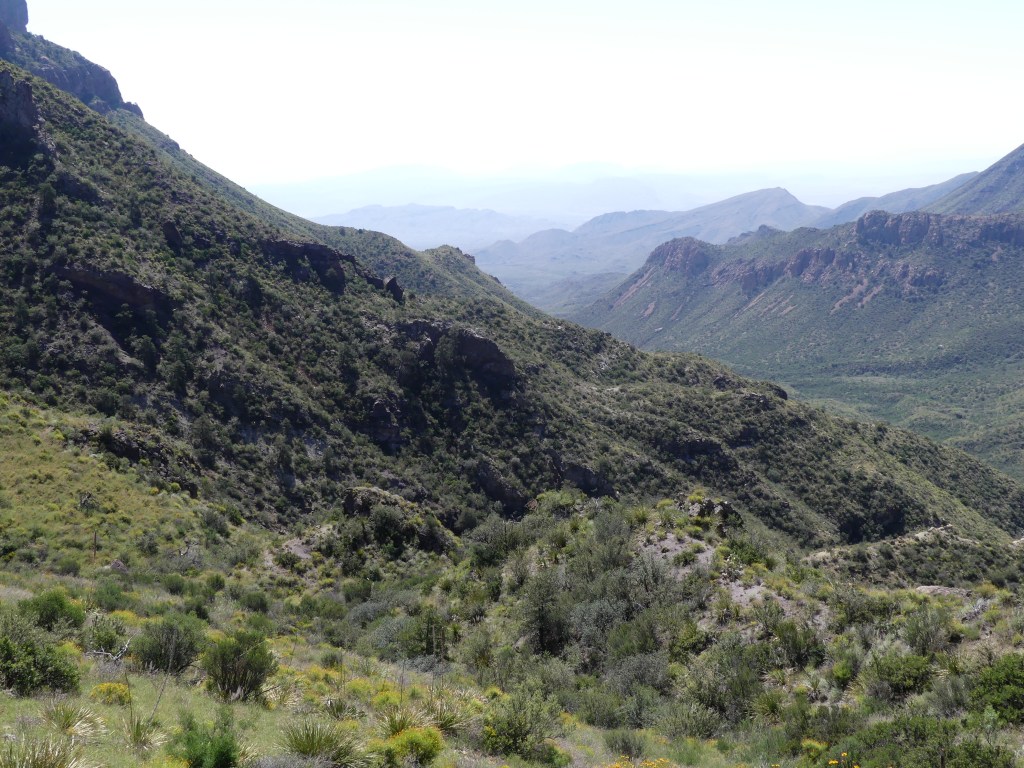
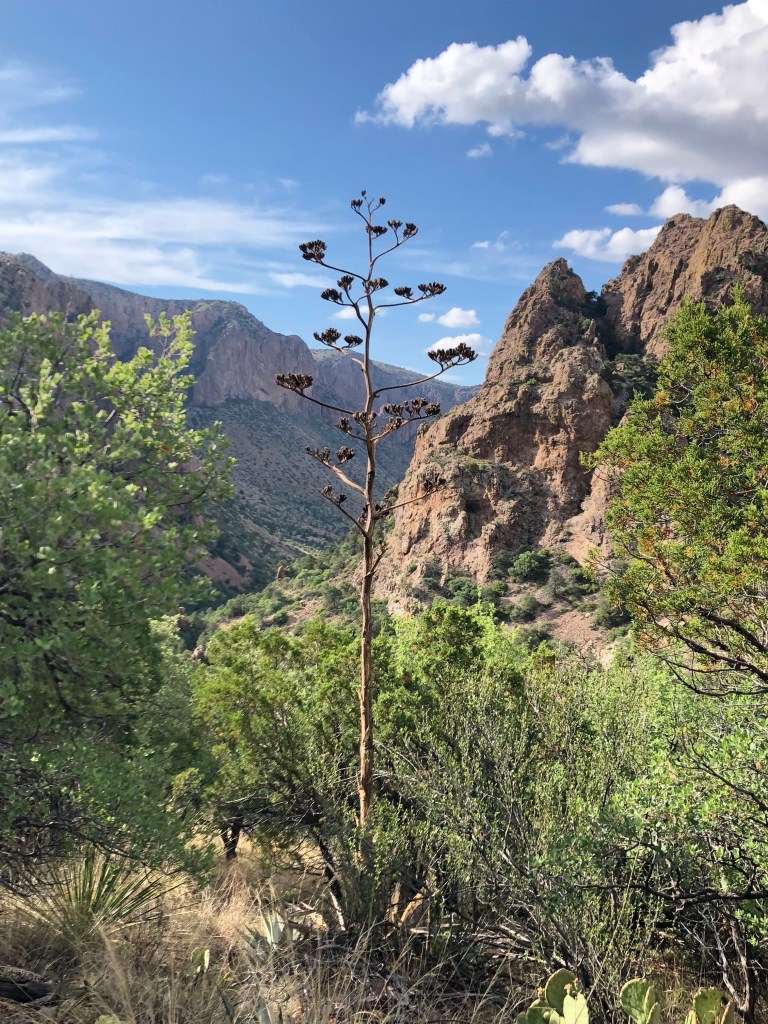
Halfway up into the Chisos Mountains, we reached a spot where the view opened beautifully. From where we stood, framed by pinyon pines, the mountainside sloped downward, dotted with yellow flowers, green clumps of sotol and shrubs. On either side the mountains rose up above us. To our right were the smooth granite towers of Casa Grande Peak, and to the left was the way upward along the Lost Mine Trail. The view south showed a series of mountain ridges, overlapping each other as they receded into the hazy distance. I sat under a pinyon pine, in awe of what was around me.

The word “awe,” in the form of the adjective “awesome,” is overused today to express, usually in an offhanded way, that something is good. French fries that manage to be both hot and crispy are “awesome.” The sense of confronting something mysterious and powerful has been wrung out of it, so that it fails to convey any suggestion of the meaning of “awe.” As defined by Merriam-Webster, awe is

an emotion variously combining dread, veneration, and wonder that is inspired by authority or by the sacred or sublime

The word’s origins nearly a thousand years ago emphasize terror or fright along with great reverence. Perhaps these emotions come from the religious connotation of being helpless and vulnerable in the presence of a God who could turn a person into a pillar of salt. In a more general way, we can experience fear in the presence of something powerful that we do not understand. As our species came of age in prehistory, a thing that seemed overwhelming and beyond our understanding might inspire dread and terror. Perhaps our survival depended on those emotions and the caution or shelter-seeking that would follow. Maybe a residual hint of fear adds to the emotional power of awe.

Standing in the Chisos Mountains, I was not aware of any terror or dread. There certainly was wonder and reverence, a deep respect for this place and all that it contained. The mountains, the Mexican jays and butterflies, the century plants that send up tall stalks ending in bunches of yellow flowers, all these things inspired fascination and gratitude. I was thankful for the privilege of being a great many miles from places where the experience of awe is shriveled to the size of an order of French fries.

I think we need the experience of awe, of being in the presence of the sacred or sublime and feeling moved by participation in something grand and wonderful. That might happen if we are in the audience as an orchestra plays the Shostakovich tenth symphony. It could happen as a jazz group plays Miles Davis’ “Blue in Green” so that musicians and audience together resonate with emotion. Or we could be standing on a mountain or in a prairie, shedding our self-awareness for a time and becoming absorbed in the life around us. The result might be shattering, in the case of the second movement of Shostakovich’s tenth symphony, described as a musical portrait of Stalin. Or, it could be transcendent and joyful, in the example of time spent in nature. In a variety of ways, we can join with something bigger than ourselves and sit with emotions and perceptions raw and real as we look out at the world from this different vantage point.

Where are the opportunities for awe in modern life, goaded by capitalism and breathless in the need for multitasking, relying on Facebook and French fries for moments of joy? Not only do the demands of modern life crowd out the space for reflection and wonder, the stresses and catastrophes of the last few years have pushed us to the limit. In the face of pandemic, isolation, mutual suspicion and insurrection, and now war in Europe, the desire to escape can be strong. Looking for that escape, some people put their shoulder to the wheel all the more, and some lose themselves in anesthetic good times. The rest of us – all of us – grow more numb from waves of trauma. When too much pain and stress come flooding in, the self-protective circuitry of our minds may keep us from being overwhelmed. One way to do that is to put up a firewall between us and our emotions, leaving us shut down and numb. If it is used very much, this shutting down is a very expensive strategy. In addition to protecting us from trauma, it also cuts us off from much of our emotional life, including those vulnerable experiences of joy and wonder.

What can we do to create space in which awe might come to us and find us open to the experience? We can look for – and plan for – times when we can slow down. I am thinking primarily of slowing our minds, taking things one thing at a time, having time to pay attention in a purposeful way. We could “slow down” while running or paddling a kayak, so long as we are not preoccupied, multitasking, and mentally running on autopilot. In order to be open to what is happening right now we have to be present, here and now. We cannot be somewhere else and fully experience our lives.

The trick is to slow down during the time that we have, not spend it in things that keep the mind revved up and distant, such as on smartphones or TV. Why do we constantly distract ourselves? Some of it is because we’ve trained our brains to expect constant stimulation and we are bored when it becomes quiet. Also, when our minds are quiet and receptive and worries or unpleasant thoughts come crowding in, we use distraction to keep them at arm’s length for a while. A capacity to be more quiet, present, and open might not come easy, but we can practice it and gradually find it easier to sit in stillness and be open to whatever we experience.