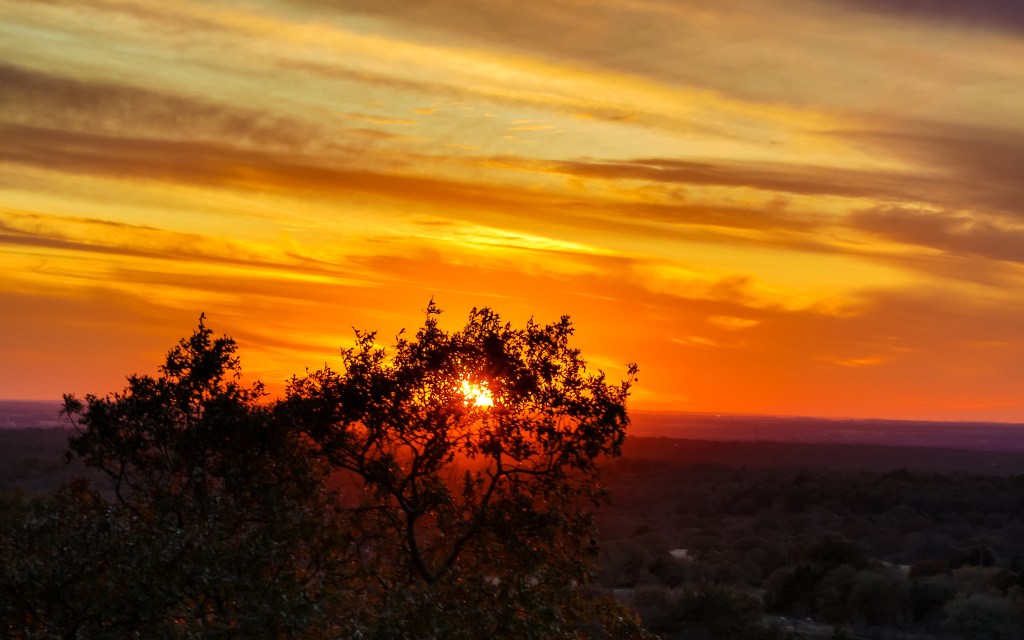
Goodbye, Winter

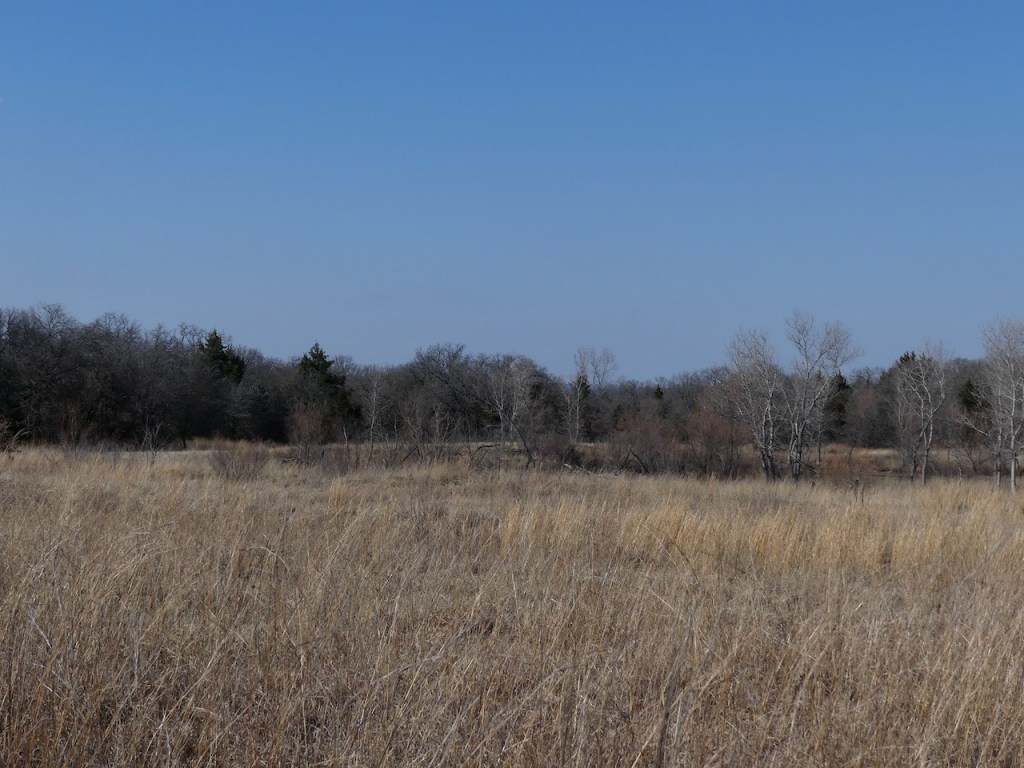
At LBJ National Grasslands yesterday, new green growth emerged from the soil everywhere. In this ecotone, this blended margin between prairie and woodland, what had been the sandy brown floor was now turning green. In some places it was hidden beneath last year’s grasses, and in other places around trees and shrubs the scattered green was unmistakable. In areas that were recently burned, where the soil now had the most contact with the bright, warming sun, the new growth was strong. 

It was March 19, the last day of winter. Tomorrow the Northern Hemisphere would be angled toward the sun just a bit more, reaching the vernal equinox. It would be the first day of spring. I spent most of the day at LBJ National Grasslands to say goodbye to winter in the biggest, quietest place I could wander through.  
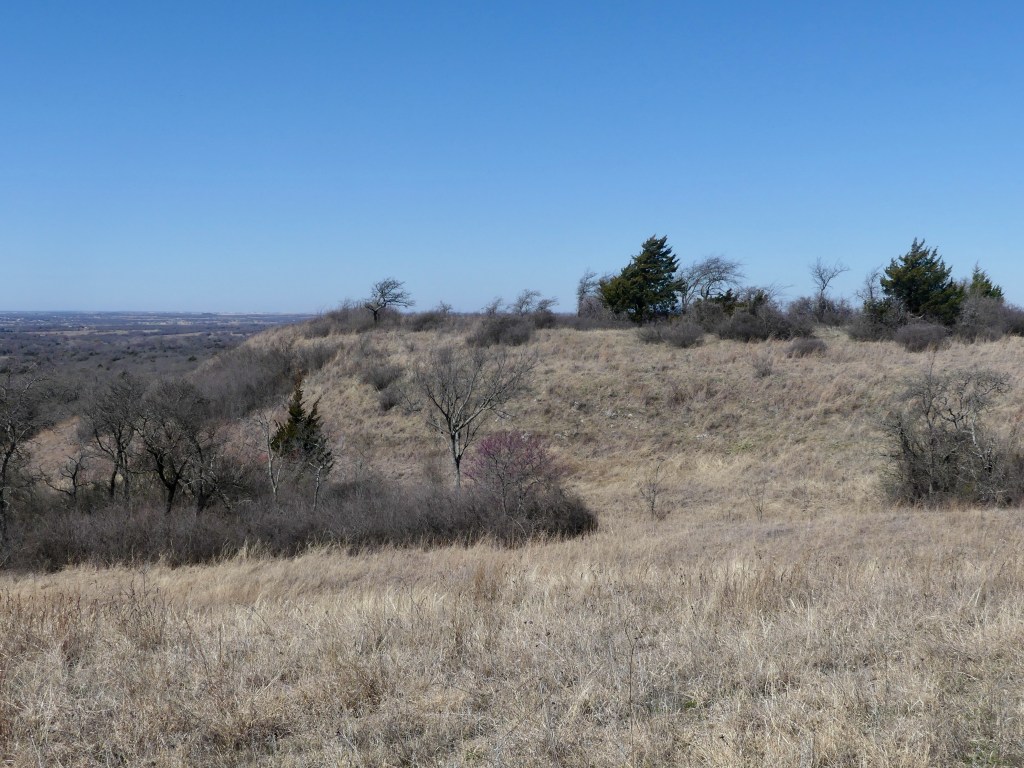
It was bright and sunny, as if the weather had already passed the equinox and was intent on spring. I soon shed the hoodie I started my walk with, as the breeze warmed a little and the sun was higher in the sky. By the end of the day I would have a mild sunburn and no regrets for having walked and sat in so much sunshine. 
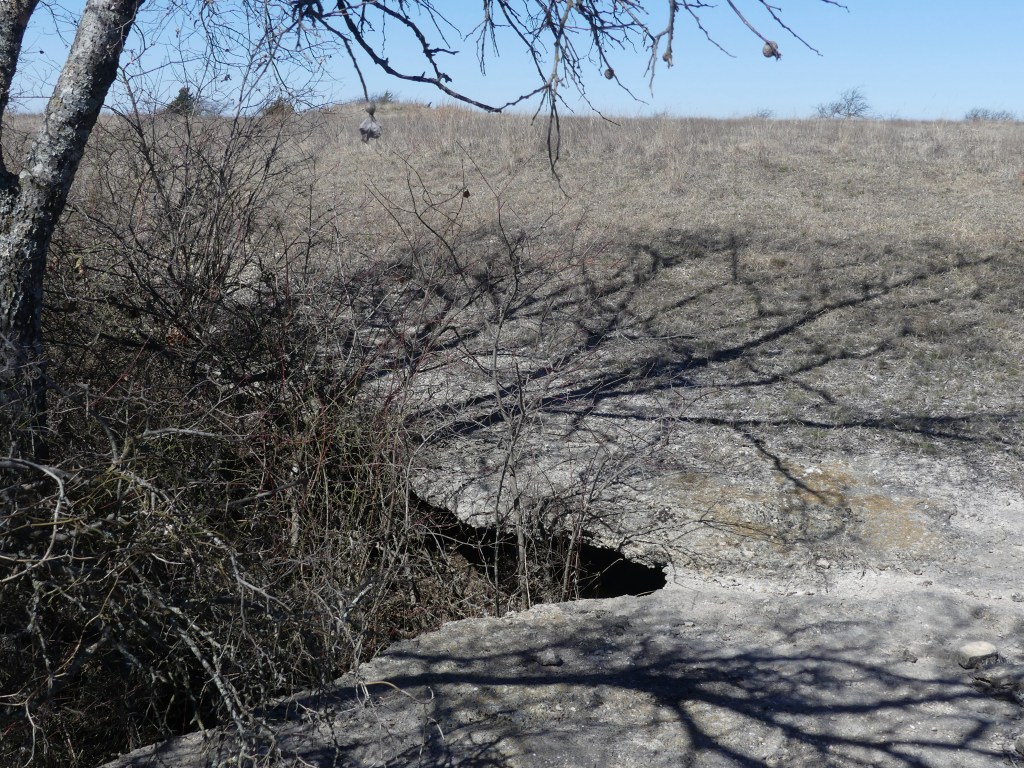
Limestone shelf at the top of an arroyo

I started up on a ridge where limestone lies beneath shallow soil. In places, erosion exposes the limestone from an ancient sea bed filled with small oysters. I walked around one spot where water had exposed a small limestone shelf and eroded back under it. This was at the top of one of those places where the land drops away from the top of the cuesta or ridge and forms a long arroyo down the hillside. Big junipers, hackberries, and woody shrubs fill these places where the land concentrates rainfall.  

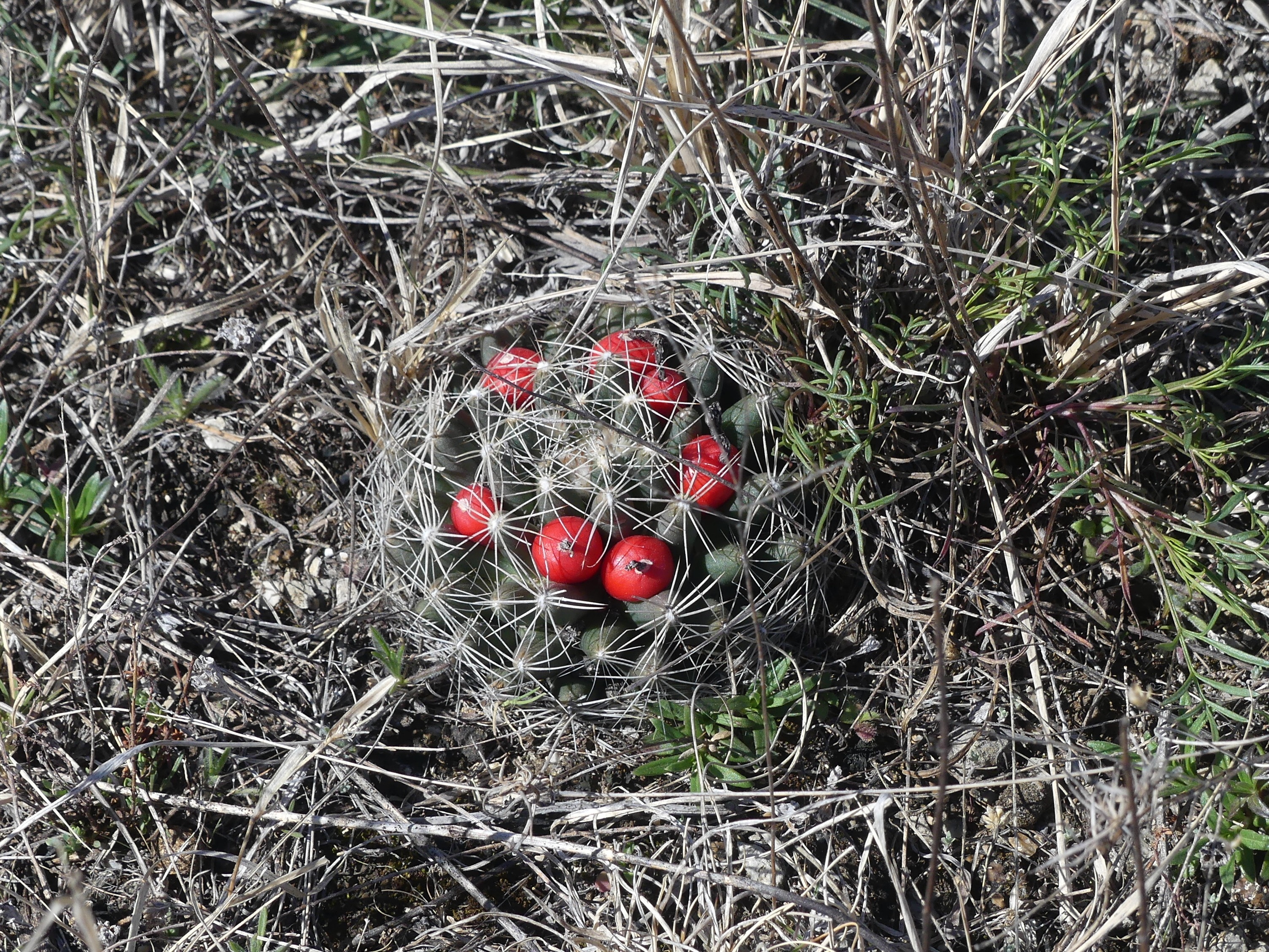
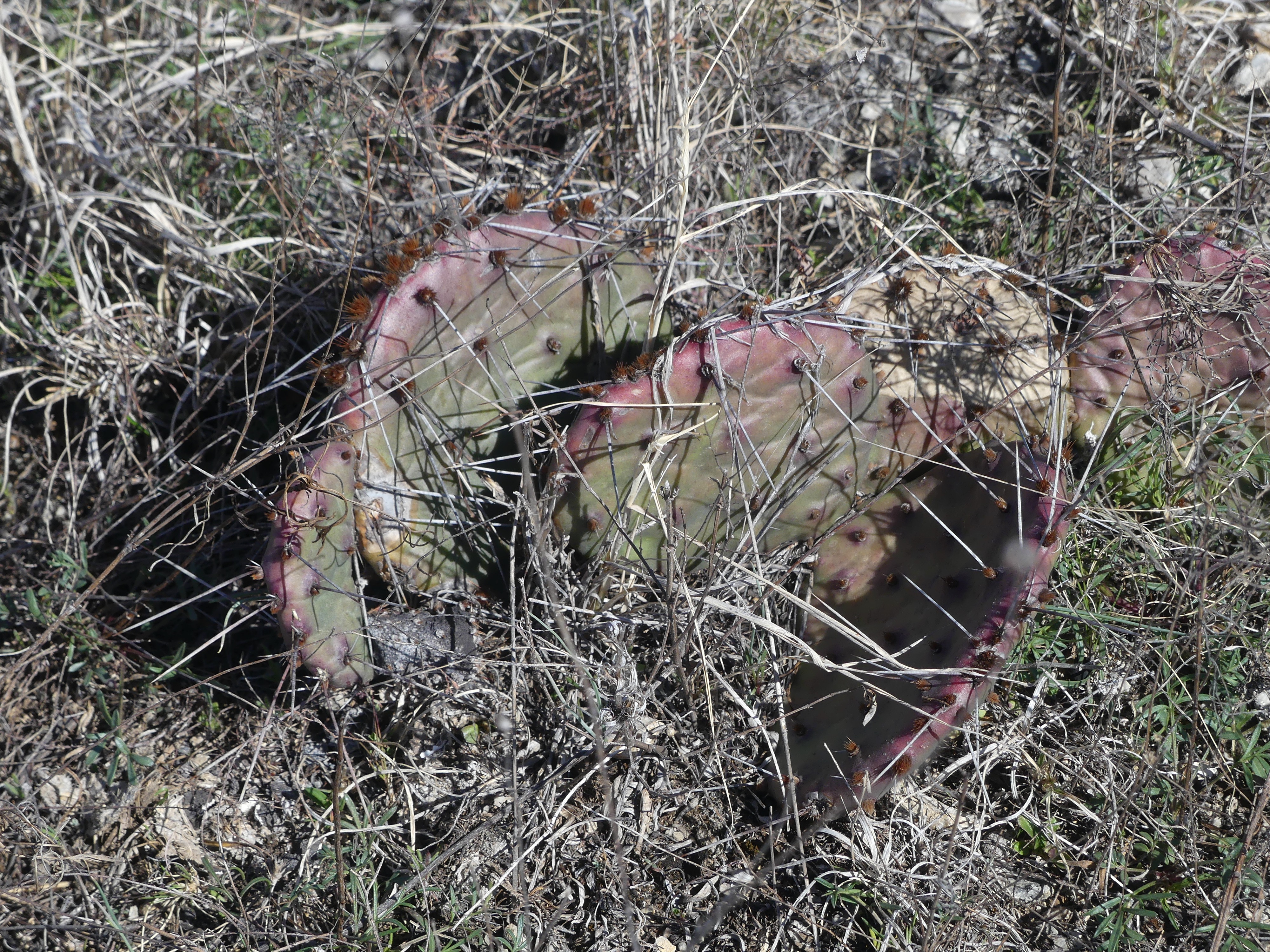
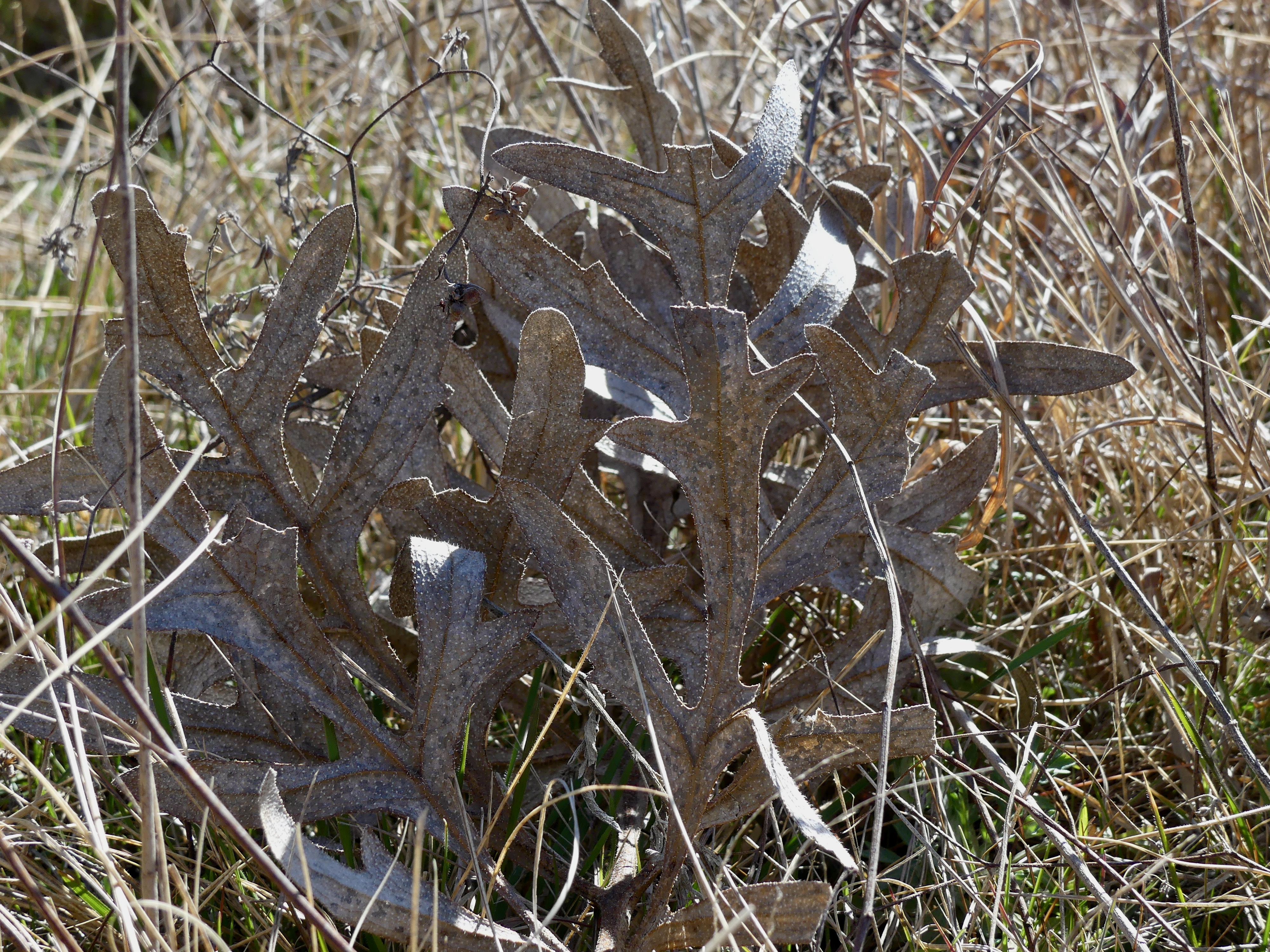
On the top of the cuesta, prairie grasses grow where the soil is deep enough. In shallow soil, even in areas with bare limestone, you can find clumps of cacti such as the grooved nipple cactus with stems like rounded domes covered with spines. There are also prickly pear cacti whose pads in winter are colored in shades of faded brick red and pink. Elsewhere up on the ridge there are clumps of compass plant. I love those long deeply notched leaves that feel as if they were cut from stiff sheets of sandpaper.  
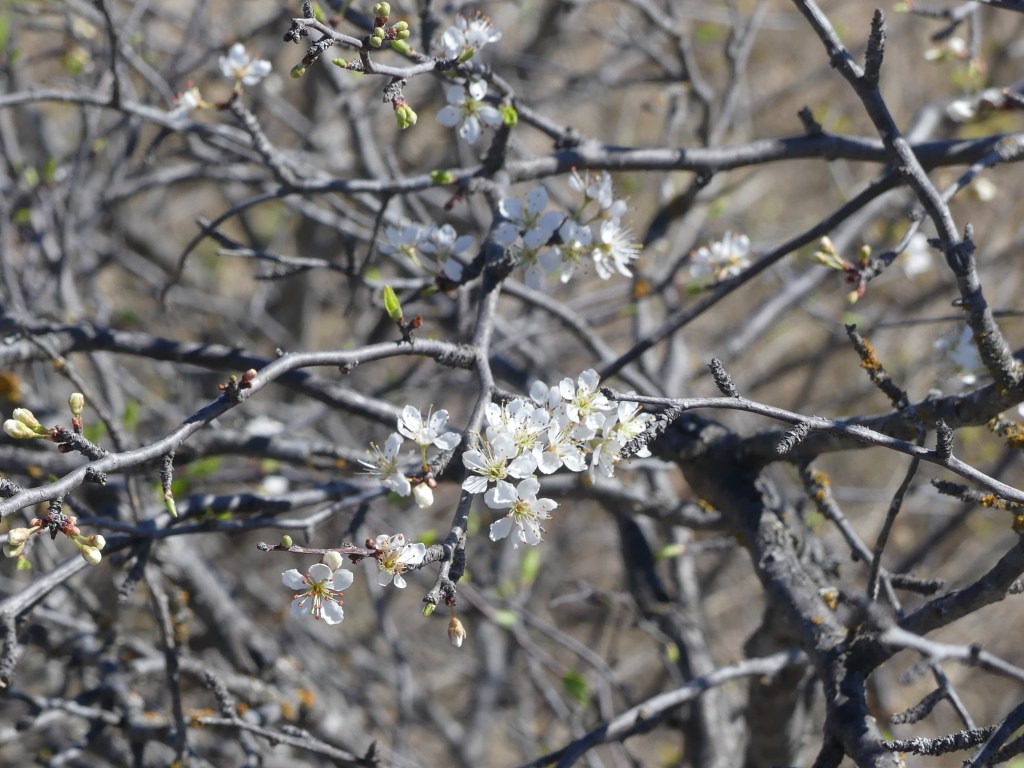
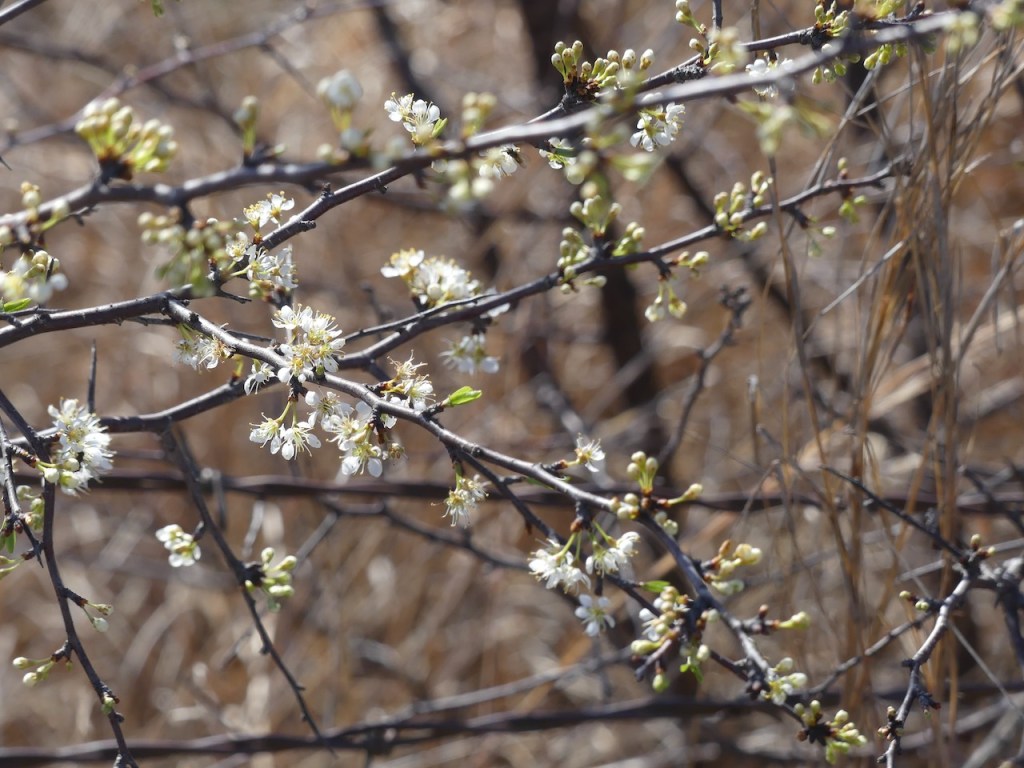
Mexican plum

A couple of hours later I was in the Cross Timbers woodland below the ridge, visiting a small pond. The breeze stirred ripples on its surface. The sunlight glittered brightly from the tops of those ripples, so that the pond’s entire surface seemed covered in sparkling jewels. When I let my focus soften, it was like a very fast twinkling of a field of stars. Even in simple places like this, the rest of the world drops away and there is only the pleasure of this moment in this spot. How we all long for such a refuge, and here it was. 
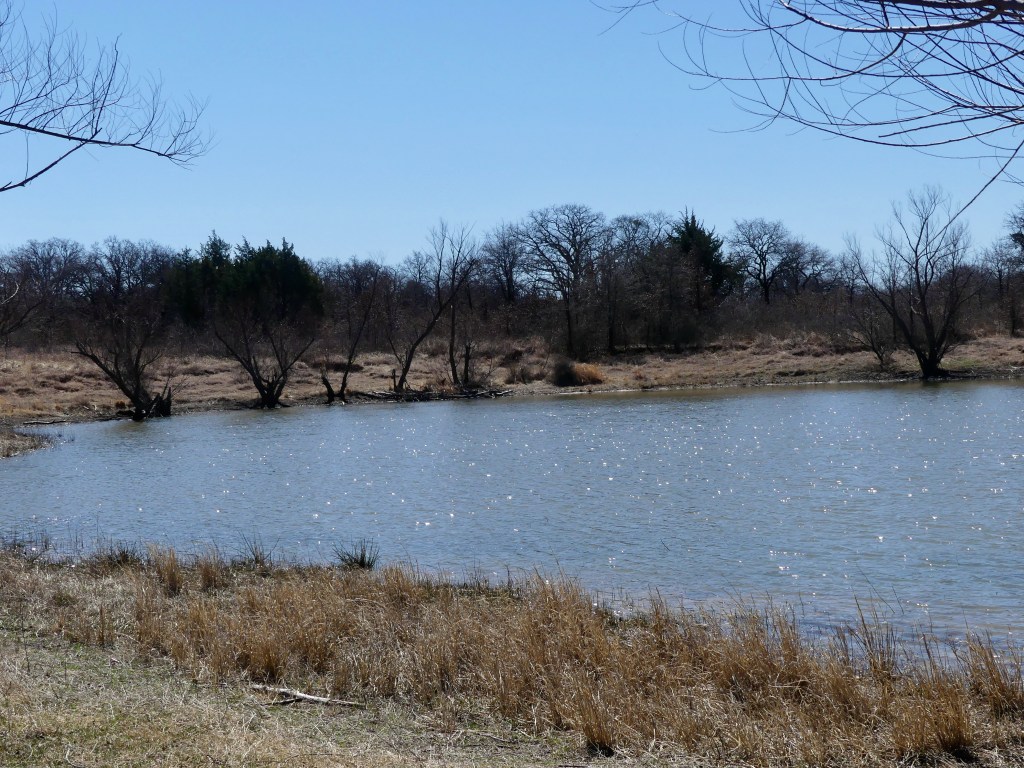
The stars in the water, only poorly represented in the photo

Throughout the winter the sulphur butterflies persist and dance across dormant prairies and sunny glades, but today more insect life was awakening. In one spot I began to see orange butterflies. At the edge of a clearing, two of them encircled each other and seemed to catch an updraft, swirling straight up to the crowns of the surrounding trees. When one landed, I saw that it was a goatweed leafwing. Their deep orange wings are scalloped, edged in ashen gray and the forewing and hindwing come to points. Their interesting name is based on description and natural history. The host for their caterpillars is “goatweed” or croton, and when closed the wings look just like a dead leaf.  
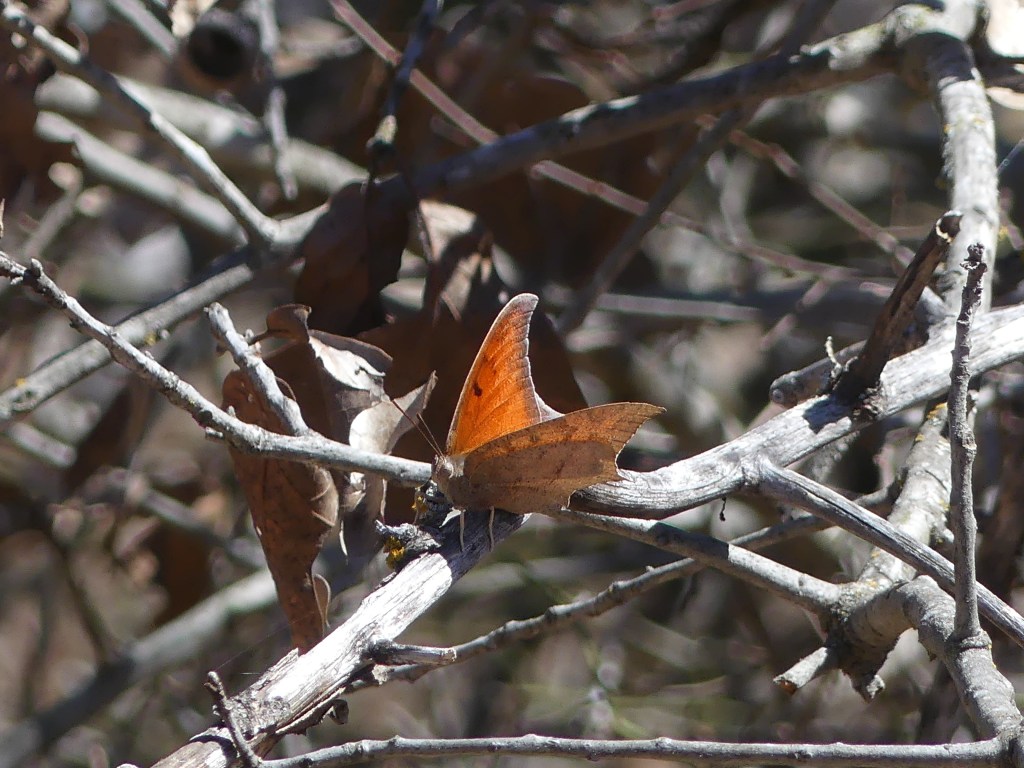
A goatweed leafwing

Finishing in this part of the grasslands, the practical but unimaginatively named unit 71, I drove to a couple of units near Alvord, including one of the beautiful and fragrant pine groves, and ended up in unit 30, one of my favorites. I let myself in through one of the green Forest Service gates and looked across the prairie and savannah toward the oak-juniper woodland. 
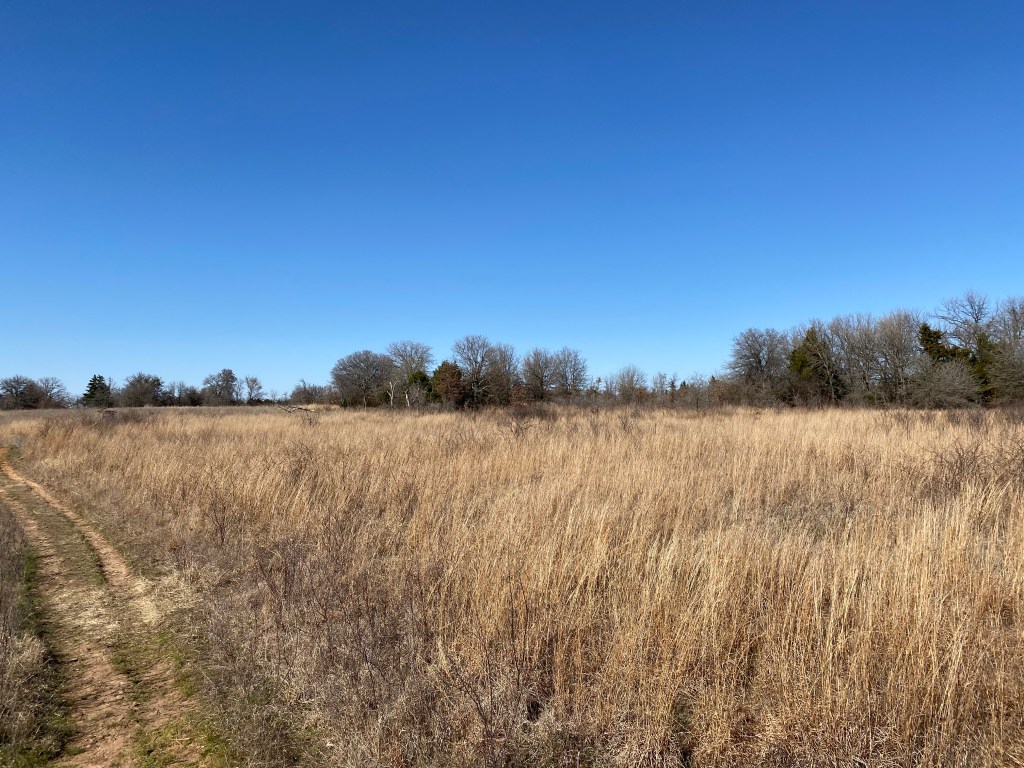
The prairie in “unit 30,” looking upslope

Here was that wonderful down-sloping prairie with little bluestem, Indiangrass, and flowering plants scattered throughout. Then the trail reaches the trees and turns sharply, losing itself in junipers, post oaks and other trees. The woods frequently open into little prairie patches as well as a few little ponds. I know the features of this part of the trail and I enjoy each walk there. I thought about why the places within LBJ National Grasslands have such an attraction for me, these “same old” trails. But the affection for the place holds. Walking here is visiting old friends, so why would I tire of it? And when I walk through spots in the grasslands that are new to me I usually see familiar landscapes, just arranged differently. Some of the appeal for me is the sense of being able to spread out, to be unconfined in grasslands and woods that keep on going. 

A nine-banded armadillo, oblivious to my nearby presence

So goodbye to winter, and welcome spring! I’m ready for frog calls and purple coneflower, and those spring evenings with distant thunder. And eventually I’ll come to miss the earth tones of dormant vegetation and quiet winter afternoons. In time I will welcome winter back again. 
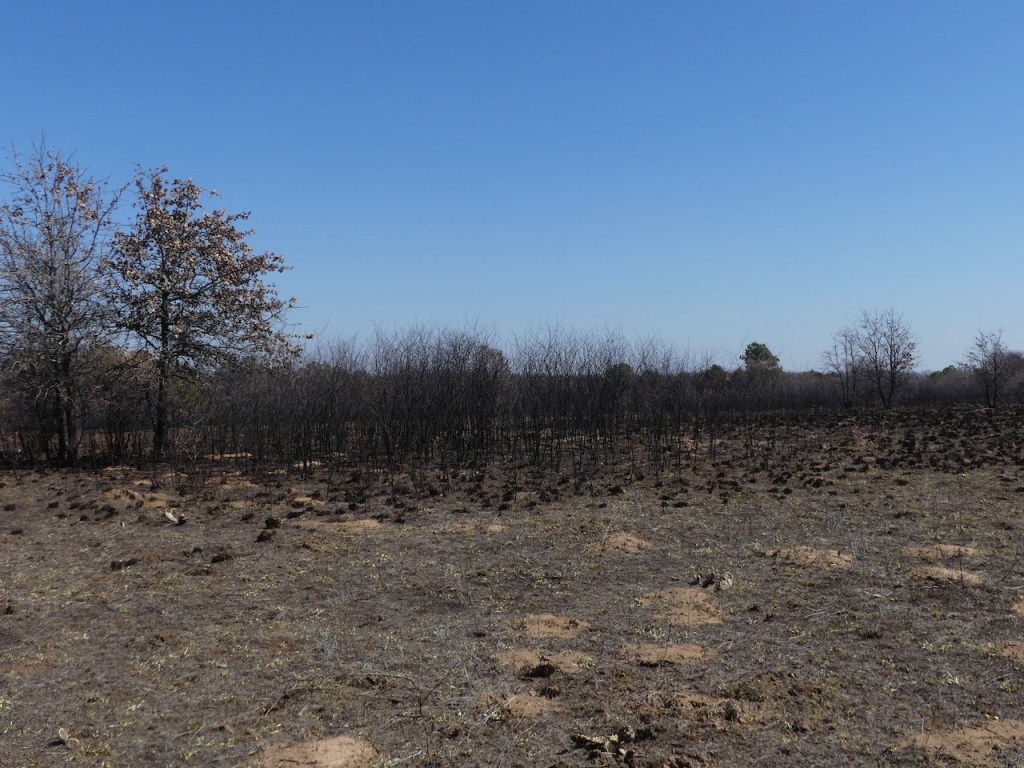
Ready for Spring

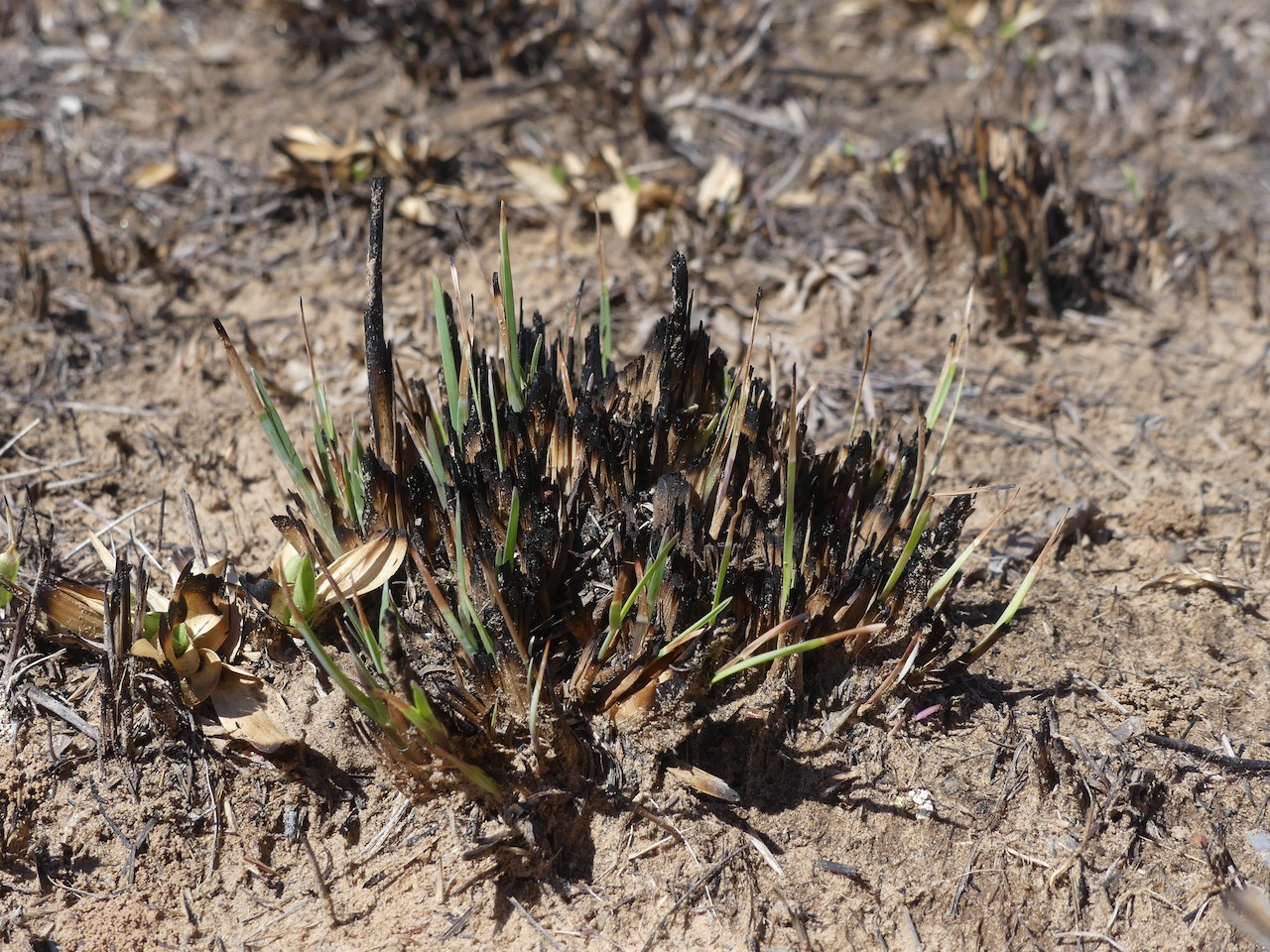
As I drove through a northern part of LBJ National Grasslands, last year’s grasses were burned off along with some of the low growing brush. At the ground, some tree trunks were blackened, but the bark of the bigger trees protected the living tissue underneath. The trees will be fine. So will the grasses. The living roots below ground were already starting to send green shoots up within the charred clumps of little bluestem and Indiangrass. After all, what burned was just the dead stems and leaves of last year’s growth. What was pushed back was, hopefully, the growth of woody shrubs and tree seedlings. These ecosystems were built with periodic fire as an important ingredient. Without it, the shrubs and seedlings would grow into thickets, closing off open areas and replacing the meadows and pockets of prairie in this place.

The Forest Service had done well, lighting fires that would move across the land quickly so that it did its job with little real damage. Larger wildlife would move out of the way and most smaller animals would shelter in burrows or climb higher in trees. They would plan the burn when fuel loads would not be too high and wind conditions were right, keeping the fire within certain boundaries. With a well-planned burn, the fire would not linger long enough to become very big or hot. 

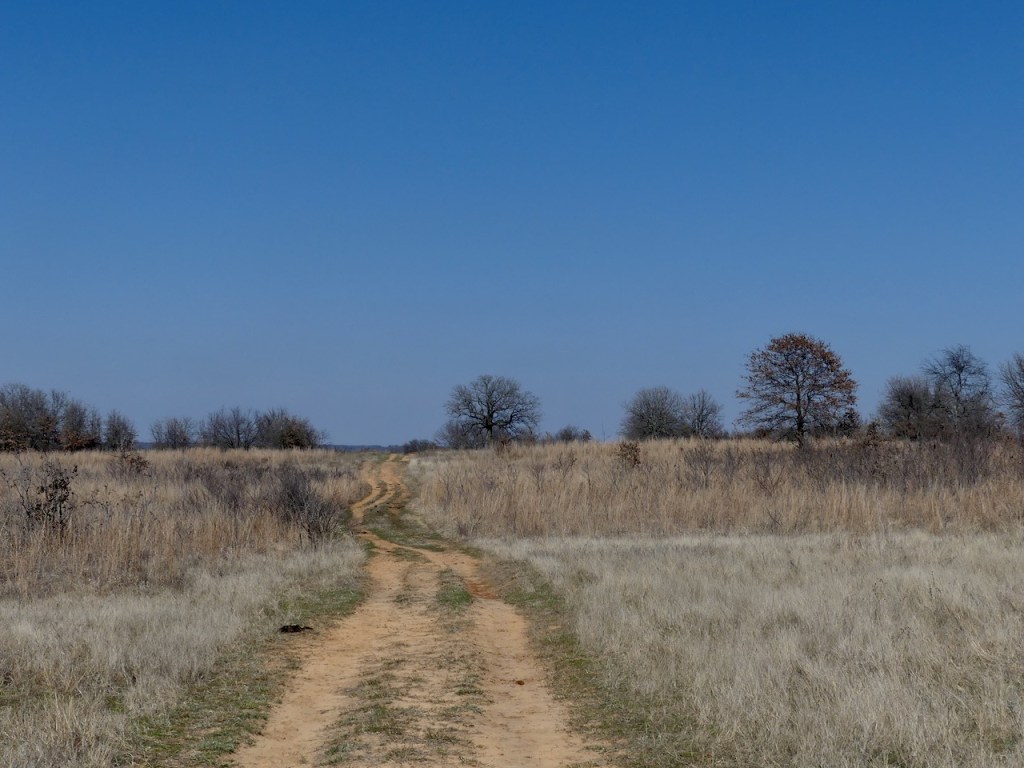
I walked a trail northeast of Alvord through areas cleared out by fire and looked at the green shoots beginning to emerge here and there where fire had burned last year’s growth to black stubs. Not only were grasses re-growing, along the surface of the soil – much more exposed than usual – new green growth was beginning everywhere. Spring is just days away (or already started, by meteorological reckoning).

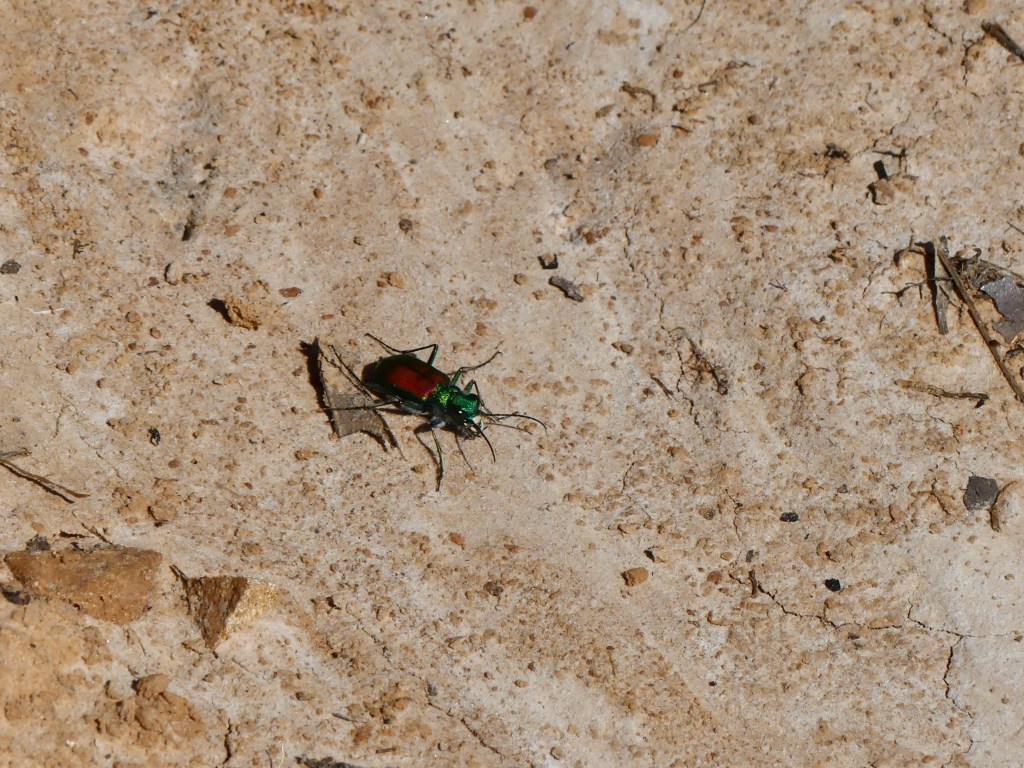
Tiger beetle

A little movement caught my eye. A small wolf spider was scampering over soil and bits of wood on the trail. “Welcome, little survivor,” I thought. A fluttering spot of yellow bounded along the ground. The little butterfly, perhaps a clouded sulphur, had also made it through the fire or the wind had carried her in from nearby fields. Altogether in my walks in two areas of the grasslands today I saw sulphurs, variegated fritillaries, and a very dark swallowtail. At another point on the trail a small insect flew ahead of me, always landing back on the bare sandy soil of the trail. Sure enough, it was a tiger beetle with a metallic green head and thorax and a brushstroke of iridescent red on the wing covers (the elytra). It appeared that the invertebrates were doing pretty well after the burn.

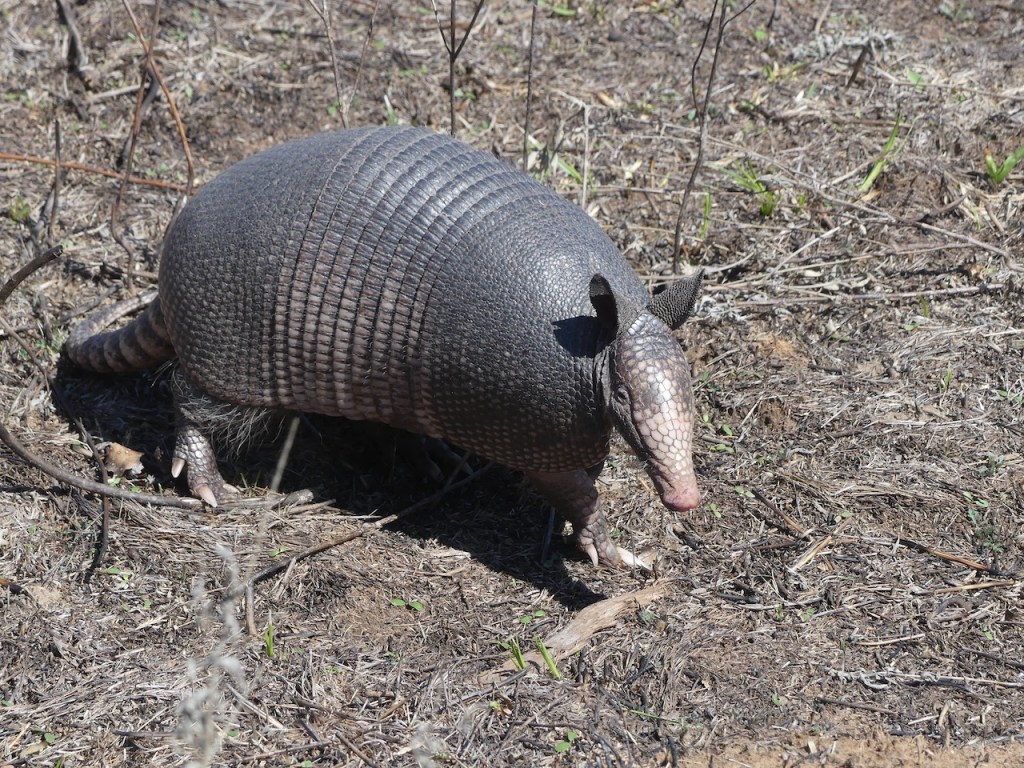
Nine-banded armadillo

Somebody else may have noticed how well the invertebrates were doing. As I came around on the trail, I saw an armadillo about thirty feet away, busily rooting into the soil looking for anything edible. These tough, chunky mammals have a sort of leathery armor over their hips and shoulders, connected in the middle by nine bands of the same stuff (thus their name, “nine-banded armadillo”). Bony deposits are embedded in this modified skin, even on their foreheads and tails. They are very strong, as anyone who has tried to pick one up can attest. 

Armadillos need these attributes, because they are not gifted with strong eyesight or attentiveness to their surroundings. I approached the little beast quietly and downwind, moving mostly when he had his snout in the ground. Periodically he stopped to look around and sniff the air and then returned to the search for insects and grubs. I got within six feet or so, with no intention of doing anything more than taking a photo. At some point he figured out that I was present and ran off, sometimes bounding into the air with all four legs like a deer. It might seem like a parody of gracefulness, but he was fast and had a sort of armadillo-style agility.

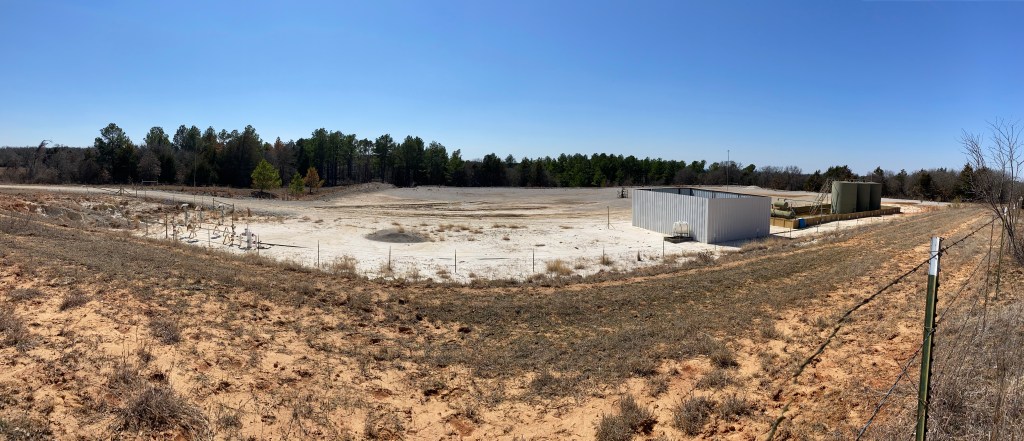
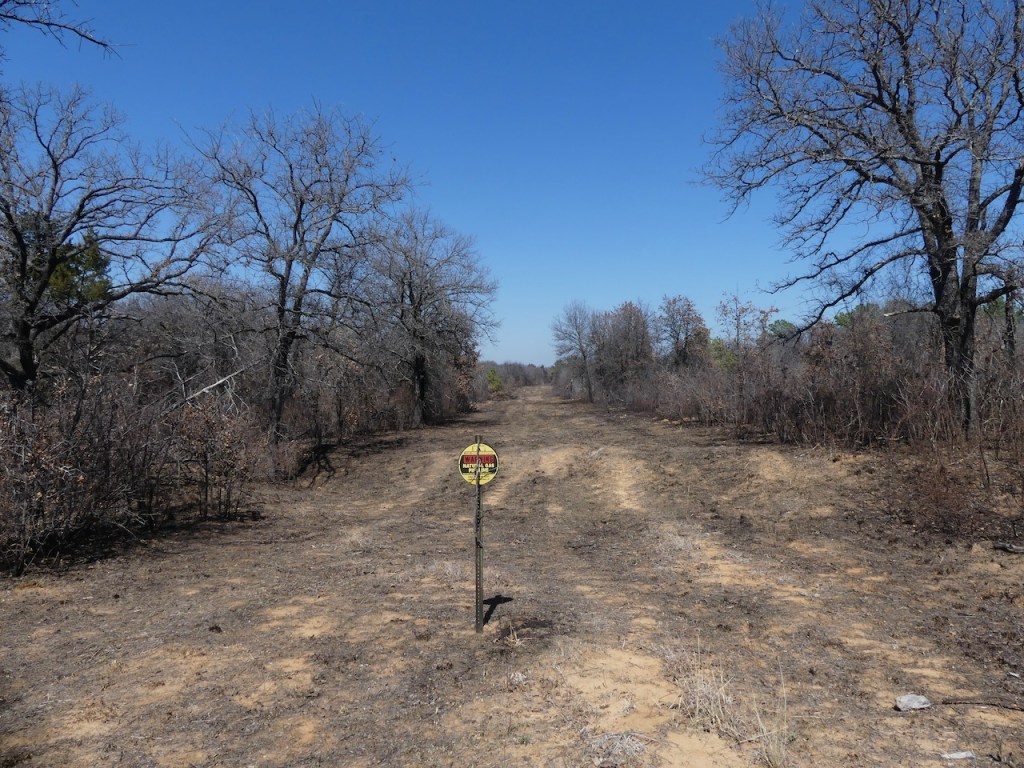
Like Texas’ national forests, the national grasslands in our state are maintained in the belief that many different uses of the land are appropriate. These uses include mineral extraction along with recreation, hunting and fishing. We can walk and study nature on what’s left. I got my first reminder that this is a “multi-use” area when the path opened on a big cleared area with gas storage tanks and some sort of building. Nearby, a wide, bulldozed corridor led into the distance with signs saying, “Warning, natural gas pipeline.” Oil and gas extraction sometimes seems like the pre-eminent use of this place.

The other reminder of the multiple uses of the grasslands happened as I finished the walk back to my car. From the pine grove camping area came several loud shotgun blasts. Hunting is allowed on the grasslands, although what I was hearing seemed unlikely to represent hunting in any competent sense, as the shotgun was discharged sometimes four to six times in rapid succession. After a pause, more shots. I wondered if it was safe to get to my car. I decided that I must be hearing some sort of target practice and chose to believe the target was not in my vicinity. I have not had this experience before, but I have passed hunters with shotguns on the trail. When visiting, we should all keep in mind that hunters (and I suppose wild target shooters) may be present.

My last hour in the grasslands on this day was spent a little distance away, in a unit that had not been burned. I wrote this in my journal:

“I’m sitting at the top of a big rise, under a blue sky with a half-moon above and to my right. There is a light breeze, a little cool and a perfect balance to the warm sun behind me. It’s such a nice spring warmth that it’s hard to believe that in twelve hours it will be blustery, cold and raining. In my shade it is 68.9ºF and 59% relative humidity. 

“It’s quiet and peaceful – a sunny refuge with post oaks, butterflies and cardinals for companions. There’s a post oak in front of me with a trunk so thick that I was reminded of the baobab tree. A cardinal flew into it and is in the high branches – “cheer, cheer, cheer” – and when he faces me there is a bright crimson dot in the branches. 

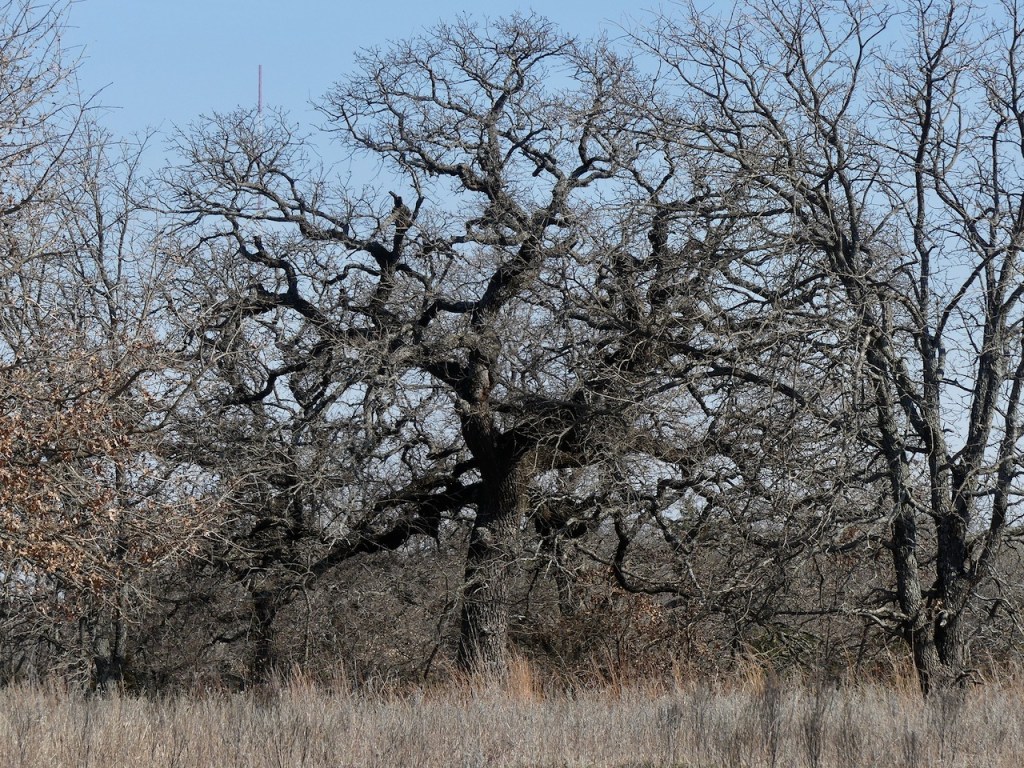
“To my right is a huge oak with twisted arms, right out of a scary story. Along the trail a pair of small sulphurs, swirling together in figure-eights nonstop across the ground.”

The twisted branches of a post oak

I’ll be back soon, watchful for armadillos and butterflies and curious about the new spring growth of grasses and flowers after the burn. Frogs will be calling soon, especially if we get some rain. There’s a lot to look forward to.

In the November Woods

Hardly anything is finer than a green Forest Service gate opening onto trails that lead through the grasslands and oak woodlands of LBJ National Grasslands. Those meadows and woods change throughout the seasons, and each of those changes is beautiful. If I had to pick a favorite, it would be autumn (but ask me again in the spring). The low-angled sun highlights details of light and shadow, the colors of leaves and grasses are wonderful, and afternoons can be sun-warmed but cool at the same time.

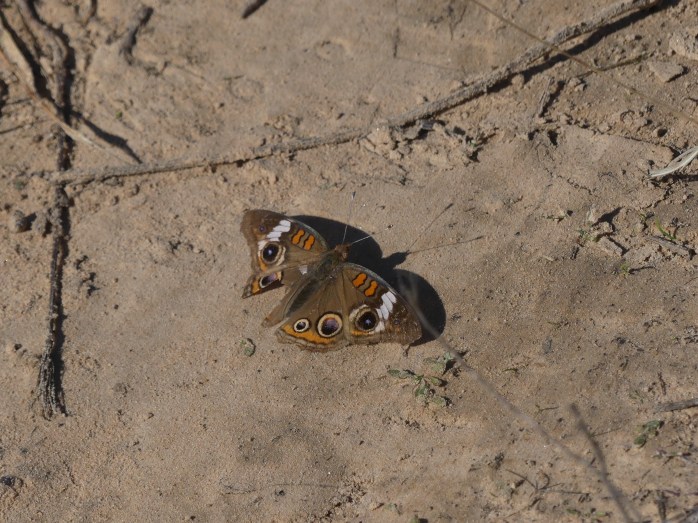
A common buckeye

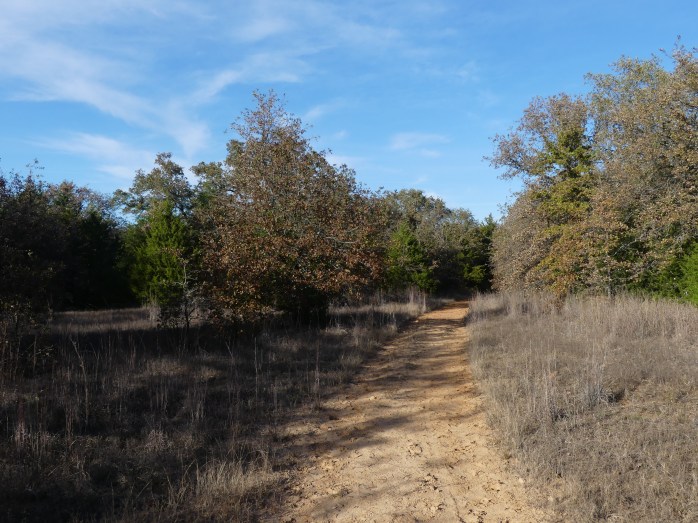
Yesterday I opened one of those green gates that was new to me and walked a trail back through rust-colored little bluestem grasses and oaks with leaves now tinged with yellow and caramel, and a little red here and there. Much of it was familiar, like the way the sun makes little bluestem sparkle when it shines through the little tufted seeds tucked away along the stems. What made it wonderful was that it was more of the things that are always on the verge of being lost. Ranches are sold and turned into houses and lawns, and so a walk through a new patch of Cross Timbers felt reassuring. 

Croton and bitterweed along the trail
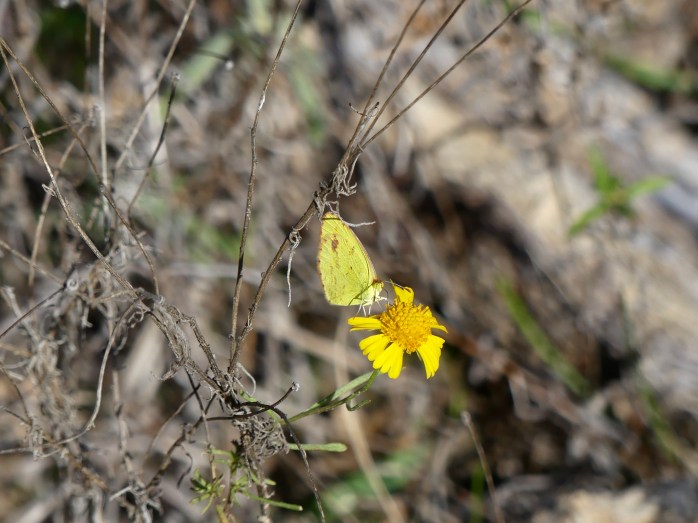
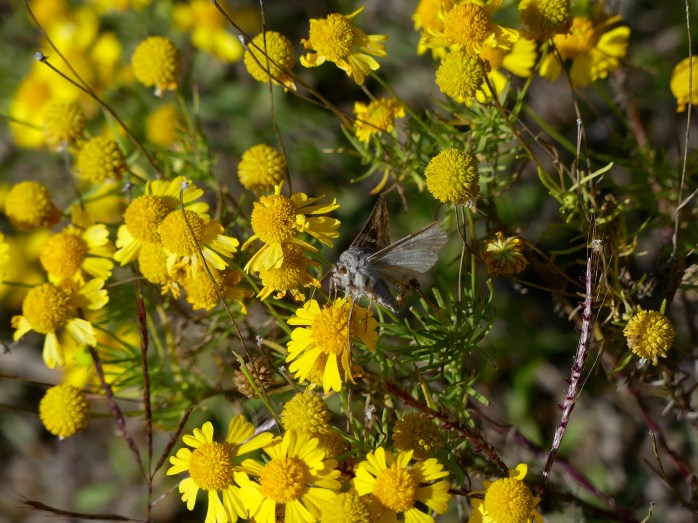
A sulphur visiting a bitterweed flower
A small pond

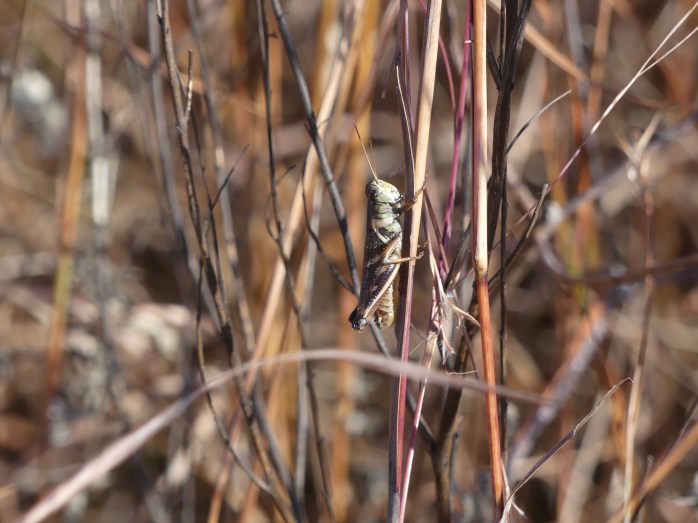
Along with the taller prairie grasses were areas with lots of croton (“prairie tea” for some folks), western ragweed, and bitterweed. I love this last plant, whose yellow flowers bloom so late in the year. Clusters of yellow bitterweed blooms were visited by bees and butterflies. Grasshoppers jumped in front of every step I took, taking advantage of these last warm days to nibble at the remaining vegetation. 

A skipper visiting the bitterweed
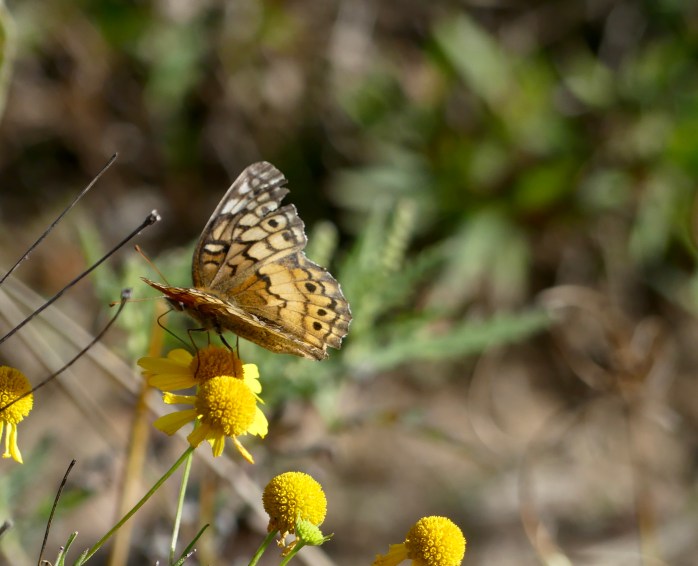
A variegated fritillary
Sunlight through bluestem seeds
“Me and my shadow.” A harvestman (daddy longlegs) and its shadow, wandering the prairie

After about an hour, I went down the road to another of those green gates, this one opening onto a trail that Meghan Cassidy and I walked a year and one week ago. After crossing a nice patch of prairie that very gradually slopes down to a line of trees, the trail turns and traces its way through oaks, junipers, and prairie openings. 

I stopped at the same post oak where we had stood and watched leaves drop, the air so quiet that I could sometimes hear a leaf bump into a branch on the way down. And then we would hear a wave of breeze approach through the treetops, stirring the top branches and releasing a few more leaves to pinwheel down to the growing carpet of leaves on the ground. Although not many leaves were falling from that tree yesterday, there was some of that sense of solitude and peace in the quiet of the woodlands.

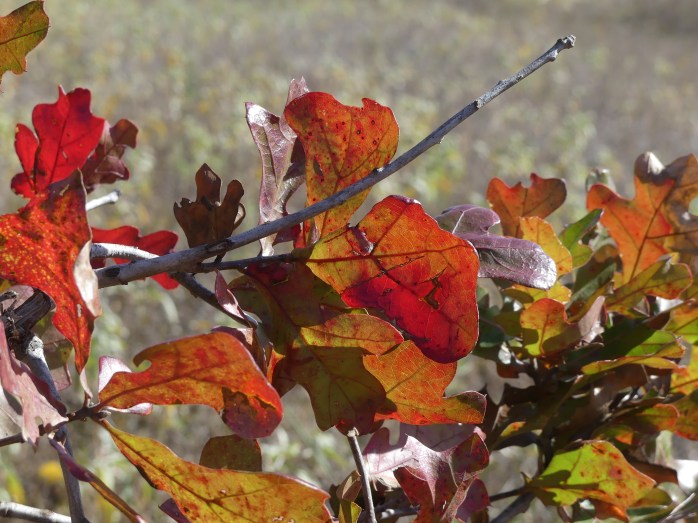
Further down the deep sandy trail some of the same young oaks were turning, with leaves glowing scarlet when backlit by the sun. The woods were full of shade behind the trees which really had yet to lose many leaves. In other places the low mid-afternoon sun struck grasses and leaves with bright, warm light. The sunlight seemed that much brighter for the contrast with the shaded and darkened places deep among the trees.

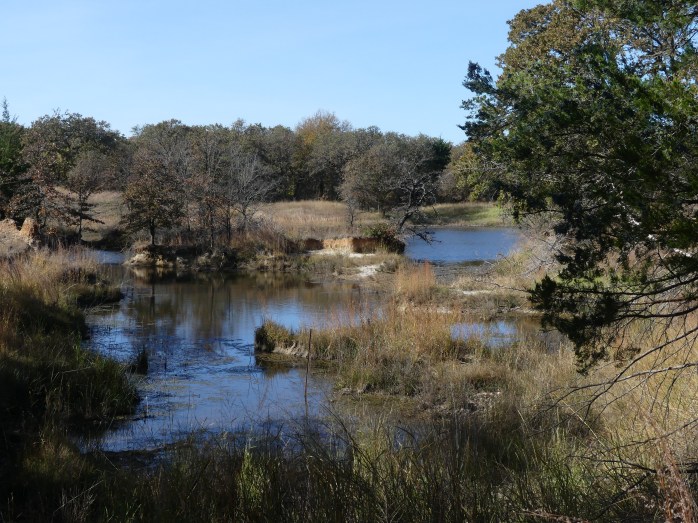
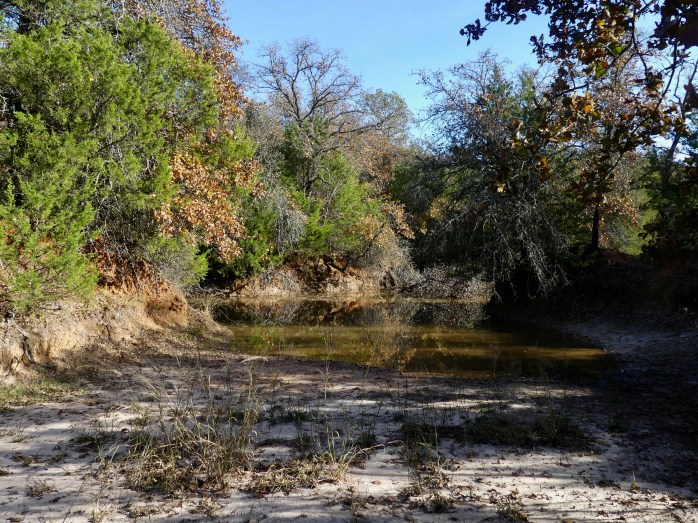
The pond

I reached a place where the soil is cut by erosion and drops, exposing red and pale sandy soil in an irregular set of steps and furrows down to a small pond. Meghan and I sat here a year ago on a stretch of slightly damp sand tilting down to the water. I was entranced by a play of the light in which the late afternoon sun was reflected by ripples, sending squiggles of light up onto a shaded bank under a juniper. The very same thing was happening yesterday, with a tiny light show playing on the shaded bank of the pond. It was a very small thing, and also an example of something that seems important to me: Nature is so often a consistent, stable presence in a world that can seem chaotic. Places in nature can be anchors in our lives to which we can return over and over for reassurance that some good things persist in spite of all the changes around us. 

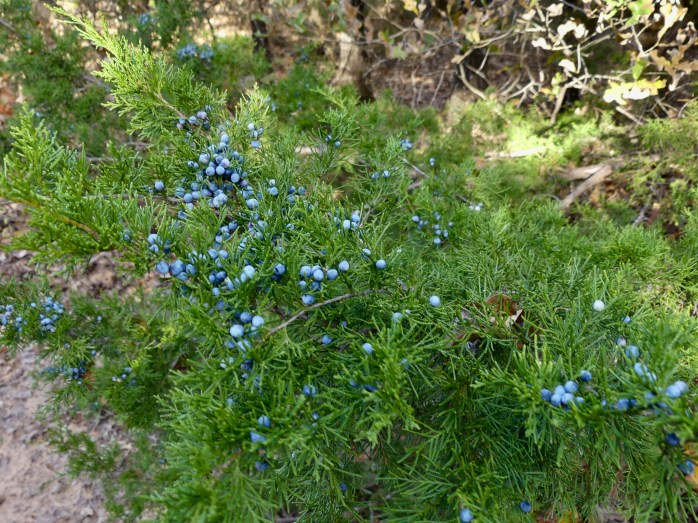
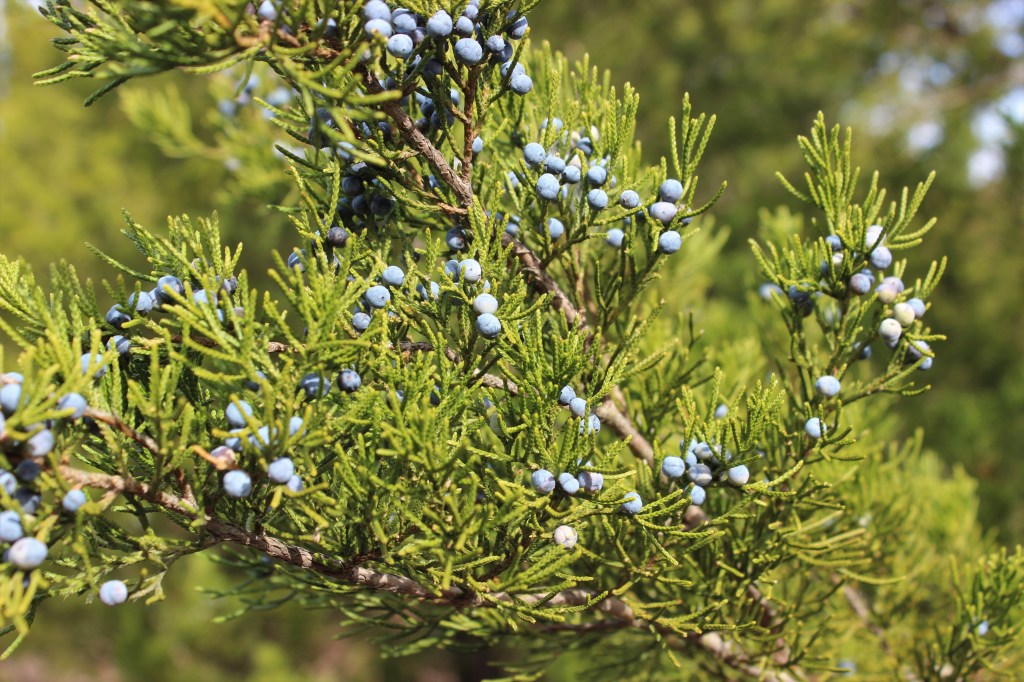
Juniper berries!

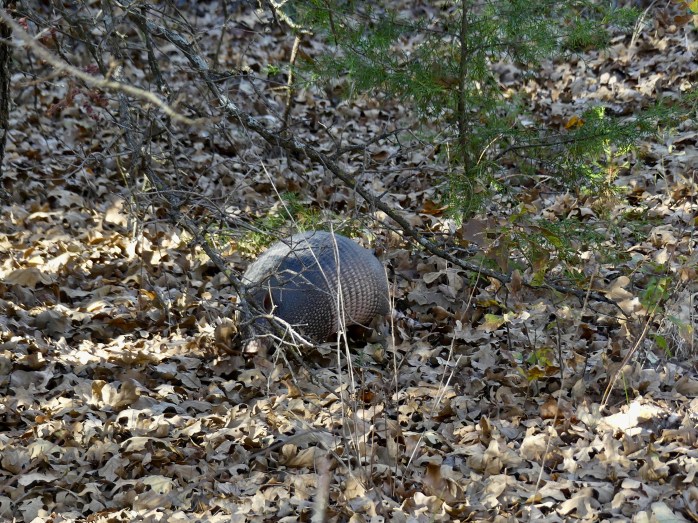
On the way back there was movement in the leaf litter a small distance off the trail. It was a nine-banded armadillo, snuffling along the woodland floor, oblivious to the human standing nearby. Once again last autumn’s walk was being repeated, as we saw an armadillo on the return walk on that day, too. This one kept searching for insects and grubs to eat while I took a couple of photos. I shifted and made a little noise and the little armored one stood up to look around and sniff the air. I coughed, and he crashed off through the brush. 

The armadillo
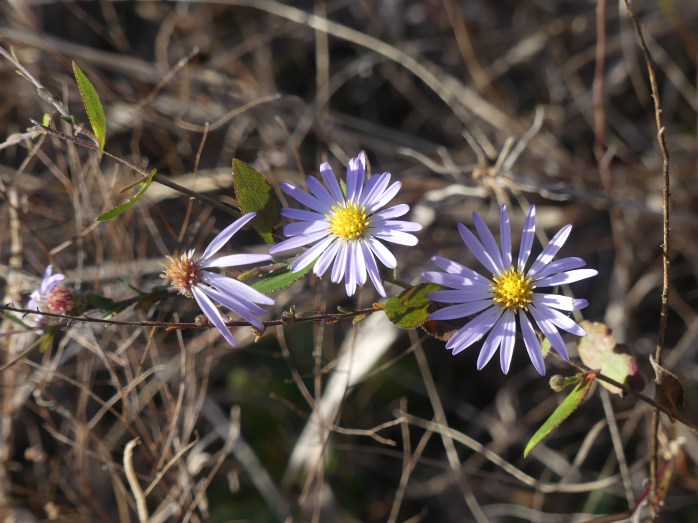
Tiny asters blooming along the trail
Grasshoppers were everywhere
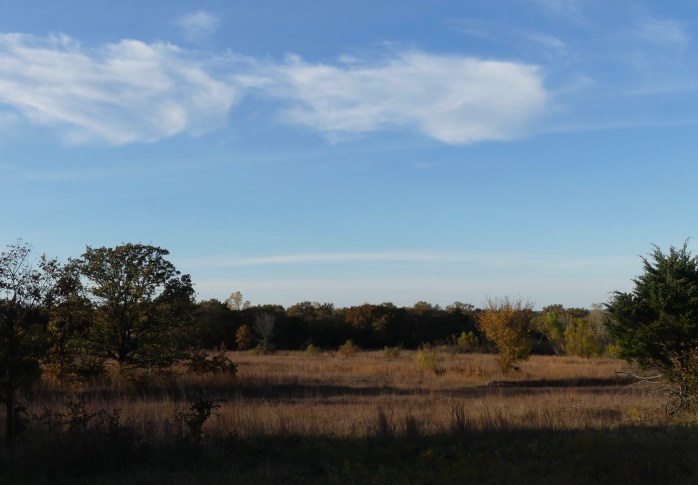
More prairie

It was getting near sunset, and my walk was done. It is hard to put into words just what this time of year, this quality of light, this quiet woodland feels like to me. In the “Autumn” section of the book Meghan and I have been working on, I wrote this: Things come to an end / Be still in the golden autumn light / And consider how to make a good end of the year / With affection and acceptance. This season does feel like an ending of the year, and it seems like a good idea to spend some time being still and quietly reflecting on all that the year contained. This November walk at the LBJ National Grasslands had been perfect for that.

A Walk in the November Woods

(I’m very fortunate to be able to use some photos by Meghan Cassidy in this post. The captions identify which ones are hers, but basically the way to tell is to look for the really good ones – they’re hers!)

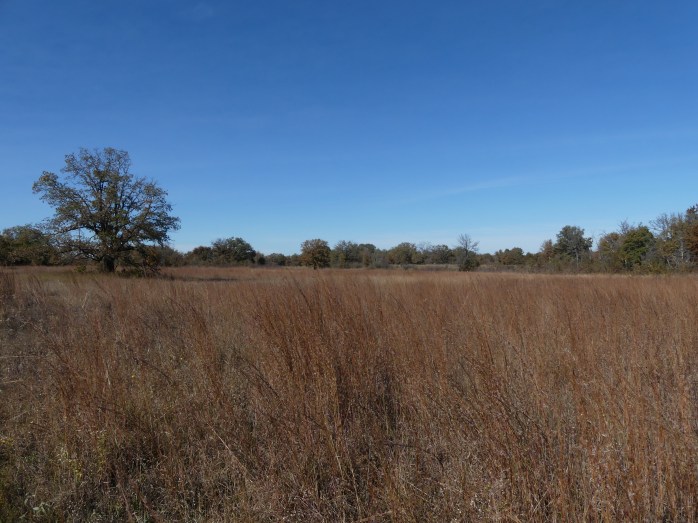
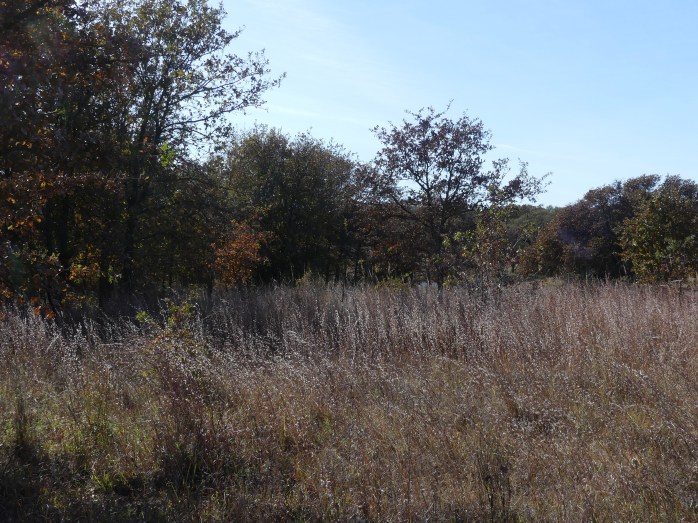
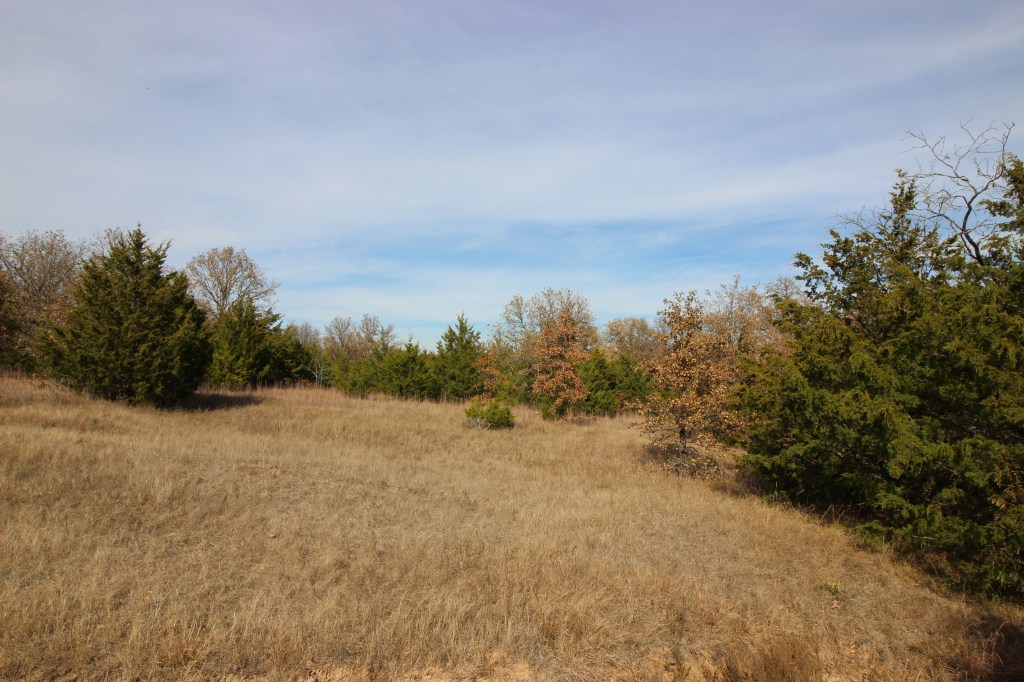
A patch of prairie at the LBJ National Grasslands

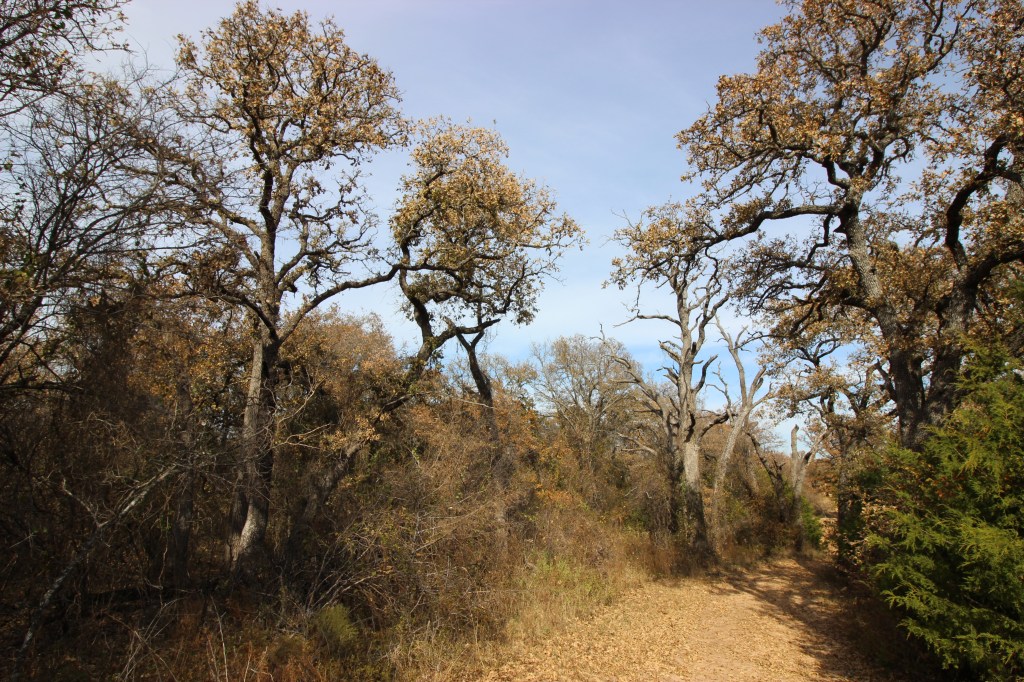
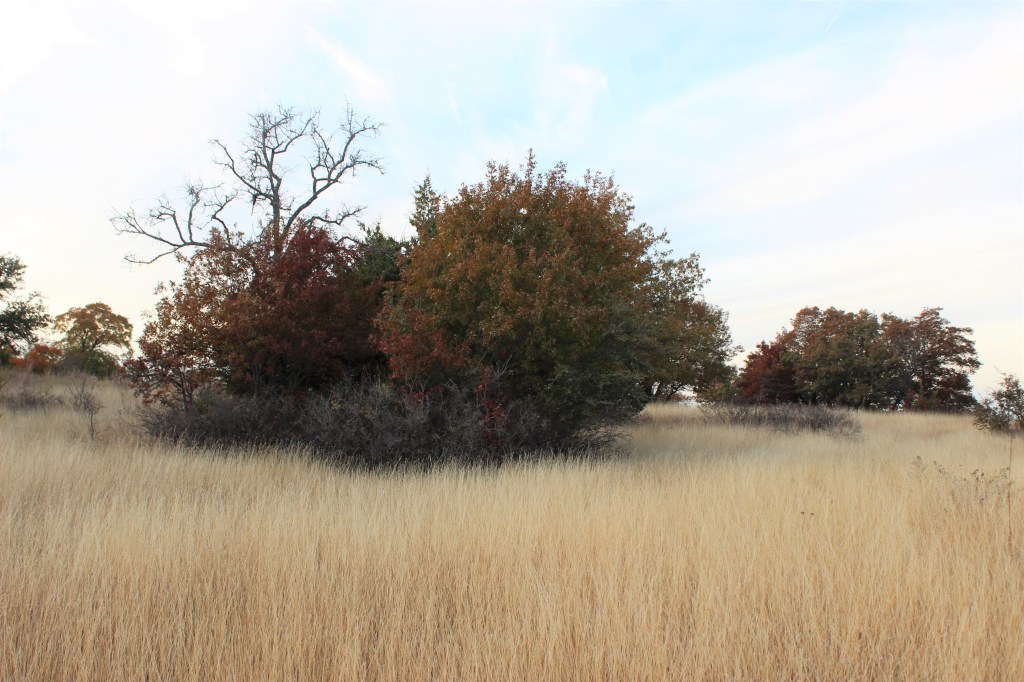
On a visit to the Lyndon B. Johnson National Grasslands in Wise County, we walked a long trail through straw- and rust-colored grasses and through the stands of oak trees that are the signature of the Western Cross Timbers. Sunny days like this in autumn are perfect for walking in the woods and prairies. The slanting sunlight and the colors of grasses and leaves (even when they are mostly shades of straw and brown) result in the landscape having a kind of warm glow, which seems like a comfortable complement to cool or even cold temperatures.

It wasn’t cold, not even a little bit. The high temperatures reached the middle sixties out in the grasslands, and the bright sunshine felt wonderful as we hiked past post oaks and junipers. Juniper is no friend of the grasslands, because without a combination of grazing and periodic fire, these trees can spread and take over. Juniper is invasive, but here is the positive side: the junipers at LBJ Grasslands are beautiful trees and really come to the foreground in winter when they remain green amidst the bare branches of oaks. And the berries! Those little blue berries give a refreshing taste when you chew a couple of them – there is a little sweetness and that aromatic juniper flavor from camphor and other aromatic oils.

Juniper “berries”

The berries, we are told, are really modified seed cones and not true berries at all. Sort of a blue, tasty variation on the pine cone theme. But it’s only a little taste; much of what lies under that blue coating is a seed, so there is not much to eat. Some junipers produce berries while others produce pollen. In winter, some of those male junipers take on a golden cast from all the pollen just waiting to be lifted by the breeze and carried to the female plant.

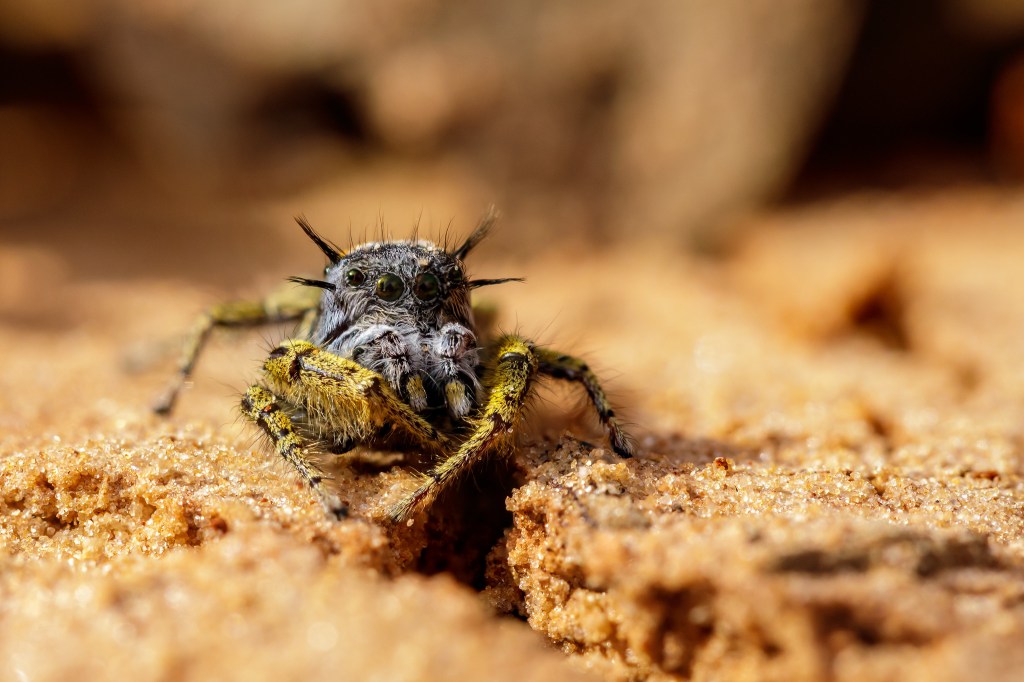
Meghan Cassidy’s photo of the jumping spider

My companions made the walk that much more enjoyable. Meghan Cassidy and Paul Mendoza are good company and knowledgeable about the natural world, particularly insects and arachnids. And those little jointy-legged critters came out to greet them in numbers greater than we would have expected. They discovered a little jumping spider on the trail which Meghan took great pains to get lots of photos of. All of us enjoyed seeing harvester ants out, and we wondered about the ones emerging from holes without the bare circle that usually marks the entrance to a colony. Lots of harvestmen were on the move. These might look a little like spiders but are only cousins. Everyone is familiar with “daddy long-legs” – the little dot of a body surrounded by eight long, impossibly delicate legs. None of them can spin webs and none have a venomous bite.

Another of Meghan’s photos: this is one of the harvestmen we saw

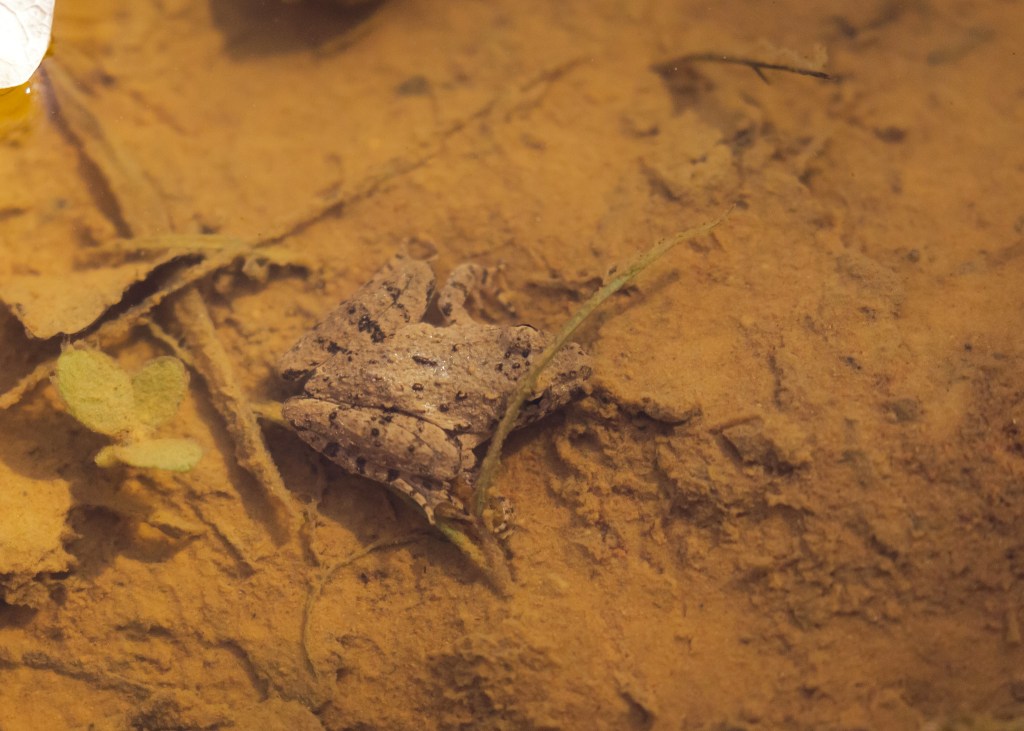
Despite being mid-November, a couple of herps graced us with their presence. Cricket frogs were out at a pond and even in some small, scooped out pools where rainwater had collected. And along one trail, a young ribbonsnake slipped among the leaves, just long enough for me to see those beautiful stripes but not long enough to capture it for a closer look. Happy cricket frog hunting, my friend!

A cricket frog, hiding under the water (photo by Meghan Cassidy)

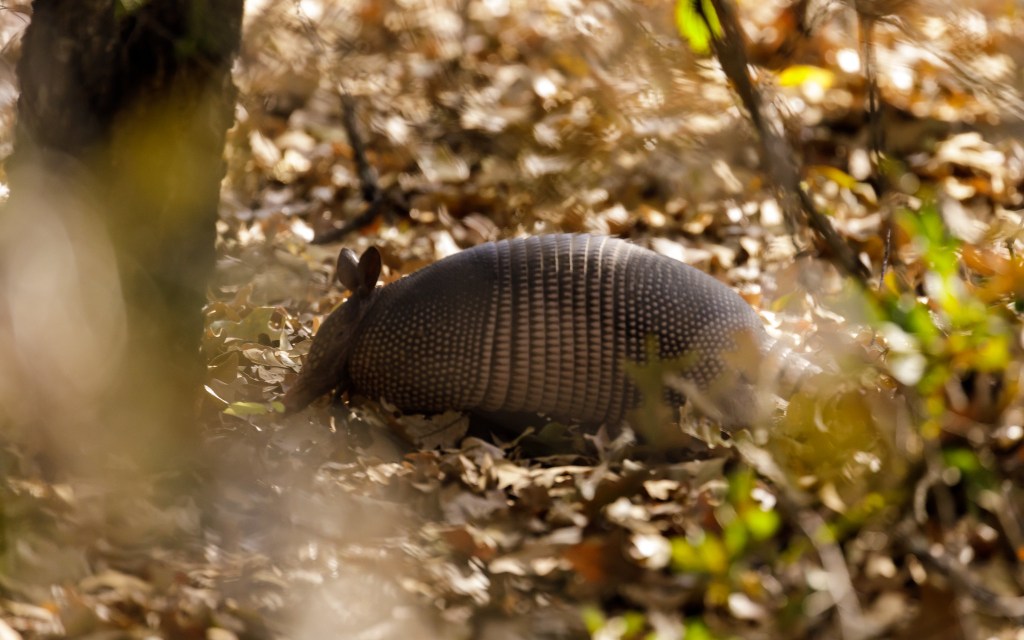
Several times we heard a little commotion in the leaf litter and were able to see an armadillo digging for invertebrates. They stop and probe the leaves and soil, sometimes scratching a short, conical excavation into the soil as they look for insects, worms, and any other animal matter that they may expose. After a short, snuffling exploration of one spot, they move a short distance and try again. David Schmidly’s The Mammals of Texas (Revised Edition) reports that much of their diet is larval and adult scarab beetles, followed by termites and ants, and then caterpillars, earthworms, millipedes, and other invertebrates. A few reptiles and amphibians are taken occasionally, probably examples of small herps being in the wrong place at the wrong time. An armadillo snuffling through the leaf litter can’t be too particular about what they turn up.
Meghan’s photo of one of the armadillos

We enjoyed our opportunities for a little armadillo watching, and sometimes we were able to get quite close. They cannot see well, so if you are quiet and stay downwind so that they cannot detect you by smell, you might get very near to one. Once they do detect you, they may jump in surprise and then crash off through the underbrush, protected from thorns and branches by their bony armor.

We talked a good bit about Blackjack Oak and Post Oak and marveled at the variety of leaves that we saw. Some looked like hybrids and there were other oak species scattered here and there. I recalled that Blackjack acorns were said to be bitter, while those of the Post Oak were more tasty and sweet. We put this to the test, as Paul cracked a Post Oak acorn and Meghan trimmed the dark husk away. A little sample of the nut was delicious.

Near a limestone ridge at LBJ National Grasslands
A last blaze of grasses and oaks before sunset

At the end of the day, we visited a limestone ridge a few miles away but still within LBJ Grasslands. Instead of Little Bluestem, the grasses here were dominated by a shorter, uniformly straw-colored species surrounding the scattered oaks and junipers. Numerous Grooved Nipple Cacti were scattered on the ridge top, growing in small mounds in the thin soil barely covering the “walnut shell” limestone. Here, we sat and watched the sun set, looking out across an area of woodland and ranch land stretching into the distance. I sat on that limestone, a conglomerate of ancient oyster shells cemented together into gray slabs, and watched the sun make a nearby oak sapling glow red-orange and then darken as the sun was obscured by some bands of clouds. When the sun re-emerged, those beautiful oak leaves glowed brighter. Gradually nature turned down the lights, and those leaves dimmed to dull red. The horizon, however, was still a glowing ember, holding on for a time and painting the undersides of the clouds red and then pink, and then they all faded to blue-gray and closed a very beautiful day in the woods.

Sunset (photo by Meghan Cassidy)