On May 5th I started the latest round of The Wild Lives of Texas Reptiles & Amphibians, a four-part training that I offer with slides and discussion in class as well as time in the field. The idea is to dig down a little deeper about herp (reptile and amphibian) natural history, more than I’m able to when training incoming Master Naturalists. And the people participating get several sessions in the field, which is both fun and important when learning about how to find and interact with herps.
And so I got to meet several new people, one of them a 15-year-old who is new to all this and one a Master Naturalist in her 80s. They were all delightful. I covered some very practical issues like watching out for bull nettle and how wild snakes, including venomous species, usually respond when we encounter them. I also gave a quick overview of taxonomy and scientific names, though the discussion about why some of these names keep changing might have gotten a little thick – but it was brief.
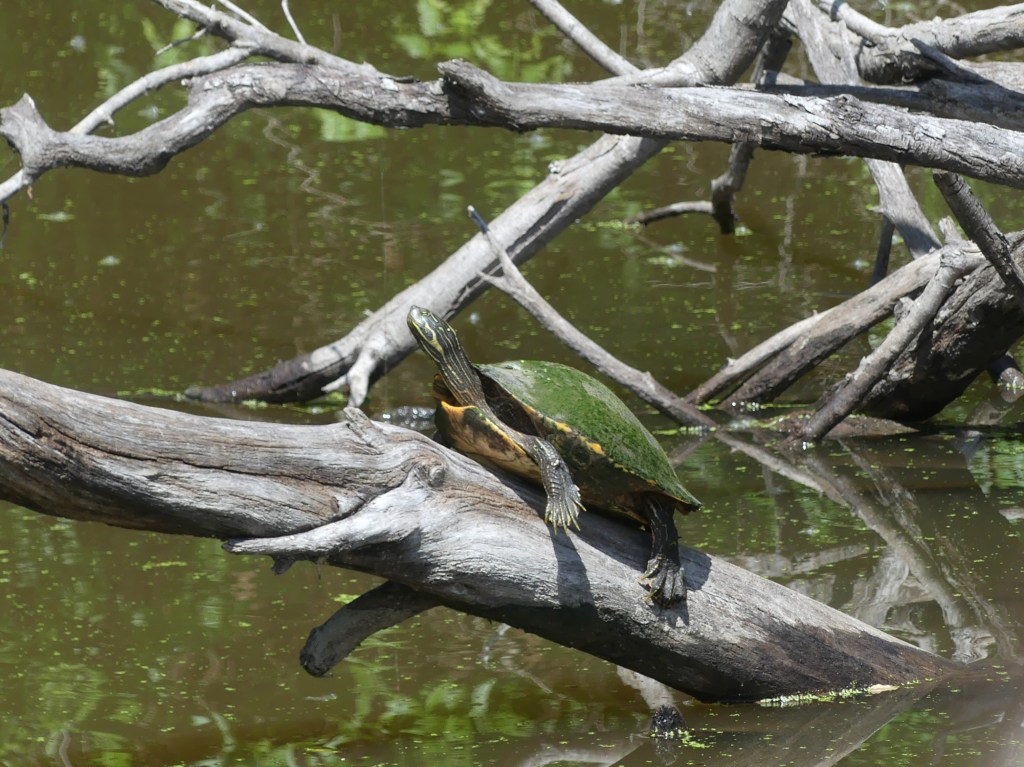
At 3:00 it was time to take a walk; the rain clouds had parted and it was a sunny and beautiful day at Fort Worth Nature Center & Refuge. We walked up the Cross Timbers trail along the Trinity River for a while, with the long, torpedo bodies of gar easily visible and the big scales and reddish fins of carp breaking the water’s surface. Our first herps were the turtles swimming or basking on branches of fallen trees. I am used to seeing more red-eared sliders, but today the river cooters were more common.

Meanwhile our group of 8 or 9 people were captivated by everything around us. After all the recent rain, the fungi were proliferating. Sheryl told us about some of the mushrooms as well as the jelly fungi like witch’s butter and wood ear. Soon, Caleb found a little brown skink. Those words serve as the actual name of the lizard as well as a description of it; they’re small and have a broad, coppery-brown band down the back, edged with a darker brown band on each side. They are sometimes described as “elfin,” perhaps because they are woodland creatures that are sometimes glimpsed for a moment as they make their way through the leaf litter.

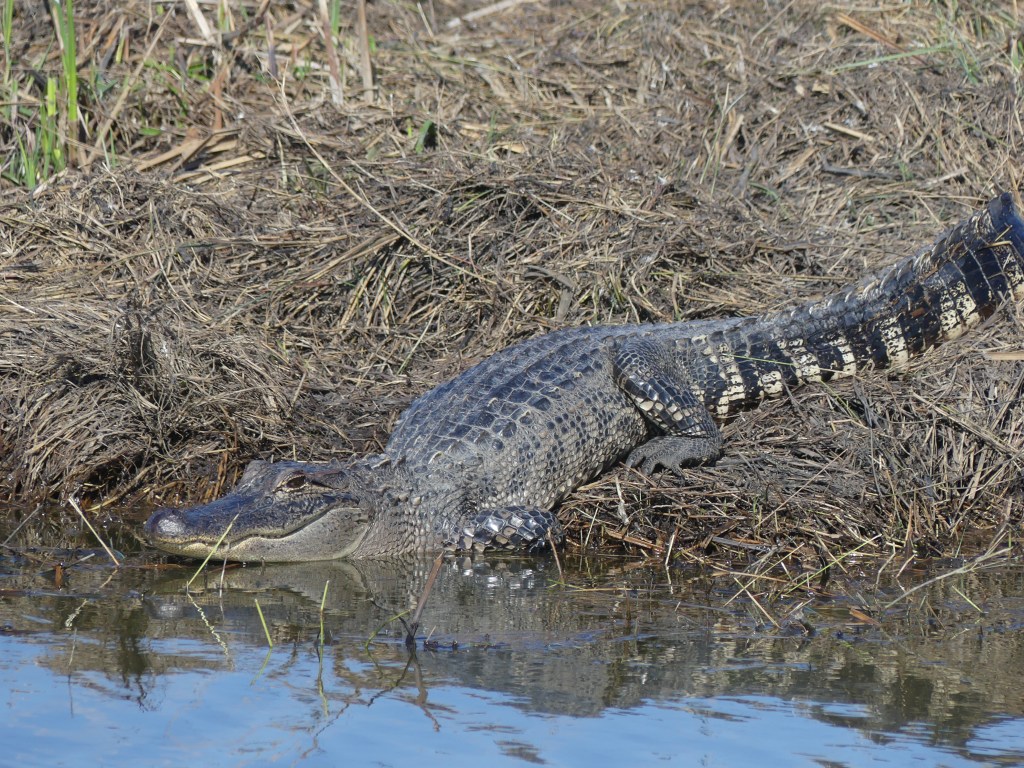
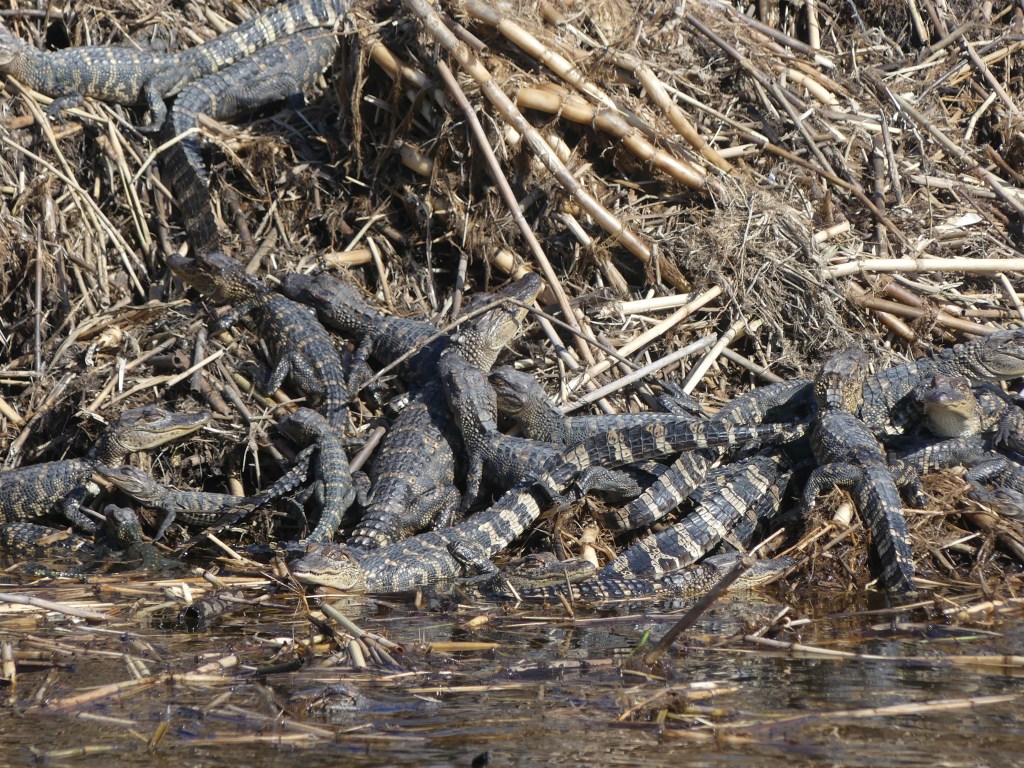
Across the river channel along the opposite bank, I spotted an American alligator that we estimated to be a bit more than five feet long. This one was half-submerged and presumably basking in the afternoon sunshine. Sometimes people are surprised that we have alligators in the DFW metroplex, thinking that they belong in the swamps of Louisiana or Florida. But the American alligator has made a significant recovery from the days when it was hunted to near-extinction.

Our ‘gators are generally found in secluded spots in or near the Trinity River. They are mostly shy around humans, though people on Lake Worth sometimes see them basking out in the open, seemingly without a care in the world. What I had shared with the group is that alligators should be admired from a distance (Texas Parks & Wildlife Dept. advises staying 30 feet away), and that alligators can run faster than we can for short distances. And yet, there are no records of people in Texas being killed by alligators and relatively few injuries.
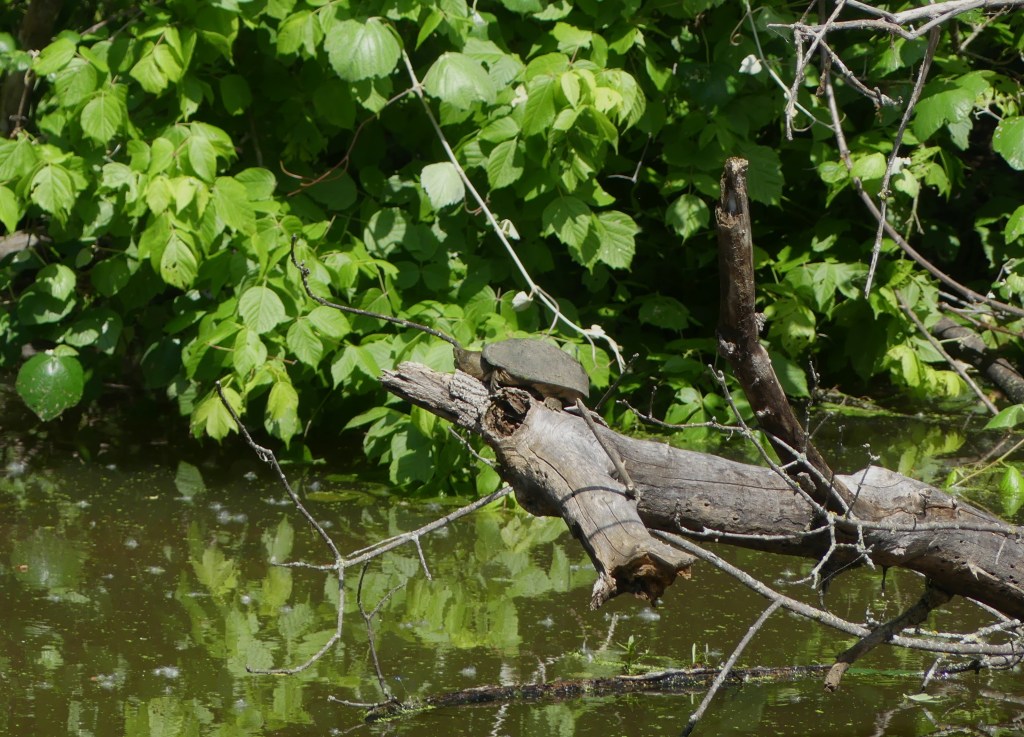
One of the turtles basking over the water was clearly not a cooter or slider, but my camera lens was not pulling in enough detail. Caleb took a look and said he thought it was a musk turtle, and with the head and neck more visible in his photo I agreed. It appears to be a razor-backed musk turtle, a small turtle with a carapace (top shell) a little like a peaked roof. Such turtles are on the menu for lots of other animals, including that alligator we had seen. As a result, they are pretty wary and I’m a little surprised that this one didn’t drop into the water before we could take a photo.

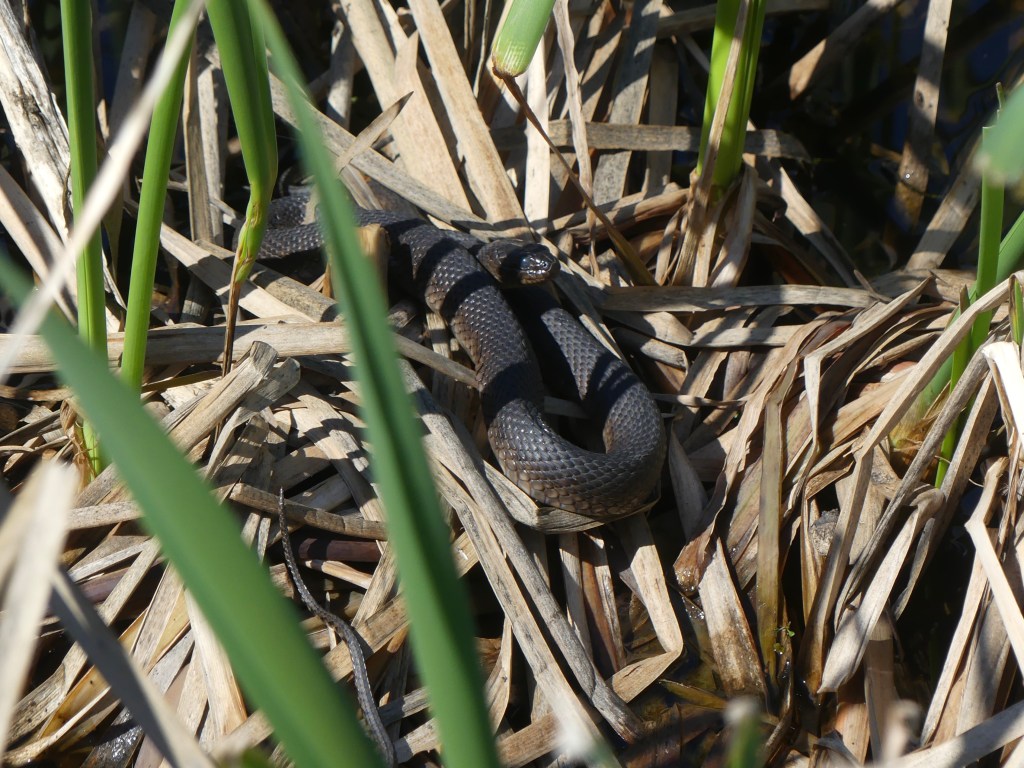
While I checked the local temperature and humidity (87.6F and 45%), Eleanor brought me the first snake, a rough earthsnake. These small snakes are found in leaf litter and under logs, as well as under boards or rocks in old fields and in gardens. In those places they find earthworms and small, soft-bodied insects that are their food.

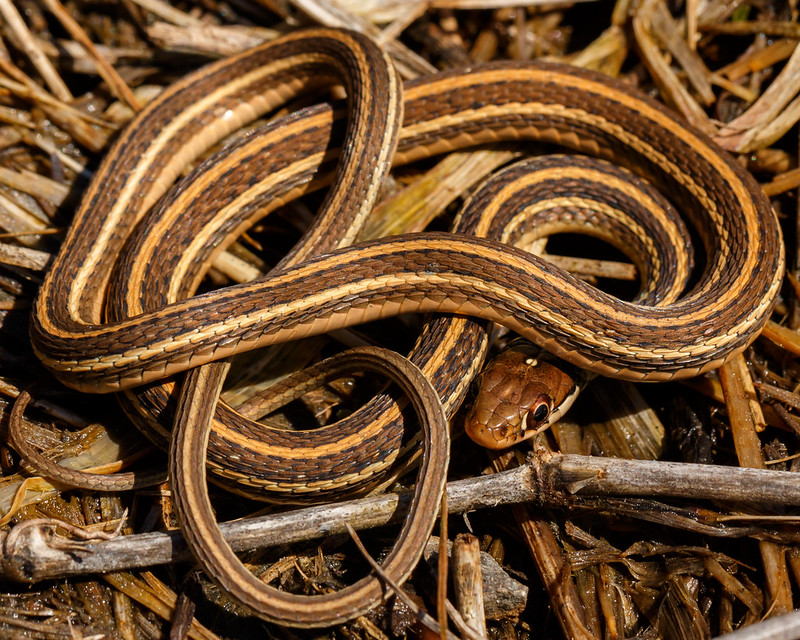
Meanwhile we continued finding lots of caterpillars as well as a variety of spiders. When the trail led us away from the river and into the woodland there were little refuges to investigate, in the form of fallen branches and logs. Could we find a frog or toad under one? Alaina did spot a leopard frog and chased it but it was soon lost in vegetation. The best things to turn over are bigger pieces that offer a larger area of shelter. Those are the ones that might conceal a ribbonsnake or cottonmouth (I brought a snake hook to insure that nobody turned a log by sticking their fingers under it).
I talked about the absence of small-mouthed salamanders in these places at the refuge. Intermittently flooded bottomlands are where I would expect them, and some persist along the Trinity River floodplain in Arlington. There are 93 observations in iNaturalist (55 of them just since the year 2020), all clustered in that area, but no observations are in the vicinity of Lake Worth and Fort Worth Nature Center & Refuge. Why would that be the case? What difference in microhabitats, predators, water quality, or something else would account for it? That would be an interesting puzzle to solve.
Everyone seemed to enjoy the walk and all that we found. This class is off to a great start, and I’ll post updates after future meetings. The next session is about amphibians, and we will look for frogs and toads around sunset and listen for frog calls. I think it will be magical!



 Our Lives In Nature