The Polycrisis and “The Work That Reconnects”

How are we doing? That’s a complicated, uncomfortable question. To a significant degree, we seem to be worried, dissatisfied, depressed, and isolated. A 2023 Surgeon General’s report notes that people feel “isolated, invisible, and insignificant.” People often remark that they “don’t have the bandwidth” to do something, meaning they don’t have the mental or emotional resources to think about something or take on a task. Such people are ordinarily capable and even resilient, but these days it’s all too much.

A Yale Medicine website talks about depression and suicidal thoughts among young people constituting a crisis, linking to a Centers for Disease Control report that has been removed by the Trump administration (the removal of trustworthy information being, in itself, emblematic of some of our troubles).

A Gallup poll early this year showed a continuing decline in the proportion of people in the U.S. who are very satisfied with how their personal lives are going. A recent American Psychiatric Association poll showed Americans anxious about current events, family safety, economics, their health, and other issues. 

Why all this unhappiness? I cannot remember a time when we faced so many challenges. Even during the 1960s when the world seemed on the brink of nuclear war, I don’t remember things feeling like this. Maybe it’s because so many things seem to be falling apart in society and government, all at once. Maybe because grinding poverty and gold-inlaid greed have surpassed the Gilded Age in which people became obscenely wealthy at the expense of everyone else. Perhaps because we are continuing to wreck the climate while societies and governments struggle to even admit that it’s real. 

“Polycrisis.” When you do a search for it, you find page after page of articles. There’s even a website devoted to understanding it. An article from a couple of years ago on the World Economic Forum describes it as multiple crises happening at once (like climate change, the Covid pandemic, loss of social cohesion, war in Ukraine and Russian expansionism, oligarchy, resurgent fascism) which can interact with each other producing an effect different from the sum of the separate crises. 

What can we do? Each of us, individually, can make choices that will help, though the tasks seem overwhelming – beyond our “bandwidth.” What comes to my mind is a quote from Tolkien, an exchange between Gandalf and Frodo that (in the books, not the movies) occurs when Frodo is discovering that the fate of his world may hang on what he does with a supremely dangerous tool of the enemy:

“I wish it need not have happened in my time,” said Frodo.

“So do I,” said Gandalf, “and so do all who live to see such times. But that is not for them to decide. All we have to decide is what to do with the time that is given us.”

The Lord of the Rings: The Fellowship of the Ring, chapter 2

This is our time – the time that is given us. What can we do that might nudge us toward a better life and a better culture? Individually and as a society, what do we value and how do we show it in our lives? What ways of living do we choose, and does it align with our beliefs? I think we need to do more than vote people out (even that option seems to be in jeopardy) and get back to what we were doing. Instead, we need to think very purposefully about the kind of society we want to (re)build and the kinds of kids we want to raise. Can we relate to each other as thinking and feeling individuals worthy of the same dignity and compassion that we expect for ourselves? Does that extend to people of different genders, races, and other ways of sorting each other into “us” as opposed to “them”?

Can we relate to the Earth as more than a big-box store and a theme park? We insist on measuring economic health in terms of growth, so that we must pretend that we can never slow down in our extraction of material from the Earth in order to produce more “product” to sell. We pretend that growth can be unlimited, that if the trend line on the graph becomes flat, the economy is stagnant and the ponzi scheme might unravel. But we could dream of a sustainable way of making our living from each other and from the Earth. We could use the same creativity and intellect that we have expended on nuclear physics or computing technology. If we applied that effort to creating such an economy, surely something good would emerge.

But we could dream of such things only if we want to live more equitably, more in harmony with each other and with the planet. As long as we consider such things to be naive fantasies, nothing much will happen. If we are raised to believe that ruthless competition is the only way to survive, that other people are objects that can be useful or not, we will stay on our current path. If we have been taught that the land, water, air, and every living thing was divinely intended to be used and despoiled by us, we keep in motion a scheme that ultimately will run out, regardless of how we might use our technology to keep it going a while longer.

That seems to be the society we have created. Clear-eyed, remorseless competition and wealth creation because we cannot imagine an alternative in today’s world. More technology, machinery, and artificial intelligence as the only salvation from the messes we create. More of what Joanna Macy called the industrial growth society.

Joanna Macy was a teacher of Buddhism and Deep Ecology whose later writings describe what she called The Great Turning, in which we begin to turn away from the industrial growth society and build a culture that can sustain healthy societies and ecosystems. Her writing, and that of writers like Rebecca Solnit, offer a useful perspective on hope for us – what Macy called, in her book of the same name, Active Hope. It is not an optimism that says “it’s gonna be OK” and allows us to wait in passive expectation for things to get better. It is not something we have, but instead something we do. It is acknowledging the actions that are still possible and working to bring about change, even if it’s little by little. I strongly recommend her writings and her work that she called “The Work That Reconnects”. 

Sister Moon

This morning I walked at Sheri Capehart Nature Preserve for about 45 minutes, underneath a blue sky with the almost-full moon still floating up there, reminding us that we’re just objects in space. And so I remember; we’re on a big, round, blue planet, ever so gradually circling Brother Sun. And we can watch Sister Moon and almost detect her falling and rising as she circles us, mirroring some of the sunlight back to us in the middle of the night so that we won’t forget the day. Or in this case continuing to reflect the sun, framed in morning sunlight, because sometimes it’s better to shine than to go dark. 

To shine seems easy and natural for Sister Moon, at least the way we understand it in terms of science. Does she sometimes struggle to do so, like we do? Maybe get up in the morning and say to herself, “I just can’t do this today.” If she is a barren sphere of rock and dust, then I suppose not. But we don’t have to reduce everything to such understanding. Native American wisdom recognizes the moon as a source of wisdom and guidance, and in the Haudenosaunee Thanksgiving Address she is the oldest grandmother, governing tides, watching over the arrival of children, and serving as a leader of women. In the Canticle of Brother Sun and Sister Moon of Saint Francis, the Earth and the heavens – all of nature – are precious gifts reflecting a wonderful Creator. And so in multiple wisdom traditions, the moon is more than what we can measure with instruments. 

And she shines throughout the year. Even when our planet is so dark, when human hatred and fear threaten to extinguish every light, Sister Moon gives us light in the darkness. When masked, armed men kidnap the innocent and march zip-tied children into the cold, and when soldiers carry out genocide, she does what I often cannot do: continue to provide light, not be overwhelmed by the darkness. 

I would like to be as constant as Sister Moon, but we are not made for such constancy. Being human means simultaneously holding on to the light, doing our best to shine, while also accepting how complicated and imperfect we are. There are times when climate catastrophe, cruelty, runaway greed – the various crises we are facing – temporarily rob us of light. Some days our faces do not reflect the light, even if we want to shine. The important thing is not to accept defeat, to let the light die. We still can imagine something better, we still recognize truth, and we still have within us compassion and empathy, even if some people have discarded it. Such things are our light, and we must let it illuminate us and all those around us.

A Sad Underwing

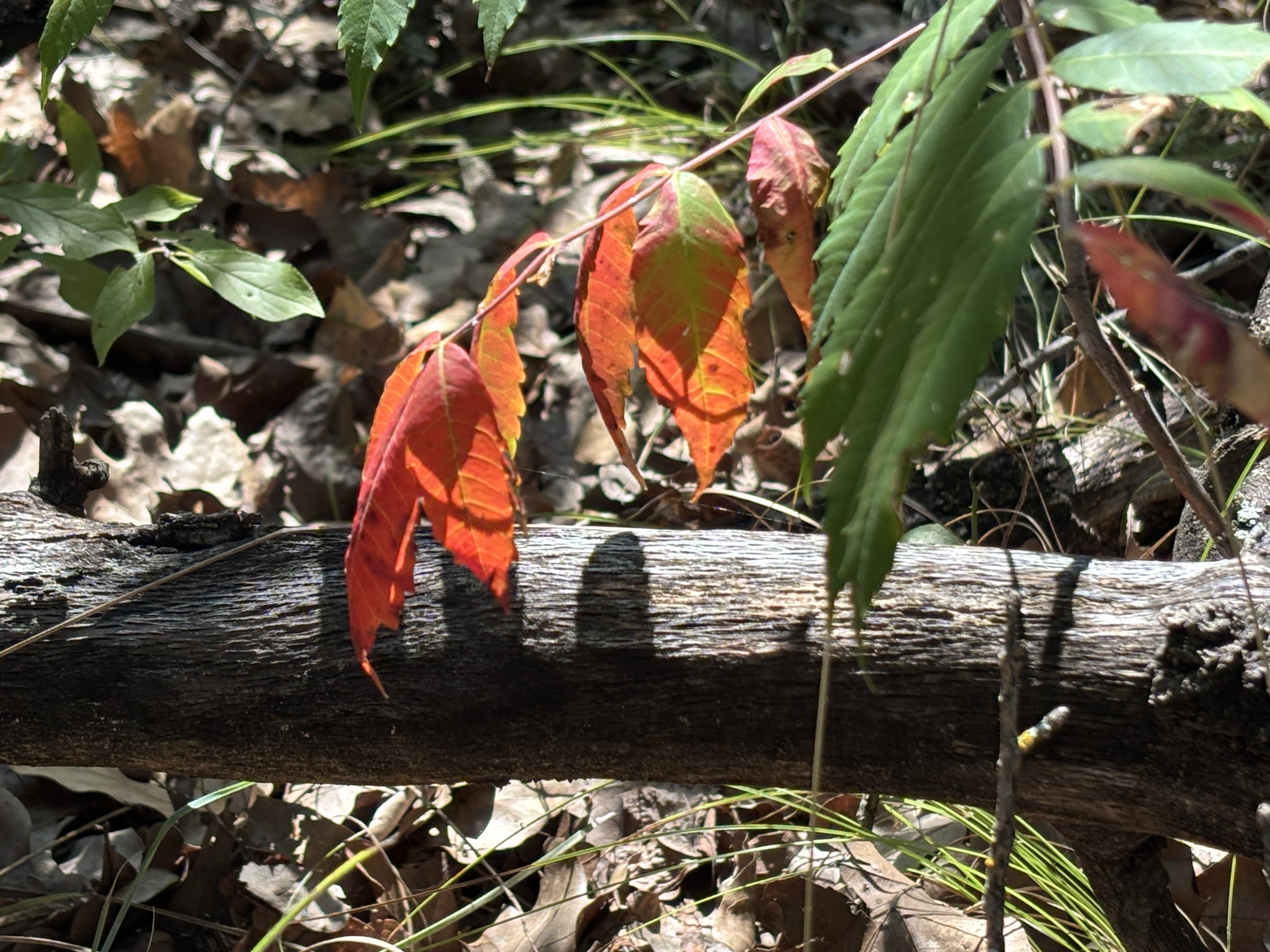
I visited Sheri Capehart Nature Preserve today, much as I have for the past ten years. I followed the trail to the sandstone ridge at the top of “Kennedale Mountain,” walked around the hill and down the boulder trail and back to the west. Despite one recent rain, it is dry at the preserve and many of the plants are drooping. On some sumacs, the leaves are giving up and becoming dark and shriveled. Some others are turning colors and autumn has barely begun. I suppose it reflects the stress of recent hot and dry conditions. Soon, the rest of the sumacs will turn bright red and orange, if they can hold out until the days get a little shorter and the temperature cooler.

Sumac leaves turning red

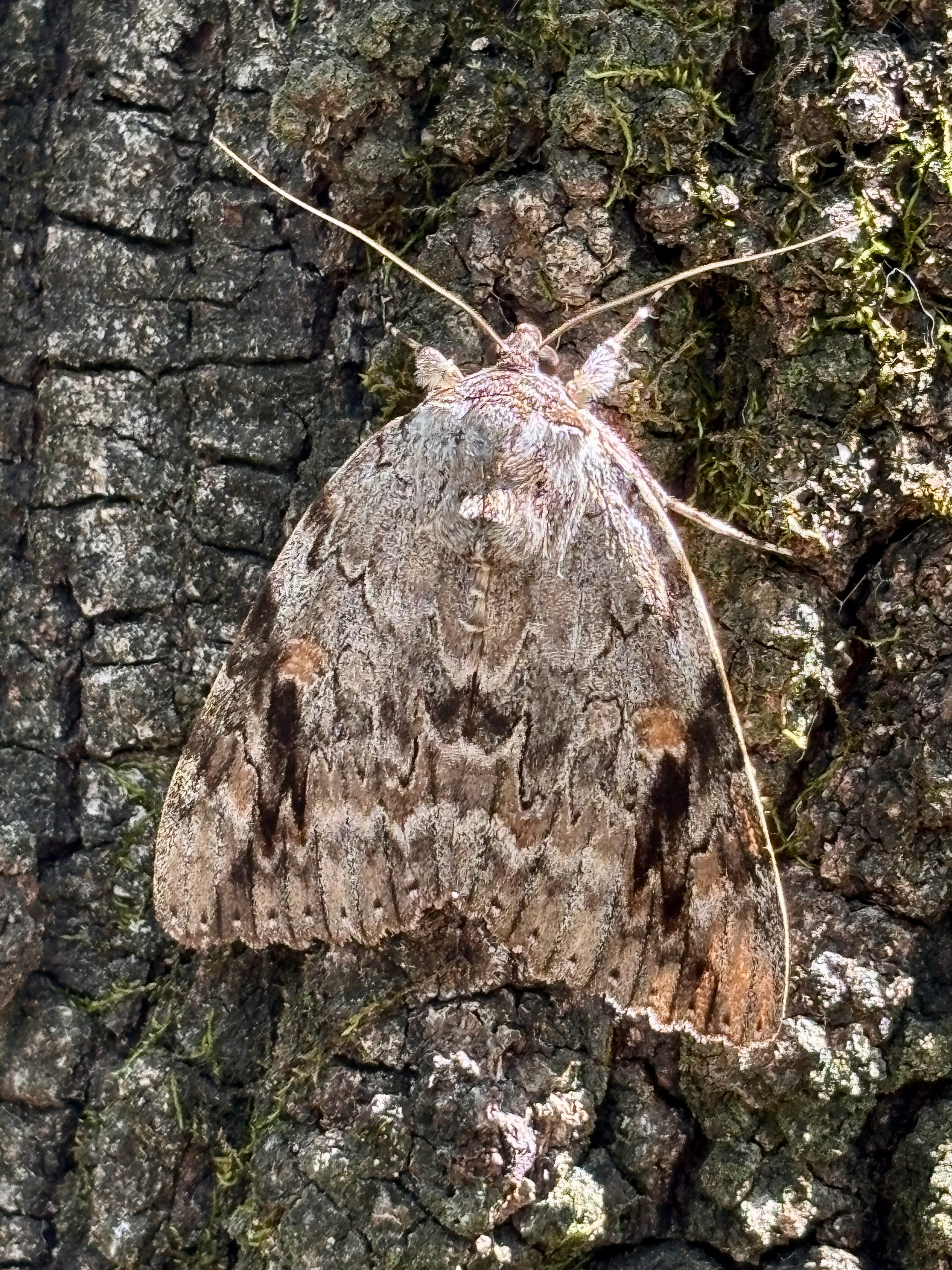
As I walked, a medium-sized moth flew across the trail in front of me and landed on an oak’s trunk. I was able to get a photo of this slightly fuzzy delta of moth beauty, and then it flew away. Those wings near the head were frosted gray with vague scalloping black lines and then irregular bands of darker color, then a brown band and alternating colors like soft squiggles. Finally there were dark/light dots – one above each scallop of the wing’s edge, with a pattern like tiny feathers. There were a couple of warm reddish-brown spots at the edge of an arc of dark color, symmetrical on each wing. The subtle patterns and colors were beautiful. 

The iNaturalist app identified this as a “Sad Underwing,” with the scientific name Catocala maestosa. The genus (Catocala) means essentially “beautiful below” and the species (maestosa) is a reference to “majestic.” The underwing moths have hindwings of a contrasting and often beautiful color, thus “beautiful below.” Those hindwings are covered by the forewings when the moth is resting, and that explains the “underwing” part of the name. 

The Sad Underwing

Many underwings have splashes of orange or pink color in those hind wings, which might startle a predator when the moth suddenly takes flight. But this species, the sad one, has hind wings that are very dark brown to nearly black. Some sources suggest that this is the reason for the “sad” in the name, either that the darkness reflects something sad or perhaps that being deprived of color is a reason for sadness. The moth had no comment about it.

From what I can see, the larva – this moth’s caterpillar – is even more camouflaged than the adult, mottled brown and gray to look like tree bark. Multiple sources say that the caterpillar feeds on three tree species: Water Hickory, Pecan, and Black Walnut. The moth is found from eastern Canada down through roughly the eastern half of the U.S., including Texas. NatureServe says that it is found in woodlands and river floodplains. 

Walks through this and other parts of the Cross Timbers are often like this. Some small treasure crosses your path somewhere, a moth or bird or flower with a fascinating life story and a beauty that you discover by staying with it for a minute, looking closely, and wondering about it. I have probably walked by underwing moths before and missed all this. I’m very glad I noticed this one today.

Summer’s End at the Grasslands

With one more week of summer, I wanted to walk in the LBJ National Grasslands. Summers there can get really hot; I will never forget a midsummer walk years ago in these grasslands. I was out with some herpetological society members on a day when the temperature was supposed to be more moderate, and everyone was probably on the verge of heat exhaustion. At least one member was feeling faint, and we made our way back to the cars by walking from one patch of shade to the next.

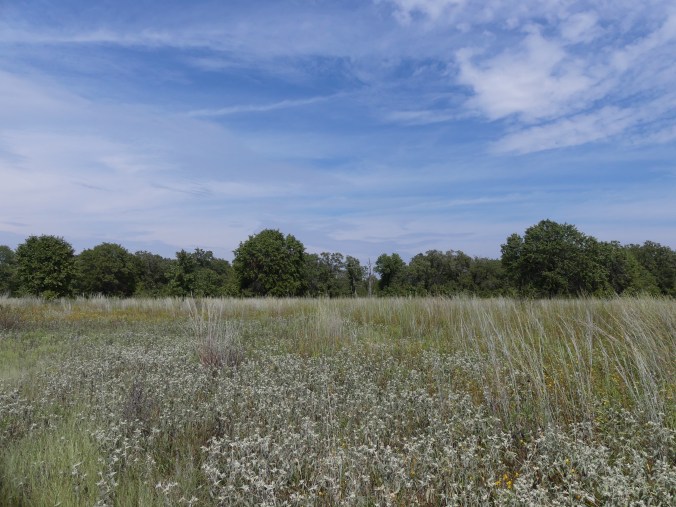
This day at the grasslands would get no hotter than the mid-90s. That’s how warm it was at 2:00pm when I arrived at a trail taking me into open fields and oak woodlands. There were patches of prairie dominated by Wooly Croton, a slightly fuzzy plant whose seeds are sought by doves, among other birds. And so, another common name for it is Doveweed. It is also a host for caterpillars of a beautiful butterfly with the strange name Goatweed Leafwing. Accordingly, another name for this plant is Goatweed. All those names can get confusing (it’s also called Hogwort by some) but the names tell interesting stories. In other areas, Western Ragweed was common. Allergy sufferers may wince at the mention of this plant, but consider the scientific name of its genus: Ambrosia. It may not literally be the food of the gods as the name suggests, but if you crush a leaf between your fingers, the smell is wonderfully aromatic.

Wooly Croton in the foreground, with Little Bluestem too the right and further back

There are plenty of native grasses, including Little Bluestem, which is easy to recognize because its blue-green stalks with pale smears of magenta stand so straight and tall. Today, some patches were shoulder to head high, giving a particular color and texture to some parts of the prairie. Switchgrass is common in areas that get a little wetter, growing in big green clumps.

The land gently rises and falls, with swales and ridges that are a part of the natural shape of the earth. In most places, the soil is very sandy and erodes easily. It is not unusual to come across a spot where the ground suddenly drops into a gully or maybe a spot where rainfall gathers into a little pond. In other places, humans built embankments years ago that created ponds either for cattle or to slow the runoff and conserve soil.

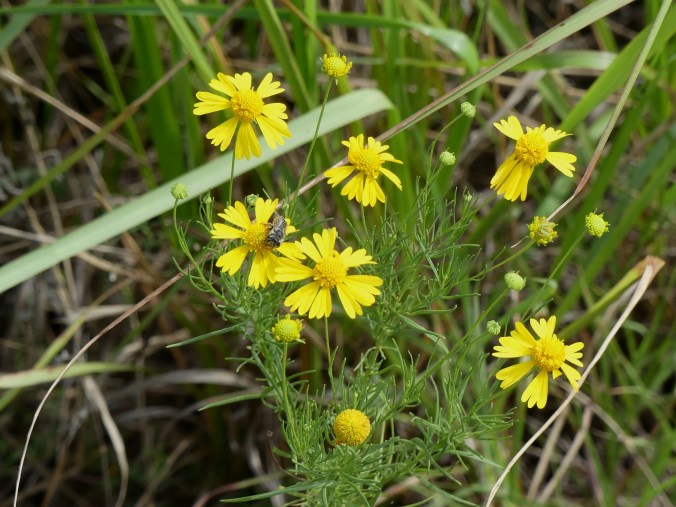
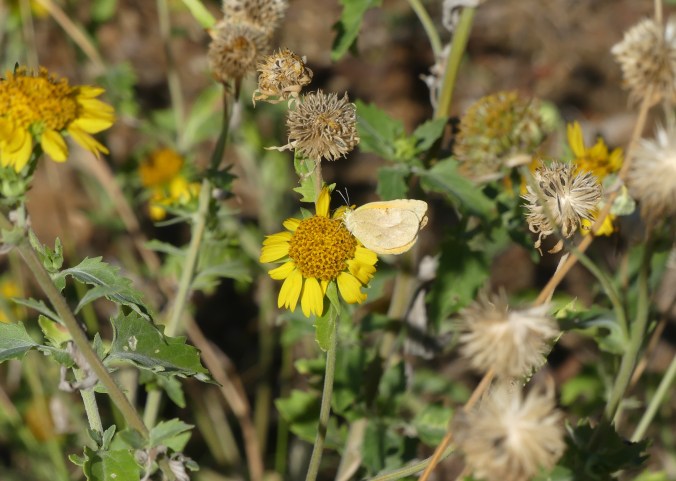
At the fork in the trail, I turned and followed the bare sand and clay track to the north, through stands of Post Oak and Eastern Redcedar and out into grassland openings, grateful for the breeze as well as for the bright sunshine. Along the trail were clumps of Bitterweed, with thin leaves and stems and bright yellow flowers. In each of those flowers, the central bowl-shaped disc is full of tiny yellow disc florets, and arranged around it are the ray florets (most of us are taught to call these structures the “petals”), each one scalloped at the edge. The plant is said to be bitter, so that if cattle must forage on them the cows produce bitter milk. But Bitterweed is a familiar and welcome sight to me, and I often find them blooming deep into winter.

Bitterweed

I sat in the shade of an oak and wrote for a bit and then decided to turn back. I became increasingly grateful for breeze, and thankful for the bright sunshine only in a more abstract sense. It’s true that it was a beautiful day, but the day was determined to show that it was still summer for another week. I found myself looking down the trail for the next spot of shade and heading for it. Perhaps my age is catching up with me, or perhaps it was poor judgment in choosing midafternoon to take this walk.

Down the road was the big pine grove in Unit 30 where people love to camp. And it is a wonderful place to sit and listen to breezes sifting through the crowns of those big Loblolly Pines. Not only that, it is dotted with a number of ponds with turtles and frogs. That made it a perfect place for me to sit beneath those trees, breathing the smell of pine trees and listening to breezes and birds. The grove is a good crow hangout, and I heard several. The identification app Merlin also heard Great Blue Heron and Northern Cardinal.

I walked to a spot near one of the ponds and sat beside a big pine tree and across from another. My camp stool rested on a mat of pine needles and dropped twigs that had accumulated over the years. At the water’s edge were the bent but mostly straight trunks of twelve to fifteen understory trees, and beyond was the water, brown from the sand and clay of the soil. On the surface of the water were mats of Floating Water Primrose and clumps of small reeds.

As I watched for the movement of a frog or turtle, I saw skimmer dragonflies dart this way and that. By now it was 4:20pm and the sun was getting lower and the slanting light more golden. Some insect trilled a steady “wrrrt-wrrrt-wrrrt” – almost but not quite like a gray treefrog. Occasional concentric ripples appeared in the water, maybe from fish or some invertebrate. Between the insect trills and the low, hushed sound of breeze in the pines it was very quiet.

It was peaceful here. The smell of pine needles, the lullabye of the breeze, ripples in the water, the sudden appearance of dragonflies; I was very lucky to be there for all of it. And while I’d like to share all of it, I am thankful for the solitude.

False Gaura on the ridge

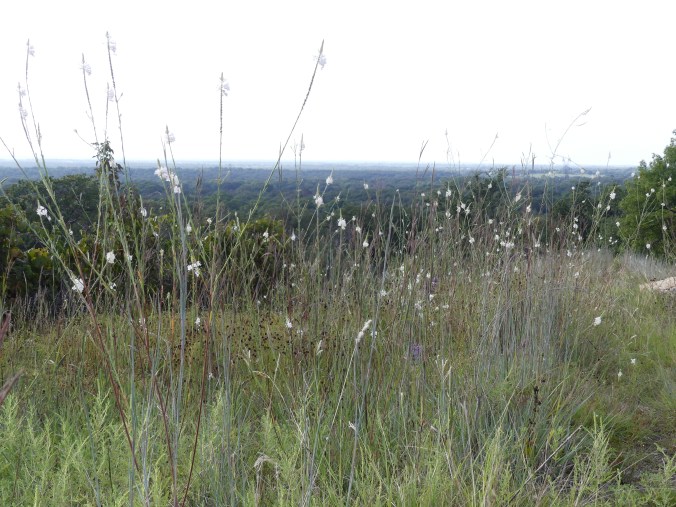
At 6:00pm I had moved to a limestone ridge in Unit 71, with a clear view to the west. Here, the Leavenworth’s Eryngo adds some spikey purple to the landscape, and False Gaura is scattered around with flower clusters looking like popcorn waving in the breeze. During the next hour, the sun was obscured behind some clouds near the horizon and it began to feel like the day was ending. Although there were some distant noises, a pump somewhere, an occasional car or jet, it seemed very quiet. No sounds of birds or insects. In the blue sky to the south, a few wispy clouds were drawn out like a downy feather.

Leavenworth’s Eryngo

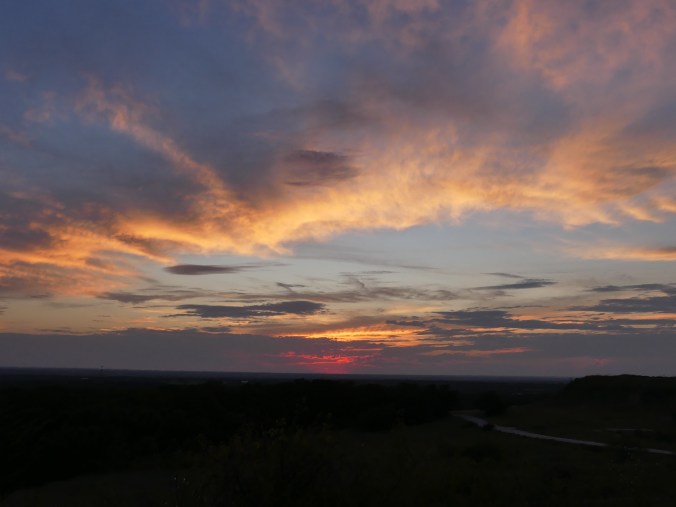
The sinking sun reached a point where it was behind some clouds, lighting them from behind so that they looked like islands and archipelagos in an orange sea. The ones several degrees up from the horizon were orange, while the ones just at the edge of land were dull red-orange.

Out of all this, I began to hear gunfire. Somewhere nearby, someone was shooting a rifle or shotgun. When visiting the grasslands, I understand that hunting is allowed with the restriction that only shotguns are allowed (not rifles, where stray bullets would be more dangerous) and shooting is not allowed near trails and campsites. I find bullet casings at the grasslands frequently, so I know that people who like to shoot may not care about the rules. And so, hearing gunfire is a real concern for me. I moved further south along the top of the ridge, and after a while I heard more gunfire – not very close, but not very far off. I sat on the other side of my car from where the sound seemed to be coming.

Forest Service land, including the National Grasslands, are supposed to accommodate various uses, including everything from logging and drilling to hunting and fishing. I understand that public lands cannot be reserved just for one kind of user such as birders or naturalists. However, some kinds of use pose no threat and little chance of degrading the land. Other uses could result in someone being shot or patches of habitat being bulldozed and potentially poisoned for gas and oil drilling. Maybe the “multiple-use sustained-yield” law that opens forests and grasslands to all these uses should have taken into account these different impacts on the land.

Hunters and gun owners might claim I was overreacting. I must acknowledge that the statewide hunting accident data in Texas for the past three years show one fatality each year and between 10 and 18 non-fatal accidents per year from 2022-2024, a lot of them while dove hunting (it is currently dove hunting season). Statistically, I’m safer at the grasslands than I am on Texas highways, where there were over four thousand fatalities last year.

At 7:25pm that orange, red, and blue sunset sea was more brilliant and well-defined. And every minute changed the view. The sun was now fully hidden, shining down between the cloud and the horizon like fire, glowing red-orange in the mists. Then the ball emerged below the cloud, reaching for the horizon.

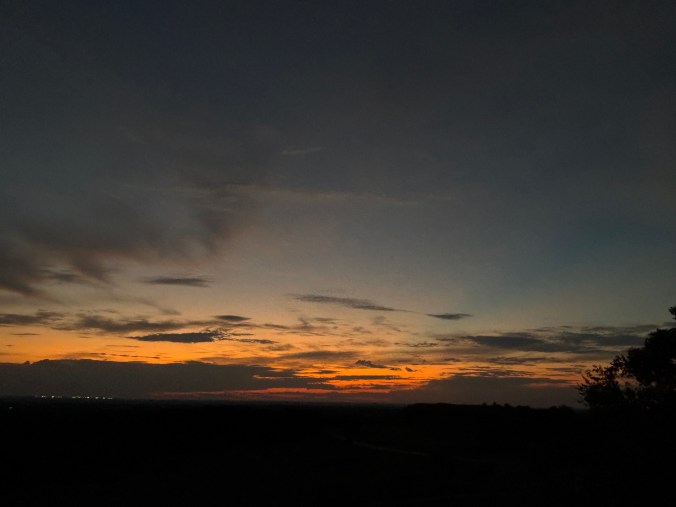
Ten minutes later, a cool breeze came up, steady this time. With it, the beginning of a pulsing, buzzing insect song. The last burning ember of the sun disappeared at 7:37pm, leaving a brilliant sky. The edges of the clouds were left like burning scribbles, and closer to me the undersides of clouds were lit in gold. Even the tattered clouds overhead were lit up in yellow-orange. Just a bit later, looking back from the west the clouds were blue-gray brush strokes edged in pink and orange. The sky was deep blue overhead but pastel all the way around the horizon, perhaps from light pollution and haze.

Nearing 8:00pm, still not full dark, stars were not yet visible. The color had left most of the clouds and the ridge was quiet. Just as the summer was ending, the day also was coming to an end.

Turning Away from What’s Essential for Humanity

The news is full of war, hatred, assassination, and cruelty. Right wing media, from what I can see, appears to be telling people that what we need is power, domination, and ruthlessness. Much of American Christianity is saying that empathy and compassion are weaknesses at a time when we need strength. Our neighbor, we might infer, is whoever is in our tribe and thinks like us. Everyone else is expendable or perhaps needs to be eliminated (by deportation or deadlier means).

The thing is that the world’s major religions disagree. Or – wait – the major teachings of major religions disagree, while the practices of their followers may not. The history of how religion has been expressed in different cultures contains plenty of hatred and murder, war, torture, and slavery. But what do you find in the teachings of Buddhism? You find compassion playing a major role, relief from suffering alongside not being held captive by possessions or attachment to the way things are. What do you find in Christianity, by which I mean the actual teachings of Jesus? Compassion, forgiveness, empathy, and love.

One of my heroes, the farmer, writer, and poet Wendell Berry, put together a small book on the subject of “Christ’s teachings about love, compassion, and forgiveness.” It is titled Blessed Are the Peacemakers, and it is in print and inexpensive. He wrote that in the U.S., Christianity seems to be fashionable, but “It seems to have remarkably little to do with the things that Jesus Christ actually taught.” He went on to write that “…I know of no Christian nation and no Christian leader from whose conduct the teachings of Christ could be inferred.” And so, he decided to put together this little book containing Gospel passages in which Jesus addressed issues of “human strife, forgiveness, compassion, and peacemaking.” It’s a good antidote for those politicians who paint a portrait of Jesus as a Proud Boy, storming the Capital and proclaiming white supremacy.

Similarly, the books of Thich Nhat Hanh spell out the wisdom of the Buddhist tradition. He was born in Vietnam and became a Buddhist monk, then went on to teach at Columbia and Princeton, to write numerous books, and work tirelessly for peace. In Peace is Every Step, he wrote that, “Real strength is not in power, money, or weapons, but in deep, inner peace.” In The Art of Living, he wrote about mindfulness, the ways we are connected with everything around us, and the importance of transforming pain and suffering.

What does science have to say about these things that I’m claiming are essential for our humanity? One place to look is in the work of Dr. Bruce Perry, a child psychiatrist who knows a thing or two about love and connection, and what damage trauma and neglect can do. Using neuroscience and our understanding of human attachment relationships, he writes (in The Boy Who Was Raised as a Dog) that humans “…could never have survived without deeply interconnected and interdependent human contact. The truth is, you cannot love yourself unless you have been loved and are loved. The capacity to love cannot be built in isolation.” He goes on to write about love and empathy in Born for Love: Why Empathy Is Essential-and Endangered. As a retired psychological associate, it troubles me to see popular culture asserting that empathy is a defect, and this book is an excellent answer to that claim. We need each other. The ideal of the tough guy who is entirely self-reliant is not a healthy model for raising children. It typically results in adults whose idea of love is more like transaction and manipulation.

Like many people, I look at what our popular culture and right-wing politics is promoting and I fear for how the future will go. Fear, but not despair – not yet. For my brothers and sisters who feel like they are bystanders to the world’s death spiral, I suggest reading Rebecca Solnit (titles like Hope in the Dark) as well as Joanna Macy (for example, Coming Back to Life, with Molly Brown).

What does all this have to do with Our Lives in Nature, the title and theme of this blog? It is all related; how we see ourselves shapes our relationship with the Earth, how we treat each other and how we treat nature are intimately related.

A Story – Journaling at the Creek

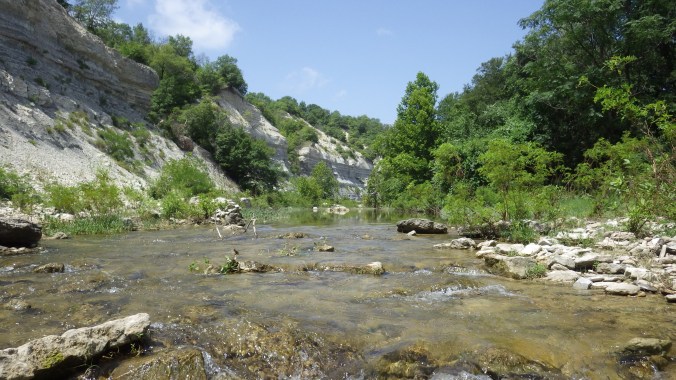
The creek bed was slippery as Elliott and Kate waded upstream. Ahead of them they could see several Sunfish, huddled in one spot where the clear water was a couple of feet deep. Then the blue-green fish decided that the two humans were getting too close, and they made a break for it, darting one at a time past Kate and then practically between Elliott’s legs. 

“I could have caught one in my hands if I was fast enough!” Elliott claimed. He added, “But I’d probably have fallen on my butt. This spot is really slip…”

Before he could finish, his legs slipped out from under him and he really did land on his butt. The water cushioned his fall, and he sat on the algae-coated limestone, spluttering. Kate came back to help.

She extended her hand to him. “If I fall in, I swear you’re going back down too,” she teased. 

Elliott managed to get up without pulling her in, and they kept wading upstream, past schools of little silver fish and a small Red-eared Slider turtle hiding in the shallows. His shorts and shirt were wet, but they would soon dry in the sun. And to have Kate take his hand and help him get back up, he thought it made falling down worth it, though he wasn’t going to say that to Kate. 

It was October, but in Texas all that meant was that it was warm rather than hot. As Halloween got closer there were no golden or orange leaves, no autumn color yet although some leaves were falling just from being worn out by a long, mostly dry summer. 

At a bend in the creek, the two of them waded out onto the exposed white limestone bank of the creek. Another, higher layer formed a sort of bench where they could sit in the shade, facing the water. Elliott went through his backpack, which had stayed mostly dry inside when he went in the water. He found his journal still sealed in a plastic bag, protected against just that kind of accident.

Kate looked back at him. “Are you getting your journal out? This looks like a pretty good place to do it, right?”

Elliott agreed. The teacher in their 10th grade science class had given this as an assignment: Take a notebook somewhere out in nature and write or draw about what you find. Kate liked this creek and so after they got the assignment, she asked Elliott to come along. 

Each of them opened their notebook and wrote the date at the top, followed by the location of the creek and the time they started walking and wading. There were a list of prompts included with the assignment, suggesting what to include. 

“Let’s see,” Kate began, “there’s weather stuff. The sky is kinda deep blue today, with a few clouds, right?”

Elliott looked at the clouds. “Yep. I think those are high clouds, a forget what you call them, but they’re sort of like a little bit of milk swirled across the sky with the tip of your spoon.”

“OK, ‘milk clouds,’ I’m sure that will win us the weather expert prize.”

“Whatever,” Elliott responded. “Remember she said it doesn’t have to be technical. She said just describe, put what you experience into words.”

’Elliott stinks like creek water.’ There, I’ve put my experience into words.”

Both of them were quiet for a minute. Then Kate said, “OK, sorry, I’ve written about blue sky and swirly clouds. Did you bring a thermometer?”

“No, but I’m going to check the nearby weather.” Elliott pulled out his phone. “So it’s 78 degrees nearby. Feels warmer when you’re out in the sun, huh?” Then he pulled a section of his T-shirt up and sniffed it. 

“That does not stink.”

Each of them wrote in his or her journal for a while. And then Elliott asked, “Remember that big white wading bird we saw back there? Do you know what it was?”

“Yeah, a Great Egret. I think I remember that they eat stuff that they can spear in shallow water, like fish or frogs. They’re so pretty when they fly.”

Elliott added, “I guess I can say something about the fish even though I don’t know what they are.”

“Ms. Martin said that was fine, that it was more important to put into words what you noticed – just what it looked like or sounded like. What did she say? ‘It helps you remember it and really notice and learn about it.’ So you could say they were silvery little shooting stars that flashed in the water, and that would be OK,” Kate commented.

Elliott smiled. “I remember – actually she’d really like that ‘shooting star’ bit, because she said it should capture how it came across to you, how you felt about it.”

They kept writing, including a little about the creek itself and the sparkling reflections of the sun when the shallow water ran over the rocks. There was the sound that water made when it ran fast and shallow, and an occasional bird call. They included the feel of the water, a cool swirl around their ankles and a slight push against their legs as they waded upstream (and Elliott could mention how hard they worked to keep their balance and that cool, sudden immersion when he fell in).

“I started to quit a few minutes ago,” Kate said, “but when you stop and think about it, there is so much to notice. I guess that was the point, huh, to get us to pay attention to all this.”

“Yeah,” Elliott answered, “How long do we have to keep going? I know she said there was no specific number of lines or words, but I keep thinking of stuff. If we weren’t doing this nature journal, I think I wouldn’t have noticed a lot of it.”

“Are you drawing anything?” Kate asked. “She said that would be good, too. Maybe I’ll draw your swirly clouds.”

“There’s that fossil snail or whatever that I saw back there. Maybe I can find another.” Elliott wandered around, looking at the exposed limestone, until he saw the exposed coil of a ribbed spiral shell, a limestone fossil embedded in the creek bed. He carefully worked it free and brought it back to where they were sitting. 

“I see at least a piece of one of those every time I’m here,” Kate said. “All this used to be a sea bed, in prehistoric times, and these were kinda like a squid living in a snail shell, is what I heard.”

As Elliott began drawing, Kate continued, “We’re supposed to say if we’re grateful, or maybe write something like if we were talking to the place, telling it what we think. Let’s see … I’m grateful that you fell in.

“Hey, we gotta wade back out of here, so don’t be so sure you won’t do the slip and slide and go for a swim.” At this point Elliott was hoping for it; paybacks were gonna be fun.

“Maybe this,” Kate went on, “’I’m glad we can visit this place, that it has so much cool stuff. It has had amazing animals since prehistoric times, and it’s still here. I hope people can wade this creek in a hundred years.’” 

“I like that,” Elliott said. “Do you want to try this again, even after the assignment is done? I usually keep on the move, and writing and drawing kind of slows me down. But maybe it would be fun to try again.”

“It slowed you down but it made you think about stuff you would have walked right past,” Kate replied. “So we could go to that preserve with the open grasslands and woods and maybe if we wrote in the journal, we would notice more things and think about them in new ways.” 

“OK, it’s a deal,” Elliott said. “We can give it a try.”

And on the way back … neither of them fell in the water. Elliott was a little disappointed.


(Recommending nature journaling might sound a little like a school assignment – which wouldn’t exactly get everyone rushing out to pick up a notebook and pen. So what is a good way to introduce it?

I decided that maybe a story would be a good approach, and in this story it literally is a school assignment. But it turns out well, and I’d like to think Kate’s and Elliott’s interest in trying some more journaling might also work out well. What I had in mind about the teacher’s prompts and suggestions to deepen their journaling is shown below – I took it along to the preserve and gave it a try. You could write something shorter; like Elliott said, there’s no prescribed number of words.)

Nature journal page with prompts or suggestions

The Children of Maria’s Meadow

The First Walk in the Wildscape

The morning of July 25 was very mild compared to the afternoon’s heat. It was a great morning for a group of about 14 kids and several adults to take a walk in the wildscape of a local Montessori school. I hoped that these mostly fourth through sixth-graders were ready to playfully explore the nature of their wildscape, and they were more than ready.

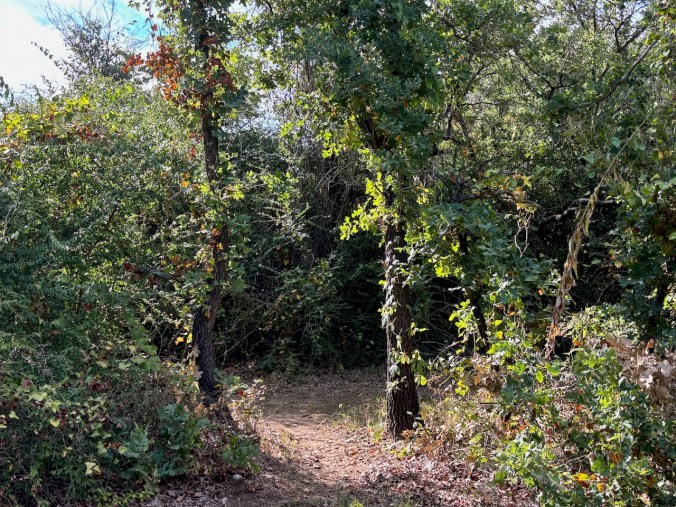
Like a gateway – to Terabithia?

They knew the place better than Marylee and me. We were nominally in charge of leading the group and teaching about nature, but these kids would have been happy to have led the get-acquainted walk. They, or their predecessors at the school, had named the places within it: the Dark Forest, the Ranger Circle, Maria’s Meadow, and other spots within this little fragment of Eastern Cross Timbers woodland and prairie.

It’s such good news that the kids had named it and made it their own, that their school had this delightful patch of wildness and let each new group of kids belong in it and get to know it. So our role would be to help them get more deeply familiar with it, more acquainted with the lives that live there.

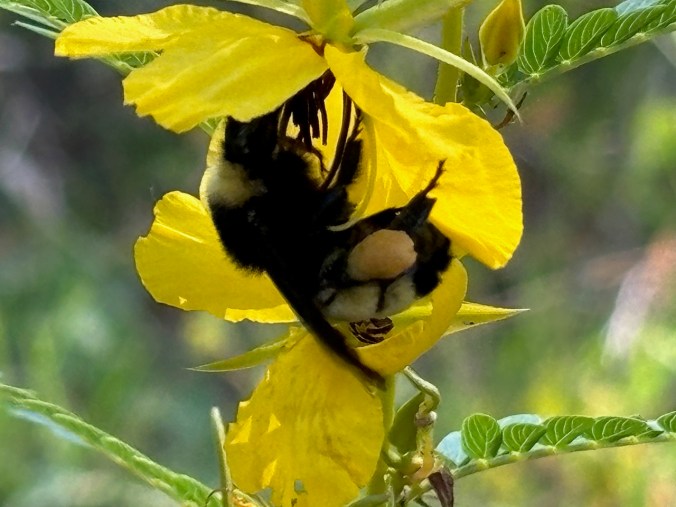
An American Bumblebee, feeding from a Partridge Pea

More acquainted with the bumblebees, for example. When everyone gathered in a circle around the old stump and we talked about likes and fears in nature, the dislikes were primarily spiders, snakes, and bees (which closely mirrors the things in nature that most nature fears are focused on). So when the group came to some flowering Partridge Pea that a bumblebee was feeding on, we didn’t pull back. We also, of course, did not swat at or otherwise make the bee feel that it was under attack. Any doubters might have seen that the bumblebee ignored us, even though I was pretty close.

This is an adult funnel-weaving spider, seen at Sheri Capehart Nature Preserve. They are all just as shy as the little one we found on our walk, and if one were to bite us, the bite is not medically significant.

Speaking of spiders, we came upon a small one in the low branches of a bush, within her web. One of the kids suggested that it was probably a wolf spider, and I agreed that the overall look was kind of like one of those. But, I commented, wolf spiders don’t trap prey with webs, they just chase down what they eat. This one’s body and web made me think of a young funnel-weaving spider, and just as I pointed toward where I thought her funnel was, she quickly scuttled down the hole made by her web.

We found and heard a lot that everyone could appreciate without overcoming a fear or aversion that they had been carrying. Bird song – especially from Northern Cardinals – rang out through the woods, and plenty of plants were still flowering. We found a butterfly and one of the boys looked for the extension of the hindwing that would make it some kind of swallowtail. (I noted to myself, “they know about swallowtails, how wonderful!”) It was a Gulf Fritillary, and when I asked if butterflies like this benefit us in some way, the kids quickly answered, “they’re pollinators!”

Did I mention that it was a real treat to be with these kids?

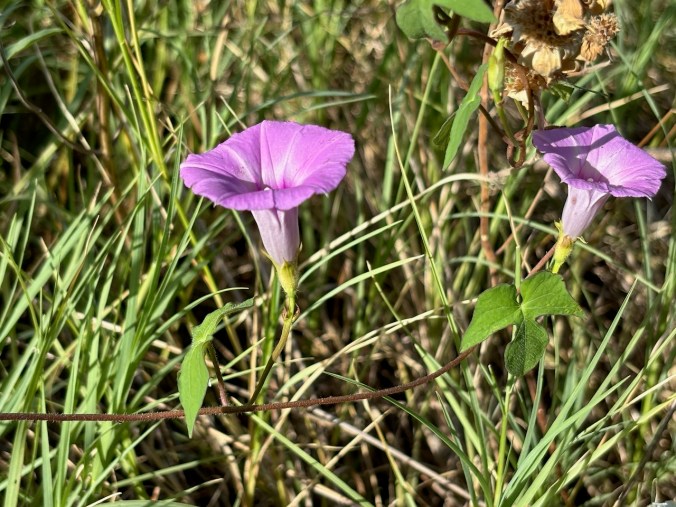
Flowers of Tievine, a type of Morning Glory, seen in the prairie patch

As we walked down the trail, I saw a telltale squiggle in the short grass at my feet. It was familiar enough that I dropped down immediately and tried to gently pin this little lizard so that we could have a look and then release him or her. It was a small Little Brown Skink. They already live up to the name – they are little and they are a coppery, two-tone brown, and this was a young one. I had it pinned briefly but could not get to where I could pick it up without risking breaking off the tail. And so it got away.

And that raises an interesting question: how much interference with nature is acceptable in a discovery walk such as this? It was important to me not to accidentally make the lizard lose its tail, but is it OK to catch wildlife? There is a kind of hierarchy of permissibility regarding what you can catch and handle. It runs up and down the phylogenetic ladder. We wouldn’t catch mammals, or birds like those Northern Cardinals. But starting with reptiles and amphibians and continuing through fish and then insects, it seems alright to most people. Catching frogs and bugs seems normal. And maybe that’s because many of them are harder to get a good look at unless we catch them. Frogs hop away, and so do grasshoppers. Also, briefly capturing them or scooping them up in a net can be pretty easy much of the time.

I wanted the kids to see the lizard I was talking about, but being captured is stressful. I make the assumption that briefly capturing such an animal for the sake of teaching, and then immediately releasing it unharmed, is completely fine. We want to teach kids compassion and respect for the lives they find out here (and anywhere), and so I’m open to revisiting and re-thinking this question.

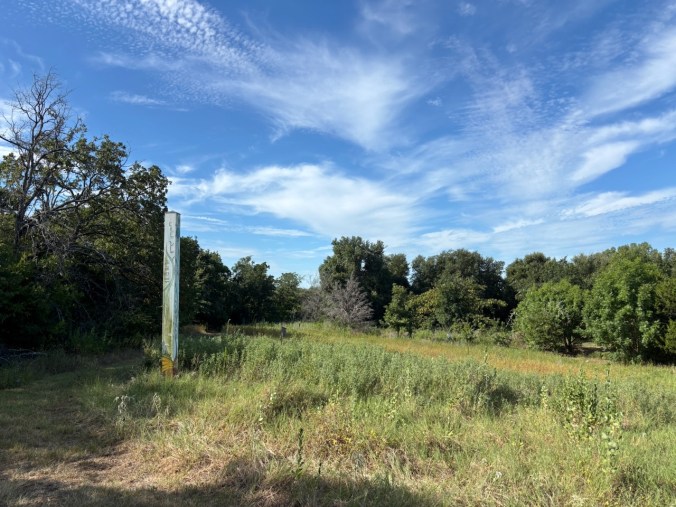
The Prairie

In a world in which most kids can recognize far more fast food logos than wildlife or plants, it was wonderful to be with these kids, who said at the end that they want to do more of it. It looks like Marylee and I will lead walks here about every four to eight weeks in the coming school year. We will get to know the wildscape through the seasons, and I look forward to all the discoveries we will make.

Getting to Know Some Reptiles

… and at least one amphibian

My interest in nature has been dominated by reptiles and amphibians (herps) starting when I was nine or ten and the girl across the street invited me to come along and find garter snakes in Colorado. I was active in herpetological societies twenty-five years ago and I’ve been teaching incoming Master Naturalists about these animals for some years. I’m interested in the “big picture” of ecology and natural history, but herps are still an important focus.

Herp conservation is very important to me. If you’d like to learn more and support some important work, please check out the Amphibian and Reptile Conservancy and the Orianne Society, among other organizations (such as Texas’ own Texas Turtles). I’ll be giving talks about reptile and amphibian conservation in Texas over the next few months, and while preparing, I’ve added some species profiles to the downloadable pdf files on my herpetology page.

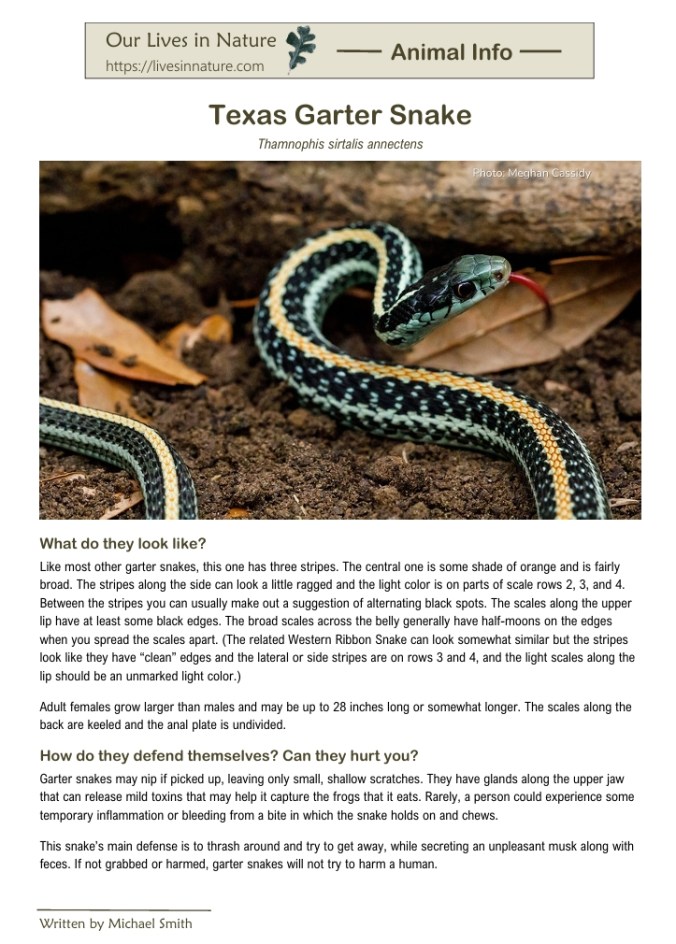
Among them is information about the Texas Garter Snake, a subspecies of the “Common” Garter Snake. Across the years, I have found a handful of Texas Garter Snakes, and they turn up occasionally on iNaturalist, but as far as I can tell they have never been common. There seemed to be particular spots or areas where they had viable populations, but even in those places a search for them was always hit-and-miss. That turned out to be the case in 2013 and 2014 when a group from UT Tyler started a project to investigate its genetics and preferred habitat. They did not find any, and had to rely on a few museum specimens in order to finish the project (published in The Southwestern Naturalist in 2019).

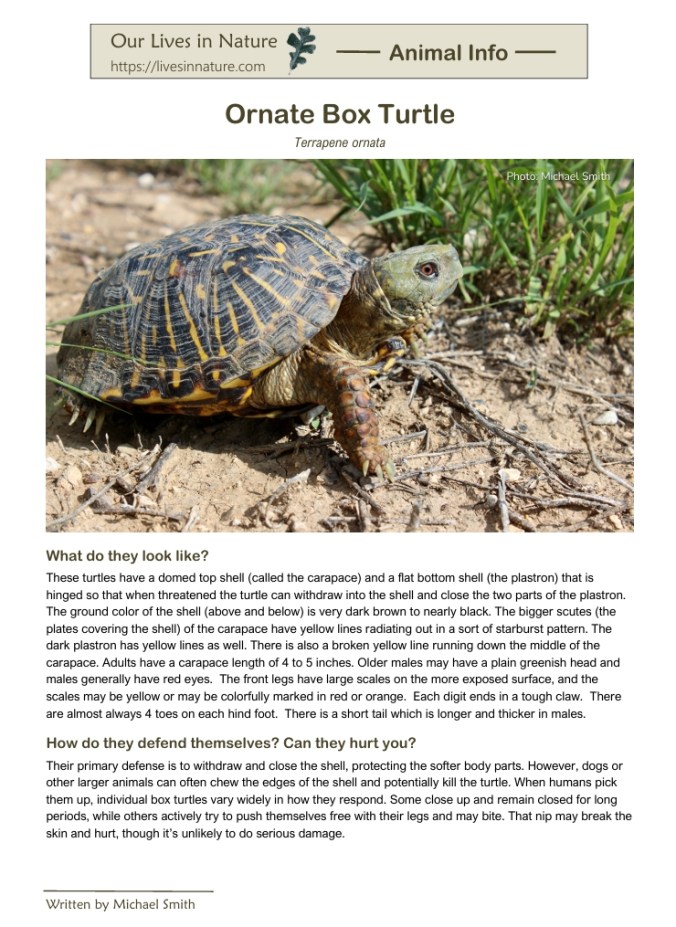
Another profile covers the Ornate Box Turtle. I have loved box turtles since I was a kid (and at least half of Texas would say the same thing, until they became uncommon enough that kids didn’t get many chances to see them). They have suffered from habitat loss and fragmentation, road mortality, and the unfortunate tendency of our species to want to collect and keep interesting and cute animals. In recent years, Texas protected box turtles from commercial collection. However, people still pick them up and take them home. Like turtles generally, their success depends on living long lives once they become adults. Collecting one is like running it over on the road – it is “dead” to the reproductive population of turtles.

And Texans of a certain age recall when the Texas Horned Lizard could be found in back yards and local parks. In the 1960s these places were often dotted with Harvester Ant colonies with a big bare circle of ground around the opening to the colony. These were the horned lizard’s food, and when people poisoned the ants (and later when the fire ants largely replaced them), there was nothing for horny toads to eat. Also in the 1960s, large numbers of these lizards were collected and shipped off to the pet trade where they inevitably died. But probably the biggest deal, according to Andy Gluesenkamp, was the loss and degradation of habitat. Native Texas prairies, with bunch grasses, open areas, ants, and the right combination of shelters and wildlife “neighbors,” were great for them. Monoculture pastures of non-native grasses, the increasing network of roads, the invasion of fire ants, and other factors have eliminated Texas Horned Lizards from many of the places where they used to be found. (Gluesenkamp led the San Antonio Zoo effort to captive breed and release young horned lizards in suitable habitat – an effort that is working.)

So far, the sole amphibian I’ve profiled is also one that biologists are concerned about. There is little real data concerning how Woodhouse’s Toad is doing, but it is the species that many of us used to see on spring and summer nights in North Texas. It has largely been replaced by the Gulf Coast Toad, but away from the cities there are places (like the LBJ National Grasslands) where Woodhouse’s Toad seems to be the predominate species. Overall, the species is considered secure, but are we sure? Wildlife agencies and universities have limited resources and cannot study everything. Everyday folks documenting what they see on iNaturalist help a great deal, but there are still enormous gaps in our knowledge of the status of most of our herps.

There are other species with these two-page downloadable pdf profiles, including the Texas (Western) Rat Snake, the Great Plains Rat Snake, the Long-nosed Snake, Rough Earth Snake, and Checkered Garter Snake. I hope you’ll use them to share with home schoolers, scout troops, or anyone else who would like them. I’d be happy if you’d like to leave a contribution, but if you can’t, that’s fine. And maybe leave me a note about anything else you’d like to see. Our venomous snakes are briefly summarized in my “Identification Guide to Venomous Snakes of North Central Texas,” found on the same page.

Letters To You (And the Joy of Sharing)

July 19, 2025

Dear Nature Folks,

I enjoy writing to you, especially to kids who love nature or are curious about it. I’ve been writing these “Letters to Nature Kids” or “Letters to Nature Folks” for over three years. Sometimes I describe a particular walk or a kind of animal or plant I found, and always there’s some connection to something in nature.

As I sit in my back yard, there are birds in nearby trees, and their songs are complex and beautiful together. Repeated notes, rising and falling whistles and whirring trills. They seem to be in the Sweetgum and Pine trees here, as the branches gently sway in the morning sun. 

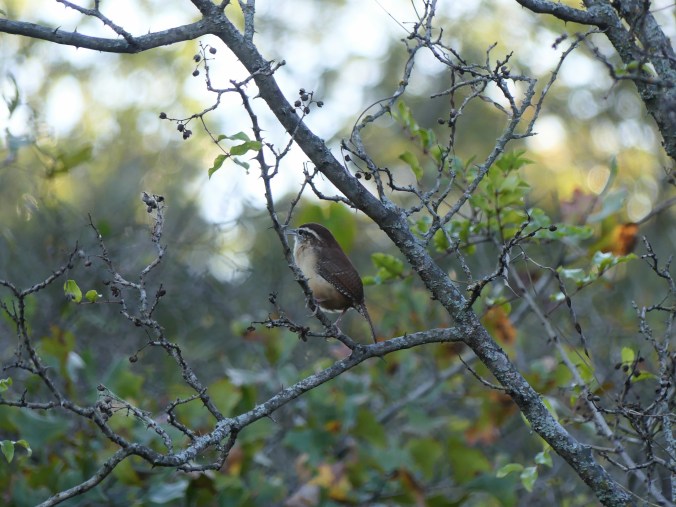
Merlin, the bird identification app, identified them as a Northern Cardinal and a Bewick’s and a Carolina Wren. Meanwhile somewhere there is a Carolina Chickadee and a Blue Jay. After a short time, the nearby birds have gone quiet. Was it just a brief stopover? Or have they finished saying what they had to say? What were they communicating, and to whom? Inviting someone in, or maybe telling someone to stay away? 

A Wren at nearby Sheri Capehart Nature Preserve

We tend to think that birds sing from pure joy at being alive on a quiet sunny morning like this. People who study birds say that they’re mostly inviting a potential mate in or claiming some spot as theirs and telling others to stay away. But that doesn’t mean there’s no joy in it. Perhaps there’s a gratitude for being alive that feeds the impulse to find mates and claim their place in the woods and fields. 

There’s also joy in my sharing what I find and what the Earth teaches me when I’m in wild places (and places that are just a little bit wild). If I can share that with you and encourage you to go see for yourself, I imagine that there would be smiles on both of our faces. And that’s the reason for these letters.

Two kids in particular have given lots of happiness and have played a part in these letters: Eli and Lilly. My granddaughter is too young to read letters, but maybe she will do so someday. She might read this letter about our visit to the Fort Worth Nature Center on November 5, 2024:


On a beautiful early November day, Lilly and I went to see bison and butterflies. When we climbed the ramp up onto the bison viewing deck, she noticed some bison that were eating grass and others that looked like they were napping. We had a snack in the shade of the oak trees up on that platform while the bison snacked on grasses below.

American Bison at Fort Worth Nature Center & Refuge

Is it “bison,” or “buffalo”? What some people call a buffalo in North America is really the American Bison. But if you call them buffalo, everyone will probably understand you. If you are interested, I wrote about bison and that viewing deck Lilly and I were standing on for Green Source DFW.

When we were back on the ground, Lilly loved seeing caterpillars making their way across the ground, “going home,” she figured. We watched small butterflies feeding on yellow wildflowers, and she gently touched one of them. Her delight in finding these small things made me feel some of the same delight.

Lilly, on the bison deck

She and I have gone on a number of these “adventure walks,” starting shortly after her second birthday. Now, with her fourth birthday coming up, we took this walk at Fort Worth Nature Center & Refuge (FWNCR). She has climbed onto boulders – small ones – at Sheri Capehart Nature Preserve and Oliver Nature Park and admired a harmless DeKay’s Brown Snake at FWNCR. She is fearless, curious, and gentle, three wonderful things to be.

Being together and sharing experiences of joy and discovery – those times are very important. You may have noticed that happiness grows even bigger when it is shared. What are some things that bring you joy? Maybe they are beautiful places, music, things that grab your attention, or put you at peace. Do you share those things with people that you love?

One of the butterflies that we saw

You and I both know that not everyone likes the same things, so we might offer to share something and the other person is not interested. That’s OK, you may find other things that you both like. But if you love nature, I hope you will find someone who is eager to go on an adventure walk with you.

In April of 2020 when he was six, I took Elijah (who is more family than friend) to my favorite creek. We waded in the clear water and noticed mosquitofish and shiners. The mosquitofish swam in little groups at the surface of the water, and shiners took off with a flash of silver scales. In later walks we have found turtles, cricket frogs, and many wonderful things (see the Letters to Nature Kids in January of 2022).

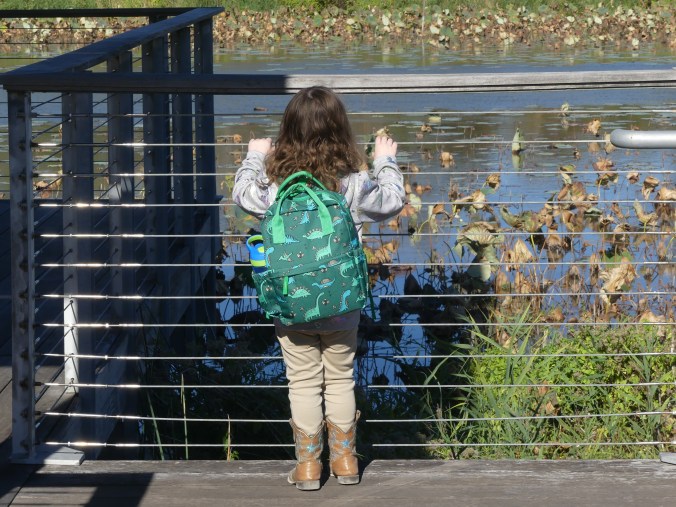
Lilly at the marsh boardwalk

After seeing the bison, Lilly and I went to the marsh boardwalk. A marsh is a place with fairly shallow water and plants that grow out of that water. This one is a lotus marsh, with many big round lotus leaves. It’s getting toward late autumn, and so lots of the leaves are turning brown.


That was a really wonderful walk. And at other times, I lead walks at Sheri Capehart Nature Preserve. Almost everyone on those walks is an adult and most are people I have just met, but sharing nature still brings joy. I suppose each one is an “adventure walk,” although adults don’t give them that name. But each of them is a kind of adventure, because we never know what we will see. And if we are lucky, we can see what we find as if it is a new discovery – even if it is a dragonfly we know well or a Carolina Chickadee we have heard many times before.

I hope you can go on a walk or two, somewhere a little bit wild. Find someone you can share some of those walks with!

— Michael

Connection and Compassion With Lives Unlike Ours

An article at a UC Berkeley website reports that “We are currently losing species hundreds or thousands of times faster than normal background extinction rates. If this continues, Earth’s biodiversity will plummet.” And biodiversity is a big deal, supporting the healthy functioning of the Earth. Animals, plants, bacteria, fungi, bryophytes – all these lives are interrelated, creating complex systems that keep the Earth going. The way the survival of every species is related to the well-being of the rest makes ecosystems resemble very complicated jenga games. You can remove a few pieces and the structure still stands, but it gets progressively more unstable. It could reach a tipping point in which further species loss brings whole ecosystems down.

Playing Jenga. Photo by Ron Lach on Pexels.com

Slowing the rates of extinction and leaving ecosystems in greater health will depend on us. Among the things we can do is to recognize which species are in trouble and take actions to conserve them. How do we encourage those things? How do we get enough people to care what happens so that they help fund conservation efforts and agree to limit some of the extraction and development so that species can survive?

An important insight from Senegalese conservationist Baba Dioum is:

“In the end we will conserve only what we love, we will love only what we understand, and we will understand only what we are taught.”

We conserve what we love. And it is easier for us to love some species than others. Part of our biological inheritance is that we are drawn to such things as big, expressive eyes, soft sounds and soft touch. And so we want to pick up and cuddle babies, we make cooing noises back to them and describe them as cute. (I don’t want to reduce the love of babies and children solely to genetic wiring, but the wiring helps.) And that response is usually extended at least a little toward cute puppies and kittens. And to baby tigers and bears, wolves and other furry, expressive animals.

Animals with strange faces, fixed expressions, and unusual body forms don’t pull us in so much, unless they are beautiful to look at or hear. A Monarch butterfly doesn’t have a face a human mother would love, but its beautiful wings and flight win our affection. Bird faces are less expressive than those of puppies, but many of us associate wings and flight with such spiritually uplifting things as heaven and angels. And there’s the beauty of their feathers and songs as well.

Reptiles and amphibians are a harder sell. For most people, they are among the less-charismatic animals to worry about and go out of our way to protect. In a world of soft and furry animals like ocelots and wolves with their expressive faces, can turtles or frogs pull at our hearts? Could the handsome colors and patterns of a Louisiana Pinesnake have a place in our affections alongside the lovely feathers of a Golden-cheeked Warbler? Could the nighttime calls of a Gray Treefrog have a place alongside the songs of Bewick’s Wren? For me, the answers are all “yes.” Part of the wonder of the natural world, and a key to its magic, is the diversity of forms, sounds, colors, and lives. Everything belongs. It’s the natural world’s equivalent of the way some of us talk about human inclusion: “Y’all means all.”

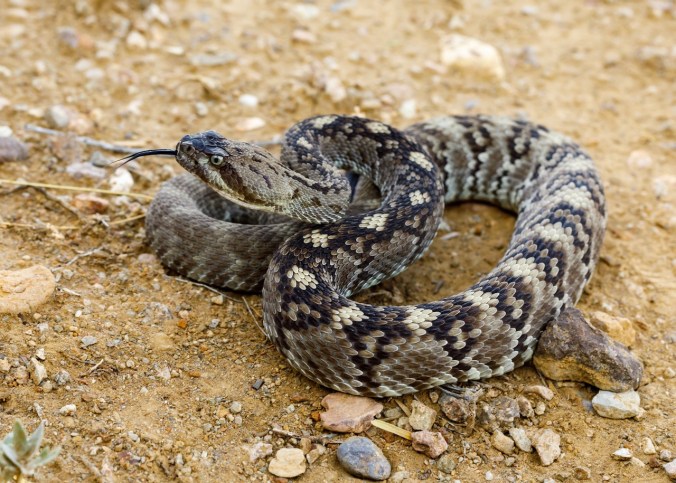
A black-tailed rattlesnake, whose very different face and body form, not to mention being venomous, might make it harder to see its beauty (photo by Meghan Cassidy)

It is important to consider why all of this matters, and why “y’all” should be interpreted so broadly. Everything matters because of that ecosystem jenga game mentioned earlier. And what about the tangible benefits that many species provide for us?

We are accustomed to environmentalists citing the many ecosystem services that various species provide, including cleansing the water and air, providing food, controlling agricultural pests and pollinating crops, breaking down the tissues of things after they die and returning nutrients to the soil, making new medicines possible, and so on. I’m grateful for all those ecosystem services – glad that the Earth and all those living things take care of us. The problem is when we take and do not give back, when we place ourselves at the center of everything. Believing that everything revolves around us is part of how the Earth got into so much trouble. We matter; humans are a part of all that glorious biodiversity, but the rest of the Earth matters, too, even when we don’t seem to get anything out of it.

The old story tells us that the Earth was given to us to use as we wish. That story led most of us into a relationship with the world in which we are the shopper and the Earth is the store as well as the sewer. We are the owners and the planet is our house, to be remade as we would like it. But there are other stories, other wisdom. We might find truth in the ones saying that all those other lives are our brothers and sisters, that we are all related such that when we treat others with respect and affection, we get a great deal in return. In that story, told by many Indigenous cultures, the world operates based on reciprocity and love, and when that breaks down, things fall apart. You can find a beautiful exploration of those ideas in Robin Wall Kimmerer’s recent book, The Serviceberry: Abundance and Reciprocity in the Natural World.

Those beloved, despised, ignored reptiles and amphibians provide beauty, pest control, medicines, and cultural meaning – and regardless of what they provide for us they have value. They are members and sometimes key players in communities of plants and animals. The great ecologist Aldo Leopold taught us that none of the members of ecosystems can be discarded:

“If the land mechanism as a whole is good, then every part is good, whether we understand it or not. If the biota, in the course of aeons, has built something we like but do not understand, then who but a fool would discard seemingly useless parts?” – Aldo Leopold, Round River

For those who see the world through a spiritual or religious lens, the quote carries the same wisdom. It changes only how we name the creator; substitute “God” or “Great Spirit” for “biota,” and discarding the parts still seems foolish and arrogant.

So if we conserve what we love, and we love what we understand, how do we bring about that understanding? It’s through experience and information, the teaching that Dioum mentioned. The more time I spend with rattlesnakes, for example, the more I am able to notice how they move through the world without malice (though their bite is dangerous if threatened), but rather with curiosity and skill. We increasingly read researchers’ accounts of problem-solving ability and maternal care. In Tracks and Shadows, herpetologist Harry Greene reports on observations of baby rattlesnakes staying with their mother, basking together, and retreating behind her if disturbed. Then, after their first shed skin, the babies disperse and mother finally has a chance to hunt for a meal (Pp.165-166). With information such as this together with my own field experience, I have plenty of respect for and caution around these animals, and also considerable affection.

It is not necessary to seek encounters with rattlesnakes or read extensively about them in order to support their continued existence. But some level of familiarity, some acquaintance with wildlife and nature is needed. The more we understand the lives around us and the places they depend on, perhaps the more we will understand the importance of the whole thing. We need to hear the stories and hopefully have firsthand experience with some of the hard-to-love, non-charismatic wildlife, showing us that they, too, have some of the qualities that stir our compassion and empathy.