Meet on the ledge, we’re gonna to meet on the ledge If you really mean it, it all comes ‘round again
Richard Thompson, “Meet on the Ledge”
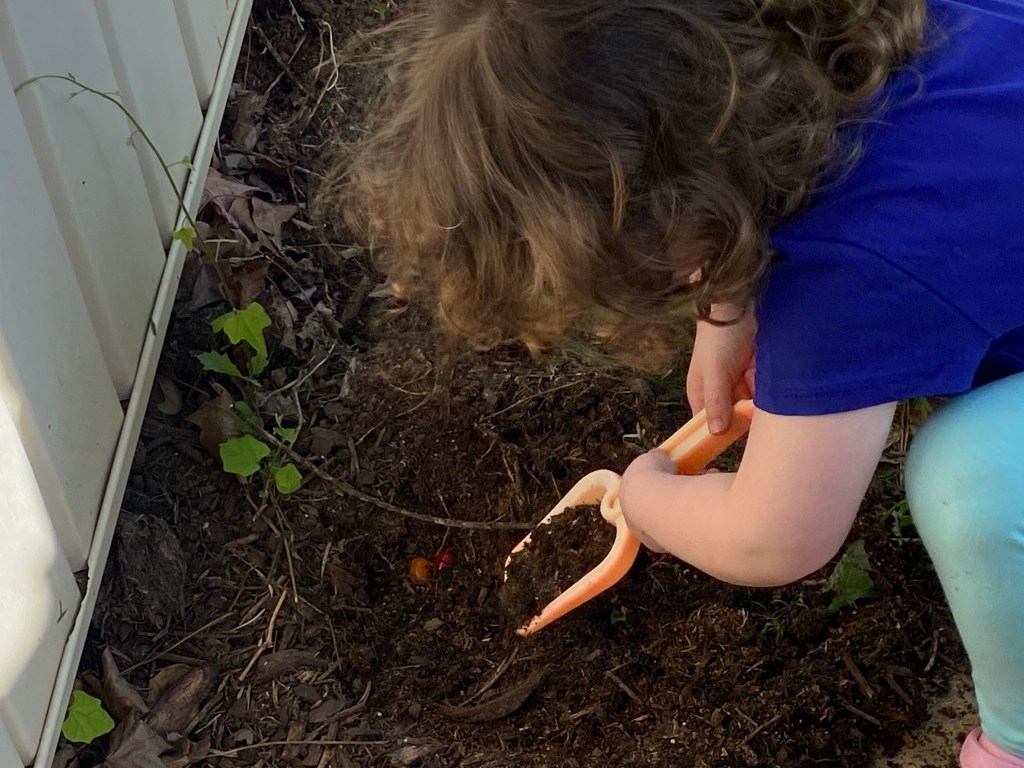
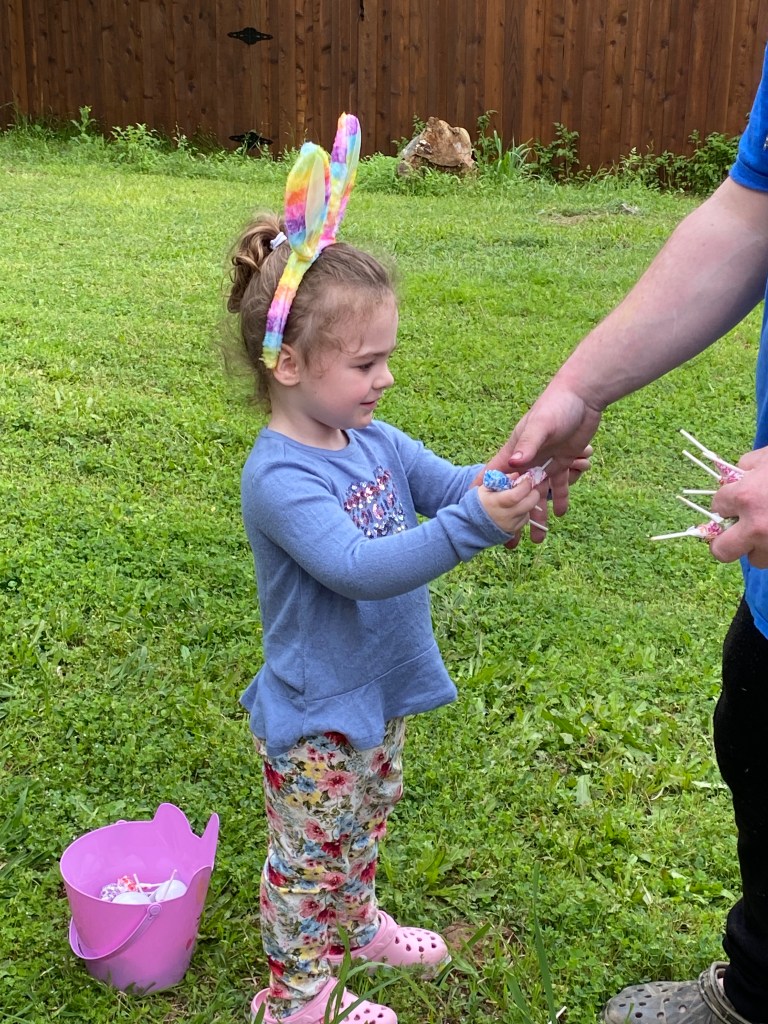
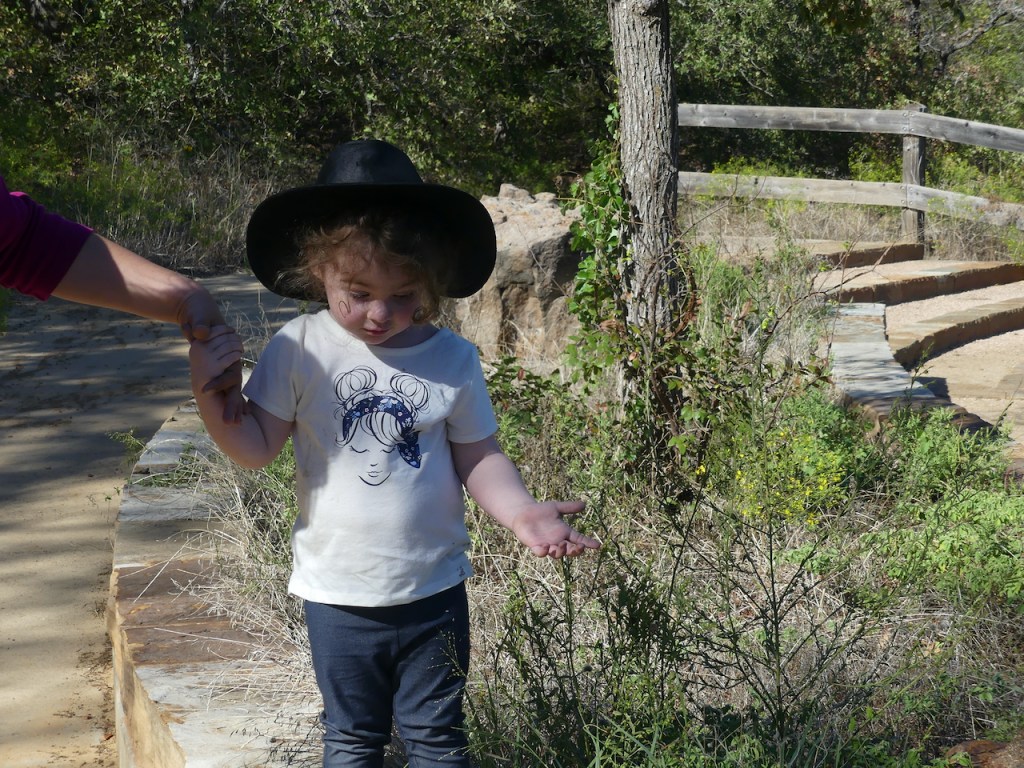
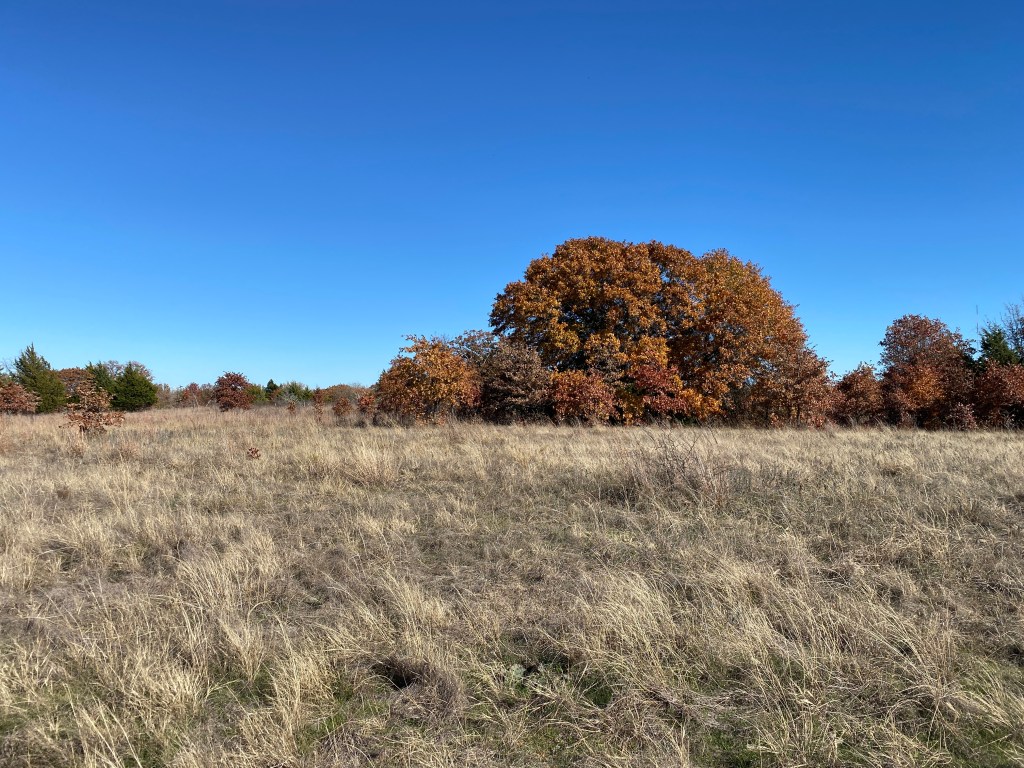
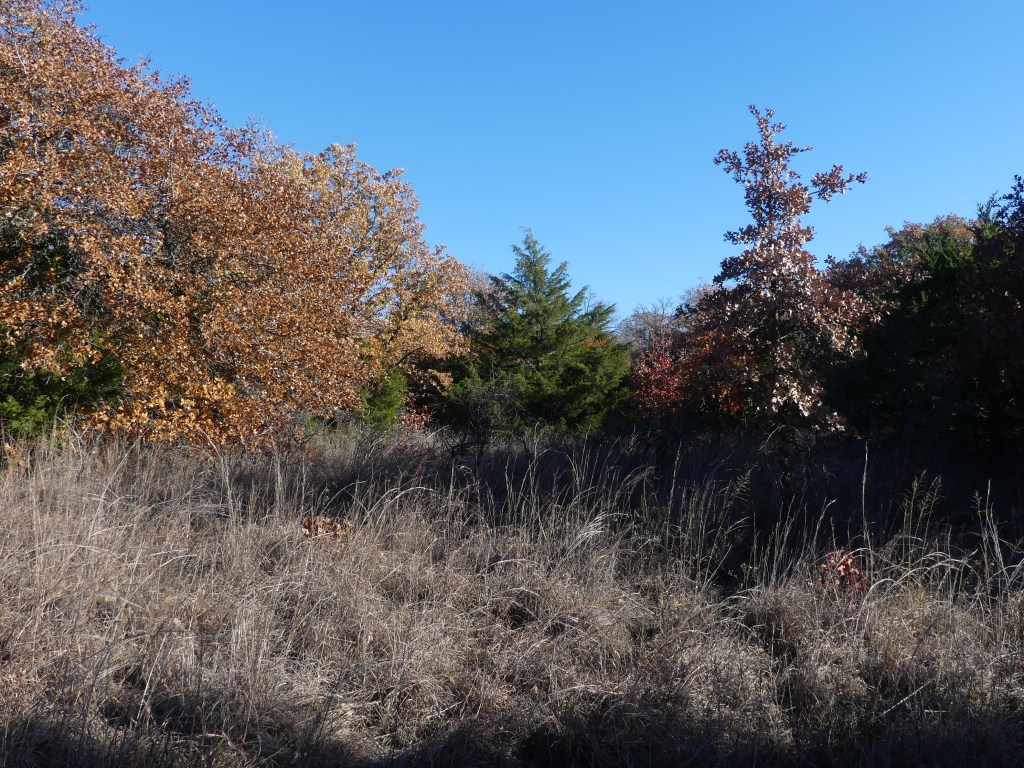
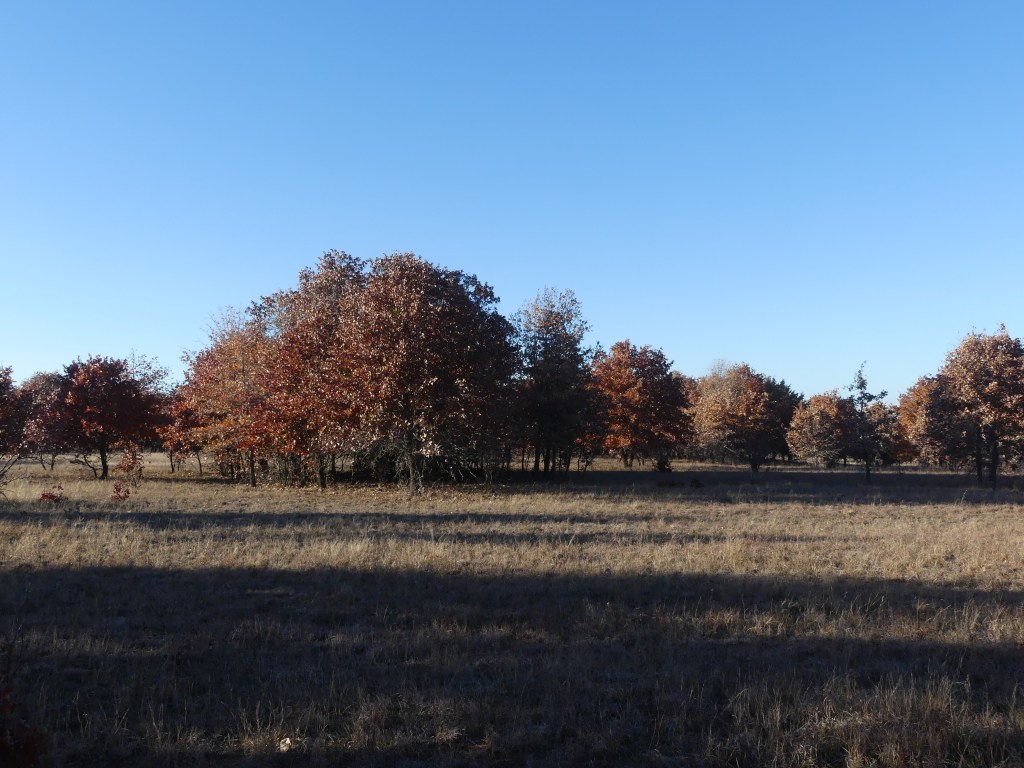
It is Easter, and spring is returning. The woodland in the nearby preserve is dotted with flowers, and oaks are leafing out. Days are getting longer and warmer. Additionally, the jelly beans that Lilly planted yesterday have sprouted into candies that she harvested today. She’s found all the bunny’s eggs, too. Easter is the most profound holiday in the Christian calendar, and its themes touch on renewal and resurrection. We are encouraged to believe that what is important does not die forever, instead “it all comes around again.” For children, we find simple ways to celebrate renewal and new life in ways they can enjoy.
In childhood rituals of colorful eggs, maybe we’re re-creating a little bit of Ostara, the pagan holiday that pre-dates Easter and celebrates the spring equinox and renewal of life and fertility. Celebrations often involved eggs and planting seeds. We may not be thinking of Ostara when our kids hunt for Easter eggs, but there is a connection (if you are interested in the origins of the Easter bunny story, have a look at this).
I’m not trying to recruit new pagan or Christian believers, just pointing out how strong is the undercurrent of our belief in this idea: that which is truly important, truly good, cannot be lost forever but finds a way to return. Perhaps some things are so fundamental to who we are, so much a part of us, that our faith and our need for them brings them back. “If you really mean it, it all comes ‘round again.”
I don’t mean to wring too much meaning out of that lovely Fairport Convention song, written by Richard Thompson when he was still a teen. I’ve read that “Meet on the Ledge” is sometimes played at funerals, when people very much want to believe in things coming ‘round again (and there’s that line, “When my time is up I’m gonna see all my friends”). He has been quoted saying that he was not intentionally writing a very deep song, but it seems that some very meaningful words wrapped themselves around him as he wrote.
I would love for our granddaughter to find her way of marking the seasons and transitions of this world and celebrating ideas and values like standing up for love and compassion no matter the cost. Today the ritual was about the sweet taste of spring and things that grow again as the season begins, and spending time delighting in things you find in the grass and the soil. There are so many things to learn about and celebrate in the coming seasons and years.
“To sharpen our gaze is to behold not only the passing beauty of this world, but also its deep suffering, and I’m afraid of the pain and purgation such vision will entail, that it will break my heart open in ways I’ve only begun to fathom.”
– Fred Bahnson
We know the trouble we are in, and we feel the stress of it. The Sixth Assessment Report of the Intergovernmental Panel on Climate Change (IPCC) tells us that human-induced climate change has caused widespread damage to nature and people. This does not just represent normal weather variability. Over 3 billion people live in situations that make them very vulnerable to climate change, and a “high proportion” of species is vulnerable. Further, “current unsustainable development patterns” are increasing our danger.
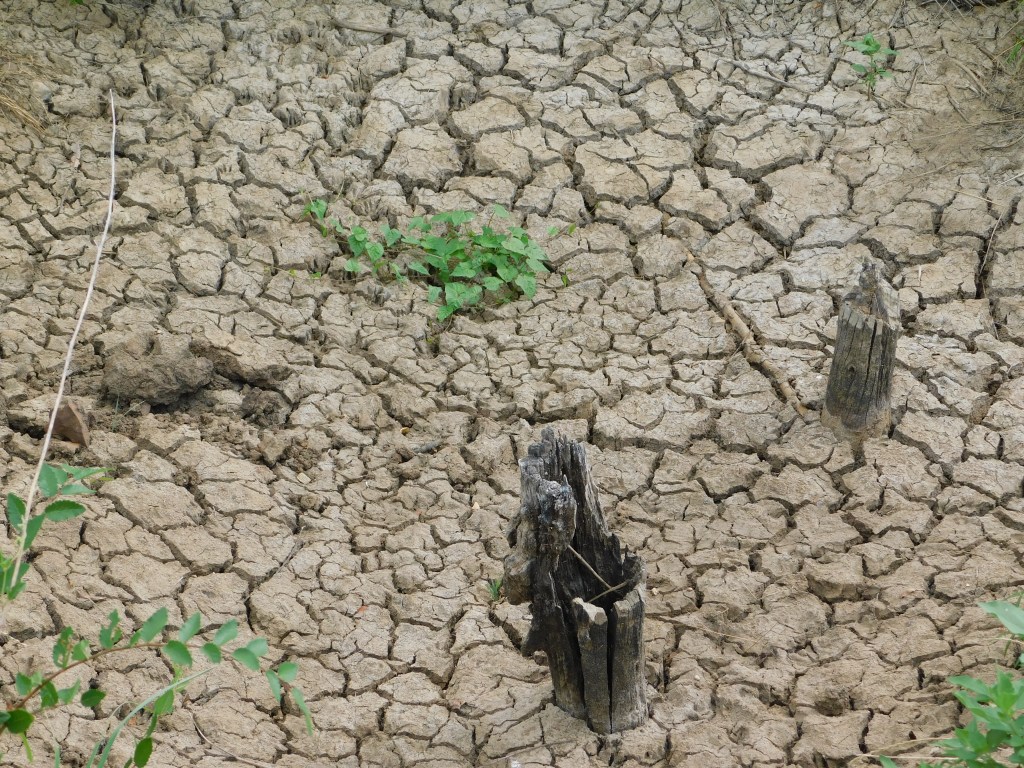
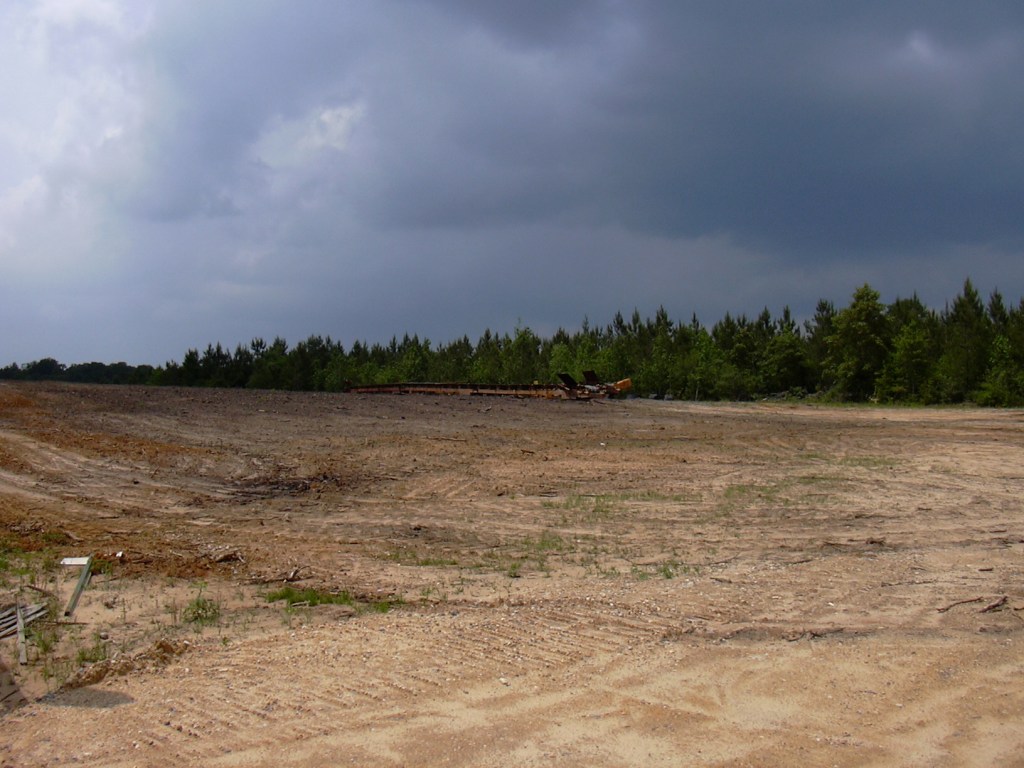
The danger includes more wildfires in various parts of the world, “100-year” floods now happening every few years, glaciers melting, stronger and more frequent hurricanes, drought, and extreme heat. Warmer climates allow mosquitoes and other pests to thrive, leading to disease for humans and trees (milder winters let bark beetle populations expand).
Our sense of safety erodes and the world feels less familiar as we watch world leaders make excuses and see too many fellow humans who are unconcerned or too preoccupied with their immediate challenges to take action. That can lead to helplessness and despair if we’re not careful.
How did we get here?
How did we get to a point where things are so crazy? Who is to blame? We elect leaders, we use fossil fuels and buy all kinds of stuff – are we to blame? I’ve been on the planet for over seventy years, surely there’s more that I should have done. On the other hand, we were born into a culture of growth and consumption. Many of the world’s cultures see nature as a sort of big-box store where it’s all for sale and the more you buy, the higher your status. Western culture enshrines unending economic growth as the only possible path to a satisfying life. It’s hard to swim against those cultural currents. And no matter how much I recycle or try to live “off the grid,” the fracking wells keep getting drilled and Congress keeps giving about $20 billion a year to the fossil fuel industry.
We can’t wait for the culture to change. The culture is us, even if each individual is a drop in the ocean. But we do what we can, even if it’s just for our own sense of integrity. And we reach out to others, pulling drops together until we fill a bucket, and buckets become waves, until we can get something done. Our actions can be guided by what is good for more than just “me,” we can place the well-being of living things above the acquisition of more things, and we can be satisfied with what we have.
The toll it takes
The damage to the planet takes a heavy toll on us, whether we’re watching from the sidelines or working hard in climate activism. A report from the American Psychological Association and others discussed the impact of the anxiety and loss that people are experiencing. There can be trauma from climate-worsened disasters such as tornadoes, floods, and fires. Sometimes the images and fear of future harm can lead to pre-traumatic stress.
There can be a loss of a physical place (a home, a favorite creek, a glacier, etc.), and a person may experience pain and longing when such a place is gone. Such an experience has been termed “solastalgia.” In the opening chapter of Richard Louv’s Last Child in the Woods, there is a fifth-grade girl whose loss of an important place sounds like solastalgia. The girl loved being out in nature:
“I had a place. There was a big waterfall and a creek on one side of it. I’d dug a hole there, and sometimes I’d take a tent back there, or a blanket, and just lie down in the hole, and look up at the trees and sky. Sometimes I’d fall asleep back in there. I just felt free; it was like my place, ….
“And then they just cut the woods down. It was like they cut down part of me.”
– Last Child in the Woods, p.14
Some environmental losses may be very significant, even when they are on a smaller scale than melting glaciers or burned forests.
Many people are experiencing anxiety and other emotions. A survey of 10,000 teenagers and young adults in various countries found that 59% of them were very or extremely worried about climate change. Most had feelings such as sadness, anxiety, anger, helplessness, and guilt.
It’s not just the kids. Many of us – whatever our age – are grieving for the loss of a healthy and familiar climate. This past summer reminded us how much has already changed, and how we took for granted summer days when you could take a walk or work in the garden without risking heat stroke. We might not have thought about how good it was to live in the old climate. With the new climate, we watch the sense of normal and safe begin to slip, and it’s slipping on a planet-wide basis.
Is it too late?
In some places, especially among young people, you hear considerable hopelessness about climate. We have missed many opportunities to act, and the further we go, the harder it will be to slow down that enormous freight train of climate warming. The question that keeps coming up is, “are we doomed?”
A recent book by Rebecca Solnit, Thelma Young Lutunatabua and other contributors has the title “Not Too Late.” It is certainly not an optimistic book, if optimism is believing everything will be OK, don’t worry. Solnit writes that “to hope is to accept despair as an emotion but not as an analysis.” She makes the case that there are still possibilities for action and she reminds us of all the times that something looked impossible until it actually happened. Public opinion has shifted, over $40 trillion has been divested from fossil fuels, and renewable energy is becoming more feasible and affordable. The outcomes are still uncertain; the authors’ point is not that everything will be fine. Maybe it won’t. But uncertainty means that things could turn out better than our fears suggest.
Taking care of ourselves
Even if we accept that things are not hopeless, we are still left with more frequent, climate-driven catastrophes and losses. What do we do about the resulting grief and anxiety? We can share grief – including grief for losses we see coming – with trusted others. We can put anxieties into words and make them more manageable. We can figure out ways to keep from being overwhelmed and actions that reduce our sense of helplessness.
There are already some avenues for doing this, such as the “Climate Cafés” provided through the Climate Psychology Alliance. These are online gatherings where people can discuss climate fears and anxieties, led by the Alliance’s facilitators. There is also the Good Grief Network, “a peer-to-peer support group for people overwhelmed by eco-anxiety, climate grief, and other experiences of eco-distress” (quoting from their website). At least in Texas, all such events are available online only.
I recently started a small face to face discussion group where we can talk about environmental anxieties and grief. There are real advantages to talking with a few trusted others in a situation where we feel heard and understood. The group is for adults – people 18 years old or older. Children’s understanding of these issues and ways of coping with them and expressing feelings about them are somewhat different, so the group does not include children.
My professional career and training has been in psychology and I am a licensed Psychological Associate. That does not mean that this is group therapy, and participants are not clients. I simply support and facilitate our discussion and gently keep us within the boundaries of supporting each other and encouraging self-expression. There is no charge for the group.
One of the central issues for the group will likely be what we can do to take care of ourselves. I recently wrote about coping with the record-breaking heat this summer and I outlined the following ways to help cope with the anxiety and loss:
Express yourself – talking, journaling, drawing, etc. Most things are easier to carry when we share them with people who listen with empathy. Writing in a journal or drawing are other helpful modes of self-expression.
Practice mindfulness and acknowledge beauty. When in natural settings, paying attention to the present moment, with an attitude of acceptance, is a helpful way to let go of persistent thoughts and emotions. The beauty we find in flowers, a woodland, or a sunset reminds us of the good that still exists.
Accept uncertainty. Mindfulness is a good way to work on this one. It is hard to live with uncertainty, but letting go helps more than trying to control what is not controllable. We can still take helpful action (see below) but with less struggle.
Engage and act. We can easily feel helpless with a problem this big and complex. It helps to find something to do (as noted above, drops come together to fill buckets and buckets become waves). We can be part of something bigger, such as Arlington Conservation Council, 350.org, or other groups.
Find a therapist. If things become too heavy, we can seek out a counselor or therapist. Climate Psychology Alliance-North America maintains a climate-aware therapist directory.
It’s easy to be anxious or sad in an uncertain climate future, with painfully slow progress in fighting climate disruption. If those are your feelings, you’re not alone. A recent poll by the American Psychiatric Association found that more than two-thirds of Americans are “somewhat” or “extremely” anxious about climate change. Do what you can, find a community of people who understand, and take care of yourself.
(The epigraph at the beginning of this article is from Fred Bahnson’s “The Ecology of Prayer” (2017) in Orion, v.36 No.4. More information about my climate grief/anxiety group can be found on the climate anxiety & grief page of this website. This article was also published in the November issue of The Post Oak, newsletter of the Arlington Conservation Council)
Sharing the adventure, being a partner in discovering the world,
feeling the excitement when the fish stirs beneath the water –
the joy and wonder are mine, too, because we are connected.
We are connected by experience together, the shared looks and little acts of attunement.
I step up to help or protect and she answers with confidence, love, or protest,
and the dialogue continues.
She is on the ground observing an inchworm and I sit with her.
Afterward, she climbs the boulders while holding my hand, and so
I am the scaffolding that keeps her upright, her partner again.
Fearlessly pushing her coordination and balance to the limit,
she has that smile that says, “I got this,” and she does for a while.
When she falls, I comfort her, safe harbor and a little repair and back out again.
Words and roles change, the scaffolding takes other forms at different ages.
But shared looks, partnership, those little acts of attunement, with
understanding and empathy – that’s always how love works.
The story of this day has a connection to the story of climate change and the pandemics of Covid 19 and of violence. This was an afternoon of sanctuary that felt like freedom, and it was a paradoxical gift from our out-of-whack climate.
Yesterday’s high temperature for the Dallas-Fort Worth area, according to the National Weather Service, was 81F. With the usual caveat that it is hard to know if an individual weather event was caused by climate change, we all know (or should know) that our fossil fuels are harming the climate and bringing crazy weather. Occasionally that crazy weather is absolutely delightful for us humans, like the warm sunny day yesterday, December 5th.
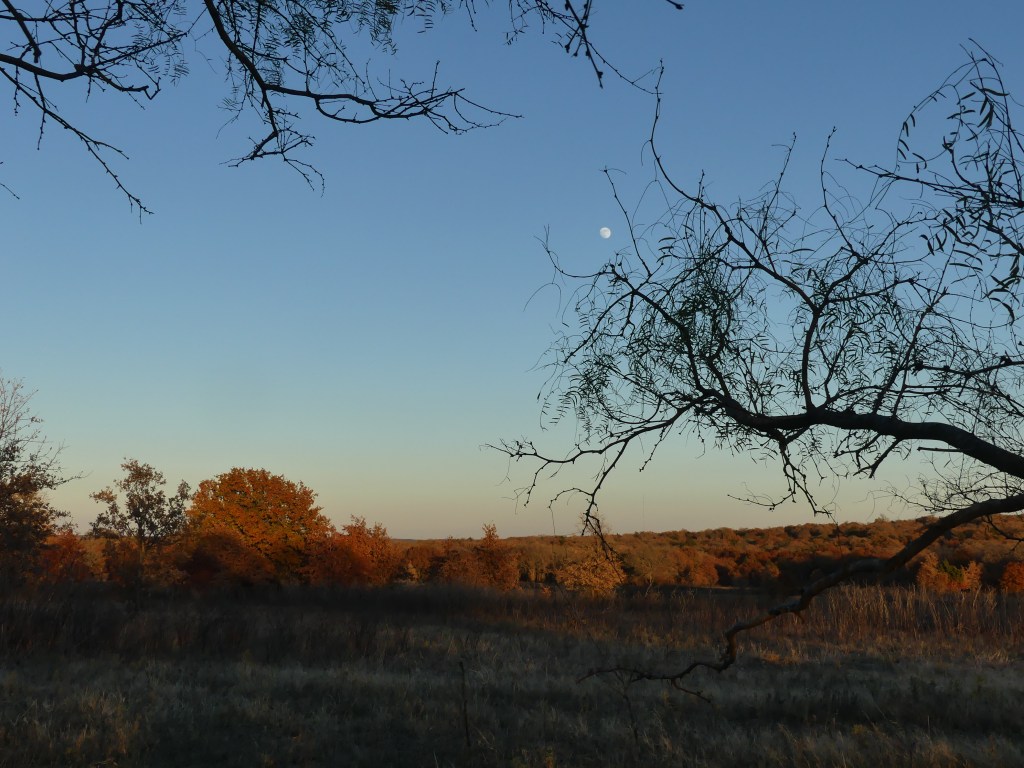
At around 4:00pm I was back at the LBJ National Grasslands in Unit 76 (near Alvord, TX). Under a sprawling mesquite tree, it was 79F under a sunny blue sky. A nearly full moon was rising above a line of oak trees in soft colors of caramel, orange, and yellow-green. I sat in my t-shirt, listening for crows to exchange greetings and thinking how fortunate I was to be there.
Weird to love weather that is a consequence of something monstrous. Warm, sunny weather in late autumn and in winter is among my favorite things. The light is beautiful and in the woods and prairies the range of colors is subtle, lovely and inviting. The smell of leaves returning to soil is like the fermenting of nature’s wine, recycling the year that is ending and preparing for new life. There can be an emotional tone of quiet reflection with a little nostalgia in the peaceful woods. For me, a bright sun and warmth brings all of this out even more strongly. Even a day that is an aberration, with temperatures outside what is normal, can feel this way.
Where is my guilt for loving a gift from climate change? Nowhere. I would gladly give up very warm winter days in return for a climate more like the one I grew up with, if I had that control. I do what I can for a healthy climate and then I enjoy beautiful days, even the weird ones.
The best way to experience a day like this is away from the mechanical grinding and whining from leaf blowers, air conditioners, highways, the constant soundtrack of the world we have built. It becomes a background noise that we pay little attention to and may forget about, but our auditory nerves and our brains are in constant reverberation with it. Go to some place where you are free of it, where it is quiet and the sounds that emerge are birds, water, and breeze, and see if the world doesn’t seem less chaotic and more sensible.
I stood just inside a woodland of oaks and junipers, watching a few stray leaves fall. A wave of breeze whispered and the trees replied “shhh,” while more leaves floated down like snow.
The LBJ National Grasslands can also be a place for solitude. On this day, a group of three people on horseback passed me on the trail, but these were the only people I saw in nearly four hours. Perhaps it’s not that I’m a grumpy old man, a would-be hermit. I’ve shared walks out there with people who have a similar style of walking slowly, noticing things, being attentive to the nature around us, and those are great walks. But there is also great value in just being by yourself.
It’s hard not to see that people are growing more out-of-whack just like the climate, with increasing extremes that do a great deal of harm. I don’t think the pandemic caused it, but it certainly gave a considerable boost to the troubles that are all around us. News reports say that children are in a mental health crisis. The news also tells of a pandemic of violence toward women. Anyone who is a little different (people of color, gay, immigrant, Jewish) is at greater risk. Whatever was going on before, the pandemic pushed us into greater isolation, more job loss, fears of getting sick and dying, and lots of toxic thinking about what and who was causing all this pain.
In the midst of all this, an afternoon in the company of crows and cricket frogs, blackjack oaks and bluestem grasses is an ideal sanctuary. I like it that the origin of that word refers to a holy or sacred and protected space. I remain engaged in the world of people, but for a time I rest in a place that feels like a refuge.
One of the small ponds feels very sheltered, and as you climb down through some erosion there is a gently sloping, sandy bank. I stayed at that pond for a while, sitting and then lying on this bank with my attention captured by little things. A tiny bee mimic fly landed inches from my face where I could see its thin yellow and black banded abdomen. A honeybee buzzed around as if looking for something inches above the sand and finally flew off. A few feet away, a cricket frog took a small hop but was in no hurry. A small snout butterfly swept in, landing on the sand. Intermittently it shifted position until it had turned itself around 360 degrees, and then it flew away. I was happy with these small and interesting companions.
Late in the day, I walked in Unit 76 where there are big open areas of grassland and a few more mesquite trees in higher, well-drained places. The sun was getting lower and the shadows longer. I sat under a mesquite looking across a patch of prairie at a line of oak trees lit by the setting sun. The rest of the landscape was darkening, and the world was still. A nearly full moon was rising in the east, and I watched it climb in the sky framed by mesquite leaves.
I get up. The kitchen becomes light when I flip the switch. The day starts with some small reassurance of the world’s predictability.
The coffee beans grind with a satisfying aroma, and the coffee tastes good. Things work. Things are OK.
The car starts. Another data point stacks up in favor of a beneficent world.
Against these meager but welcome signs that the world makes sense, there is the news. I don’t want to watch the news, but I am drawn to watch it anyway, the way a traumatized child’s play is drawn toward re-enactment of the trauma. This “trauma play” can crowd out the child’s ordinary, creative, fun play, just as the televised discussion and reporting of bad news can crowd out time that might be better spent elsewhere. But we want to be able to predict what may happen, to know what’s coming. The obsession with knowing “what happened” is a way of trying to make sense of the world and what might happen next.
Oh, good, the trash was picked up, and the recyclables, too. Things are working as they are supposed to.
I think about the health of the people I care about. If there is trouble, I can prepare myself for how to be supportive, and maybe predict how events might play out and what we could do in each situation. Our brains are wired to anticipate the future and try to prepare, in every area of our lives.
Part of our brain can be something like a “situation room,” a place where the experts and leaders gather to try to work their way through a crisis. And if the situation room is always running hot, problems occur. After a while, someone yells, “Turn off the damn alarm,” as the jangling autonomic nervous system keeps us in a panic, but the bell keeps ringing. Everyone sits around the table, exhausted, reviewing the information for the fiftieth time. The more we ruminate, the more dysfunctional the situation room becomes. Exhausted, irritable people do not solve problems well. Neither do chronically stressed or traumatized brains.
I grew up in a world that seemed safer and more predictable.
Stepping back from what I just wrote, it sounds ridiculous, impossible. When I grew up, White State Troopers were beating Black civil rights protesters nearly to death in Selma. Boys were being drafted to go die in the war in Vietnam. We had nuclear attack drills in school, practicing how we would get under our desks to survive hydrogen bombs that seemed likely to fall on us any day. The world would end. How could such a world ever seem safer and more predictable than it does today?
It seemed safer, but it was not. Why did it seem safer – why did the world make more sense in my childhood?
My parents could not take away the threat of nuclear war but they could help support an everyday world in which things happened sensibly, often with happiness and wonder. There was carefree backyard play. There was the sound of waves, the smell of the Gulf, and a young child’s fascination with lightning whelk seashells. And then there were lightning bugs on summer nights, dragonflies in a scrubby vacant lot, and camping in the mountains. The immediate, direct experiences of the day. Having parents to share those gifts and cushion the disappointments and challenges made the day-to-day world a place that seemed mostly safe and predictable. In the fourth grade, if the everyday world is in good shape then nuclear attack drills can be just something that you do, with little connection to the cataclysmic threat and the absurd idea of surviving underneath that desk.
In the everyday world, I watch clouds slide to the north, piling up to great heights with edges lit brilliant white by the sun. They cross the pale blue sky slowly and peacefully. This world, at this moment, is a good place.
Regardless of what the world presents us with, we want it to be sensible, predictable, and safe. Even thrill-seekers want that security after the thrill is over. After the free-fall, after the parachute opens, we want gravity to give us a landing we can walk away from, ready to do something else.
With pandemics, insurrections, and a climate spinning out of control, it is easy to doubt that we can walk away from our landing. Road-rage killings, people assaulting others on airplanes, neighbors stockpiling weapons of war. People gathering to scream utter nonsense opposing a vaccine that could save us. For many of us, the world appears to be less predictable, sensible and safe with each passing year. What do we do with that?
One way of coping with the world’s trouble is to purposefully set aside time for living in the present, the world that we are in contact with each day. We cannot let the world’s troubles make us numb to the little gifts of our everyday lives. Those are the moments in which we visit a friend, listen to a bird, or write a letter (or an email). They are moments of contact with what we see and hear around us, what we touch with our fingers.
My grand-daughter’s beautiful smile draws me into more play. I think what a gift this is, something that makes the everyday world a good place to live.
I know that our everyday lives can be difficult at times. Things break down, a loved one gets sick, we have loss and sorrow at times. But in between those times are the moments when the world offers its most precious gifts of beauty, sustenance, love and joy.
Living in the present is not shirking responsibility or escaping from the world. There are times when we do need to think about the bigger world and contribute what we can to try to bring about change. And when we have done what we can, then it is good to let all that go and spend time living in the everyday reality that we have been given.
I sit and listen to Beethoven’s String Quartet No. 14, completely absorbed in those four interwoven melodies.
(My life as a naturalist and conservationist is balanced by my career as a Psychological Associate. As I wrote a while back, “our lives” is as important a part of this blog as “in nature.” I know that my focus here is our lives in nature – the interrelated ways that humans and other species make their way through the days and years. I will try to stay focused, but sometimes an article will tilt toward the “‘our lives” part of the blog.)