The Polycrisis and “The Work That Reconnects”

How are we doing? That’s a complicated, uncomfortable question. To a significant degree, we seem to be worried, dissatisfied, depressed, and isolated. A 2023 Surgeon General’s report notes that people feel “isolated, invisible, and insignificant.” People often remark that they “don’t have the bandwidth” to do something, meaning they don’t have the mental or emotional resources to think about something or take on a task. Such people are ordinarily capable and even resilient, but these days it’s all too much.

A Yale Medicine website talks about depression and suicidal thoughts among young people constituting a crisis, linking to a Centers for Disease Control report that has been removed by the Trump administration (the removal of trustworthy information being, in itself, emblematic of some of our troubles).

A Gallup poll early this year showed a continuing decline in the proportion of people in the U.S. who are very satisfied with how their personal lives are going. A recent American Psychiatric Association poll showed Americans anxious about current events, family safety, economics, their health, and other issues. 

Why all this unhappiness? I cannot remember a time when we faced so many challenges. Even during the 1960s when the world seemed on the brink of nuclear war, I don’t remember things feeling like this. Maybe it’s because so many things seem to be falling apart in society and government, all at once. Maybe because grinding poverty and gold-inlaid greed have surpassed the Gilded Age in which people became obscenely wealthy at the expense of everyone else. Perhaps because we are continuing to wreck the climate while societies and governments struggle to even admit that it’s real. 

“Polycrisis.” When you do a search for it, you find page after page of articles. There’s even a website devoted to understanding it. An article from a couple of years ago on the World Economic Forum describes it as multiple crises happening at once (like climate change, the Covid pandemic, loss of social cohesion, war in Ukraine and Russian expansionism, oligarchy, resurgent fascism) which can interact with each other producing an effect different from the sum of the separate crises. 

What can we do? Each of us, individually, can make choices that will help, though the tasks seem overwhelming – beyond our “bandwidth.” What comes to my mind is a quote from Tolkien, an exchange between Gandalf and Frodo that (in the books, not the movies) occurs when Frodo is discovering that the fate of his world may hang on what he does with a supremely dangerous tool of the enemy:

“I wish it need not have happened in my time,” said Frodo.

“So do I,” said Gandalf, “and so do all who live to see such times. But that is not for them to decide. All we have to decide is what to do with the time that is given us.”

The Lord of the Rings: The Fellowship of the Ring, chapter 2

This is our time – the time that is given us. What can we do that might nudge us toward a better life and a better culture? Individually and as a society, what do we value and how do we show it in our lives? What ways of living do we choose, and does it align with our beliefs? I think we need to do more than vote people out (even that option seems to be in jeopardy) and get back to what we were doing. Instead, we need to think very purposefully about the kind of society we want to (re)build and the kinds of kids we want to raise. Can we relate to each other as thinking and feeling individuals worthy of the same dignity and compassion that we expect for ourselves? Does that extend to people of different genders, races, and other ways of sorting each other into “us” as opposed to “them”?

Can we relate to the Earth as more than a big-box store and a theme park? We insist on measuring economic health in terms of growth, so that we must pretend that we can never slow down in our extraction of material from the Earth in order to produce more “product” to sell. We pretend that growth can be unlimited, that if the trend line on the graph becomes flat, the economy is stagnant and the ponzi scheme might unravel. But we could dream of a sustainable way of making our living from each other and from the Earth. We could use the same creativity and intellect that we have expended on nuclear physics or computing technology. If we applied that effort to creating such an economy, surely something good would emerge.

But we could dream of such things only if we want to live more equitably, more in harmony with each other and with the planet. As long as we consider such things to be naive fantasies, nothing much will happen. If we are raised to believe that ruthless competition is the only way to survive, that other people are objects that can be useful or not, we will stay on our current path. If we have been taught that the land, water, air, and every living thing was divinely intended to be used and despoiled by us, we keep in motion a scheme that ultimately will run out, regardless of how we might use our technology to keep it going a while longer.

That seems to be the society we have created. Clear-eyed, remorseless competition and wealth creation because we cannot imagine an alternative in today’s world. More technology, machinery, and artificial intelligence as the only salvation from the messes we create. More of what Joanna Macy called the industrial growth society.

Joanna Macy was a teacher of Buddhism and Deep Ecology whose later writings describe what she called The Great Turning, in which we begin to turn away from the industrial growth society and build a culture that can sustain healthy societies and ecosystems. Her writing, and that of writers like Rebecca Solnit, offer a useful perspective on hope for us – what Macy called, in her book of the same name, Active Hope. It is not an optimism that says “it’s gonna be OK” and allows us to wait in passive expectation for things to get better. It is not something we have, but instead something we do. It is acknowledging the actions that are still possible and working to bring about change, even if it’s little by little. I strongly recommend her writings and her work that she called “The Work That Reconnects”. 

Sister Moon

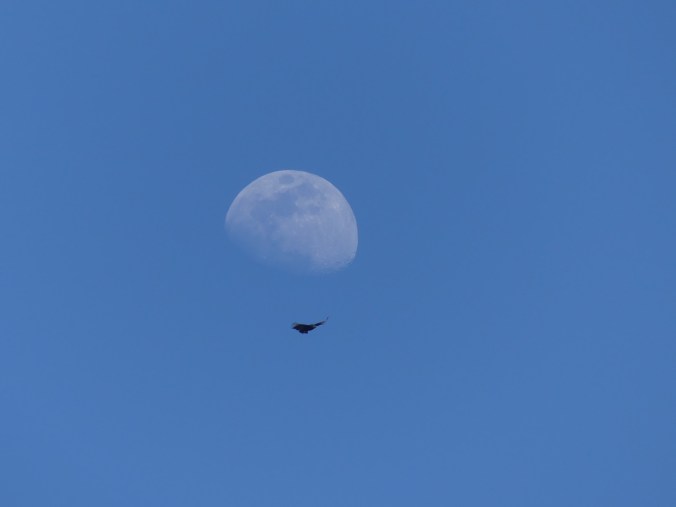
This morning I walked at Sheri Capehart Nature Preserve for about 45 minutes, underneath a blue sky with the almost-full moon still floating up there, reminding us that we’re just objects in space. And so I remember; we’re on a big, round, blue planet, ever so gradually circling Brother Sun. And we can watch Sister Moon and almost detect her falling and rising as she circles us, mirroring some of the sunlight back to us in the middle of the night so that we won’t forget the day. Or in this case continuing to reflect the sun, framed in morning sunlight, because sometimes it’s better to shine than to go dark. 

To shine seems easy and natural for Sister Moon, at least the way we understand it in terms of science. Does she sometimes struggle to do so, like we do? Maybe get up in the morning and say to herself, “I just can’t do this today.” If she is a barren sphere of rock and dust, then I suppose not. But we don’t have to reduce everything to such understanding. Native American wisdom recognizes the moon as a source of wisdom and guidance, and in the Haudenosaunee Thanksgiving Address she is the oldest grandmother, governing tides, watching over the arrival of children, and serving as a leader of women. In the Canticle of Brother Sun and Sister Moon of Saint Francis, the Earth and the heavens – all of nature – are precious gifts reflecting a wonderful Creator. And so in multiple wisdom traditions, the moon is more than what we can measure with instruments. 

And she shines throughout the year. Even when our planet is so dark, when human hatred and fear threaten to extinguish every light, Sister Moon gives us light in the darkness. When masked, armed men kidnap the innocent and march zip-tied children into the cold, and when soldiers carry out genocide, she does what I often cannot do: continue to provide light, not be overwhelmed by the darkness. 

I would like to be as constant as Sister Moon, but we are not made for such constancy. Being human means simultaneously holding on to the light, doing our best to shine, while also accepting how complicated and imperfect we are. There are times when climate catastrophe, cruelty, runaway greed – the various crises we are facing – temporarily rob us of light. Some days our faces do not reflect the light, even if we want to shine. The important thing is not to accept defeat, to let the light die. We still can imagine something better, we still recognize truth, and we still have within us compassion and empathy, even if some people have discarded it. Such things are our light, and we must let it illuminate us and all those around us.

Turning Away from What’s Essential for Humanity

The news is full of war, hatred, assassination, and cruelty. Right wing media, from what I can see, appears to be telling people that what we need is power, domination, and ruthlessness. Much of American Christianity is saying that empathy and compassion are weaknesses at a time when we need strength. Our neighbor, we might infer, is whoever is in our tribe and thinks like us. Everyone else is expendable or perhaps needs to be eliminated (by deportation or deadlier means).

The thing is that the world’s major religions disagree. Or – wait – the major teachings of major religions disagree, while the practices of their followers may not. The history of how religion has been expressed in different cultures contains plenty of hatred and murder, war, torture, and slavery. But what do you find in the teachings of Buddhism? You find compassion playing a major role, relief from suffering alongside not being held captive by possessions or attachment to the way things are. What do you find in Christianity, by which I mean the actual teachings of Jesus? Compassion, forgiveness, empathy, and love.

One of my heroes, the farmer, writer, and poet Wendell Berry, put together a small book on the subject of “Christ’s teachings about love, compassion, and forgiveness.” It is titled Blessed Are the Peacemakers, and it is in print and inexpensive. He wrote that in the U.S., Christianity seems to be fashionable, but “It seems to have remarkably little to do with the things that Jesus Christ actually taught.” He went on to write that “…I know of no Christian nation and no Christian leader from whose conduct the teachings of Christ could be inferred.” And so, he decided to put together this little book containing Gospel passages in which Jesus addressed issues of “human strife, forgiveness, compassion, and peacemaking.” It’s a good antidote for those politicians who paint a portrait of Jesus as a Proud Boy, storming the Capital and proclaiming white supremacy.

Similarly, the books of Thich Nhat Hanh spell out the wisdom of the Buddhist tradition. He was born in Vietnam and became a Buddhist monk, then went on to teach at Columbia and Princeton, to write numerous books, and work tirelessly for peace. In Peace is Every Step, he wrote that, “Real strength is not in power, money, or weapons, but in deep, inner peace.” In The Art of Living, he wrote about mindfulness, the ways we are connected with everything around us, and the importance of transforming pain and suffering.

What does science have to say about these things that I’m claiming are essential for our humanity? One place to look is in the work of Dr. Bruce Perry, a child psychiatrist who knows a thing or two about love and connection, and what damage trauma and neglect can do. Using neuroscience and our understanding of human attachment relationships, he writes (in The Boy Who Was Raised as a Dog) that humans “…could never have survived without deeply interconnected and interdependent human contact. The truth is, you cannot love yourself unless you have been loved and are loved. The capacity to love cannot be built in isolation.” He goes on to write about love and empathy in Born for Love: Why Empathy Is Essential-and Endangered. As a retired psychological associate, it troubles me to see popular culture asserting that empathy is a defect, and this book is an excellent answer to that claim. We need each other. The ideal of the tough guy who is entirely self-reliant is not a healthy model for raising children. It typically results in adults whose idea of love is more like transaction and manipulation.

Like many people, I look at what our popular culture and right-wing politics is promoting and I fear for how the future will go. Fear, but not despair – not yet. For my brothers and sisters who feel like they are bystanders to the world’s death spiral, I suggest reading Rebecca Solnit (titles like Hope in the Dark) as well as Joanna Macy (for example, Coming Back to Life, with Molly Brown).

What does all this have to do with Our Lives in Nature, the title and theme of this blog? It is all related; how we see ourselves shapes our relationship with the Earth, how we treat each other and how we treat nature are intimately related.

About Truthfulness

I continue to think about bringing up kids with the skills and values that are needed. I see the world that kids are growing up in, how it is changing, and I wish for a better world. The way we make that better world is through compassion, integrity, and other qualities that are hard to hold onto with so much going on. I wrote about empathy last month, and I’d like to talk about truth this time. (I started this at Rain Lilies on Substack and reprint it here.)


“Did you finish your homework?” “Are you really friends with that person?” Those can be difficult questions. Sometimes being liked or staying out of trouble can make truth-telling hard, for adults and kids. Does it really hurt anything to “bend” the truth?

Little kids may automatically give the answer that the other person wants, the “right” answer, even if it’s not really what happened. “Did you hit your sister?” The right answer, the one that the questioner wants to hear, is “no.” For a very young child that may be the only answer that occurs to them.

In other words, in those first few years kids don’t necessarily sort things into categories like lying and telling the truth. It might not occur to them that the thing that really happened is different from the thing that the other person wants to hear. They simply give the desired right answer. Only later do they understand that they’re choosing to lie.

Teaching honesty usually begins early, before we can discuss things like building trust. Parents might say, “Thank you for admitting what you did; I know that was hard.” They might still get in some trouble, but hopefully they see themselves as a kid who made a mistake but handled it honorably. And that’s important to see yourself (and for others to see you) as a basically good person who made a mistake.

If the consequences of making mistakes are really harsh, then a kid may lie even when they know it’s a lie. They become so afraid of a parent’s or teacher’s anger that they will take a chance on lying. What does this child do? Tell the truth and let awful things happen, or lie and hope they don’t find out? The child may decide to make it a very convincing lie and hope for the best.

If this keeps on going, lying can become a habit. There can be other ways for habitual lying to develop, but this is one. Screwing up gets you in bad trouble, maybe scary trouble, so you just get good at making things up to stay out of trouble. You become good enough at lying that you often don’t get caught. It becomes second nature to make stuff up.

Is lying ever acceptable? It is possible that it could be okay to tell a lie in order to protect someone or save them from needless hurt? There is a wonderful story by Mark Twain that I hope you will read. It’s “Was It Heaven? Or Hell?” and it shows how compassion and caring sometimes outweigh truth-telling. It’s not long and it illustrates the point really well.

But there is that other kind of lying, done only to help ourselves regardless of who is hurt. The lie that is designed to harm someone, or intended to help us get away with something that is wrong. The bully who beats someone up but then claims to have been nowhere nearby when the beating happened. The person who calls folks up pretending to sell impossibly good insurance and tricks them into giving up their bank access and then steals their savings. The leader of a country who tells the citizens that he really won an election that he actually lost, claiming that immigrants voted illegally and bad people stole or dumped votes that were for him.

And when too many people easily tell lies like that, we might begin to feel like we are foolish to tell the truth. Especially when people who should be respectable go on TV and say things that aren’t true and say it easily (wanting us to think “of course, that’s obvious”) and become offended if someone challenges them. We begin to be not so sure what is truth and what is a lie, and to wonder if lying isn’t just what everyone does to get by in the world.

Photo by Gerzon Piu00f1ata on Pexels.com

But if that’s who we become, how will we ever be able to trust anyone? Already too many people only trust folks in a small circle of friends and family. We should be able to talk with someone we don’t know and decide to give them at least a little trust. We could start off seeing them as trustworthy unless there is a reason to think they are not, while at the same time being careful not to trust them with too much.

In other words, we want to think that most people have integrity. Someone with integrity tells the truth and does not mislead people about who they are. They don’t pretend to be one kind of person for some people and act like a different sort of person for others. Think of it as “doing the right thing even when no one is looking.”

Being able to trust others and to believe that they have integrity is important. It allows us to live in a community where people are ready to accept each other as neighbors and maybe friends. I hope that more of us can live in such communities.

How do we remain ready to extend a little trust but at the same time protect ourselves against people who would use lies to hurt us? How do we maintain our own integrity when we see many others getting by through deception and lies? How do our kids manage it? I suppose part of it is finding trustworthy people as friends and acquaintances, reminding us what good, caring, honest relationships look like.

And we can develop the skill of being good observers of others, reflecting on what we see in them and listening to ourselves about what those observations mean. It’s a mistake to jump into things on a whim or listen too much to peer pressure or wishful thinking. Get to know people and think about what you’re learning about them.

All of that is easy to say and suggest to others. It can be harder for us to put all that thinking and reflecting and listening into practice in our own lives. But it really pays off.

About Empathy

I’m writing again to kids and to anyone else who is interested, about the values that can shape our lives if we choose them. Like empathy.

So – empathy. The thing that lets us know that a classmate is going through something bad, even if they say they’re “fine.” And also lets us share a friend’s joy. The ability that lets us connect with each other, lets us care about each other in a meaningful way.

Empathy is our ability to understand what it is like to be another person in their situation – to sense what their emotions and thoughts might be. If you see someone being bullied, see their expressions and hear their voice, you might feel some of their fear, pain, and anger, and want to help them.

What is it like to be small and have a hurt? And to have someone who is there for you?

It’s not the same as “sympathy,” which is having concern for someone but without the emotional part that happens when we feel what they are feeling. Empathy connects us through emotional understanding, while sympathy really does not.

If you look these things up online, some places in social media and websites don’t get it quite right. There’s some good information here and here. And I learned a good bit about these things during my career as a Psychological Associate. Empathy is crucial to what was required in that career.

I guess a person who is worried about being seen as weak or vulnerable has no use for empathy or else would find it hard or uncomfortable. It amazes me that some politicians and some churches are saying that empathy is a problem, or even a sin.

When Elon Musk says that empathy is a “bug” and a “weakness,” he is wrong. Empathy helps bring about the kind of connection and trust that holds relationships, communities, and societies together. Right now, as a society, very many people are isolated from each other and mistrustful of most others. We need to have relationships in which the other person “gets” us.

It would be great to have more face-to-face relationships that include empathy, making us feel understood by a wider group of friends and people in the community. I think we would feel less isolated and mistrustful of everyone else we see. And wouldn’t that be a wonderful thing?

Looking around me right now, I see too many people who have no time or desire to understand others except to use them, who act as though getting through the day means shoving people aside, and who desperately want to be invulnerable, untouchable, armor-plated like a superhero. Empathy would mean sometimes opening yourself to difficult feelings, connecting so that it could matter – a lot – how another person is doing. You can’t do that with armor on. (You can and should do it while maintaining some sort of “boundary,” but that’s for another discussion.)

So I hope you will grow up being strong enough and wise enough to have empathy for others. Being with someone when they need it, without giving advice or trying to “fix it” and quickly move on, but instead just being present so they don’t carry what they’re carrying all by themselves.


I’m not sure how I managed to write the above without bringing in one of Bruce Perry’s books, Born for Love (written with Maia Szalavitz). Not that I wanted it to be a long essay with a lot of references, but this is a popular, readable book by a psychiatrist who I regarded as a rockstar earlier in my career when I heard him speak and read his books and articles. So, if you can take the time, go get this book!

For the Kids in My Family

This is heartfelt but maybe preachy, so bear with me. And it’s particularly for Eli and Lilly, should they want to read it at some future time. I was thinking of boys in particular as I wrote it, but it’s for anyone. Especially for those raising boys or having influence in their lives, and for anyone whose life is woven together with the lives of boys.

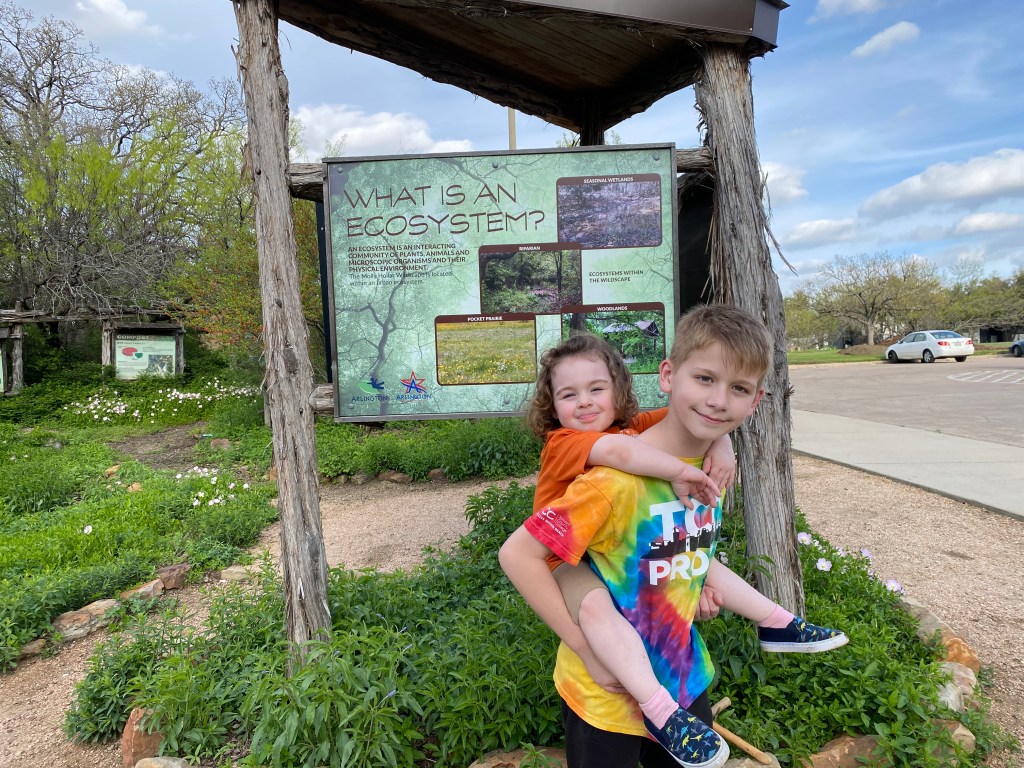
Lilly and Eli

I hope you will question what means to be a boy, and a man. Don’t just absorb what the culture teaches without some careful thought.

The culture (schools, places of worship, movies, social media, etc.) shapes what we expect of boys and men. But we don’t have to follow the culture when it holds up domination or aggression as ideals. We can turn away when it yells, “do it!” because stopping to think before acting is supposed to be weak. We don’t have to end up as men who are hardened, isolated, determined to win no matter who gets hurt. And we don’t have to raise our sons that way.

So … who do you want to be? I don’t mean work or a career, I mean what values could guide you as you make your way through the world?

Here are a few that are worth thinking carefully about: equality, empathy, truthfulness, integrity, compassion, kindness, and work as well as play.

Equality ought to be easy, right? People talk about it, even in our Declaration of Independence, the part about believing that “all men are created equal.” Nobody is above another person. It’s a great idea, and yet they wrote “men” and left out women. They left out people of color, too. Over the next couple of centuries, we began recognizing what we left out, and a lot of people have tried to correct that.

I hope you’ll think about equality on a very personal level, about you and the people around you. They way you are with girls, women, people of color, people with less money. Older people, like me, often used the right words about others being equal, but didn’t act like it. Our sisters and girlfriends were equal, but … boys and men needed to do things for them, speak for them, and make the important decisions. We said one thing but acted like it wasn’t true. Equality was mainly just a nice word. I think many younger people are doing better, but the problem is still here. In fact, some churches and politicians want to go back to the time when women were supposed to be quiet and obedient.

Women and girls should matter just the same as men and boys. Neither one should try to control the other, as if they were better. This especially includes the old problem of men and boys thinking they can control the bodies and the affection of women and girls. If we really mean it about being created equal, then we each make our own decisions about what to wear, who to hug, when it’s OK to touch or be touched. And of course that goes for any gender, gay, straight, transgender, or other way of recognizing who we are.

And being treated equally goes for any other person who is different in ways like race and skin color, or what country you are from, or how much money you have. I’m not better than a person who is different in those ways, and neither are you.

People who are opposed to these ideas may try to make it seem like we are saying that everybody has more rights than men or boys, like we are getting left out and these others are getting special rights. I guess what bothers them is that we men have less of a special privilege than before. We are used to having a special status, and so just being equal to everyone feels like we lost something. But the deal is, no one has more rights or is “more” equal than anyone else.

With equality, being female doesn’t give girls and women special rights, just the same rights.

And it doesn’t give Black people special rights over White ones, just the same rights.

And so on, with other kinds of differences.

So I hope you will think about the values that you want to guide your life, and I hope that equality is one of them.


I want to write more about these issues, maybe touch on those things like empathy, truthfulness, integrity, compassion, kindness, work, and play. What is happening in our country right now seems to challenge and distort those qualities, and some people are glorifying power and even violence. They would give special privileges to the rich and make women conform to mistaken ideas of what is required to be virtuous. They would re-define truth to be whatever is convenient at the moment. If we think such ideas are wrong, we have to speak up.

A Small Restoration

I had to go to the woods today. Among my frequent visits to those places, some are for spiritual and psychological first aid. Today was a day like that.

Cardinals like this male were singing throughout the preserve

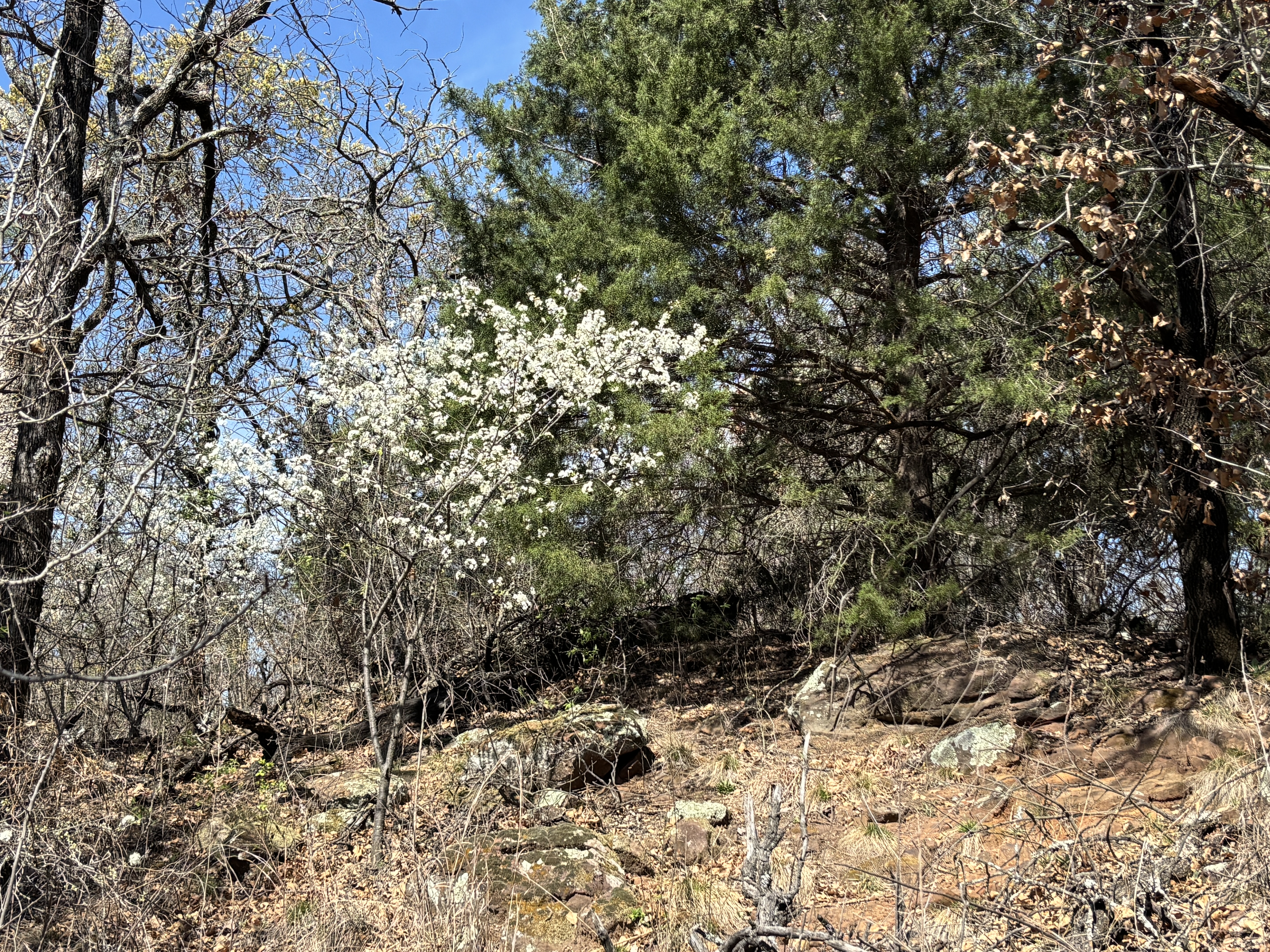
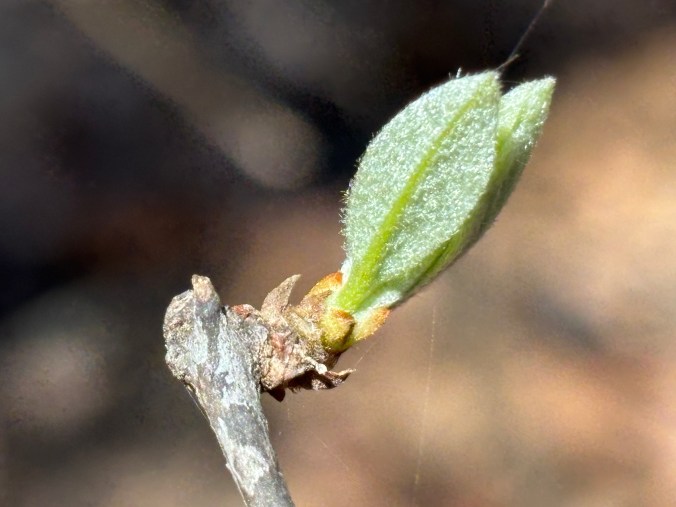
Here at Sheri Capehart Nature Preserve, I can sit on the ridge and look down into the brown and gray woods, still in those colors for a while before the leaves appear. There are some glimpses of green, bits of juniper seen through oak branches, and patches of moss at the base of tree trunks. And there is a flash of reddish feathers from a female northern cardinal.

Yes, there is traffic noise and a barking dog somewhere, but it feels quiet and there is a stillness to the dormant woods, here at the edge of spring. I needed this respite. Not a respite from my home, except that home is where the news arrives. Home is where I get sucked into the Internet, with stories from the world: destruction, corruption, and bullying. Here, I don’t allow the news to appear on my phone, which is used only for photos or checking the Merlin app to identify some unseen bird.

The sun is at my back and a butterfly dances by. Mosses and lichens growing on the stones of the ridge provide endless color, life, and art. And there is the stillness that hardly seems able to be found in the city.

Butterflies agree that spring is ready to arrive. On the trail from the ridge to the boulders, a fritillary glides in toward me on rigid orange wings. It sails on past, wings now flapping to carry it up to the treetops. Nearby, a pair of butterflies suddenly appear and spiral up in their fluttering flight, above the crown of the nearest tree. When I reach the boulders, a pair of sulfurs chase each other down the path. The fluttering, erratic flight of butterflies might make us think they cannot control their flight very well, but have you noticed how often they can weave among obstacles without hitting them? That erratic flight seems to be a gift, an ability to make quick turns and maneuvers that help them escape predators.

The historic 200-year-old post oak referred to as the Caddo oak

I walk around the preserve, past the historic Caddo oak, seeing many more butterflies and hearing a number of bird species: Carolina wrens, tufted titmice, a chickadee or two, an eastern phoebe, and many northern cardinals. I see a red-tailed hawk overhead, soaring and then turning on powerful wings.

A slightly fuzzy photo of the red-tailed hawk

Arriving near the north pond, I think about how much data we have about the benefits of mindfulness and time spent in nature. There is the reduction in stress, the cardiovascular benefits, an immunologic boost, reduction in depressive rumination, and increases in empathy among other gifts. Those things make time in the woods not some privileged escape or ignorance of the troubles of the world. It is a sort of refueling for the work that lies ahead. It is restorative – a little like sleep – and so it should not be undervalued.

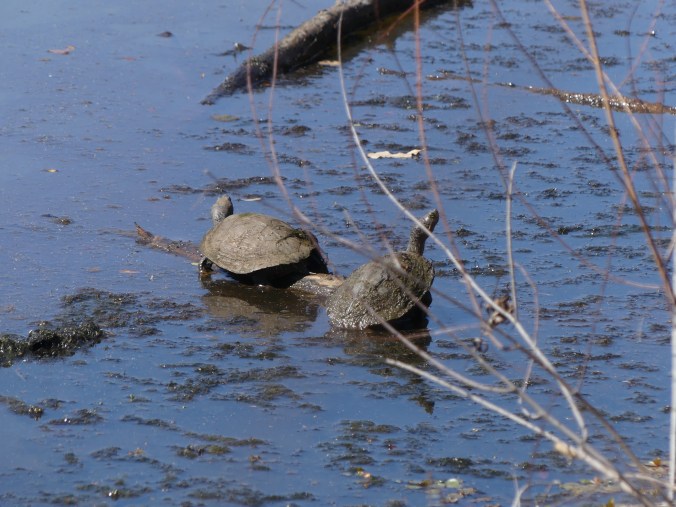
It is now 77F in the shade. Down at the north pond, life is in full swing. red-eared sliders swimming or pulling out and basking in sunshine. Cricket frogs jumping into the water as I get too close to them. All that is needed is the emergence of dragonflies, and the pond will seem complete. I walk back to the car after nearly two hours of walking, sitting, and noticing things in a world that seems so different from the big events of the wider world. It has been a small but important restoration.

Being With Children in Nature

(Reprinted from “Rain Lilies” on Substack)

A lot of parents hope that their kids will enjoy being outside and maybe even become “nature kids” – the kids that love the trees, water, grasses, bugs or birds, and may have familiar and beloved places in nature. Some other parents have kids who, on their own, have become interested in nature and love getting out. Such parents may be willing to support their child’s interest. I screwed up my first attempts, but have better ideas now that I’d like to tell you about.

Elijah, holding a green anole

Like many other parents, I hoped my son would enjoy being in nature and even be a partner with me in exploring the woods and creeks. All these years later, I understand some things better than I did then. What is wonderful to me may not be attractive or interesting to someone else. To share an experience or a place with someone, it is important to be tuned in to how they will experience it. These ideas will seem obvious to you, and thirty years ago those ideas – put into those words – would have been obvious to me, too. But sometimes I was blind to their meaning.

So here’s what I did that may have sunk any chances of my raising a nature kid. When he was five, I took my son to the creek that meant so much to me when I was growing up. He rode on my shoulders through the tall grass, and then we walked the limestone creek bed where water trickled and gathered in pools. I turned over a piece of wood to find a couple of plain-bellied water snakes hiding beneath. They are harmless, so I grabbed for them and caught one.

For someone with a serious interest in field herpetology, “harmless” means “this snake is going to bite you if you pick it up, but there is no venom and it only leaves scratches.” Others might not necessarily agree that “harmless” is the right word, but there it is. Geoffrey was not thinking the snake was harmless as it repeatedly bit my arm and drew blood. I got control of the snake’s movement and it stopped thrashing, and Geoff’s eyes were wide with fear. I was clueless enough to offer to let him touch the snake somewhere away from its head.

“No-o-o-o-o-o,” was the answer.

I hadn’t bothered to ask if he wanted to find a snake, and then had not paid attention to how he was responding when I did find one. I was very mis-attuned to my son and too focused on what was a wonderful experience for me and thus I thought surely would be for him. Geoff tells me that he would not have become a nature kid regardless, but I’m sure this experience did not help.

Maybe if I had talked with him before our walk to see what he would like to get out of it, or at least prepared him for how it might go if we found a snake. And maybe if he shrank back as I discussed it, I would know that it’s better to just walk around the creek and not look for snakes this time. You would think that my Master’s degree in psychology would have told me this.

At a later point in my career, I was trained in parent-child attachment relationships and a program called the “Circle of Security,” a way for parents to pursue attuned, secure attachment with their children. The “circle” is a graphic that shows us as the secure base from which the child goes out to explore and grow but also comes back in for reconnection and help.

Sarah, examining a pine cone at LBJ National Grasslands

Having a secure relationship with someone means we work to be reliable partners for each other, whether we’re a parent with a child, two close friends, or a married couple. We try to respond to each other’s emotional cues and act in the other person’s best interest, and when we screw up, we try to fix it. We can take delight in each other without being overly controlling, but we can also step in and be protective when needed. We wish we could succeed at this all of the time but we never perfect it. There are mistakes in the relationship from time to time, and what counts is how we repair it. The cycle of rupture and repair can strengthen relationships in ways that perfection probably could not.

Early research on attachment involved mothers and babies or very young children, but the themes follow us into adulthood. Our relationships, how we trust others, how we maintain (or don’t maintain) boundaries with others, and how we handle conflicts, tend to reflect to one degree or another how those early relationships worked. And so these ideas are very relevant to our parenting of school-aged children and beyond.

Much of the Circle of Security approach seems relevant to encouraging children to spend time in nature. We surely don’t want to make it a battle, as if to say, “You’re going to march right out there and hang out with the birds, or you’re grounded!” I don’t think it works out well to make it a chore, a sort of outdoor homework in which we say, “Stop having fun, it’s time for nature; and remember, there will be a quiz afterward.” No one would really say that, but you know what I mean.

So what can happen when we take children to the prairies and woodlands? We can support their exploration while watching over them, staying closer when they’re younger and giving them more independence and space when they are older. We can give help when it is needed and genuinely wanted, and also enjoy the experience with them. With Lilly’s earliest walks in the woods, I stayed very close but I generally followed her lead. When she stopped to play in the sand of the trail, I stopped with her. I’ve taken older kids who also wanted to play in soft sand, and I’m happy to stay nearby and watch that happen. Once I joined an elementary school-age girl who was throwing a few small branches and sticks into a pond and describing the results, in one case creating a small wave in the water “like an angel’s wing.”

Lilly on a walk in the woods

In Circle of Security terms, these are things that happen on the top half of the circle, when the child is playing under our watchful eye and sometimes needing us to delight in what they are doing. It doesn’t all have to be free play; we can and should offer ideas and help. We can engage kids in some structured activities or games while in nature. But it helps if some of that time in nature involves following the child’s lead, and if our time in nature feels like something that we create together.

Kelby shares a moment of discovery with her kids

What about the bottom half of the Circle of Security? That’s when the child needs to return to you for support, to take out that splinter or reassure them that the bee that’s buzzing around isn’t trying to attack. Or maybe when the younger child falls apart in frustration or the older child has a conflict with another child. It might be when she or he is getting near some place that could be dangerous, and we have to step in and set limits. In Circle of Security terms, it’s when the child needs us to welcome them, protect them or comfort them, and help them manage overwhelming feelings.

There are always hazards of some sort. Not long ago I stopped Lilly just before she walked into a patch of cactus. I took a group of people on a walk at sunset at LBJ National Grasslands (no young children on that walk). Copperheads are fairly common there, and I prepare folks accordingly and would set limits on risky things like walking around barefoot at such times. Coyotes began to yip and howl in the darkness, and a little reassurance was needed for one of the participants. These are all moments that occur on the bottom half of that circle, in which the other person wants to reconnect or needs help or limit-setting.

The helpful phrase that the program taught us was, “Always be bigger, stronger, wiser, and kind.” We are bigger and stronger in the protective sense – with four-year-old Lilly I will hold her hand as we cross an elevated walkway and would not let her fall. With young children it is also protective when, if necessary, we pick them up and move to a safer or quieter area in the middle of a tantrum. We also aim to be wiser in the sense that we decide when we can follow their lead and when it is necessary to step in and assume control. It takes wisdom and self-awareness to avoid using our strength just to “show them who’s boss.” And kindness is that crucial ingredient that can make the bigger and stronger part not frightening and (at least sometimes) not escalate emotions into a fight.

Taking kids out into nature needs the right blend of following the child’s lead, offering ideas, and making the outing a working partnership between adult and child. It also requires judgment and protectiveness on our part. If we can be a secure base for children, as described in the Circle of Security, and remember to be bigger, stronger, wiser, and kind, we will all benefit.

Looking Beyond Ourselves

Our lives have taken a dark turn, bringing a foreboding that cannot be wished away with reassuring words. Our physical safety, health, economic security, community integrity, and the already unstable environment are threatened. As we work on the practical issues of taking care of ourselves and resisting what is coming, we may want to reach beyond ourselves for some sort of transcendence, to be part of something bigger and better than the mess we find ourselves in.

I’m not recommending that we check out and abandon the work that must be done to resist the oligarchy and the bullies and enablers that now constitute most of our government. I hope we will stand up against that which is wrong, support organizations and communities that remain committed to truth and democracy, and embody what we want to see around us (such as compassion, humility, and integrity). I will still visit the woods and prairies and try to be open to experiences of transcendence and spiritual renewal, but I also hope to do those other things.

How do we find strength and keep from getting swallowed up by what we are facing? One honest answer is “I don’t know,” but I’m thinking that it will involve reaching beyond our worries and things we use for distraction. And if we reach into the part of life that we refer to as “spiritual,” would we find strength or would we struggle too much with all the baggage that the word carries? Hopefully we could resolve the issues about religion and control that many of us think of first when that word comes up. Various religions have hijacked spirituality and confined it to the “right” beliefs, orthodoxy in our practices, and condemnation of others. A great deal of cruelty and killing have resulted, and many of us want no part in that.

But some do. For example, we hear about Christian Nationalism and those who want to rule in the name of Christianity. I’ll single out Christianity, knowing that the other Abrahamic religions could be part of this discussion, too. I have been dismayed to hear reports of self-identified “Christians” disavowing the Sermon on the Mount (including “blessed are the merciful” and “blessed are the peacemakers”) as being irrelevant now and too weak. It is revolting that the “Rod of Iron Ministries” venerates the AR-15 and has a compound in Texas preparing for war with the rest of us.

At the opposite end of the spectrum is the Episcopal Diocese of Washington (DC), where Bishop Mariann Budde spoke directly to Trump at a prayer service yesterday, saying:

“I ask you to have mercy upon the people in our country who are scared. There are gay, lesbian, transgender children, Democratic, Republican, independent families — some who fear for their lives” … “I ask you to have mercy, Mr. President, on those in our communities whose children fear that their parents will be taken away.”

Trump later asserted that she was “nasty” (another “nasty woman”) and should apologize. Given his penchant for revenge, I would say she was courageous. And her words were consistent with the teachings of Jesus – for anyone interested in exploring what he actually taught about love and compassion, I highly recommend Wendell Berry’s Blessed Are the Peacemakers, in which he pulled together the New Testament statements attributed to Jesus concerning these topics. In the Introduction, Berry said that Christianity was fashionable in the U.S., but “It seems to have remarkably little to do with the things that Jesus Christ actually taught.”

But back to the broader topic of spirituality. Definitions of “spirituality” include references to the sacred, to transcendence, reverence, awe, and seeking meaning and purpose, and being in the right relationship with everything that is. My source for these can be found at a webpage at the National Center for Cultural Competence.

If I look for experiences and activities that go beyond me as an individual human, that connect with something meaningful and enduring, perhaps I will be shielded a little bit from the hurts of the world even while staying engaged with that world. It might be finding and sharing beauty and harmony, responding to the needs of others, or participating in religious beliefs that are not a mask for power and greed. It might be understanding that I can be a part of a love that is bigger than individual people and even inclusive of all lives. Such spirituality might provide a sort of sanctuary, in the sense of a place of refuge and safety.

Lilly’s Adventure Walks

This post is also at “Rain Lilies,” a Substack that I started when I considered leaving the WordPress platform. While it was sitting unused but not deleted, my friend Dresden Graff (read what he writes at “Human and Learning” over there) recommended me to his readers. And that spurred me to write about Lilly’s and my walks in nature. I’m getting my thoughts together to possibly write a new book, this one for families of kids. I would talk about introducing kids to nature, supporting their nature interests, and I would draw on my psychology career to include some things about child development and how the human lives part of our lives in nature works. I may try out some ideas over at Rain Lilies, in case you’d like to have a look.


Tomorrow (January 17), I plan to take Lilly to the woods and the marsh. We took a walk there a couple of weeks ago, and she’d like to return and maybe see birds. On our last walk, we heard crows, and one of them flew in and loudly announced his presence from a nearby tree. What a wonderful, big black bird, like a druid of the woods with secret knowledge of who lives among the trees, some to welcome and others to chase away. Did he welcome Lilly and me? I don’t know, but I think Lilly welcomed him.

Lilly and I have been taking adventure walks since she was two, and now she is four. She loves climbing on boulders and looking at creatures we find. A little before her third birthday, she discovered a small, harmless DeKay’s brownsnake on the trail. She had nothing but gentle curiosity with this little animal, and with my guidance she was able to touch it and wish it good-bye as it disappeared into the leaves and grasses. 

Lilly’s first snake – a DeKay’s brownsnake at Fort Worth Nature Center & Refuge

In that encounter, she embodied a significant issue for two-year-olds, as expressed by the famous psychoanalyst Erik Erikson as “holding on and letting go.” As they experiment with their increasing sense of what it is to have power, they may make demands, enjoy saying “no,” and become overwhelmed with the resulting emotion and have tantrums. Toddlers have to work out, with us big people, how to manage the impulse to be in charge of everything, to have and express choices while living within limits. A loving adult caregiver can be firm, yet reassuring, and help the child navigate the stage that Erikson called “autonomy vs. shame and doubt.” 

Lilly seemed to get through that stage amazingly well, with a healthy wish to be independent along with an ability, most of the time, to negotiate shared control. She has what psychiatrists Chess and Thomas would describe as an easy temperament, meaning that she is pretty adaptable to changes and new situations, her mood is generally positive, she is active but not so much that it interferes with everyday situations, and so on. Child development researchers tell us that temperament styles are largely a part of who the child is (they are not taught by parents), though they can shift some with experience and parents can bring their own flexibility into play and work around some difficult temperament. 

In one of our visits to Sheri Capehart Nature Preserve when she was still two, we looked at flowers of the tie vine (a kind of morning glory) where honeybees, bumblebees, and other bees were visiting. She was fearless but did not impulsively try to grab one (thankfully). We talked about just watching and not touching, and we had a good time. Her dad – my son Geoffrey – understands that the loving and careful grandpa is in charge of his own wild nature nerd impulses, and I’ve never brought her back with bee stings or other boo-boos. However, I encouraged and was proud of her fearlessness as we sat there.

Watching bees at Sheri Capehart Nature Preserve

As a three-year-old, we’ve been to a number of parks and preserves, and sometimes she would walk along the top of a series of small boulders, enjoying her physical ability and coordination (and being up there as tall as papa). She has spent plenty of time sitting in the trail drawing in the dirt with fingers or sticks. As the famous developmental psychologist Jean Piaget would tell us, the typical child at age 3 can think about things that are not present and talk about them or make drawings of them. Sometimes she may have been drawing herself, but there were also times that it might have been the turtles we saw earlier or a bird she wished to see. Drawing in the dirt is an imprecise thing, and I often could not tell.

Using a stick to draw, Oliver Nature Park

For Lilly, an adventure walk is a learning walk, but hopefully not because I’m turning it into “school.” I try to check myself if I start saying “…and that tree over there is an oak.” Better to follow her lead, and then I will throw in the name of something or ask a question we can both wonder about. If she almost steps into a cactus, I’ll help her stop and say a couple of things about it being “pokey” but also some animals do eat them. If she asks a question, I’ll try to answer it, but if she is ready to move on, I’ll go with that. (I did start a game at one point by saying, “Let’s see how many cacti we can see,” and she walked along noticing each one: “Cactus!”)

An adventure walk is also a way for us to learn about each other and share with each other. We get better at understanding each other’s likes, abilities, and attention spans. And we experience the delight of a pond, and ants following a path across the trail, or a crow fussing at us from a tree. We open each other’s eyes to wonderful things that we might have missed.

Being a guide for a child’s becoming acquainted with nature is a privilege to be honored and taken seriously. I’m enormously grateful. And I’m ready to see that crow tomorrow!


This is a short follow-up to yesterday’s post about Lilly’s and my adventure walks. As I mentioned in yesterday’s post, we went to Fort Worth Nature Center & Refuge today (January 17), so here’s what happened.

We arrived just after 2:00pm, when the clouds retreated and the sun warmed the afternoon. She had wanted to see birds, and we did see vultures as well as some sparrows (sorry, no specific ID) in the dead stalks and branches along the boardwalk. We wanted to get a photo of one of those turkey vultures, and I’m including one that Lilly took, with help with zoom and focus.

Lilly’s photo of a couple of turkey vultures

From a cloudy and cool morning, it was becoming a really wonderful day with beautiful clouds.

Looking east from the marsh boardwalk

We walked the trail eastward, and after a short walkway across a low area the trail climbs up a little, overlooking the marsh. Lilly had decided that we were pirates, and that I was to tell her “aye, aye, cap’n,” which of course I did. She runs a very egalitarian ship, trading off periodically and making me the captain. 

At a high spot along the shore there is a bench, and we stopped and had a drink. She dug for buried treasure in the gravel, and came up with some caps from acorns. We drank candy from these acorn cups, as pirates always do, and she even spoke in a harsh pirate voice. 

And so it was a great walk on a very nice day, and she noticed turkey vultures as well as greenbrier (she really doesn’t want to get scratched, so she kept calling out “greenbrier” when she would see one). A nice combination of natural history and pretend play!