Field Herping and Fighting “The Nothing”

(This one first appeared in my earlier blog, “The Great Rattlesnake Highway,” in March of last year. I describe how my field herping evolved as I learned more about the animals and places I love.)

I spend as much time as I can in woods and prairies, or wading creeks and watching turtles slip into the water or cricket frogs jump away as I approach. From my first gartersnake in the early 1960s to now, I’ve spent a lot of time in the field, looking for reptiles and amphibians. But that first gartersnake led to a sort of addiction. Ribbonsnakes, watersnakes, box turtles, massasaugas – a list of species that seemed ever-widening as I discovered more of the herpetological world.

This image has an empty alt attribute; its file name is thamnophis-radix-juv.jpg
Juvenile Plains gartersnake

That world expanded to more of the natural world when, as a young teenager, I spent some of the most valuable time of my life in a couple of Texas museums. I learned how my favorite animals were connected with other species, predator and prey. I learned about plant succession, symbiosis, food webs and the like, as we spent time in the field, patient teacher and eager learners like me, eyes opening to layer upon layer of the lives of forests and prairies, worlds within worlds.

It was as if my mentors and my experience in the field revealed a real and beautiful world to me. I waded in clear streams running along rocky bluffs, where map turtles basked on limestone boulders and little aquatic predatory larvae would transform into beautiful dragonflies soaring on cellophane wings. I learned about tallgrass prairies teeming with diverse plants and animals, adapted so that they required periodic fires and occasional grazing by bison in order to keep on being prairies and not be overrun by shrubs and trees. This seems to me to be the “real” world, while urban landscapes of steel and concrete are an alternate reality in which I may have to spend time, but never quite feel at home.

This image has an empty alt attribute; its file name is img_0145.jpg
The “real” world

Field herpers are more likely than most people to understand this “real” world and find beauty in some things that others would overlook, or maybe be repulsed by. Flipping tin to find snakes in the cool of the morning, we might think about how ingeniously an ectothermic animal can make use of its surroundings to get to the right temperature. The sun heats those sheets of corrugated tin and might help get that racer up to speed and ready for a day of chasing down prey. We could find a red-spotted gartersnake in Oregon and imagine the long-running arms race these snakes have had with rough-skinned newts. The newts’ skin produces a neurotoxin that is fatal to many animals and there is even a human fatality, someone who is said to have swallowed the newt on a dare. That toxin that the newt secretes from skin glands, tetrodotoxin, protects the newt from most predators, but not from the red-spotted gartersnake. Perhaps early on the tetrodotoxin killed some of the gartersnakes, but some with greater tolerance for the poison survived. This new generation of snakes was more able to eat most of the newts, but populations with stronger toxins were still protected, and passed along their genes for more powerful secretions. And so it progressed, with newts developing stronger toxin, followed by gartersnakes developing greater resistance. Stories like this teach us so much about predation, evolution, and survival. They continue to hook some of us into a greater fascination and love for the natural world.

And so we go on hikes to look for reptiles and amphibians, and in the process may learn more about the living world around us. Successful searches depend on our understanding a few things about habitat, and we learn more about how an upland oak forest is different from a bottomland forest with its periodic flooding and rich soil. Finding herps depends on understanding a bit of their natural history, and so we learn to look in places favorable for shelter and prey, and we discover how a species’ activity can shift from daytime in the cooler spring and fall months to nighttime in the hot summer. Somewhere along the way, the natural world (which can seem foreign and exotic to some people) comes to feel like home.

That home is shrinking. What used to be a continuous mural of forests, plains, mountains, and deserts across the continent has been clipped into fragments and marked over until it is now a series of portraits and thumbnail images of what once was. A report from the Intergovernmental Science-Policy Platform on Biodiversity and Ecosystem Services (IPBES) says:

“Compared to pre- European settlement status, over 95 per cent of the tall grass prairie grasslands in North America … have been transformed into human-dominated landscapes. … over 50 percent of all wetlands in the United States have been lost since European settlement, with up to 90 per cent lost in agricultural regions.” (IPBES, p. 27)

Focusing in on herps in particular, the situation is very concerning. Amphibians are in decline globally, and similar declines in reptiles have been discussed for going on two decades (Gibbons, et al., 2000). Habitat loss and fragmentation, toxic pollution, invasive species, climate change, diseases, unsustainable use by humans, all these things are threatening herps and other species.

To borrow a movie (or book) metaphor, it’s like The Neverending Story, in which a young boy reads a book telling about a fantastic world that is being consumed by the “Nothing,” gradually disappearing, bit by bit. Like in our world, where forests are cut, grasslands ploughed, and the animals disappear along with the land. As Bastian reads, he gradually discovers that by reading the book, he has entered the story, and has become a character in it. And by going into the field, we have entered the story, and we are a part of whatever happens to wild places and wildlife. What can we do to fight the Nothing?

This image has an empty alt attribute; its file name is fwncr-cottonw-bark-17mar19.jpg
Loose bark provides refuges for herps and invertebrates

Among the things we can do is to keep the remaining wild places as healthy as possible. This is important not only in tracts of wilderness, but also in small local preserves. For example, in a woodland we know that some herp species might be sheltering under big loose sections of bark on dead trees. The easiest way to search would be to pull those sections of bark off, but that would destroy a bit of microhabitat that was used by lizards, snakes, and other animals. Once the bark is pulled off, it cannot be put back.  So maybe it’s a big woods with a number of other dead trees, and it might seem like we’re just doing something that is going to happen anyway, eventually as the wood decays. But we probably don’t find what we’re looking for under the bark of that first dead tree, so maybe we go on to the next one and peel the bark off of it. Soon, we have done a lot of damage.  I would rather carry a small flashlight in the field and shine it into such places, so I can see what is there without destroying the places where these animals live.

“Rock-flipping” is a time-honored, though back-breaking field herping practice. Big, flat rocks with just the right amount of gap under them can be great places for herps to shelter. The environment under them can be just right – they may gather the radiant heat of the sun when needed but insulate against severe heat, and the humidity will be a little higher than in exposed places. The easy way to flip a rock is to simply turn it over and leave it there, but that destroys the “just right” conditions under the rock. I am so thankful for those herpers to go out of their way to re-position the rocks just like they were. Researchers in Australia looked at whether herps used rocks that were left out of place and found that they did not. A rock that had been carefully put back in its original position was much more likely to be used by lizards and snakes. They also found that the temperature and humidity were different under rocks that had been moved by humans. A field of rocks that have been turned over and left is the herp equivalent of a place that has been invaded by the Nothing.

This image has an empty alt attribute; its file name is img_1076.jpg
Plenty of rocks to flip – but put them back!

Diseases are significant threats to wildlife. Many of the well-known threats are fungal, like white-nose syndrome that has killed millions of bats. More recently, snake fungal disease has emerged as a significant disease in wild snakes, causing fungal lesions of the skin and mouth. One of the biggest culprits in world-wide amphibian die-offs are a couple of species of chytrid fungus. They attack the delicate skin of frogs and salamanders, thickening the skin and harming its ability to exchange gases and water. Field researchers working with amphibians have adopted protocols to make sure they do not spread any such fungus, and we should consider some of the same measures. We might, for example disinfect nets and other equipment as well as the parts of boots that have gathered mud, before visiting a different location. Bleach solutions work well for this.

You explore a hillside all afternoon, being careful to pull rocks up just enough to look underneath, and then put them back just like you found them. Under one of those rocks, you find the most magnificent kingsnake! Its scales are a beautiful, glossy black, each one with a little dab of canary yellow, speckled from head to tail. Do you pick it up? Just take a photograph, or stare in quiet admiration? Or do you take it home? Unlike birders, herpers get to pick up and hold many of their finds. In many cases, perhaps with a hunting license or other permit, we can take reptiles and amphibians home to keep in cages or terraria. Whether that is a good thing is a long and complicated argument.

This image has an empty alt attribute; its file name is dscn0233.jpg
A beautiful desert kingsnake from Brewster Co., Texas

First, let me tell you about my experience over the years. When I got started, I collected most of the reptiles that I found. My parents accepted my hobby and helped me build cages, and I brought home coachwhips, ratsnakes, box turtles, the occasional snapping turtle, and others. Chances are, I did little harm to most of the populations – I was just another predator, a two-legged boy taking a ribbonsnake rather than a two-legged heron stabbing the snake with its long bill. Predation is a fact of life for wild animals, and unless the predation is too high, the population withstands it. (By the way, it is worth noting that collection by herpers is just like being captured and eaten by a raccoon or hawk or other animal – the herp is dead as far as the population is concerned.)

When increasing numbers of collectors work over a small area, the losses can drive populations down in that place. This is especially true for turtles, which mature slowly and live long lives. A female turtle has to lay lots of clutches of eggs over her long lifetime, because many eggs and young are killed and eaten, and only a few make it to adulthood. This makes every adult box turtle or snapping turtle very valuable. They have to stick around for a long time in order to contribute to the population. Removing a box turtle takes away many years of reproductive potential from the population. Being run over on the highways is a big threat to turtle populations, but collection can harm them, too. In Connecticut, wood turtles were studied both before and after an area was opened to hiking by permit. The population of turtles was gone in ten years, likely because of people who meant no real harm collecting them and taking them home (Internet: Vermont Fish & Wildlife Dept.).

Over the years, I collected fewer herps. This was partly because a large collection of reptiles demands a lot of time and work if you care for them properly. It was also because I noticed that a velvety-black coachwhip cruising gracefully through grassland and scrub loses a lot of its magic once it is at home, in a box. As I came to appreciate them more, I didn’t want to see them confined in a tiny area from which they would gladly escape if they could (and on occasion they did). I learned more by just watching, about how they moved and hunted when undisturbed. I remember watching a watersnake periscope up and look around, and then take a leisurely swim across the creek. I watched a racerunner lizard nervously make its way across sand and grass with quick, jerky movements as if barely restraining its energy. It grabbed an invertebrate to munch it down, and turned this way and that to look for prey and watch for predators. More and more, these moments seemed more valuable to me than chasing the herp down (maybe breaking the lizard’s tail in the process) to collect it.

I don’t want you to think that I am a purist who never captures anything. If it can be done without harming the animal, I may capture it briefly and pose it for a photograph. I also think that some collection of herps for scientific collections is justified – those collections have increased our understanding of these animals greatly, and we need scientific collections. But I found that I did not need much of a personal collection.

What would I do with extra animals kept at home, ones that I didn’t want to keep? I couldn’t (or shouldn’t have) let them go, for several reasons. First, of course, I would never release anything that was exotic. Quite often, something that isn’t adapted to the area will simply die, but if it doesn’t, it can become quite a problem. I’d learned about invasive exotic species, starting with the story of the cane toad, introduced into Australia to control the cane beetle. Apparently the toad did not help with that beetle, but it did eat lots of other things, adding extra pressure on native wildlife. The toad’s toxic secretions were also a problem for wildlife species that attempted to eat it, further harming local wildlife. There are plenty of other stories of exotic wildlife that have gotten loose or been released, such as in Florida.

Thinking about the problems with spreading diseased like chytrid or snake fungal disease, I would not want to release a native animal, either. Being collected is a source of stress, and even if my local ratsnake was feeding and acting healthy, I cannot be sure if that snake might be harboring some pathogen that got established because stress can compromise the immune system. With weakened immune functioning, microorganisms that had been present at low levels might now flourish, and my ratsnake might pick up new pathogens while in my collection, because I did not practice hospital-level infection control when taking care of that collection.

And even if the animal is native and could be proven to have no disease that it could spread, there’s one more problem. Out in the wild, as they grow and move around in their habitat, herps generally stay within an area referred to as the “home range.” They get to know the landmarks and resources of an area and generally stay within that home range. The size of the home range varies a great deal across different species and to some extent for different individuals. A home range might be bigger for larger, active animals and when the resources are limited, forcing the animal to move over a larger area to find what they need. When we capture a reptile and later release it somewhere else, trouble often follows. The animal may not settle down, continuing to search for “home” and having a greater chance of being killed. This problem has been studied, and the results are often similar. Plummer and Mills (2000) radio-tracked eight resident eastern hog-nosed snakes and eight that were translocated. The resident snakes moved about within their home ranges but the ones that had been moved traveled more, often in straight line movements, and were three times more likely to die during the study. Nowak & van Riper (1999) translocated western diamond-backed rattlesnakes in Arizona and found that the translocated snakes moved greater distances, and some found their way back to their original home range while others experienced greater mortality. Overall similar results have been seen with box turtles (for example, Cook, 2004; Sosa & Perry, 2015): when moved out of their home range, adults often move greater distances, may not stay in the area to which they have been moved, and may have greater mortality.

Eastern hog-nosed snake

There have been a few successes when translocating herps, but overall the news has not been very good. Sometimes moving an animal is justified. When a herp is found in some high-traffic, developed location where it will be killed or be unable to find food and shelter, then moving it to the closest available place with suitable habitat may be the best we can do. Otherwise, moving the animal just because we think we know where it would live a better life, or in an attempt to re-establish it in some place where that species has disappeared, is really not a good idea.

So I guess that over the years I have learned a lot of “don’t do this” stuff. But you know what? It’s really stuff that lets me do what I love in a way that helps me protect the places and animals I love. Think of them as ways to fight “the Nothing” while still having a great time exploring forests, wetlands, and deserts, and seeing amazing animals.


AmphibiaWeb. https://amphibiaweb.org/declines/declines.html (accessed 2/9/19)

Cook, R.P. 2004. Dispersal, home range establishment, survival, and reproduction of translocated eastern box turtles, Terrapene c. carolina. Applied Herpetology, Vol. 1, Pp. 197-228.

Gibbons, J.W., Scott, D.E., Ryan, T.J., Buhlmann, K.A., Tuberville, T.D., Metts, B.S., Greene, J.L., Mills, T., Leiden, Y., Poppy, S., & C.T. Winne. 2000. The Global Decline of Reptiles, Déjà Vu Amphibians. BioScience, Vol. 50, No. 8, Pp. 653-666.

Intergovernmental Science-Policy Platform on Biodiversity and Ecosystem Services. https://www.ipbes.net/system/tdf/2018_americas_full_report_book_v4_pages_0.pdf?file=1&type=node&id=29404 (accessed 2/9/19)

Nowak, E.M., & C. van Riper. 1999. Effects and Effectiveness of Rattlesnake Relocation at Montezuma Castle National Monument. Flagstaff, AZ: USGS Forest and Rangeland Ecosystem Science Center Technical Report.

Pike, D.A., Croak, B.M., Webb, J.K., and R. Shine. 2010. Subtle – but easily reversible – anthropogenic disturbance seriously degrades habitat quality for rock-dwelling reptiles. Animal Conservation, Vol. 13, Pp. 411-418.

Plummer, M.V., & N.E. Mills. 2000. Spatial Ecology and Survivorship of Resident and Translocated Hognose Snakes (Heterodon platirhinos). Journal of Herpetology, Vol. 34, No. 4, Pp. 565-575.

Sosa, J.A., & G. Perry. 2015. Site Fidelity, Movement, and Visibility Following Translocation of Ornate Box Turtles (Terrapene ornata ornata) From a Wildlife Rehabilitation Center in the High Plains of Texas. Herpetological Conservation & Biology, Vol. 10 No. 1, Pp. 255-262.

Vermont Fish & Wildlife Department. Wood Turtle. https://vtfishandwildlife.com/learn-more/vermont-critters/reptiles/wood-turtle (accessed 2/10/19)

An Evening at the Ponds at Southwest Nature Preserve

The long, hot day was surrendering to darkness at the preserve. The trees and shrubs around the edge of the pond were black silhouettes and the sunset was fading. Shades of gold and rose would soon slip into the dusty gray-black that passes for night sky in a big city whose lights perpetually fight the darkness. We had listened to frog calls and scanned the pond margin with flashlights to look for frogs or a watersnake beginning its nightly hunt. In that last rosy light above the pond, things were dipping and flying, feeding on the insects that buzz around the water. Some of the acrobats had the strong, angular wings of swallows, birds whose flying maneuvers are amazing. But then we noticed that others had stubbier outlines with more flapping. Bats! It was not surprising to find them, but since I rarely get a chance to actually observe them, it was a wonderful treat!

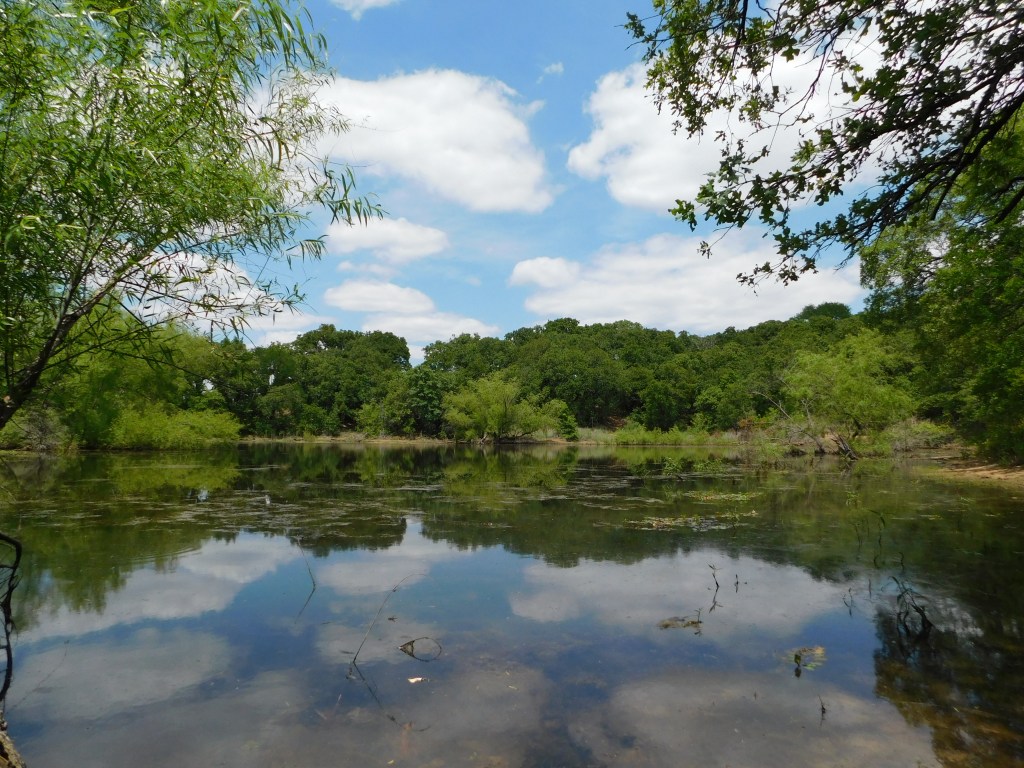
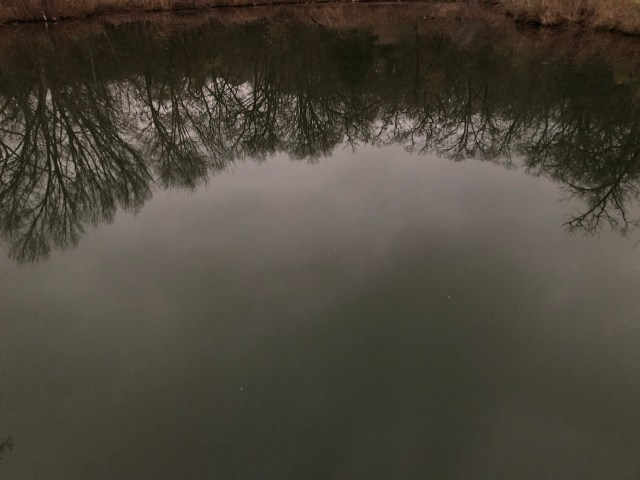
The pond in daylight

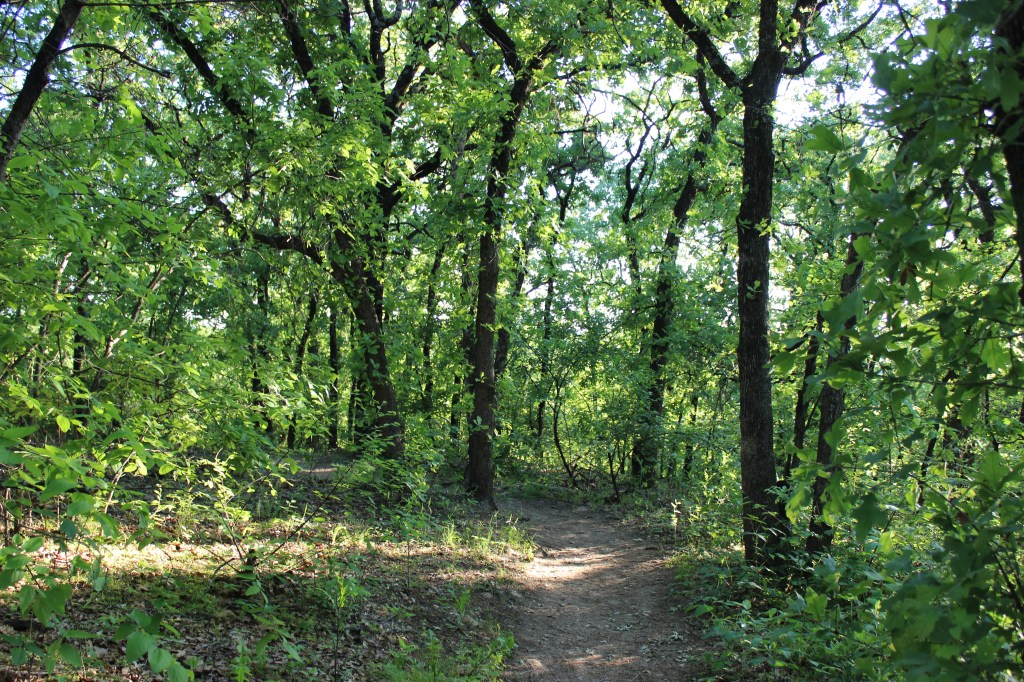
This walk was part of what is becoming a survey of the reptiles and amphibians (“herps”) of the 59-acre preserve, with incidental observations of whatever else we find. I plan to visit the place every week, with walks that include trails through primarily wetland, woodland, and open or “edge” habitat where meadows or glades open up in the Cross Timbers forest. We will note the time of day as well as temperature, humidity, and sky conditions. Over time, we will have looked for herps in each of these habitats at least once a month, as the seasons change and hopefully as the years roll by. Could we glean some information about whether things are changing? I hope we can offer some educated guesses. The survey is a citizen-science effort by people who are not trained researchers, but what we record can be valuable.
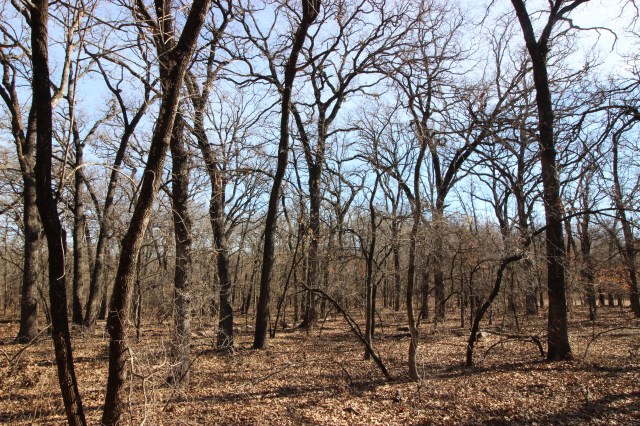
On this particular evening, “we” were Jim Domke, Annabelle Corboy, and me. Jim is a newspaper guy, and now a freelance writer and photographer. He writes about nature and cares a lot about the preserve; Jim is the guy who always brings a trash bag to help clean the place up while hanging out with nature nerds. Annabelle is a retired IT person who is now part of Friends of Southwest Nature Preserve. She is a curator for the preserve’s project at iNaturalist and is a great advocate for the citizen science efforts that help document the plants and animals at the preserve.

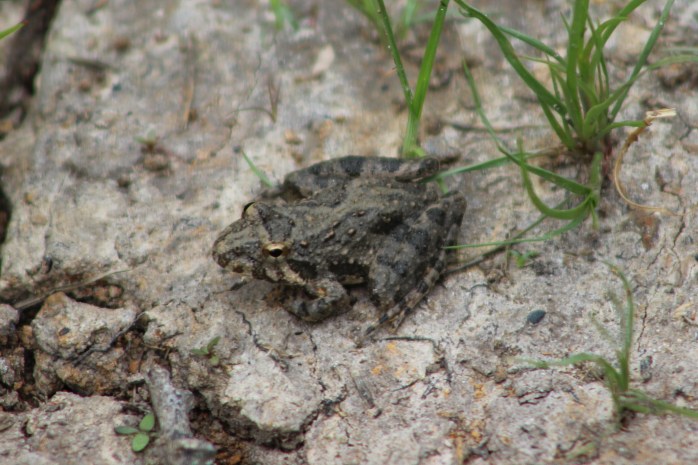
Blanchard's Cricket Frog
Blanchard’s Cricket Frog

We started our survey visit on the trails at the edge of the big pond. The shoreline is dotted with cattails, the occasional willow, and plenty of water primrose along the edge of the water. In that tangle of primrose and other low plants, Blanchard’s Cricket Frogs hopped and then disappeared against the dark mud or dove under the water and tangled plant matter. As I watched for a chance to take a photo, a disturbance in the water caught my eye. An adult common Snapping Turtle had come up for air but pulled back down upon seeing me. There was no time for a photo, but that face was unmistakable – the chunky head, the almost-smiling jaws, and those yellow-green eyes with the dark dashes radiating out from the pupil to break up the pattern. In a moment, it was gone, but I was delighted since this was the first common snapper I had seen at the preserve.

That illustrates one reason for doing this kind of survey – to confirm observations of infrequently-seen species. People have reported sightings of the Snapping Turtle at the preserve three times in three separate years. It is very plausible that Snapping Turtles keep to themselves under the water and simply are not seen very often. More observations of them would help to confirm whether a stable population of this species is living in the ponds at the preserve.

Red-eared Slider

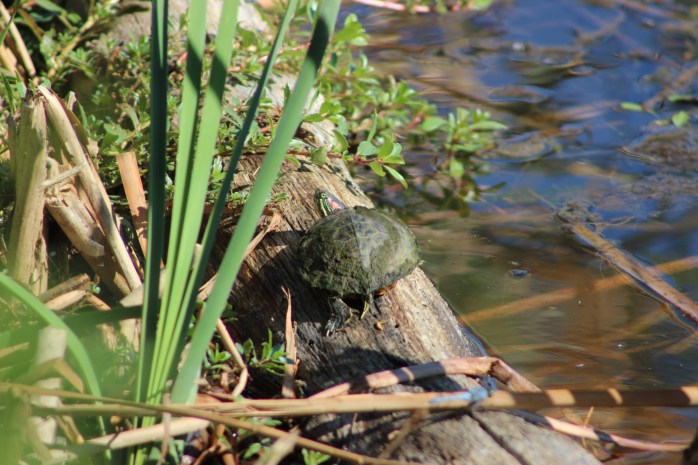
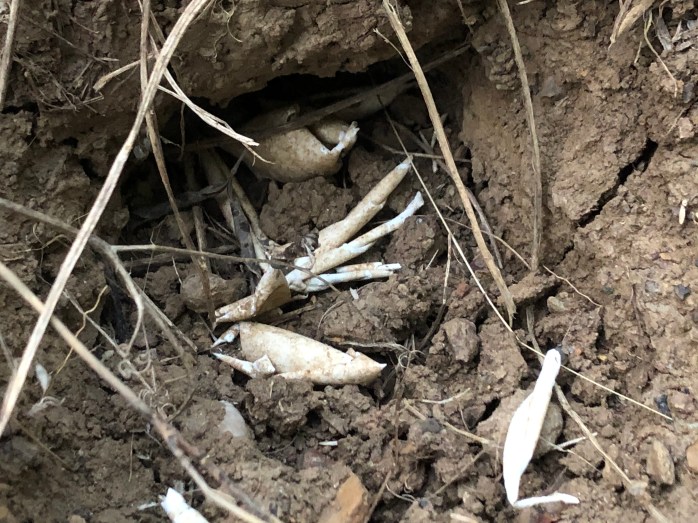
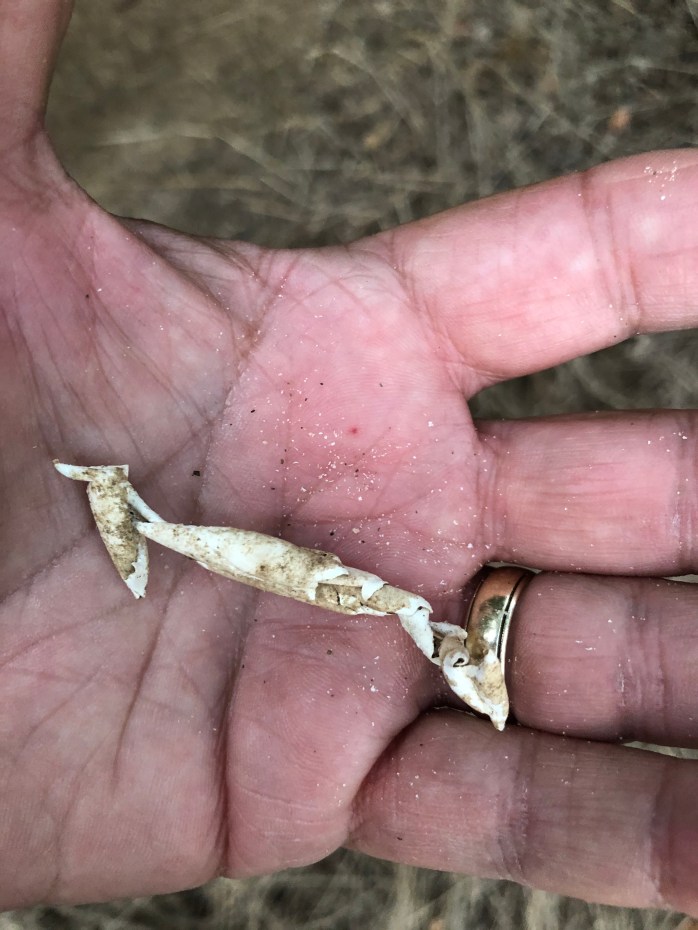
Other turtles such as the Red-eared Slider are common in those ponds, and we observed a big female being pursued by several smaller turtles, presumably males courting her. The frequency with which this species is documented, including individuals of different ages (I recently photographed a baby at one of the ponds, and we see half-grown individuals as well as big females and old melanistic males) strongly suggests a healthy reproducing population. And they manage this despite heavy predation on their nests. At the next pond we visited, we saw three excavated turtle nests with broken, dried eggshells. Chances are good that female sliders wandered away from the water until they found a suitable spot, dug nests and deposited eggs, and then covered them with soil and a wish for good luck. Nevertheless, predators such as raccoons are avid nest-raiders and help themselves to turtle eggs, over-easy. I don’t know what the odds are for a turtle nest to successfully incubate and hatch at the preserve, but clearly it is a roll of the dice.

An excavated turtle nest
Broken and dried turtle egg
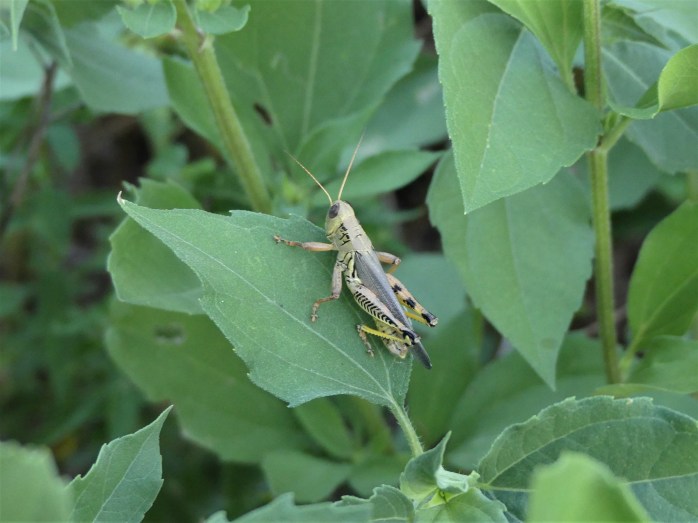
Differential Grasshopper

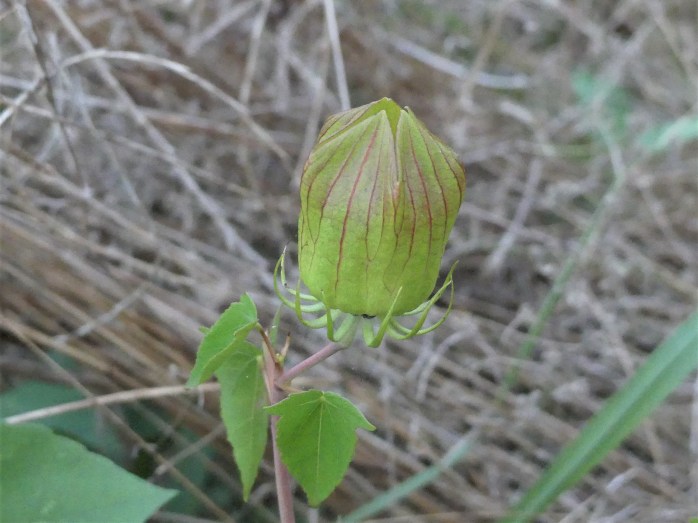
Along the way, there are many other species to see. I photographed a number of grasshoppers such as the big Differential Grasshopper in vegetation around the first pond. That and the delicate little Forktail Damselfly and the orb-weaving spider whose web shone brightly in the flashlight beam all made our walk richer, but none of us are invertebrate experts, and so we added them as incidental observations. The same is true with plants, although Annabelle and I were delighted by the Halberd-leaf Rosemallow that we photographed at the smallest pond. Annabelle knows a good bit about plants, but it would take a dedicated team to systematically survey the plants at the preserve.

Halberd-leaf Rosemallow

We ended up walking most of the way around the pond at the north end of the preserve, and as I mentioned, it was rapidly becoming dark. We spent five minutes monitoring any frog calls, standing quietly with flashlights off. Blanchard’s Cricket Frogs began calling with their quick little “clicks,” sounding like two pebbles being hit against each other. There is a system for grading how many frogs of a given species are calling. This evening, the “call index” for these cricket frogs was a “2,” meaning that multiple individuals were calling and their calls overlapped some, but it was still possible to count how many frogs were calling.

It had been an interesting two hours, with the exciting observation of the Snapping Turtle, then finding the raided turtle nests, and that last leg of our visit with bats, swallows, and frog calls. We heard a Chuck Will’s Widow with its high, whistling call in the distance. I can’t wait to come back for another visit!

Dear Urban Hiker

We’ve spent way too much time in the house, binge-watched Netflix until we get pulled into the screen and sucked dry. We’re trying to get through a crisis where people are dying and others are wondering how they will make a living. Uncertainty and stress pile up, and we crave an escape from all of it. Some of the preserves and natural areas around the city are open – and your thought is: “put on the Nikes and grab the water bottles, let’s go!” I get it; those preserves and natural areas are places I want to go, too. I just hope we can use them in ways that let them survive in good shape.

I watch you cut through the temporary fencing at the preserve so that you can take the short cut, climbing straight up the hill. You may not have noticed that this hill is composed of fine sand from the sandstone rock under the soil and exposed at the top as a scenic ridge. The oaks, yuccas, vines and other plants hold that sand together and create a thin soil. It is enough to support the cacti, wildflowers and other plants, but your footsteps break through that thin network holding the sand together, and the wind and rain wash it away. That happens later, and you do not see the consequences of your short cut, so it seems OK to you.

I also see you fishing at the ponds, maybe showing your child how to bait the hook and wait patiently for a bite. Sitting quietly with someone you care about, taking in the sights and the feel of the breeze, that is a wonderful experience that every child should have. I sure wish that you could bring a small trash bag with you, because the fast food wrappers and bait cups should not stay behind once you have left. It would also teach responsibility and thoughtfulness if you would pack out that broken fishing line and the floats and bobbers that we see caught in the shoreline vegetation. Small animals often get tangled in that fishing line and strangle or starve. This also happens later, and so again you do not see the consequences of what you leave behind.

We visit these places for a variety of reasons, and I know that this is OK. One of my reasons is to watch birds and other wildlife. Even urban preserves can support a good number of animals, from the cardinals, doves, and hawks in the air to lizards on the tree trunks, frogs on the banks of the ponds, and sunfish in the water. When your group passes me on the trail, loudly talking about the topic of the moment, I wonder if you know what we all just missed as the wildlife scatter. Keep in mind that I know you have the right to jog along the trail or amble along in social groups (although during this pandemic I very much wish that you would stay some distance from each other). Once you pass, I’ll wait for the wildlife to re-emerge. Lately, though, as everyone visits the preserves, it is more challenging because sometimes there is little break from the stream of hikers.

We all get to make use of these places, and I do try (I promise) to remember that different ways of using them can be just fine. Some of the things people do, though, are not so fine. Let’s compare some ways of visiting parks and refuges. Some visitors come for a little diversion and a workout opportunity, and going off-trail, moving  or destroying barriers, and ignoring signs asking people to stay on the trail seems like no big deal – “rules for other people, not for me.” For some it is a pleasant place to bring their burgers and onion rings, and since no one thought to station trash cans along the trails, what can you do but toss the Styrofoam cup and food wrappers into the woods. Who wants to carry a handful of trash for the rest of their walk?

Other people come for exercise in beautiful surroundings, with a commitment to leaving the place like they found it. They may jog through the place without stopping to look for birds or flowers, but they stay on the trail. Others might come for the solitude – or relative solitude – of a walk through a woods or prairie. They may be birdwatching, or might be looking for particular plants or flowers, or some other part of the natural world that has survived the surrounding city. You might pass these people sitting quietly somewhere or squinting through some binoculars. Chances are they are not interested in taking short cuts, and they know that they should not go off-trail to see some particular plant or animal.

The two uses of preserves and parks – one as a momentary convenience and the other as a place valued because of relatively undisturbed nature – are not the same. That “relatively undisturbed” part is the key. Users who trample the plants and create erosion, paint or carve graffiti, or litter, those folks are using the preserve up. Each visit brings the place closer to just some urban vacant lot, although the process is very gradual so each discarded cup, each carved initial, each off-trail excursion seems like no big deal. There is much less damage from the other users who walk or jog along the trails, pack out anything they bring in, and leave the place just like they found it. Yes, the noise and presence of people may make wildlife more scarce, and even foot traffic on trails can do a little damage. But these are impacts from which nature can recover.

So, my friend, here’s what I ask, respectfully and in the hope that we can all use the lands that belong to all of us: please leave it like you found it, and please visit in ways that allow others who are present to use it too. You are in an uncommon and wonderful place, and the slower and quieter you are, the more you are likely to discover that. Quite often you are getting a glimpse of what the surrounding area used to be like before the land was settled and developed. You can get a look at things that are in many cases being lost to us. They are disappearing in our minds and in our imaginations, and often they are disappearing literally, in terms of numbers. So when you are there, remember that we get to use it but we do not get to use it up.

Passing the Creek Along to a New Generation

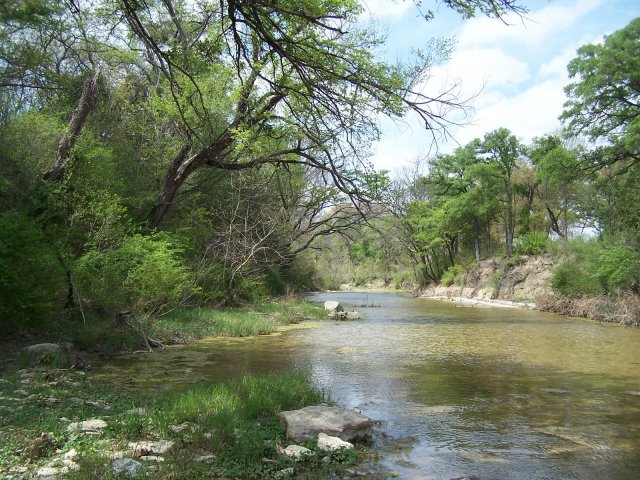
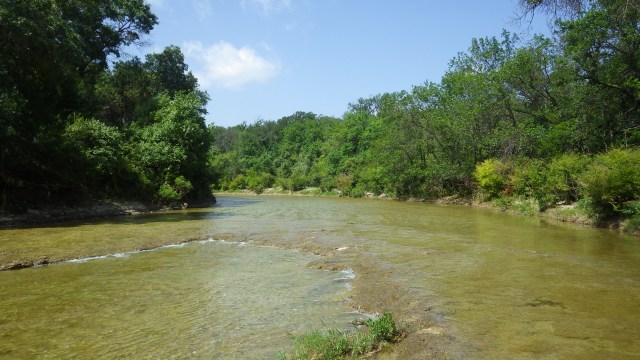
In about 1962 or ’63 I was given a gift that lasts a lifetime. I was introduced to a certain creek in western Tarrant County with clear running water rippling over white limestone and gathering in shaded pools. In deeper, still water the sunfish guarded their nests and hid in shadows. At about twelve years old, I would spend entire days there, chasing chalk-white earless lizards over jumbled limestone rocks and plunging into the water to catch the nonvenomous watersnakes that were common at the creek. With a friend or two, I’d wander the fields along the creek and sit where the grass and soil ended and the creek flowed twenty or thirty feet below us, watching turtles basking in the sun. It’s hard to imagine a more carefree existence than spending a day discovering the life of that creek.

I brought home mosquitofish, a surface-feeding little fish looking like a guppy without the fancy tail. Their blue iridescence, seen only with light at certain angles, is subtle but definitely caught my imagination. I was also drawn to the blackstripe topminnow, another surface-feeding fish like a little torpedo with a thick black line down its side.

The snakes, however, were the real prize. I was already hooked on gartersnakes, but the creek was home to incredibly graceful ribbonsnakes, seeming to trace calligraphy over the water as they swam. The bright orange and cream-colored stripes glowed in the sunlight when one of those slender little snakes swam across the water and traced its way through the streamside vegetation.

The creek was a place I returned to over and over. I walked it in summer heat when drought stopped the water’s flow and turned the pools into algae-choked saunas of warm water. I walked it in late fall when the water was almost too cold to wade, and flowed over yellow, brown, and rust-colored layers of dropped leaves. In the winter, I kept visiting even though most reptiles and amphibians were dormant in burrows and crevices. Cricket frogs, however, were out on almost any sunny day that gave them a chance to bask and hunt whatever tiny invertebrates were out and about. Fish didn’t seem to mind the winter’s chill and I could observe them while threading my way along limestone shelves and earthen embankments, trying not to step in the cold water.

Going to college spaced my visits out more but did not stop them. When we lived in Houston, work and distance kept me away. However, when we moved back to Arlington, I found times to visit. The creeping expansion of Fort Worth required that I enter the creek further out. Gradually, the city was gnawing away at my creek, as more land was sold to developers who turned perfectly good nature into bricks, concrete, and turf grass.

Casey examining a Red-eared Slider at the creek

This isn’t the story of the loss of the creek, however. It is the story of sharing it and passing it along to new generations. The connection I formed with the creek was forged in childhood, while spending day after day there when school was out for the summer, exploring and discovering as if that time would never end. Maybe it never did end, at least for that place as I internalized it and made it an important part of who I am. I have taken friends to that creek many times over the years. Most of them share a sense that this is a special place, and I hope that they return or else find some place to make theirs. It is too late for the adults to form the same kind of connection that I have with the creek. I am pretty sure that such a bond happens only during childhood, when a place seems to be what people call “larger than life.” What I really mean is “as large as life,” completely occupying that wide open space we give it when we live in it regularly and get to know it intimately. As we become adults, that space narrows; by then we have spent our lives in a lot of places, often in brief and fragmented chunks, making use of places in utilitarian ways. Usually there is little room left in which we can open ourselves to some beautiful place and live in it, getting to know its little mysteries and its seasons in an unhurried way.

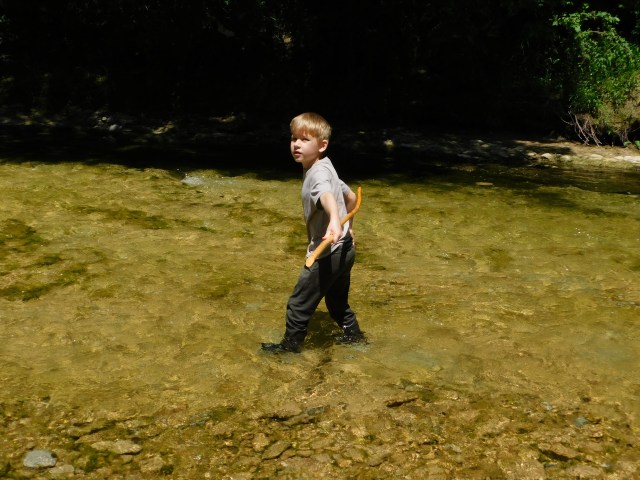
Elijah at the creek

I recently took Elijah for a little exploring at the creek. He is in many ways a grandson. I saw him on the day he was born and have watched him grow into a wonderful six-year-old who has been on many walks in nature preserves with his parents and me. I dedicated my forthcoming book to him and to an old mentor of mine, once again mindful of how a love of the natural world is passed along from one generation to the next. And on the day of the walk at the creek, it was just Elijah and me. We were prepared with a net and walking sticks. When wading the creek, the stick becomes a third leg to help balance on algae-coated limestone, and while the old man didn’t fall, Elijah did get a couple of soakings.

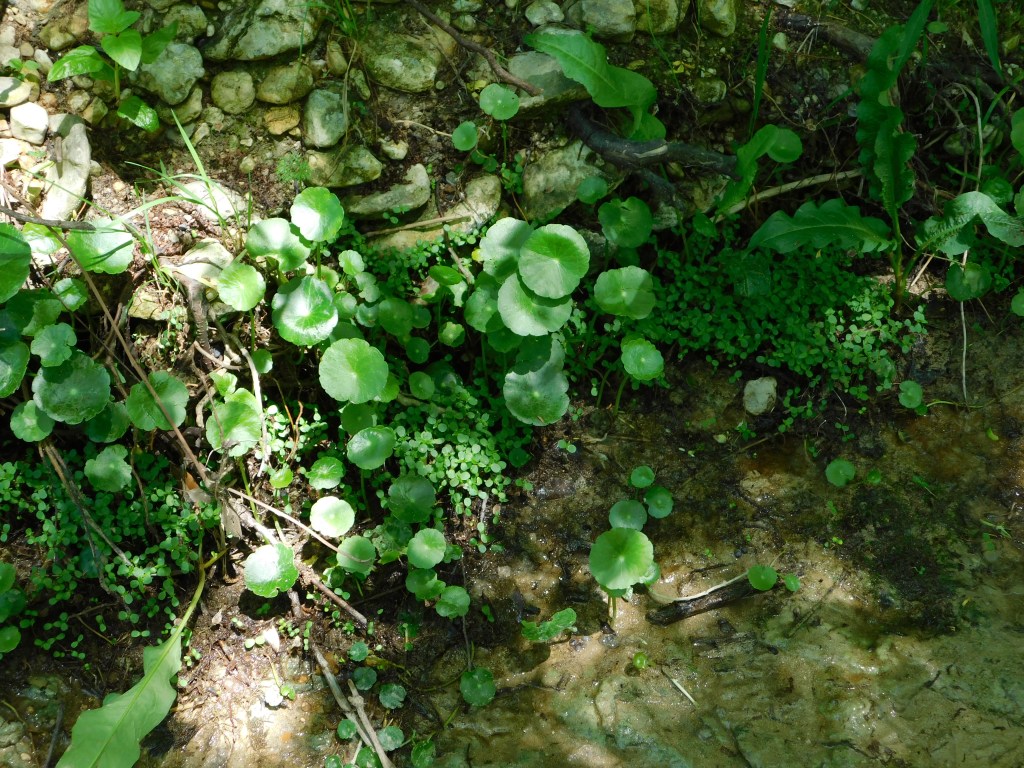
Water pennywort

Along a part of one side of the creek, in dappled shade, I saw some water pennyworts like parasols on thin little stems. I called Elijah over, saying “Look, they’re like little umbrellas.” At the time, I didn’t know what name to call them when Elijah asked. They were just some kind of pennywort. After another question or two, we moved on. He was on a Pokemon jag so that the dragonflies sailing on the sun-warmed air were “dragonfly-Pokemon,” and the turtles we looked for would have been “turtle-Pokemon.” We did find fish, all of which were too fast for our net. The group of shiners swimming close to the bottom scattered in front of the net, and the sunfish scooted out of reach with a flick of its caudal fin. We saw a small bass as well, but it was getting nowhere near the net.

A turtle-Pokemon?

We had to decide whether to walk into an area where the water was forced into a small channel and ran swiftly – the equivalent of whitewater for the creek. I let him test his strength without getting into the biggest and fastest part and being pulled down. It’s good to get just enough real-life lesson about the power of moving water so that you know when it’s safe to wade and when it will drag you into the current.

After our explore was done and we were back at the car, Elijah asked how I knew so much about nature. I explained that I had been doing it for a lot of years, had read many books, and had hung out with people who knew a lot, just as he was doing with me today. He told me, “When I’m older and I can read better, we will find things and I’ll look them up in the books and we’ll know which plant we saw.” Such a beautiful dream only comes along once in a great while, and I would gladly see it come true. Elijah, you’ve got a deal. I promise. If I can give you the gift of this creek, or a woods or prairie somewhere, I will surely do it.

Finding a Box Turtle

(I wrote this in The Great Rattlesnake Highway blog, several years ago. I thought it was worth bringing over here before I finally retire the other blog.)

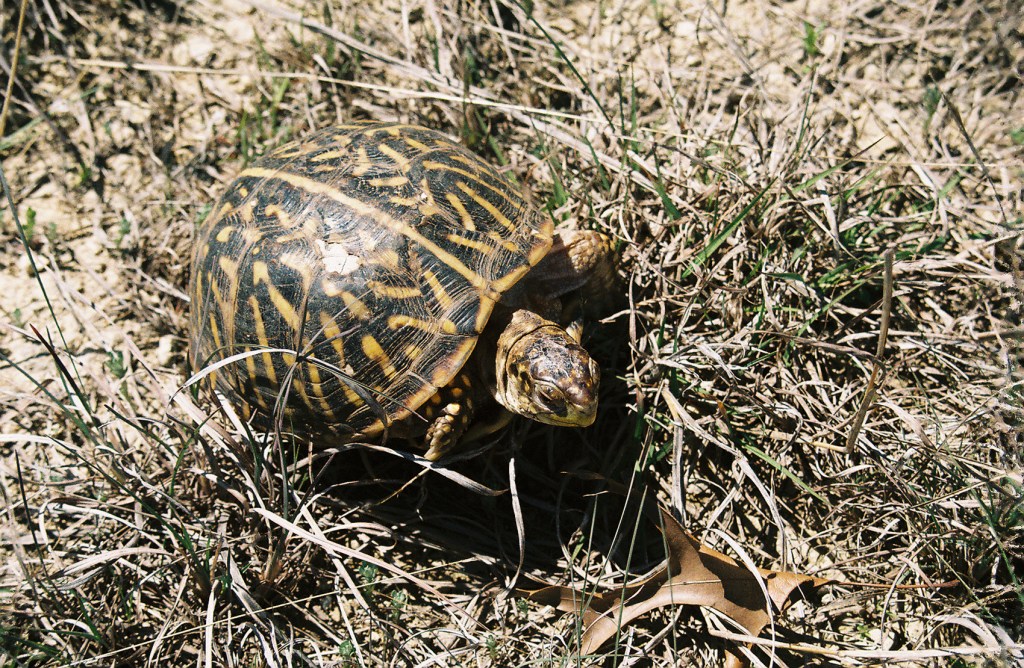
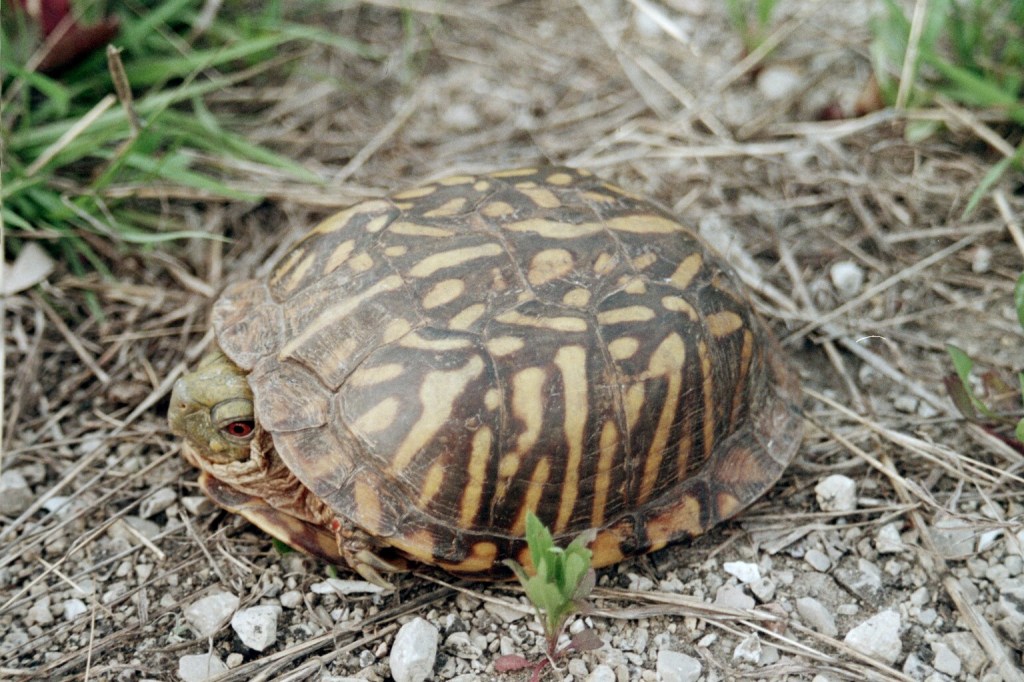
Another Ornate Box Turtle, this one a female

In May of the year 2000, Steve Campbell and I found a box turtle on our way to the LBJ National Grasslands, north of Decatur. It was an old male that had probably walked the fields and fencerows for twenty or perhaps thirty years or more. These ornate box turtles, with their yellow streaks on a compact, dark shell, used to be a common sight in the western cross timbers north and west of Fort Worth. In the last fifty years they’ve become increasingly uncommon in most of the places where they are found. So Steve and I were faced with a problem: what do you do with a turtle found just past someone’s driveway, on a busy farm road at the outskirts of a small but growing city?

Taking it home was never an option for us to consider. The box turtles that are left in the wild need to stay there, because the species depends on adults living a long time and continuing to reproduce, in order to have a chance of surviving. That individual turtle might have done fine if we had collected him; both Steve and I understood its need for a varied diet, an outdoor enclosure with access to direct sunlight as well as water and refuge, and such things. However, once picked up and taken home, it is dead to the population of box turtles. It might as well have been run over, as far as the impact on the box turtle population is concerned. We would like future generations to be able to see box turtles in the wild, and so we were not going to take that turtle out of the population.

A male Ornate Box Turtle, seen in Grand Prairie, Texas

Perhaps one way to keep the turtle in the population would be to take it far down a side road, away from traffic, and release it in a meadow near a pond – how does that sound? It used to sound great to me, but it can only sound good if we ignore something pretty important about box turtle behavior. If I was picked up and taken far from home, placed on an unfamiliar street surrounded by strangers, I would set out to try to find home. It probably would not matter that the neighborhood might not look so bad, I would want to find the place I know. I would want to go home. It is similar with box turtles. I do not want to anthropomorphize, trying to make box turtles just like people. However, these turtles do learn and remember important landmarks, and as they grow up, they generally establish a “home range.” This is an area that the turtle uses for day-to-day activities, in the same patch of woods or the same meadow, for most or all of the year.  In North American Box Turtles: A Natural History, C. Kenneth Dodd reports that while it is an area of variable size, often it is about the size of a couple of football fields. While some box turtles are transients, most stay within a small area over the course of years. And if moved out of this home range, they generally try to find their way back.

This tendency toward “homing” has plagued efforts to re-populate areas from which box turtles have declined. It also makes it hard to know what to do with box turtles found on city streets or other places where they cannot stay. If you take them to some new place, even an apparently good place, they may wander off. This is generally true of many reptile species – they know where they live and they don’t do well when released far from home. The mortality rate among relocated reptiles is high, presumably from wandering into danger or failing to settle down and find adequate shelter and food.

In a study published last year in Herpetological Conservation & Biology, J. Alan Sosa and Gad Perry reported on their work releasing adult, juvenile, and hatchling ornate box turtles in the Lubbock area. The turtles came from a wildlife rehabilitation facility, where they were brought after being hurt or found in areas that were obviously unsuitable for them. The researchers relocated only healthy turtles, placing them in a variety of locations. Some were released in suburban back yards, others in small undeveloped areas within the city limits, and still others were released on ranchland outside the city. Their whereabouts were tracked using radio transmitters glued to their shells. They found that only 24% of the adult turtles remained in the area where they were released, regardless of what which area it was. There were better results with juveniles and hatchlings, but even then, only 40% of them remained in the area.

And so, if we had taken our ornate box turtle to some place we considered safer and better, it is likely that the outcome for the turtle would be bad, with the turtle failing to settle down and “make a living” in a new place. Imagine how this applies to all the turtles that well-intentioned people take some place and let go, thinking that they’ve done the turtle a favor or helped boost the local population of turtles. And yet, it’s hard to know the right thing to do when you find a box turtle in a suburban neighborhood, in imminent danger from traffic, dogs, pesticides, and many other hazards. Our box turtle’s circumstances were a little better. It was at the edge of a small town, with open fields across the road.

We did about the only thing that our knowledge of box turtle natural history and our commitment to conservation left for us to do. We took the turtle across the road and released it in the nearby field. I thought about the chances that this turtle could go on living in this same patch of grassland, near a line of trees and a little creek, where it probably grew up. It had been lucky enough to survive all these years and not been run over by a car, or collected and put in some dirty aquarium in somebody’s house. Maybe that turtle is still roaming around on the outskirts of Decatur, eating dewberries and grasshoppers, and getting a good soak in the puddles after it rains. Maybe he ran across a female box turtle and together they generated one more clutch of eggs, from which one hatchling (if it was lucky) would survive to adulthood to carry on the species.

100_0142
An ornate box turtle seen at LBJ Grasslands on a different occasion – I made sure it got across the road and watched it walk out into the grasslands

On the other hand, I don’t know if that turtle wandered back out on the road the next day, possibly to be run over. There is no way for me to know, but I am sure we made the right decision on that day, sixteen years ago. Over the years since then, I have wandered the LBJ Grasslands many times, but have only seen  two or three other box turtles. We need to keep those turtles out there, alive and at home.

The Racer and the Jump to Light Speed

This article originally appeared in The Great Rattlesnake Highway blog.

There was once a time when I could chase down an Eastern Yellow-bellied Racer. Well, if it was on a flat surface … maybe if I had a head start. Probably not now, unless my head start was that I was allowed to grab it before it saw me. These snakes are not called “racers” for nothing.

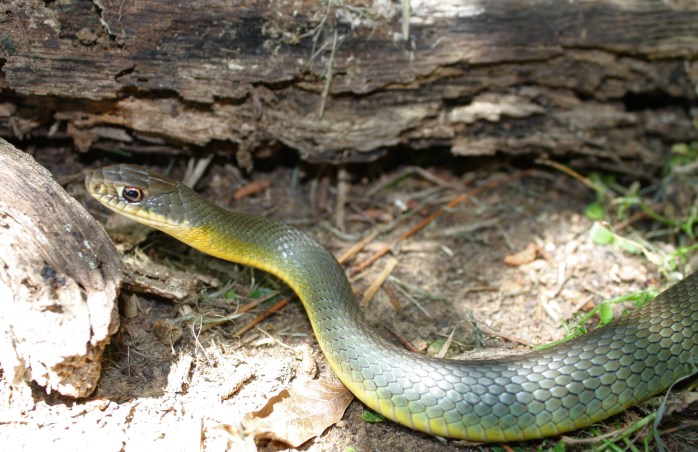
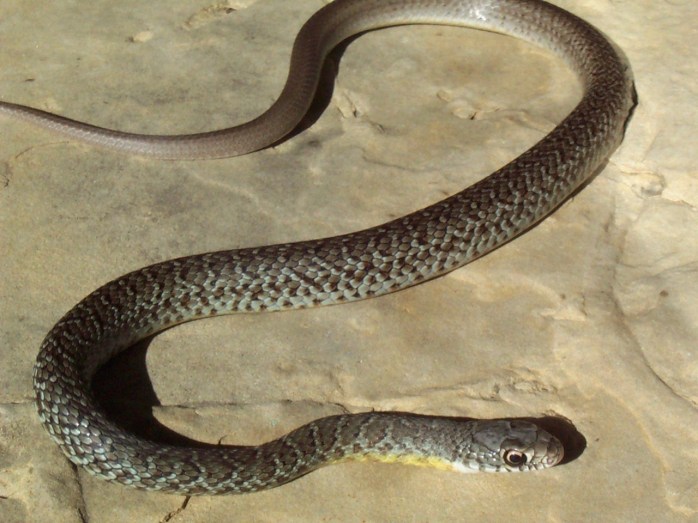
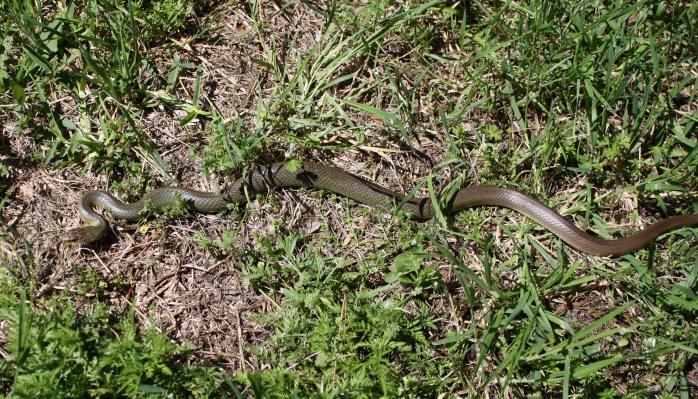
Eastern Yellow-bellied Racer

They can cruise around on a hot summer day, their big eyes alert to any movement, watching for a grasshopper or lizard to spring into action, and ready to give chase. When they do flush some unfortunate prey animal, they are unrelenting in pursuit. When a big grasshopper lands and freezes, the snake may have to search until it again makes the insect jump, and at that point the chase resumes. Having no venom and no ability to wrap and constrict, the racer simply swallows its prey or maybe pins it on the ground with a section of its body while swallowing. Racers can eat animals as large as a mouse or medium-sized frog, relying on the rows of sharp, recurved teeth and strong jaws to overcome the struggles of its prey.

Many years ago, my family moved to Fort Worth and my knowledge of reptiles and amphibians expanded from days spent hanging out with museum staff and reading books. At the end of the summer, I would occasionally find a little spotted snake around the yard. Their pretty yellow bellies were speckled with rust-colored spots, and as I held them their large eyes looked alert, and their jet-black tongues tested the air. Around the same time, a group of us kids found a medium-sized snake stretched along a branch within a shrub in a neighbor’s yard. It sat motionless, watching us, and I recall it being a sort of olive greenish color. I was puzzled about this snake’s identity but later figured out that it was what some people called a “blue racer,” but down here in Texas it was a different form called the Eastern Yellow-bellied Racer.  With further study, I discovered that the little spotted snakes I sometimes found at the end of summer were actually hatchlings of that same species. Over the course of a couple of years, the spots would fade and the snake would be brownish or olive or grayish-blue on top, and yellow underneath.

E yellow-bellied racer, juvenile

Occasionally I would find one in the field, sometimes as a serpentine blur disappearing in the grass. Other times I might find one under a board or a rock, and if I grabbed quickly, I might get a close look at this muscular coil of pure energy. When grabbed, that same energy is directed toward thrashing and biting, and the poor snake may injure itself if not supported properly. The bites are annoying but not particularly painful, and they seem to come out of nowhere as the snake thrashes around to a new vantage point. However, when gently supported and not harmed, the snake may settle down, after a fashion, continually testing the air with that black tongue and watching its captor like a hawk. Drawing the animal closer, for a detailed look, often results in a strike aimed at the person’s face. Loosening the grip a little too much results in a sudden attempt to break free, as if the racer was waiting for just this opportunity.

Part of the racer’s reputation as a snake that can make the jump to “light speed” is its ability to navigate through brush and around rocks without slowing. Its top speed is actually a little slower that a person could run on a track, but when seen, these snakes are often around rocky outcrops, fallen logs, or tangles of undergrowth, none of which cause the snake to slow down. Imagine the speed with which this reptile processes the visual images coming at it, like a fighter pilot flying low over the landscape, dodging left and right but keeping right on going!

Eastern Yellow-bellied Racers make use of a fairly large “home range,” or area within which it hunts, rests, finds water, and so on. In their book, Texas Snakes, Werler & Dixon cite research done in Kansas showing that racers may use about 25 acres as a home range. Within that area, the individual snake may be familiar with refuges such as a particular abandoned burrow or crevice under the rocks, and where the best pools in a little creek may be. These racers prefer open areas such as patches of prairie or savannah, and they may hang around near the edge of a woodland.

Texas has a four other forms or subspecies of racer. The Buttermilk Racer lives in parts of east Texas, and has the same overall bluish-gray to olive coloration but is speckled here and there with small globs and specks of white. The Tan Racer, found around the Big Thicket, uses forest habitat much more than the other racers, and is a uniform tan color above and pale whitish below. Along the southern Texas coast, the Mexican Racer zips along through the thorn scrub. And at the northeastern corner of the state, the Southern Black Racer is found in several counties.

On a cool, overcast day in March, 2012, I found a young Eastern Yellow-bellied Racer under a big rock in Wise County. I was out with Clint and his wife, and we thought we might get an early start on field herping that year. Sure enough, we did find several things, but everything was under cover, since March in north Texas may turn unpredictably from sunny and fairly warm to rainy and cool. When I turned the rock over, the young racer was too cool to dart off. Oh, the disadvantages of being an ectotherm! Being cold-blooded means that if you hang out in a cold place, you are cold, too. The engines that drive all that nervous, alert activity depend on warmth, and if you’re a reptile you cannot generate your own heat. The little snake sat while I recorded it on video, tongue-flicking and moving slowly. It even flattened its neck vertically a little at one point, in a threatening display meant to make it look bigger.

In the summer, being an ectotherm would be a big advantage for the reptile. Us endotherms have to take in lots of nutrients so that our metabolic engines can constantly generate heat. Snakes are “solar-powered,” directly or indirectly, making use of sunlight or a sun-warmed environment to get up to speed. As a result, they do not have to eat as often. But on this day, at the end of winter, the little racer was slow-moving and vulnerable. After I got all the photos I wanted, I let her return to the shelter of the rock and wait for a warmer day.

If you find one, admire whatever glimpse you get of this snake and let it go. That three-feet or so of nimble hyperactivity will just make you sprain your ankle or get a face full of cactus if you chase it. Or maybe, if you’re lucky, you will find one under sheets of tin, or boards, or under a rock on a cool day when light speed is not an option. They are beautiful, graceful animals!

The Cloud Castles of Heaven, Seen From the Texas Plains

Or, in Plain English, a Visit to Muleshoe National Wildlife Refuge

Long perspectives and flat horizons (photo by the author)

Last month, Meghan Cassidy, Paul Mendoza and I visited the Muleshoe National Wildlife Refuge for two days, a brief trip in search of open skies, prairie, and Sandhill Cranes. It was part of a project in which I am writing about mindfully spending time in nature and Meghan is photographing the places we visit and the wildlife that we see.

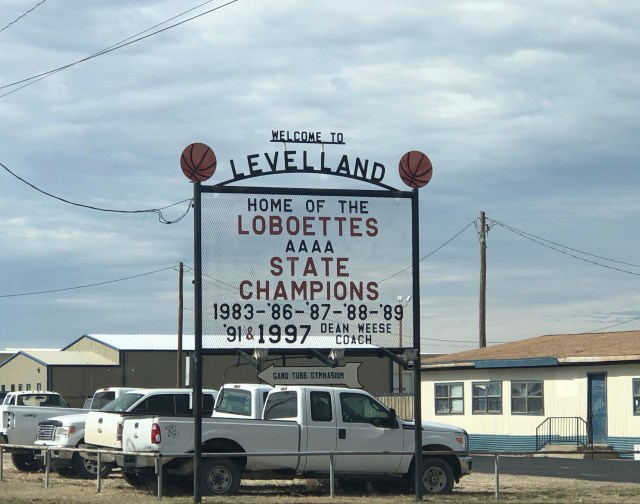
Muleshoe is northwest of Lubbock, and one way to get there is to go through Levelland, a community that is proud of the high school girls basketball team, the Loboettes. You can be sure that James McMurtry’s unforgettable song about sitting outside with his mom, watching the stars and dreaming of being gone from Levelland, was playing as we drove past.

“Welcome to Levelland” (photo by the author)

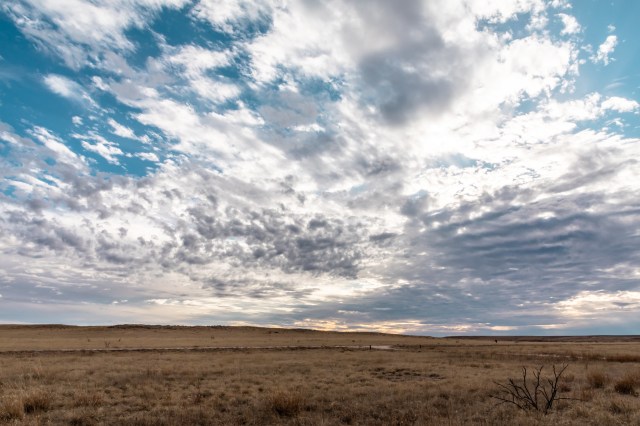
We arrived at the refuge, getting out of the car into an open expanse of grass, a broad flat prairie set between two ridges. Above us, the sky was bigger than I had ever seen it before. Clouds passed in an infinite field of blue. It was hard to judge where the horizon was, but it felt like we could see all the way to Montana. Above us the clouds were big masses of puffy white with gray underneath, but nearer the horizon they overlapped and formed a fantasy landscape of floating islands and castles. Standing there and absorbing all this felt wonderful, resetting my frame of reference from the human scale of houses and yards to the High Plains scale in which we can take our place with a little awe and humility.

Grassland and clouds at Muleshoe NWR (photo by Meghan Cassidy)

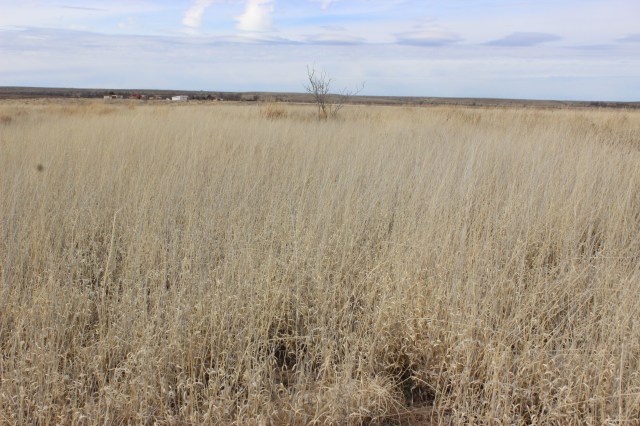
Dry, winter-dormant grasses covered the gently rolling fields and ridges that stretched into the distance to meet the sky. Here and there a spindly cholla cactus or a sage plant grew, but the only visible trees were in the distance where rainfall drained toward White Lake. The land was ruled by grasses. We could make out several species, one of which sent up tall, slender stalks about waist-high, with leaves nearer the ground that were like curled ribbons.

(photo by the author)

Once again I thought about how much I am attracted to grasslands. I love walking through fields of grass and taking in the amazing but subtle variety of colors and textures. Here on the High Plains, the sense of openness and space was bigger than anywhere I have been except in the Trans-Pecos. Here was more prairie than I could walk through in a day, grass as far as my eye could see.

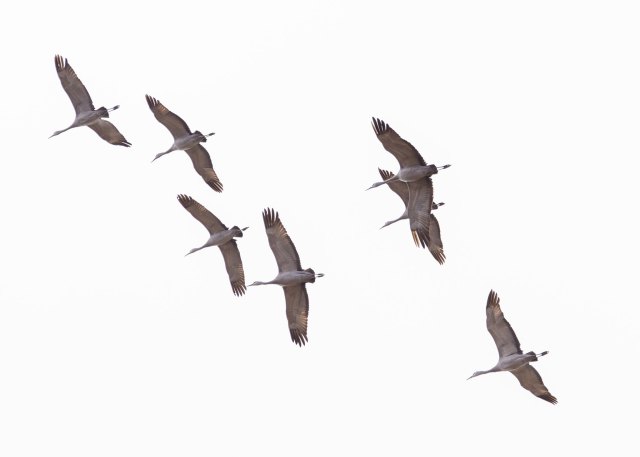
It turned out that much of the refuge property was off-limits to protect the winter population of Sandhill Cranes. A refuge staff member told us that people had been approaching much too closely, so they had taken action to protect the birds. We were able to see some of them, from a distance, in the northern part of the refuge around Paul’s Lake. Across the lake, the shore was dotted with well over a hundred big pale Sandhill Cranes. We watched and listened, though the birds were too far away for a good photo. Their calls and conversations came across the lake’s surface clearly when the wind was not blowing. The cranes were calling in a sort of low, stuttering whistle, repeated over and over again. Occasionally a squawk of protest came through, but mostly it was that short rattling call at a low pitch but with a higher whistling overtone. I found a spot of bare ground among the burned clumps of grass and settled in to watch and listen. The streaks of clouds were mirrored in the motionless surface of the lake, with some pastel blue and rose among the white and gray. Everything was still, and I could imagine that time was not moving forward or was only moving in slow motion.

Sandhill Cranes, flying overhead (photo by Meghan Cassidy)
Sandhill Cranes calling (video by the author)

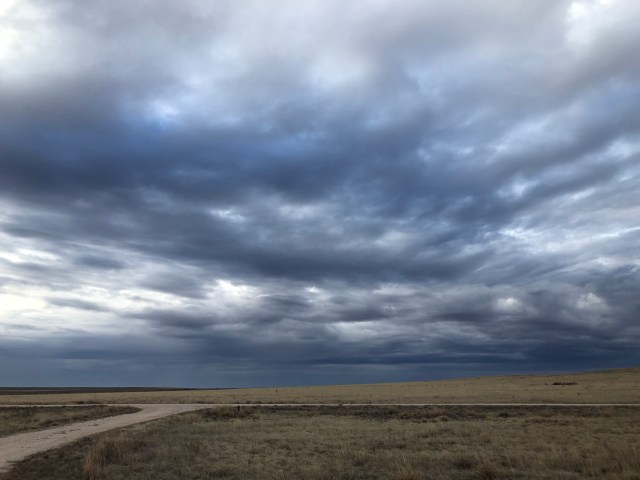
The next morning started with a cold rain, but by the time we headed back to the refuge, the rain was moving out of the area. Arriving before 8:00am, we saw a sky with clouds gathered in dark blue-gray masses and in some places stretched thin enough to be cottony white or even admit a patch of blue sky. In some places around us there were dark curtains of rain. Once again I was struck by the giant scale of this place. From horizon to horizon there was nothing to obstruct the sky, no trees and no buildings. All those clouds, all those mountains of water vapor, dark blue and dense or brightly illuminated where the sun struck them, slid across the sky on currents of wind. I meandered across the grassland, thinking of nothing as the clouds passed, trying to be empty of internal mental chatter so that I could absorb this experience in as raw and direct a way as possible. Standing here might have felt vulnerable, alone and uncovered to the sky, because in everyday life we rely on buildings, roads, signs, or even trees as cues for what is normal and safe. Instead I felt completely open and connected with the land and sky, without distraction.

Rain clouds at Muleshoe (photo by the author)

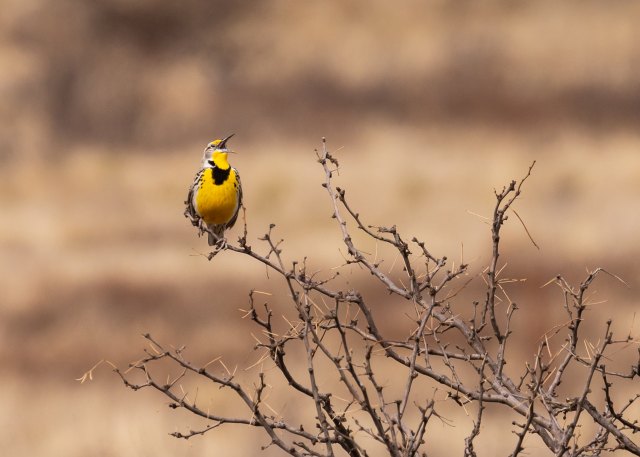
We saw a number of grassland birds, including meadowlarks. The Western Meadowlark prefers open grasslands and prairies, feeding as well as nesting on the ground. The Cornell Lab website indicates that they are still numerous but have declined about 1% per year over a period of nearly 50 years. It had been a while since I had seen one, but here they really were numerous, though quick to fly off when we approached. Our best observations happened when we used the car as an improvised bird blind. From the open window we watched and listened as a male sang his heart out while perched high on a thorny shrub, his musical whistling notes rising and falling. The call has been described as flute-like, with high notes dropping, coming back up and falling into a low warble. If we did not love this grassland already, we would have after listening to the meadowlarks singing spring into existence here at the end of winter.

Meadowlark (photo by Meghan Cassidy)
Meadowlark singing (video by the author)

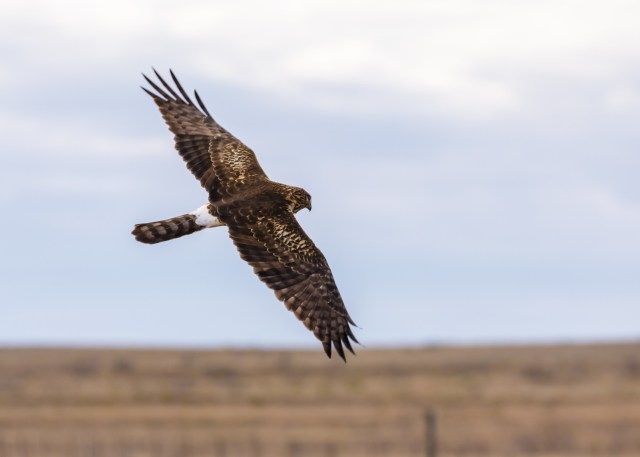
Our meadowlark dropped to the ground when a Northern Harrier cruised through the area, flying low and looking for prey. These raptors have a very distinctive white patch on the rump that helped us to identify them on the refuge and in nearby areas. They hunt near the ground, listening as well as watching for food such as rats, mice, birds, and the occasional small snake or lizard. As our meadowlark hunkered down under the grasses, the harrier sailed by and circled the area, at one point fixing us with a withering stare. He reminded us of why so many animals are cryptically colored, alert and fast, or take shelter in burrows in the ground. Harriers, owls, coyotes and other predators are a constant presence, weeding out the slow, the sick, and the unlucky. This constant dance between predator and prey added another dimension to what we took away from Muleshoe National Wildlife Refuge. It is a beautiful, wild place that seems larger than life, with a complex community of living things on the ground as well as above and below it.

Northern Harrier (photo by Meghan Cassidy)

It was a great trip and my notes, and especially Meghan’s photos, will be a memorable part of this project, which will take us to places all around the state.

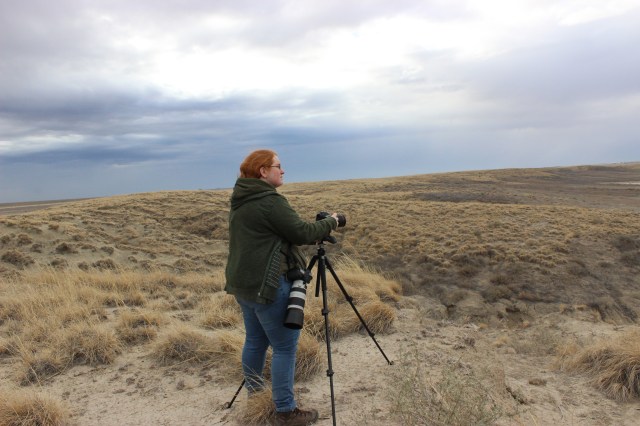
Meghan, photographing White Lake from a ridge (photo by the author)

Christmas Eve, at Home In the Woods

Everyone should have a home, a place where we feel like we belong. Ideally, home is a place where mostly good things happen over a long time, so that it feels comfortable and familiar. Americans move around a lot, so that long-term familiarity might not happen within the structure of one house. In my case, my family moved frequently until my middle teenage years, and after that there was college and other moves. But starting when I was about 11 or 12 years old, I visited the Greer Island Nature Center, which later expanded to become the Fort Worth Nature Center & Refuge. I have now been visiting that place for roughly 57 years, walking the trails alone or with friends and leading interpretive walks talking about reptiles and amphibians. I’ve had a lot of changes of houses, but a long and intimate familiarity with the oak woodlands, prairies, bottomland forest, marsh, and lake shore at the nature center. When I visit there, I’m where I belong. When it comes to people, I belong with my family; but if we’re talking about places, the Fort Worth Nature Center & Refuge is home.

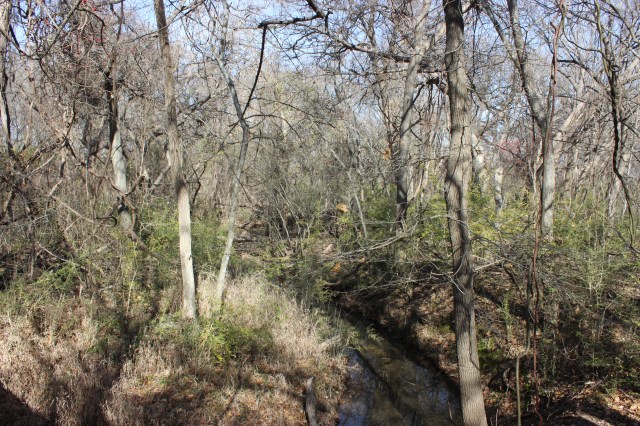
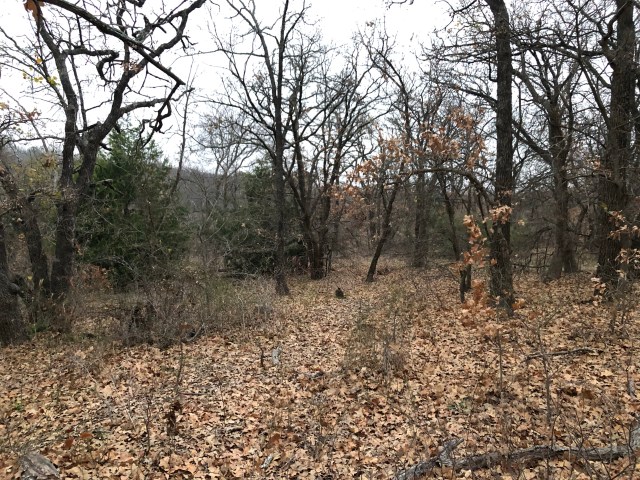
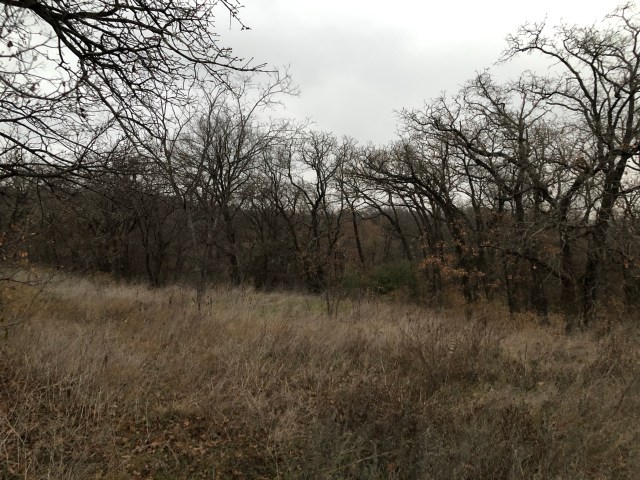
Woodland near the marsh
Inland Sea Oats, within that woodland

I went home yesterday, for Christmas Eve. I took advantage of another unusually warm day with clear skies and bright sunshine. The high temperature near the nature center was 71ºF, not a record high but definitely warmer than usual. So I needed no jacket as I walked down the Wild Plum Trail to Forked Tail Creek Trail, starting in relatively open woodlands with oak, honey locust, and patches of grassland and gradually dropping as it wound its way toward the marsh.

Fork Tailed Creek

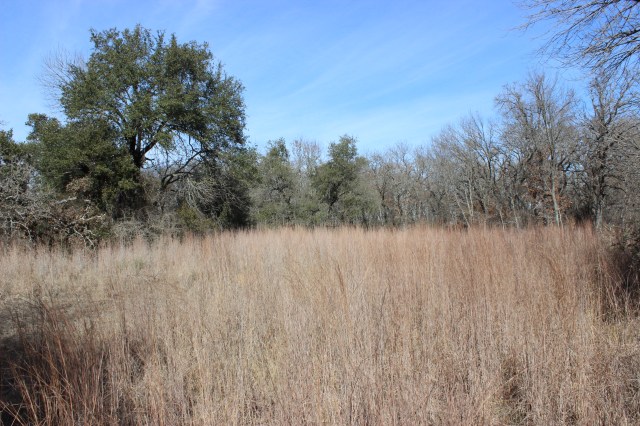
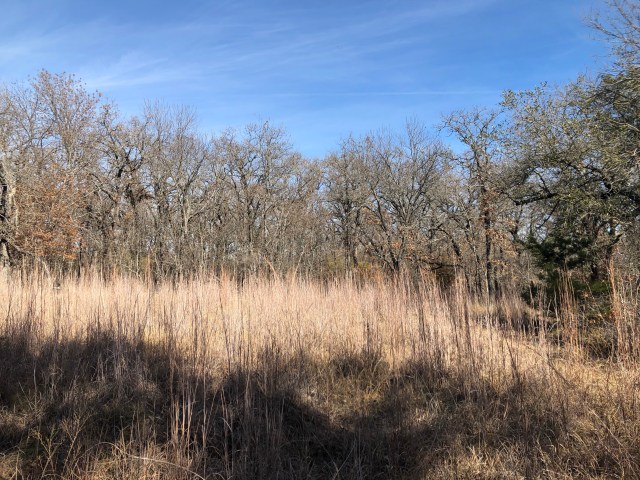
The trees got taller, and I walked over a wooden bridge crossing Fork Tailed Creek. A little further, and the trail suddenly opened onto a lovely savanna. Between the scattered trees were the dried and dormant leaves and stalks of prairie grasses, including the light rusty color of Little Bluestem. I stood for a while, taking in all the textures and colors, the pale rusty color of bluestem and the shades of straw where other grasses or plants were dominant. There were different textures: taller vertical brushstrokes, shorter grasses, curled leaves of the forbs mixed in among the grasses, and then there were the scattered trees with barren branches. Some branched out near the ground while a few sent straight, pale trunks upward before dividing to form a crown. So much detail to take in!

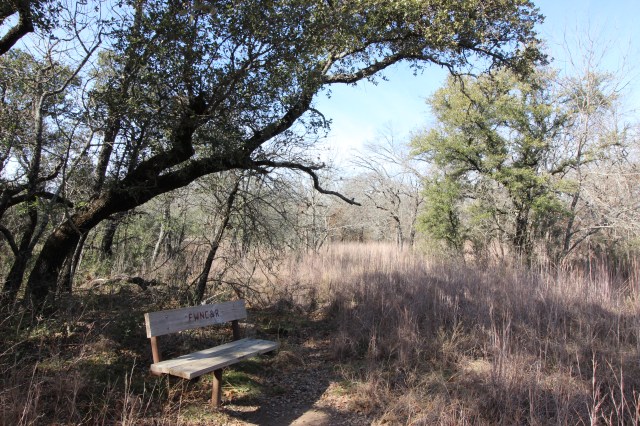
The trail led back through woodland and crossed a little patch with scattered Live Oaks among prairie grasses.  Under one of the Live Oaks was a wooden bench with a patch of bluestem in front of it. The perfect destination for this walk, a place to sit and take in the tall grasses in the foreground and, further back, the line of Post Oaks with their gnarled branches dividing into thinner, more intricate fingers reaching into the clear, blue sky. A couple of Turkey Vultures soared above me, riding the air currents gracefully and searching for a meal. Often one would pass by low enough for me to see its head turn from side to side, scanning the ground. Others sailed through the sky far above, wheeling and flying on broad, strong wings. The sunlight was warm in its low angle, casting shadows as if it were late afternoon. I could hear the breeze gently stirring the trees, and despite the background highway noise it really seemed quiet and peaceful. It was a great moment to stop doing. Not even writing or putting thoughts together, just being still and surrendering to this place. I put away my field notes and just sat there, letting the warm sunlight and the beautiful woods wash over me.

The bench

Of course, some thoughts continued to occur to me, and I tried to let them come and then pass by, returning my attention to the sights, smells, sounds, and feel of the place. Periodically I would get restless, as if ready to go on down the trail, but then I would settle again. I could have moved on, but was I done here? Was there something else I needed? Actually, no, it was just the habit that I think most of us have of keeping on the move, doing, thinking, talking, and so on. But what I really wanted was for these moments – this sunlight, these trees, the grass and the breeze – to continue. And so they did, for a while.

The view from the bench

Winter Solstice

Good morning Weathercock: make this day bright.

Put us in touch with your fair winds.

Sing to us softly, hum evening’s song.

Point the way to better days we can share with you.

-Jethro Tull, “Weathercock,” from Heavy Horses

The sun has set on the shortest day of the year; the sun is as far away from us as it will get. Although it is now winter, from here on out each day will have more daylight. The days will start getting longer, and perhaps the weathercock will point the way to better days.

It is now winter, by astronomical reckoning, although the climatologists count winter according to the three months with the coldest temperatures. By that reckoning, winter started on December 1.

It has felt more like winter today, but I wanted to take at least a short walk on this shortest day of the year, and so I was at Southwest Nature Preserve (my home away from home) at sunset. It was a moody, dark sunset with clouds obscuring the actual setting of the sun, but I have no complaints. Taking a walk at the pond and the woods is good regardless of weather, and that includes cool, cloudy, misty days like this one.

Reflections in the pond