15 March 2026 – Sheri Capehart Nature Preserve 1:55-3:10pm.
A quick walk on a windy day, as the mid-80s warmth prepared to tumble back into winter for brief reminder that winter has a few more things to say. It was constantly breezy, and then the wind would gust and send the crowns of trees into a spasm of bend-and-rebound. Up close, the upper trunks and branches moved and yet were rigid, a contest between strength and pliability. From further away, the crowns of trees seemed to dance and bow to each other.
Once or twice, strength and rigidity failed and branches snapped or trunks fractured. I did not witness this and did not want to, especially not while standing below the tree. I kept an eye out for crowns that had not sprouted leaves, trees that might be dead or weakened, without the flexibility to remain standing.
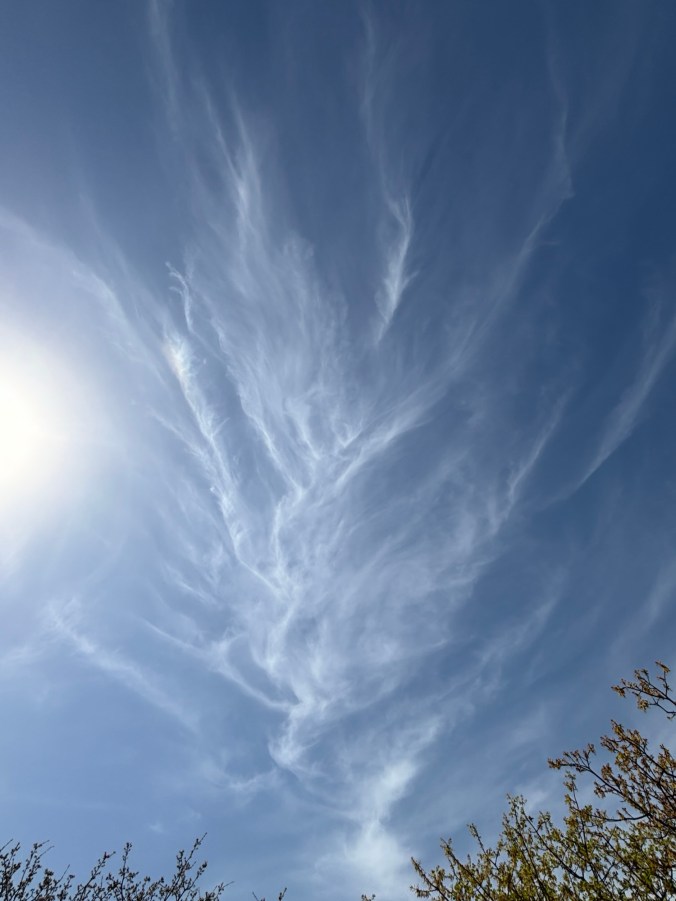
At the bluff, I lay back and looked at the blue sky whose currents above me were invisible. When we cannot see the torrents of wind or the languid movement of air on a calm day, we may forget that the atmosphere above is like the water below us. It may slide overhead like a big, lazy river or it may rush along like a mountain stream, shoving and rearranging whatever it touches. As I lay there, streaks of wispy cloud were blown in from the west, looking like fingers reaching toward us. Soon the whole hand was above us, and so I imagined the upper winds were speeding along like those at ground level.
As I walked down the south face of the hill I thought about how little activity I had seen. Even the dragonflies’ flight was no match for this wind, and the couple of birds I saw in flight were really struggling. When the wind is blowing like this, the butterflies are grounded. Even the honeybees barely ventured out of their tree.
For a human, it was a good time to take a walk and feel the power of the air when it is really moving. In some places those wind currents are causing trouble and damage to other people, and I wish that was not happening. Where I walked, it was no more than what the woodlands are adapted to (mostly) withstand every spring.
Discover more from Our Lives In Nature
Subscribe to get the latest posts sent to your email.
 Our Lives In Nature