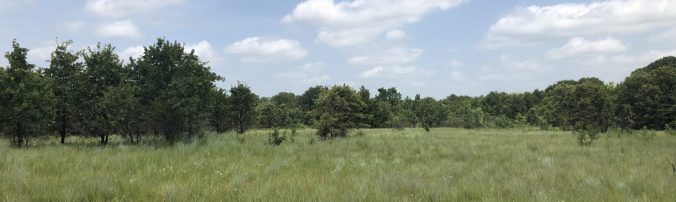
Yesterday I took a couple of friends to visit the LBJ National Grasslands (LBJNG). There was a little light rain as we walked around the pine trees and ponds, seeing a few frogs and toads. We wandered out onto the prairie at sunset, seeing some flowers that are a reminder, for a while, of the spring that has just passed. Some time ago, Kayla West and I led walks there regularly to introduce people to this amazing place, and we had a Facebook group for a while.
I’ve adapted some of what I wrote during that time, providing it here for those who may not have visited yet, to help you get acquainted and consider taking a walk there. You might also want to subscribe to Mary Curry’s blog, “Looking Out in North Texas,” in which she describes lots of ramblings in places like the National Grasslands and finding plants, fungi, mosses and lichens, and wildlife.
The LBJNG is located along the eastern edge of the Western Cross Timbers, which is an area where patches of prairie are mixed in with woodland (largely Post Oak and Blackjack Oak). You rarely walk very far in the oak woods without emerging into a little meadow or perhaps a large expanse of grassland. The grasses include Little Bluestem, Indiangrass, Switchgrass, and some other native species, some smaller ones like Sideoats Grama and big ones which, in some patches, stand above your head.
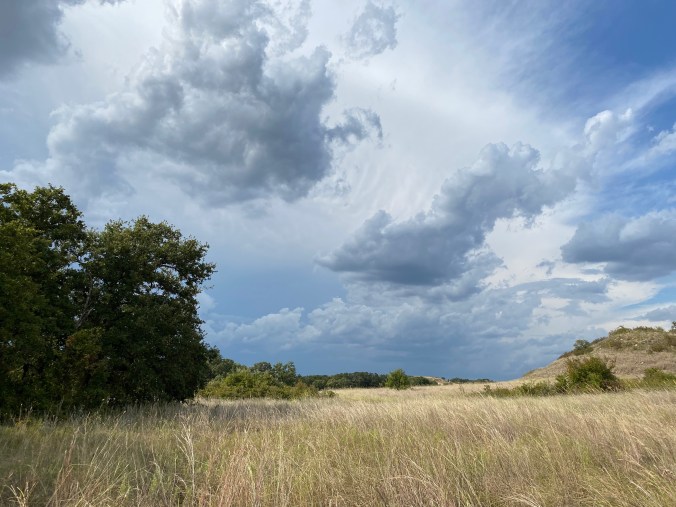
The soil and rock beneath it is largely Antlers Sand with some Walnut and Goodland formation limestone and clay (see “Geology of Wise County, Texas“). These geological features are from the Cretaceous period (roughly 145-65 million years ago). Walking the trails of LBJ National Grasslands, you come into contact with reddish sand and clay, or along ridges in southern units there is limestone filled with fossil oysters.
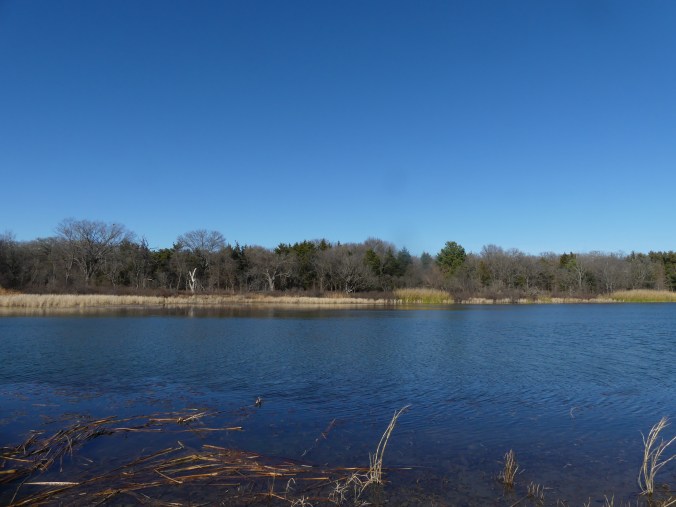
The grasslands are dotted with many small ponds, and many were created by people with the aim of reducing runoff and soil erosion as well as providing water for cattle. There are also several small lakes constructed for the same purpose as well as providing recreation. Those include Cottonwood Lake (about 40 acres in size), Black Creek Lake (about 30 acres), and Clear Lake (about 20 acres, with a small fishing pier).
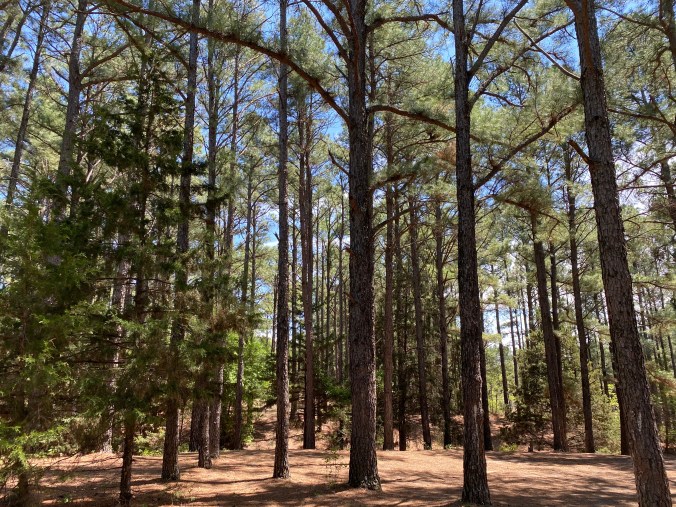
In several spots within the grasslands there are areas dominated by Loblolly Pines. They are generally in areas of deep sand with one or more ponds and are popular with campers. Pine trees are not a typical part of the Cross Timbers plant communities, and we have been told by Forest Service staff that pine seedlings were brought to the area 40 or 50 years ago and planted. Today many of the trees have grown quite tall, and smaller trees and seedlings show that these pine groves are well-established and even expanding.
As delightful as the pine trees may be, there is nothing that compares with the prairies and their spring flowers or the native grasses in autumn, or the oak and juniper woodlands on a quiet autumn afternoon.

Visiting the Grasslands
From the Dallas-Fort Worth area, it’s a little drive to get there (somewhere in the neighborhood of 45 miles, depending). However, it’s one of the best nearby opportunities for some solitude and quiet that I know of, along with thousands of acres of oak woodlands, grasslands, and ponds.
Here is a basic map of the grasslands, showing the administrative units (in green), county roads, and many trails. A more detailed map of the major trails can be downloaded here.

Making Your Visit Great
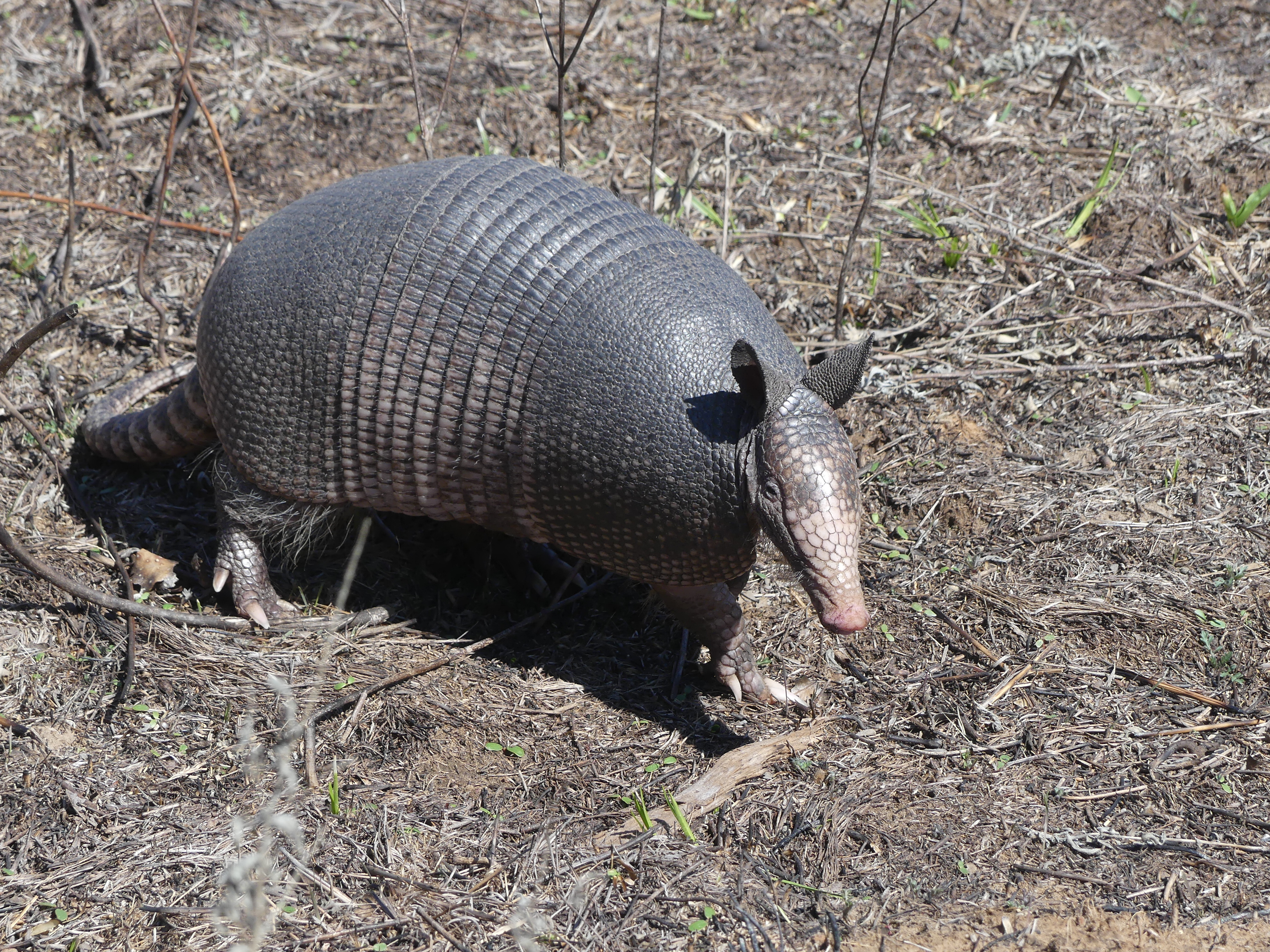
Before you walk the trails out there, ask yourself, “What do I want to get from this visit?” and also ask, “How can I be open to what the LBJNG offers?” Perhaps you are looking for beauty. You might want to see wildlife – birds or butterflies, Armadillos, Tiger Beetles, or a beautiful Rough Green Snake masquerading as a vine in the shrubs. You could sit in a pine grove and listen to breezes whispering in the treetops. You might keep walking to see the endless ways that prairie grasses, Post Oaks and Junipers can appear as you explore around the next bend of the trail.
It also is helpful to be open to what a particular visit may offer. Things might be different than you expected, and if you can be flexible you might find that different can still be rewarding. Another way of being open is to widen your attention beyond what you expected or planned to receive. Become quiet and still for at least part of your visit. Be aware of everything around you, noticing sounds, smells, the feel of sunlight, water, and soil. As much as you can, let thoughts and worries go (you cannot stop your brain from coming up with thoughts, but you don’t have to hold onto them and let them take over). Such a practice of mindfulness can be a great way to visit any place in nature.
Leave some room to reflect on what the experience meant to you and, now that you have some connection with the grasslands, what that connection means. For some people, the opportunity to be away from the “built” world of cities, towns and crowds is like being rescued from chaos and recovering for a while. For others, the multitude of living things is some reassurance of life’s – or a creator’s – benevolence and creativity. Some of us see the grasslands as a sort of sanctuary we can share, and at the same time a place that needs our care and support in order to survive in the world.
Even if the meaning of the grasslands is largely about a scientific list of species and their characteristics, I’d like to encourage you to write about it and draw things that catch your eye. I suggest carrying a notebook of some sort and stopping periodically to write and draw while you’re out there. This nature journaling will strengthen your memory of the day and give you a chance to reflect on what the place means to you.
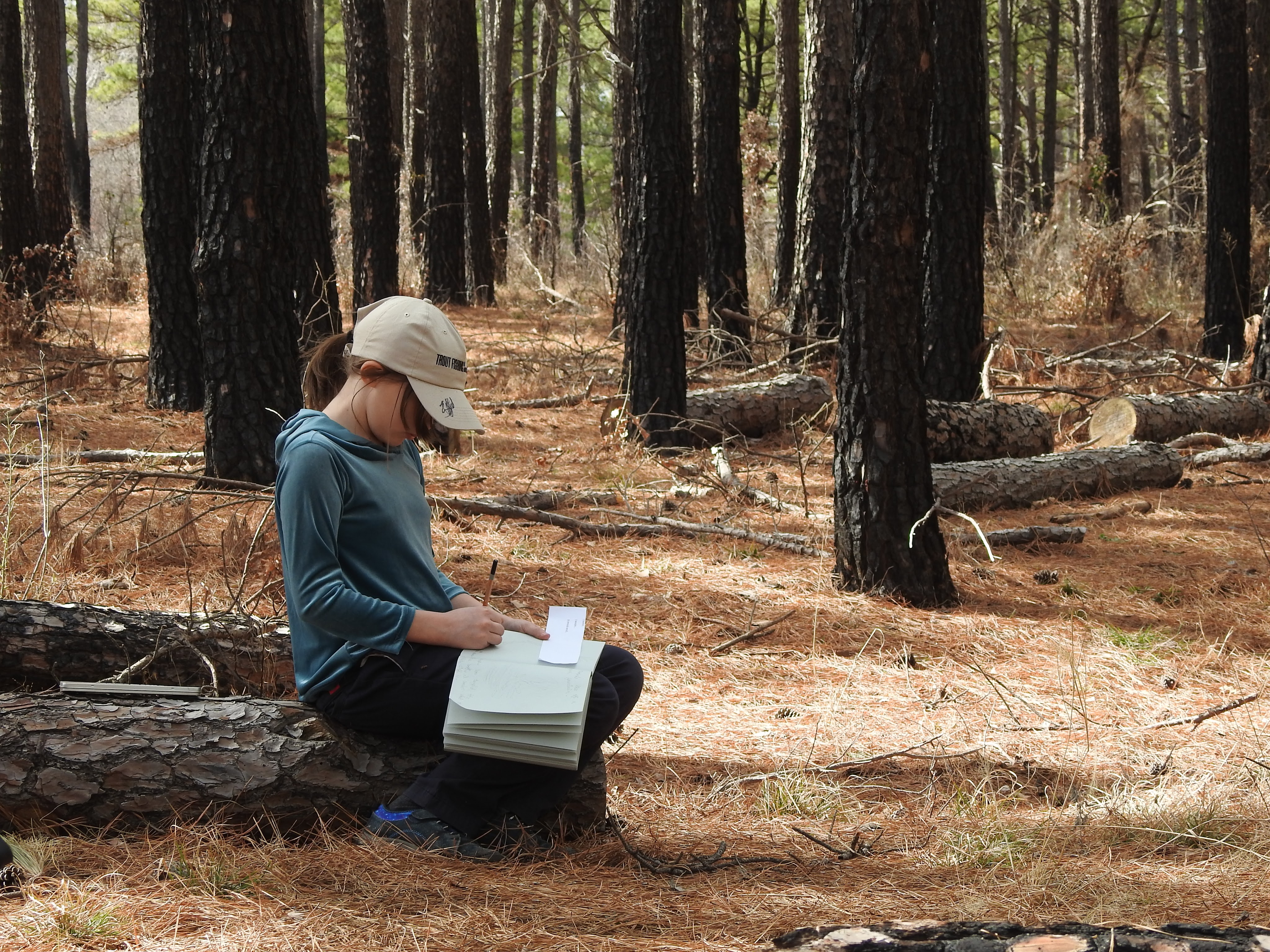
One way to write about your visit is to write a letter to the grasslands, as if the ponds, prairies and woodlands could read what you wrote. Maybe that sounds a little weird when you first consider it. However, when you write to somebody, you’re writing from within a relationship, and each person in the relationship has intentions and wishes to be considered. Kayla and I have led walks in which we suggested that participants write a “Dear Grasslands” letter, and the results were often personal and meaningful.
Taking Care of the Grasslands
All of us should take care that our visit does not harm the grasslands. We hope you’ll take a small bag with you to place any snack wrappers, disposable water bottles (get a non-disposable one!), or other trash so you can pack it out with you. And be very careful with fire, if you make a campfire. The Forest Service occasionally does prescribed burns to maintain the ecosystem, but the time and place of such burns are carefully planned. Clear the area around your fire and make sure there are no branches or shrubs close by – including above the fire. Then stay with the fire until every spark is out.
I hope you will leave things the way you found them. There is a role for legal hunting and fishing (especially for food) and scientific collection, and I think there’s no harm in taking a few samples of things like leaves, acorns, or empty mussel or snail shells.
Taking Care of Yourself
There are few dangers to worry about at LBJNG. Nevertheless, please pay careful attention to the following hazards:
- Dehydration and heat illness. It is very easy to forget water at the start of a walk when you’re not thirsty. Please bring water with you, even on a winter walk. Additionally, in summer you can get overheated and dehydrated very easily. Read up on heat exhaustion, heat stroke and sunburn and bring water, a hat, and sunscreen.
- Guns and archery equipment. People may be hunting in the area. For guns, the Forest Service rule is black powder hunting only, because buckshot is less likely than a bullet to travel far and injure someone at a greater distance. However, be aware that not everyone follows this rule (you occasionally find bullet casings). The Forest Service also forbids hunting in developed areas like campsites and within 150 yards of hiking/equestrian trails, but not all hunters know this. Hunters are, in most situations, required to wear fluorescent orange to make accidents less likely, and hikers are encouraged to do the same during hunting and archery season. Information from Texas Parks & Wildlife Department about hunting seasons can be found here.
- Plants. Depending on the area, Prickly Pear and other cacti may be common. Greenbrier is a thorny vine that is common especially in the woodlands. The stiff, pointed leaves of Yucca can also cause a puncture if you stumble into one. In places you will find Texas Bull Nettle, a plant covered with small stinging hairs. Another plant to be careful around is Poison Ivy, especially in woodland areas.
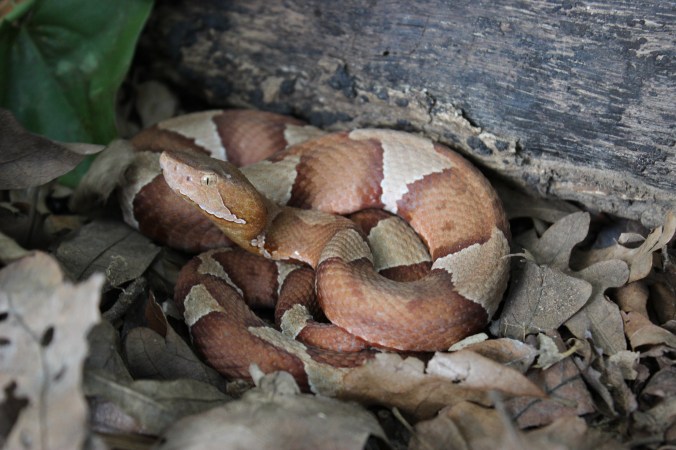
- Wildlife. Most of the larger wildlife at LBJNG is no cause for fear. Coyotes live there, but you are more likely to hear them than to see them. If you see a coyote that stands its ground, especially in spring during pupping season, you should back away and leave the area. More information about interactions with coyotes can be found here. Feral pigs are seen in some areas, and while they usually run away, they are potentially dangerous. Avoid them, especially sows with young pigs. We should keep a respectful distance from wildlife, even deer. There are two species of venomous snakes that are common in suitable habitat within the grasslands. These are the Northern Cottonmouth (also called the water moccasin) and the Broad-banded Copperhead. Cottonmouths typically are seen near the bigger lakes and ponds. Through most of the year, copperheads are primarily active at night. If left alone both species will avoid interacting with people. Don’t put your hands under rocks or logs where one may be concealed, and watch your step. More information about these snakes can be found here.
I would love to hear your thoughts about this great place, especially if you visit after reading this article. After 25 years of visiting off-and-on, I believe there is always something to make each visit interesting and each walk a little gift of renewal of body and spirit.
Discover more from Our Lives In Nature
Subscribe to get the latest posts sent to your email.
 Our Lives In Nature

