
Our responses to losses and extinction of our fellow creatures should reflect our complete selves, not just what we make of the losses intellectually but also how they resonate in our hearts and souls. When a species is gone, it should pull from us something beyond what is measured in statistics. Birds do that, as you can hear in the magnificent elegy by Christopher Tin, called The Lost Birds. It’s a collection, a heartbreaking instrumental theme memorializing the Passenger Pigeon (“Flocks a Mile Wide”) and songs, some with original lyrics and some drawing on others’ poems such as “Hope is the Thing with Feathers.” Those lost birds, our distant relatives, deserve memorials such as this.
Of course, it’s not just birds. Many of our other animal relatives are disappearing, and some of them have eloquent advocates. Wolves have passionate defenders, and even the Monarch butterfly inspires legions of helpers planting milkweed for their caterpillars.
Amphibians and reptiles have captured my interest and affection all my life. A great many are declining, and the loss of many amphibians has been deemed an extinction “crisis.” At least, it’s a crisis as seen by herpetologists and some others. Turtles are disappearing, too, along with many reptile species.
You can see where I am headed. No elegies for the disappearing Louisiana Pine Snake or the Yangtze Giant Softshell Turtle. Our culture does not elevate them in that way. The flight of birds symbolizes freedom for us. Our cultural stories equate birds with hope; a dove with an olive branch signifies peace, and those feathered wings remind us of angels. The snake, in Western culture, brings up temptation, fall from grace, and being condemned to crawl on the belly. We have to look elsewhere, like Asia or Indigenous Americans to find some positive cultural meanings.
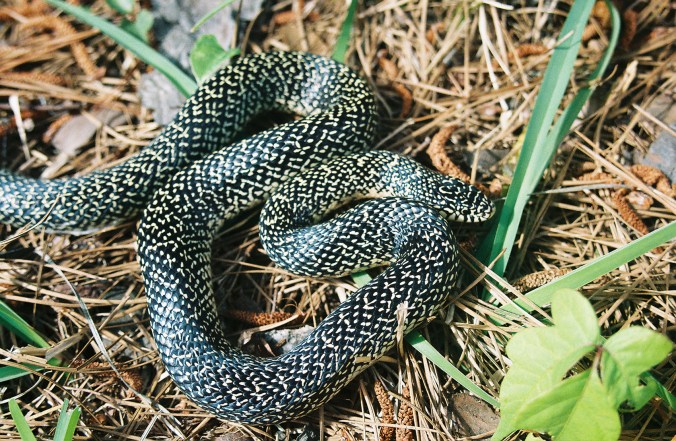
My point is not a resentment of birds, just a wish that we could do for other animals what we’ve done for birds. I wish we had stories and images in our culture that found more positive inspiration and affection for the animals without beautiful songs and wings, with no soft fur or expressive eyes. It would make it easier for us to find room for them in the family of living things. It might give a little boost to our willingness to go out of our way to conserve them, and maybe we would need fewer elegies.
Discover more from Our Lives In Nature
Subscribe to get the latest posts sent to your email.
 Our Lives In Nature